

Binsar Wildlife Sanctuary and Zero Point: The Complete Travel and View Guide
Rohit Verma
August 17, 2026
Explore Binsar Wildlife Sanctuary: hike to Zero Point for an unforgettable 300-km Himalayan panorama (Trishul, Nanda Devi, Panchachuli), spot over 200 bird species, and walk ancient oak trails.
Introduction to Binsar Wildlife Sanctuary
Crowning the highest forested ridge of the Kumaon Himalayas at an elevation ranging from 1,500 to 2,420 meters (7,940 feet), Binsar Wildlife Sanctuary is a pristine 47-square-kilometer haven of dense oak, rhododendron, and Himalayan cedar wilderness. Located 30 kilometers north of Almora in Uttarakhand, Binsar was once the revered summer capital of the ancient Chand kings of Kumaon between the 11th and 18th centuries. Today, it stands as one of the most ecologically rich forest reserves in northern India, offering nature lovers an extraordinary 300-kilometer uninterrupted panoramic vista of the Greater Himalayas from its iconic Zero Point watchtower. Visitors staying at the best forest eco lodges in Binsar experience profound peace enveloped by birdsong and ancient forest canopies.

Binsar is uniquely celebrated for its absence of urban noise, vehicular thoroughfares, and commercial clutter. Because private vehicular movement inside the core forest is strictly controlled by the Uttarakhand Forest Department, the sanctuary has preserved its pristine wilderness character. Whether you are an avid birdwatcher, wildlife tracker, landscape photographer, or a traveler exploring Kumaon following our best time to visit Almora guide, Binsar provides a peerless nature sanctuary.
The Hike to Zero Point: A 300-km Himalayan Panorama
The crown jewel of any visit to Binsar is the trek to Zero Point (elevation 2,412 meters), the highest geographic vantage point in the sanctuary. From the road terminus near the Forest Rest House, a well-defined 2-kilometer stone-and-dirt trail meanders gently through dense canopies of towering Himalayan oak (Banj oak), silver fir, and flowering rhododendrons.
The hike takes approximately 45 minutes of easy walking along an undulating ridge, suitable for travelers of all ages. As detailed in our comprehensive Binsar Zero Point trek guide, arriving at the two-tiered wooden watchtower before sunrise or in late afternoon rewards visitors with one of the most jaw-dropping mountain panoramas on Earth.
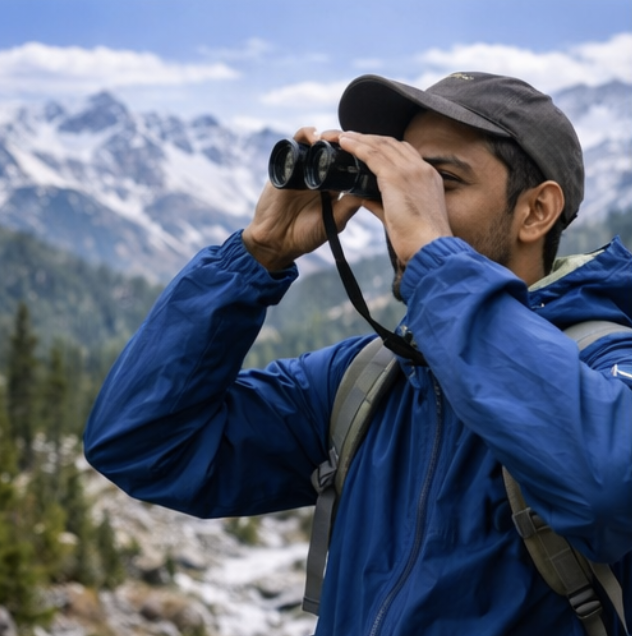
From Zero Point, the entire arc of the Great Himalayan Range unfolds in razor-sharp relief across 300 kilometers of the horizon. On clear days, the panorama encompasses:
- Kedarnath & Chaukhamba: The western sentinels of the Garhwal range rising dramatically in the distance.
- Trishul Massif (7,120m): Resembling the mythical trident of Lord Shiva with its three sharp jagged crests.
- Nanda Devi (7,816m) & Nanda Devi East (7,434m): India's second-highest and most sacred peak, towering regally over the Nanda Devi Sanctuary.
- Maiktoli & Mrigthuni: The glaciated ridgelines flanking the southern rim of the Nanda Devi basin.
- Panchachuli (6,904m) & Nanda Kot: The iconic five hearths of the Pandavas in eastern Kumaon near the Nepal border.
- Api & Nampha: The distant glaciated summits extending into western Nepal.
Biodiversity: Over 200 Bird Species and Himalayan Fauna
Binsar Wildlife Sanctuary is designated by BirdLife International as an Important Bird and Biodiversity Area (IBA). The dense mixed broadleaf and coniferous canopy provides feeding and nesting grounds for more than 200 resident and migratory bird species.
Avian enthusiasts walking the quiet forest trails can encounter rare and colorful species including the iridescent Himalayan Monal, Koklass Pheasant, Kalij Pheasant, Rufous-bellied Woodpecker, Greater Yellownape, Brown-fronted Woodpecker, Verditer Flycatcher, Rufous Sibia, White-throated Laughingthrush, Red-billed Blue Magpie, Grey-winged Blackbird, and the majestic Eurasian Jay. The open skies above the ridge frequently host raptors such as the Himalayan Griffon, Steppe Eagle, and Bearded Vulture (Lammergeier).
The sanctuary also shelters a diverse population of Himalayan mammals. Wildlife tracks along soft forest mud frequently reveal prints of the elusive common leopard, Himalayan black bear, barking deer (kakar), goral (Himalayan mountain goat), wild boar, red fox, yellow-throated marten, and the flying squirrel.
Historical Landmarks: Chand Kings Heritage and Bineshwar Temple
Binsar has a rich cultural and historical footprint. Near the entrance gate of the sanctuary in Ayarpani stands the ancient 16th-century Bineshwar Mahadev Temple. Built by King Kalyan Chand of the Chand dynasty, this stone-carved Shiva temple is set amidst a grove of towering deodars and is worshipped by villagers across Kumaon as the guardian deity of the forest.
Other fascinating historical points inside the reserve include Golu Devta Temple, Mary Budden Estate (a colonial-era heritage bungalow dating back to the 1890s), and the Binsar Sanctuary Museum, which houses educational exhibits on regional geology, flora, and wildlife conservation.
Forest Trails: Beyond Zero Point
Binsar features an interconnected network of scenic walking trails that crisscross the sanctuary ridge, making it a dream destination for self-guided trekking:
- Sunset Point Hike: A gentle 1.5-kilometer trail from Grand Oak Manor leading to a rocky western ledge that offers magnificent fiery sunsets over the Almora and Koshi river valleys.
- Gairal Trail: A peaceful 6-kilometer downhill descent through pristine moss-draped oak woodlands down to the secluded village of Gairal.
- Binsar to Dhaulchhina Trek: A scenic 11-kilometer point-to-point day hike crossing the sanctuary boundary into terraced pine orchards and traditional Kumaoni hamlets.
To maximize your holiday comfort and mountain views, explore our curated selection of the best Himalayan view resorts in Binsar.
Best Time to Visit Binsar Wildlife Sanctuary
The sanctuary offers distinct charms throughout the calendar year:
- March to May (Spring Bloom): The forest comes alive as thousands of rhododendron trees burst into vibrant crimson flowers. Temperatures range between 15°C and 25°C, making it prime time for birding and forest walks.
- July to August (Monsoon): The jungle becomes lush, misty, and draped in vibrant green mosses and lichens. Streams are full, though mountain roads can be slippery.
- September to November (Autumn Clarity): The premier season for uninterrupted Himalayan views from Zero Point. Crystal-clear sapphire skies provide extraordinary visibility of the snow peaks. Night temperatures range from 4°C to 10°C.
- December to February (Winter): Crisp mountain sunshine and cool temperatures (0°C to 12°C). High ridges receive occasional winter snowfall, creating a peaceful snow-draped forest escape.
How to Reach Binsar Wildlife Sanctuary
Binsar is located 30 km from Almora, 115 km from Kathgodam railway station, and 380 km from Delhi. From Kathgodam, private and shared taxis drive via Bhowali, Almora, and Kasauni turnoff toward Ayarpani (approx. 4 hours). Travelers visiting the region often combine Binsar with scenic halts featured in our Almora Bright Corner viewpoint guide.
At the Ayarpani entrance gate, visitors pay nominal sanctuary entry permits and vehicle entry fees before driving the 9 km scenic forest road up to the ridge.
Practical Tips for Visitors
- Sanctuary Entry Timings: The sanctuary entry gate opens at 6:00 AM and closes at 5:00 PM for private day vehicles. Entry after dark is strictly restricted to travelers with confirmed bookings inside sanctuary lodges.
- Eco-Rules: Loud music, open campfires, plastic littering, and off-trail driving are strictly prohibited and attract heavy forest department penalties.
- Guide Recommendations: Hiring an authorized local naturalist guide from the Ayarpani gate significantly enhances birdwatching and wildlife tracking success.
Conclusion
Binsar Wildlife Sanctuary is a rare Himalayan sanctuary where ancient oak forests, rich biodiversity, and monumental mountain views unite in serene harmony. Standing atop the watchtower at Zero Point with 300 kilometers of glittering Himalayan giants stretching from Garhwal to Nepal is an awe-inspiring experience that encapsulates the majestic grandeur of Uttarakhand.
Location
Frequently Asked Questions
Q1.What is Zero Point in Binsar and how high is it?
Q2.Which Himalayan peaks are visible from Binsar Zero Point?
Q3.How long is the trek to Zero Point from the forest rest house?
Q4.How many bird species are found in Binsar Wildlife Sanctuary?
Q5.What are the entry timings and fees for Binsar Sanctuary?
Recommended For You

Bright Corner Almora: Complete Guide to the Himalayan Sunrise Viewpoint
A complete guide to Bright Corner (Bright End Corner) in Almora, one of Kumaon's finest sunrise viewpoints, covering the best time of day to visit, how to reach it, and what to expect at this quiet Himalayan lookout.

Best Time to Visit Almora: Season-by-Season Weather Guide
A season-by-season guide to the best time to visit Almora, covering summer, monsoon, autumn, and winter weather patterns along with the timing of the annual Nanda Devi festival.

Best Himalayan View Homestays in Munsyari: Bhotia Tribal Stays & Panchachuli Vistas
Experience authentic Bhotia tribal hospitality and front-row views of the five Panchachuli peaks at the best homestays in Munsyari. Discover Sarmoli, Darkot, and Johar Valley retreats.
Never Miss an Adventure
Get the latest trekking guides, travel tips, and exclusive offers delivered straight to your inbox.
