
Select date
7 Days / 6 Nights
Medium
5.0 (14 reviews)
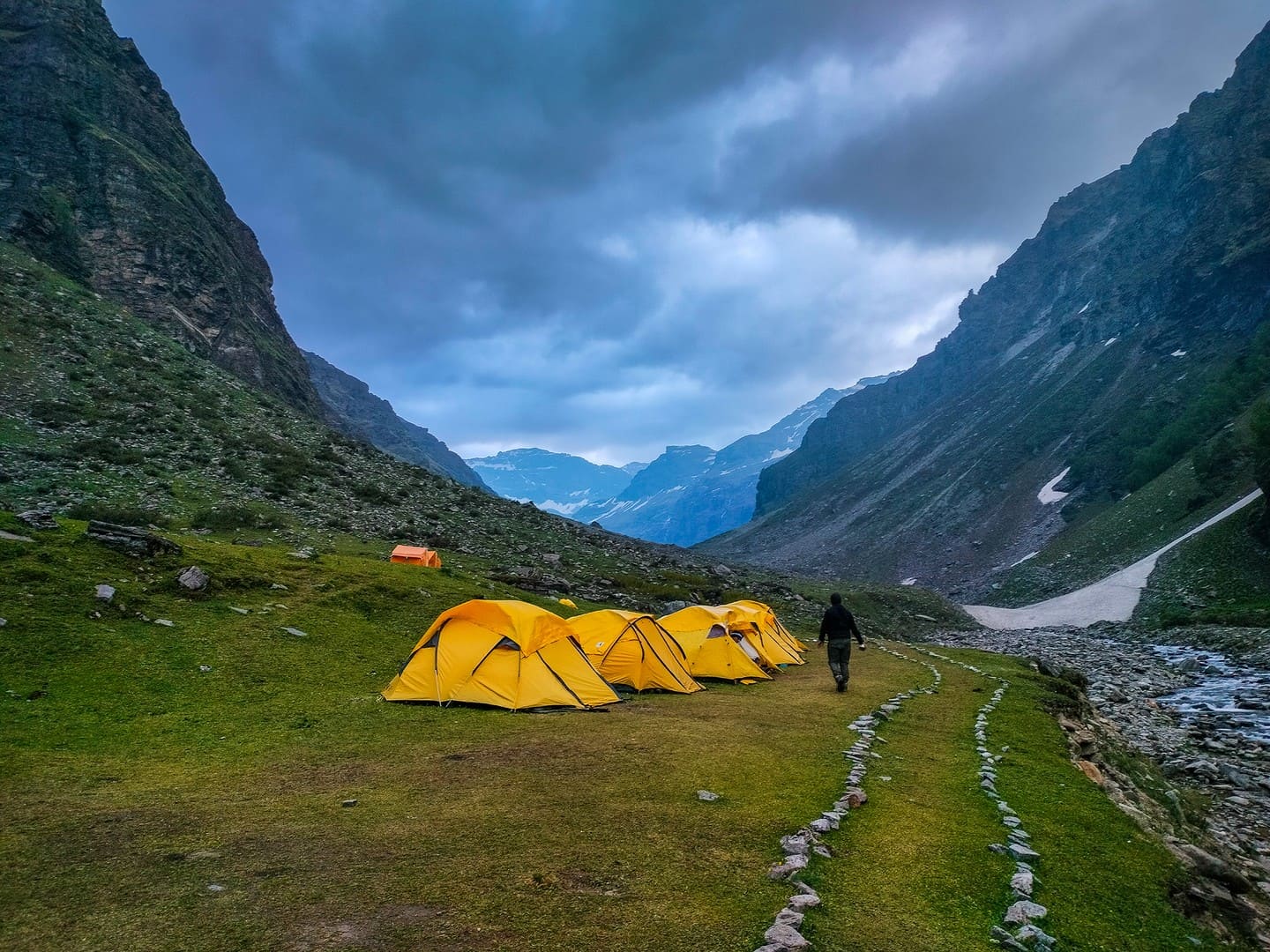
Rupin Pass is a high-altitude pass at about 4,650 m. The trek starts from Dhaula in Uttarakhand and ends at Sangla in Himachal Pradesh, covering about 57 km, with the best season in May, June, September, October and November.
Altitude
15,260 ft
Distance
41 km
Season
May, June, and September
Trip Category
domestic
Base Location
Bawta

Total Price (1 traveler)
₹5,000
17% OFFPartial payment can be made in next step

Everything you need to know about Rupin Pass Trek
Everything you need to know about Rupin Pass Trek
The months of May, June, and September are the finest times to trek over the Rupin Pass. But, a little shift in air pressure or a change in the winds might bring precipitation such as rain or snowfall while you are hiking over the Rupin Pass.
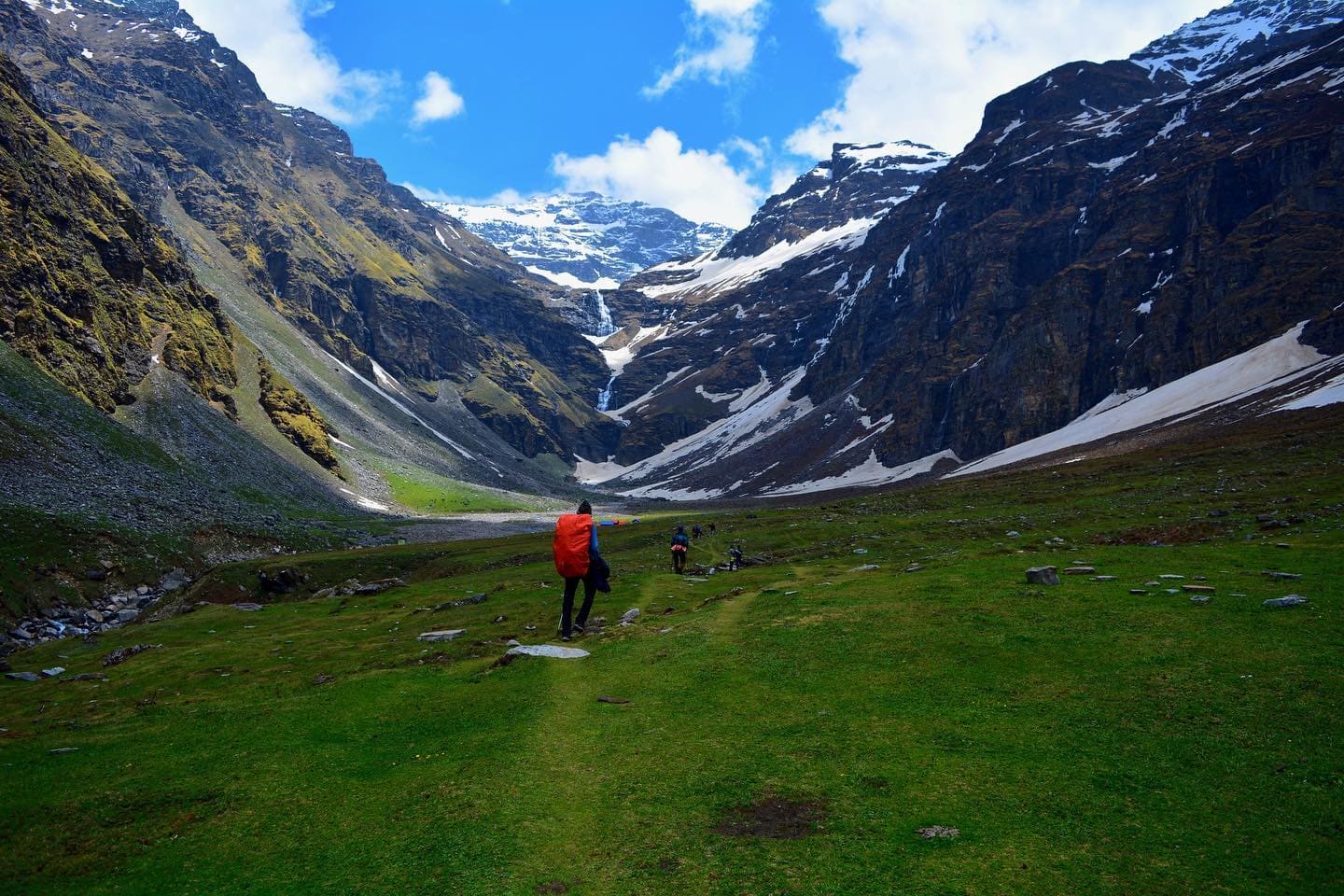
The snow at Rupin Pass is renowned for its pristine condition. Snow will greet you as soon as you leave Dhauala and continue your ascent to the Rupin pass. On your hike through Rupin pass, you will ascend to an elevation that is 15,250 feet above mean sea level at its highest point. If you are a fan of snow, you should go to the highest point of Rupin pass since it has the cleanest and clearest snow.
During night, the temperature drops to between 0 and 7 degrees Celsius, while during the day it hovers between in the range of 13-18 degrees Celsius. The weather is unpredictable, making the hike more challenging than it would otherwise be. There is going to be a significant quantity of snow coming from Saruwas Thatch throughout the month of May. The amount of snowfall during June often falls within the average range for this month. September often sees very little snowfall. In the higher levels, the first winter snow will often fall around the first week of October.
It is not possible for a first-time hiker to finish the journey to Rupin Pass since it demands them to go for 52 kilometres and ascend to an altitude of 15,250 feet. It is necessary to have prior experience trekking in order to complete the Rupin Pass Trek since the trail to the summit is tough to travel and there is a considerable risk of sliding.
The Rupin Pass Trek may be done without risk of injury. If each and every regulation is adhered to, then the hike has the potential to be the safest hike you have ever experienced. You may easily traverse the rough trails if you are equipped with the appropriate hiking gear, such as shoes and poles. This removes any potential for hazard. When it comes to safety, any hike is potentially hazardous; nevertheless, the level of risk is entirely determined by the conduct of the group as a whole as well as the guide. The Rupin Pass Trek will not be dangerous for you if you have ideal physical and mental strength, follow correct rules, and pay attention to the recommendations given to you by your guide.
In the Indian state of Himachal Pradesh may be found the high-altitude mountain pass known as Rupin Pass. It is located in the Himalayan mountain range. It is situated on an ancient trail used by shepherds and hikers that connects Dhaula in Uttarakhand with Sangla in Himachal Pradesh and travels through the area in question.
The trail across Rupin Pass ranges from moderately tough to challenging. If this is your first time, it is imperative that you get yourself physically prepared at least one month in advance.
The high-altitude walk known as the Rupin Pass starts in Dhaula in the Indian state of Uttarakhand and concludes in Sangla.
You must already possess a certain level of physical fitness in order to do it. If you are a person who is not physically fit and leads a life that is primarily sedentary, then you can also do some form of physical activity such as yoga, exercises, or sports to make yourself fit for the trek every day so that you can properly regulate your breathing.
The Rupin Pass trip alone is perfectly safe. Nonetheless, it is advisable to undertake it in groups considering the tough terrain and weather circumstances.
First and greatest precaution is to overlook or avoid the alcohol when hiking. Clothes must be woollen textiles and no body parts must be visible.