
Lake Issyk Almaty: The Tragic Lake of Kazakhstan

Ananya Sharma
January 1, 2026
Visit Lake Issyk near Almaty, Kazakhstan. Discover 1963 tragedy, how to reach, best time & travel guide.
Introduction: Alpine Beauty Near Almaty
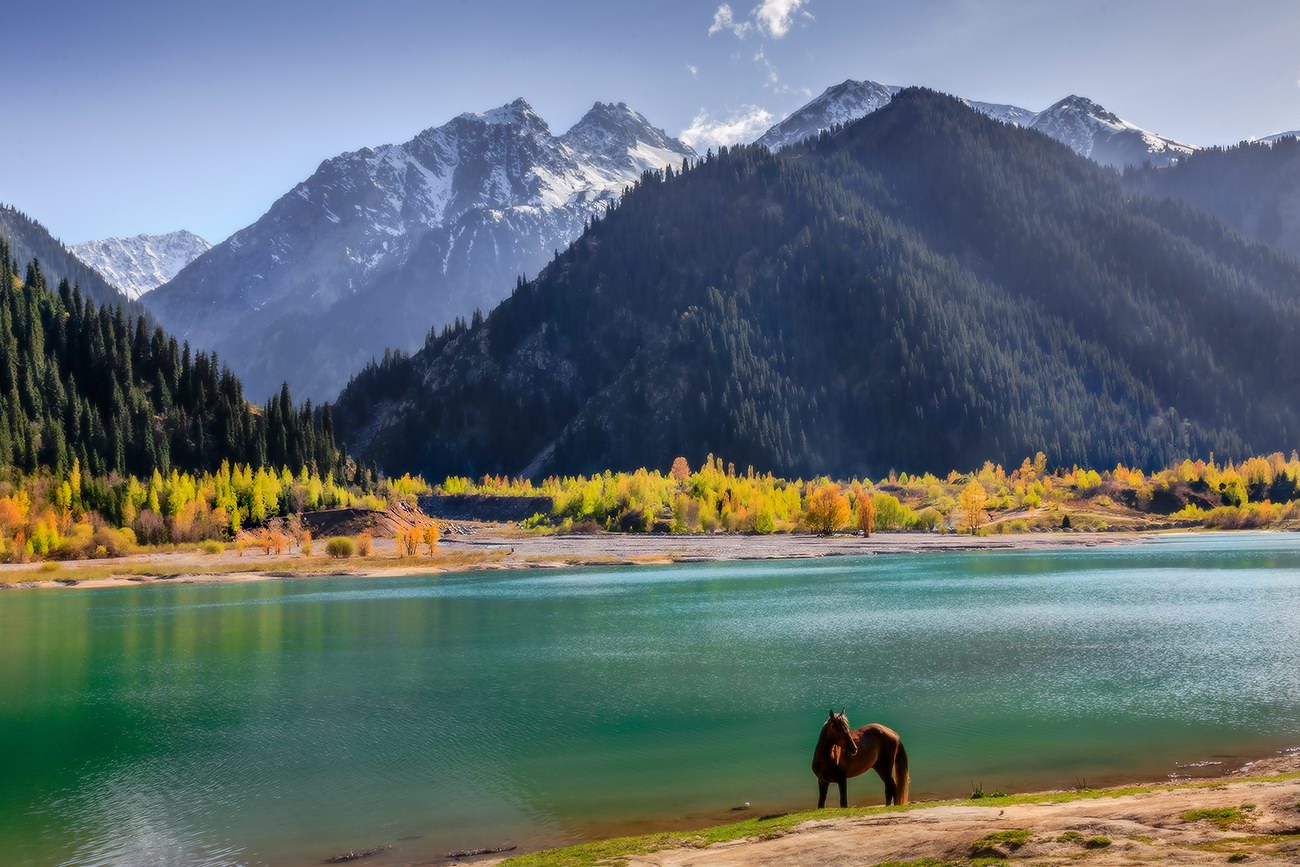
Lake Issyk is a stunning alpine lake located approximately 70 kilometers from Almaty, Kazakhstan's largest city. Nestled in the Issyk Gorge of the Trans-Ili Alatau mountains, this natural lake was once a pristine destination known for its crystal-clear waters and surrounding pine forests. Today, Lake Issyk is remembered both for its natural beauty and the tragic 1963 mudflow disaster that devastated the area and changed its landscape forever.
For travelers exploring Almaty tourist places, Lake Issyk offers a day trip that combines natural scenery with historical reflection. The lake's restoration in the 2000s has made it accessible once again, though on a smaller scale than its original form. Combine your visit with nearby attractions like Medeu Skating Rink and Ile Alatau National Park for a complete Almaty mountain experience.
About Lake Issyk: Geography and Natural Beauty
Lake Issyk is situated in the Zailiyskiy Alatau mountains, part of the Northern Tien Shan range. The original lake was formed in a natural depression within the Issyk Gorge, at an elevation that provided it with alpine character while remaining accessible from the Almaty valley below.
The lake was characterized by its exceptional water clarity and the dense pine forests that carpeted its shores. Snow-capped peaks surrounded the gorge, creating a dramatic backdrop that made the lake one of Kazakhstan's most photographed natural landmarks. The waters reflected the changing seasons—from spring wildflowers to autumn golds to winter snows.
Original Lake Specifications
| Feature | Description |
|---|---|
| Original Altitude | Approximately 1,760 meters above sea level |
| Original Surface Area | Approximately 1.8 square kilometers |
| Maximum Depth | Estimated 50-60 meters in deepest areas |
| Water Quality | Crystal clear alpine water |
| Surrounding Vegetation | Dense pine and spruce forests |
| Geological Formation | Natural lake in mountain gorge |
Natural Characteristics
The original Lake Issyk was distinguished by several natural features that made it exceptional among Kazakhstan's lakes:
- Water Clarity: The lake was known for remarkably clear water that allowed visibility deep beneath the surface. This clarity resulted from the alpine environment, minimal pollution, and natural filtration through mountain springs.
- Temperature: Despite its high altitude, the lake never froze completely in winter, maintaining some open water even in coldest months. This unusual characteristic resulted from thermal inputs from underwater springs.
- Surrounding Forests: Pine and spruce forests carpeted the slopes around the lake, creating a dark green frame that contrasted with the blue water and snow-capped peaks.
- Mountain Backdrop: The gorge walls rose steeply from the lake's shores, with peaks reaching altitudes of 4,000 meters and higher. This dramatic verticality gave the lake its iconic appearance.
Biodiversity of the Region
The Issyk Gorge area supported rich biodiversity typical of Central Asian alpine ecosystems. The forests provided habitat for various wildlife including brown bears, lynx, deer, and numerous bird species. The lake itself supported fish populations, contributing to the ecological complexity of the region. This biodiversity made the lake important not only for tourism but also for conservation and ecological research.
The 1963 Tragedy: A Natural Disaster
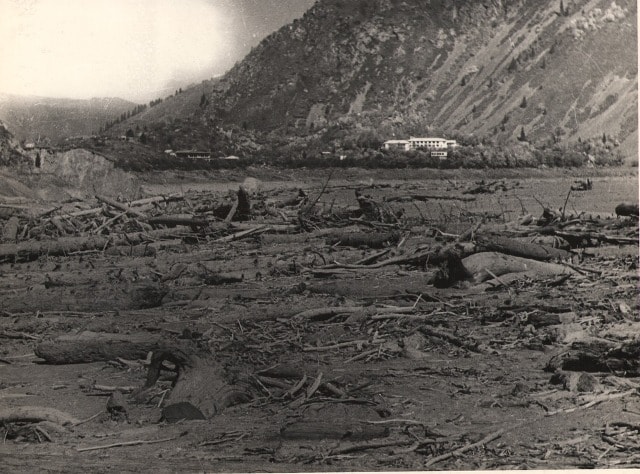
The events of July 7, 1963, permanently altered Lake Issyk and the surrounding region. What began as a typical summer day ended in catastrophic destruction when a massive mudflow descended the gorge, destroying the town of Issyk and devastating the lake itself.
Sequence of Events
The disaster unfolded through a chain of natural events that illustrate the power of mountain environments:
- Glacial Activity: Heavy rains in the days preceding July 7 accelerated melting in the glacial zone above the gorge. This increased water volume in the glacier lake upstream.
- Glacial Lake Burst: The upstream glacial lake, unable to contain the increased water volume, burst catastrophically. This sudden release of massive quantities of water began the destructive chain.
- Mudflow Formation: As the water cascaded down the mountainside, it picked up rocks, soil, trees, and debris. This mixture transformed into a devastating mudflow—a rapidly moving wall of mud, boulders, and water with tremendous destructive power.
- Descent Through Gorge: The mudflow gained momentum and volume as it descended the Issyk Gorge, gathering additional material and growing in destructive force.
- Impact on Town: The flow reached the town of Issyk, located in the gorge below the lake. The town was largely destroyed by the force of the mudflow, with buildings swept away and significant loss of life.
- Impact on Lake: The mudflow continued downstream to Lake Issyk itself. The sheer force and volume of material burst through the lake's natural containment, draining the lake and filling its basin with debris.
Scale of Destruction
| Impact | Details |
|---|---|
| Human Casualties | Significant loss of life in Issyk town |
| Town Destruction | Issyk town largely destroyed by mudflow |
| Lake Destruction | Complete draining of original lake basin |
| Landscape Change | Gorge dramatically altered by debris |
| Economic Impact | Loss of local infrastructure and tourism |
Community Impact
The 1963 disaster had profound and lasting impacts on the local community. Issyk town, once a thriving settlement, was nearly completely destroyed. Survivors faced not only personal tragedy but also the loss of homes, livelihoods, and a place that had been home for generations.
The destruction of the lake removed a natural asset that had supported local tourism, fishing, and recreation. The area's economy, which had benefited from visitors drawn to the lake's beauty, suffered significantly in the aftermath.
For the broader Almaty region, the disaster served as a stark reminder of natural hazards in mountain environments and prompted increased attention to geological monitoring, early warning systems, and disaster preparedness.
Lake Restoration and Current Status
For decades after the 1963 disaster, the lake basin remained largely empty, a hollow in the landscape that testified to the tragedy. However, beginning in the early 2000s, restoration efforts began to recreate a version of Lake Issyk.
Restoration Project
The restoration initiative involved several engineering and environmental components:
- Dam Construction: A new dam was built to create a containment structure for the restored lake. This dam incorporated modern engineering to better withstand potential natural forces.
- Basin Preparation: The debris-filled lake basin was partially cleared and prepared to hold water again. Not all original debris was removed, as some became part of the new landscape.
- Water Management: Systems were implemented to manage water inflow and outflow, maintaining lake levels and ensuring stability.
Current Lake Characteristics
| Feature | Status |
|---|---|
| Current Size | Smaller than original lake |
| Water Quality | Clear alpine water, restored |
| Accessibility | Open to visitors, road access available |
| Surrounding Environment | Recovering forest and natural vegetation |
| Facilities | Basic visitor facilities developing |
Ongoing Preservation
The restored Lake Issyk represents both technological achievement and environmental recovery. Ongoing preservation efforts focus on:
- Maintaining Water Quality: Monitoring and protecting the lake from pollution to maintain its alpine character.
- Forest Recovery: Supporting natural regeneration of the forests that were destroyed in 1963. Young pine and spruce trees are gradually reclaiming the slopes.
- Tourism Development: Developing sustainable tourism that respects both the natural environment and the memory of the 1963 tragedy.
- Geological Monitoring: Installing monitoring systems to detect early signs of potential hazards and protect both visitors and the restored lake.
Memorial
A memorial at the site commemorates the victims of the 1963 disaster. This memorial serves as both a tribute to those who lost their lives and a reminder of nature's power. Visitors to Lake Issyk are encouraged to visit the memorial as part of understanding the full story of the lake—not only its beauty but also its tragic history.
Best Time to Visit Lake Issyk
Planning your visit to Lake Issyk requires understanding seasonal variations that affect accessibility, weather conditions, and the overall experience.
Summer: Prime Access (June-August)
Summer is the best time to visit Lake Issyk for accessibility and comfortable conditions. The roads from Almaty to Issyk Gorge are reliably passable, and weather is generally pleasant:
- Road conditions are optimal, with no snow or ice
- Daytime temperatures are comfortable for outdoor activities
- The lake surface is ice-free and at its most scenic
- Surrounding vegetation is lush and green
- Long daylight hours allow extended exploration
Summer weekends can see increased visitor numbers, so weekday visits offer quieter experiences. Morning arrivals allow for the best light and fewer crowds.
Spring: Transition and Renewal (April-May)
Spring brings renewal to the mountains but also variable conditions:
- Snow is melting, creating flowing streams and waterfalls
- Vegetation is beginning to green up
- Roads may have residual snow or debris in early April
- Weather can be unpredictable with rain and cold snaps
- Later in spring (May) conditions stabilize
Late May offers a balance between spring freshness and summer reliability. Early visitors in April should be prepared for winter-like conditions and check road status before departure.
Autumn: Colors and Crispness (September-October)
Autumn transforms the landscape into a display of fall colors:
- Pine forests show hints of gold and copper
- Air is crisp and clear, excellent for photography
- Crowds diminish as peak summer season ends
- Roads remain accessible until snow begins
- Water temperature drops rapidly
September is particularly beautiful, with warm days and cool nights. October sees increasing cold and the possibility of early snow at higher elevations, so earlier autumn visits are safer for road access.
Winter: Frozen and Limited (November-March)
Winter presents significant challenges for visiting Lake Issyk:
- Mountains are snow-covered, creating beautiful scenery
- Access roads may be difficult or impassable
- Lake surface freezes completely
- Daylight hours are short
- Temperatures are well below freezing
Winter visits are only recommended for experienced travelers with appropriate vehicles, winter driving skills, and cold-weather equipment. The frozen lake and snow-covered mountains create stunning photography conditions, but accessibility is the limiting factor.
How to Reach Lake Issyk from Almaty
Getting to Lake Issyk from Almaty is a scenic mountain drive that takes visitors from the city into the Trans-Ili Alatau range.
Route Overview
- Distance: Approximately 70 kilometers
- Drive Time: 1 to 1.5 hours depending on conditions
- Direction: East from Almaty toward Esik, then into Issyk Gorge
Transportation Options
| Mode | Cost Range | Best For |
|---|---|---|
| Private Car Rental | Varies by rental company and vehicle type | Maximum flexibility, control over schedule |
| Hired Driver/Car | Higher than self-drive but convenient | Those who prefer not to drive |
| Tour Company Transfer | Includes guide, transportation, possibly other stops | Hassle-free, informative experience |
| Public Transport | Bus to Esik, then taxi to lake (limited) | Budget travelers, flexible timing |
Driving Directions
The route to Lake Issyk follows generally straightforward directions:
- Exit Almaty heading east toward Esik
- Follow the main road for approximately 40-50 kilometers
- At Esik, look for signs or follow directions toward Issyk Gorge
- Turn into the gorge road and continue approximately 20 kilometers
- The road leads directly to the lake area
Navigation is relatively straightforward as there is essentially one main road into the gorge. However, conditions vary seasonally, so check current road status before departure.
Road Conditions
Understanding road conditions helps prepare for the journey:
- Summer: Generally good conditions. Well-maintained mountain road. Paved for most of the route.
- Spring/Autumn: Generally good but watch for debris from melting snow or early snow.
- Winter: Challenging. Snow and ice create hazardous conditions. Only for experienced winter drivers with appropriate vehicles.
Parking
Parking is available near the lake area. During peak summer weekends, parking can fill up as more visitors arrive. Arriving early morning helps secure parking closer to the lake access points. The parking area is basic, without formal parking attendants or marked spaces—vehicles simply pull off the road in designated areas.
Nearby Attractions to Combine with Lake Issyk
The region around Lake Issyk offers several attractions that can be combined for a fuller day or multi-day experience in Almaty's mountain surroundings.
Turgen Gorge
Turgen Gorge is one of the most beautiful gorges near Almaty, located approximately 30 kilometers from Lake Issyk. The gorge features:
- Multiple waterfalls cascading through pine forests
- Reindeer breeding farm where visitors can see these animals
- Scenic hiking trails of varying difficulty
- Archaeological sites with ancient burial mounds
Combining Lake Issyk with Turgen Gorge makes for an excellent nature-focused day trip from Almaty, offering both lake and mountain valley experiences.
Asy Plateau
Asy Plateau (Assy Plateau) is a high-altitude alpine meadow approximately 50 kilometers from Lake Issyk. The plateau offers:
- Expansive alpine meadows with wildflowers in summer
- Spectacular mountain panoramas
- Traditional Kazakh yurts during summer grazing season
- Opportunities for horse riding and longer hiking
The plateau is higher in altitude and requires more time to reach, but for those with a full day or overnight plans, it offers an authentic high-mountain experience.
Medeu Skating Rink
Located on the way to the mountains from Almaty, Medeu Skating Rink is one of the highest-altitude outdoor skating rinks in the world. While primarily a winter attraction, the area offers:
- Spectacular mountain views even when ice-free
- Historical significance as a Soviet-era sports venue
- Photography opportunities with the rink's distinctive architecture against mountain backdrop
The rink is conveniently located along the route to Lake Issyk, making it easy to stop briefly on the way to or from the lake.
Shymbulak Ski Resort
Shymbulak, accessible via the Medeu area, is Almaty's premier ski resort and a year-round mountain destination:
- Skiing and snowboarding in winter
- Cable car to high-altitude viewpoints in summer
- Mountain restaurant and facilities
- Paragliding and adventure activities
The cable car offers spectacular mountain views without requiring the physical effort of hiking. In summer, the high-altitude viewpoint provides a different perspective on the region's topography.
Big Almaty Lake
Another alpine lake located near Lake Issyk, Big Almaty Lake sits at higher altitude (approximately 2,500 meters) and offers:
- Stunning blue water surrounded by jagged peaks
- More challenging access (rougher road)
- Pristine alpine environment
- Excellent photography opportunities
Visiting both Big Almaty Lake and Lake Issyk provides contrast between two different alpine lake environments in the same mountain range.
Ethno Village
Kazakhstan Ethno Village (located near Big Almaty Lake road) showcases traditional Kazakh culture through:
- Recreated traditional dwellings
- Cultural demonstrations and performances
- Local crafts and souvenirs
- Traditional Kazakh cuisine options
The ethnographic museum provides cultural context for understanding the region's human history, complementing the natural experiences of lake and mountain visits.
Practical Information and Travel Tips
Being prepared for your Lake Issyk visit ensures a safe and enjoyable experience in this mountain environment.
Entry and Access
Access to the Lake Issyk area is generally free. There may be small fees for parking or specific facilities, but the lake itself does not have an entry ticket booth like some tourist attractions.
Facilities Available
- Basic parking area near the lake
- Some picnic spots
- Memorial area commemorating 1963 victims
- Limited restroom facilities
- No restaurant or food service on-site
- No boat rental or water activity equipment
Visitors should come prepared with their own supplies, including food, water, and any equipment needed for planned activities.
What to Carry
| Item | Why |
|---|---|
| Water and Snacks | No food service available on-site |
| Camera with Extra Battery | Excellent photography opportunities |
| Layers and Windproof Jacket | Mountain weather can change quickly, windy |
| Sturdy Walking Shoes | Rocky terrain, uneven surfaces |
| Sunscreen and Sunglasses | High altitude increases UV exposure |
| First Aid Kit | Basic preparedness |
Safety Considerations
- Weather Awareness: Check weather forecast before departure. Mountain weather can change rapidly, and conditions at altitude may differ from city weather.
- Road Safety: Mountain roads require careful driving. Reduced speed on curves, use horn on blind corners, and never pass on dangerous sections.
- Water Safety: Lake water is cold, and swimming is not recommended. The lake is primarily for viewing and photography.
- Altitude: The lake sits at approximately 1,760 meters. Most visitors acclimatize quickly, but be aware of potential mild altitude effects.
- Geological Awareness: The 1963 disaster occurred due to geological processes. While rare, understanding that mountain environments carry natural hazards is important.
Responsible Visit Guidelines
Visitors to Lake Issyk should practice responsible tourism:
- Leave no trace—pack out all trash
- Respect the memorial site and its significance
- Stay on designated paths to protect recovering vegetation
- Keep noise levels considerate of other visitors
- Follow any posted guidelines or instructions
Conclusion: Reflection on Beauty and Resilience
Lake Issyk represents a complex story of natural beauty, tragic loss, human resilience, and technological restoration. The lake that visitors see today is not the same as the one that existed before July 1963, but it is a testament to the human capacity to rebuild and recover.
For travelers from Almaty and beyond, Lake Issyk offers more than scenic photography. It provides an opportunity to reflect on the power of nature, the vulnerability of human settlements in mountain environments, and the importance of respecting natural forces while appreciating their beauty.
The restored lake, though smaller than its predecessor, continues to captivate visitors with its alpine setting, clear waters, and mountain backdrop. Combined with nearby attractions like Turgen Gorge, Asy Plateau, and Shymbulak, a visit to Lake Issyk becomes part of a richer exploration of Kazakhstan's exceptional mountain landscapes.
Whether you visit for the natural scenery, historical reflection, or simply to experience one of Kazakhstan's distinctive alpine environments, Lake Issyk rewards those who make the journey from Almaty. Plan your visit during the summer months for best accessibility, come prepared for mountain conditions, and take time to appreciate both the beauty and the story of this remarkable place.
Location
Frequently Asked Questions
Q1.Where is Lake Issyk located in Kazakhstan?
Q2.How far is Lake Issyk from Almaty?
Q3.What happened to Lake Issyk in 1963?
Q4.Can we swim in Lake Issyk?
Q5.What is the best time to visit Lake Issyk?
Q6.Is Lake Issyk worth visiting?
Q7.How to reach Lake Issyk from Almaty?
Q8.Is there public transport to Issyk?
Q9.Are there facilities at Lake Issyk?
Q10.What activities are available at Lake Issyk?
Recommended For You
Adventure Activities in Almaty: Canyons, Cables & Alpine Thrills
Discover thrilling adventure activities in Almaty, Kazakhstan. From skiing at Shymbulak to trekking in Tian Shan mountains, paragliding, ice skating at Medeu & more!
28 Panfilov Guardsmen Park Almaty: History, Landmarks & Visitor Info
Explore 28 Panfilov Guardsmen Park in Almaty: Home to Ascension Cathedral, war memorials, and Kazakhstan's rich history. Complete visitor guide with timings, tips, and nearby attractions.
Places to Visit in Almaty: 15 Top Attractions
Discover the best places to visit in Almaty, Kazakhstan. From mountains and ski resorts to museums and bazaars, complete travel guide with timings and tips.
Never Miss an Adventure
Get the latest trekking guides, travel tips, and exclusive offers delivered straight to your inbox.
