
Select date
16 Days / 15 Nights
Hard
4.9 (15 reviews)
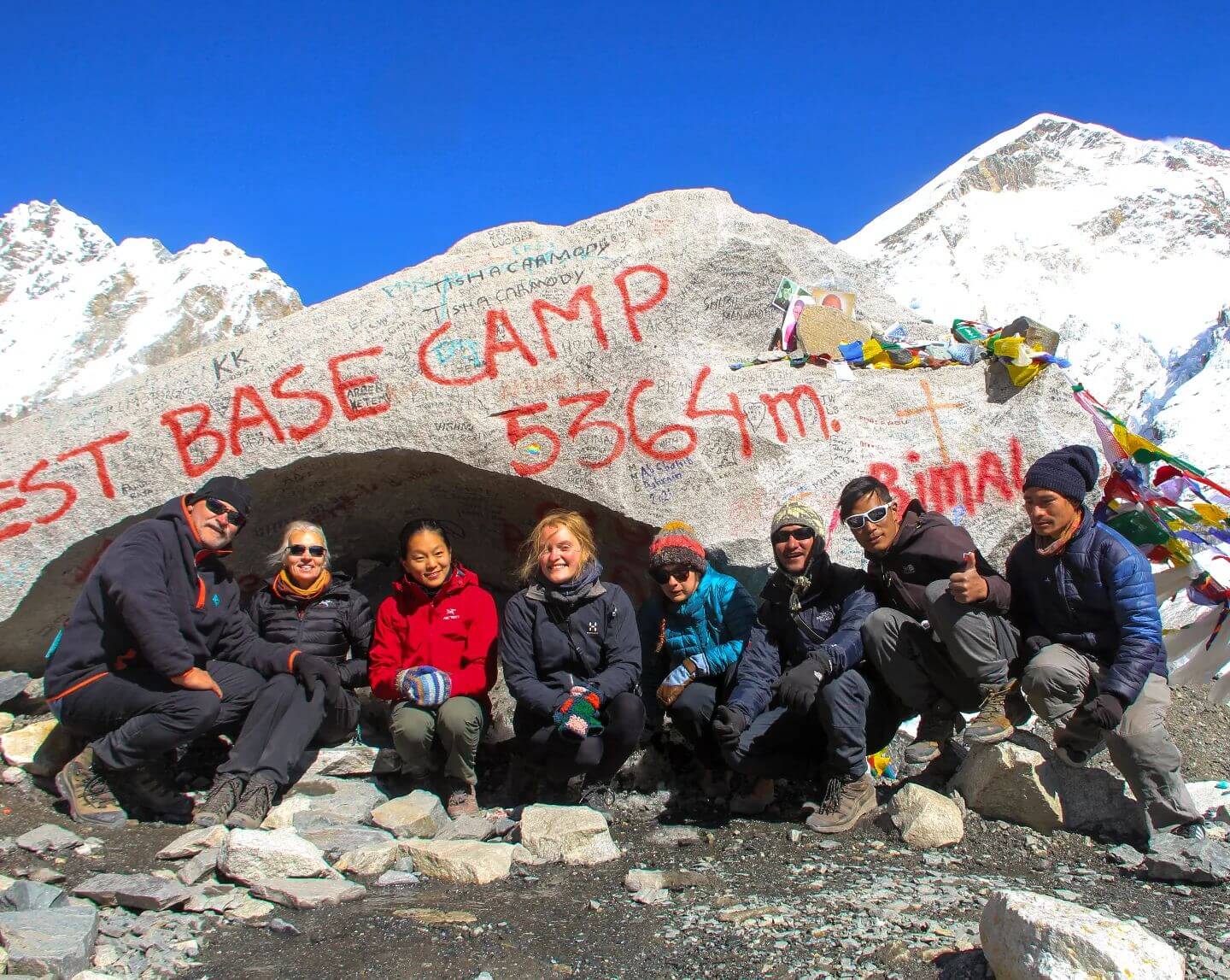
Everest Base Camp Trek via the Khumbu Valley reaches Kala Patthar (5,545 m), passing Sherpa villages, Sagarmatha National Park and iconic peaks like Everest and Ama Dablam. Best seasons are Mar–May and Sept–Dec.
Altitude
5545m (18191 ft)
Distance
67 km
Departure Time
7:30 To 8:00 AM
Season
March to June and September to November
Trip Category
international
Base Location
Kathmandu

Total Price (1 traveler)
₹75,000
12% OFFPartial payment can be made in next step

Everything you need to know about Everest Base Camp Trek
Refund structure: 30+ days full refund less 1.99%, 15-30 days 80%, 10-15 days 40%, 8-10 days 40%, under 8 days no refund. 5% fee on all refunds. Refunds in 7 working days. Bad weather: free lifetime reschedule.
Note: Original reservation and departure date determine refund.
Everything you need to know about Everest Base Camp Trek
The months of March through June and September through November are ideal for making the journey to Everest Base Camp (September to Mid December). The weather is often pleasant throughout these times of year, which makes for breathtaking vistas along the journey. Although while a climb to Everest Base Camp may be done during the winter months, the freezing temperatures may not be ideal for everyone.
Everest Base Camp experiences temperatures ranging from 25 degrees Celsius to -20 degrees Celsius on average throughout the year. The temperature may reach as high as 25 degrees Celsius during the day, but by night it may plummet to between -20 and -30 degrees Celsius. The temperature may even go as low as -40 degrees Celsius. As you make your way up from Lukla into Kumbhu and other higher elevations, you will notice that the temperatures are beginning to decrease. It is also possible that the weather may suddenly shift from dazzling sunshine to snowfall or a storm in a short period of time. But, it should not be too difficult to continue the hike if the weather improves to a more favourable state.
The ascent to Mount Everest's base camp has been made far less dangerous for hikers in recent years because to improvements in technology and gear, as well as newer, more secure evacuation methods. Because of this, even those with no prior expertise in mountaineering are able to successfully complete the journey, and many do so. There is a possibility that you may suffer from the symptoms of acute mountain sickness (AMS), such as feeling sick to your stomach or getting a headache. In such a scenario, you should communicate this information to your trip leader as soon as possible. He will work to improve the circumstances going forward.
Although while there is no way to completely avoid getting altitude sickness, there are ways in which you may reduce the likelihood of getting it by adopting a few simple preventative measures. The cardinal rule is that you should never, ever skip out on the acclimatisation days. Caffeine and cigarettes should not be consumed in the days leading up to the hike. This aids in the prevention of headaches, which are sometimes mistaken for AMS. Every day, you should consume an amount of water that is adequate. Headaches are likely to develop if less water is consumed owing to the high altitude. Walk at a speed that is comfortable for you in order to gain altitude gradually.
It is possible to get a glimpse of the peak of Everest, although the view is not very good. The majority of the view is taken up by the Nuptse and Kumbhu ice falls. You will need to continue your ascent to Kala Patthar, which is around 7-8 hours of hiking from Gorakshep, in order to have a view of the Everest peak that is both clear and spectacular.
The Everest Base Camp Trek does not need you to do any specific training, but it is strongly recommended that you do so in order to maximise your enjoyment of the journey. A few weeks before your flight to Kathmandu, you should get into the habit of doing fundamental cardiovascular workouts such as running, cycling, swimming, and trekking. Your stamina and endurance will improve as a result of doing these activities. While hiking at high altitudes, it is important to take it easy and walk at a steady pace in order to reduce the likelihood of being ill from the altitude.
The Pashupatinath Temple is a holy Hindu temple complex that can be found in Kathmandu, Nepal. It is situated on the banks of the Bagmati River. The temple, which is also known as the seat of Lord Pashupatinath, is home to a number of different idols that date back many centuries.Thamel: A trip to any new location is not complete unless at least one stop is made to the local market, and the same is true in Thamel. This location is packed with all of the essential amenities that are need to have a relaxing and enjoyable holiday, including restaurants, motels, and local artisan businesses and cafés.Garden of Dreams: Also known as the Swapna Bagicha, the Garden of Dreams is the ideal place to take a break, relax, and experience the pinnacle of revitalization. One may find everything here, from a little pond to a variety of rare plant species. This place has it all.Temple of Hanuman Dhoka: This temple complex extends over an area of around 5 acres and is comprised of a variety of tiny structures as well as pillars. Malla Kings and the Shah Dynasty were the architects behind the construction of the temple, and their influence can be observed even now in the structure's design.The Kumari House is famous for having been the residence of a little girl who is widely believed to be an incarnation of the goddess Durga. The Kumaris were the original owners of the property. People come from all over the globe to see this child in the hopes of catching even a fleeting sight of her.Indra Chowk is one of those places where you can acquire anything, from mementos to regional specialties, and it is busy with travellers from all over the world. This site is full of the bustle and activity of residents, and it is also packed with tourists from a variety of nations.
Beginning at Lukla, the traditional and most travelled route to Everest Base Camp travels via Namche Bazaar, Tengboche, Dingboche, Lobuche, Gorak Shep, and finally Everest Base Camp. This is the most common route to Everest Base Camp, used by about 95% of trekkers and summiteers.You may also go to Everest Base Camp by crossing Chola Pass and going to Gokyo Ri. This path is little more challenging and longer. Magnificent panoramas of the Gokyo Lakes may be seen from the top of Chola Pass (17,782 ft / 5,420 m) and the peak of Gokyo Ri (17,575 ft / 5,357 m).
You'll need a lot of fitness for this hike. If you don't currently follow a fitness routine, you should get started as soon as you can if you want to see results. You should try to exercise on at least four different days each week. You will be able to climb more effectively and with less effort if you train well in advance.Your exercise routine need to include a variety of different exercises that target different aspects of your body, including your upper body, core, endurance, lower body, and shoulder strength, among other areas. Your natural breathing pattern will improve as a result of your physical activity. You may be certain that you will arrive at the destination without incident if you maintain a regular training regimen.We recommend that you participate in more cardiovascular activities and put more of your attention on increasing the muscle in your legs by jogging, running, and climbing stairs. Running and jogging drills should be practised on a variety of surfaces. This may be accomplished by going on a trek up one of the hills in the area. Walking uphill and walking downhill are both very useful exercises to do. This blog offers more in-depth advice and suggestions.
Yes! Our guides and porters have received extensive training and are well equipped and cared for. The experience of having previously completed the EBC journey is something that our Trek Captain brings with him. While going on a hike, the members of the group need to work together as a unit and take care of each other's responsibilities.
There is no upper age restriction for the Everest Base Camp trip; nevertheless, participants are expected to be in excellent physical form and have a cheerful attitude during the journey. Before to beginning the journey, we also strongly recommend that you consult with a medical professional to receive the essential clearances and recommendations, as well as any medicines that may be required for high-altitude travel. This should be done before you begin the hike.
Absolutely, our requirements for physical fitness have been maintained deliberately simple and easy to meet. In order to meet our standards for physical fitness, you must either perform a 5 kilometre run in less than 35 minutes, cycle 10 kilometres in less than 40 minutes, swim one kilometre in less than 40 minutes, or climb 50 floors (10 floors up and down 5 times) in less than 30 minutes. Any evidence from a fitness app would be sufficient to qualify. We will also assist you with a fitness training program for free and guide you in getting fit to complete this trek.Our fitness criteria are not a blocker or to stop people from joining this trek. However, it is a conscious effort to make sure you have a comfortable and memorable experience during the trek. NOTE: Trekkers who have already trekked in the same route or have trekked at a similar altitude (highest altitude of this trek) or even higher automatically get qualified.
Acclimatization is essential because Everest Base Camp is at an altitude of (17,595 ft / 5,363 m) where oxygen levels are low. You might get Acute Mountain Sickness if you don't acclimatise properly to the high altitude. Acute Mountain Sickness is also known as AMS in trekking parlance. Namche Bazaar and Dingboche(11,286 ft / 3,440 m) are where you will stay for an extra day for acclimatization.You can spend the day visiting the Everest viewpoint or relaxing and exploring Namche Bazaar. It is in the main centre of the Everest (Khumbu) region and has government offices, shops, restaurants, a bakery, ATMs, cyber cafes, and a beautiful market.At Dingboche, you will go on a hike to Nangkartshang Peak (5,615 M) It takes about 2-3 hours hike from Dingboche to reach the top of Nangkartshang Peak. You will get the best view of Imja Valley including the three highest mountains in the world Mt. Makalu (8,463m), Lhotse (8,749m), Cho Oyu (8,201m) and Island peak (6,189m), Amadablam (6,812m), Kangtega (6,782m), Thamserku (6,623m), Taboche (6,542m), Cholatse (6,440m), etc.Physical fitness can help prevent AMS to some level but does not rule it out completely.
The best way to avoid AMS is to follow simple tips before and during the trek.Avoid over-exerting yourself at the beginning of the trek. Climb slow, and enjoy the views. Trekking is not a race.Drink plenty of water. Try to drink at least 3-4 litres of water during the trek. Follow the 2-sip rule - after every few hundred metres, take 2-3 sips of water.NO Alcohol, Cigarettes and intoxicants before and during the trek. (These are things to avoid after the trek as well.) This increases your risk of getting AMS multifold.Eat lite and easy-to-digest foods - fruits, vegetables, and carbohydrates (rice, daal). Avoid fried foods, bread, noodles, and non-vegetarian items during the trek. These can cause stomach upset - which can cause dehydration and AMS. Also avoid any yak milk products during the trek if you haven’t tried them before.Get enough sleep - Sleep for at least 8-9 hours during the night.Check medicines with your doctor before taking them. Avoid over the counter drugs. Avoid medicines suggested by fellow trekkers, online blogs or google - unless you are very sure about it. You may never know how medicines may react to your body at high altitudes.Make sure you are physically and mentally fit to take any trek. Exercise regularly at least 5-6 months in advance, reduce stress levels and be healthy.
Some of the symptoms you can experience when you have AMS are:HeadacheDisturbed sleepLoss of appetite/nauseaShortness of breathCoughPalpitationSwelling of the hands and face
We advise you to consult your doctor regarding the medicines you will need to carry. However, while our trek leaders do have a first aid kit along with a portable oxygen cylinder, we suggest you bring regular medicines as advised by your doctor.
Most of the teahouses on the Everest Base Camp trail have western-style toilets. It is strongly advised to bring your toilet paper and other sanitary essentials. Depending on the package you choose, you may get a private (in the room) or shared toilet in the tea house. Please note that the water in the toilets may be freezing cold.
Indians do not require a visa to enter Nepal. Citizens of countries other than India will be required to purchase a Visa. The Visa fee can range between USD 30 and USD 50, depending on the days you must stay in Nepal. We always recommend getting a 30-day visa because there is a chance of unprecedented delays and setbacks during the trek.
ATMs are only available in Namche Bazaar and Lukla. However, the services may stop working or even run out of cash. So, we suggest you bring some extra cash on the trek for food, snacks, and other necessities.
You can trek to Everest Base Camp during two seasons. The first period runs from April to May (Spring), and the second from October to November (Autumn). The latter is considered a post-monsoon period, with fewer chances of rain along the trail. During the autumn, the Sagarmatha region is in full bloom, providing beautiful picturesque views for you to enjoy. During the spring season, many indigenous flowers also put on a colourful sight.