

Benital Astro Village Guide: Uttarakhand Dark Sky Stargazing & Stays

Rahul Garg
August 23, 2026
Discover Benital in Chamoli, Uttarakhand's official Astro Village: Bortle 2-3 dark skies, community AstroStays, telescope stargazing, and alpine Himalayan bugyals.
Introduction to Benital: Uttarakhand's Official Astro Village
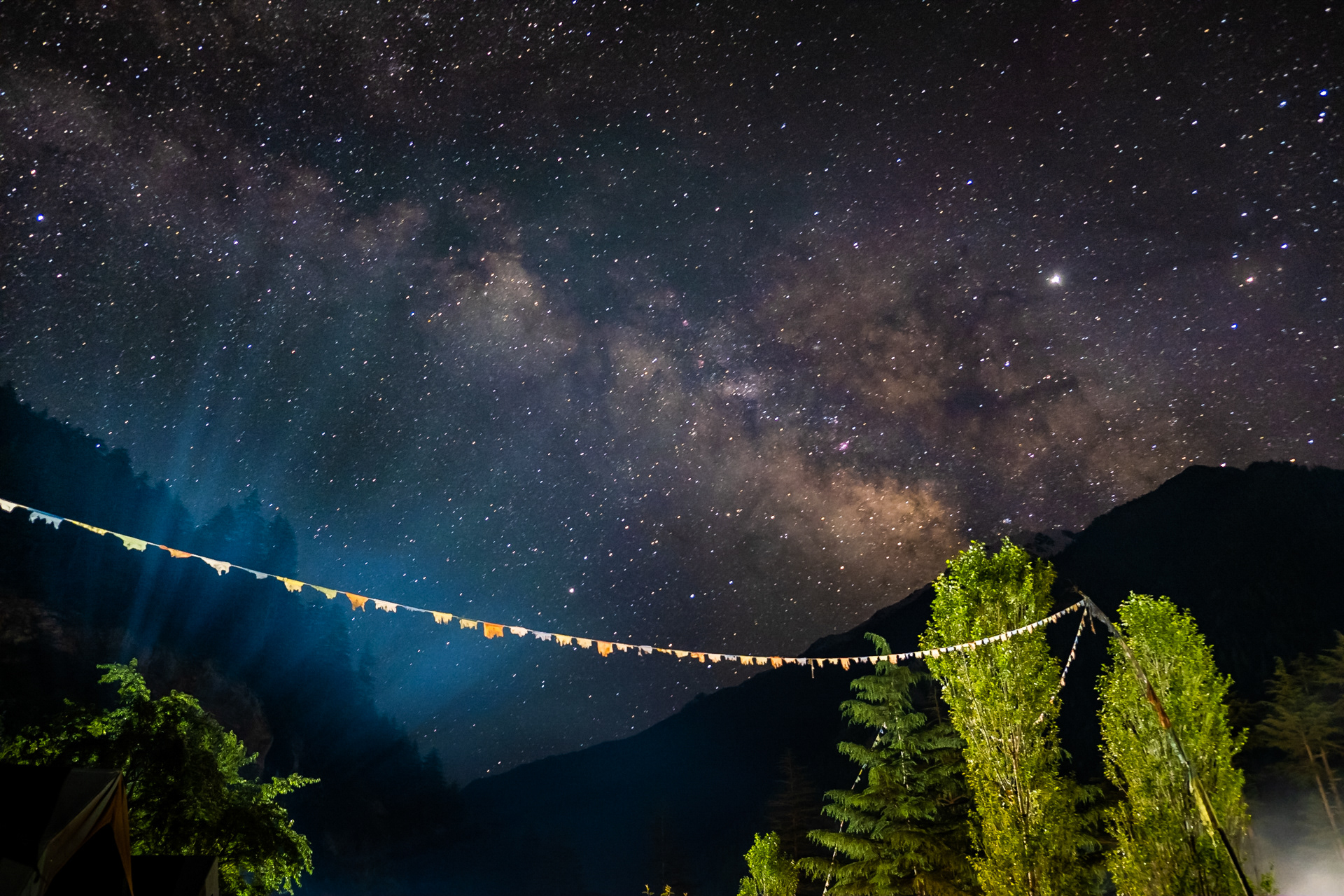
Perched at an elevation of 2,600 meters (8,530 feet) in the Chamoli district of Garhwal Uttarakhand, Benital is India's pioneer Astro Village and designated dark sky tourism hub. Overlooking the serene Pindar and Alaknanda river valleys near Karnaprayag and Gairsain (Uttarakhand's summer capital), this idyllic high-altitude alpine meadow (bugyal) offers pristine, crystal-clear skies virtually untainted by modern light pollution. While high-altitude stargazing enthusiasts often venture into remote Ladakh or Spiti, as detailed in our guide on stargazing in Spiti Valley, Benital provides accessible world-class astronomy tourism surrounded by lush oak and rhododendron forests.

Developed by the Uttarakhand Tourism Development Board (UTDB) in collaboration with astronomy community initiatives and local panchayats, Benital has been transformed into a model AstroStay ecosystem. Local villagers have been trained as community astronomers and telescope operators, turning traditional homestays into immersive astronomical retreats where guests can observe the rings of Saturn, deep-space nebulae, and the luminous band of the Milky Way with professional-grade optical equipment.
Why Benital Boasts World-Class Dark Skies
Benital offers ideal atmospheric and geographical parameters for deep-sky observation and astrophotography:
- Bortle Class 2-3 Dark Skies: Far removed from major industrial cities and commercial tourist hubs, Benital experiences exceptionally low artificial sky glow. This enables the naked human eye to resolve thousands of individual stars, intricate constellations, and interstellar dust lanes without light pollution filters.
- High Altitude Atmospheric Clarity (2,600m): Situated high above the dense moisture, smoke, and particulate layers of the lower valleys, the thin, dry mountain air drastically reduces atmospheric scintillation, ensuring sharp, steady optical seeing for high-magnification planetary observation.
- 360-Degree Mountain Horizons: The gently undulating alpine meadows provide unobstructed panoramic views of the celestial sphere, flanked by the snow-clad sentinels of Nanda Devi, Trishul, Chaukhamba, and Kamet along the northern mountain horizon.
The AstroStays Experience: Homestays & Community Astronomy
The heart of Benital's charm lies in its sustainable, community-driven AstroStays model. Rather than staying in generic concrete hotels, travelers reside in warm, traditionally crafted Garhwali stone and timber homestays run by local mountain families.
During the evening, guests gather on the open meadows around high-grade 8-inch and 11-inch computerized Dobsonian and Schmidt-Cassegrain telescopes. Trained local youth, affectionately called Astro-Guides, conduct interactive night-sky sessions. They weave together scientific astronomy—explaining planetary orbits, binary star systems, globular clusters, and star lifecycles—with regional folklore and Vedic celestial mythology. After a night of sky exploration, guests are treated to piping hot traditional Garhwali meals made from organic finger millet (mandua), pahadi rajma, local fiddlehead ferns (linguda), and spiced mountain honey.
Daytime Adventures: Meadow Hikes and Himalayan Panoramas
While nights in Benital are reserved for the cosmos, daylight hours reveal breathtaking Himalayan landscapes and rich outdoor activities:
- Bugyal Strolls and Rhododendron Trails: Walk through alpine meadows carpeted with wild daisies and buttercups in spring, surrounded by dense stands of deodar, oak, and blooming red rhododendrons.
- Himalayan Vista Points: Clear mornings offer awe-inspiring views of the Greater Himalayan peaks, including Nanda Ghunti, Trishul, and the Panchachuli range glistening in gold under the morning sun.
- Heritage Temple Walks: Explore ancient stone shrines and traditional hill architecture in surrounding hamlets, witnessing rural Garhwali mountain life at a peaceful, unhurried pace.
- Birdwatching in Oak Canopies: Spot Himalayan monals, koklass pheasants, rufous sibias, and Eurasian jays in the dense surrounding montane forest.
For travelers planning multi-day road journeys across the Garhwal hills, Benital integrates beautifully into routes outlined in our 5-day Garhwal ridge circuit or our 5-day Uttarakhand peaks itinerary.
Best Season for Stargazing at Benital
Stargazing conditions at Benital depend directly on seasonal atmospheric clarity:
- October to November (Autumn): The premier season for astrophotography. Post-monsoon breezes scrub the atmosphere clean, providing dry, razor-sharp skies and crisp views of the late-autumn Milky Way and the Andromeda Galaxy.
- December to February (Winter): Cold, clear winter nights with dazzling views of Orion, Sirius, the Pleiades cluster, and bright winter nebulae. Be prepared for temperatures dropping below freezing (-2°C to 5°C), requiring heavy thermal gear.
- March to May (Spring): Pleasant daytime weather, blooming alpine flowers, and comfortable night temperatures (8°C to 15°C) ideal for relaxed stargazing and planetary tracking.
- June to September (Monsoon): Heavy cloud cover and rain; stargazing is not feasible, though the meadows turn brilliantly green.
You can also compare Benital's serene quietude with the lake country described in our Nainital and Bhimtal itinerary or the scenic trails in our 5-day Kumaon road trip guide.
How to Reach Benital Astro Village
- By Air: Jolly Grant Airport in Dehradun (DED) is the closest operational airport, located approximately 220 kilometers (6.5 to 7 hours drive) away via Rishikesh, Devprayag, and Srinagar Garhwal.
- By Train: The nearest major railheads are Yog Nagari Rishikesh (200 km) and Haridwar Junction (225 km), connected to Delhi, Mumbai, and Kolkata with daily express trains.
- By Road: Travel along the Badrinath National Highway (NH 58) through Rishikesh, Srinagar Garhwal, and Rudraprayag up to Karnaprayag. From Karnaprayag, take the road towards Gairsain and branch off near Simli towards Benital (approx. 30 km scenic mountain ascent on smooth paved roads).
Astronomy Workshops and Stargazing Equipment at Benital
The dark sky facility at Benital is equipped with advanced optical instruments designed for deep-sky observation and astrophotography. Visitors participate in guided night sky orientations where they learn how to navigate the celestial sphere using star charts and mobile astronomy applications. The community telescopes feature motorized tracking mounts that automatically compensate for the Earth's rotation, keeping distant celestial objects centered in the eyepiece for prolonged viewing.
During the new moon phase, guests can observe the intricate dust lanes of the Andromeda Galaxy (M31), the glowing gas clouds of the Orion Nebula (M42), and the sparkling blue stars of the Pleiades open cluster (M45). High-magnification planetary eyepieces allow crisp observation of Jupiter's four Galilean moons (Io, Europa, Ganymede, Callisto) and the shadow transits across the gas giant's banded atmosphere. Local youth guides share fascinating Garhwali folk tales associated with seasonal constellations, blending scientific discovery with ancient Himalayan storytelling.
Astrophotography Tips for Benital
If you plan to capture the night sky at Benital, bring a DSLR or mirrorless camera with full manual exposure control, a sturdy carbon-fiber tripod, and a wide-angle fast prime lens (14mm to 24mm) with an aperture of f/2.8 or faster. Set your ISO between 3200 and 6400, exposure time to 15-20 seconds (avoiding star trails according to the 500 Rule), and manually focus on a bright star like Vega or Jupiter using magnified live view. Bring multiple spare batteries as night temperatures accelerate power discharge.
Conclusion
Benital Astro Village is a pioneering destination that bridges modern scientific curiosity with authentic rural Himalayan hospitality. Stargazing into deep space through powerful telescopes while wrapped in woolens on a tranquil mountain bugyal is an unforgettable experience that will leave you with a profound sense of wonder.
Location
Frequently Asked Questions
Q1.What is Benital Astro Village?
Q2.How dark are the skies at Benital?
Q3.What accommodation options are available in Benital?
Q4.When is the best time to visit Benital for stargazing?
Q5.How do you reach Benital from Rishikesh?
Recommended For You
Stargazing in Spiti Valley: Best Spots, Months & Night Sky Conditions
Experience stargazing in Spiti Valley! Guide to best locations like Kaza, Chandratal, photography tips, best time & what to expect.

Best Bakeries and Pastry Shops in Uttarakhand Hills: Artisanal Bakes Guide
Discover the best bakeries and pastry shops in the Uttarakhand hills. From Landour Bakehouse and Sakley's in Nainital to Ellora's in Dehradun and Baba Cake in Kasar Devi.

2-Day Nainital & Bhimtal Weekend Itinerary: Emerald Lakes, Temples & Pine Ridges
Discover Naini Lake boating, Tiffin Top panoramas, Bhimtal island, Naukuchiatal kayaking, and Neem Karoli Baba's Kainchi Dham in this 2-day Kumaon itinerary.
Never Miss an Adventure
Get the latest trekking guides, travel tips, and exclusive offers delivered straight to your inbox.
