
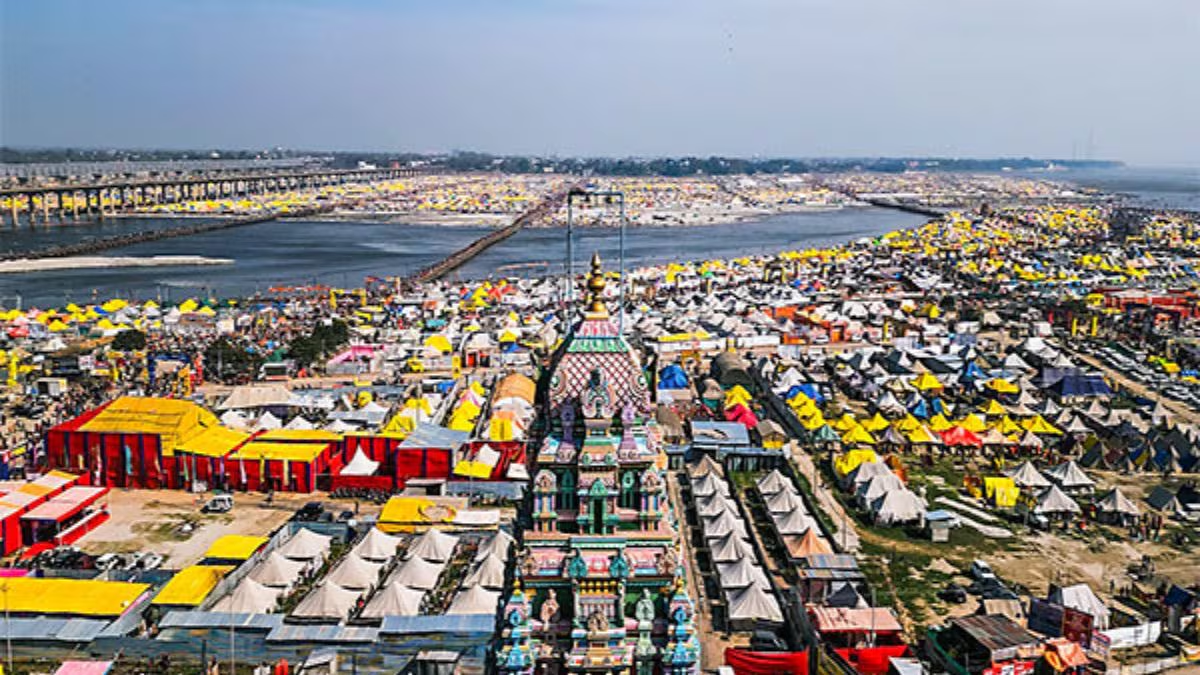
Maha Kumbh Traffic Advisory: Route & Parking 2025

Priya Mehta
November 11, 2025
Complete Maha Kumbh 2025 traffic advisory with route maps, parking facilities, public transport options, and real-time updates to help millions of pilgrims navigate Prayagraj during this once-in-144-year event.
Introduction: Traffic Management Overview
The Maha Kumbh 2025 in Prayagraj is one of the largest religious gatherings in human history, with over 400 million pilgrims expected to attend this 144-year celestial event. Managing such an unprecedented crowd requires an equally massive traffic management strategy spanning over 4,000 hectares of mela area. The Uttar Pradesh government has allocated ₹4,200 crore for infrastructure development, including comprehensive traffic planning to ensure smooth movement of millions of devotees. Traffic management during the Maha Kumbh is a complex operation involving multiple agencies including UP Police, Prayagraj Traffic Police, and Mela Authority. With approximately 5.63 lakh parking spaces arranged and thousands of vehicles expected daily, advance planning is crucial for a safe and hassle-free pilgrimage experience. This comprehensive traffic advisory provides all essential information about routes, parking restrictions, and transport options to help you navigate the sacred city during this auspicious period.Traffic Zones & Restrictions
Understanding the traffic zoning system is essential for planning your visit to the Maha Kumbh. The entire mela area has been divided into three distinct zones based on security protocols and crowd management requirements.Red Zone (Complete Vehicle Ban)
The Red Zone comprises the Sangam area and its immediate vicinity, extending approximately 2 kilometers from the main bathing ghats. This area maintains a complete ban on all private and commercial vehicles except emergency services and authorized VIP movement with special permits. Pilgrims can only access this zone on foot through designated pedestrian corridors. The restriction applies 24/7 throughout the Kumbh period, with no exceptions for any vehicle category. The Red Zone includes Sangam Ghat, all major bathing ghats along the Ganges and Yamuna confluence, and the temporary akharas accommodation areas. Thousands of traffic police personnel manage this zone to maintain pedestrian flow and prevent any vehicle intrusion that could compromise safety.
Yellow Zone (Restricted Vehicle Entry)
The Yellow Zone forms the buffer area around the Red Zone, extending approximately 5 kilometers from the Sangam area. This zone permits restricted vehicle entry based on valid permits and passes. Local residents with proper address proof and valid documentation may access their residences through designated routes. Commercial vehicles require special Mela Authority permits, and even then, access is time-restricted during peak bathing hours. The Yellow Zone includes areas around major akharas, temporary markets, and accommodation clusters beyond the immediate Sangam vicinity. Traffic movement here is carefully monitored through multiple checkpoints where documents are verified before granting entry. During major bathing days like Makar Sankranti and Mauni Amavasya, the Yellow Zone may see complete vehicle restrictions for several hours to manage massive pedestrian influx.Green Zone (Normal Traffic Flow)
The Green Zone encompasses areas outside the designated Kumbh mela limits, including major highways and city areas not directly affected by the pilgrimage. Normal traffic rules apply in this zone, and vehicles can move freely without special permits. This zone includes areas like Civil Lines, Katra, and the Prayagraj railway station area, serving as transit points for pilgrims heading towards the mela. While traffic flow is normal in the Green Zone, expect significant congestion on arterial roads leading to mela entry points during peak periods. The traffic police implement flow control measures at strategic intersections to prevent gridlock. Motorists are advised to use alternate routes and avoid peak hours when traveling through this zone.No-Entry Areas and Temporary Restrictions
Beyond the permanent zones, several temporary no-entry areas are established based on real-time crowd assessment. During Royal Bathing days (Shahi Snan), major roads including MG Marg, Yamuna Bridge, and Allahabad Bypass Road may face complete or partial closures. Traffic police announce these temporary restrictions through multiple channels including digital signboards, social media, and SMS alerts. Peak hour limitations typically extend from 4:00 AM to 2:00 PM during major bathing days, affecting all vehicle categories. However, emergency vehicles including ambulances, fire tenders, and police vehicles receive priority passage throughout all zones. The restriction schedule is published in advance through official channels, allowing pilgrims to plan their travel accordingly.Route Maps & Diversions
Navigating to and within the Maha Kumbh area requires understanding the elaborate diversion system implemented by traffic authorities. Multiple route maps have been prepared to ensure smooth flow from all major directions.Major National Highway Diversions
National Highway 19 (old NH 2), which connects Delhi to Kolkata via Prayagraj, sees significant diversions during the Kumbh period. Vehicles traveling from Delhi are diverted at Naini Bridge towards Phaphamau before entering the city, avoiding the congested central areas. Similarly, traffic from Varanasi direction is rerouted at Jhusi towards alternate routes bypassing the mela zone. The Allahabad Bypass Road serves as a major artery for cross-city traffic, allowing vehicles to travel through Prayagraj without entering the mela area. Traffic police operate temporary checkpoints at all major highway intersections to guide vehicles according to their destinations. Signage in Hindi and English clearly marks diversion points, with additional directions provided by deployed personnel.City Bypass Routes
For pilgrims heading to accommodation areas outside the mela zone, several bypass routes have been established. The Phaphamau-Naini Ring Road provides circumferential connectivity around the mela area, connecting major entry and exit points. The GT Road-Jhusi Link offers an alternate route for vehicles coming from Kanpur side, reducing pressure on the main MG Marg corridor. The bypass routes are widened with additional lanes to handle increased volume, and temporary traffic signals have been installed at intersections where permanent signals might not exist. These routes are continuously monitored through CCTV cameras, and dynamic message boards provide real-time traffic updates to motorists.
Entry Routes from Major Cities
From Lucknow: Vehicles traveling via NH 30 are directed to enter Prayagraj through the Phaphamau sector. Designated lanes separate vehicles heading to mela accommodation zones from through traffic, preventing bottlenecks at entry points. The route includes multiple checkpoints where vehicle passes are verified before proceeding towards inner areas. From Varanasi: The NH 19 route brings vehicles to the Jhusi entry point, where they are guided towards designated parking areas based on accommodation type. Traffic police maintain a queuing system during peak hours to ensure orderly movement and prevent gridlock near entry gates. From Kanpur: Vehicles approaching via NH 27 use the GT Road corridor before diverting towards the mela zone at designated points. The route has been engineered to separate heavy commercial traffic from light motor vehicles, with separate lanes for each category to maintain flow efficiency.Exit Routes and Departure Planning
Post-bathing exit planning is crucial for managing the massive crowd leaving Sangam simultaneously. The exit strategy employs a one-way traffic system during peak departure hours, with designated exit corridors guiding pilgrims away from the Sangam area towards parking zones and transport hubs. Multiple exit gates operate simultaneously to prevent congestion, with traffic police managing dispersal through crowd control barriers. The departure routes are color-coded for easy identification, with signage matching route numbers printed on parking receipts. This system helps pilgrims remember their exit corridor even after spending hours at the ghat. Emergency exits remain operational throughout for use by medical teams and security personnel.Signage and Navigation Support
Digital signboards are installed at all major decision points, displaying real-time traffic conditions and recommended routes. The signs show congestion levels using color codes - green for clear roads, yellow for moderate traffic, and red for heavy congestion. During major bathing days, mobile signboards provide additional guidance at critical junctions. Traffic police personnel deployed at strategic points offer navigation assistance in multiple languages. GPS navigation providers have updated their maps with Kumbh-specific restrictions and diversion routes, though travelers should follow on-ground directions over digital navigation during peak periods. The official Maha Kumbh app also provides turn-by-turn navigation with live traffic updates.Parking Facilities
With approximately 5.63 lakh parking spaces arranged across multiple locations, the Maha Kumbh boasts one of the largest temporary parking facilities ever created. These parking areas are strategically located to minimize walking distance to ghats while maintaining safe distance from the Red Zone.Designated Parking Areas
Parking facilities have been established at the city periphery, creating multiple satellite parking lots surrounding the mela area. Each parking sector corresponds to specific ghats and accommodation clusters, allowing pilgrims to park near their intended destination. The largest parking facilities are located at Phaphamau, Naini, and Jhusi sectors, each capable of accommodating over one lakh vehicles. Sector-wise parking lots are color-coded and numbered for easy identification. For example, Parking Sector A1 serves visitors heading to Sangam Ghat, while Sector B4 caters to those visiting Narayani Ghat. Each parking lot has designated entry and exit points to prevent vehicle crossover and ensure smooth movement.
Parking Categories
General Parking: Open to all pilgrims on a first-come-first-served basis, these parking areas are free or nominally charged depending on the location and duration. Basic amenities including drinking water, toilets, and security personnel are available at all general parking lots. CCTV cameras monitor these areas round the clock, ensuring vehicle safety. VIP Parking: Reserved for pass holders including government officials, dignitaries, and special category visitors. These parking areas are located closest to designated ghats and include premium amenities including covered parking, dedicated shuttle services, and security checkpoints. VIP parking passes must be obtained in advance through the official Mela Authority portal. Media Parking: Accredited media vehicles have dedicated parking areas with press badge verification. These locations provide easy access to media centers and are equipped with charging stations, Wi-Fi connectivity, and press briefing rooms. Media vehicles can move with limited restrictions within the Yellow Zone with proper accreditation. Emergency Parking: Designated for ambulance, fire, police, and other emergency services. These areas are strategically located near all major ghats and accommodation clusters, ensuring rapid response during any incident. Emergency vehicles are exempt from all traffic restrictions and can access all zones during emergencies.Parking Passes and Online Booking
The Mela Authority has implemented an online parking pass system to help pilgrims plan their visit better. Passes can be booked through the official Maha Kumbh website or mobile app by selecting the preferred parking sector and date of visit. The system displays real-time availability, allowing pilgrims to choose less crowded parking areas. Pass categories include: - Daily Pass: Valid for one day only, ideal for day visitors - Three-Day Pass: Valid for 72 hours, suitable for short stays - Weekly Pass: Valid for seven days, for longer pilgrimages - Season Pass: Valid for the entire Kumbh duration, for frequent visitors Pricing varies based on parking sector location and pass duration, with peripheral lots being more affordable than those closer to the mela zone. Passes must be printed or saved on mobile phones and displayed at parking entry points for verification.Parking Facilities and Amenities
All parking facilities are equipped with: - 24/7 CCTV surveillance for security - Armed security personnel and private guards - Shuttle bus connectivity to nearby ghats - Drinking water stations and restroom facilities n- First aid stations and emergency phones - Charging points for electric vehicles - Covered areas for motorcycles and scooters Large parking lots include information kiosks where pilgrims can obtain route maps, shuttle schedules, and assistance in multiple languages. Lost and found centers are operational at major parking facilities to help pilgrims locate misplaced vehicles or belongings.Prohibited Parking Areas
Parking is strictly prohibited in the Red Zone, along major arterial roads within the mela area, and near emergency vehicle routes. Violation of parking regulations results in immediate towing at the vehicle owner's expense. Towing teams patrol all no-parking zones continuously, with a centralized control room providing information about impounded vehicles. Penalty clauses include fines ranging from ₹2,000 to ₹5,000 for illegal parking, with additional towing charges applicable. Repeat offenders may face vehicle seizure for the duration of their stay. Pilgrims are advised to use only designated parking areas to avoid inconvenience and additional expenses.Public Transport Options
Given the scale of the Maha Kumbh and vehicle restrictions near ghats, public transport is the most convenient and cost-effective way to navigate the pilgrimage. Multiple transport options have been arranged to connect all entry points with major ghats and accommodation areas.UPSRTC Special Buses
The Uttar Pradesh State Road Transport Corporation operates dedicated Kumbh Mela services connecting all major cities to Prayagraj. Special buses run 24/7 during the Kumbh period with increased frequency during major bathing days. These buses feature the distinctive Kumbh branding and are given priority traffic clearance at all checkpoints. Within the city, UPSRTC operates circular routes connecting parking lots, railway stations, and mela zones. These services follow fixed routes with designated stops at major points, allowing pilgrims to hop on and off as needed. The fare structure is subsidized during the Kumbh period, with tickets costing between ₹10 and ₹50 depending on distance.City Bus Services
Local city bus services connect all major ghats with parking areas and railway stations. Circular routes operate continuously, with buses arriving every 10-15 minutes during peak hours. Ghat-specific routes provide direct connectivity from parking lots to the nearest bathing points, reducing walking distance for elderly and differently-abled pilgrims. Timetable details are displayed at all bus stops and available through the official Kumbh app. Electronic ticketing options including QR codes and contactless payments are available at major terminals, though cash tickets continue to be accepted throughout the network.E-Rickshaws and Last-Mile Connectivity
Battery-operated e-rickshaws provide last-mile connectivity from parking areas and bus stops to ghats. These eco-friendly vehicles operate on designated routes within the Yellow Zone, avoiding the congested Sangam area. Designated stands are marked at all major drop-off points, with clear signage indicating route numbers and destinations. Fare regulations are strictly enforced to prevent overcharging during peak demand. Standard rates range from ₹10 to ₹30 depending on distance, with route maps displayed at all stands. E-rickshaws are prohibited from operating within the Red Zone, ensuring pedestrian safety around bathing ghats.Train Connectivity and Special Services
Indian Railways operates special trains connecting Prayagraj with major cities across India during the Kumbh period. The Prayagraj Junction, Phaphamau Junction, and Naini stations serve as primary railheads for pilgrims. Additional temporary platforms have been constructed at these stations to handle increased footfall. Railway station shuttles connect these stations to parking areas and mela zones, operating at high frequency during train arrival and departure times. Special Kumbh Mela trains with additional coaches and enhanced amenities run on select routes. Booking information is available through the IRCTC website and railway enquiry services.Shuttle Services and Charter Options
For groups and families, shuttle services and charter bus options provide convenient group transport. Private operators with Mela Authority permits offer dedicated shuttle services from parking areas to specific ghats. These services can be booked in advance through the Kumbh app or at designated booking counters. Group transport facilities are available for pilgrimages organized by religious trusts, community groups, and tour operators. Vehicles must obtain proper permits and adhere to designated routes. Charter operators provide vehicles ranging from 12-seater minibuses to 50-seater luxury coaches, with pricing based on vehicle type and duration.Entry/Exit Points
Managing the flow of millions of pilgrims requires a sophisticated system of entry and exit points across the mela area. These checkpoints serve multiple purposes including security screening, document verification, and crowd control.Major Checkpoints
The city features multiple major entry gates serving as primary access points for vehicles entering the mela area. Each checkpoint is equipped with scanning equipment, document verification systems, and security personnel to screen incoming vehicles. The Phaphamau Gate, Naini Gate, and Jhusi Gate are the three primary vehicle entry points, each connected to major highways. Vehicle inspection points check for valid parking passes, pollution certificates, and driver documentation. Security screening includes baggage scanning for prohibited items and visual inspection. During peak periods, these checkpoints operate additional lanes to handle increased volume, with personnel deployed in shifts to ensure continuous operations.Ghat Access Points
Pedestrian entry gates provide access to major bathing ghats from the Yellow Zone. These gates feature multiple entry and exit lanes to manage bidirectional pedestrian flow. Baggage screening is conducted at all ghat access points, with separate lanes for elderly and differently-abled pilgrims. Vehicle drop points are located approximately 500 meters from each ghat, where pilgrims must disembark and proceed on foot. Time-based access restrictions prevent vehicle entry during peak bathing hours, ensuring pedestrian safety and smooth crowd movement. Emergency routes remain operational at all times for medical and security vehicles.Exit Strategy and Departure System
The post-snann exit plan employs a staggered departure system to prevent massive crowding at exit points. Different ghats have designated departure corridors operating on a rotation basis, ensuring that pilgrims leave in an organized manner. Route dispersal guides exiting crowds towards parking areas and transport hubs through clearly marked pathways. Traffic police manage exit flow through crowd control barriers and personnel deployment. The system is designed to prevent bottlenecks at the interface between Red and Yellow Zones, with multiple exit gates operating simultaneously during peak departure periods. Emergency medical stations are stationed at exit points to handle any medical needs of departing pilgrims.Important Traffic Rules
Adherence to traffic rules is mandatory throughout the Maha Kumbh area, with strict enforcement by traffic police. Violations can result in fines, vehicle seizure, or legal action depending on the severity of the offense. Valid Permits Mandatory: All vehicles entering the Yellow Zone must carry valid parking passes and Mela Authority permits. Documents must be original and valid, with photocopies not accepted. Failure to produce valid permits results in immediate vehicle seizure and refusal of entry.
Pollution Certificate Required: All vehicles must have valid pollution under control (PUC) certificates. Vehicles without valid PUC certificates are prohibited from entering the mela area. Surprise checks at entry points verify PUC status of all incoming vehicles.
Speed Limits in Kumbh Zone: The maximum speed limit is 20 km/h within the Yellow Zone and 10 km/h near pedestrian areas. Speed limits are strictly enforced using speed cameras and manual monitoring. Violators face heavy fines and possible vehicle impounding.
No Honking Zones: Honking is prohibited within 1 kilometer of all bathing ghats and designated silent zones. Violators face on-the-spot fines of ₹500, with repeat offenders risking vehicle seizure.
Parking Regulations: Vehicles must park only in designated parking areas and within marked bays. Illegal parking results in immediate towing and fines ranging from ₹2,000 to ₹5,000. Pilgrims are advised to note their parking lot number and sector for easy vehicle retrieval.
Lane Discipline: Strict lane discipline is enforced on all mela area roads. Lane changing is prohibited at intersections and designated no-change zones. Traffic violators are penalized to maintain orderly traffic flow.
Prohibited Vehicle Types: Heavy commercial vehicles, tankers, and oversized trucks are prohibited from entering the mela zone except with special permits. Three-wheeler goods carriers face time-based restrictions during peak hours.
Loading/Unloading Restrictions: Loading and unloading is prohibited on main roads within the mela area. Designated loading zones are marked at parking areas and accommodation clusters. Violations result in fines and immediate vehicle removal.
Valid Permits Mandatory: All vehicles entering the Yellow Zone must carry valid parking passes and Mela Authority permits. Documents must be original and valid, with photocopies not accepted. Failure to produce valid permits results in immediate vehicle seizure and refusal of entry.
Pollution Certificate Required: All vehicles must have valid pollution under control (PUC) certificates. Vehicles without valid PUC certificates are prohibited from entering the mela area. Surprise checks at entry points verify PUC status of all incoming vehicles.
Speed Limits in Kumbh Zone: The maximum speed limit is 20 km/h within the Yellow Zone and 10 km/h near pedestrian areas. Speed limits are strictly enforced using speed cameras and manual monitoring. Violators face heavy fines and possible vehicle impounding.
No Honking Zones: Honking is prohibited within 1 kilometer of all bathing ghats and designated silent zones. Violators face on-the-spot fines of ₹500, with repeat offenders risking vehicle seizure.
Parking Regulations: Vehicles must park only in designated parking areas and within marked bays. Illegal parking results in immediate towing and fines ranging from ₹2,000 to ₹5,000. Pilgrims are advised to note their parking lot number and sector for easy vehicle retrieval.
Lane Discipline: Strict lane discipline is enforced on all mela area roads. Lane changing is prohibited at intersections and designated no-change zones. Traffic violators are penalized to maintain orderly traffic flow.
Prohibited Vehicle Types: Heavy commercial vehicles, tankers, and oversized trucks are prohibited from entering the mela zone except with special permits. Three-wheeler goods carriers face time-based restrictions during peak hours.
Loading/Unloading Restrictions: Loading and unloading is prohibited on main roads within the mela area. Designated loading zones are marked at parking areas and accommodation clusters. Violations result in fines and immediate vehicle removal.
Real-time Updates & Contacts
Staying informed about traffic conditions and obtaining assistance when needed is crucial for a smooth pilgrimage experience. Multiple channels provide real-time updates and support services throughout the Kumbh period.Traffic Helpline and Control Room
The Prayagraj Traffic Control Room operates 24/7 during the Kumbh period, providing real-time traffic information and assistance. The helpline number 1073 connects directly to traffic police officers who can provide route guidance, parking availability, and help in emergencies. For vehicle-related queries including towing and fines, the dedicated traffic helpline can be reached at 1800-180-2929. WhatsApp helpline at 9454404455 allows pilgrims to send queries and receive instant responses in Hindi, English, and regional languages. The helpline staff can assist with route planning, parking queries, and emergency coordination. Average response time is under 5 minutes during off-peak hours and under 10 minutes during peak periods.Mobile App and Digital Updates
The official Maha Kumbh app provides comprehensive traffic management features including real-time parking availability, route maps, and traffic alerts. Available on both Android and iOS platforms, the app uses GPS to show live traffic conditions and recommends optimal routes. Push notifications inform users about traffic restrictions, diversions, and safety alerts. GPS navigation providers including Google Maps and MapMyIndia have updated their services with Kumbh-specific routes and restrictions. However, pilgrims should prioritize on-ground police directions over digital navigation during peak periods, as traffic police may implement real-time changes not yet reflected in digital maps.Live Updates and Emergency Alerts
Traffic status updates are broadcast through multiple channels including FM radio stations in Prayagraj and surrounding areas. Local stations provide continuous traffic bulletins during major bathing days, with updates every 15 minutes during peak hours. The official Maha Kumbh Twitter and Facebook accounts also post real-time traffic information. Parking availability is updated live on the Kumbh app and displayed on digital signboards at parking lot entry points. Route changes are announced through SMS alerts to registered pilgrims and through the official app notification system. Emergency alerts regarding crowd surges, weather conditions, or security incidents are broadcast through all channels simultaneously.Emergency Contacts and Support Services
Traffic Control: 1073 (24/7 helpline) Police Assistance: 112 (Emergency number) Medical Emergency: 108 (Ambulance) Tourist Help: 1800-180-3104 (Tourist helpline) Women's Helpline: 1090 Child Helpline: 1098
Traffic Camera Feeds and Monitoring
Live traffic camera feeds are available on the official Kumbh website and app, allowing pilgrims to monitor traffic conditions before starting their journey. Over 5,000 CCTV cameras monitor the entire mela area, with feeds available at traffic control centers and information kiosks. Pilgrims can check congestion levels at specific routes and parking areas through these feeds. Traffic management centers analyze real-time camera feeds along with data from drones and crowd monitoring systems to implement dynamic traffic control measures. This data-driven approach allows traffic police to respond proactively to developing congestion and implement diversions before gridlock occurs.Planning your visit to the Kumbh Mela with proper understanding of traffic restrictions and routes ensures a safe and spiritually fulfilling experience. Remember that advance planning is key to navigating the massive crowds and complex traffic management during this once-in-144-year event. Stay informed, follow official instructions, and prioritize safety above all else.
Location
Frequently Asked Questions
Q1.What are the traffic restrictions during Kumbh?
Q2.Are private vehicles allowed near ghats?
Q3.Where to park during Kumbh Mela?
Q4.What are the diverted routes?
Q5.How to reach Sangam Ghat by vehicle?
Q6.What is the nearest parking to Sangam?
Q7.Are shuttle services available?
Q8.Where are the bus stops located?
Q9.What are the special bus services?
Q10.What documents are required for vehicles?
Recommended For You
Prayagraj One-Day Itinerary: Sangam, Temples & City Route Plan
Plan the perfect one-day Prayagraj itinerary covering Triveni Sangam, fort zone, Anand Bhawan, Khusro Bagh, museums and evening market stops.
Triveni Sangam Prayagraj: Best Time, Boat Rides & Ritual Info
Plan a Triveni Sangam Prayagraj visit with sacred bath timing, boat ride details, rituals, and practical travel guidance.
Kumbh Mela Tent Booking: Complete Guide & Prices
Kumbh Mela tent booking guide covering categories, pricing logic, online steps, facilities, and practical tips for smooth accommodation planning.
Never Miss an Adventure
Get the latest trekking guides, travel tips, and exclusive offers delivered straight to your inbox.
