
Konark Sun Temple Odisha: History, Timings & Visitor Tips

Rohan Malhotra
February 19, 2026
Visit Konark Sun Temple in Odisha - UNESCO World Heritage Site shaped like a chariot. Complete guide with timings, tickets, history & architecture.
Introduction: Chariot of the Sun God
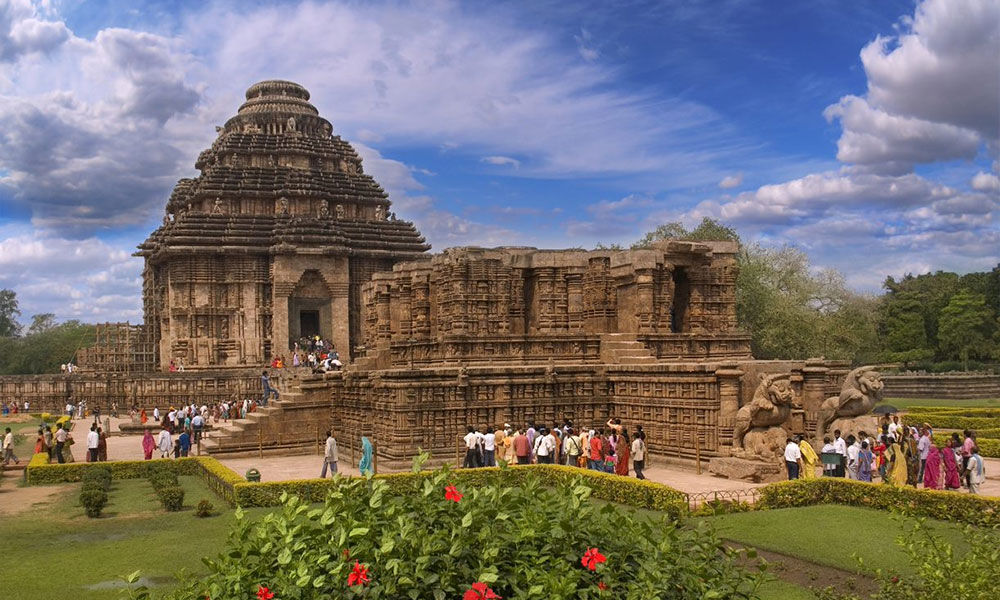
Standing on the coast of Odisha, the Konark Sun Temple is one of India's most magnificent architectural achievements and a UNESCO World Heritage Site that has captivated visitors for centuries. This 13th-century temple, shaped like a colossal chariot with twelve pairs of elaborately carved wheels, is dedicated to Surya, the Sun God, and represents the pinnacle of Kalinga architecture. When you approach Konark, the sheer scale and artistry leave you speechless. The temple appears as if it's emerging from the earth—a massive stone chariot pulled by seven mighty horses, carrying the sun across the celestial sky. Built by King Narasimhadeva I of the Eastern Ganga Dynasty in 1250 CE, this architectural marvel took 12 years to complete and employed over 1,200 artisans. The temple's most striking feature is its precise astronomical alignment. The main entrance faces east so that the first rays of the rising sun illuminate the sanctum. The twelve pairs of wheels function as sundials, accurately telling time to the minute. Even in its partially ruined state, Konark continues to inspire awe and wonder, making it one of India's must-visit heritage sites. Whether you're a history enthusiast, architecture lover, or spiritual seeker, this comprehensive guide covers everything you need to know about visiting Konark Sun Temple: its history, architecture, timings, tickets, and practical travel tips.Historical Significance
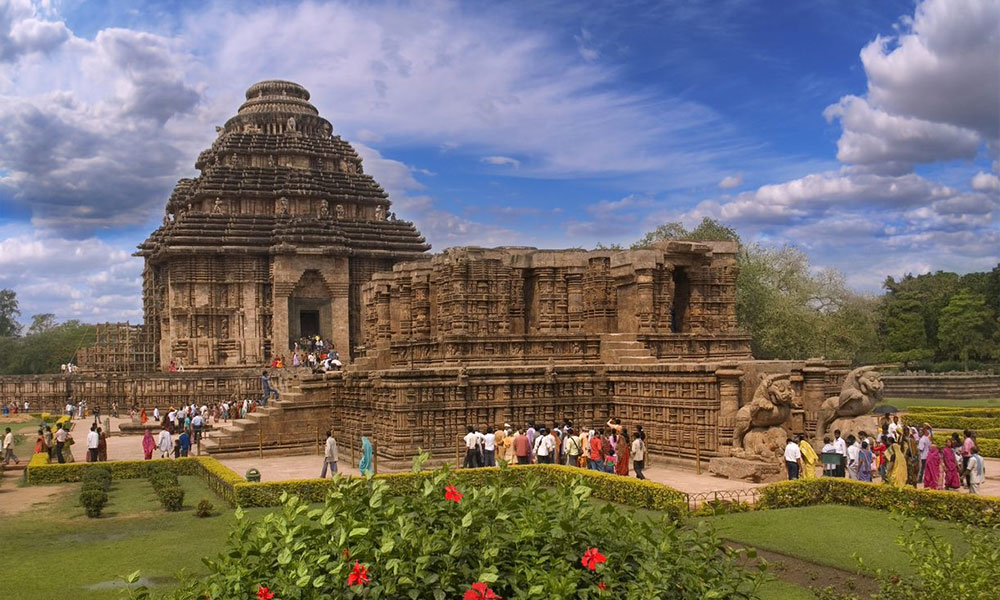 The Konark Sun Temple's story is one of artistic genius, religious devotion, and the tragic decline of a once-thriving cultural center.
The Legend Behind the Temple:
According to popular legend, the temple was built by Samba, the son of Lord Krishna, who was cursed with leprosy. After 12 years of penance, Surya appeared before him and cured him. In gratitude, Samba built this magnificent temple dedicated to the Sun God at the confluence of the Chandrabhaga River and the Bay of Bengal.
Historical Construction:
King Narasimhadeva I commissioned the temple in 1250 CE to celebrate his military victories against Muslim invaders. The temple served both religious and political purposes—it was a center of Sun worship and a symbol of Kalinga's power and cultural sophistication. The name "Konark" derives from the Sanskrit words "Kona" (corner) and "Arka" (sun), referring to its position in the "corner of the sun" region.
The Architects and Artisans:
The chief architect was Bisu Maharana, who led a team of over 1,200 sculptors, architects, and artisans. According to local lore, 1,200 craftsmen worked for 12 years to complete the temple. The chief sculptor's son, Dharmapada, is said to have sacrificed himself to save the craftsmen's honor when the king threatened to kill them all if they couldn't place the crown stone—a story that highlights the temple's perfect completion.
UNESCO Recognition:
In 1984, UNESCO designated Konark as a World Heritage Site, describing it as "one of the most stunning examples of religious architecture in the world." The temple represents the culmination of the Odisha temple architecture style and has influenced temple construction across Southeast Asia.
Mysterious Decline:
The temple's decline remains a mystery. Some theories suggest a massive lightning strike destroyed the main sanctum tower. Others attribute it to natural decay or deliberate removal of the magnetic lodestone that supposedly held the structure together. What remains today is the Jagamohana (assembly hall) and portions of the Natya Mandapa (dance hall), but even these ruins showcase extraordinary craftsmanship.
The Konark Sun Temple's story is one of artistic genius, religious devotion, and the tragic decline of a once-thriving cultural center.
The Legend Behind the Temple:
According to popular legend, the temple was built by Samba, the son of Lord Krishna, who was cursed with leprosy. After 12 years of penance, Surya appeared before him and cured him. In gratitude, Samba built this magnificent temple dedicated to the Sun God at the confluence of the Chandrabhaga River and the Bay of Bengal.
Historical Construction:
King Narasimhadeva I commissioned the temple in 1250 CE to celebrate his military victories against Muslim invaders. The temple served both religious and political purposes—it was a center of Sun worship and a symbol of Kalinga's power and cultural sophistication. The name "Konark" derives from the Sanskrit words "Kona" (corner) and "Arka" (sun), referring to its position in the "corner of the sun" region.
The Architects and Artisans:
The chief architect was Bisu Maharana, who led a team of over 1,200 sculptors, architects, and artisans. According to local lore, 1,200 craftsmen worked for 12 years to complete the temple. The chief sculptor's son, Dharmapada, is said to have sacrificed himself to save the craftsmen's honor when the king threatened to kill them all if they couldn't place the crown stone—a story that highlights the temple's perfect completion.
UNESCO Recognition:
In 1984, UNESCO designated Konark as a World Heritage Site, describing it as "one of the most stunning examples of religious architecture in the world." The temple represents the culmination of the Odisha temple architecture style and has influenced temple construction across Southeast Asia.
Mysterious Decline:
The temple's decline remains a mystery. Some theories suggest a massive lightning strike destroyed the main sanctum tower. Others attribute it to natural decay or deliberate removal of the magnetic lodestone that supposedly held the structure together. What remains today is the Jagamohana (assembly hall) and portions of the Natya Mandapa (dance hall), but even these ruins showcase extraordinary craftsmanship.
Architecture & Design
 The Konark Sun Temple represents the pinnacle of Kalinga architecture, combining mathematical precision with artistic excellence.
The Chariot Design:
The entire temple complex is designed as a colossal chariot of the Sun God, measuring approximately 200 feet high, 128 feet wide, and sprawling over 12 acres. The chariot has:
The Konark Sun Temple represents the pinnacle of Kalinga architecture, combining mathematical precision with artistic excellence.
The Chariot Design:
The entire temple complex is designed as a colossal chariot of the Sun God, measuring approximately 200 feet high, 128 feet wide, and sprawling over 12 acres. The chariot has:
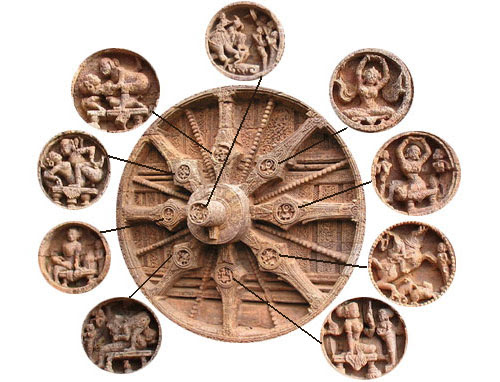
- Twelve Pairs of Wheels: Each 10 feet in diameter, representing the 12 months of the year
- Seven Horses: Representing the seven days of the week
- Three Main Parts: Vimana (main temple, now collapsed), Jagamohana (assembly hall), and Natya Mandapa (dance hall)
- Precise Timekeeping: You can tell the exact time by observing the shadow cast by the wheel's spokes
- Eight Major Spokes: Representing the eight prahars (3-hour periods) of the day
- Fine Spokes: The smaller spokes indicate minutes
- Mathematical Precision: The calculations demonstrate ancient India's advanced knowledge of astronomy
- Daily Life: Scenes of hunters, musicians, dancers, and farmers
- Mythological Stories: Episodes from the Ramayana, Mahabharata, and Puranas
- Erotic Sculptures: Similar to Khajuraho, celebrating human passion and fertility
- Animals and Birds: Elephants, horses, lions, and mythical creatures
- Floral Patterns: Intricate lotus motifs and decorative elements
- Curvilinear Shikharas: Towering spires with pronounced curvature
- Presentation Deula: Vertical progression of structures
- Platform Base: Built on a raised platform with intricate moldings
- Ornate Doorways: Elaborately carved entrance portals
Best Time to Visit Konark Sun Temple
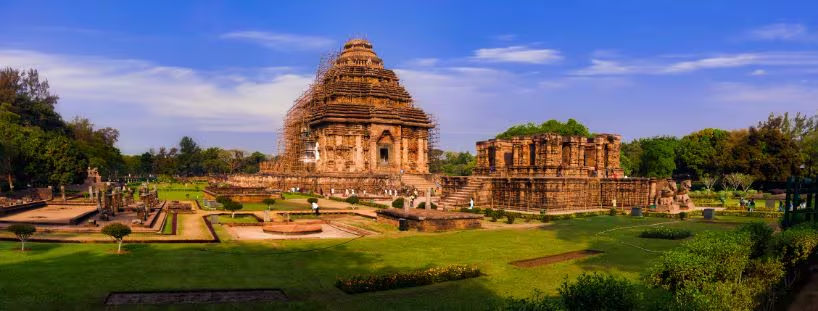 Choosing the right time dramatically impacts your experience at Konark.
Sunrise (6:00-7:00 AM) – Best Overall
- Lighting: Golden rays illuminating the temple facades
- Symbolism: Perfect alignment with the temple's dedication to the Sun God
- Crowds: Much fewer visitors than later in the day
- Temperature: Comfortable, especially in summer
- Photography: Best lighting conditions for exterior shots
Sunset (4:30-6:00 PM) – Golden Hour
- Lighting: Warm golden light on the stone carvings
- Atmosphere: Magical evening ambiance
- Temperature: Pleasant, especially in winter
- Photography: Beautiful sunset shots with the temple silhouette
Konark Dance Festival (December)
- Experience: Classical dance performances against the illuminated temple
- Dates: Usually December 1-5 (check current year schedule)
- Performances: Odissi, Bharatanatyam, Kathak, and more
- Timing: Evening performances from 6:00 PM to 9:00 PM
Seasonal Considerations:
- Winter (October-February): Best weather, pleasant temperatures (15-25°C). Ideal time for extended exploration.
- Summer (March-June): Hot and humid (25-40°C). Visit early morning or late afternoon.
- Monsoon (July-September): Heavy rainfall. Temple looks stunning after rain but access can be challenging.
Timings & Tickets
Opening Timings:
- Sunrise to Sunset: Open from sunrise (approximately 6:00 AM) to sunset (approximately 6:00 PM)
- All Days Open: Open every day of the week
- Best Time: Early morning or late afternoon
Ticket Prices:
| Category | Indian Citizens | Foreigners | SAARC/BIMSTEC |
|---|---|---|---|
| Adult | ₹50 | ₹600 | ₹50 |
| Children (below 15) | Free | Free | Free |
| Video Camera | ₹25 | ₹25 | ₹25 |
Ticket Booking:
- Online: Book through official ASI website or Paytm/BookMyShow
- Offline: Available at ticket counters near the temple entrance
- ID Required: Carry valid ID proof for foreigners
- Timing: Tickets allow unlimited time for the day
Konark Sun Temple Museum
Located near the temple complex, the Archaeological Museum houses original sculptures and artifacts:- Timings: 10:00 AM to 5:00 PM (Closed on Fridays)
- Entry Fee: ₹5 for Indians, ₹100 for foreigners
- Highlights: Original sculptures removed from the temple for preservation
- Must-See: The massive Surya idol and intricate carvings displayed indoors
How to Reach Konark Sun Temple
By Air:
- Nearest Airport: Biju Patnaik International Airport, Bhubaneswar (65 km)
- From Airport: Hire a taxi or take a bus to Konark (2 hours)
- Connections: Well-connected to major Indian cities
By Train:
- Nearest Railhead: Puri Railway Station (35 km)
- Major Station: Bhubaneswar Railway Station (65 km)
- From Station: Hire taxi or take bus to Konark
By Road:
- From Bhubaneswar: 65 km via NH-316 (2 hours by road)
- From Puri: 35 km via Marine Drive (1 hour by road)
- Bus Services: Regular OSRTC buses from Bhubaneswar and Puri
- Private Transport: Taxis and hired cars easily available
Puri-Konark Marine Drive:
The scenic route from Puri to Konark along the coast offers beautiful views of the Casuarina forests and the Bay of Bengal. This 35 km stretch is one of India's most beautiful coastal drives.Nearby Attractions
Chandrabhaga Beach: Located just 3 km from the temple, this sacred beach is where the Chandrabhaga River once met the sea. It's perfect for sunset views and relatively less crowded than Puri Beach. Ramachandi Temple: Situated on the confluence of the Kushabhadra River and the Bay of Bengal, about 10 km from Konark, this scenic temple offers beautiful river views and peaceful surroundings. Puri: Just 35 km away, Puri is home to the famous Jagannath Temple and beautiful beaches. Combine both destinations for a complete Odisha heritage experience. Chilika Lake: Asia's largest brackish water lagoon is about 80 km from Konark. It's a bird watcher's paradise, especially during winter when migratory birds arrive. Bhubaneswar: The capital city of Odisha, 65 km from Konark, is known as the "Temple City of India" with hundreds of ancient temples including Lingaraj Temple.Travel Tips
- Best Time: Visit at sunrise to see the temple illuminated by the first rays
- Hire a Guide: Learn about the temple's history, architecture, and hidden stories
- Wear Comfortable Shoes: You'll walk on stone surfaces and explore extensively
- Carry Water: Especially important in summer months
- Sun Protection: Use sunscreen, hat, and sunglasses during midday visits
- Photography: Allowed free of charge for still cameras and mobile phones
- Museum Visit: Don't miss the Archaeological Museum for original sculptures
- Combine with Puri: Plan a combined trip to Puri and Bhubaneswar for a complete Odisha experience
- Respect the Site: Don't touch or climb on the ancient sculptures
- Konark Dance Festival: If visiting in December, plan to attend this cultural extravaganza, one of the many Konark Dance Festival performances staged against the temple backdrop
Conclusion: Eternal Monument to the Sun
The Konark Sun Temple stands as a testament to human creativity, devotion, and astronomical knowledge. Even in its ruined state, it continues to inspire awe and wonder among visitors from around the world. This UNESCO World Heritage Site is not just an architectural marvel—it's a living symbol of India's rich cultural heritage. Whether you're watching the sunrise illuminate the intricately carved wheels, studying the thousands of sculptures that adorn the walls, or simply marveling at the engineering precision of this 13th-century masterpiece, Konark offers an experience that transcends time. Combine your Konark visit with exploring Odisha's other heritage sites, or head to the nearby Chilika Lake for nature's beauty, and round off the coastal stretch with a relaxed evening at Puri Beach. Either way, the Sun Temple of Konark delivers an experience that illuminates both the mind and the soul.Location
Frequently Asked Questions
Q1.What are the Konark Sun Temple timings?
Konark Sun Temple is open from sunrise to sunset (typically 6:00 AM to 6:00 PM) every day of the week.
Key Timings:
- Opens at sunrise (approximately 6:00 AM)
- Closes at sunset (approximately 6:00 PM)
- Open 7 days a week, including all holidays
- The Archaeological Museum on site is open 10:00 AM to 5:00 PM (closed Fridays)
Plan for at least 2-3 hours to explore the temple complex thoroughly.
Q2.What is the ticket price for Konark Sun Temple?
Konark Sun Temple ticket prices vary by visitor category:
Entry Tickets:
- Indian Citizens: ₹50 per person
- Foreign Nationals: ₹600 per person
- SAARC/BIMSTEC countries: ₹50 per person
- Children below 15 years: FREE
Additional Charges:
- Video Camera: ₹25
- Still Photography: FREE
- Museum Entry: ₹5 (Indians), ₹100 (foreigners)
Tickets can be purchased online through ASI website or at the counter.
Q3.Why is Konark Sun Temple famous?
Konark Sun Temple is famous for several remarkable reasons:
UNESCO World Heritage Site:
Designated in 1984, it's recognized as one of India's most outstanding architectural achievements.
Unique Chariot Design:
The entire temple is shaped like a massive chariot with twelve pairs of wheels and seven horses, dedicated to the Sun God.
Astronomical Precision:
The wheels function as accurate sundials, telling time precisely—a testament to ancient Indian astronomical knowledge.
Exquisite Sculptures:
Thousands of intricate carvings depict mythology, daily life, and erotic art, showcasing Kalinga craftsmanship at its peak.
Architectural Marvel:
Built in the 13th century without modern technology, it demonstrates advanced engineering skills.
Q4.What is the best time to visit Konark Sun Temple?
The best time to visit Konark Sun Temple is during winter (October to February), with sunrise visits being the most magical.
Best Time of Day:
- Sunrise (6:00-7:00 AM): See the first rays illuminate the temple
- Sunset (4:30-6:00 PM): Golden hour lighting for photography
Best Season:
- Winter (October-February): Pleasant weather (15-25°C)
- December: Attend the famous Konark Dance Festival
Avoid:
- Midday summers (too hot, 40°C+)
- Monsoon season (heavy rainfall)
Early morning visits offer fewer crowds and the most photogenic lighting conditions.
Q5.How to reach Konark Sun Temple from Bhubaneswar?
Konark Sun Temple is located 65 km from Bhubaneswar and is well-connected by road.
By Road:
- Distance: 65 km via NH-316
- Travel Time: 2 hours by car/taxi
- Route: Bhubaneswar → Pipili → Konark
Bus Services:
- Regular OSRTC buses from Bhubaneswar Bus Stand
- Frequency: Every 30-60 minutes
- Cost: Approximately ₹100-150 per person
Private Transport:
- Hire taxi or auto-rickshaw
- Cost: ₹1,500-2,500 for a round trip by taxi
The scenic drive through rural Odisha is pleasant and offers glimpses of local village life.
Q6.Is photography allowed inside Konark Sun Temple?
Yes, photography is allowed at Konark Sun Temple with some guidelines.
Allowed:
- Still photography everywhere in the complex
- Mobile phone photography
- No additional charges for still cameras
Additional Charges:
- Video Camera: ₹25 fee
- Professional photography may require permission
Guidelines:
- Respect the heritage site
- Don't touch or climb on ancient sculptures
- Tripods allowed but be mindful of other visitors
- Drone photography requires special permission from ASI
The temple offers excellent photography opportunities, especially during sunrise and sunset.
Q7.What is the story behind Konark Sun Temple?
Konark Sun Temple has both legendary and historical origins:
Legend:
According to mythology, Samba, son of Lord Krishna, was cursed with leprosy. After 12 years of penance worshipping Surya, the Sun God cured him at this confluence. In gratitude, Samba built the magnificent Konark Temple.
History:
King Narasimhadeva I of the Eastern Ganga Dynasty commissioned the temple in 1250 CE. Construction took 12 years with over 1,200 artisans working on the project. The temple celebrated his military victories and honored Surya worship.
Decline:
The temple's decline remains mysterious—possibly due to lightning, natural decay, or removal of the magnetic lodestone. The main sanctum tower collapsed centuries ago.
UNESCO Status:
Designated a World Heritage Site in 1984 for its outstanding architectural and cultural significance.
Q8.How far is Konark from Puri?
Konark is located 35 km from Puri, and the journey takes approximately one hour by road.
Travel Options:
- By Car/Taxi: 1 hour via Marine Drive
- By Bus: Regular OSRTC bus service
- Cost: ₹800-1,200 for taxi, ₹50 for bus
Puri-Konark Marine Drive:
The route along the coast is scenic, passing through Casuarina forests and offering beautiful Bay of Bengal views.
Combined Visit:
Most travelers combine both destinations in one trip, visiting Puri's Jagannath Temple and beach in the morning, then Konark in the afternoon.
The distance makes it easy to explore both these important Odisha heritage sites in a single day.
Recommended For You
Places to Visit in Odisha: Temples, Beaches & Nature
Explore the best places to visit in Odisha. From the sacred Jagannath Temple in Puri to the Konark Sun Temple, Chilika Lake's dolphins, Bhitarkanika's crocodiles, and pristine beaches. Discover India's best-kept secret.
Puri Beach Odisha: Complete Travel Guide with Tips
Complete Puri Beach travel guide with best time to visit, activities, nearby attractions, food, and safety tips for Odisha's famous beach.
Lingaraj Temple Bhubaneswar: Darshan Timings, Rituals & Entry Details
Visit Lingaraj Temple in Bhubaneswar - 1000-year-old Shiva temple & Kalinga architecture masterpiece. Complete guide with timings, darshan & history.
Never Miss an Adventure
Get the latest trekking guides, travel tips, and exclusive offers delivered straight to your inbox.
