
Uluwatu Temple Bali: Sunset Viewpoints, Kecak Show & Entry Tips

Neha Kapoor
November 23, 2025
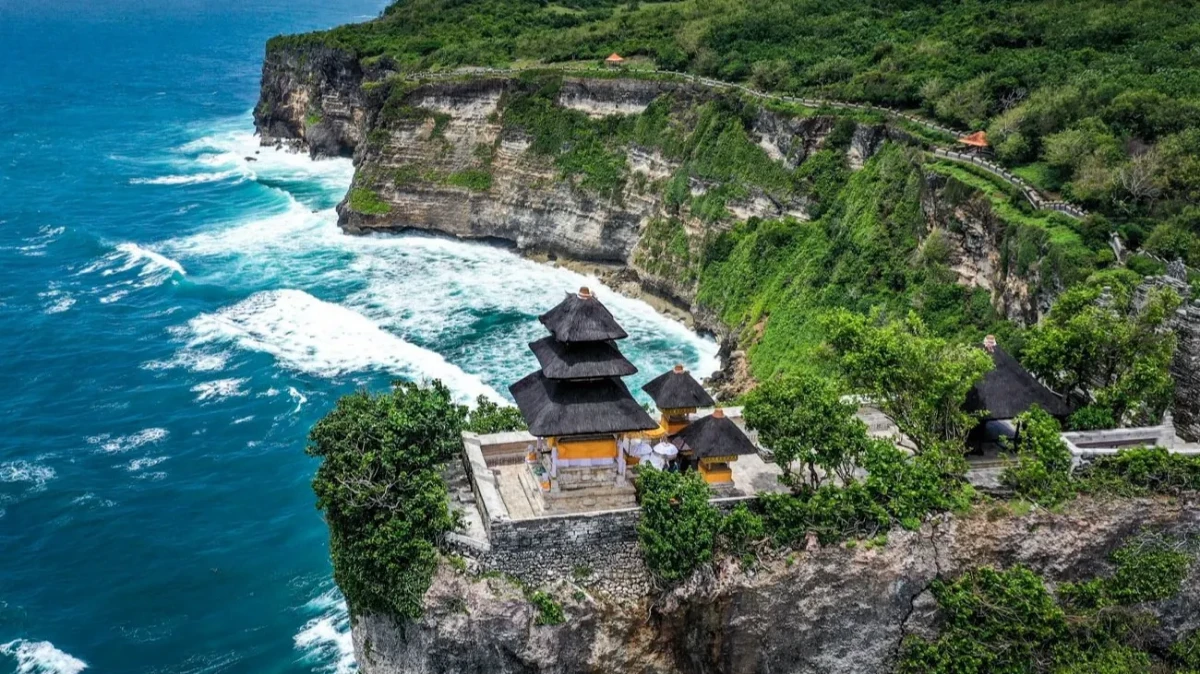
Visit Uluwatu Temple (Pura Luhur) perched on a 70m cliff in Bali. Complete guide to Kecak Fire Dance, sunset views, entrance fees, dress code, monkeys, and practical tips for this spectacular cliffside temple.
Introduction: The Temple on the Cliff's Edge
Perched precariously on the edge of a 70-meter cliff overlooking the roaring Indian Ocean, Pura Luhur Uluwatu is not just a temple – it's a dramatic fusion of spiritual devotion and natural grandeur. As one of Bali's six key spiritual pillars (Sad Kahyangan), Uluwatu Temple has guarded the island's southwestern tip for centuries, offering visitors a unique blend of Balinese Hindu culture, stunning sunset views, and world-class cultural performances. What makes Uluwatu truly special is its setting. The temple sits at the very edge of a limestone cliff, with waves crashing against the rocks below, creating a natural amphitheater where the elements seem to converge. At sunset, the sky transforms into a canvas of oranges, pinks, and purples, while temple silhouettes create dramatic shapes against the fading light. It's this combination of spiritual energy and natural beauty that makes Uluwatu one of Bali's most photographed and beloved attractions. But Uluwatu is more than just a pretty sunset spot. It's an active religious site where priests perform daily ceremonies, where mischievous monkeys roam freely, and where the famous Kecak Fire Dance brings the Ramayana epic to life each evening. Whether you're a culture enthusiast, a sunset chaser, or simply someone seeking one of Bali's most iconic experiences, Uluwatu Temple delivers on every level.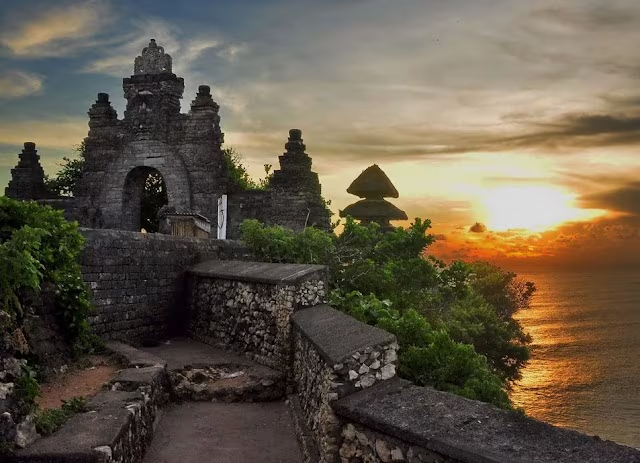
History & Spiritual Significance
Uluwatu Temple, known in Balinese as Pura Luhur Uluwatu, holds immense spiritual significance in Balinese Hinduism. The name itself tells the story: "Pura" means temple, "Luhur" means "of divine origin" or "grand," and "Ulu" means "land's end" while "Watu" means "rock" – literally "the temple at the land's end on the rock."Origins and Expansion
The temple's origins date back to the 11th century when the Javanese sage Empu Kuturan expanded a small existing shrine into a larger temple complex. However, it was the 16th-century priest Dang Hyang Nirartha who solidified Uluwatu's place in Balinese spiritual history. Nirartha, a revered Hindu saint who traveled across Bali establishing key temples, chose this cliffside location as his final earthly abode. According to legend, Dang Hyang Nirartha attained moksha (spiritual liberation) here, dissolving into pure light while meditating. The temple priests believe his spirit still resides at Uluwatu, making it one of the most sacred sites in Bali. This association with moksha is why Uluwatu is one of the Sad Kahyangan Jagat – the six main temples that serve as spiritual pillars protecting the island.Architectural Features
Unlike Bali's elaborate mountain temples, Uluwatu's architecture reflects its cliffside location and the harsh coastal environment. The temple complex consists of several courtyards built at different levels, each connected by stone steps. The main shrine, a padmasana (lotus throne) dedicated to Sang Hyang Widhi Wasa (the supreme God in Balinese Hinduism) in his manifestation as Rudra (the destroyer aspect of Shiva), sits at the highest point, closest to the sky. One of Uluwatu's most distinctive features is its traditional gates (candi bentar) – split gateways that are characteristic of Balinese temple architecture. The stone carvings here, weathered by centuries of sea salt and wind, have a raw, ancient quality that adds to the temple's mystical atmosphere. The temple's location at Bali's southwestern tip is strategically important. In Balinese cosmology, the southwest direction is associated with the Rudra aspect – the fierce, protective energy. Uluwatu, with its dramatic cliff setting and crashing waves below, embodies this protective warrior energy, guarding Bali from negative influences coming from the sea.The Kecak Fire Dance: A Cultural Spectacle
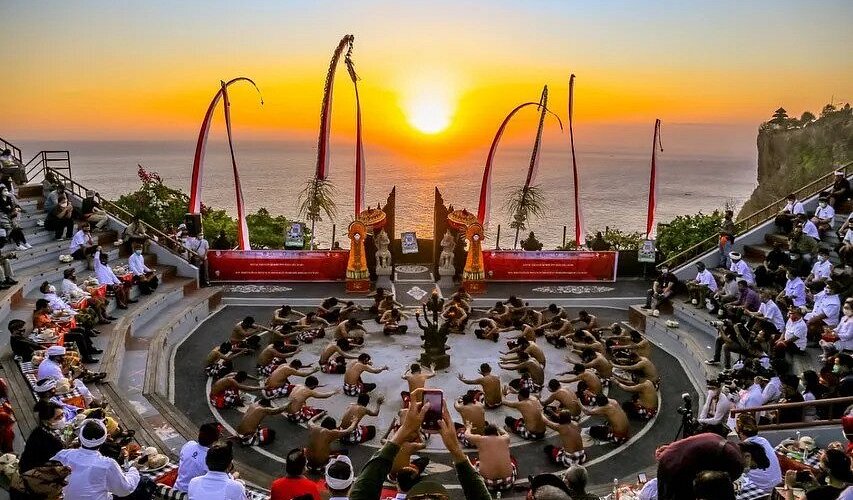 Perhaps Uluwatu's most famous attraction is the daily Kecak Fire Dance performance. As the sun begins its descent, a troupe of 50-100 men, shirtless and wearing checkered sarongs, gather in the open-air amphitheater near the temple entrance. What follows is one of Bali's most unique and mesmerizing cultural experiences.
What is the Kecak Dance?
Unlike traditional Balinese dances accompanied by gamelan orchestras, Kecak has no musical instruments. Instead, the performers create a rhythmic, hypnotic chant of "Cak-Cak-Cak" that builds in intensity throughout the performance. Their arms rise and fall in synchronized movements, creating patterns that are visually stunning to watch. The dance tells a story from the Ramayana epic – specifically, the episode where Prince Rama rescues his wife Sita from the demon king Ravana with the help of the monkey god Hanuman. What makes the Uluwatu performance special is the dramatic setting – as the dance reaches its climax, the sun sets behind the performers, and the actual temple is visible in the background, creating an almost magical ambiance.The Fire Kicking Finale
The performance concludes with a spectacular fire-kicking sequence. A coconut husk fire is lit on stage, and dancers in costume (portraying Hanuman and other characters) kick and dance through the flames. The sight of performers seemingly immune to the burning embers, combined with the chanting crowd and temple backdrop, creates an unforgettable spectacle.Performance Details
- Timing: Daily at 6:00 PM (90 minutes before sunset during summer months)
- Duration: Approximately 60 minutes
- Ticket Price: Around 150,000 IDR (approximately $10 USD)
- Booking: Tickets can be purchased on-site or through hotels/tour operators. During peak season, booking in advance is recommended.
- Best Seats: Arrive 30-45 minutes early to secure front-row seats. The center section offers the best views.
The Monkeys of Uluwatu: Wildlife Warning
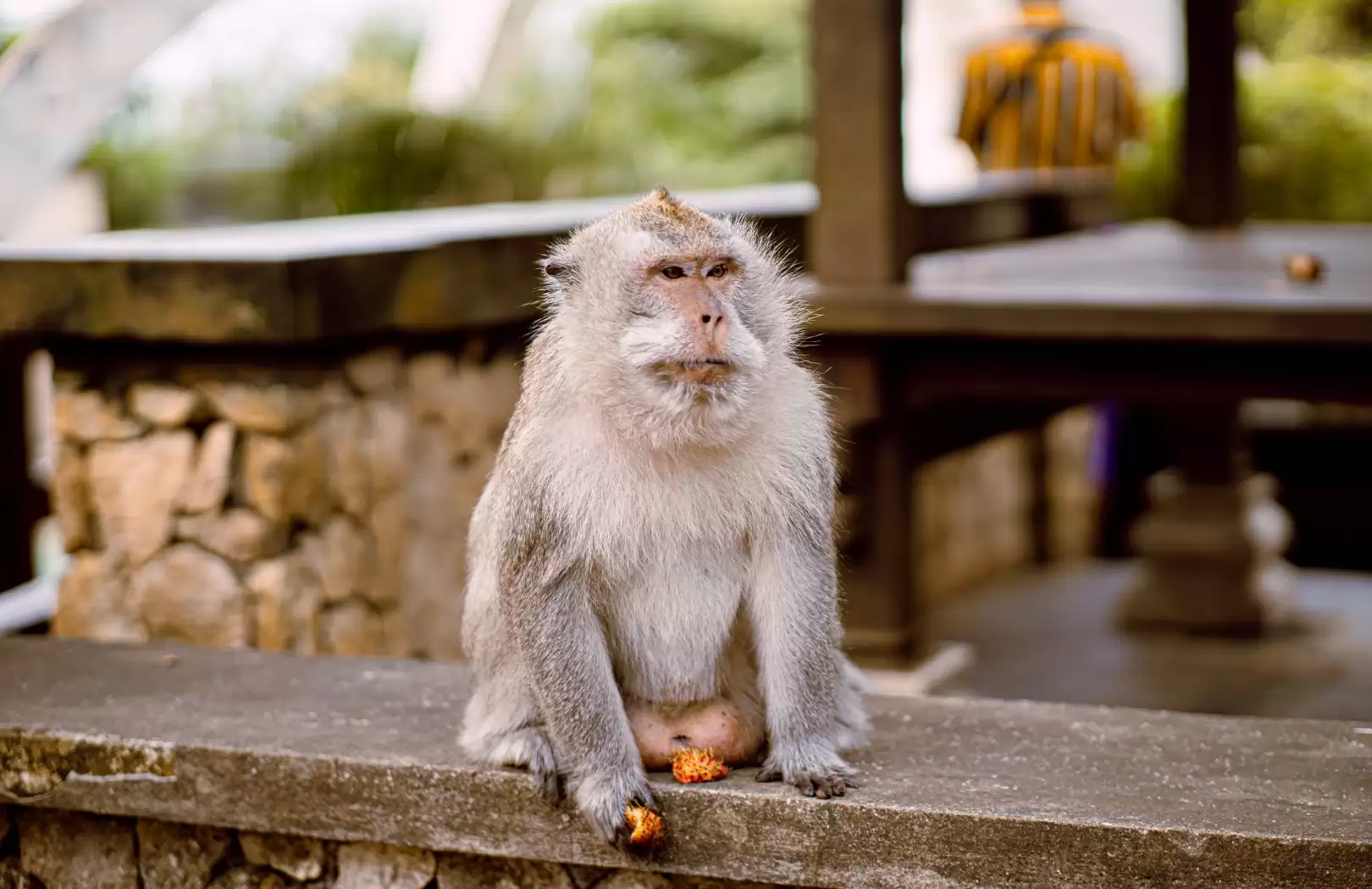 No guide to Uluwatu is complete without mentioning its most infamous residents: the long-tailed macaques who inhabit the temple grounds. These monkeys are not the cute, friendly primates you might expect – they're opportunistic thieves who have learned that tourists carry valuable items.
What the Monkeys Steal
The Uluwatu monkeys are notorious for snatching:- Sunglasses and eyeglasses
- Hats and caps
- Mobile phones and cameras
- Earrings and other jewelry
- Water bottles and snacks
- Anything loose and shiny that can be quickly grabbed
Why They Do It
The monkeys aren't stealing for food – they're holding items hostage for a ransom. Tourists whose belongings are snatched can often hire one of the temple guards to retrieve the item. The guards offer bananas to the monkeys, who typically drop the stolen goods in exchange for the food. Some tourists end up paying significant amounts (negotiated in advance) for item retrieval.Tips for Dealing with the Monkeys
- Secure Everything: Don't wear sunglasses or hats. If you must, use a strap to secure them. Keep cameras on neck straps with your hand on them at all times.
- No Eye Contact: Avoid direct eye contact with monkeys. They interpret it as a challenge or threat.
- No Feeding: Despite what you might see others doing, don't feed the monkeys. It encourages aggressive behavior.
- Stay Calm: If a monkey approaches, back away slowly. Don't scream or make sudden movements.
- Use Guards: Temple staff with sticks patrol the grounds. If monkeys get aggressive, call for help.
- Leave Expensive Items: Consider leaving expensive jewelry, watches, or electronics at your hotel.
Appreciating Them Safely
Despite their mischief, the monkeys are part of what makes Uluwatu unique. In Balinese Hinduism, animals are considered sacred, and the macaques are believed to protect the temple. If you keep your distance and respect their space, watching them interact, play, and groom each other can be enjoyable. Just remember: they're wild animals, not pets, and their cute appearance masks sharp intelligence and light fingers.Sunset at Uluwatu: A Natural Spectacle
While the Kecak dance and temple architecture are impressive, Uluwatu's sunset is what most visitors come for. The combination of cliff-edge location, open ocean views, and Bali's equatorial position creates some of the most dramatic sunsets you'll witness anywhere in the world.Best Sunset Viewing Points
The Amphitheater: If you're watching the Kecak dance, you'll have a perfect view. The performance is timed so that the climax coincides with sunset, creating a stunning backdrop. The Temple Platform: Before entering the main temple area, there's a viewing platform overlooking the cliff. This spot offers unobstructed ocean views and is excellent for photography. The Cliff Path: Walking along the cliff edge path that runs along the temple perimeter provides multiple vantage points. You can find secluded spots away from the crowds for a more intimate sunset experience. Aling-Aling Restaurant: Located within the temple complex, this restaurant offers a sunset-viewing deck where you can enjoy drinks and snacks while watching the sun go down. It's quieter than the main viewing areas and requires a minimum spend.What Makes Uluwatu Sunsets Special
Unlike beach sunsets where the sun disappears into the ocean, at Uluwatu, you're watching from above. The sun sets over the open ocean, creating a horizon-to-horizon light show. The clouds, reflecting off the water, turn every shade of orange, pink, purple, and red. The cliff edge adds drama. You'll hear the waves crashing against the rocks 70 meters below, feel the sea breeze, and watch as the fading light bathes the temple in golden hues. It's a multisensory experience that combines visual beauty with the sound and smell of the ocean.Photography Tips
- Arrive Early: At least 45 minutes before sunset if you want the best spots. The golden hour (hour before sunset) offers beautiful light.
- Use a Tripod: If you have one. Long exposure shots can create dramatic effects with moving clouds and waves.
- Include Foreground Elements: Frame your shots with temple architecture, statues, or silhouettes of prayer flags for depth and context.
- Stay After Sunset: The colors continue for 15-20 minutes after the sun disappears. Don't leave immediately.
- Respect Others: Don't block paths or climb on temple structures for photos.
Practical Information: Planning Your Visit
Temple Timings
| Activity | Timing | Details |
|---|---|---|
| Temple Hours | 7:00 AM - 7:00 PM | Last entry at 6:00 PM |
| Kecak Dance | 6:00 PM daily | Duration: ~60 minutes |
| Sunset | 6:15 - 6:45 PM | Varies by season |
| Worship | 24 hours | For devotees only |
Entrance Fees
- Temple Entry: 50,000 IDR per person (approximately $3.50 USD)
- Kecak Dance: 150,000 IDR per person (approximately $10 USD)
- Parking: 2,000 IDR for motorbikes, 5,000 IDR for cars
- Sarong Rental: Included in temple ticket price
Dress Code & Etiquette
Like all Balinese temples, Uluwatu has a strict dress code:- Sarong and Sash: Mandatory for both men and women. These are provided free with your temple ticket.
- Covered Shoulders: Singlet tops, tank tops, and strapless dresses are not permitted. Wear a t-shirt or bring a shawl.
- Knees Covered: Shorts and skirts should come below the knee. If wearing short shorts, you'll need to use a sarong.
- Temple Sash: Wear the sash around your waist, not over your shoulder (that's reserved for priests).
- Menstruating Women: Traditionally, women who are menstruating are not permitted to enter Balinese temples. This rule is strictly observed at Uluwatu.
Best Time to Visit
- Dry Season (April - October): Best weather with clear skies and dramatic sunsets. Peak tourist season, so expect larger crowds.
- Wet Season (November - March): Fewer tourists and lower prices. However, rain can cancel outdoor activities, and cloudy days obscure sunset views.
- Shoulder Months (April, May, September, October): Sweet spot with good weather and manageable crowds.
- Time of Day: Late afternoon is best – combine temple exploration with sunset and Kecak dance. Early morning visits (8-10 AM) offer a quieter, more spiritual experience with fewer tourists and cooler temperatures.
How to Reach Uluwatu Temple
From Popular Bali Destinations
| From | Distance | Time | Transport Options |
|---|---|---|---|
| Kuta | 33 km | 45-60 min | Scooter, Taxi, Private Driver |
| Seminyak | 40 km | 60-75 min | Scooter, Taxi, Private Driver |
| Ubud | 50 km | 75-90 min | Private Driver (Recommended), Taxi |
| Canggu | 35 km | 50-70 min | Scooter, Taxi, Private Driver |
| Nusa Dua | 25 km | 35-45 min | Scooter, Taxi, Private Driver |
Transportation Options
Scooter: The most popular and economical option. Rental costs approximately 60,000-80,000 IDR per day. The roads to Uluwatu are in good condition, but be cautious of Bali's traffic and road conditions. International driving license required. Taxi: Blue Bird taxis and ride-hailing apps (Gojek, Grab) operate throughout Bali. A taxi from Kuta to Uluwatu costs approximately 200,000-250,000 IDR one way. Negotiating a return trip with the driver is often possible. Private Driver: The most comfortable option, especially for families or those staying farther away (like Ubud). Hotels can arrange drivers, or you can book through reputable tour companies. Full-day tours typically cost 600,000-1,000,000 IDR depending on the itinerary and vehicle type. Shuttle Bus: Some tour operators offer shared shuttle services to Uluwatu for sunset and Kecak dance. These are cheaper than private drivers but less flexible with timing.Nearby Attractions: Making a Day of It
The southern Bukit Peninsula, where Uluwatu is located, has several other attractions worth combining with your temple visit:Suluban Beach (Padang Padang Beach)
Just 10 minutes from Uluwatu, Suluban Beach is famous for its unique cave entrance and world-class surf break. Access the beach through a natural cave in the cliff, emerging onto a sandy shore lined with cafes. When the swell is up, watch surfers tackle the reef break from the cliff above. The beach gained international fame after appearing in the movie "Eat, Pray, Love."Padang Padang Beach
Adjacent to Suluban, this is one of Bali's most legendary surf beaches. Even if you're not a surfer, the white sand beach and clear water make for excellent swimming and relaxation. Several cliffside cafes offer cold drinks and views of the surf action.Single Fin Bar
Located at Uluwatu Surf Villa, this iconic cliffside bar is the perfect spot for a post-temple drink. Watch surfers tackle the Padang Padang break while enjoying a cold Bintang beer and a sunset dinner. The bar has a laid-back surf vibe and attracts a mix of surfers, expats, and tourists.Thomas Beach
A quieter alternative to the more popular beaches nearby, Thomas Beach requires a short hike down stairs but rewards you with a secluded stretch of white sand and fewer crowds. Perfect for those seeking relaxation away from the tourist trail.GWK Cultural Park
On the way to Uluwatu from Kuta, stop at Garuda Wisnu Kencana (GWK) Cultural Park. Home to a massive statue of Lord Vishnu riding Garuda (at 120 meters, one of the world's tallest statues), the park offers cultural performances, art exhibitions, and panoramic views of the southern Bali coastline.Conclusion: Experience Bali's Spiritual & Natural Beauty
Uluwatu Temple encapsulates everything that makes Bali special: ancient spiritual traditions, dramatic natural landscapes, vibrant cultural performances, and that unique Balinese ability to create beauty wherever they build. Watching the sun set into the Indian Ocean while hearing the rhythmic chanting of the Kecak dance, with the temple silhouetted against the fading light, is one of those travel experiences that feels almost otherworldly. Whether you're drawn by the spiritual significance, the cultural performance, the wildlife encounters, or simply the promise of Bali's most famous sunset, Uluwatu delivers. It's a place where the elements converge – earth (the limestone cliffs), water (the ocean below), fire (the sunset and fire dance), and air (the sea breeze) – creating a powerful energy that must be experienced firsthand. For travelers seeking to understand Bali beyond its beaches and clubs, Uluwatu offers a deeper glimpse into the island's soul. It's a reminder that beneath Bali's tourist-friendly surface lies an ancient spiritual culture that has worshipped at places like Uluwatu for centuries – and that culture continues to thrive, evolve, and welcome visitors who come with respect and curiosity. So when you're planning your Bali trip, make sure Uluwatu is on your itinerary. Arrive early to explore the temple without crowds, watch the Kecak dance as the sun sets, and leave as darkness falls over the ocean, carrying with you memories of one of Southeast Asia's most spectacular cultural and natural experiences. After all, some places photographs can't capture – and Uluwatu, with its cliff-edge drama and spiritual energy, is definitely one of them.Location
Frequently Asked Questions
Q1.How much is the entrance fee for Uluwatu Temple and Kecak dance?
The entrance fees for Uluwatu Temple are quite reasonable:
Temple Entry Only:
• Adults: 50,000 IDR (approximately $3.50 USD)
• Children: 30,000 IDR
• Includes: Sarong rental and sash
Kecak Dance Performance:
• Standard seats: 150,000 IDR (approximately $10 USD)
• VIP seats: 250,000 - 500,000 IDR (front row, cushioned seating)
• Duration: ~60 minutes, daily at 6:00 PM
Combo Tickets:
• Temple + Kecak dance combo tickets are available at a slight discount
Additional Costs:
• Parking: 2,000 IDR for motorbikes, 5,000 IDR for cars
• Food and drinks are available for purchase at the venue
Tips:
• Bring exact change in Indonesian Rupiah
• Book Kecak dance tickets in advance during peak season (July-August)
• Arrive 30-45 minutes early for best seats
• Consider booking through your hotel or tour operator for inclusive transportation
Q2.What time does the Kecak dance start at Uluwatu Temple?
The Kecak Fire Dance at Uluwatu Temple starts daily at 6:00 PM.
Timing Details:
• Performance Start: 6:00 PM sharp
• Duration: Approximately 60 minutes
• Gate Opening: 5:30 PM for dance ticket holders
• Seating: First come, first serve – arrive 30-45 minutes early
Seasonal Variation:
The performance is timed to coincide with sunset. Since sunset times vary slightly throughout the year (6:15 PM in April, 6:30 PM in July), the performance schedule may shift by 15-30 minutes depending on the season. Check current times when purchasing tickets.
Best Time to Arrive:
• For Front Row: Arrive by 5:15 PM
• For Good Seats: Arrive by 5:30 PM
• Minimum: Arrive by 5:45 PM (any later and you'll get back row seats)
Important:
• The dance is performed outdoors – arrive even earlier if you want time to explore the temple first
• Performances run rain or shine (except during extreme weather)
• There's usually only one performance per day – don't be late!
Q3.Do I need to book Kecak dance tickets in advance?
Booking in advance is recommended but not always required. Here's what you need to know:
When You CAN Book On-Site:
• Low Season (Nov-Mar): Tickets usually available at the gate
• Weekdays: Generally less crowded, easier to get tickets
• Early Arrival: If you arrive 45-60 minutes early
When You SHOULD Book in Advance:
• Peak Season (July-August): High tourist season – performances often sell out
• Christmas/New Year: December 20 - January 5 is extremely busy
• Large Groups: Families or groups of 4+ people wanting to sit together
• VIP Seats: If you want front-row seats with cushions
Booking Options:
• Through Your Hotel: Most hotels can book tickets (often includes transportation)
• Tour Operators: Many companies offer Uluwatu sunset tours
• Online Platforms: Some Bali tour websites accept advance bookings
• Official Ticket Counter: At the temple entrance (day of show)
Recommended Approach:
Ask your hotel concierge to check availability and book for you. It's usually free to book through them, and they can arrange transportation as well.
Q4.Are the monkeys at Uluwatu dangerous?
Yes, the monkeys at Uluwatu can be aggressive and are known to steal belongings. However, they're not typically dangerous if you follow precautions.
What They Do:
• Steal Belongings: Sunglasses, hats, phones, cameras, jewelry, water bottles
• Hold Items Hostage: They expect food in exchange for returning stolen items
• Bite If Threatened: Rare, but can happen if you try to forcefully retrieve items
They're Not Usually:
• Physically attacking without provocation
• Aggressively seeking food (unlike monkeys at some other temples)
• Dangerous if you leave them alone
Safety Tips:
• Secure Everything: No loose items. Use straps for glasses and cameras
• No Eye Contact: Direct staring can be seen as a threat
• Don't Feed Them: Despite what others do, don't encourage aggressive behavior
• Stay Calm: If one approaches, back away slowly. Don't scream or run
• Use Guards: Temple staff patrol with sticks – call them for help
• Leave Valuables Behind: Don't wear expensive jewelry or watches
If Something Gets Stolen:
• Find a temple guard immediately
• Negotiate the "ransom" price (usually 50,000-100,000 IDR) in advance
• Let the guard handle the exchange – don't approach the monkey yourself
Bottom Line: Respect their space and they'll generally ignore you. They're wild animals, not pets.
Q5.What is the best time to visit Uluwatu for sunset?
The best time to visit Uluwatu for sunset depends on what you want to experience:
For Complete Experience (Recommended):
• Arrive: 3:30 - 4:00 PM
• Why: Time to explore the temple before crowds arrive
• Sunset: 6:15 - 6:45 PM (varies by season)
• Kecak Dance: 6:00 PM (watch sunset during the performance)
For Sunset Only:
• Arrive: 5:00 - 5:15 PM
• Why: Secure good sunset viewing spots before the crowds
For Temple Exploration Without Crowds:
• Arrive: 8:00 - 9:00 AM
• Why: Quieter, more spiritual experience, cooler temperatures
• Drawback: You'll need to return later for sunset/Kecak
Best Season for Sunsets:
• Dry Season (April - October): Clearer skies, more dramatic sunsets
• July - August: Best weather but also most crowded
• September - October: Sweet spot – great weather, fewer tourists
Seasonal Sunset Times:
• April: ~6:15 PM
• July: ~6:30 PM
• October: ~6:00 PM
Pro Tip: Even after the sun disappears, stick around for 15-20 minutes – the afterglow colors are often the most spectacular part of the sunset.
Q6.Can tourists enter the inner sanctum of Uluwatu Temple?
No, tourists cannot enter the inner sanctum (jeroan) of Uluwatu Temple.
Who Can Enter:
• Balinese Hindu Devotees: Those coming to pray and make offerings
• Temple Priests: Those performing ceremonies
• Those with Special Permission: Rare and typically only for researchers or special ceremonies
What Tourists CAN Access:
• Outer Courtyard (Jaba Sisi): Open to all visitors
• Middle Courtyard (Jaba Tengah): Some sections accessible during ceremonies
• Cliff Viewing Areas: Full access to the perimeter paths
• Kecak Dance Amphitheater: Accessible with dance ticket
Why the Restriction?
• Sacred Space: The inner sanctum houses the shrine of Lord Rudra
• Religious Protocol: Only those who know the proper prayers and rituals may enter
• Respect: Balinese Hinduism reserves certain spaces for the faithful
This is Normal:
• The same rule applies at all Balinese temples
• Tourists can observe from the outer courtyards
• The most impressive views and architecture are accessible anyway
Respect the Rules:
• Don't attempt to enter restricted areas – you'll be asked to leave
• Stay on marked paths
• Don't interrupt worshippers or ceremonies
• Remember: This is an active religious site, not a museum
Tip: If you're genuinely interested in learning more about Balinese Hinduism, hire a local guide who can explain what you're seeing from the accessible areas.
Q7.Is there a dress code for Uluwatu Temple?
Yes, Uluwatu Temple has a strict dress code like all Balinese Hindu temples.
Requirements for Both Men and Women:
• Sarong: Mandatory – wraps around the waist, covers legs
• Sash: Worn around the waist (not over the shoulder, that's for priests)
• Covered Shoulders: No singlets, tank tops, or strapless tops
• Covered Knees: Shorts and skirts must come below the knee
What's Provided:
• Free Rental: Sarong and sash are included with your temple entrance fee
• Return Required: You'll need to return them when leaving
• Quality: Basic cotton sarongs – functional but not fashionable
Recommended Attire:
• Men: T-shirt or polo shirt, lightweight trousers or long shorts (below knee)
• Women: T-shirt or blouse, lightweight dress or skirt (below knee), or trousers
• Footwear: Comfortable walking shoes – you'll remove them before entering temple areas
What NOT to Wear:
• Forbidden: Bikinis, swimwear, hot pants, crop tops, transparent clothing
• Inappropriate: Athletic wear (gym clothes), revealing outfits
• Prohibited: Clothing with offensive slogans or images
Special Notes:
• Menstruating Women: Traditionally not permitted to enter – this is strictly observed at Uluwatu
• Bathing Suits: If you're coming from the beach, change before entering
• Respect: The dress code isn't optional – it's about respecting Balinese religious customs
Pro Tip:
If you plan to visit multiple temples, consider buying your own sarong at a market (50,000-100,000 IDR). They're nicer quality than the rentals, and you'll have it for the duration of your trip.
Q8.How do I get to Uluwatu Temple from Kuta, Seminyak, or Ubud?
Transport options to Uluwatu from popular Bali areas:
From Kuta (33 km, 45-60 minutes):
• Scooter: 60,000-80,000 IDR rental for the day. Route via Jimbaran.
• Taxi: 200,000-250,000 IDR one way. Negotiate return trip (~400,000 IDR total).
• Ride-hailing: Gojek or Grab – 150,000-200,000 IDR one way (may not find return drivers easily).
• Private Driver: 600,000-800,000 IDR for full day (can include other stops).
From Seminyak (40 km, 60-75 minutes):
• Scooter: 70,000-90,000 IDR rental. Similar route to Kuta but slightly farther.
• Taxi: 250,000-300,000 IDR one way.
• Private Driver: 700,000-900,000 IDR for full day.
From Ubud (50 km, 75-90 minutes):
• Private Driver (Recommended): 800,000-1,000,000 IDR for full day. Best option as it's far and scooter may be tiring.
• Scooter: Possible but long ride. 80,000-100,000 IDR rental. Not recommended for inexperienced riders.
From Canggu (35 km, 50-70 minutes):
• Scooter: Popular with surfers staying in Canggu. 70,000-90,000 IDR rental.
• Taxi: 220,000-270,000 IDR one way.
General Tips:
• Road Conditions: Good, paved roads. No problem for scooters or cars.
• Traffic: Can be heavy during rush hours (8-10 AM, 4-6 PM). Plan accordingly.
• Parking: Available at the temple (2,000 IDR motorbike, 5,000 IDR car).
• Return Journey: Easier to arrange round-trip with your driver than finding transportation back at night.
• Best Approach: Hire a private driver for the day. Combine Uluwatu with other Bukit Peninsula attractions (beaches, GWK Cultural Park).
Recommended For You
Best Time to Visit Bali: Season Guide and Travel Tips
Plan the best time to visit Bali with weather-wise strategy, route planning, and practical tips for smoother island travel.
Currency Exchange in Bali: Best Rates, Safety, and Tips
Learn currency exchange in Bali with IDR basics, authorized money changer checks, ATM tips, scam prevention, and practical payment planning.
How to Reach Bali from India: Flights, Routes & Guide 2026
Complete guide on how to reach Bali from India - flights, routes, visa, best time to visit, costs, and practical travel tips for a smooth journey.
Never Miss an Adventure
Get the latest trekking guides, travel tips, and exclusive offers delivered straight to your inbox.
