
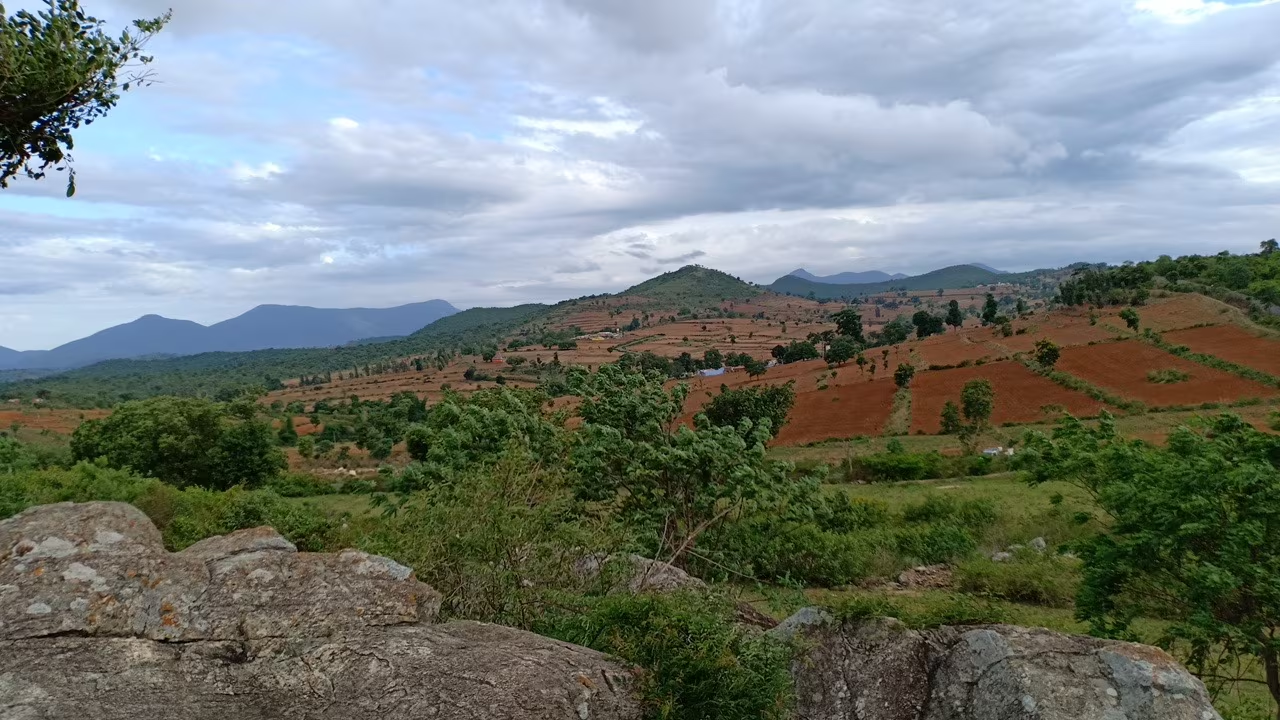
Historical Places in Erode: Temples, Forts & Heritage Sites

Rohan Malhotra
February 20, 2026
Explore historical places in Erode Tamil Nadu! Discover temples, monuments, heritage sites, and complete Kongu Nadu guide.
Historical Places in Erode Guide
Erode is often visited for trade, food, and transit links, but it also has a meaningful heritage layer tied to Kongu region history. Travelers looking for historical places in Erode can build a rewarding short itinerary by combining temples, old civic zones, and nearby traditional neighborhoods. Start planning with places to visit in Erode and then narrow by interest.
The city works best for travelers who prefer practical, low-rush exploration over monument-heavy tourism. Its strength is in context and continuity rather than single mega-attractions.
Why Erode's Heritage Matters
Erode's historical significance comes from its role in regional commerce, agrarian networks, and religious activity. Heritage here is distributed, not concentrated in one fort or palace. This means visitors need a route approach rather than one-site mindset.
When read properly, the city's historical layer explains how trade routes, temple culture, and local governance shaped urban growth in western Tamil Nadu.
Key Historical Zones to Explore
A practical heritage route includes one temple-led segment, one old market or civic fabric segment, and one peripheral historical site. This gives architectural, social, and economic context in a single day without overload.
For temple-focused travelers, cross-reference temples in Erode to prioritize by distance and significance.

How to Reach and Move Around
Erode is well connected by rail and road, which makes it easy for short heritage breaks from nearby cities. Local movement is usually manageable by cab, auto, and city roads, but peak-hour traffic can still affect tightly packed plans.
A good strategy is to cluster nearby stops in each half-day and avoid repeated cross-city movement.
Best Time to Visit
Cooler months are more comfortable for walking and multi-stop exploration. Summer visits are possible with early starts and midday rest. Monsoon can bring relief from heat but may affect movement in some local segments.
For photographers, morning and late-afternoon light improve facade detail and reduce harsh contrast.

One-Day Erode Heritage Model
| Time | Suggested Focus |
|---|---|
| Morning | Temple and primary heritage structure |
| Midday | Meal break and local transfer |
| Afternoon | Market/civic history and peripheral stop |
This structure gives enough time for observation and avoids rushed transitions.
Nearby Extensions
If you have extra time, add nearby routes using places near Erode and nature add-ons such as hill stations near Erode. This balances heritage with landscape in a short regional trip.
For food-focused travelers, combine evening local cuisine after heritage blocks to keep the day varied and engaging.
Travel Tips
- Keep one water and rest break every half-day block
- Use route clustering, not random stop lists
- Confirm opening windows before transfer
- Wear comfortable walking footwear
- Carry digital and offline map backups
These basics improve trip quality significantly in distributed-heritage cities.

Common Mistakes to Avoid
Most visitors either over-plan too many minor sites or under-plan and miss key context entirely. The solution is to choose 3 to 4 meaningful stops and spend enough time at each.
Another common mistake is ignoring heat impact on midday movement. Plan physically demanding segments in cooler windows.
Final Take
Historical places in Erode are best enjoyed through thoughtful sequencing and context-aware travel, not checklist tourism. The city rewards travelers who observe social and architectural continuity across neighborhoods and sacred spaces.
Plan slowly, cluster routes smartly, and combine heritage with local culture. That is the most effective way to experience Erode's historical character.
Extended Planning Notes
A common reason travelers under-enjoy this destination is over-compressed scheduling. Heritage exploration improves when you keep transit buffers, climate buffers, and one optional stop instead of forcing fixed minute-level plans. This destination works best when viewed as a contextual experience rather than a checklist item. Use realistic movement assumptions, especially if your group includes elders or children. A slower pace increases observation quality, reduces fatigue, and gives better decision-making for the second half of the day.
For stronger route continuity, pair this guide with temples erode and places to visit near erode. These internal references help you connect architecture, local culture, and practical movement planning without repeating the same attraction type all day. In multi-stop routes, alternate high-effort and low-effort segments. This keeps energy stable and avoids the common pattern of early enthusiasm followed by rushed final stops.
Advanced Observation Checklist
- Start with macro layout before focusing on details
- Identify what is original, restored, or weathered
- Map movement paths and visitor pressure points
- Use two viewing passes: orientation pass and detail pass
- Take notes on interpretation, not just photos
This method is especially useful for travelers who want meaningful recall after the trip. Without structured observation, even major monuments can blur together. A short note-taking discipline can dramatically improve retention and storytelling quality.
Photo and Timing Strategy
For most locations, first light and late light are best for texture and depth. Midday can still work for documentation shots, but nuanced details are easier to capture in softer directional light. Keep one wide contextual frame, one medium narrative frame, and one close detail frame for each section. This simple three-frame model gives a complete visual record without overshooting.
If crowds are high, wait for flow gaps instead of forcing frames. Patience usually produces cleaner compositions and safer movement. Also avoid physically risky positions for dramatic angles. Strong storytelling images come more from composition discipline than from dangerous viewpoints.
Final Field Guidance
Before ending the visit, verify that you covered primary sections, essential context points, and one reflective pause to synthesize what you observed. If you still have time, use places to visit erode to decide your next stop based on effort level rather than popularity alone. This approach improves total trip quality and prevents late-day burnout.
The most successful heritage days are not the busiest ones. They are the ones where you understand the place, remember key details, and finish with enough energy for the next day. Plan accordingly, and this destination will deliver much stronger value.
Additional practical note: keep digital map backups, verify local timings close to visit date, and maintain a flexible one-hour buffer in your schedule. This small margin usually absorbs traffic, queue variation, or weather disruption without compromising core site quality.
Additional practical note: keep digital map backups, verify local timings close to visit date, and maintain a flexible one-hour buffer in your schedule. This small margin usually absorbs traffic, queue variation, or weather disruption without compromising core site quality.
Additional practical note: keep digital map backups, verify local timings close to visit date, and maintain a flexible one-hour buffer in your schedule. This small margin usually absorbs traffic, queue variation, or weather disruption without compromising core site quality.
Additional practical note: keep digital map backups, verify local timings close to visit date, and maintain a flexible one-hour buffer in your schedule. This small margin usually absorbs traffic, queue variation, or weather disruption without compromising core site quality.
Additional practical note: keep digital map backups, verify local timings close to visit date, and maintain a flexible one-hour buffer in your schedule. This small margin usually absorbs traffic, queue variation, or weather disruption without compromising core site quality.
Additional practical note: keep digital map backups, verify local timings close to visit date, and maintain a flexible one-hour buffer in your schedule. This small margin usually absorbs traffic, queue variation, or weather disruption without compromising core site quality.
Additional practical note: keep digital map backups, verify local timings close to visit date, and maintain a flexible one-hour buffer in your schedule. This small margin usually absorbs traffic, queue variation, or weather disruption without compromising core site quality.
Location
Frequently Asked Questions
Q1.What are the most historical places in Erode?
Q2.How many heritage sites are in Erode?
Q3.Which is the oldest historical place in Erode?
Q4.What is the historical significance of Erode?
Q5.Best time to visit historical places in Erode?
Q6.What is the entry fee for historical sites in Erode?
Q7.Is photography allowed at all historical places?
Q8.How much time needed for Erode heritage tour?
Recommended For You
Shopping Places in Erode: Textile Markets, Turmeric Trade & Local Shops
Discover shopping in Erode with our guide to textiles, handloom fabrics, Erode turmeric, Kongu Main Road, and traditional markets.
8 Hill Stations Near Erode: Distance, Route & Weekend Plans
Explore 8 scenic hill stations near Erode within 200 km. From Ooty's tea gardens to Kolli Hills' untouched beauty, discover perfect getaways with detailed routes & travel tips.
Places to Visit in Tamil Nadu: Region-Wise Attractions & Itinerary Ideas
Discover places to visit in Tamil Nadu with region-wise planning, season logic, and practical itinerary models for smoother travel.
Never Miss an Adventure
Get the latest trekking guides, travel tips, and exclusive offers delivered straight to your inbox.
