
Istana Negara Kuala Lumpur: Palace History, Entry Rules & Photo Spots

Rohan Malhotra
December 8, 2025
Visit Istana Negara Malaysia - King's palace in KL. Opening hours, dress code, tickets, history, how to reach, photography rules & tour tips.
Malaysia's Majestic Royal Palace
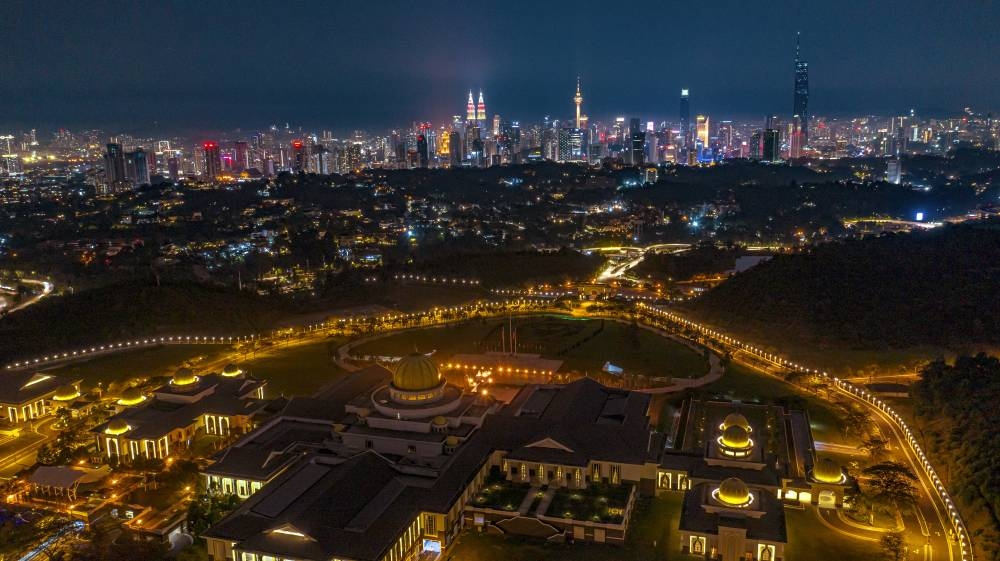
Standing proudly in the heart of Kuala Lumpur, Istana Negara (National Palace) serves as the official residence of the Yang di-Pertuan Agong, the Supreme King of Malaysia. This magnificent palace represents the sovereignty and dignity of the Malaysian monarchy, one of the few remaining constitutional monarchies in Southeast Asia. While the palace itself is not open for interior tours, the exterior and surrounding areas offer visitors a glimpse into Malaysia's royal heritage and the opportunity to witness the impressive Changing of the Guards ceremony.
What makes Istana Negara particularly fascinating is its blend of traditional Malay architecture with modern palace design. The golden domes, intricate Islamic motifs, and spacious grounds create an atmosphere of regal splendor that captivates visitors. Whether you're a history enthusiast, a culture buff, or simply someone who appreciates grand architecture, a visit to Istana Negara provides valuable insights into Malaysia's unique constitutional monarchy system.
Unlike many royal palaces around the world that are strictly off-limits, Istana Negara welcomes visitors to its grounds, allowing them to photograph the exterior and witness ceremonial activities. The palace's location on a hilltop offers panoramic views of the surrounding area, adding to its allure as a must-visit attraction in Kuala Lumpur.
History of Istana Negara
The current Istana Negara building has an interesting history. Originally, it was a private mansion known as the Big House built in 1928 by a wealthy Chinese merchant named Chan Wing. The double-story mansion with 13 rooms was impressive enough to catch the attention of the Japanese during World War II, who used it as their officers' mess.
After Malaysia gained independence from Britain in 1957, the Federal Government acquired the property and converted it into the official residence of the Yang di-Pertuan Agong. The first king to reside here was Tuanku Abdul Rahman, who moved into the palace in 1957. For over five decades, this building served as Malaysia's royal palace until 2011.
The current Istana Negara, located at Jalan Tuanku Abdul Halim, was completed in 2011 at a cost of approximately RM800 million. This new palace was built to replace the old building, which was subsequently converted into the Royal Museum. The new palace is significantly larger, spanning 13 acres, and features modern facilities befitting a 21st-century constitutional monarchy while maintaining traditional Malay architectural elements.
The Institution of the Yang di-Pertuan Agong
What makes Malaysia's monarchy unique is its rotational system. The Yang di-Pertuan Agong is elected from among the nine hereditary rulers of the Malay states for a five-year term. This system, established after independence, ensures that each state ruler gets a chance to become the Supreme King. The palace changes occupants every five years, with each new king bringing their own traditions and preferences to the residence.
What to See at Istana Negara
While visitors cannot enter the palace itself, there's plenty to see and appreciate from the outside and within the palace grounds.
Palace Exterior and Architecture
The palace architecture is a stunning example of modern Malay-Islamic design. The most prominent features are the golden domes that crown the main building. These domes, covered in gold leaf, sparkle in the Malaysian sun and are visible from various points around Kuala Lumpur.
The palace facade features intricate Islamic geometric patterns and traditional Malay motifs. The main entrance is particularly impressive with its grand staircase and decorative elements. The 22 domes throughout the palace complex symbolize the nine hereditary rulers and the thirteen states of Malaysia.
The Palace Grounds
The palace compound is beautifully maintained with lush gardens, manicured lawns, and trees. Visitors can walk along the perimeter fence and photograph the palace from various angles. The grounds provide excellent opportunities for photography, especially during the golden hours of sunrise and sunset when the golden domes glow beautifully.
Royal Guards and Gatehouses
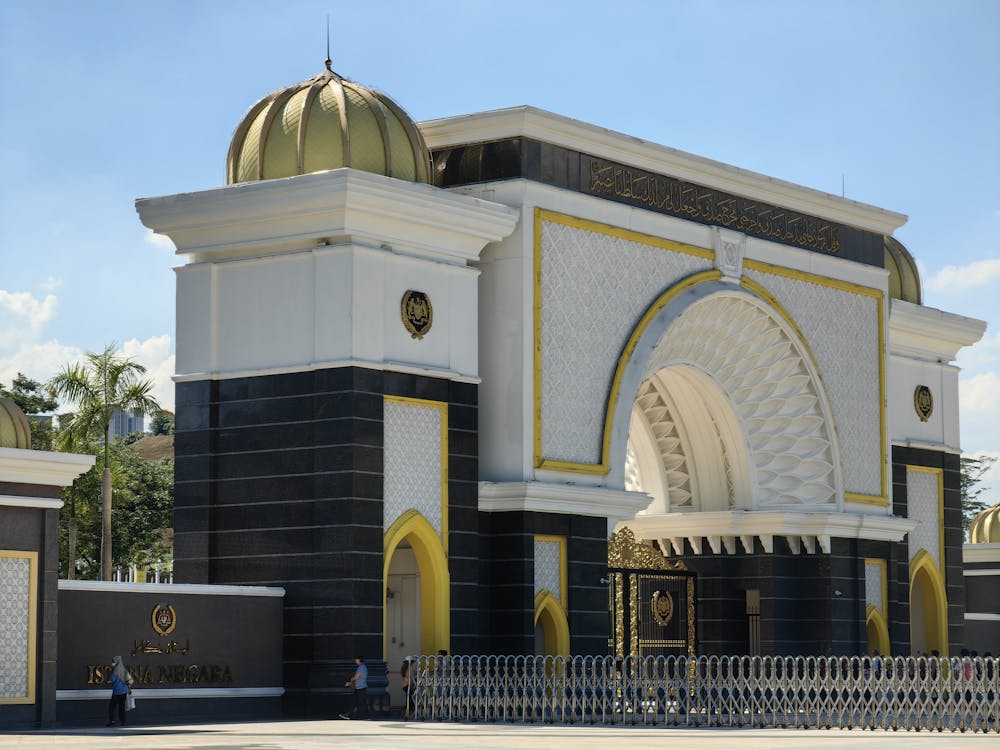
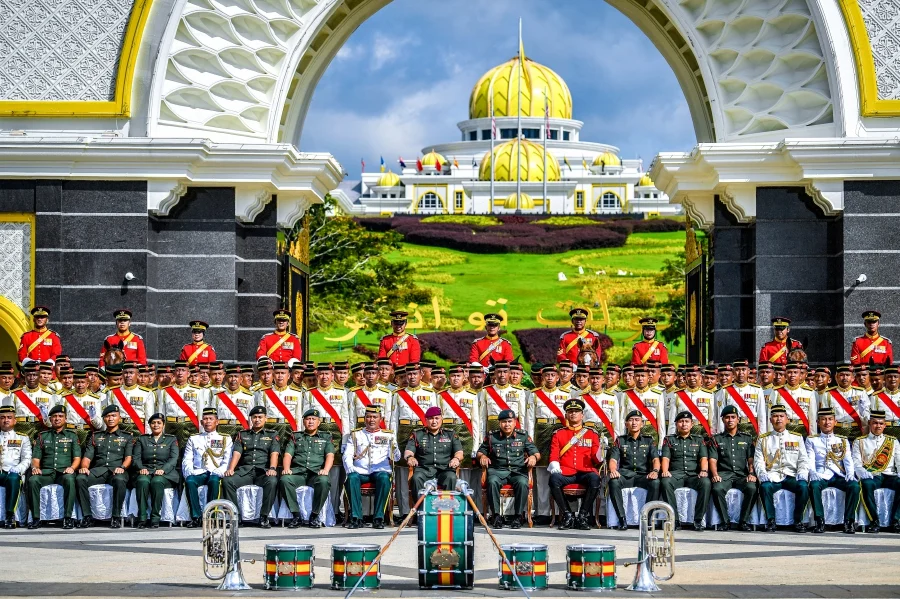
The entrance to the palace features impressive gatehouses where the Royal Guards are stationed. These guards in their distinctive red and yellow uniforms are a symbol of the palace's security and tradition. The guardhouses themselves are beautifully designed, featuring arches and domes that complement the main palace architecture.
The Main Gate
The main entrance gate is an architectural masterpiece with Islamic arches and decorative elements. This is where the Changing of the Guards ceremony takes place, making it the focal point for visitors. The gate features the royal crest of Malaysia and serves as the symbolic entrance to the king's official residence.
Royal Guard Changing Ceremony
The Changing of the Guards ceremony is the highlight of a visit to Istana Negara. This daily ceremony is reminiscent of the Changing of the Guard at Buckingham Palace and is a must-see for visitors.
Ceremony Details
Timing: The ceremony takes place once daily at 10:00 AM. The entire ceremony lasts about 30 minutes.
What Happens: The ceremony involves a perfectly coordinated exchange of guards between the incoming and outgoing shifts. The Royal Guards, dressed in their ceremonial uniforms, march with military precision. The new guard unit arrives from their barracks and relieves the current guards after a formal handover procedure.
Uniforms: The guards wear distinctive red and yellow uniforms with black headgear. The red symbolizes courage, while yellow is the royal color in Malay culture. Their polished boots and ceremonial weapons add to the impressive visual spectacle.
Tips for Viewing the Ceremony
- Arrive at least 15-20 minutes early to secure a good viewing spot
- The best viewing area is directly in front of the main gate
- Maintain respectful silence during the ceremony
- Photography is allowed but avoid using flash
- Respect the guards' space and don't block their movement
Practical Information
Visiting Hours
The palace grounds are accessible to visitors from early morning until evening. The Changing of the Guards ceremony at 10:00 AM is the specific time you should plan for. Arriving around 9:30 AM gives you time to find parking, locate the viewing area, and get comfortable before the ceremony begins.
The area around the palace is accessible year-round, though weather should be considered. Malaysia's tropical climate means it can be hot and humid, especially in the afternoon. Morning visits when the weather is cooler are recommended.
Entry Fee
There is no entry fee to view the palace exterior or witness the Changing of the Guards ceremony. This makes Istana Negara a budget-friendly attraction in Kuala Lumpur. However, if you wish to enter the Royal Museum (the old palace building), there is a nominal entry fee of approximately RM15 for adults and RM10 for children.
Dress Code
While there's no strictly enforced dress code for viewing the palace from outside, visitors are expected to dress modestly out of respect for the royal residence. Avoid shorts, short skirts, sleeveless tops, and revealing clothing. Shoulders and knees should be covered. This is particularly important if you plan to visit the Royal Museum where dress code may be more strictly enforced.
Photography Rules
Photography is permitted from outside the palace perimeter. You can take photos of the palace exterior, the guards, the Changing of the Guards ceremony, and the palace grounds. However, photography may be restricted in certain areas or during specific security situations. Always follow instructions from palace staff or security personnel.
Travel Tips
Best Time to Visit
The ideal time to visit Istana Negara is in the morning, specifically to catch the 10:00 AM Changing of the Guards ceremony. Morning temperatures are cooler and more comfortable for walking around the palace grounds. The lighting is also excellent for photography during these hours.
Avoid visiting during heavy rain, which is common in Malaysia's tropical climate, especially during the monsoon season. While you can still see the palace from sheltered areas, the experience is less enjoyable in wet weather.
Getting There
The palace is located at Jalan Tuanku Abdul Halim, approximately 8 kilometers from Kuala Lumpur city center. The most convenient way to reach is by taxi or ride-hailing services like Grab. Public transport options are limited, though you can take a train to the nearest MRT station and then take a short taxi ride to the palace.
If you're driving, parking is available near the palace, though spaces can fill up quickly during the Changing of the Guards ceremony. Arrive early if you plan to drive.
Combining with Other Attractions
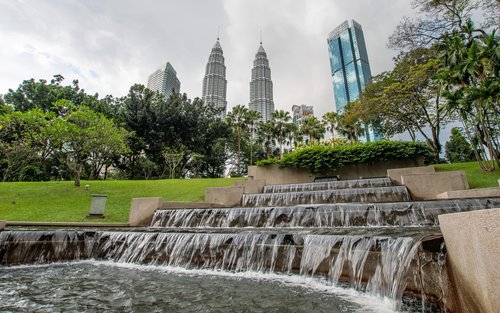
Istana Negara can be combined with other nearby attractions for a full day of sightseeing. You can also visit the iconic Petronas Twin Towers or explore KLCC Park for a full day of sightseeing. The Batu Caves are also accessible for a combined cultural experience. The Bird Park and Butterfly Park are also nearby in the Lake Gardens area.
Duration of Visit
Plan to spend about 45 minutes to 1 hour at Istana Negara. This allows time to view the palace, watch the Changing of the Guards ceremony, take photographs, and walk around the perimeter. If you combine the visit with the Royal Museum, add another 1-1.5 hours to your schedule.
Things to Do Nearby
Royal Museum (Muzium Diraja)
The old Istana Negara building has been converted into the Royal Museum and is open to the public. This museum offers a glimpse into the life of Malaysia's kings, displaying royal artifacts, gifts from foreign dignitaries, and replicas of royal regalia. It's an excellent complement to viewing the current palace.
National Museum (Muzium Negara)
Located just a few minutes from Istana Negara, the National Museum provides comprehensive exhibits on Malaysian history, culture, and the monarchy. For more modern attractions, consider visiting Berjaya Times Square.
The museum building itself is architecturally significant, featuring traditional Malay design elements.Kuala Lumpur Bird Park
One of the largest covered bird parks in the world, the KL Bird Park is home to over 3,000 birds. It's located in the Lake Gardens area, a short distance from the palace, and makes for a great combination of royal and natural attractions.
Perdana Botanical Garden
Also known as Lake Gardens, this is Kuala Lumpur's oldest and most popular park. It's a beautiful place for a leisurely stroll after visiting the palace, featuring lush greenery, a lake, and various themed gardens. Nearby, you can also visit the Batu Caves for a cultural experience.
Islamic Arts Museum Malaysia
This museum houses one of the most comprehensive collections of Islamic art in Southeast Asia. It's located near the National Museum and provides cultural context for understanding the Islamic elements visible in Istana Negara's architecture.
Photography Tips
Istana Negara is a photographer's delight, offering numerous opportunities for stunning images. Here are some tips to make the most of your photography session:
- Golden Hour: The hour after sunrise and before sunset provides the most flattering light. The golden domes glow beautifully during these times.
- Wide Angle: Use a wide-angle lens to capture the full palace and its grounds.
- Detail Shots: Don't miss the intricate architectural details - Islamic patterns, the royal crest, decorative elements.
- Guards: The Royal Guards make for striking portrait subjects with their distinctive uniforms.
- Ceremony: Capture the Changing of the Guards from multiple angles.
Respecting Royal Protocol
While visiting Istana Negara, remember that this is the official residence of Malaysia's head of state. Certain protocols should be observed:
- Speak in moderate tones - avoid loud conversations
- Don't climb on barriers or walls for better views
- Follow instructions from security personnel
- Don't attempt to enter restricted areas
- Show respect to the Royal Guards - don't touch or distract them
- Keep the premises clean - dispose of trash properly
Conclusion
Istana Negara stands as a symbol of Malaysia's unique heritage and democratic traditions. It represents the peaceful coexistence of ancient monarchy and modern democracy, of tradition and progress. A visit here offers more than just photo opportunities - it provides insight into Malaysia's system of government and the respect accorded to its royal institutions.
The Changing of the Guards ceremony connects visitors to centuries of military and royal tradition, while the palace architecture showcases the evolution of Malay-Islamic design. Whether you're watching the guards perform their duties with precision, photographing the golden domes against the blue sky, or simply walking around the perimeter contemplating the history within those walls, Istana Negara leaves a lasting impression.
Make sure to include Istana Negara in your Kuala Lumpur itinerary. It's an experience that combines culture, history, architecture, and ceremony - all the elements that make travel enriching and memorable.
Location
Frequently Asked Questions
Q1.Can tourists enter Istana Negara Kuala Lumpur?
Q2.Is Istana Negara open to the public?
Q3.What is Istana Negara famous for?
Q4.Who lives in Istana Negara?
Q5.Is photography allowed inside Istana Negara?
Q6.How much time is needed for Istana Negara?
Q7.Is there an entry fee for Istana Negara?
Q8.What is the dress code for Istana Negara?
Recommended For You
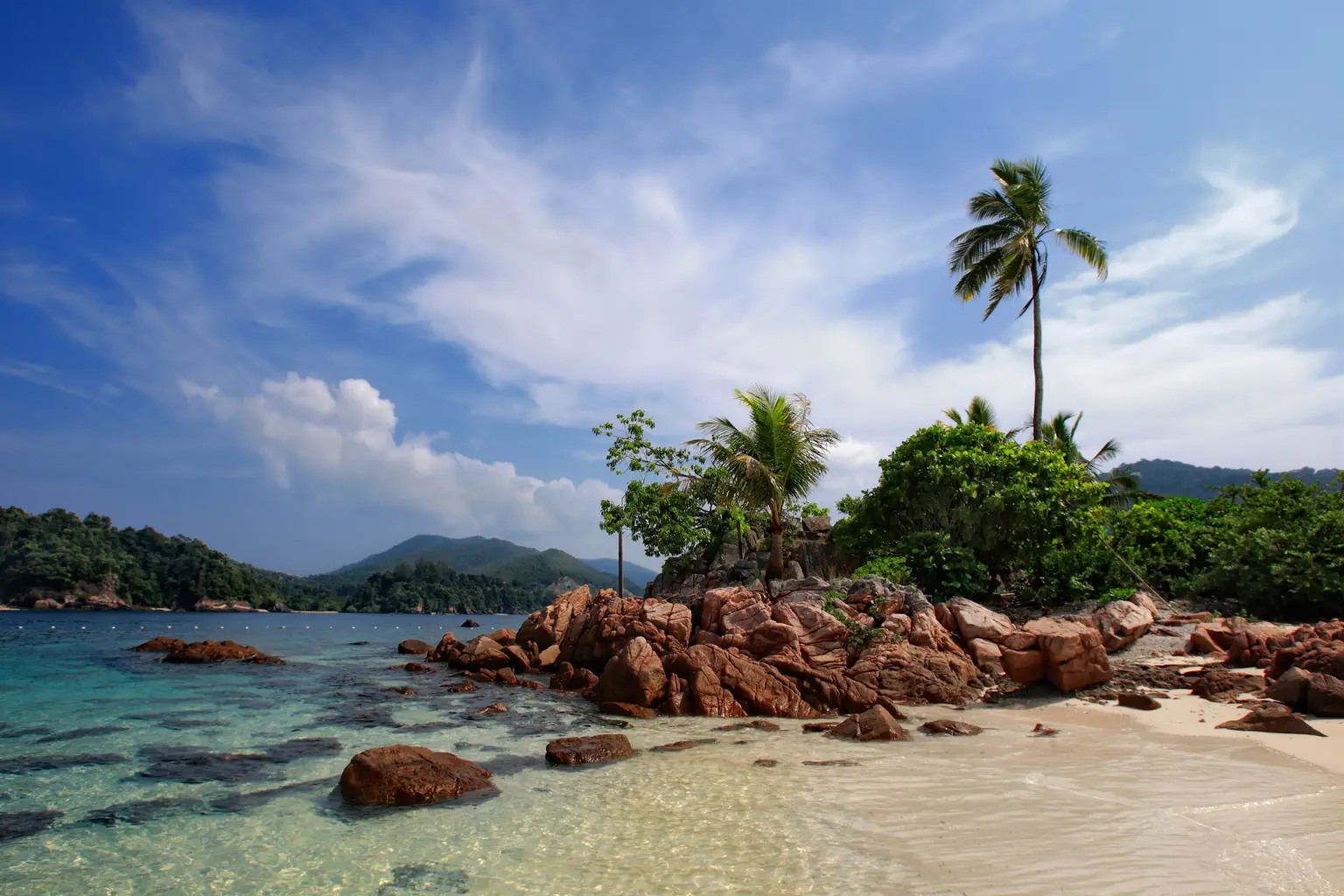
Beaches in Malaysia: Island Picks, Activities & Travel Planning
Discover Malaysia's stunning beaches from Langkawi's luxury shores to Perhentian's pristine coral reefs. Complete guide with best time to visit, activities, and travel tips.
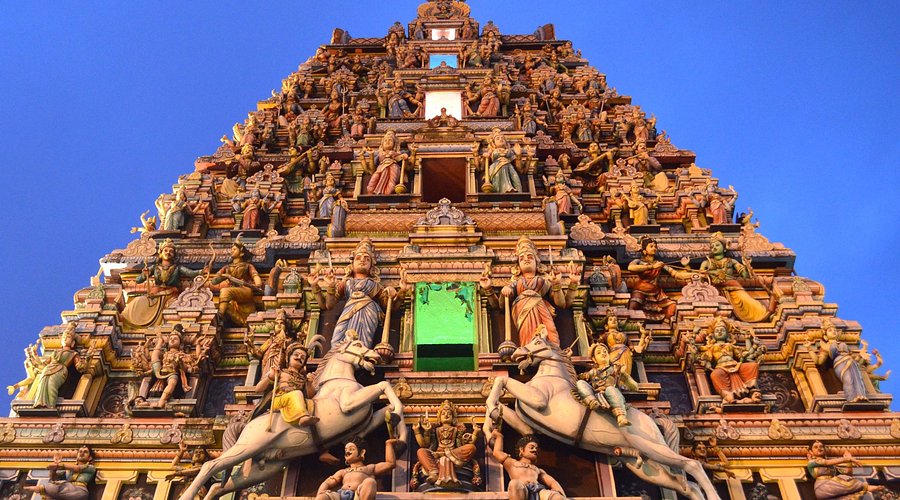
Sri Mahamariamman Temple Kuala Lumpur: Timings, Rituals & Visit Tips
Visit Sri Mahamariamman Temple in Kuala Lumpur. Guide with timings, history, how to reach, architecture & festivals at oldest Hindu temple.
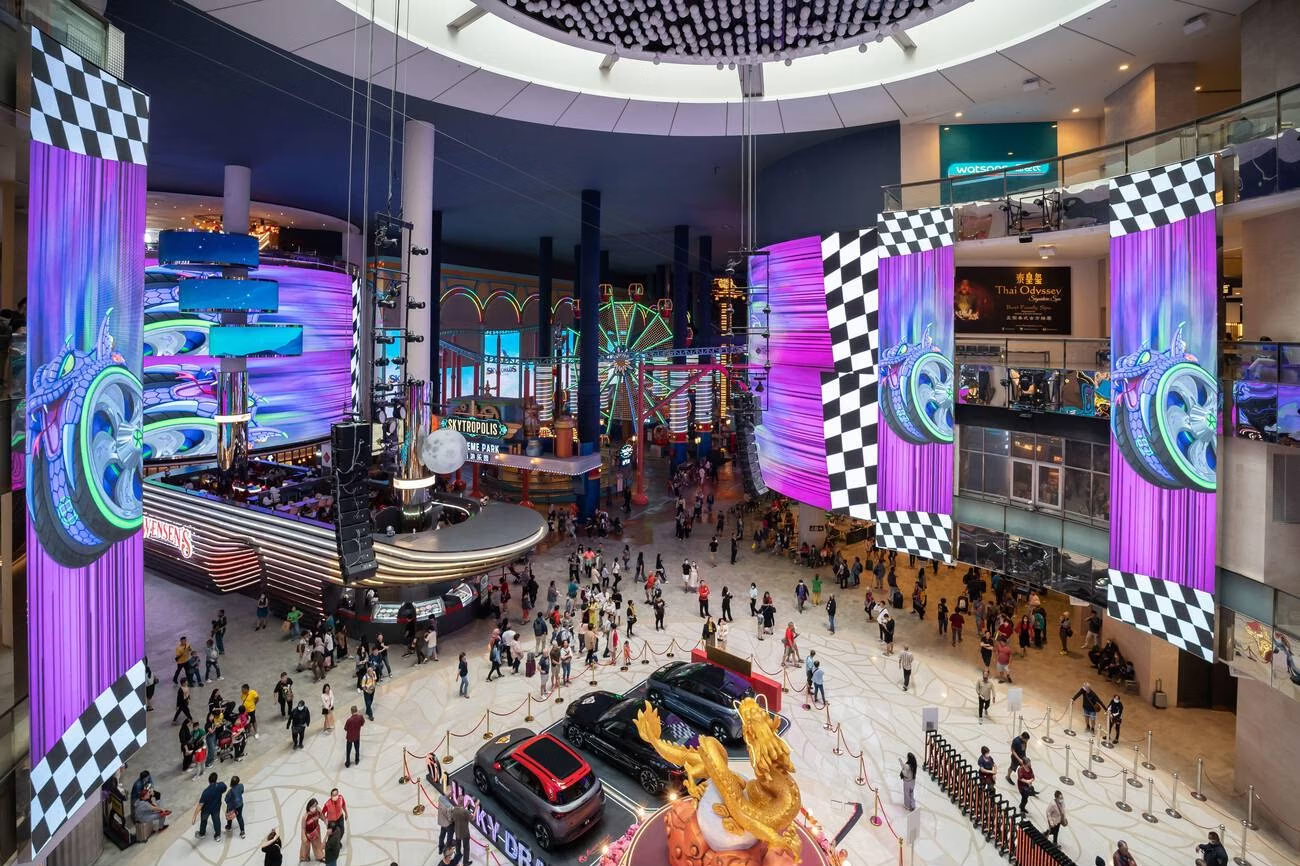
SkyAvenue Shopping Mall Genting Highlands: Complete Guide 2026
Complete SkyAvenue Mall Genting Highlands guide featuring brands, restaurants, tax-free shopping, operating hours, and travel tips for 2026.
Never Miss an Adventure
Get the latest trekking guides, travel tips, and exclusive offers delivered straight to your inbox.
