
Japanese Covered Bridge Hoi An: History, Timings & Nearby Attractions

Rohan Malhotra
January 12, 2026
Visit Japanese Covered Bridge Hoi An. Know history, architecture, timings, entrance fee & how to reach. Complete guide with photos & travel tips.
Introduction: Hoi An's Iconic Symbol
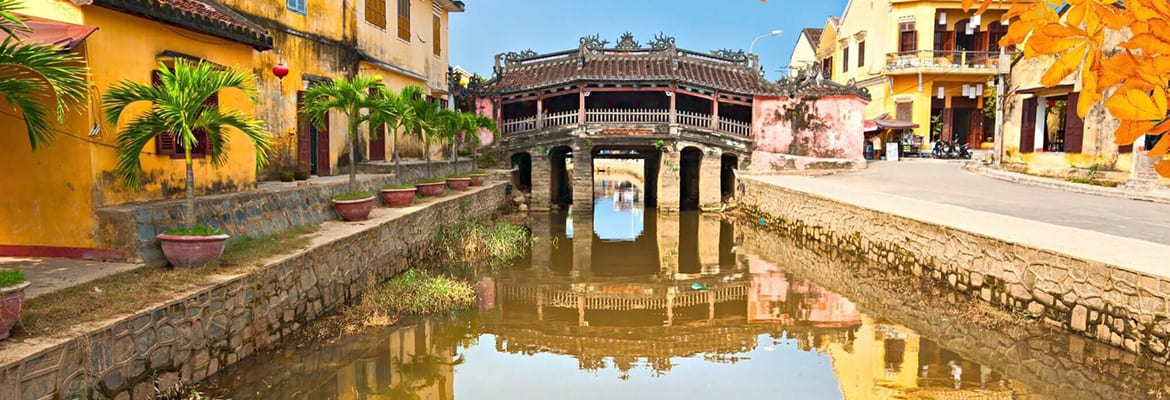
The Japanese Covered Bridge, known locally as Chua Cau or the Pagoda Bridge, stands as the most iconic landmark of Hoi An Ancient Town and one of Vietnam's most photographed heritage sites. This beautifully preserved 18-meter wooden bridge has spanned the Thu Bon River for over four centuries, serving as both a functional crossing and a spiritual sanctuary. Recognized as a UNESCO World Heritage Site as part of Hoi An Ancient Town, the bridge represents the remarkable cultural fusion that defined this historic trading port.
What makes the Japanese Covered Bridge truly special is its unique architectural blend of Japanese, Vietnamese, and Chinese design elements, reflecting Hoi An's cosmopolitan past as a major Southeast Asian trading hub. The bridge appears on Vietnam's 20,000 VND banknote, testifying to its status as a national symbol. For visitors to Hoi An, crossing this historic structure offers a tangible connection to the merchant communities that once thrived here and a perfect introduction to the old town's enchanting atmosphere.
History & Significance
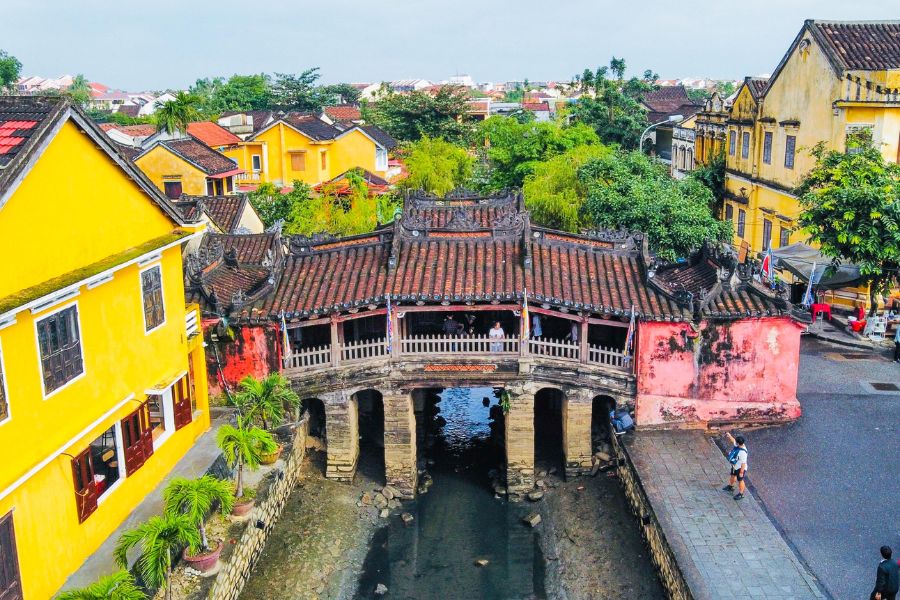
The story of the Japanese Covered Bridge begins in the 1590s, when Hoi An was flourishing as one of Southeast Asia's most important trading ports. The town's strategic location on the Thu Bon River attracted merchants from across Asia, creating a vibrant multicultural community of Japanese, Chinese, Vietnamese, Dutch, Indian, and other traders.
Construction by Japanese Merchants
The bridge was constructed by the Japanese merchant community living in Hoi An during the 1590s. At that time, Hoi An was divided into distinct quarters based on nationality, with the Japanese community living on one side of the river and the Chinese community on the other. The bridge's primary purpose was practical - to provide a convenient connection between these two communities, facilitating trade and cultural exchange.
The Japanese merchants who built the bridge were part of a larger wave of Japanese traders who established themselves in Hoi An during the 16th and 17th centuries. These traders played a crucial role in Vietnam's silk trade, connecting Vietnamese silk producers with markets in Japan and beyond. The bridge they built reflected both their practical needs and their spiritual beliefs.
Religious Significance
Beyond its practical function as a crossing, the bridge has always held religious significance. It was built as a temple dedicated to the worship of the weather gods, specifically Tran Vo Bac De, the northern god of weather, who was believed to control the weather elements that could protect or endanger ships at sea.
This religious function explains why the structure is technically a temple (chua) rather than merely a bridge. The small shrine inside the bridge has been maintained for centuries, with locals still coming to pray for protection, safe travels, and favorable weather. The bridge's spiritual dimension added to its importance in daily community life and helped ensure its preservation through centuries of change.
Restoration Through the Centuries
The bridge we see today is not exactly the original structure. Like all wooden buildings in tropical climates, the bridge required periodic restoration. The structure has been renovated and repaired multiple times over the past four centuries, with major restorations recorded in 1817, 1865, 1915, 1986, and most recently in the late 1990s.
Despite these renovations, the bridge has maintained its original design and architectural integrity. Restoration efforts have carefully preserved the original Japanese architectural elements while replacing weathered wood and reinforcing the structure against flooding and decay. The most recent restoration was conducted with UNESCO oversight as part of Hoi An's World Heritage Site conservation efforts.
Cultural Harmony Symbol
The Japanese Covered Bridge stands as a powerful symbol of cultural harmony and peaceful coexistence between different communities. In an era when religious and ethnic conflicts were common elsewhere, Hoi An's Japanese, Chinese, and Vietnamese communities lived and traded together peacefully. The bridge physically connected these communities while also blending their architectural traditions.
This symbolism of cultural harmony remains relevant today and is one reason the bridge holds such deep meaning for Vietnamese people. It represents a vision of different cultures not just tolerating each other, but creating something beautiful together - a message that resonates strongly in our interconnected world.
UNESCO Recognition
In 1999, Hoi An Ancient Town was inscribed as a UNESCO World Heritage Site, with the Japanese Covered Bridge listed as one of its most significant monuments. UNESCO recognized Hoi An as "an exceptionally well-preserved example of a South-East Asian trading port dating from the 15th to the 19th century." The bridge is specifically cited for its architectural value and as an outstanding example of cultural fusion.
UNESCO designation brought international attention to Hoi An and helped fund preservation efforts. It also placed the bridge under formal protection, ensuring that future development would not compromise its historical integrity. Today, the bridge receives hundreds of thousands of visitors annually, each one connecting with over four centuries of history.
Architecture & Design
The Japanese Covered Bridge is a masterpiece of traditional architecture that beautifully synthesizes Japanese, Vietnamese, and Chinese design elements. Every aspect of its construction holds symbolic meaning and reflects the sophisticated craftsmanship of its builders.
Traditional Japanese Temple Architecture
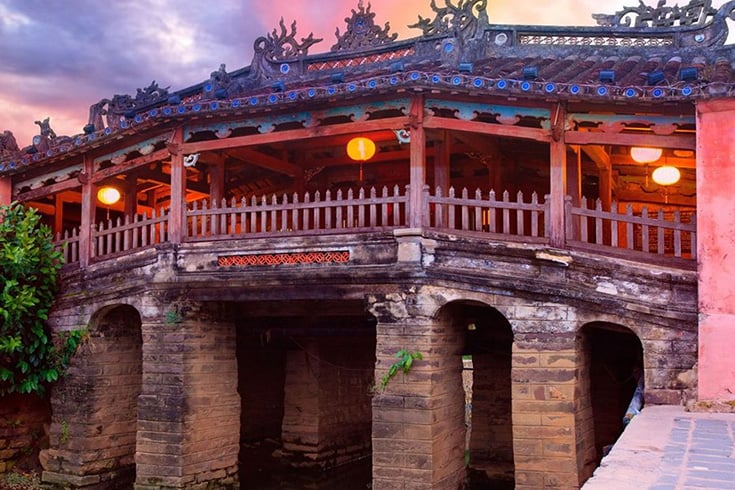
The bridge's design follows traditional Japanese temple architecture, specifically resembling temple gates found in Japan. The covered structure with its pagoda-style roof is distinctly Japanese, though adapted to local materials and conditions. The roof features multiple layers with upturned corners, characteristic of East Asian temple architecture.
The bridge measures approximately 18 meters in length and is built entirely of wood, joined without the use of nails - a traditional Japanese construction technique that allows the structure to flex during floods and earthquakes. This ingenious joinery has helped the bridge survive centuries of tropical storms and seasonal flooding.
The Covered Design
The covered design served both practical and aesthetic purposes. The roof protected the wooden structure from tropical rain and intense sun, significantly extending its lifespan. Covered bridges were common in Japan, and the Japanese merchants replicated this familiar architectural form in their new home.
The covering also provided shelter for travelers crossing the bridge, offering relief from Hoi An's hot sun and sudden rain showers. In the evenings, the covered space became a gathering spot where locals could socialize and enjoy river breezes. This combination of practicality and beauty characterizes much of traditional Asian architecture.
Dog and Monkey Statues
One of the bridge's most distinctive features is the pair of statues guarding the entrance - a dog and a monkey. These ceramic statues are positioned at either end of the bridge and have become iconic symbols of the structure.
The animals hold special significance in Japanese culture and relate to the bridge's construction date. According to Chinese zodiac tradition, many Japanese emperors were born in years of the monkey or dog. The bridge is said to have begun construction in the year of the monkey and been completed in the year of the dog. Additionally, in Japanese folklore, these animals are believed to protect against evil spirits, making them appropriate guardians for a sacred structure.
Some local legends suggest the statues represent the Japanese merchants' longing for home - monkeys and dogs being common in Japanese art. Others believe they symbolize the bridge's role in protecting the community, with the dog guarding against human threats and the monkey against spiritual dangers.
Interior Shrine and Decorations
Inside the bridge, a small temple area contains an altar dedicated to Tran Vo Bac De, the god of weather. The shrine features traditional Vietnamese religious elements including incense burners, candles, and offerings. Locals still visit to pray, keeping the religious tradition alive after four centuries.
The interior walls feature Chinese calligraphy and traditional Vietnamese lacquer paintings in red and gold - colors that symbolize good fortune and prosperity in Vietnamese culture. The combination of Japanese architecture, Chinese calligraphy, and Vietnamese religious elements perfectly represents Hoi An's multicultural heritage.
The wooden structure features intricate carvings and decorative elements, though centuries of tropical weather have softened some details. The restoration efforts have carefully preserved these decorative elements while replacing damaged wood. The dark, weathered wood of the bridge adds to its historical authenticity and romantic appeal.
The Bridge's Structural Design
Technically, the bridge is an arched wooden structure built on stone foundations. The arch design allows it to span the river while providing sufficient clearance for boats passing underneath. The wooden arch distributes weight efficiently, a sophisticated engineering achievement for 16th-century builders.
The stone piers at either end anchor the bridge and protect it from the Thu Bon River's seasonal floods. These piers have been reinforced over the centuries as engineers learned from each flood season. The bridge's resilience to flooding is remarkable testament to the original builders' understanding of the river's behavior.
The Pagoda Roof
The multi-layered pagoda roof is perhaps the bridge's most photographed feature. Its curved corners and upward-facing eaves are characteristic of East Asian temple architecture. The roof structure was originally covered in yin-yang tiles - traditional Vietnamese roof tiles made of alternating convex and concave shapes.
The roof not only protects the structure but creates a striking silhouette against the sky. During restoration, the roof has been carefully maintained to preserve its traditional appearance. The red and gold color scheme creates a beautiful contrast with the natural wood tones and surrounding greenery.
Best Time to Visit
Choosing the right time to visit the Japanese Covered Bridge can significantly enhance your experience. Hoi An has distinct seasonal patterns, and daily timing matters for photography and crowd management.
Seasonal Considerations
The best time to visit Hoi An is during the dry season from February through April and August through October. These months offer pleasant weather with less rainfall, making exploration comfortable. February-April is particularly lovely with comfortable temperatures and lower humidity.
The rainy season from November to January brings frequent showers and occasional flooding. During flood periods, the bridge area may be inaccessible, and views may be less picturesque. However, the rainy season has its own moody beauty, with misty mornings creating atmospheric photography opportunities.
Daily Timing
For the best experience, visit the bridge early in the morning (7-9 AM) before the crowds arrive and tour buses discharge their passengers. The soft morning light is beautiful for photography, and you'll have the bridge largely to yourself. Morning visits also allow you to see locals coming to pray at the shrine.
Late afternoon (4-6 PM) is another excellent time, especially during golden hour when the setting sun creates beautiful warm light on the bridge's wooden structure. The hour before sunset is magical, with the bridge glowing in the golden light and the Thu Bon River reflecting the colors of the sky.
Evening Visits
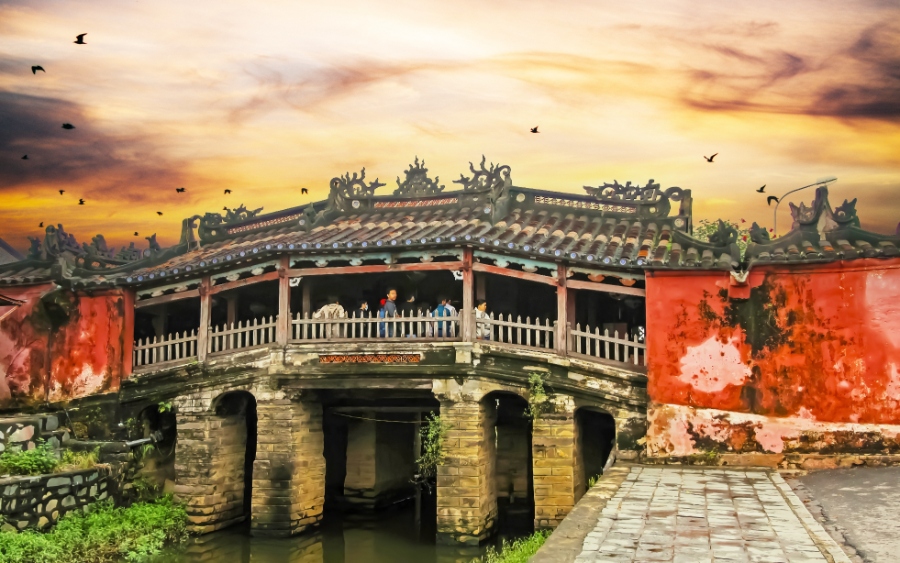
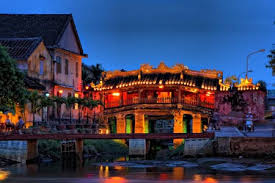
The bridge takes on a completely different character at night. The covered structure is illuminated with traditional lanterns, creating an enchanting atmosphere that feels timeless. Evening visits during the full moon lantern festivals are particularly special, when the entire old town is illuminated by lanterns and the bridge becomes part of a fairytale scene.
Night photography is excellent, with the illuminated bridge creating stunning reflections in the dark water below. The evening atmosphere is quieter and more romantic than during the day, perfect for couples seeking a memorable experience.
Times to Avoid
Mid-day (10 AM - 3 PM) brings the largest crowds and harshest light for photography. Tour groups arrive in full force during these hours, making it difficult to get unobstructed photos or enjoy peaceful contemplation. The tropical sun can also be quite intense, making covered spaces more appealing than open areas.
How to Reach & Location
The Japanese Covered Bridge is located in the heart of Hoi An Ancient Town, making it easily accessible from anywhere in the old town. Understanding the transportation options and logistics helps plan your visit efficiently.
Exact Location
The bridge spans the Thu Bon River at the western end of Nguyen Thi Minh Khai Street in the Old Town section of Hoi An. It connects Tran Phu Street (the main street running through the old town) with Nguyen Thi Minh Khai Street. The location is central - most other attractions in the Old Town are within a 5-10 minute walk.
Surrounding the bridge, you'll find numerous cafes, restaurants, souvenir shops, and art galleries. This central location makes it easy to combine bridge visits with exploration of other Old Town attractions. Many hotels and guesthouses in the Old Town are within walking distance.
From Da Nang
Da Nang is the nearest major city to Hoi An, located approximately 30 kilometers away. The journey from Da Nang to Hoi An takes about 45 minutes by car or taxi. Several transportation options are available:
- Taxi: The most convenient option, costing approximately 300,000-400,000 VND ($12-16) each way
- Private Car: Can be arranged through hotels or tour operators
- Bus: Public bus number 1 connects Da Nang and Hoi An cheaply
- Motorbike Taxi: Grab motorbikes offer an adventurous option
From Hue
Hue is located about 130 kilometers north of Hoi An, a journey of approximately 2.5 hours by road. Many travelers visit Hue and Hoi An as part of a central Vietnam itinerary. Options include:
- Private Car Transfer: Most convenient, with stops at Marble Mountains and Hai Van Pass
- Bus: Several bus companies run the route with morning and afternoon departures
- Train to Da Nang + Transfer: Scenic train option, then continue to Hoi An
Getting Around Hoi An
Once in Hoi An, the Old Town (including the bridge) is best explored on foot. The historic center is pedestrian-friendly, with many streets closed to motorized traffic during certain hours. Walking allows you to fully appreciate the architecture and discover hidden gems.
Bicycle rental is another excellent option, with bikes available for approximately 30,000-50,000 VND ($1-2) per day. Cycling is a quintessential Hoi An experience and gives you flexibility to explore beyond the Old Town. Bicycle parking is available near the bridge.
Hoi An Ancient Town Pass
To visit the Japanese Covered Bridge and other monuments in Hoi An Ancient Town, you need to purchase an Old Town entrance ticket. The ticket costs 120,000 VND ($5) and is valid for multiple attractions within the Old Town over a period of 10 days.
The ticket system helps fund preservation efforts and crowd control. Your ticket allows entry to the bridge interior, several ancient houses, assembly halls, and museums. Keep the ticket with you as officials may check it at various sites. The ticket represents excellent value given access to multiple significant monuments.
Nearby Attractions in Old Town
The Japanese Covered Bridge sits in the heart of Hoi An Ancient Town, surrounded by numerous other significant attractions. Plan to spend at least a full day exploring the Old Town, with the bridge as your starting point.
Assembly Halls
Hoi An's five Chinese Assembly Halls ( congregations halls) are architectural gems that served as community centers for Chinese merchants from different regions. Each hall features distinct architectural styles reflecting regional differences:
- Fujian Assembly Hall: The most elaborate, featuring beautiful artwork and a turtle fountain
- Cantonese Assembly Hall: Known for its detailed wood carvings and peaceful atmosphere
- Hainan Assembly Hall: Smaller but charming, dedicated to 108 merchants who were unjustly killed
- Chinese All-Community Assembly Hall: Used by all Chinese communities, features a large courtyard
- Nguyen Family Assembly Hall: A clan house with beautiful ancestral altar
These halls are included in the Old Town ticket and offer insight into Chinese religious practices and community organization. Each hall contains elaborate altars, statues, and artwork that represent Chinese Buddhism, Taoism, and ancestor worship.
Ancient Houses
Several beautifully preserved traditional houses (called "ancient houses") are open to visitors, showcasing the lifestyle of wealthy merchants. Notable examples include:
- Tan Ky Ancient House: Over 200 years old, featuring Japanese, Chinese, and Vietnamese architectural elements
- Quan Thang Ancient House: Known for its beautiful wood carvings and traditional layout
- Duc An Ancient House: Formerly a Chinese medicine shop, with original furniture and artifacts
These houses demonstrate the sophisticated design principles that kept homes cool in tropical heat while creating elegant living spaces. Most are still inhabited by descendants of the original merchant families.
Hoi An Market
The central market (Cho Hoi An) is a bustling sensory experience where locals shop for fresh produce, spices, fabrics, and prepared foods. The market is divided into sections - wet market with fresh meat and seafood, dry goods with spices and grains, a fabric section, and prepared food stalls.
Visiting the market provides insight into daily life in Hoi An and opportunities to try local specialties. Try Cao Lau (Hoi An's signature noodle dish), Banh Mi Phuong (famous baguette sandwiches), or fresh tropical fruits. The market is most active in the early morning.
Thu Bon River Waterfront
The Thu Bon River is Hoi An's lifeblood, and walking along the waterfront offers beautiful views and peaceful atmosphere. Early morning brings fishermen returning with their catch and boats delivering goods to the market. Sunset is magical, with golden light reflecting off the water and boats creating silhouettes.
Sunset boat rides on the Thu Bon River are popular and reasonably priced. Local boats will take you for a 30-minute cruise, typically including a paper lantern release - a spiritual tradition in Hoi An. The river views of the Old Town, especially the Japanese Bridge illuminated at night, are unforgettable.
Lantern Making Workshops
Hoi An is famous for its silk lanterns, and several workshops offer lantern-making classes. These classes, typically 1-2 hours, teach you the traditional craft of frame-building and silk covering. You'll create your own small lantern to take home - a unique souvenir of your visit.
The workshops also serve as showrooms where you can purchase larger lanterns. Hoi An lanterns are beautiful mementos and make excellent gifts. Learning about their craftsmanship adds to their appreciation.
Tailor Shops
Hoi An is renowned for its custom tailoring, with hundreds of tailor shops throughout the Old Town. You can have clothing custom-made quickly (often within 24 hours) at very reasonable prices. Bring a photo or describe what you want, and skilled tailors will create made-to-measure garments.
Popular items include ao dai (Vietnamese national dress), suits, dresses, and leather goods. Quality varies, so ask for recommendations and read reviews before choosing a tailor. Getting custom clothing made in Hoi An is a quintessential visitor experience.
Museums
Hoi An's museums provide deeper historical context:
- Hoi An Museum of History and Culture: Comprehensive overview of Hoi An's past
- Museum of Trade Ceramics: Showcases the ceramics trade that made Hoi An prosperous
- Museum of Sa Huynh Culture: Exhibits about the pre-Cham culture of the region
These museums are included in the Old Town ticket and are worth visiting for historical context. They help you understand how Hoi An became such an important trading port and why such diverse communities settled here.
Night Market
Every evening from 5 PM, the Old Town transforms into a night market along Nguyen Hoang Street. Hundreds of stalls sell souvenirs, clothing, crafts, and street food. The atmosphere is festive, with music, smells of street food, and colorful lanterns illuminating the street.
The night market is perfect for shopping and trying various local foods. It's also where you'll find most of the lantern sellers - beautiful silk lanterns in every color and size. Bargaining is expected at the night market, making shopping fun and interactive.
Photography Tips
The Japanese Covered Bridge is one of Vietnam's most photogenic landmarks. These tips will help you capture stunning images of this beautiful structure.
Golden Hour Photography
Visit during golden hour (the hour after sunrise and before sunset) for the most magical light. The soft, warm light creates beautiful contrasts with the dark wood and makes the red and gold decorations glow. Morning golden hour offers the added benefit of fewer crowds.
During sunset, position yourself on the downstream side of the bridge to capture the sun setting behind or beside the structure. The silhouettes created are spectacular. Use a wide-angle lens to capture the entire bridge with reflections in the water.
Night Photography
The illuminated bridge at night offers completely different photographic opportunities. Use a tripod or steady surface for long exposures. The reflections of lantern light on the water create beautiful images that capture Hoi An's romantic atmosphere.
Experiment with different angles - shoot from the riverbank, from nearby bridges, or get closer to capture details of the illuminated architecture. Night photos of the Japanese Bridge have become iconic images of Vietnam.
Reflection Shots
The Thu Bon River often provides calm water that creates perfect reflections, especially in the early morning or after rain when the water is still. Position yourself low near the water's edge to capture the bridge's reflection symmetrically.
Polarizing filters can help enhance reflections and reduce glare on the water. Reflection shots work particularly well during golden hour when the warm light creates beautiful mirrored images.
Crowd Management
The bridge gets crowded, especially mid-day. For unobstructed photos, visit early morning (7-8 AM) or during lunch time (12-1 PM) when tour groups are eating. If you must visit during busy times, use patience and wait for gaps between crowds.
Consider including people in your photos for scale and cultural context - tourists taking photos, locals crossing the bridge, or vendors nearby all add human interest to your images. Just try to avoid having large groups block the main views.
Detail Shots
Don't just photograph the entire bridge - move in close to capture architectural details: the dog and monkey statues, intricate wood carvings, Chinese calligraphy, roof tiles, and the temple shrine inside. These detail shots tell the bridge's story through close-up views.
Inside the bridge, photograph the temple area with its altar and decorations. The interplay of light through the structure creates interesting patterns. Use fill flash or a fast lens to handle the dimmer interior light.
Equipment Recommendations
- Wide-angle Lens: Essential for capturing the entire bridge in tight quarters
- Tripod: Helpful for night shots and early morning low-light conditions
- Polarizing Filter: Enhances colors and reduces reflections on water
- Extra Battery: Humidity can drain batteries faster than normal
For more on exploring Vietnam, check out our guides on the best places to visit in Vietnam and best time to visit Vietnam.
The Japanese Covered Bridge stands as a testament to Hoi An's remarkable history and the cultural harmony that defined this once-great port. More than just a beautiful structure, it represents a vision of different cultures living and creating together peacefully. For modern visitors, crossing this bridge offers not just a physical journey across the Thu Bon River, but a journey through four centuries of history and a connection to the merchants, craftsmen, and communities who made Hoi An one of Southeast Asia's most special places.
Location
Frequently Asked Questions
Q1.What is the Japanese Covered Bridge famous for?
Q2.When was the Japanese Covered Bridge built?
Q3.Why was the Japanese Covered Bridge built?
Q4.What are the opening hours of the Japanese Bridge?
Q5.Is there an entrance fee for the Japanese Covered Bridge?
Q6.How much time should I spend at the Japanese Bridge?
Q7.What is special about the Japanese Covered Bridge architecture?
Q8.Are there any statues inside the Japanese Bridge?
Q9.Can we walk across the Japanese Covered Bridge?
Q10.Where is the Japanese Covered Bridge located?
Recommended For You
Haiphong Travel Guide: Attractions, Food and Route Tips
Complete Haiphong travel guide covering attractions, food, Cat Ba connections, transport from Hanoi, where to stay, and practical itinerary planning.
Hoan Kiem Lake Hanoi Guide: History, Walks, and Tips
Explore Hoan Kiem Lake Hanoi with practical timing, history, temple visit flow, and nearby walking-route suggestions.
Best Things to Do in Vietnam: Top Activities
Discover the best things to do in Vietnam with practical city, nature, food, and adventure ideas for a balanced trip.
Never Miss an Adventure
Get the latest trekking guides, travel tips, and exclusive offers delivered straight to your inbox.
