
Leh to Tso Moriri Bike Trip: Route Map, Stops & Permit Info

Rohan Malhotra
February 20, 2026
Leh to Tso Moriri bike trip guide with route planning, permits, road conditions, Korzok stays, safety essentials, and best-season advice.
Introduction: A Remote Ladakh Ride Beyond Mainstream Routes
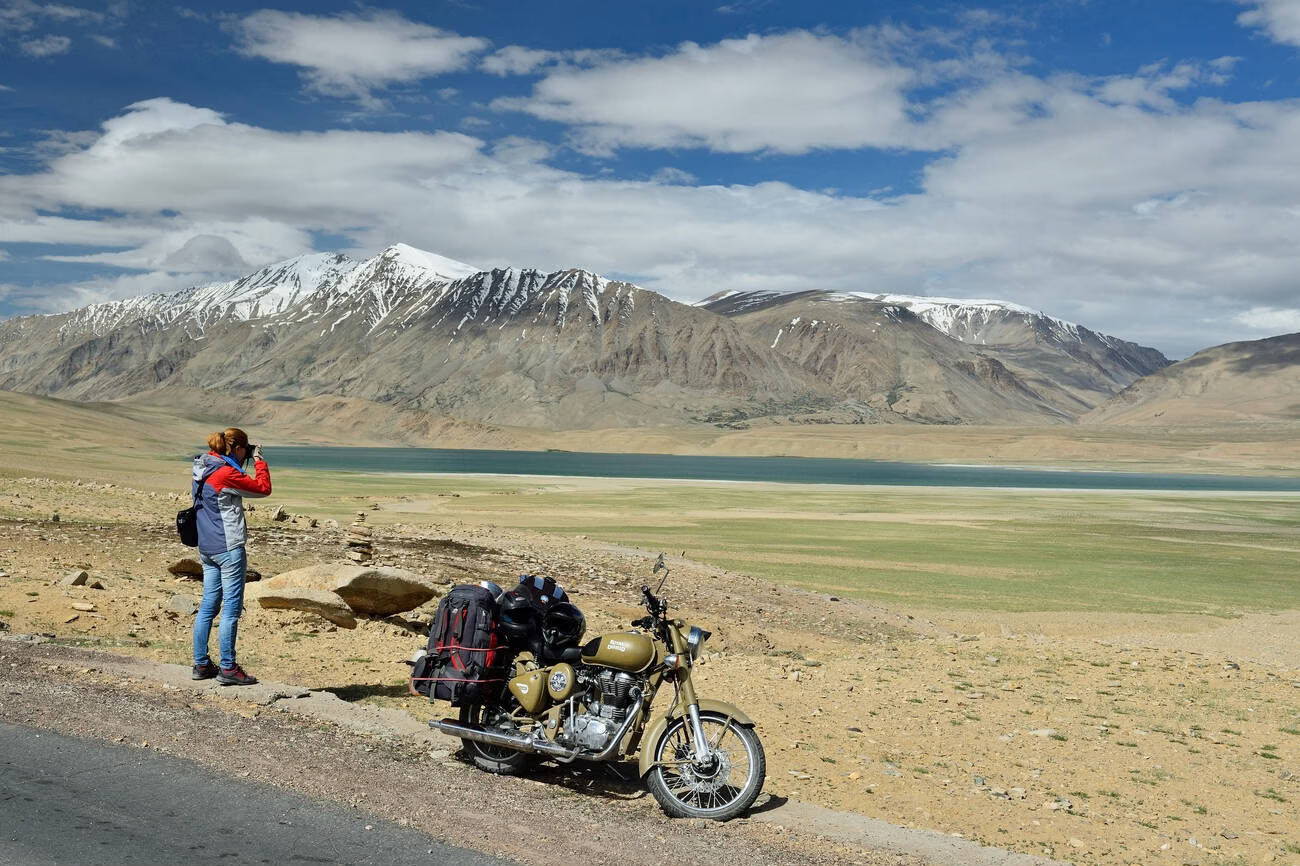
A Leh to Tso Moriri bike trip is one of Ladakh's most rewarding high-altitude rides for travelers who want quieter landscapes and deeper route immersion. Tso Moriri in Changthang offers a pristine lake setting, dramatic mountains, and fewer crowds than more commercial circuits.
This route requires planning around altitude, permits, fuel, and weather changes. Riders should pace carefully and avoid rushed timelines. For connected route planning, read Leh to Pangong bike trip, Changthang Wildlife Sanctuary, and Leh to Hanle bike trip.
About Tso Moriri Lake
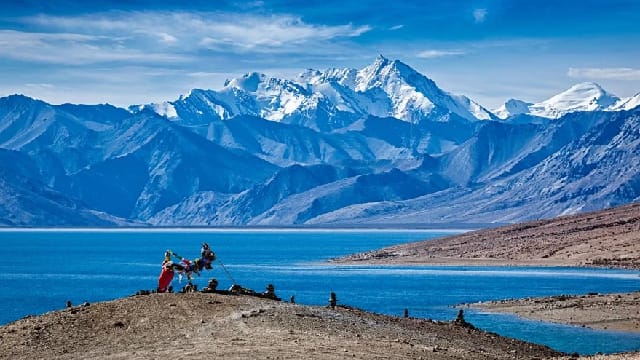
Tso Moriri is a high-altitude lake in southeastern Ladakh known for deep blue water and a remote mountain setting. The surrounding region is ecologically sensitive, so responsible travel behavior is essential. Weather and wind can shift quickly, especially in afternoon windows.
| Feature | Details | Impact on Riders |
|---|---|---|
| Altitude | Very high Himalayan elevation | AMS awareness required |
| Remoteness | Sparse infrastructure | Self-sufficiency needed |
| Climate | Cold nights and fast weather changes | Layered packing essential |
Route and Distance
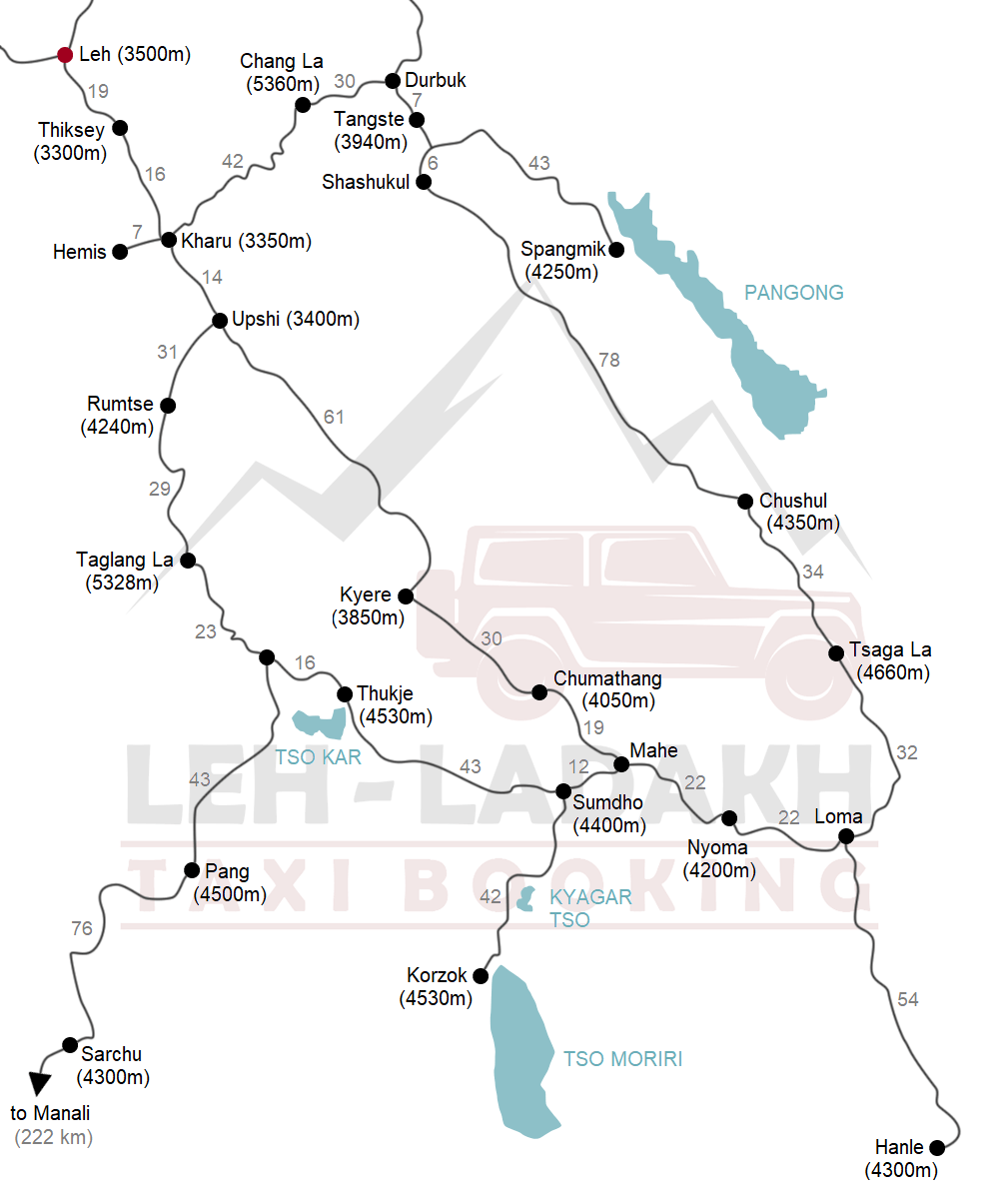
The commonly used route is Leh → Upshi → Chumathang → Mahe → Korzok/Tso Moriri. It is a full-day ride for most travelers with multiple breaks. Some stretches are smooth while others are rough, with occasional water-affected sections depending on season.
Road Condition and Difficulty Level
Road difficulty is usually moderate to challenging due to altitude and variable surfaces rather than technical riding complexity alone. Riders should keep conservative speed and avoid fatigue-driven mistakes in final segments.
- Leh-side roads are generally better in early sections
- Remote stretches can be rough and unpredictable
- Altitude can reduce stamina and concentration
- Night riding is not recommended on this route
Suggested Itineraries
2-Day Plan
Day 1 ride from Leh to Tso Moriri region, overnight near Korzok; Day 2 return to Leh.
3-Day Plan
Add Tso Kar or nearby route variation for better pacing and deeper landscape experience.
Extended Circuit
Experienced riders can combine Pangong and Hanle-linked circuits with proper permit and fuel planning.
Permits and Documents
Permit requirements apply for many travelers on this route. Policies can change, so verify in Leh before departure. Carry both printed and digital copies of your papers.
| Requirement | Status | Tip |
|---|---|---|
| Inner line/route permit | Generally required | Apply before ride day |
| ID proof copies | Mandatory | Keep multiple copies |
| Checkpoint readiness | Essential | Store documents in waterproof pouch |
Korzok Village and Monastery
Korzok is the main settlement near Tso Moriri and commonly used as overnight base. Stay options include camps and basic homestay-style properties depending on season. Korzok Monastery adds cultural context and helps riders connect the lake experience with local life.
Best Time to Visit
Main riding season is usually from late spring to autumn when routes are accessible and stays operate. Winter access is often highly restricted and conditions become severe.
- Peak season: broader accessibility
- Shoulder months: fewer crowds, colder nights
- Winter: not suitable for standard bike itineraries
Fuel, Food, and Packing Essentials
- Fill fuel fully in Leh and carry reserve safely.
- Pack thermal and windproof layers.
- Carry hydration, electrolytes, and snacks.
- Keep first-aid and altitude-support basics ready.
- Carry tools and puncture support for remote stretches.
Safety Tips
- Acclimatize properly in Leh before long rides.
- Do not ignore AMS symptoms.
- Avoid alcohol before and during high-altitude ride days.
- Ride in a group when possible.
- Respect no-litter and eco-sensitive lake zone guidelines.
Final Take
Leh to Tso Moriri bike trip is ideal for prepared riders who value remote landscapes and disciplined high-altitude travel. With the right planning, this route can be one of the most memorable bike journeys in Ladakh.
Acclimatization Strategy Before the Ride
Acclimatization is the foundation of a safe Leh to Tso Moriri bike trip. Riders who rush from arrival to long-route riding increase AMS risk and overall fatigue. A minimum acclimatization buffer in Leh helps your body adapt before prolonged high-altitude exposure. This improves reaction time, reduces headache risk, and supports safer riding decisions on remote stretches.
Use acclimatization days actively: short local rides, light hydration-focused movement, and adequate sleep. Avoid alcohol-heavy nights before long-altitude rides. Good acclimatization is not just health advice; it is route-performance strategy.
Fuel and Mechanical Planning in Remote Terrain
Fuel planning is one of the most common failure points on this route. Do not rely on assumptions around roadside availability. Calculate realistic mileage based on high-altitude performance, load, and road variation, then carry reserve safely. Mechanical reliability is equally important: chain condition, brakes, tire health, clutch response, and electrical integrity should be checked before departure.
| Pre-Ride Check | Why It Matters | Action |
|---|---|---|
| Fuel range estimate | Remote stretches have limited support | Tank full + reserve |
| Tire and tube condition | Rough segments increase puncture risk | Inspect and carry puncture kit |
| Brake and chain status | Control on rough roads | Service before ride day |
| Electrical health | Cold-start and visibility reliability | Battery/lights check |
Weather and Road Timing Discipline
Weather in Ladakh can shift quickly and affects both comfort and route safety. Wind intensity and temperature drop often increase later in the day, while some road segments may become tougher after meltwater activity. Early starts are therefore a tactical advantage, not just a convenience.
Plan departure at first light, keep buffer for stops, and avoid late-evening riding in unknown segments. If weather degrades significantly, slowing down or halting safely is better than forcing schedule completion.
Korzok Stay and High-Altitude Night Management
Korzok stays are usually basic and should be approached with realistic expectations. Focus on warm clothing, hydration, and rest rather than luxury comfort. Night temperatures can drop sharply, and sleep quality may vary due to altitude. Carrying essential medicines, thermal layering, and simple snacks can improve overnight stability.
Avoid heavy physical effort immediately after arrival at high altitude. A short acclimatization walk is enough; conserve energy for next-day return or onward route.
Wildlife, Ecology, and Responsible Riding
Tso Moriri lies in an ecologically sensitive region. Responsible behavior is non-negotiable: no littering, no aggressive off-road movement near fragile zones, and no disturbance to wildlife habitats. Keep noise discipline near lake edges and village areas. Respect local community norms and protected-area restrictions at all times.
Riders who treat the route responsibly help preserve access and experience quality for future travelers. This region is beautiful precisely because it remains less disturbed than mainstream destinations.
Emergency Readiness Checklist
- Shared route plan with one contact in Leh
- Offline maps and backup navigation
- Permit and ID copies in waterproof pouch
- Basic tool roll and puncture support
- AMS-response essentials and hydration stock
Prepared riders handle uncertainty better. In remote Ladakh, preparation is your best safety system.
Day-by-Day Riding Tactics
On this route, riding tactics matter as much as route knowledge. Begin early, use shorter breaks in lower sections, and take longer hydration stops as altitude increases. Avoid racing to checkpoints. A steady cadence protects both rider health and machine reliability. If weather turns, prioritize visibility and control over timing goals.
Group riders should keep clear spacing and communication signals, especially on rough and narrow segments. Overtaking in blind sections is one of the most preventable risks in remote Ladakh rides.
AMS Awareness and Physical Readiness
Acute mountain sickness can affect even experienced riders. Learn early warning signs: persistent headache, nausea, unusual fatigue, breathlessness at rest, and confusion. If symptoms intensify, descending and seeking medical guidance is safer than forcing continuation. No landscape is worth long-term health risk.
| Signal | Immediate Action | Do Not |
|---|---|---|
| Mild headache | Hydrate and rest | Ignore for long hours |
| Nausea + fatigue | Pause ride, monitor closely | Push aggressive speed |
| Severe symptoms | Descend and seek help | Continue deep-route ride |
Sustainable Riding in Changthang
The Changthang region is environmentally sensitive and culturally fragile. Avoid off-route tire tracks near wetland edges and do not disturb wildlife habitats. Keep camp waste controlled and avoid plastic disposal in remote sections. Responsible riders protect this route for future travelers.
Support local villages through fair stays and basic purchases where appropriate. This contributes directly to community resilience in a difficult terrain economy.
Final Readiness Check Before Departure
Before leaving Leh, run one final readiness check: documents packed, fuel strategy confirmed, weather reviewed, and rider health stable. This five-minute check often prevents major on-route issues. Do not start the ride if any core safety element is uncertain.
Keep your riding mindset flexible. In high-altitude remote routes, reaching safely is always more important than strict timing goals. If visibility drops or fatigue rises, slow down or stop. Good riders adapt to terrain conditions, they do not fight them.
Tso Moriri rewards patience. Plan conservatively, respect altitude, and ride responsibly. With this approach, the route becomes one of Ladakh's most meaningful riding experiences.
Keep one flexible buffer in your itinerary for weather or rider fatigue. Remote Ladakh rewards adaptive planning, and this buffer can significantly improve safety and trip quality.
Plan with one clear priority, one backup option, and one fixed return strategy. This simple structure improves safety, reduces stress, and helps you enjoy the core experience without last-minute confusion. Travelers who follow this model usually report smoother logistics, better time use, and stronger overall trip satisfaction.
Before finalizing any plan, reconfirm timings, route conditions, and booking details on the same day. Real-time verification reduces surprises and helps you make better decisions when crowd, weather, or logistics change unexpectedly.
Location
Frequently Asked Questions
Q1.How far is Tso Moriri from Leh?
Q2.What is the best time to visit Tso Moriri?
Q3.Can I do a day trip to Tso Moriri from Leh?
Q4.What is the road condition to Tso Moriri?
Q5.Is Tso Moriri bike trip difficult?
Q6.Do I need permits for Tso Moriri?
Q7.Where can I stay near Tso Moriri?
Q8.Are there fuel stations on the route?
Recommended For You
Best Time for Leh Ladakh Bike Trip: Season Guide Tips
Choose the best time for Leh Ladakh bike trip with season-wise planning, permit timing, and practical high-altitude ride tips.
Bike Rental for Leh Ladakh Trip: Complete Guide Tips
Plan bike rental for Leh-Ladakh trips with practical checks, budget strategy, and high-altitude route safety tips for smoother rides.
Leh to Changthang Bike Trip: Route & Itinerary
Ultimate guide to Leh to Changthang bike trip. Route via Hanle, Tso Moriri, Tso Kar. Itinerary, road conditions, permits & preparation.
Never Miss an Adventure
Get the latest trekking guides, travel tips, and exclusive offers delivered straight to your inbox.
