

Shopping in Chopta: Gear, Woolens and Trek Essentials

Ananya Sharma
February 22, 2026
Practical guide to shopping in Chopta with trekking essentials, woolens, local availability, what to carry from home, and pre-trek buying tips.
Introduction: Shopping in a Trek Base, Not a Retail Town
Shopping in Chopta is practical, limited, and heavily tied to trekking needs. Travelers expecting full-scale markets usually get disappointed, but those who treat Chopta as a mountain basecamp buy exactly what they need and move efficiently. The area is designed around routes to Tungnath and nearby hikes, so supplies focus on weather protection, basic food, low-cost woolens, and emergency essentials.
The right strategy is simple: carry critical gear from home, use Chopta for last-minute top-ups, and avoid relying on local stock for technical or branded equipment. This approach reduces stress and keeps your trek prep realistic.
This guide explains what is actually available in Chopta shops, what to carry in advance, how rental options work, and how to plan purchases based on season. For broader route context, pair this with things to do in Chopta, places to visit in Chopta, and trek planning references if you are comparing mountain circuits.

What You Can Expect from Chopta Market
Chopta's market setup is small and need-based. Most outlets are basic stores attached to guesthouse clusters, roadside counters, or seasonal stalls serving trekkers.
- Limited but useful trekking accessories
- Woolen caps, gloves, socks, and low-cost layers
- Rain protection items in season
- Packaged snacks, water, tea supplies
- Basic medicines and personal-care items
Do not expect premium outdoor brands, advanced trekking shoes, or specialized winter systems. For those, buy in larger towns before arrival.
Trekking Gear: What Is Usually Available
Local stores and rental points may offer simple gear for short treks. Availability changes with season and footfall, so last-minute dependence is risky during peak dates.
| Gear Type | Likely Availability | Recommendation |
|---|---|---|
| Walking stick | Common | Can buy/rent locally |
| Rain poncho | Seasonal | Carry one backup from home |
| Gloves/caps | Common | Good for emergency purchase |
| Trekking shoes | Very limited quality | Carry from home |
| Backpack | Basic options | Use your own if possible |
Rental quality can vary. Check stitching, zippers, and fit before taking any item, especially during wet or cold weather.
Woolens and Winter Essentials in Chopta
Woolens are among the easiest purchases in Chopta. You will generally find caps, socks, gloves, and simple sweaters that work for quick weather support.
- Best local buys: Woolen caps, thick socks, knit gloves.
- Okay emergency buys: Low-cost thermals and local jackets.
- Avoid relying on: Technical insulation layers and premium shells.
For winter travel, use Chopta purchases as supplementary layers, not your core protection system. Night temperatures can drop sharply, so dependable primary gear should already be in your backpack.

Food, Snacks and Daily Essentials
Shops in Chopta usually stock packaged snacks, bottled water, instant noodles, biscuits, and simple trail food. This is enough for short route prep, but not ideal for specialized dietary needs.
Useful buys before trek start
- Energy bars and chocolates
- Electrolyte packets
- Dry snacks for summit stretch
- Extra water bottles if refill options are uncertain
Carry personal medicines from home. Mountain shops may not stock the exact formulations you need.
What to Carry from Home vs What to Buy There
| Category | Carry from Home | Can Buy in Chopta |
|---|---|---|
| Footwear | Quality trekking shoes | Only emergency alternatives |
| Weather gear | Reliable jacket, rain shell | Poncho/basic cover |
| Medical | All prescription needs | Basic OTC items |
| Food | Special nutrition items | General snacks and water |
| Accessories | Headlamp, power bank | Basic gloves/caps/socks |
Shopping Tips for Trek Travelers
- Buy critical gear before reaching Chopta.
- Keep cash for smaller counters and remote payments.
- Shop in daylight so you can inspect items properly.
- Avoid peak-hour rush right before trek departures.
- Confirm weather and buy only what your route requires.
Most trekking delays come from poor preparation, not difficult shopping. A clear checklist saves both money and effort.
Best Time for Shopping in Chopta
Stock levels are usually better in active trekking months, while harsh winter periods may reduce variety and opening windows. If you are visiting in shoulder or low season, finalize purchases in larger towns before moving into Chopta.
Morning to early evening is typically the most reliable shopping window. Late-night buying is rarely practical in remote mountain setups.
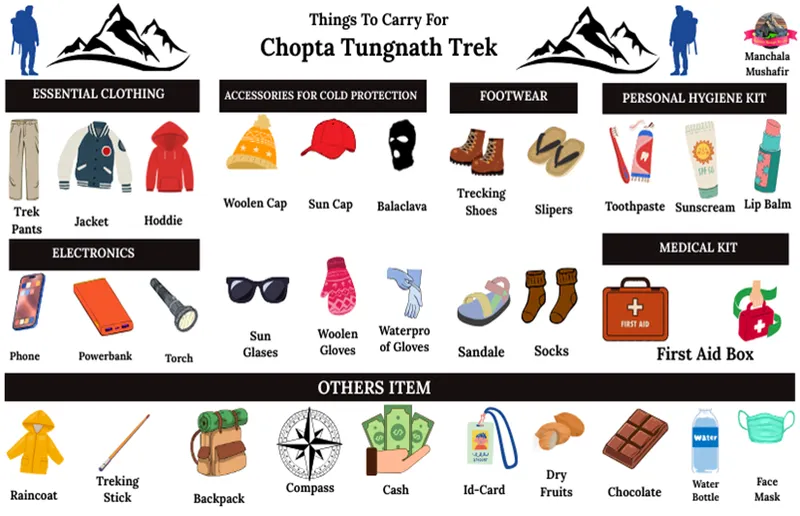
Sample 2-Hour Pre-Trek Shopping Plan
- First 30 minutes: verify route weather and make checklist.
- Next 45 minutes: buy/rent stick, rain cover, gloves, snacks.
- Next 30 minutes: re-check clothing layers and medicine kit.
- Final 15 minutes: pack and waterproof essentials before start.
Preparation Deep Dive: Weather-Risk Shopping Strategy
Mountain shopping in Chopta is most effective when tied directly to weather risk. Before buying anything, check latest forecast windows for rain, wind, and night temperature drop. Then map purchases into three levels: critical safety gear, comfort-support items, and optional extras. Critical items include rain protection, thermal support, hydration support, and safe walking aids. Comfort-support items include additional socks, light snacks, and emergency gloves. Optional extras include low-value souvenirs or duplicate gear that does not improve safety.
Travelers often overspend on visible but low-impact products while missing one or two critical items. A practical rule helps: buy first for dryness, then warmth, then energy. If these three are managed well, your trek experience improves sharply. For example, one reliable rain layer and dry socks can matter more than an extra sweater of uncertain quality. Similarly, carrying enough quick-energy food is often more useful than buying additional non-essential accessories.
Another common issue is late-hour shopping right before trek start. This causes rushed decisions and poor fit checks. Instead, complete all purchases at least one evening before departure, then test pack and layering in your room. Check backpack balance, poncho access speed, and glove usability with your phone/touch needs. This rehearsal method reduces trail delays and stress next morning.
Rental vs Purchase Decision Framework
Use rentals only for low-risk items like walking sticks and simple rain covers. For items that directly affect foot stability, warmth quality, or prolonged comfort, personal gear is usually superior. The fit and reliability advantage is significant in mountain conditions.
| Item | Rent | Buy Local | Bring from Home |
|---|---|---|---|
| Walking stick | Yes | Yes | Optional |
| Rain poncho | Sometimes | Yes | Preferred backup |
| Trekking shoes | No | Emergency only | Strongly yes |
| Thermal base layer | No | Limited quality | Yes |
| Headlamp | No | Rare | Yes |
If renting, inspect for damage, odor, moisture, and worn-out grips. Reject compromised items immediately.
Route-Day Energy and Snack Planning
Many trekkers underestimate energy planning in Chopta routes. Local shops can provide backup snacks, but do not assume ideal stock every day. Build a personal snack kit with a simple ratio: fast sugar source, slow carb source, and electrolyte support. This helps maintain stable movement pace, especially in cold and variable weather.
- Carry at least one emergency high-calorie item you will not open unless needed.
- Use refillable bottles with clean water strategy from known points.
- Avoid overloading your pack with bulky low-calorie snacks.
Good snack planning reduces fatigue and poor decision-making on trail turns and descent timing.
Final Night Checklist Before Trek Start
- Set out first-layer clothing and rain gear for quick morning access.
- Keep gloves, cap, and socks in top compartment.
- Charge phone and backup battery fully.
- Keep medicine pouch waterproofed.
- Confirm local weather update and start time.
- Sleep early to avoid late, rushed departure.
This checklist may feel basic, but it is the difference between smooth mountain execution and avoidable pre-trek stress.
Packing Discipline for First-Time Trek Travelers
First-time Chopta visitors often carry either too much or too little. The right method is category packing: weather layer, trail utility, personal care, and emergency reserve. Keep frequently used items accessible and deep-pack only backup items. A cluttered bag slows your movement and increases mistakes at critical moments like sudden rain or temperature drops.
Use a pre-departure drill: wear your base layer, test poncho reach, confirm glove access, and check that water and snacks are not buried under heavy clothing. This small rehearsal takes ten minutes and significantly improves trail readiness. Travelers who do this usually need fewer emergency purchases on route and make better use of local shops for genuine top-ups.
Remember that Chopta shopping should solve gaps, not replace planning. If your core gear is reliable and your bag is organized, local markets become helpful support points instead of last-minute stress centers.
If you start prepared and shop only for true gaps, Chopta's small market is more than enough for a safe and efficient trek setup.
Another practical recommendation is to keep a weather-trigger checklist in your phone: if rain probability rises, prioritize waterproofing and sock redundancy; if wind chill rises, prioritize glove and neck coverage. This real-time adaptation method helps trekkers spend only on necessary upgrades instead of random emergency buys. In remote mountain bases like Chopta, disciplined micro-planning is often more useful than broader shopping variety.
A final gear check at sunrise is still recommended before stepping out, even if you shopped well the previous day.
Conclusion
Shopping in Chopta is about utility, not variety. Treat local stores as support points for last-mile trekking needs and keep your major equipment ready before arrival. This mindset prevents avoidable delays and makes your trek safer and smoother.
With a practical checklist and realistic expectations, even Chopta's minimal market scene is enough to prepare effectively for short Himalayan routes.
Location
Frequently Asked Questions
Q1.Are there shops in Chopta?
Q2.Can I buy trekking gear in Chopta?
Q3.What woolens are available in Chopta markets?
Q4.Should I rent trekking items in Chopta?
Q5.What should I carry from home for Chopta?
Q6.Are medicines available in Chopta shops?
Q7.What are Chopta shop timings?
Q8.How much time should I keep for Chopta shopping before trek?
Recommended For You

Best Treks in Shimla: Routes, Season and Tips
Plan the best treks in Shimla with route difficulty awareness, seasonal timing, and practical safety tips for better trail experiences.

Trekking in Wayanad: Best Trails, Permit Info & Safety Tips
Complete Wayanad trekking guide with Chembra Peak, Pakshipathalam, Edakkal Caves, best trails, permits, season, and preparation tips for adventurers.

Treks in Dharamshala: Top Trails, Distance & Best Time
Top treks in Dharamshala - Triund, Kareri Lake, Indrahar Pass. Trail details, difficulty, best season & preparation tips.
Never Miss an Adventure
Get the latest trekking guides, travel tips, and exclusive offers delivered straight to your inbox.
