
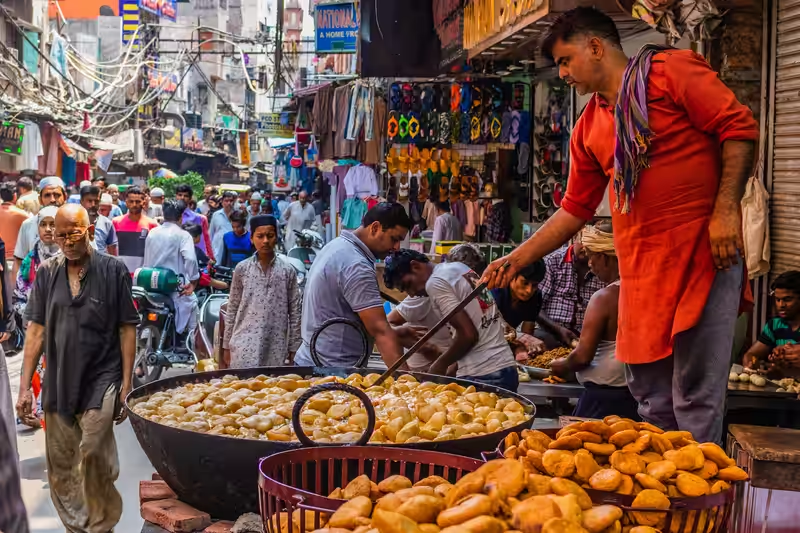
Street Food Delhi: Complete Guide to Chaat & Local Eats

Rahul Garg
February 19, 2026
Complete guide to Delhi's street food including chaat, gol gappe, chole bhature, parathas, famous locations, and food safety tips.
Street Food Delhi: Best Food Walk Routes, Must-Try Dishes, and Safe-Eating Tips
Delhi is one of India’s strongest street-food cities, but the experience can feel overwhelming for first-time visitors. There are too many lanes, too many famous stalls, and too many viral recommendations with no route logic. If you want to enjoy street food in Delhi properly, you need a simple framework: area-wise planning, dish sequencing, hygiene filters, and timing awareness.
This guide gives you exactly that. You will find the best food streets by zone, must-try dishes, budget estimates, metro-friendly route planning, and practical safety tips. If you also want restaurant and themed dining contrast in the same trip, pair this with Railway Coach Restaurant Delhi and Noida top restaurants.
How to Plan Delhi Street Food Like a Local
The biggest mistake tourists make is jumping randomly between far-apart food spots. Delhi traffic can waste hours if route planning is poor. The better strategy is to do one food district at a time. That gives fresher tasting, less fatigue, and lower transport stress.
Route-first rules:
1. Pick one food area per half day.
2. Start with lighter dishes and build intensity.
3. Share portions to try more items.
4. Avoid overloading fried and dairy-heavy foods at once.
Best Street Food Areas in Delhi
Old Delhi and Chandni Chowk Belt
This is the most iconic street-food zone in Delhi. It is dense, historic, and packed with legendary stalls. You can explore chaat, kebab lanes, sweets, and old-school snack classics in walking distance. Crowd levels are high, so early-evening timing and walking patience are important.
Central Market and College Belts
Good for mixed modern and classic snack options. Suitable for younger crowds and short evening food sessions.
Night Food Streets in Different Districts
Several late-evening belts offer rolls, kebabs, desserts, and fusion snacks. These are useful for night explorers, but hygiene checks are non-negotiable.
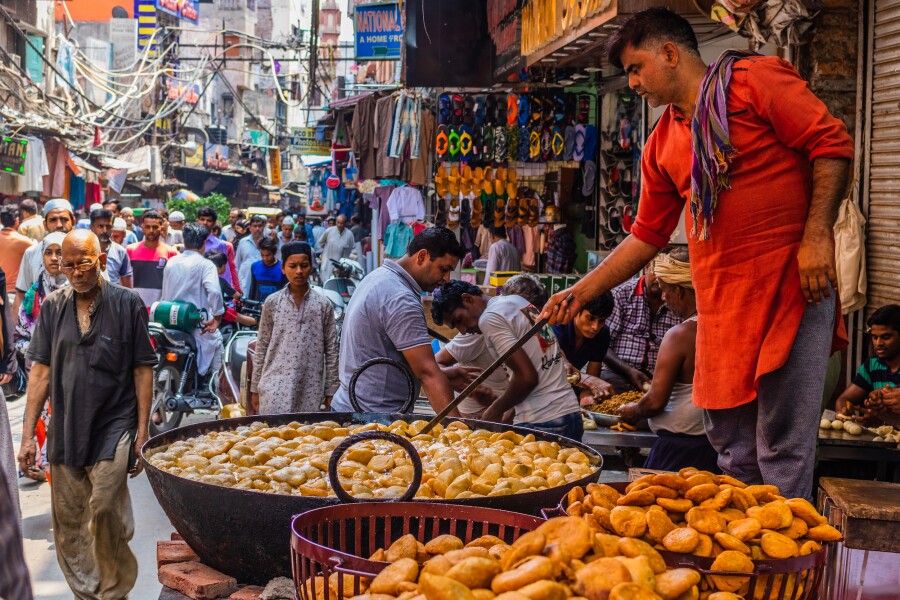
Must-Try Street Foods in Delhi
Delhi is not about one signature dish. It is a layered food experience. Prioritize a balanced tasting list:
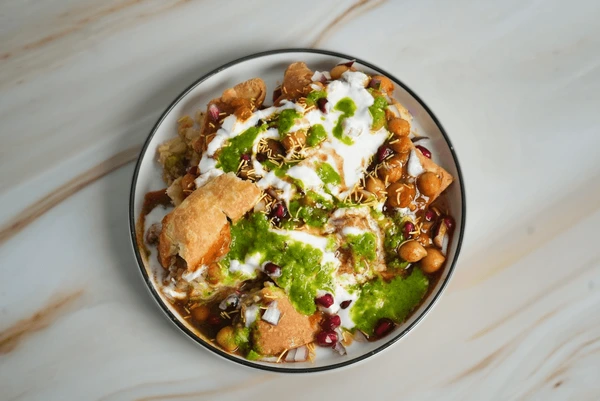
1. Chaat category (start here).
2. Stuffed bread/snack category.
3. Roll or grilled savory item.
4. One fried specialty.
5. One classic sweet or dessert finish.
If you are a first-timer, this structure helps avoid early food fatigue and keeps your tasting journey enjoyable.
Half-Day Old Delhi Food Walk Itinerary
Step 1: Arrive early and begin with light savory snacks.
Step 2: Move to signature chaat and regional specialties.
Step 3: Add one heavier savory item.
Step 4: Finish with sweet and tea-based stop.
Step 5: Exit before crowd peak if you prefer comfort.
This pattern works for most tourists and allows tasting variety without exhaustion.
Full-Day Delhi Street Food Plan (Metro-Friendly)
Morning: breakfast-style street staples in one zone.
Afternoon: light meal + short break.
Evening: Old Delhi or similar high-value belt.
Night: optional dessert and tea finish in selected area.
Use metro-linked clusters where possible to reduce travel stress and maximize food time.
How Much Budget to Keep?
Delhi street food can be budget-friendly if you manage portion size and route discipline. Costs rise when travelers over-order due to excitement at every stall. Sharing is the best way to experience more dishes while controlling spend.
Budget tips:
1. Keep fixed tasting budget per session.
2. Share high-demand items.
3. Carry small cash denominations and digital option both.
4. Avoid paid transport hopping between distant areas in same window.
Food Safety and Hygiene Checklist
Street food is best enjoyed with smart filters, not fear. Use this checklist:
1. Choose high-turnover stalls.
2. Prefer freshly cooked/hot-served items.
3. Check water and ice usage in beverages.
4. Avoid low-activity stalls with pre-plated items.
5. Keep hand sanitizer and hydration support ready.
If you have a sensitive stomach, avoid mixing too many dairy and fried items in one stretch.
Best Time for Delhi Street Food Exploration
Time selection depends on area. Some lanes are best in late afternoon, others peak at night. For first-time visitors, avoid most crowded windows if you want easier movement and cleaner stall visibility. Festival periods increase excitement but also crowd density.
Weekdays are often easier than weekend night peaks for route-based food walks.
Street Food for Families and Couples
Families should keep shorter routes with planned rest points and avoid very late-night heavy zones with children. Couples can enjoy evening food walks if they choose a compact area and keep the plan paced. In both cases, shared tasting and short breaks improve comfort and overall fun.
Common Mistakes Tourists Make
1. Visiting too many far-apart food zones in one day.
2. Starting with heavy fried dishes first.
3. Ignoring crowd and weather timing.
4. Choosing stalls by social hype only.
5. Skipping hydration and pacing breaks.
Avoid these and your Delhi street-food day becomes much smoother.
How to Combine Street Food with Delhi Sightseeing
A strong itinerary model is: morning monument/cultural stop, afternoon rest, evening food walk in one concentrated zone. This reduces fatigue and makes both sightseeing and food exploration better. If you want old-city heritage with food, pair route segments around the same district and avoid cross-city backtracking.
For broader travel planning around Delhi, you can also explore Chandni Chowk Delhi (if relevant in your list) and related local guides.
Who Should Do a Delhi Street Food Trail?
Food explorers, budget travelers, photographers, and culture-first visitors will enjoy it most. It is ideal for people who like immersive local experiences rather than only formal restaurant settings. If you prefer curated table service, use street food as one evening experience and keep other meals at restaurants.
Final Recommendation
Street food Delhi is best experienced with route discipline, hygiene awareness, and tasting balance. Pick one zone at a time, share portions, and prioritize fresh high-turnover stalls. Done right, Delhi’s food streets can become one of your most memorable travel experiences in India.
To diversify your food journey, combine Delhi street trail with restaurant-led city guides like Chennai restaurants and night-market formats like Sarafa Bazaar Indore.
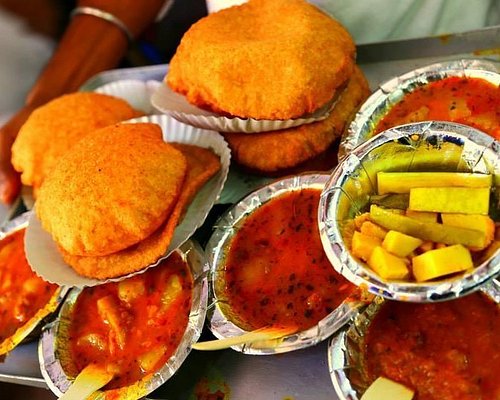
Street Food Delhi for First-Time International Travelers
First-time international travelers can enjoy Delhi street food comfortably with a few adjustments: start in high-turnover famous lanes, keep portions small, avoid raw chutney-heavy combinations initially, and maintain hydration. Do one short food session before attempting full-day trails. This builds confidence and helps your body adapt to spice and richness levels gradually.
How to Build a Safe Tasting Sequence
Start with hot-cooked items, then move to moderate fried snacks, then sweets, and keep dairy-heavy items later only if your stomach feels stable. Avoid mixing too many acidic, fried, and dairy dishes rapidly. A paced tasting sequence is the easiest way to enjoy variety without discomfort.
Metro-Friendly Route Strategy
Delhi street-food trails are easier when metro-linked. Use one station as entry anchor, walk a concentrated food lane, then continue to one nearby cluster instead of taking multiple cross-city rides. This saves money and energy. Keep digital map + offline backup, especially in dense lanes where network can fluctuate.
Night Street Food in Delhi: Is It Worth It?
Yes, night food culture is a key part of Delhi’s identity. But choose known areas, stay in groups where possible, and avoid very late unplanned exploration in unknown pockets. Night windows can offer excellent freshness and energy in popular lanes when planned safely.
Final Food-Walk Checklist
1. Pick one area per session.
2. Keep hygiene filters active.
3. Share portions and pace tasting.
4. Carry hydration and sanitizer.
5. Stop before food fatigue starts.
Street food in Delhi is best when curiosity and caution are balanced. Plan smart, eat fresh, and enjoy the city’s incredible flavor diversity.
Location
Frequently Asked Questions
Q1.What is the most famous street food in Delhi?
Q2.Where can I find the best street food in Delhi?
Q3.Is Delhi street food safe to eat?
Q4.What is the best time to explore Delhi street food?
Q5.What is Paranthe Wali Gali famous for?
Q6.What is the cost of street food in Delhi?
Q7.What is daulat ki chaat?
Q8.What are momos in Delhi street food?
Recommended For You

Jama Masjid Delhi: Timings, Entry Rules & Nearby Old Delhi Walk
Complete Jama Masjid Delhi guide with timings, entry details, architecture highlights, minaret climb tips, dress code, and nearby Old Delhi route planning.
Connaught Place Delhi: Shopping Blocks, Restaurants & Metro Access
Explore Connaught Place Delhi: shopping, dining, brands, markets, tips & timings. Complete guide to Delhi's iconic circular market district.
Fatehpuri Masjid Delhi: History, Prayer Timings & Visitor Tips
Complete guide to Fatehpuri Masjid Delhi covering historical background, architecture, timings, entry details, and Old Delhi itinerary tips.
Never Miss an Adventure
Get the latest trekking guides, travel tips, and exclusive offers delivered straight to your inbox.
