
Fatehpuri Masjid Delhi: History, Prayer Timings & Visitor Tips

Ananya Sharma
February 18, 2026
Complete guide to Fatehpuri Masjid Delhi covering historical background, architecture, timings, entry details, and Old Delhi itinerary tips.
Introduction: A Mughal-Era Landmark at Chandni Chowk
Fatehpuri Masjid stands at the western end of Chandni Chowk and remains one of Old Delhi's most historically important mosques. Travelers searching for this monument usually want clear details on history, timings, metro access, and photography rules. This guide focuses on exactly those needs while keeping religious context respectful.
The mosque is not just a visual heritage stop. It is an active spiritual space with deep historical memory from the Mughal period to later colonial transitions. Visiting thoughtfully gives both architectural insight and cultural understanding of Old Delhi.
History and Construction Background
Fatehpuri Masjid dates to the mid-17th-century Mughal era and is associated with Fatehpuri Begum, one of Emperor Shah Jahan's queens. Its placement in Chandni Chowk aligned with broader Mughal urban planning of ceremonial, commercial, and religious spaces.
The mosque also experienced major historical upheaval during the 19th century. Post-revolt transitions altered ownership and usage before restoration to community religious function. This layered past gives the monument significance beyond architecture alone.
Architecture Highlights and Design Language
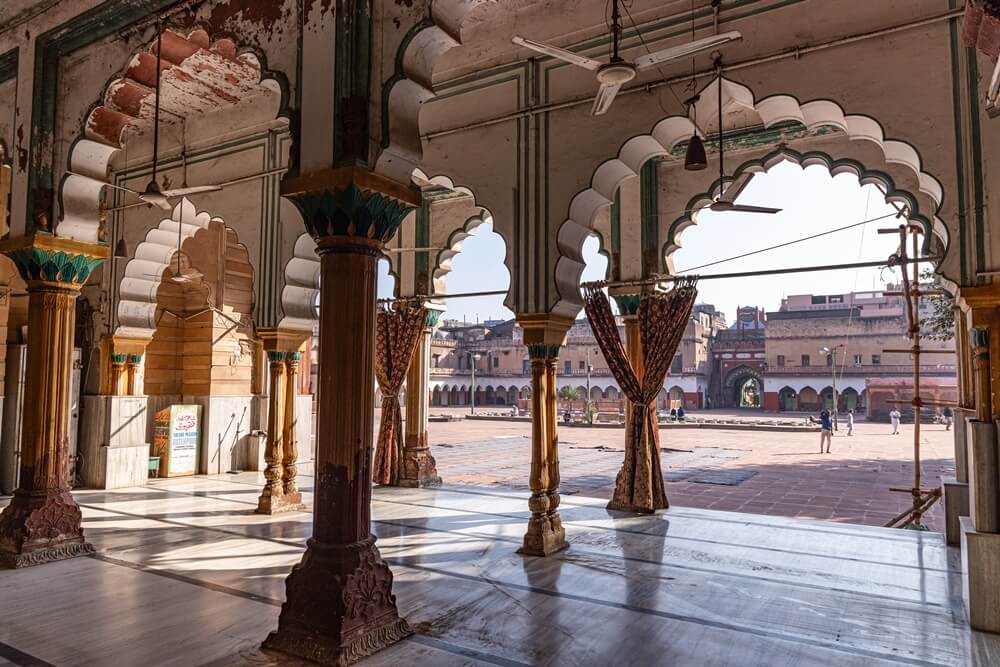
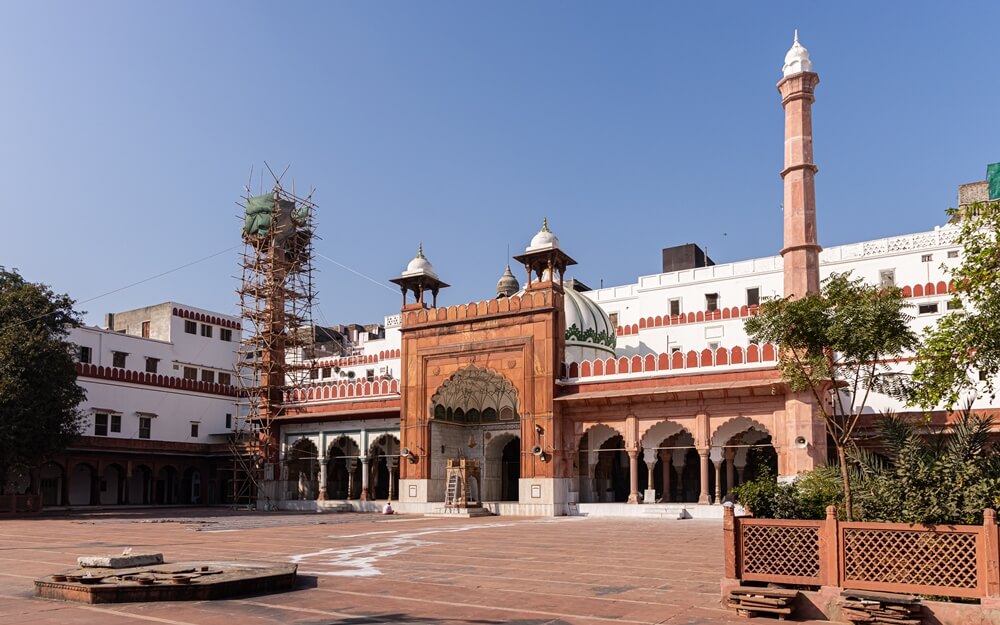
Built in classic Mughal style, Fatehpuri Masjid emphasizes symmetry, arches, and red-stone identity. The prayer courtyard, structural geometry, and decorative restraint together create a strong heritage profile.
| Element | What to Observe | Importance |
|---|---|---|
| Main courtyard | Open congregational layout | Supports communal prayer scale |
| Arched frontage | Balanced Mughal rhythm | Visual hallmark of the structure |
| Dome and prayer axis | Spatial focus toward worship direction | Liturgical and architectural function |
| Surface detailing | Measured ornamentation | Reflects Mughal aesthetic discipline |
Architecture enthusiasts should spend time comparing this mosque's style with nearby Old Delhi structures for a broader urban-historical reading.
Religious Significance and Community Role
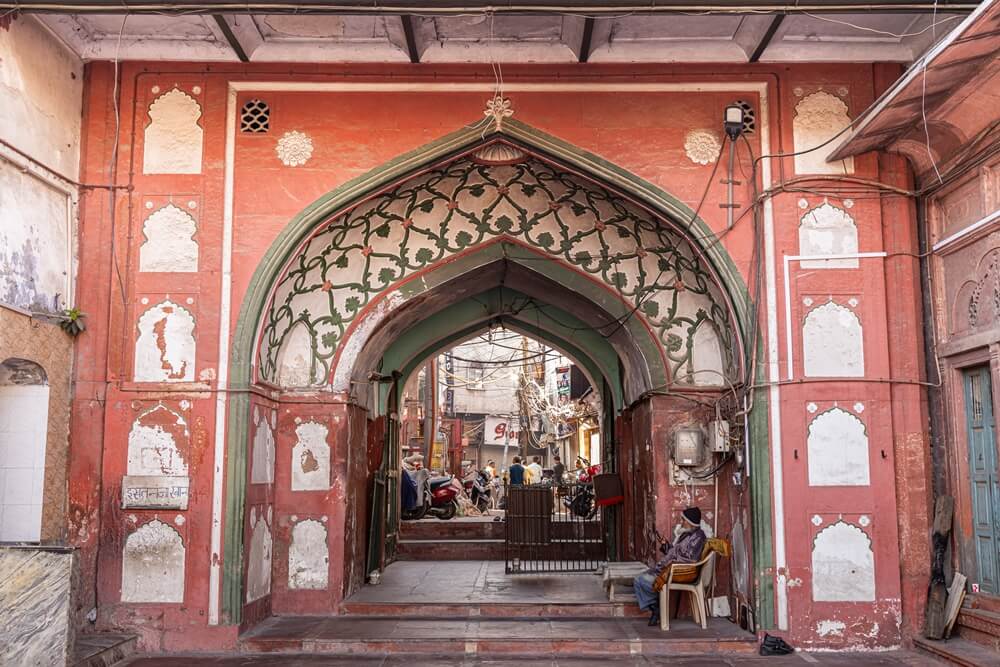
Fatehpuri Masjid remains an active place of worship. While many visitors arrive for history and photography, prayer and community life continue at the center of the site.
- Regular daily prayers with local participation
- Higher footfall around Friday and festival periods
- Strong place in Old Delhi Muslim heritage memory
Visitors should maintain respectful behavior and prioritize worship activity over tourism movement.
Timings, Entry, and Visitor Information
Prayer schedules and visitor movement windows can vary across weekdays, Friday congregations, and festival periods. Confirm current timing locally when planning a focused visit.
| Visit Type | Typical Condition | Tip |
|---|---|---|
| General non-prayer visit | Moderate movement | Good for architecture observation |
| Friday visit | High worship footfall | Avoid intrusive photography |
| Festival period | Crowded and devotional | Visit with extra time buffer |
Entry policies and photography norms may differ by time and management instructions. Follow on-site guidance strictly.
How to Reach Fatehpuri Masjid (Metro and Road)
Fatehpuri Masjid is easily integrated into Old Delhi routes. Metro access plus short walking/cycle-rickshaw segments is common for visitors. Road traffic can be dense in Chandni Chowk, so allow buffer time.
- Use metro to nearby Old Delhi corridors
- Take short local transfer to mosque entrance zone
- Prefer morning or late-afternoon movement for better comfort
If you are doing a religious and heritage loop, combine with Jama Masjid in Delhi and Chandni Chowk Delhi.
Nearby Attractions and Route Pairing
Because of its central Old Delhi location, Fatehpuri can be part of a highly efficient heritage route.
- Places to Visit in Old Delhi
- Traditional market lanes and food circuits
- Other Mughal-era monuments in close proximity
Plan route blocks by walking comfort rather than distance alone, as lane density can slow movement.
Photography and Respectful Conduct Tips
- Avoid flash during active prayer windows.
- Do not photograph worshippers without permission.
- Dress modestly and keep behavior quiet.
- Prioritize spiritual environment over social-media performance.
Final Take
Fatehpuri Masjid is one of Old Delhi's most meaningful heritage-and-faith landmarks. It rewards visitors who combine historical curiosity with religious respect. Keep timing flexible, follow local guidance, and include it in a broader Chandni Chowk heritage circuit for the best experience.
With mindful planning, this site offers a rich view into Delhi's layered Mughal and community history.
How to Read Fatehpuri Masjid as Urban History
Fatehpuri Masjid is best understood as part of Shahjahanabad’s integrated urban design rather than a standalone monument. The western-end placement in Chandni Chowk reflects planning logic around movement, trade, and congregational religion. If you map the mosque with nearby bazaars, routes, and historic nodes, the site becomes a living reference point for Old Delhi’s layered identity.
Visitors interested in history should read inscription styles, surface aging, and surrounding street patterns. These elements reveal continuity and change in ways standard monument summaries do not. A slow walk around the precinct before entry often improves historical understanding.
Prayer Etiquette and Non-Disruptive Visiting
Because Fatehpuri Masjid is an active mosque, visitor behavior must adapt to prayer priority. If you arrive during congregational windows, step back from photography and allow devotional movement to proceed smoothly. Non-Muslim visitors are generally welcomed when respectful norms are followed.
- Dress modestly and avoid loud conversation.
- Remove footwear where required.
- Do not cross in front of worshippers in prayer formation.
- Ask before photographing people or sensitive spaces.
This approach protects both sanctity and visitor experience quality.
Suggested Old Delhi Heritage Route Including Fatehpuri
A balanced half-day route can start at Fatehpuri, move through Chandni Chowk market layers, and continue toward Jama Masjid and adjacent historic points. Keep meal and rest breaks built in, as lane density and crowd flow can slow movement. This route gives architecture, religion, and bazaar life in one integrated urban narrative.
| Route Block | Approx Focus |
|---|---|
| Start at Fatehpuri | Mughal religious architecture |
| Chandni Chowk section | Market and street heritage |
| Jama Masjid corridor | Expanded Islamic architectural context |
Photography and Documentation Best Practices
Use natural light and avoid intrusive framing during high-devotion periods. Focus on geometry, arches, courtyard scale, and texture transitions instead of crowd-centric shots. Researchers and students can maintain a simple observation log: date, timing, crowd condition, and architectural notes. This makes repeat visits far more useful.
Conservation and Future Relevance
As with many active heritage structures in dense city zones, long-term preservation requires cooperation between community use and visitor behavior. Respectful tourism is part of conservation. If you value Delhi’s historical continuity, sites like Fatehpuri deserve mindful visitation rather than hurried social-media-only stops.
Deep Old Delhi Context: Why Fatehpuri Matters
Fatehpuri Masjid becomes far more meaningful when read alongside Old Delhi’s commercial and social geography. Chandni Chowk is not just a market corridor; it is a layered historical ecosystem where trade, religion, craft, and migration have interacted for centuries. The mosque’s position at a major historic axis shows how congregational spaces were integrated into urban function in Mughal planning.
Today, this legacy continues in a different form: dense lanes, mixed communities, and high movement patterns that still revolve around historical nodes. Visiting Fatehpuri with this context helps you see continuity rather than only monument aesthetics. You are witnessing a living city system, not isolated ruins.
Researchers and serious travelers should observe how mosque activity coexists with intense market rhythms nearby. This coexistence is one of Old Delhi’s defining features. A respectful and attentive visit makes Fatehpuri one of the most educational stops for understanding Delhi’s layered urban history.
For first-time visitors, keeping extra time for neighborhood observation before and after the mosque visit is highly recommended.
Community Memory and Living Heritage
Fatehpuri Masjid remains powerful because it is a living place in a living neighborhood. Its value comes from continuity: daily worship, market proximity, and generational memory. Visitors who engage respectfully with this living context understand Old Delhi far better than those who treat the mosque as a static monument.
In practical terms, this means planning your visit around worship rhythms and neighborhood flow. The mosque and market are connected realities, and observing that connection is one of the richest lessons the site offers.
Take time to absorb atmosphere, architecture, and community movement together. This integrated reading is what makes Fatehpuri memorable.
Practical Wrap-Up for First-Time Visitors
If this is your first visit to Fatehpuri Masjid, prioritize timing and conduct over photography output. Arrive when movement is manageable, dress appropriately, and observe before you document. This helps you read the mosque as a living place and not just a structure. Keep your visit anchored in respect for prayer routines and community use.
Also, plan your surrounding Old Delhi route with realistic walking buffers. Dense lanes and stop-start movement are part of the experience. When you accept that pace and align your itinerary accordingly, Fatehpuri becomes one of the most meaningful heritage encounters in Delhi.
Closing Note for Heritage Travelers
Fatehpuri Masjid should be visited as a living sacred space with historical depth. Give it time, enter respectfully, and connect it with Old Delhi’s broader social history for a complete understanding. Travelers building a wider Delhi faith circuit often add Nizamuddin Dargah to the same trip, since it offers another perspective on how devotional life continues inside a historic urban neighborhood.
For repeat visitors, a second visit at a different time of day is highly recommended. Morning and late-day atmospheres can feel completely different, and this contrast helps you understand both worship rhythm and neighborhood behavior more clearly. On your second visit, focus less on photos and more on spatial experience, prayer flow, and community movement around the mosque. That shift usually deepens the visit significantly.
Location
Frequently Asked Questions
Q1.Who built Fatehpuri Masjid?
Q2.When was Fatehpuri Masjid built?
Q3.What is Fatehpuri Masjid famous for?
Q4.What are Fatehpuri Masjid timings?
Q5.Is there an entry fee for Fatehpuri Masjid?
Q6.How to reach Fatehpuri Masjid by metro?
Q7.Can we take photos inside Fatehpuri Masjid?
Q8.Is Fatehpuri Masjid open for non-Muslim visitors?
Recommended For You
Chhatarpur Temple Delhi: Timings, Nearest Metro & Visitor Rules
Plan Chhatarpur Temple Delhi with timing guidance, nearest metro details, darshan strategy, and practical festival-day tips for a smooth spiritual visit.
Lotus Temple Delhi: Timings, Entry Rules & Best Visiting Hours
Lotus Temple Delhi complete visitor guide: FREE entry, timings (9 AM-5:30 PM winter, 9 AM-7 PM summer), nearest metro (Kalkaji Mandir), photography rules, dress code, meditation tips & best time to visit. Plan your peaceful retreat.
Nizamuddin Dargah Delhi: Sufi Shrine Guide and Timings
Visit Nizamuddin Dargah in Delhi, Hazrat Nizamuddin Aulia's Sufi shrine. Qawwali timings, history, how to reach, and respectful visitor guidance.
Never Miss an Adventure
Get the latest trekking guides, travel tips, and exclusive offers delivered straight to your inbox.
