
Thean Hou Temple Kuala Lumpur: Timings, Entry & Visitor Tips

Rahul Garg
December 27, 2025
Visit Thean Hou Temple in KL. Guide to timings, entry fee, how to reach, best time to visit, photography tips & explore this stunning 6-tier Chinese temple.
Why Visit Thean Hou Temple?
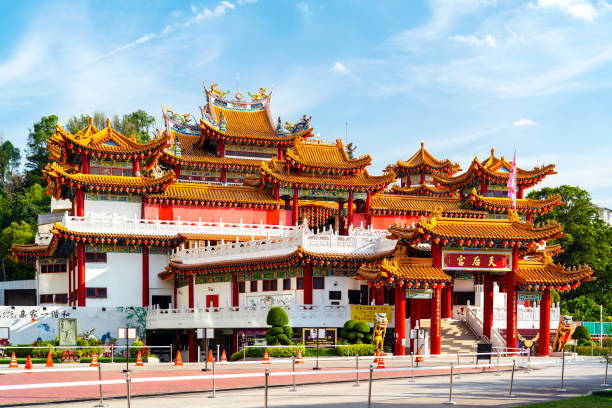
Thean Hou Temple stands as one of Southeast Asia's oldest and largest Chinese temples, dominating the skyline of Kuala Lumpur with its magnificent six-tiered architecture. Dedicated to Goddess Tian Hou (Thean Hou), the Goddess of Heaven, this spectacular temple represents a perfect blend of traditional Chinese design and modern construction techniques. Built between 1987 and 1989, the temple has become one of KL's most visited cultural landmarks, attracting thousands of devotees and tourists alike.
What makes Thean Hou Temple special is its comprehensive representation of Chinese spiritual traditions. The temple houses three primary deities: Tian Hou (Goddess of the Sea), Guanyin (Goddess of Mercy), and Shui Wei Sheng Niang (Goddess of the Waterfront). This unique combination reflects the diverse spiritual needs of the Hainanese community who built and maintain the temple. For travelers, it offers an authentic glimpse into Chinese-Malaysian culture, complete with stunning architecture, panoramic city views, and vibrant festival celebrations.
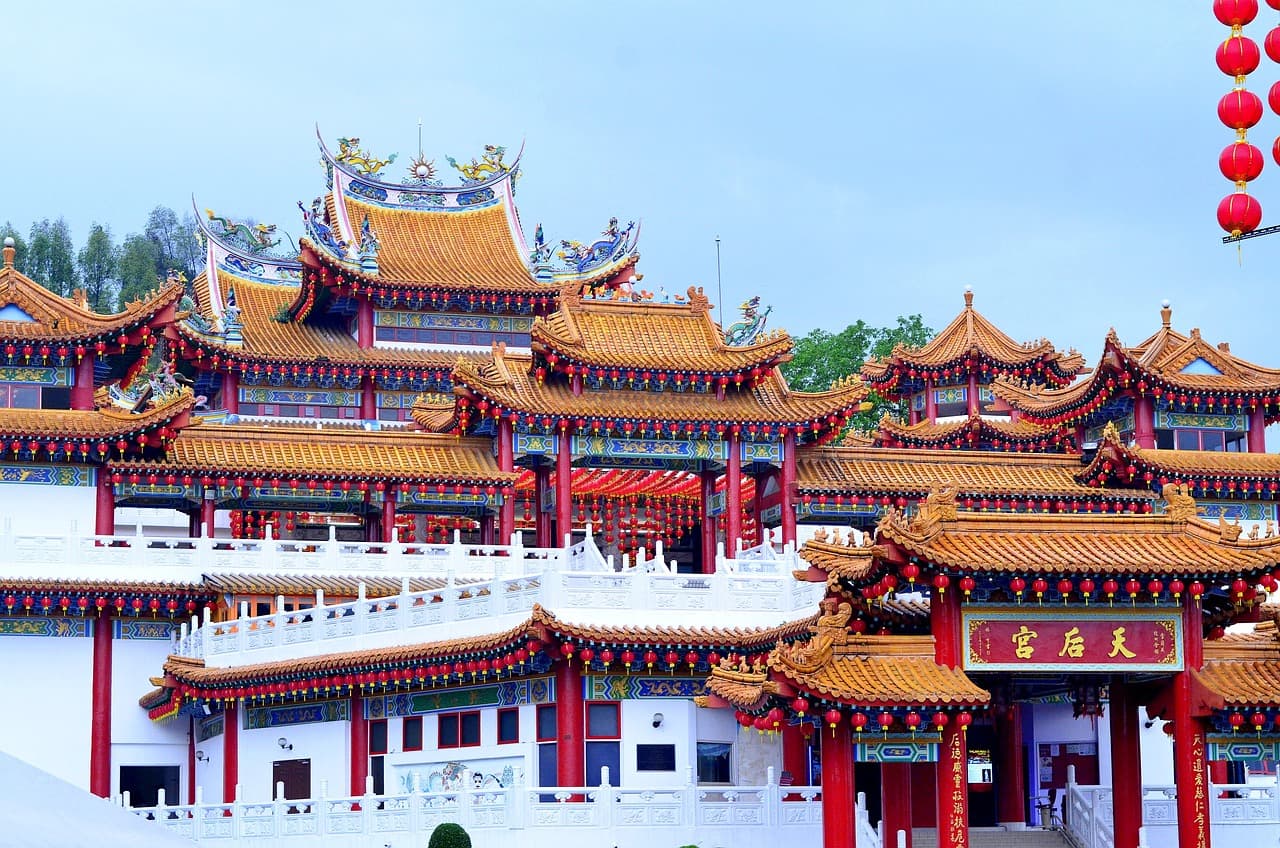
Located in Robson Heights, the temple sits on elevated ground, providing breathtaking views of Kuala Lumpur's skyline. Whether you're a spiritual seeker, architecture enthusiast, or cultural explorer, Thean Hou Temple offers an enriching experience that combines religious significance with visual grandeur. The temple is just one of many spiritual sites in Malaysia, complementing the country's diverse religious landscape that includes the magnificent Batu Caves.
About Thean Hou Temple
Thean Hou Temple, managed by the Selangor and Federal Territory Hainanese Association, occupies 1.5 acres of land and stands as a testament to the Chinese community's devotion and architectural prowess. The temple's construction took six years to complete, with its official opening on September 3, 1989. Since then, it has evolved from a purely religious site to a comprehensive cultural center that serves both spiritual and social functions.
The temple's name translates to "Temple of the Goddess of Heaven," and it was specifically built to honor Tian Hou, a deity revered by seafarers and fishermen. However, the temple's inclusive approach to spirituality is evident in its dedication to multiple deities. Guanyin, the Goddess of Mercy, occupies a prominent position, reflecting the Mahayana Buddhist influence in Chinese spirituality. The third principal deity, Shui Wei Sheng Niang, represents the protection of waterfront communities.
Beyond its religious functions, Thean Hou Temple serves as a cultural hub for Kuala Lumpur's Chinese community. It hosts traditional Chinese weddings, festivals, and cultural events throughout the year. The temple has also become a popular venue for couples seeking auspicious wedding dates, particularly those with the number eight, which is considered extremely lucky in Chinese culture.
Architecture & Design
Thean Hou Temple's six-tiered architecture draws inspiration from traditional Chinese temple design, incorporating elements that have been refined over thousands of years. The temple's impressive height of approximately 30 meters makes it visible from various points in the city, serving as a spiritual landmark for Kuala Lumpur's Chinese community.
The temple's exterior showcases traditional Chinese architectural elements with its prominent red, gold, and blue color scheme. Red symbolizes good fortune and joy, gold represents prosperity and wealth, while blue is associated with immortality. The roof features intricate oriental carvings and is adorned with decorative elements that include mythical creatures, traditional Chinese symbols, and detailed phoenix and dragon representations. These two dragon statues flank the main entrance, serving as guardians of the temple.
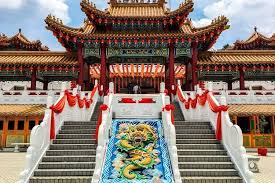
The temple is organized into multiple tiers, each serving specific functions. The first tier houses the main prayer hall with large statues of the primary deities. The second and third tiers contain additional prayer rooms and shrines dedicated to various Buddhist and Taoist figures. The upper tiers (fourth through sixth) feature gardens, viewing decks, and recreational areas where visitors can relax and enjoy panoramic views of Kuala Lumpur.
Throughout the temple, visitors will find Chinese calligraphy inscribed on pillars, traditional lanterns hanging from ceilings, and representations of the twelve Chinese zodiac animals. The temple grounds also include a beautifully maintained Chinese garden with a koi pond, traditional bridges, and peaceful seating areas. The herbal garden features plants used in traditional Chinese medicine, adding another layer of cultural authenticity to the site.
Architectural Highlights
Main Prayer Hall: The heart of the temple features a 2-story statue of Guanyin, the Goddess of Mercy, surrounded by smaller statues and religious artifacts. The hall's high ceilings and intricate decorations create an atmosphere of reverence and grandeur.
Zodiac Garden: All twelve Chinese zodiac animals are represented in beautifully crafted statues, allowing visitors to find their birth signs and learn about their associated characteristics.
Viewing Deck: The upper levels provide 360-degree views of Kuala Lumpur, making it an excellent spot for photography and city sightseeing. On clear days, visitors can see major landmarks including the Petronas Twin Towers and KL Tower.
Chinese Garden: The landscaped grounds feature traditional elements including a koi pond, stone lanterns, and carefully manicured plants that create a peaceful retreat from the bustling city below.
Religious Significance
Thean Hou Temple embodies the syncretic nature of Chinese religious practice, where Buddhism, Taoism, and Confucianism often blend seamlessly. The temple's three main deities represent different aspects of Chinese spiritual belief, reflecting the community's diverse spiritual needs.
Tian Hou (Thean Hou): The primary deity, also known as Mazu, originated as a patron goddess of seafarers in China's Fujian province. Fishermen and sailors would pray to her for protection before undertaking dangerous voyages. Today, she is regarded as a general protector who grants safety, prosperity, and good health to her devotees. Her prominence in the temple reflects the Hainanese community's historical connection to maritime activities.
Guanyin: The Goddess of Mercy represents compassion and unconditional love. In Mahayana Buddhism, Guanyin is one of the most beloved bodhisattvas, known for hearing the cries of all beings and working to relieve their suffering. Her two-story statue in the main prayer hall serves as a focal point for devotees seeking comfort, healing, or guidance.
Shui Wei Sheng Niang: The Goddess of the Waterfront protects communities living near water and is particularly revered for her ability to prevent flooding and water-related disasters. Her inclusion in the temple's pantheon reflects the practical concerns of historical Chinese communities who settled near rivers and coastal areas.
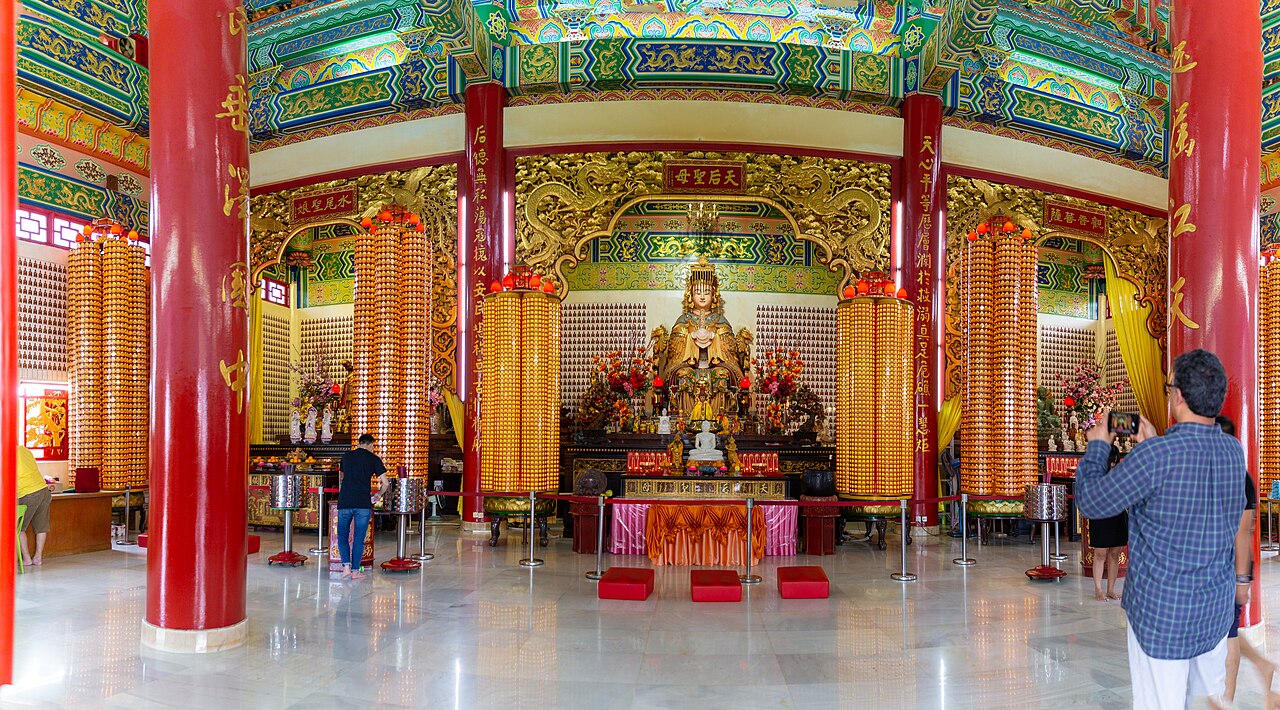
Worship at Thean Hou Temple incorporates both Taoist and Buddhist practices. Devotees typically begin their visit by lighting incense sticks, which are placed in urns before the main altars. Offerings of fruit, flowers, and sometimes food are presented to the deities. Many visitors participate in Kau Chim, a traditional fortune-telling practice involving bamboo sticks inscribed with numbers that correspond to written fortunes.
The temple's feng shui orientation was carefully considered during its construction. The elevated location and specific alignment are believed to maximize positive energy flow (chi), creating an auspicious environment for worship and contemplation. This attention to geomantic principles demonstrates the community's commitment to maintaining authentic Chinese spiritual traditions.
Major Festivals
Thean Hou Temple comes alive during traditional Chinese festivals, transforming from a place of daily worship into a vibrant celebration center. These festivals offer visitors the best opportunity to witness Chinese-Malaysian culture at its most colorful and expressive.
Chinese New Year (January/February): The temple celebrates the lunar new year with elaborate decorations featuring red lanterns, couplets with auspicious messages, and floral displays. Lion dance performances are held regularly, and the temple grounds are filled with festive energy. Devotees visit to pray for blessings in the coming year, and many families come to mark important life milestones such as newborn first visits.
Lantern Festival (15th day of Chinese New Year): This festival, also known as Chap Goh Mei, marks the end of the new year celebrations. The temple displays thousands of lanterns, creating a magical nighttime spectacle. Single women traditionally toss mandarin oranges into water while making wishes for future partners, reflecting the romantic associations of this festival.
Wesak Day (May): Although Wesak is primarily a Buddhist celebration commemorating Buddha's birth, enlightenment, and death, Thean Hou Temple participates with special ceremonies, vegetarian food offerings, and acts of merit-making. The temple's inclusion of Guanyin makes Wesak an important observance here.
Mid-Autumn Festival (September/October): Also called the Mooncake Festival or Lantern Festival, this celebration features elaborate lantern displays throughout the temple grounds. Families bring children to see the colorful lanterns and enjoy mooncakes while appreciating the full moon. The temple's elevated location makes it an ideal spot for moon gazing.
Goddess Tian Hou's Birthday (23rd day of the 3rd lunar month): This is one of the most important celebrations at Thean Hou Temple, specifically honoring the primary deity. Devotees make special offerings, and the temple hosts elaborate ceremonies that may include traditional Chinese opera performances and vegetarian feasts.
Weddings: The temple is extremely popular for Chinese weddings, particularly on dates considered auspicious in the Chinese calendar. Visitors to the temple on weekends will often see couples in traditional wedding attire having their photographs taken among the temple's beautiful backdrops.
Practical Visiting Information
Timings & Entry Fee
Thean Hou Temple is open daily from 8:00 AM to 10:00 PM, with the best visiting times being early morning (8-10 AM) or late afternoon (5-7 PM) when temperatures are cooler and lighting is ideal for photography. The temple is free to enter, though donations are welcome and help maintain the facilities.
Most visitors spend 1-2 hours exploring the temple thoroughly. Prayer ceremonies are typically held in the morning and evening, and these are particularly atmospheric times to visit. Weekends tend to be more crowded, especially when weddings are taking place. If you prefer a quieter experience, weekday mornings are your best option.
How to Reach
From KL Sentral: The temple is approximately 15 minutes by taxi or Grab ride-hailing service, costing around 15 MYR. This is the most convenient option for most visitors.
From KLCC/Petronas Twin Towers: The journey takes about 20 minutes by car (approximately 20 MYR). The route offers nice views of the city as you make your way to Robson Heights.
From Chinatown: Only 10 minutes by taxi (about 12 MYR), making it easy to combine both attractions in a single outing.
Public Transport: Take the LRT to Bangsar station, then continue by taxi for 10 minutes to reach the temple. RapidKL buses (number 76 and 78) also serve the area, though schedules can be irregular. The Hop-On Hop-Off tourist bus has a stop near the temple.
Parking: Free parking is available at the temple, making it convenient for those who rent cars or prefer driving.
Best Time to Visit
Early Morning (8-10 AM): This is the most peaceful time to visit, with fewer crowds and soft morning light perfect for photography. The temple is at its most serene, and you can observe morning prayer ceremonies.
Late Afternoon (5-7 PM): Sunset visits provide beautiful lighting on the temple's architecture and the opportunity to see Kuala Lumpur's skyline as the city lights begin to twinkle. The temperature is also cooler during these hours.
Festival Times: Visiting during major Chinese festivals offers a spectacular experience with elaborate decorations and special ceremonies. However, expect large crowds and limited parking. The Mid-Autumn Festival and Chinese New Year are particularly impressive.
Avoid: Mid-day hours (11 AM - 3 PM) when Malaysia's tropical heat is at its peak. The temple does have some covered areas, but moving between sections can be uncomfortable during the hottest part of the day.
Photography Guide
Thean Hou Temple is a photographer's paradise, offering countless opportunities for stunning images. Here are some tips for capturing the temple's beauty:
Exterior Shots: Morning or late afternoon light provides the best illumination for the temple's exterior architecture. The golden hour shortly after sunrise or before sunset creates beautiful warm tones on the red and gold decorations. A wide-angle lens is ideal for capturing the entire temple structure.
Interior Photography: The prayer halls are dimly lit, so you'll need to use higher ISO settings or a tripod. Be respectful of worshippers and avoid using flash, which can be disruptive. The intricate details of statues, carvings, and decorations reward close-up photography.
City Views: The upper viewing decks offer panoramic views of Kuala Lumpur. For the best city skyline shots, visit in the late afternoon when you can capture both daylight and twilight scenes. The Petronas Twin Towers and KL Tower are clearly visible from the temple.
Festival Photography: Chinese New Year and the Mid-Autumn Festival provide incredible opportunities with colorful lanterns, decorations, and cultural performances. These events require some patience due to crowds, but the photographic rewards are substantial.
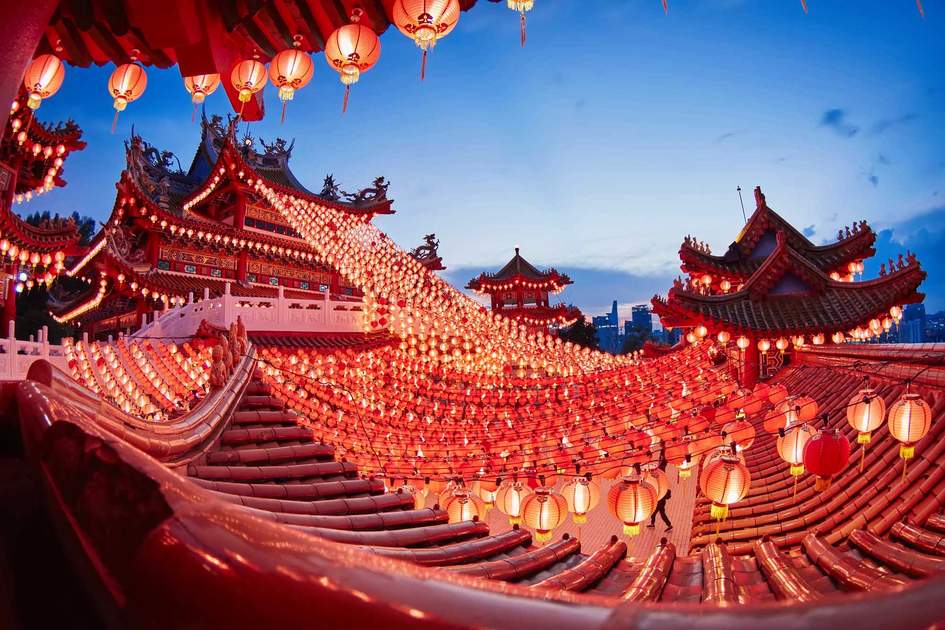
Details: Don't overlook the small details that make the temple special. The dragon statues, zodiac animals, calligraphy, and traditional lanterns all make for compelling close-up shots that tell the story of Chinese craftsmanship and symbolism.
Drone Photography: Drone flights are not permitted in the temple area due to restricted airspace in Kuala Lumpur. All photography should be done from ground level or the temple's elevated viewing platforms.
What to See
Main Prayer Hall: The central worship space features large statues of the primary deities surrounded by offerings, incense burners, and religious artifacts. The hall's high ceilings and elaborate decorations create an atmosphere of grandeur.
Guan Yin Statue: The two-story statue of the Goddess of Mercy dominates the main hall and is one of the temple's most impressive features. Devotees can be seen bowing and making offerings before this statue throughout the day.
Zodiac Garden: All twelve Chinese zodiac animals are represented in statues scattered through the temple grounds. Find your birth sign and learn about its associated characteristics and predictions.
Fortune Sticks: Near the main altar, visitors can participate in Kau Chim, a traditional fortune-telling practice. Shake the cylinder of bamboo sticks until one falls out, then use the number to find your corresponding fortune.
Lantern Displays: Elaborate lantern installations are particularly impressive during festival periods, though the temple maintains some lantern decorations year-round. The red lanterns against the temple's architecture create classic Chinese aesthetic scenes.
Chinese Garden: The landscaped grounds include a koi pond, traditional bridge, and peaceful seating areas. It's an excellent spot for a quiet break from sightseeing.
Viewing Deck: The upper level provides 360-degree views of Kuala Lumpur. On clear days, you can identify major landmarks and appreciate the city's urban layout.
Herbal Garden: This lesser-known area features plants used in traditional Chinese medicine, with informational signs explaining their uses. It's an interesting glimpse into Chinese healing traditions.
Nearby Attractions
Thean Hou Temple's strategic location makes it easy to combine with other Kuala Lumpur attractions:
KL Sentral: Just 15 minutes away, this transportation hub offers shopping, dining, and connections to other parts of the city. It's convenient to visit before or after your temple visit.
Buddhist Maha Vihara: Located in Brickfields, this Buddhist temple is about 10 minutes by car from Thean Hou Temple. It provides an interesting contrast in Buddhist architectural styles and practices.
Little India (Brickfields): A short distance from Thean Hou Temple, this vibrant neighborhood offers Indian restaurants, shops, and cultural sites. It's an excellent place for lunch after your temple visit.
National Museum: Approximately 10 minutes by car, Malaysia's National Museum provides comprehensive coverage of Malaysian history and culture. It's a logical next stop for cultural tourists.
Lake Gardens: About 15 minutes away, this expansive park area includes the Kuala Lumpur Bird Park, Butterfly Park, and other attractions. It's a nice place to relax after temple sightseeing.
KL Tower: Visible from Thean Hou Temple's viewing deck, KL Tower is one of Kuala Lumpur's tallest structures and offers its own panoramic city views, and many visitors also stop at Suria KLCC.
Visitor Tips
Dress Modestly: As an active religious site, Thean Hou Temple requires appropriate dress. Both men and women should cover their shoulders and knees. Avoid revealing clothing, and remove hats inside prayer halls. If you're dressed inappropriately, you may be refused entry or asked to cover up.
Remove Shoes: Before entering prayer halls and certain indoor areas, you must remove your shoes. Look for shoe racks at entrances. Wear shoes that are easy to slip on and off, and bring socks if you're concerned about walking on bare floors.
Keep Voice Down: Thean Hou Temple is an active place of worship. Speak quietly and avoid disruptive behavior. Many devotees come for prayer and meditation, so be respectful of their need for quiet contemplation.
Donate if You Wish: While admission is free, donation boxes are available throughout the temple. If you appreciate the cultural experience and want to support the temple's maintenance, a small donation is appropriate.
Respect Worshippers: Do not interrupt people who are praying or taking part in ceremonies. Don't walk directly between worshippers and the altars. Wait for appropriate breaks before taking photographs of people.
Bring Water: Kuala Lumpur is hot and humid year-round. Carry a water bottle and stay hydrated, especially if you're visiting during mid-day hours. There's no food or drink sold inside the temple.
Combine with City Tour: Thean Hou Temple works well as part of a broader Kuala Lumpur itinerary. Plan to spend 1-2 hours here, then continue to other attractions like Petronas Twin Towers or explore the wider things to do in Malaysia guide for more ideas.
Visit During Festivals: If your travel dates are flexible, try to time your visit during a major Chinese festival. The Mid-Autumn Festival and Chinese New Year periods offer the most spectacular decorations and cultural experiences, though crowds will be larger.
Allow Extra Time for Photography: The temple's architecture, city views, and cultural details reward leisurely exploration with a camera. Don't rush your visit if you're interested in photography – plan at least 2 hours to capture the temple's many photogenic angles.
Thean Hou Temple offers an authentic glimpse into Chinese-Malaysian culture and spirituality, making it an essential stop for any Kuala Lumpur visitor. Its combination of architectural grandeur, religious significance, and panoramic city views creates a uniquely rewarding experience that stays with travelers long after they've returned home.
Location
Frequently Asked Questions
Q1.What are Thean Hou Temple's opening hours?
Q2.Is there an entrance fee for Thean Hou Temple?
Q3.How long does it take to visit Thean Hou Temple?
Q4.How to reach Thean Hou Temple from KL Sentral?
Q5.What is the best time to visit Thean Hou Temple?
Q6.Is photography allowed in Thean Hou Temple?
Q7.Who is Thean Hou?
Q8.How many steps to Thean Hou Temple?
Recommended For You
Things to Do in Malaysia: City Tours, Islands & Nature Activities
Plan top things to do in Malaysia with Kuala Lumpur highlights, Penang food and culture, Langkawi beaches, and practical multi-day itinerary guidance.
Shopping in Malaysia: Complete Guide to Kuala Lumpur, Penang & Langkawi
Shopping in Malaysia guide - Kuala Lumpur malls, Penang heritage, Langkawi duty-free. Complete guide to best buys, sales, and shopping tips.
Suria KLCC Kuala Lumpur: Shopping, Dining, and Access
Plan Suria KLCC Kuala Lumpur with practical shopping, dining, and access tips for a smoother city-center experience.
Never Miss an Adventure
Get the latest trekking guides, travel tips, and exclusive offers delivered straight to your inbox.
