
Wildlife Safari in Rajasthan: Top Parks, Costs & Route Planning

Rahul Garg
November 17, 2025
Experience wildlife safari in Rajasthan - Ranthambore tigers, Keoladeo birds, Sariska wildlife. Complete guide to safaris, booking, best time, and travel tips.
Introduction: Beyond the Deserts - Rajasthan's Wild Side
Rajasthan, famous for its forts, palaces, and deserts, is also home to some of India's most exciting wildlife destinations. The state's diverse ecosystems - from the dry deciduous forests of Ranthambore to the desert ecosystem of the Thar, from the wetlands of Bharatpur to the scrub forests of Sariska - create surprising biodiversity. Rajasthan offers the chance to see the majestic Bengal tiger in its most accessible habitat, thousands of migratory birds, desert wildlife found nowhere else, and the unique opportunity to combine wildlife safaris with cultural experiences in India's most royal state. For those planning to explore the royal state alongside wildlife experiences, timing your visit can enhance both cultural and wildlife encounters.
What makes Rajasthan's wildlife special is its accessibility and variety. Ranthambore National Park is arguably the best place in India to see tigers in the wild due to its open terrain and reliable tiger sightings. Keoladeo National Park (formerly Bharatpur Bird Sanctuary) is a UNESCO World Heritage Site and one of the world's most important bird habitats. Sariska Tiger Reserve offers excellent wildlife viewing just a few hours from Delhi. The desert national park protects unique desert-adapted wildlife. And you can easily combine wildlife safaris with visits to Rajasthan's magnificent forts, palaces, and colorful cities.
This comprehensive guide covers all major wildlife destinations in Rajasthan, safari options, the best time to visit, how to reach these parks, what wildlife you can expect to see, and practical tips for planning your wildlife adventure in the Land of Kings.
Top Wildlife Destinations in Rajasthan
Ranthambore National Park
Location: Sawai Madhopur district, approximately 130 kilometers from Jaipur
Area: 1,334 square kilometers
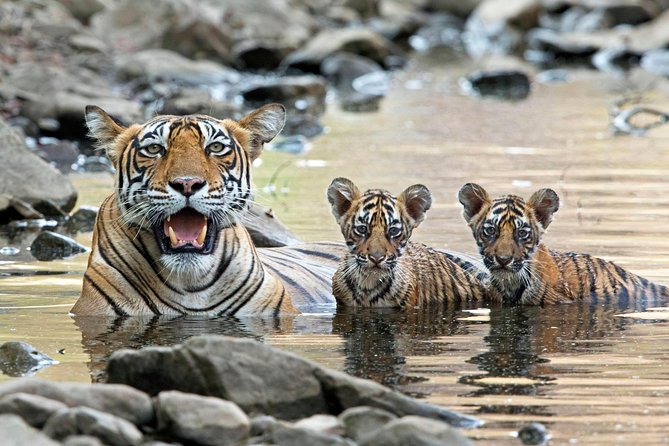
Flagship Species: Bengal tiger (approx. 70 tigers), leopard, sloth bear
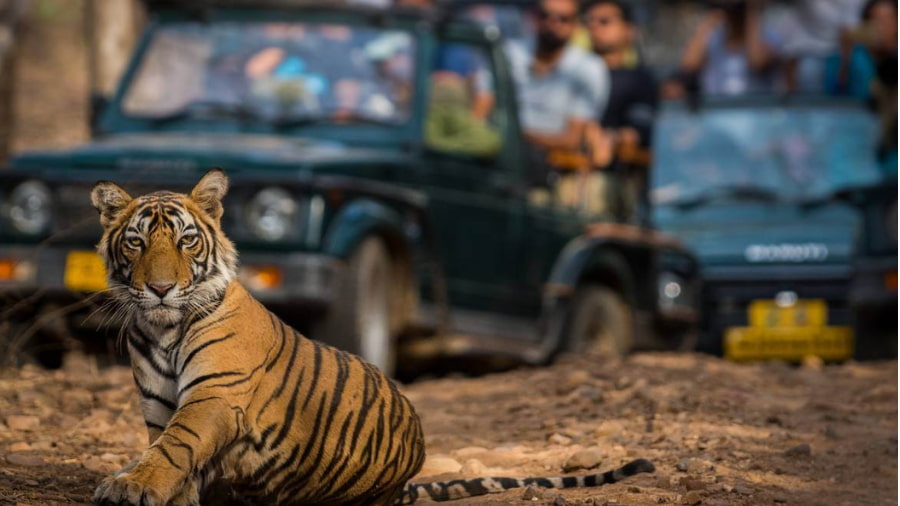
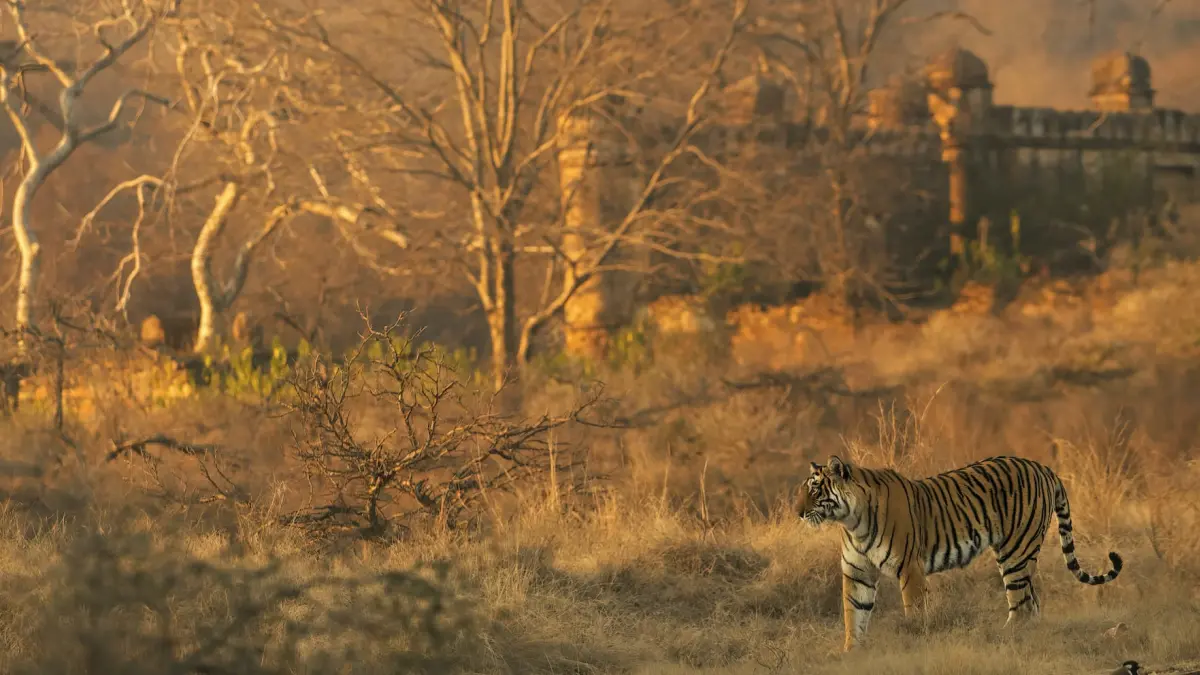
Ranthambore is India's most famous tiger reserve and arguably the best place to see wild tigers. The park's open terrain, scattered with ruins and lakes, makes wildlife viewing relatively easy compared to denser forests. What makes Ranthambore special is that tigers here are somewhat habituated to safari vehicles, allowing for incredible sightings and photographic opportunities. For detailed information about planning your tiger safari, Ranthambore National Park offers excellent opportunities for sightings.
The park also contains the impressive 10th-century Ranthambore Fort, creating a unique setting where ancient history and wildlife meet.The park's landscape varies from dry deciduous forests to open grassy meadows, with several lakes and waterholes that attract wildlife. The ruins of the past - temples, palaces, hunting lodges, and the massive fort - create an atmospheric backdrop for wildlife viewing. Seeing a tiger walking past ancient stone arches or drinking at a lake with the fort in the background is an experience unique to Ranthambore.
Safari Options:
- Jeep Safari (Gypsy): Open 4x4 vehicles, 6 seats plus driver/guide. Morning (6:30-10:00 AM) and afternoon (2:30-6:00 PM) safaris.
- Canter Safari: Larger 20-seater open vehicles. Same timings as jeep safaris. Less intimate but more affordable.
- Full Day Safari: Extended safari covering more areas (requires special permit).
Best Time: October to June. The park is closed during monsoon (July-September). April and May are best for tiger sightings as animals congregate around water sources.
Sariska Tiger Reserve
Location: Alwar district, approximately 110 kilometers from Delhi, 160 kilometers from Jaipur
Area: 866 square kilometers
Flagship Species: Bengal tiger, leopard, striped hyena
Sariska Tiger Reserve is one of the most accessible wildlife reserves from Delhi NCR, making it perfect for quick wildlife getaways. Though Ranthambore gets more attention, Sariska offers excellent wildlife viewing in beautiful hill and valley landscape. The reserve is in the Aravalli Range, with dry deciduous forests, rocky hills, and narrow valleys.
Sariska has had challenges - tiger populations were wiped out by poaching in 2004-2005, but tigers have been successfully reintroduced from Ranthambore, and the population is now healthy. The reserve is also home to a good population of leopards (often seen), striped hyenas (rare in Indian parks), and various deer species. The Kankwari Fort, located inside the reserve, adds historical interest. Travelers can also explore the legendary tigers of Rajasthan who have made these forests their home.
Safari Options: Jeep safaris and canter safaris similar to Ranthambore. Morning and afternoon safaris available.
Best Time: October to June. Closed during monsoon (July-September). Summer (April-June) for best wildlife sightings near water.
Keoladeo National Park (Bharatpur Bird Sanctuary)
Location: Bharatpur district, approximately 180 kilometers from Delhi
Area: 28.73 square kilometers
Flagship Species: Over 370 bird species including the rare Siberian crane
Keoladeo National Park, formerly known as Bharatpur Bird Sanctuary, is a UNESCO World Heritage Site and one of the world's most important bird habitats. This man-made wetland was originally created as a duck hunting preserve for the Maharajas of Bharatpur but was later protected as a national park. The park's wetlands, woodlands, and grassy lawns attract thousands of migratory birds from Central Asia, Siberia, China, and beyond.
What makes Keoladeo special is its bird diversity and accessibility. Over 370 species have been recorded here. You can explore the park on foot, by bicycle, or by cycle rickshaw - very different from other wildlife reserves where vehicles are mandatory. The rickshaw pullers are expert bird guides who can identify species by sight and sound. The park is small enough to cover in 1-2 days but rich enough to keep birders occupied for much longer.
Key Birds:
- Siberian Crane: Rare winter visitor (though sightings have decreased)
- Painted Stork: Large, colorful storks, commonly seen nesting
- Openbill Stork: Common resident
- Sarus Crane: World's tallest flying bird, resident
- Dalmatian Pelican: Rare winter visitor
- Various Ducks and Geese: Thousands winter here
- Raptors: Eagles, harriers, hawks
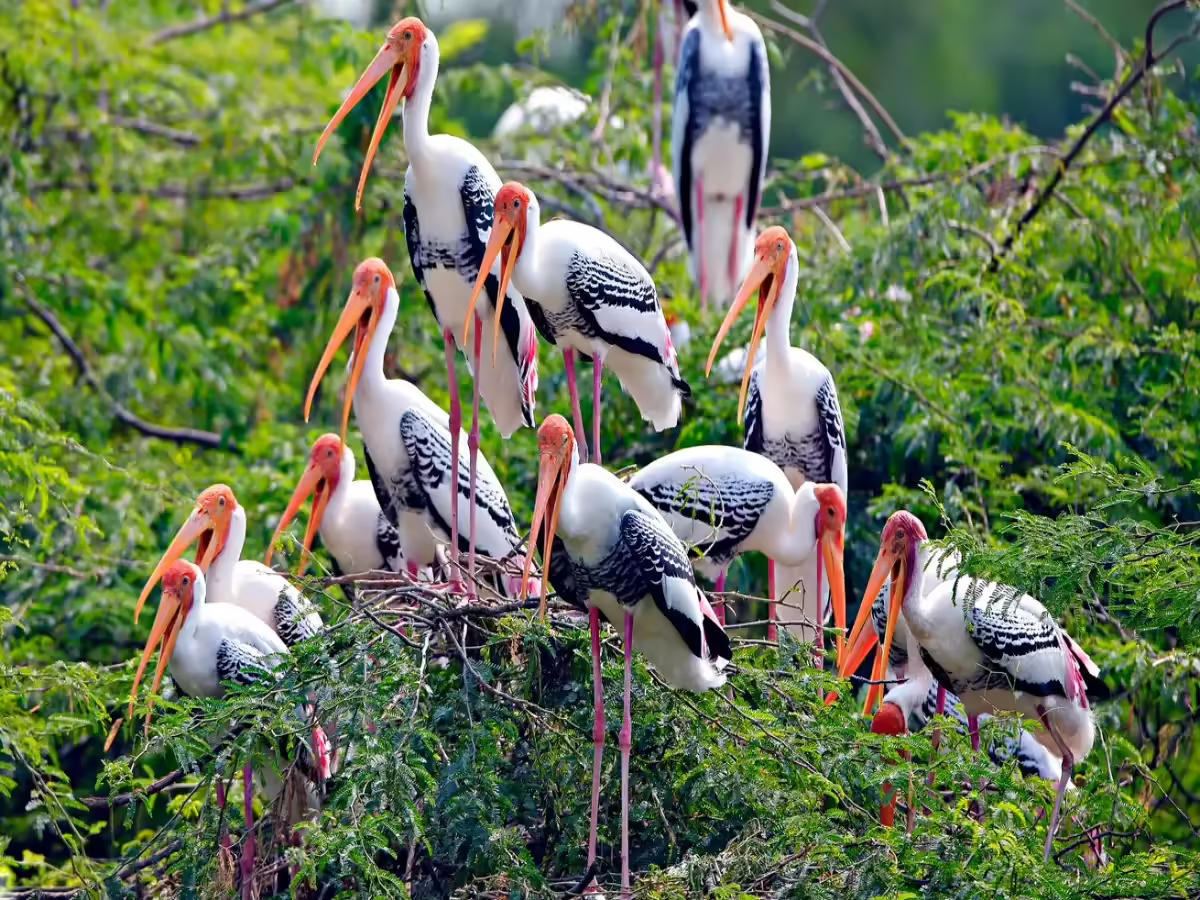
Best Time: October to March for winter migrants. August to September for resident breeding birds. The park is open year-round but winter is best for diversity and numbers.
Desert National Park
Location: Jaisalmer district, near the Pakistan border
Area: 3,162 square kilometers (one of India's largest)
Flagship Species: Great Indian bustard (critically endangered), desert fox, chinkara
The Desert National Park protects the unique ecosystem of the Thar Desert. Unlike Rajasthan's tiger reserves, this park showcases desert-adapted wildlife in a landscape of sand dunes, rocky outcrops, and sparse vegetation. The park's vast size and remote location mean it receives few visitors, offering a pristine desert wildlife experience.
The park's most famous resident is the Great Indian Bustard, a critically endangered bird species that can weigh up to 15 kilograms, making it one of the world's heaviest flying birds. Fewer than 150 individuals remain in India, and the Desert National Park is crucial for their survival. Other wildlife includes the chinkara (Indian gazelle), desert fox, desert cat, and various reptiles.
Experience: This is a true wilderness experience. Safaris require special arrangements and permits. The terrain is challenging but rewarding for those seeking offbeat wildlife experiences.
Best Time: October to March. Avoid summer (April-June) when temperatures are extreme (45°C+).
Mount Abu Wildlife Sanctuary
Location: Sirohi district, Mount Abu, Rajasthan's only hill station
Area: 288 square kilometers
Flagship Species: Sloth bear, leopard, langur
Mount Abu Wildlife Sanctuary is different from Rajasthan's other reserves - it's located in the Aravalli Range at an elevation of 300 to 1,722 meters, creating a cooler, more verdant habitat. The sanctuary contains dry deciduous forests, evergreen forests, and bamboo thickets. It's home to the sloth bear, leopards, chowsinghas (four-horned antelope), and over 250 bird species.
What makes Mount Abu special is that you can combine wildlife viewing with a hill station holiday. Mount Abu's pleasant climate makes it a popular summer retreat, and the sanctuary is easily accessible from the town. The famous Dilwara Jain Temples and Nakki Lake are nearby, making it a complete destination.
Best Time: March to June and September to November. The sanctuary is open year-round, but monsoon can make trekking challenging.
Jawahar Sagar Sanctuary
Location: Bundi district
Area: 153 square kilometers
Flagship Species: Various deer, leopard, crocodiles
This lesser-known sanctuary surrounds the Jawahar Sagar Dam and lake. The reservoir attracts wildlife, and the surrounding forests protect various species. The sanctuary is good for bird watching and offers peaceful wildlife viewing away from crowds.
Best Time for Wildlife Safari in Rajasthan
Winter (October to March)
Weather: Pleasant, 10°C - 25°C (50°F - 77°F), sunny days, cool nights
Wildlife Viewing: Good. Animals are active in comfortable temperatures. Visibility is excellent in dry, leafless forests. Tiger sightings are good but not as reliable as summer.
Pros: Comfortable weather for safaris, excellent for bird watching (winter migrants at Keoladeo), peak tourist season
Cons: Can be crowded, especially around Christmas/New Year, higher prices
Summer (April to June)
Weather: Hot to very hot, 25°C - 45°C (77°F - 113°F), dry
Wildlife Viewing: Excellent, perhaps the best. As water sources dry up, wildlife congregates around remaining waterholes. Tigers and other animals are predictably found near water. Vegetation is thinner, improving visibility.
Pros: Best tiger sightings, fewer tourists, lower prices, good photography (lighting, visibility)
Cons: Extreme heat, challenging conditions for safaris (though vehicles have shade), some areas uncomfortable
Monsoon (July to September)
Weather: Hot and humid, 25°C - 35°C (77°F - 95°F), rainfall
Wildlife Viewing: Parks are closed. Vegetation becomes dense, water is abundant, animals disperse, and roads become impassable.
Pros: Lush green landscapes, lower off-season rates at hotels
Cons: Parks closed, no safaris possible, high humidity, mosquitoes
Safari Booking Process
Advance Booking
Safari bookings in Ranthambore and Sariska can be made online up to 90 days in advance. This is highly recommended, especially for: - Weekend safaris - Peak season (October-March) - Morning safaris (generally better for wildlife) - Jeep safaris (more popular than canters)
Book through the official forest department websites or authorized booking agents. Have your ID proof ready as it's required for booking.
On-the-Spot Booking
Some safari seats are available for booking on the spot at the park entrance, but these are limited and fill quickly, especially during peak season. If relying on spot booking, arrive very early (by 5:00 AM for morning safaris).
Safari Zones
Ranthambore is divided into 10 zones (1-10). Each zone has different characteristics and tiger territories. Some zones are better for sightings than others. You can request specific zones when booking (subject to availability). Zones 1-5 are generally considered best for tiger sightings.
Wildlife You Can Spot
Mammals
- Bengal Tiger: Star attraction. Ranthambore has approx. 70 tigers, Sariska has a growing population. Best seen in summer near water.
- Leopard: Common in both Ranthambore and Sariska. More elusive than tigers but regularly sighted.
- Sloth Bear: Present in Ranthambore and Sariska. Shy, nocturnal, but sometimes seen during day.
- Striped Hyena: Sariska has a healthy population. Rare in other Indian parks.
- Sambar Deer: Large deer, common, tiger's main prey.
- Spotted Deer (Chital): Very common, often seen in large herds.
- Blue Bull (Nilgai): Large antelope, commonly seen grazing.
- Chinkara (Indian Gazelle): Elegant antelope, seen in Desert National Park and some reserves.
- Chowsingha (Four-horned Antelope): Unique antelope with four horns, seen in Mount Abu.
- Wild Boar: Common, often seen.
- Langur and Macaque Monkeys: Very common, often seen around the park entrance and in forests.
Birds
- Great Indian Bustard: Critically endangered, Desert National Park's star attraction.
- Painted Stork: Large, colorful storks, Keoladeo.
- Openbill Stork: Common at Keoladeo.
- Sarus Crane: World's tallest flying bird, Keoladeo.
- Various Eagles: Crested serpent eagle, booted eagle, spotted eagle.
- Owls: Spotted owlet, brown fish owl.
- Parakeets: Rose-ringed parakeet, plum-headed parakeet.
- Kingfishers: White-breasted kingfisher, pied kingfisher.
- Waterbirds: Various ducks, geese, herons, egrets, ibises at Keoladeo.
Planning Your Wildlife Safari
Recommended Duration
- Ranthambore: Minimum 3 safaris (2 morning, 1 afternoon or vice versa) to increase tiger sighting chances. Ideally 2-3 days with 4-6 safaris.
- Sariska: 2-3 safaris over 2 days.
- Keoladeo: 2 days allows thorough exploration.
- Combination: Ranthambore + Keoladeo + Jaipur is a popular circuit (5-6 days).
What to Carry
- Clothing: Earth tones (green, brown, khaki) - not bright colors. Warm layers for winter mornings. Hat, sunglasses for summer.
- Binoculars: Essential for wildlife viewing and bird watching.
- Camera: DSLR with telephoto lens (minimum 200mm, ideally 300mm+) for wildlife photography.
- Sun Protection: Sunscreen, sun hat, even in winter.
- Insect Repellent: Especially for monsoon and post-monsoon.
- Water and Snacks: Safaris are 3-4 hours, come prepared.
- ID Proof: Required for entry - carry original.
Safari Etiquette
- Silence: Keep voices down. Whisper when necessary.
- No Flash: Flash photography disturbs wildlife and is prohibited.
- Stay in Vehicle: Don't disembark except at designated points.
- Respect Distance: Don't crowd animals. Give them space.
- Listen to Guide: Follow naturalist's instructions.
- Don't Litter: Keep the park clean.
- Patience: Wildlife viewing requires patience.
Combining Wildlife with Culture
One of Rajasthan's great advantages is combining wildlife safaris with cultural experiences:
- Ranthambore + Jaipur: 2-3 days Ranthambore, 2 days Jaipur (Pink City)
- Ranthambore + Keoladeo + Agra: Classic Golden Triangle with wildlife
- Sariska + Delhi: Perfect quick wildlife escape from Delhi
- Mount Abu + Udaipur: Hill station wildlife + City of Lakes
- Desert National Park + Jaisalmer: Desert wildlife + Golden City
- Full Rajasthan Circuit: Delhi-Sariska-Ranthambore-Jaipur-Udaipur-Jaisalmer-Jodhpur (10-14 days)
Accommodation Options
- Luxury: Taj, Oberoi, and other luxury properties at Ranthambore
- Mid-Range: Comfortable resorts and hotels near all sanctuaries
- Budget: Forest rest houses (basic), budget hotels, homestays
- Unique Stays: Heritage properties, tented camps near Ranthambore
Conclusion
Rajasthan's wildlife destinations offer the perfect blend of incredible wildlife experiences and rich cultural heritage. Whether you spot a tiger at Ranthambore, watch thousands of birds at Keoladeo, explore the desert ecosystem, or combine wildlife safaris with visits to magnificent forts and palaces, Rajasthan delivers unforgettable experiences. The accessibility of these parks, the reliability of wildlife sightings (especially tigers), and the ability to combine wildlife with cultural tourism make Rajasthan one of India's best wildlife destinations. From the excitement of a tiger sighting to the serenity of watching birds at dawn, Rajasthan's wild side offers experiences that complement the state's royal heritage, creating a complete and memorable travel experience.
Location
Frequently Asked Questions
Q1.Which is the best wildlife sanctuary in Rajasthan?
Q2.What is the best time for tiger safari in Ranthambore?
Q3.How to book safari in Ranthambore National Park?
Q4.Can we see tigers in Sariska Tiger Reserve?
Q5.Is Keoladeo National Park worth visiting?
Q6.What is the difference between Jeep and Canter safari?
Q7.How many safaris should I book in Ranthambore?
Q8.How many days are enough for Ranthambore National Park?
Recommended For You
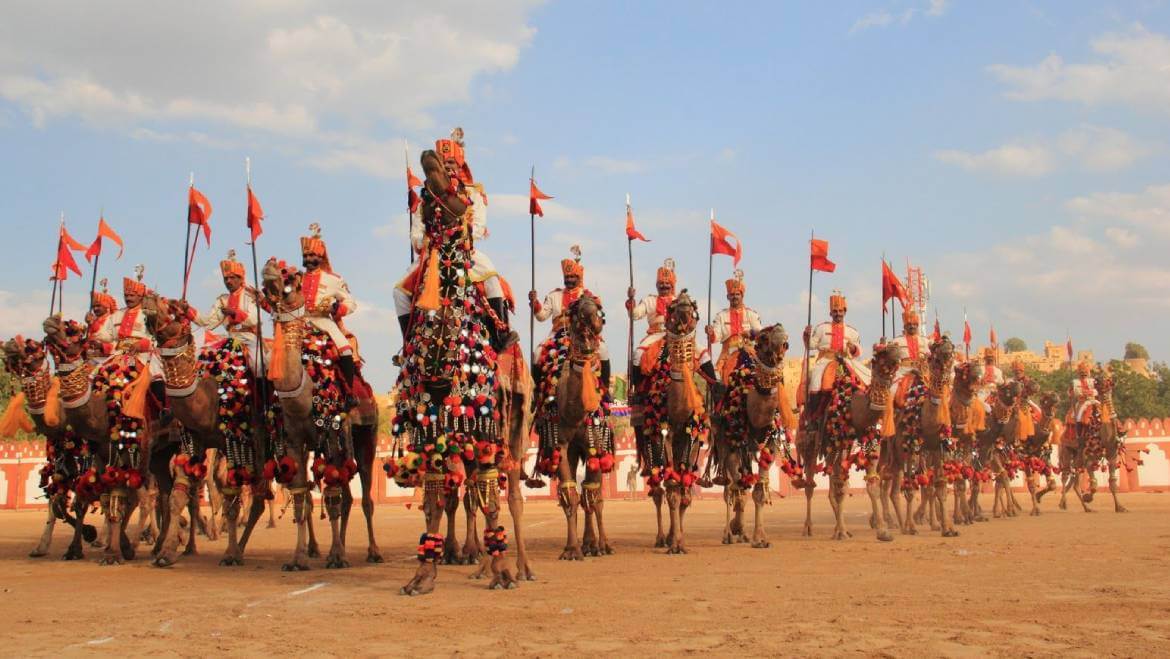
Desert Festival Jaisalmer 2025: Complete Guide to Rajasthan's Most Vibrant Celebration
Experience Rajasthan's vibrant Desert Festival Jaisalmer 2025. Discover dates, events, camel competitions, cultural performances, tickets & travel tips for this spectacular celebration.
Rajasthan in Monsoon: Top Places to Visit
Discover the best places to visit in Rajasthan in monsoon with city-wise ideas, seasonal highlights, and practical travel tips.
Ranthambore National Park: Safari Zones, Ticket Booking & Best Time
Discover Ranthambore National Park, India's premier tiger reserve. Complete guide to safaris, best time to visit, zones, wildlife, booking tips & accommodation.
Never Miss an Adventure
Get the latest trekking guides, travel tips, and exclusive offers delivered straight to your inbox.
