
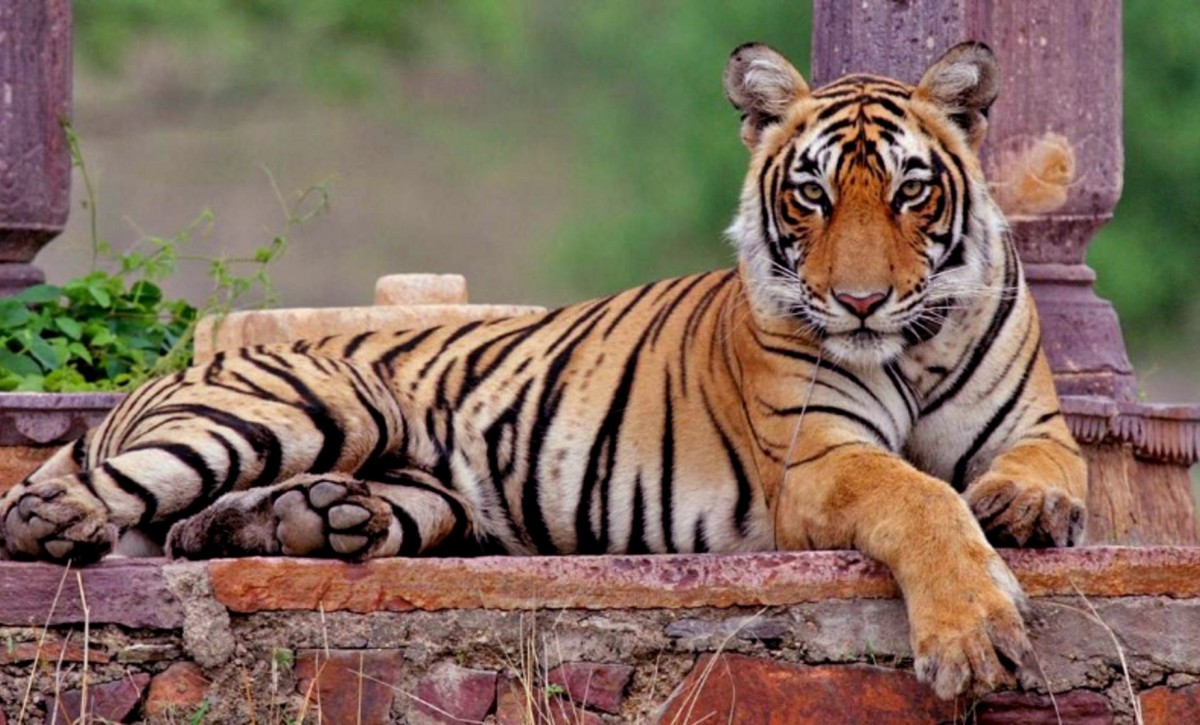
The Legend of Machali: The Queen of Ranthambore Tigers

Rahul Garg
February 1, 2026
Discover the inspiring story of Machali (T-16), the legendary tigress of Ranthambore National Park who became the world's most photographed tiger. From her incredible crocodile-hunting feats to her remarkable 20-year life, learn about the Queen of Tigers whose legacy shaped India's conservation efforts.
Introduction: The Queen Who Ruled Ranthambore
In the heart of Rajasthan's Ranthambore National Park lived a tigress whose story would capture hearts across the globe. Machali, also known as T-16, was not just another wild Bengal tiger – she was a phenomenon that rewrote everything we thought we knew about tiger behavior, longevity, and survival. Born around 1996-1997, this remarkable tigress lived for nearly 20 years in the wild, defying the average lifespan of 12-15 years for tigers in their natural habitat.
What made Machali truly extraordinary was her combination of fierce hunting prowess, intelligent territorial management, and an uncanny ability to capture human imagination. She became the most photographed wild tiger in history, generating an estimated $10 million annually for Ranthambore National Park through tourism. Her fame transcended borders, making her a global icon of wildlife conservation and earning her titles like "Queen of Tigers," "Lady of the Lake," and "Mother of Ranthambore."
Early Life and Rise to Power
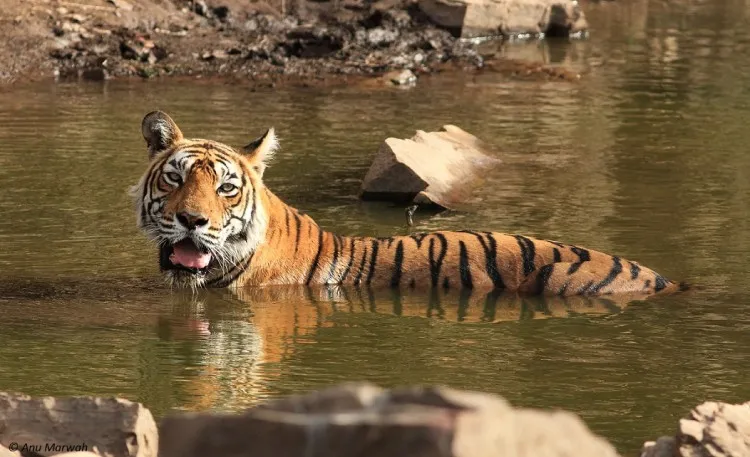
The legendary Queen of Ranthambore at her favourite lake
Machali's story begins in the dense forests of Ranthambore during the rainy season of 1996 or 1997. She was named "Machali" (meaning "fish" in Hindi) because of the distinctive fish-shaped mark on her face, a natural tattoo that would become instantly recognizable to wildlife enthusiasts worldwide. Her early life followed the typical pattern of tiger cubs – learning hunting skills from her mother and navigating the complex social dynamics of the forest.
At just 18 months old, Machali faced the harsh reality of tiger life when her mother expelled her from their territory to establish her own independence. This challenging period tested her survival instincts, but Machali proved exceptional from the start. Instead of wandering aimlessly as many displaced sub-adults do, she demonstrated remarkable strategic thinking by identifying and claiming territory around Ranthambore Lake – an area that would become her kingdom for nearly two decades.
Her rise to power wasn't without conflict. In a display of unprecedented courage, Machali challenged and defeated her own mother to take control of the prime lakeside territory. This rare behavior – a daughter challenging and overcoming her mother – foreshadowed the extraordinary life that lay ahead. By the age of two, she had established herself as the dominant predator in one of Ranthambore's most desirable territories, setting the stage for her legendary reign.
The Crocodile Killer: Hunting Feats
Among Machali's many extraordinary abilities, her skill as a hunter stands out as truly exceptional. What earned her the nickname "Crocodile Killer" was her documented ability to hunt and kill crocodiles – a feat virtually unheard of among tigers. Over her lifetime, Machali successfully killed at least eight crocodiles, including a massive 4.2-meter specimen that serves as testament to her hunting prowess.
This unique hunting behavior was not born of desperation but of calculated strategy. Ranthambore Lake provided her with abundant prey, including sambar deer, chital, and wild boar. However, Machali's opportunistic nature and mastery of her territory extended to eliminating potential competitors. Her crocodile hunting demonstrated her understanding of ecosystem dynamics and her willingness to eliminate threats before they became problems. These encounters, witnessed by forest rangers and tourists, became the stuff of legend and showcased her superior combat skills and tactical intelligence.
Beyond crocodiles, Machali was an exceptionally efficient hunter of typical tiger prey. Her success rate in hunting was significantly higher than average, allowing her to maintain her physical condition even during challenging periods. This hunting efficiency became crucial later in her life when she had to compensate for physical limitations caused by aging and injuries.
Territory Management and Defense
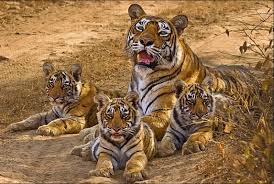
Mother of Ranthambore with her litter
Machali controlled a territory spanning approximately 350 square miles around Ranthambore Lake, making it one of the most valuable tiger territories in India. The lakeside location provided year-round water access, abundant prey, and excellent cover for stalking – all crucial elements for a successful hunting ground. Defending this territory against competitors was a constant challenge, especially from larger male tigers seeking to expand their range.
What set Machali apart was her strategic approach to territory defense. Unlike many tigers who rely primarily on physical confrontation, Machali used a combination of scent marking, strategic patrol routes, and calculated displays of power to maintain control. She understood that constant fighting led to injury and energy expenditure, so she chose her battles carefully. When confrontation was necessary, her reputation as a fierce fighter often preceded her, and many potential challengers thought twice before encroaching on her domain.
Her territory management extended beyond simple defense. Machali maintained relationships with neighboring tigers in a complex social network that allowed for peaceful coexistence when beneficial and decisive action when necessary. This social intelligence contributed significantly to her longevity and the stability of her territory throughout her reign.
The Great Mother: Raising a Dynasty
Machali's most enduring legacy is perhaps her role as the matriarch of Ranthambore's tiger population. Between 2000 and 2009, she gave birth to four litters totaling 11 cubs, successfully raising nine to adulthood. This exceptional reproductive success played a crucial role in rebuilding Ranthambore's tiger population during the early 2000s, a period when tiger numbers were critically low across India.
Her maternal instincts were remarkable even by tiger standards. Machali was known to be an attentive and protective mother, teaching her cubs essential hunting and survival skills. She demonstrated remarkable patience during training, allowing her cubs to practice hunting techniques while remaining close enough to intervene if necessary. This careful balance between independence and protection ensured that her offspring developed into competent hunters capable of surviving on their own.
The genetic legacy of Machali is staggering. By the time of her death, approximately 50% of Ranthambore's tiger population were her direct descendants. Her lineage includes several famous tigers who have continued her legacy of dominance in the park. This genetic contribution makes her arguably the most influential individual tiger in India's conservation history, with her bloodline continuing to shape Ranthambore's tiger population years after her passing.
Survival Against Odds: Physical Challenges
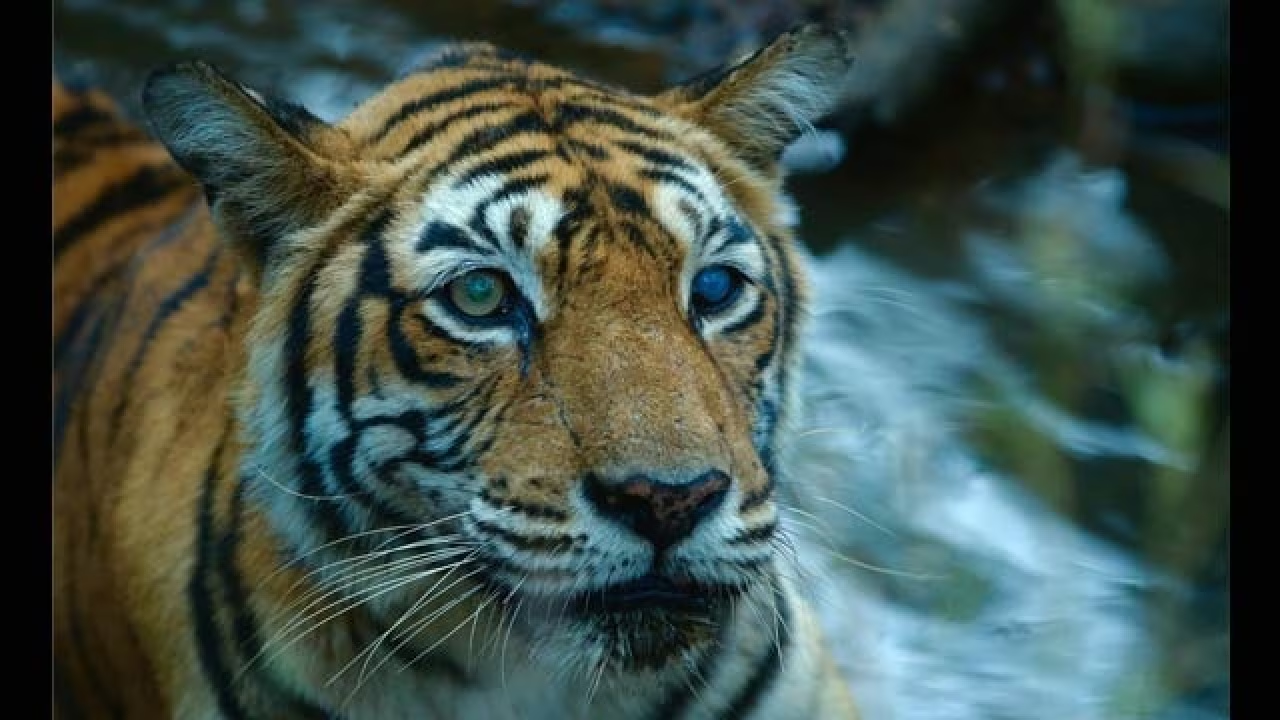
Survivor who hunted despite losing one eye
As Machali aged, she faced significant physical challenges that would have forced most tigers into decline. Her most famous injury was the loss of her right eye, which occurred during a territorial dispute. Despite this disability, Machali adapted her hunting techniques and continued to successfully provide for herself. She developed strategies to compensate for her reduced depth perception, approaching prey from advantageous angles and using ambush techniques that minimized the disadvantage.
Even more challenging was the gradual loss of her canine teeth – a tiger's primary weapon for killing prey. By 2013, Machali was struggling to hunt effectively due to fallen teeth, which should have spelled the end of her time in the wild. However, her reputation and the respect she commanded from other tigers worked in her favor. Her offspring and other tigers in the area often left portions of their kills for her, a remarkable display of interspecies cooperation rarely observed among tigers.
These challenges forced Machali to abandon her fixed territory around 2009, transitioning into a more nomadic existence in her later years. Despite these difficulties, she continued to survive in the wild for seven more years – a testament to her incredible adaptability and the ecosystem she helped create. Her ability to overcome physical limitations demonstrated the remarkable resilience of tigers and challenged our understanding of age-related decline in wild predators.
The Final Days: A Queen's Farewell
In the winter of 2016, forest officials who had monitored Machali for years noticed her health declining significantly. The legendary tigress who had once dominated Ranthambore's landscape now struggled to move and had largely stopped hunting. On August 17, 2016, in a gesture that symbolized her lifelong connection to her territory, Machali made her way to the lakeside for one final bath.
Forest rangers who had watched her for decades described the scene as both heartbreaking and profoundly moving. The Queen of Ranthambore, now frail and weak, spent her final hours near the water that had been the center of her kingdom for nearly 20 years. She died peacefully on August 18, 2016, at approximately 19-20 years old – making her the longest-lived wild tigress on record.
What followed was unprecedented. Ranthambore National Park held a grand funeral ceremony for Machali, complete with traditional Hindu rituals and tributes from forest officials, wildlife enthusiasts, and locals who had come to love and admire her. She was posthumously awarded a "Lifetime Achievement Award" – a symbolic gesture that acknowledged her immense contribution to conservation and tourism. Her body was cremated according to Hindu customs, and a memorial was established in her honor within the park.
Conservation Impact and Global Legacy
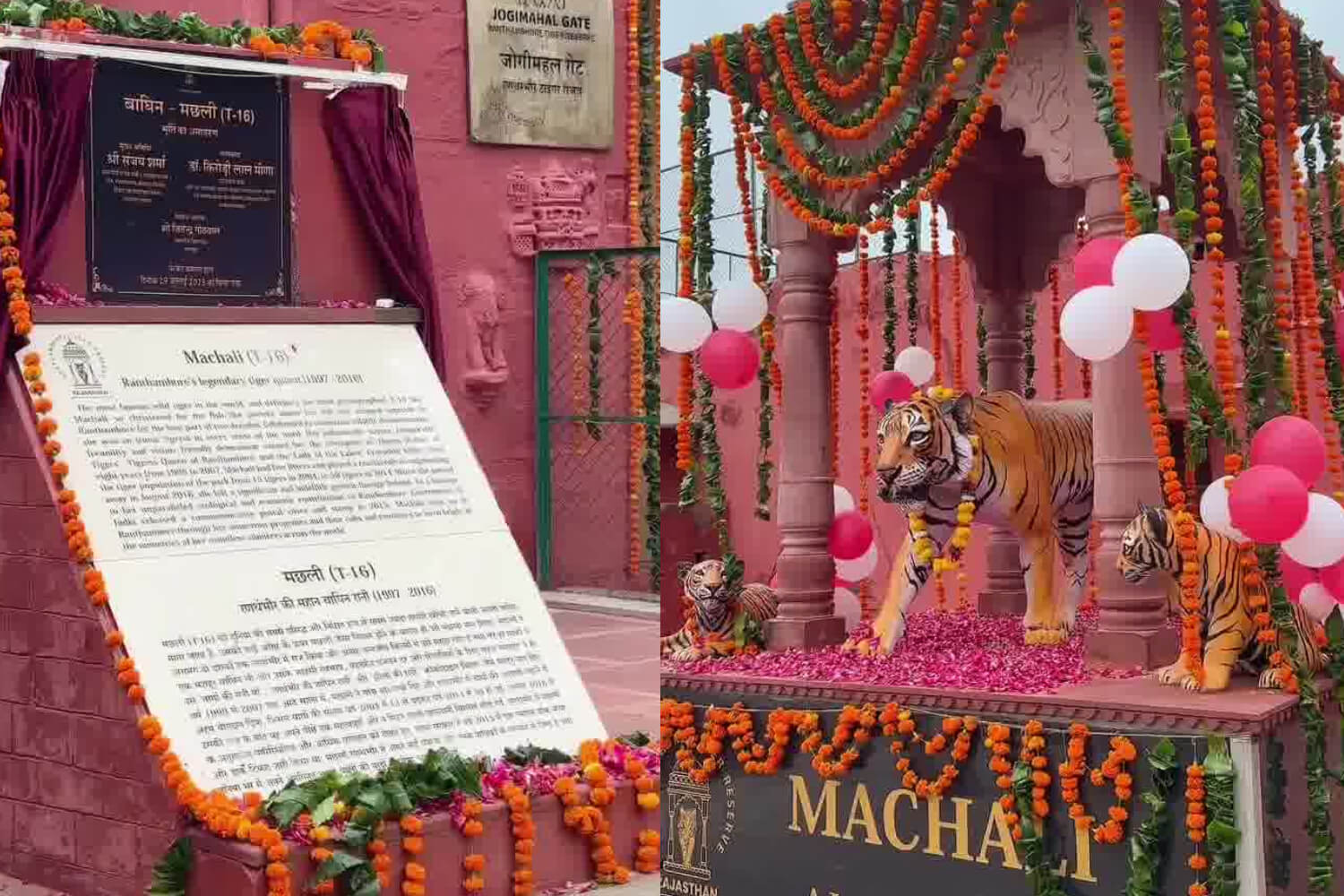
Tribute to India's most beloved tigress
Machali's impact on wildlife conservation extends far beyond her individual achievements. She became an ambassador for tiger conservation at a critical time when India's tiger population was facing severe threats. Her fame generated unprecedented interest in Ranthambore, bringing millions of visitors and creating economic incentives for conservation. The approximately $10 million she annually generated for the park through tourism demonstrated that living tigers were far more valuable than dead ones, strengthening local support for conservation efforts.
Her story humanized tigers for millions of people who had never seen one in the wild. Through countless documentaries, news articles, and social media posts, Machali helped people understand that tigers were not just fearsome predators but individuals with personalities, families, and complex social lives. This emotional connection has been crucial for building public support for tiger conservation initiatives.
The lessons learned from studying Machali's life have influenced conservation strategies across India. Her success as a mother demonstrated the importance of protecting breeding females and their territories. Her adaptability in the face of injury showed the importance of maintaining ecosystem integrity so that aging tigers could find alternative strategies for survival. Her relationship with other tigers provided insights into tiger social dynamics that continue to inform management decisions.
Visiting Ranthambore: Paying Tribute to Machali
For wildlife enthusiasts visiting Ranthambore today, Machali's legacy is still palpable. Her former territory around Ranthambore Lake remains one of the most popular safari zones, and guides often share stories of her legendary exploits during tours. The memorial established in her honor serves as a pilgrimage site for those who admired her, and her descendants continue to dominate the landscape she once ruled. When planning a Rajasthan wildlife tour, Ranthambore should be at the top of your list.
The best way to honor Machali's memory is to visit Ranthambore responsibly, supporting conservation efforts through ethical tourism. This means choosing registered tour operators, respecting park regulations, and prioritizing the welfare of tigers over getting that perfect photograph. Remember that Machali's territory supported not just her but an entire ecosystem of wildlife, and responsible tourism helps preserve this habitat for future generations of tigers.
When planning your visit to Ranthambore, consider staying at properties that actively support conservation initiatives and employ local community members. Many lodges in the area participate in anti-poaching efforts and community development programs that help reduce human-tiger conflict. By choosing such accommodations, you contribute to the continuation of Machali's legacy of conservation. You might also want to explore Sariska Tiger Reserve for another incredible tiger experience in Rajasthan.
Lessons from the Queen of Tigers
Machali's life offers profound lessons about resilience, adaptability, and the importance of individual contributions to conservation. She demonstrated that age and physical limitations don't necessarily diminish one's value to a community or ecosystem. Her ability to adapt to changing circumstances – from losing territory to physical disabilities – provides inspiration beyond the realm of wildlife.
For conservation practitioners, Machali's story highlights the importance of recognizing and protecting individual animals that make extraordinary contributions to their populations. Not all tigers are equally important for conservation, and identifying and protecting key individuals like Machali can have outsized benefits for entire populations.
Perhaps most importantly, Machali showed us that successful conservation requires more than just protecting habitat – it requires building emotional connections between people and wildlife. Her ability to capture human imagination and generate support for conservation demonstrates the power of storytelling in environmental advocacy. As we work to protect tigers and other endangered species, we would do well to remember the Queen of Ranthambore and the lessons her remarkable life taught us.
Conclusion: Remembering a Legend
Machali was more than a tiger – she was a phenomenon, a teacher, and an inspiration. Her life spanned nearly two decades of triumph, adversity, motherhood, and eventual decline, offering insights into tiger biology and behavior that continue to inform conservation science. She captured the hearts of millions worldwide and became a symbol of wild nature's resilience and beauty.
Today, her descendants continue her legacy in Ranthambore, and her story continues to inspire new generations of conservationists and wildlife enthusiasts. The Queen of Tigers may be gone, but her impact on conservation, tourism, and our understanding of tiger behavior endures. Every tiger sighting in Ranthambore today is, in some way, a continuation of the story that Machali began – a story of survival, dominance, and the enduring power of wild nature.
As we face the ongoing challenges of tiger conservation in the 21st century, let us remember Machali not just as a remarkable individual, but as proof that dedicated conservation efforts can succeed. Her life showed us that tigers can thrive when given space, protection, and respect. May her memory continue to inspire action for tiger conservation across India and beyond, ensuring that future generations can experience the thrill of seeing a tiger in the wild and understand what we lost when we nearly drove these magnificent creatures to extinction.
Location
Frequently Asked Questions
Q1.Who was Machali the tigress?
Q2.How long did Machali the tigress live?
Q3.Why was Machali called the Crocodile Killer?
Q4.How many cubs did Machali have?
Q5.Why was Machali the most photographed tiger?
Q6.When did Machali die and what were her final days like?
Q7.Can you still see Machali's descendants in Ranthambore?
Recommended For You
Desert National Park Jaisalmer: Safari Zones, Wildlife & Timings
Explore Desert National Park in Jaisalmer, India's largest national park and home to the critically endangered Great Indian Bustard. Discover unique desert wildlife, stunning landscapes, and practical travel tips for an unforgettable desert safari experience.
Keoladeo Ghana National Park Bharatpur: Birding Season & Safari Info
Discover Keoladeo Ghana National Park, formerly known as Bharatpur Bird Sanctuary – a UNESCO World Heritage Site and one of the world's most important bird habitats. This comprehensive guide covers bird species, best viewing seasons, and practical travel tips.
National Parks in Rajasthan: Tiger Safari Parks & Booking Tips
Explore National Parks in Rajasthan. Ranthambore, Sariska, Keoladeo. Tigers, birds, safari booking & best time to visit.
Never Miss an Adventure
Get the latest trekking guides, travel tips, and exclusive offers delivered straight to your inbox.
