
Amdavad ni Gufa Ahmedabad: Underground Art Gallery by Doshi

Rohit Verma
February 5, 2026
Discover Amdavad ni Gufa, the extraordinary underground art gallery in Ahmedabad designed by Pritzker winner Balkrishna Doshi featuring M.F. Husain's iconic paintings.
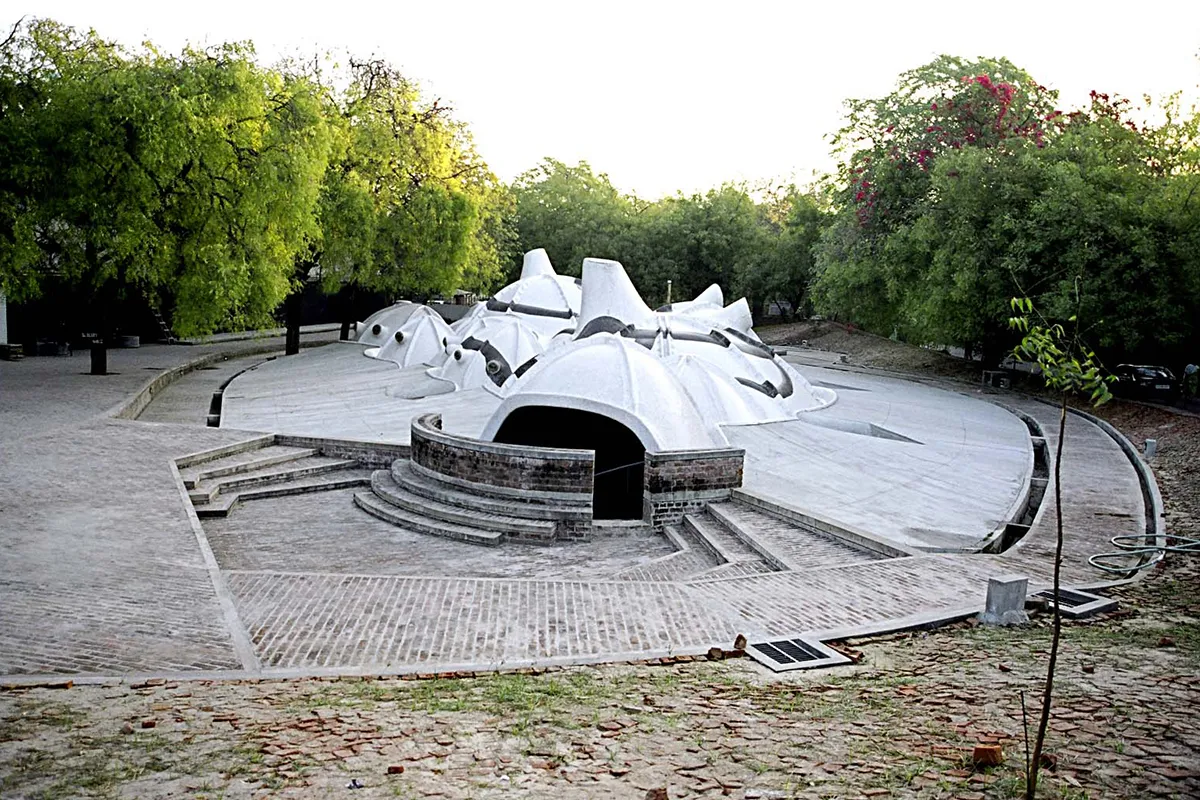
Amdavad ni Gufa is one of Ahmedabad’s most distinctive cultural spaces, known for combining experimental architecture with modern Indian art. Designed by architect Balkrishna Doshi and associated with M.F. Husain’s visual language, the gallery offers an experience very different from conventional white-wall museums. If you are planning a city circuit, start with this list of places to visit in Ahmedabad and include Amdavad ni Gufa as a high-priority stop.
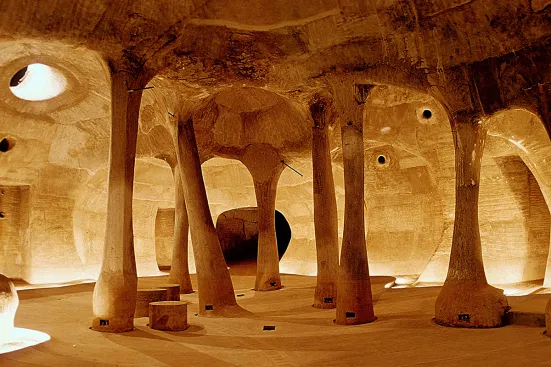
The most memorable aspect of the site is spatial atmosphere. You move from bright urban streets into a cooler, cave-like interior where light, texture, and curvature shape how art is perceived. This transition is intentional. The structure is designed to slow visitors down and create a contemplative encounter with painting and form.
Why Amdavad ni Gufa Is Architecturally Important
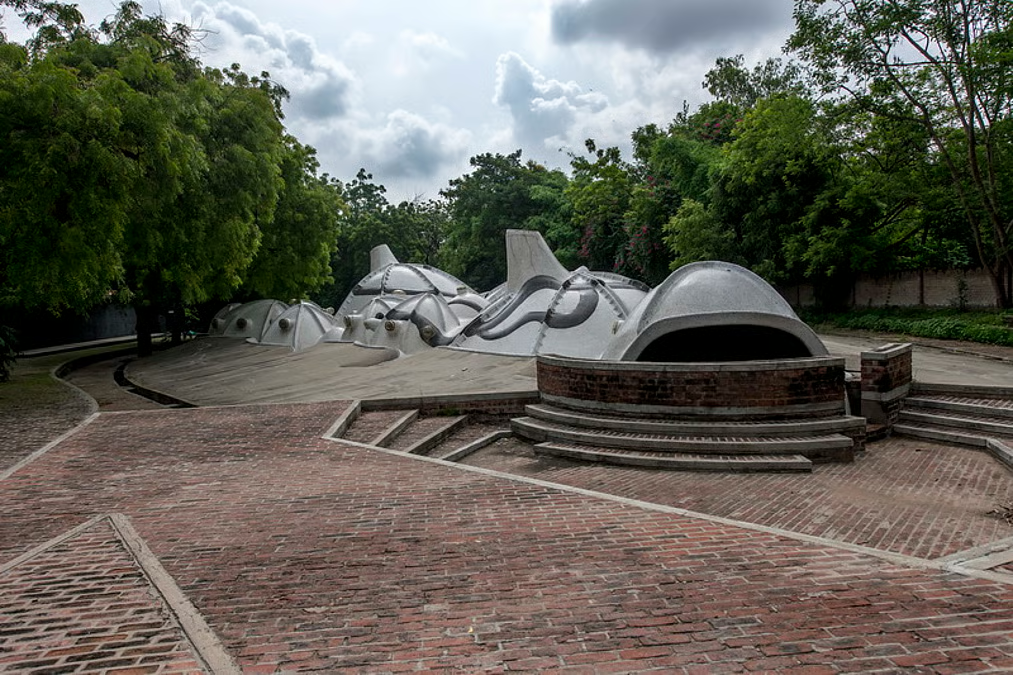
Amdavad ni Gufa is widely discussed in architecture schools because it challenges standard gallery planning. Instead of rigid rectangular halls, it uses organic geometry and subterranean volume. The structure explores how climate-responsive design, low-energy cooling, and artistic display can coexist. In hot-weather cities like Ahmedabad, this approach is both practical and visionary.
Doshi’s broader philosophy is visible here: architecture should respond to place, people, and climate rather than copy global templates. The gallery demonstrates this clearly through thermal comfort, filtered light, and textured surfaces that feel handcrafted rather than industrial.
The Doshi-Husain Collaboration
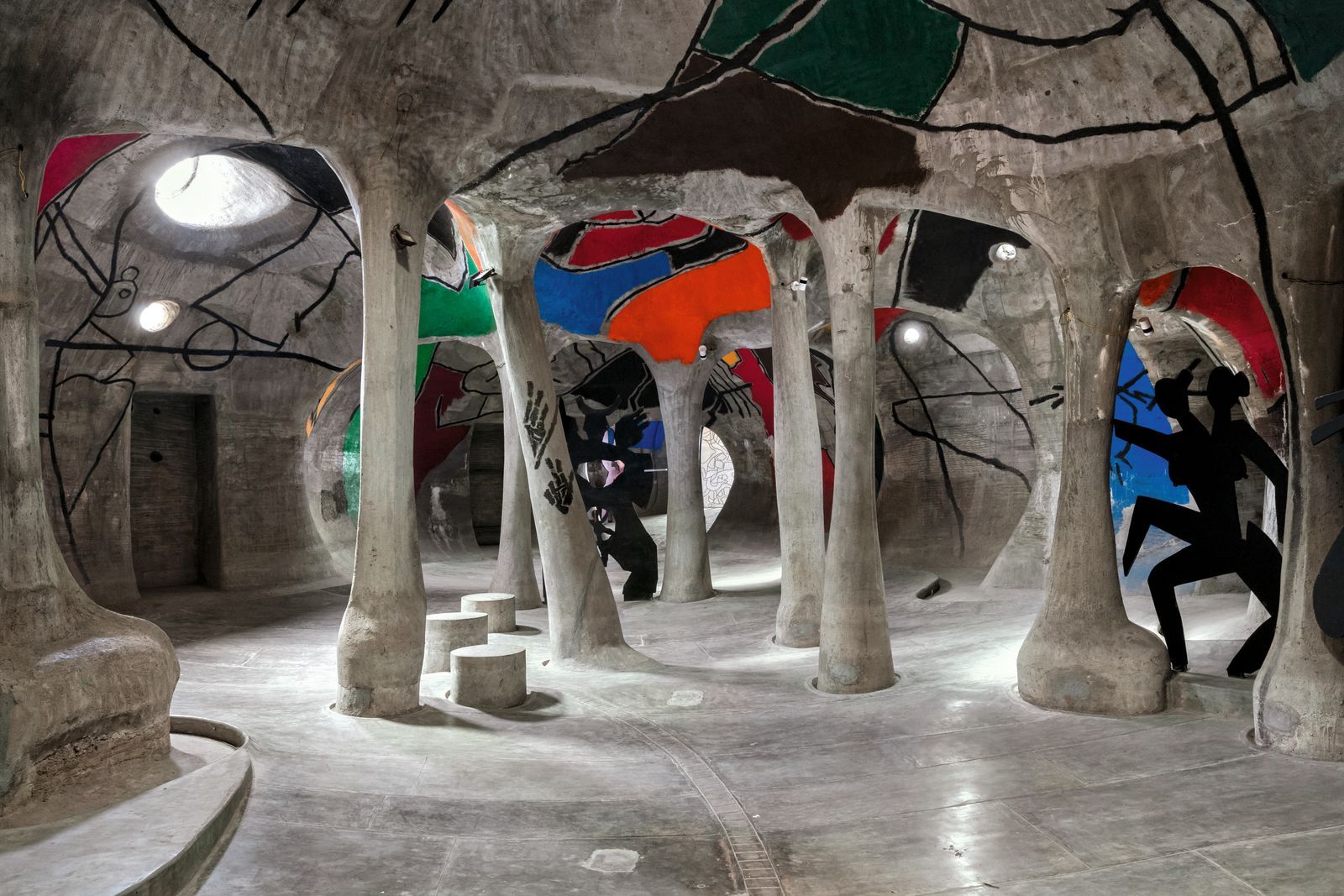
The collaboration between Balkrishna Doshi and M.F. Husain is central to the identity of the site. This is not just a building that displays paintings; it is a conversation between architecture and art. Husain’s works gain additional intensity in this environment because walls, ceiling curves, and shadow gradients influence visual attention.
Visitors unfamiliar with modern Indian art often find this setting easier to engage with than formal museum halls. The immersive quality reduces distance between viewer and artwork, creating a direct, emotional experience.
What You See Inside
Inside the gallery, expect a sequence of rounded chambers, connected movement paths, and mural-rich surfaces. Depending on the exhibition cycle, you may encounter permanent and rotating displays. The textured interiors and controlled natural light make every visit feel slightly different, especially across seasons and time slots.
Do not rush through in ten minutes. Sit for a while in one chamber, observe how light moves, and then continue. This slower rhythm is the best way to understand why the space is globally referenced in conversations on modern Indian architecture.
Best Time to Visit and Crowd Strategy
Weekday mornings are usually ideal for quieter viewing. You get more room to observe artworks and take non-intrusive photographs. Afternoons can be busier, especially during holidays and student group visits. The underground environment remains relatively comfortable compared to outdoor heat, but it is still better to combine this stop with nearby attractions in a planned sequence.
If you are building a cultural day plan, follow this guide to things to do in Ahmedabad and cluster nearby stops by geography to reduce travel time.
How to Pair This Visit With Nearby Attractions
A practical half-day combination is Amdavad ni Gufa plus one heritage and one city-lifestyle stop. Strong pairings include Adalaj Stepwell for historical water architecture and Sabarmati Riverfront Ahmedabad for evening movement and city views. This gives a strong contrast between underground art, historic engineering, and contemporary public space.
Another excellent add-on is the Calico Museum of Textiles, especially for travelers interested in design history and craft traditions. Together, these sites create a deep cultural itinerary rather than a general tourist circuit.
Photography and On-Site Etiquette
Always check current photography permissions before shooting. Even when photography is allowed, avoid flash and intrusive setups that disturb other visitors. The best images usually come from respectful, low-noise framing that captures architecture-art interaction rather than only close-up artwork.
Because the space is contemplative, keep conversations soft and avoid blocking narrow circulation paths. If you are with a group, stagger movement so everyone can pause without crowding.
For Architecture and Design Students
Amdavad ni Gufa is a valuable study site for spatial behavior and climate response. Observe how thickness, curvature, and openings influence thermal comfort and movement. Note where light is controlled and where it is intentionally dramatic. Also examine how non-orthogonal geometry affects orientation, pause points, and visual hierarchy.
Students documenting the site should sketch section ideas and visitor flow, not just facades. The building’s logic is experiential, so diagrams of circulation and light are more useful than static photographs alone.
Practical Tips Before You Go
Wear comfortable footwear and carry light hydration for city travel between stops. Keep at least 60-90 minutes for this gallery if you want a meaningful visit. If you are traveling during festivals or peak tourist periods, consider pre-checking timings and closures to avoid last-minute schedule gaps.
After the gallery, you can continue to Law Garden Night Market Ahmedabad for shopping and local evening energy. This is a convenient way to balance art-heavy morning hours with a more casual local experience.
Why It Stands Out in Ahmedabad’s Cultural Map
Many cities have museums, but few have a space where architecture itself is part of the exhibit experience. Amdavad ni Gufa stands out because it is immersive, climate-smart, and culturally rooted without being nostalgic. It remains relevant to travelers, students, and practitioners who want to understand how Indian modernism evolved through local conditions.
For Ahmedabad visitors seeking more than checklist tourism, this site offers depth. It demonstrates that meaningful travel can come from spending time in one carefully designed space rather than racing through many disconnected attractions.
Final Take
Amdavad ni Gufa is absolutely worth visiting for anyone interested in architecture, modern art, and place-based design thinking. Plan it as a focused stop, give it unhurried time, and pair it with nearby heritage and urban destinations for a complete day. Done thoughtfully, the visit becomes one of the most memorable cultural experiences in Ahmedabad.
If your itinerary allows, extend the circuit with museums, stepwells, and riverfront spaces to understand the city through both historical and contemporary design lenses.
Suggested 4-Hour Cultural Plan
If you have half a day, start with Amdavad ni Gufa in the morning, continue to one museum or heritage site, then close with an evening urban stop. This structure keeps travel practical and avoids heat-heavy movement in peak afternoon windows. For first-time visitors, this sequence offers strong variety: experimental architecture, historical context, and contemporary city life in one compact plan.
You can also use this stop as a design-focused anchor if you are in Ahmedabad for architecture studies or creative work. Spending focused time in one high-quality site often delivers deeper insight than rushing through many superficial stops.
Common Mistakes to Avoid
The most common mistake is treating the gallery as a quick photo point. Amdavad ni Gufa rewards slow observation. Another mistake is planning no contextual add-ons; without nearby heritage or museum visits, you miss how this space fits Ahmedabad’s broader cultural landscape. Lastly, avoid peak-hour crowding if you prefer contemplative viewing. A simple fix is to arrive early, stay longer, and combine the gallery with one thoughtfully selected nearby site.
Location
Frequently Asked Questions
Q1.What is the best time to visit Amdavad ni Gufa?
Q2.What are Amdavad ni Gufa's opening hours?
Q3.What is the entry fee for Amdavad ni Gufa?
Q4.Why is Amdavad ni Gufa built underground?
Q5.Who designed Amdavad ni Gufa?
Q6.What artworks are displayed at Amdavad ni Gufa?
Q7.Is photography allowed inside Amdavad ni Gufa?
Q8.How long should I spend at Amdavad ni Gufa?
Q9.What are the nearby attractions to Amdavad ni Gufa?
Q10.How do I reach Amdavad ni Gufa from Ahmedabad airport?
Q11.What is the architectural style of Amdavad ni Gufa?
Q12.Is Amdavad ni Gufa suitable for children?
Q13.Are there guided tours available at Amdavad ni Gufa?
Q14.What makes Amdavad ni Gufa unique among Indian art galleries?
Q15.Can I combine Amdavad ni Gufa with other Ahmedabad attractions?
Recommended For You
Things to Do in Ahmedabad: Heritage Walks, Food & Evening Plans
Plan the best things to do in Ahmedabad with heritage walks, food circuits, markets, museums, family activities, and practical 2-3 day itineraries.
20 Best Places to Visit in Ahmedabad: Heritage & Fun
Explore top places to visit in Ahmedabad with heritage landmarks, food streets, shopping hubs, and practical 1-day/2-day itinerary planning.
Places to Visit in Gujarat: Rann, Gir & Temples
Explore the best places to visit in Gujarat - from the Statue of Unity (world's tallest) to the white Rann of Kutch, Asiatic lions of Gir, sacred temples of Dwarka & Somnath. Complete travel guide.
Never Miss an Adventure
Get the latest trekking guides, travel tips, and exclusive offers delivered straight to your inbox.
