
Heritage
Arikamedu Pondicherry: Ancient Roman Port

Rohan Malhotra
February 18, 2026
5 min read2,675 views
Explore Arikamedu in Pondicherry with a clear guide to its Indo-Roman history, excavation findings, visitor tips, and practical travel planning.
Introduction
Arikamedu Pondicherry is one of India's most important archaeological landscapes because it offers direct evidence of early Indo-Roman maritime trade. Located near Ariyankuppam, just outside the main city zone, the site is often overlooked by travelers who focus only on beaches and cafés. Yet for history lovers, Arikamedu provides a rare link between South India and Mediterranean trade networks that operated nearly two thousand years ago.
If you are building a full city itinerary, combine this with French War Memorial Pondicherry and coastal stops like Serenity Beach Puducherry. This guide explains Arikamedu's history, major findings, excavation timeline, what to see today, how to reach, and how to plan a meaningful visit.
Why Arikamedu Matters in Indian History
Arikamedu is associated with the ancient port known as Poduke or Podouke in Greco-Roman records. Archaeological evidence from pottery, amphora fragments, beads, and structural remains indicates active long-distance exchange between Roman traders and the Tamil coast. This was not a symbolic link. It was a functioning trade ecosystem with imported and exported goods moving through organized maritime routes. For students of Indian Ocean history, Arikamedu demonstrates how early South Indian settlements were connected to global commerce much earlier than many casual narratives assume.Historical Background and Time Period
Most major activity at Arikamedu is placed between around the 1st century BCE and 2nd century CE, with continuity and variations across phases. The settlement stood near a riverine route that improved handling and movement of goods. Its location gave it both inland access and maritime utility.| Historical Aspect | Arikamedu Context |
|---|---|
| Ancient identity | Linked with Poduke in classical records |
| Peak trade phase | Early centuries around Roman imperial period |
| Primary significance | Evidence of Indo-Roman exchange |
| Archaeological value | Material proof from ceramics, beads, and structures |
Major Excavations and Key Researchers
 Arikamedu gained stronger scholarly visibility through twentieth-century excavations, including work associated with Mortimer Wheeler and other teams. These studies documented stratified cultural deposits and trade-related finds that changed how historians interpreted peninsular India's ancient global connections.
Excavation work here is a reminder that archaeological interpretation evolves over time. Later studies often revisit earlier conclusions with improved dating and contextual analysis.
Arikamedu gained stronger scholarly visibility through twentieth-century excavations, including work associated with Mortimer Wheeler and other teams. These studies documented stratified cultural deposits and trade-related finds that changed how historians interpreted peninsular India's ancient global connections.
Excavation work here is a reminder that archaeological interpretation evolves over time. Later studies often revisit earlier conclusions with improved dating and contextual analysis.
What Was Found at Arikamedu
The site is known for material categories linked to trade, production, and habitation.- Roman amphora fragments: Often connected with imported liquids like wine or oil.
- Arretine and related fine wares: Indicators of Mediterranean contact.
- Bead-making evidence: Suggests local craft and export participation.
- Brick and structural remains: Settlement planning and storage utility.
- Local pottery traditions: Confirms regional continuity alongside imports.
Indo-Roman Trade Network Context
Arikamedu was one node in a larger Indian Ocean exchange system linking the Red Sea, Arabian Sea, and peninsular ports. Goods moving outward from India likely included textiles, beads, spices, and valuable regional products. Incoming goods included ceramic containers, luxury wares, and other traded materials.Why This Changes the Narrative
It shows early South Asian coastal settlements were not isolated. They were participants in high-value cross-cultural trade. This adds economic depth to ancient Tamil coast history and offers context for other peninsular port sites.What Visitors Can See Today
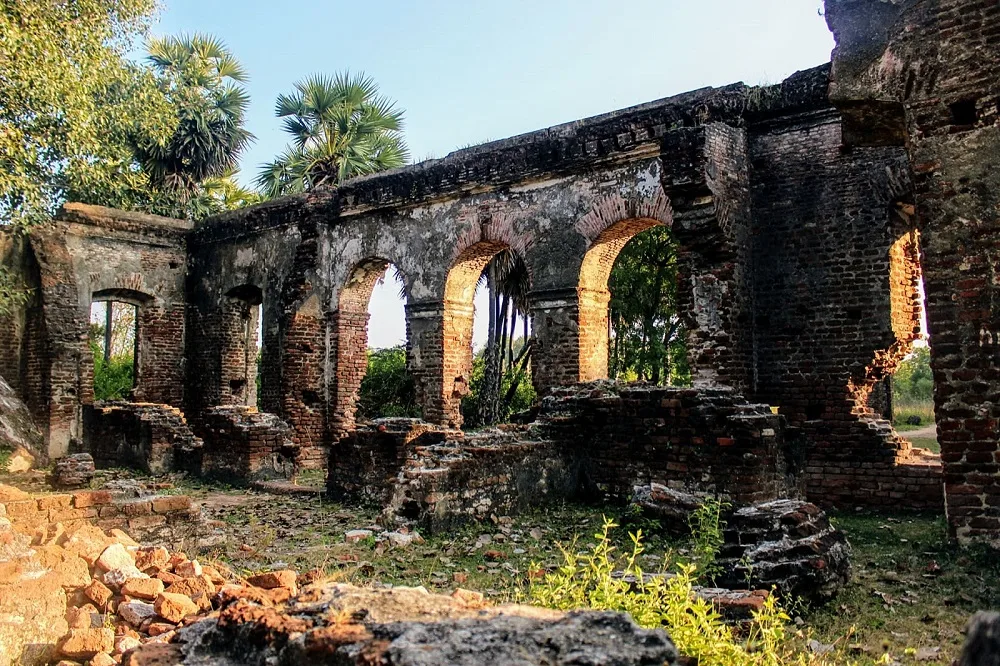
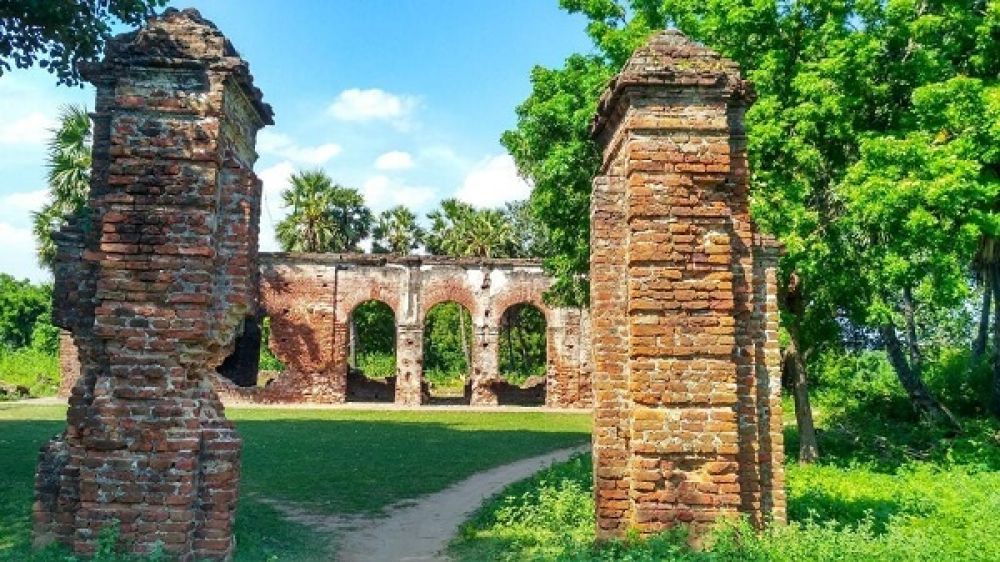 Arikamedu is not a monumental stone complex like a preserved imperial citadel. Visitors should expect low-visibility ruins, mounded areas, and interpretive potential rather than dramatic architecture. The value here is historical depth, not visual grandeur.
| On-Site Element | Visitor Expectation |
|---|---|
| Excavated zones | Partial exposed areas and mounds |
| Structural traces | Foundational remains and brick contexts |
| Interpretive value | High for history-focused travelers |
| Photography | Possible, but subtle site aesthetics |
Best Time to Visit Arikamedu
Cooler months are more practical for open-site walking. Midday summer heat can reduce comfort, especially when shade is limited. Morning and late-afternoon slots give better walking conditions and softer light for documentation photos.How to Reach Arikamedu from Pondicherry
Arikamedu is close enough for short local transfers by auto, taxi, or private vehicle. Travelers staying in central Pondicherry can reach the site in a short drive depending on traffic and route.- Use local cab or auto for direct drop.
- Combine with Ariyankuppam-side attractions.
- Carry water because amenities around site edges may be limited.
Visitor Tips for a Better Heritage Experience
- Read site background before arrival to improve understanding.
- Do not expect a heavily curated tourist complex.
- Wear comfortable footwear for uneven ground.
- Visit museum collections in Pondicherry for artifact context.
- Avoid litter and respect archaeological boundaries.
Common Misconceptions
One common mistake is judging Arikamedu only by visible monument scale. Archaeological value is often beneath surface and within documented finds, not always in standing architecture. Another misconception is treating Indo-Roman links as myth-level claims. At Arikamedu, evidence from ceramics and trade materials provides concrete support for long-distance exchange.Who Should Prioritize Arikamedu
Arikamedu is ideal for history students, archaeology enthusiasts, culture travelers, and anyone interested in ancient maritime networks. If your preference is purely scenic tourism, keep this as a shorter interpretive stop and pair it with beach and town attractions.Conclusion
Arikamedu Pondicherry remains one of the most meaningful heritage stops in South India for understanding ancient global connections. Visit with the right expectations: this is a research-rich archaeological landscape, not a cinematic monument zone. With prior reading and a combined city itinerary, Arikamedu offers exceptional historical payoff.Interpreting the Site Layout for First-Time Visitors
Because Arikamedu lacks the dramatic standing walls of a fort or temple complex, many first-time visitors initially struggle to read the landscape. It helps to think of the site in two broad zones: the northern sector, associated with earlier habitation and craft activity such as bead production, and the southern sector, where most of the trade-linked material including amphora fragments and fine ware was concentrated during excavation phases. Understanding this rough division before arrival makes a self-guided walk far more rewarding, since you are not simply looking at undifferentiated mounds but at distinct functional areas of an ancient settlement. Local guides and site literature, when available, can help translate excavation grid references into a walkable narrative. If no formal guide is present during your visit, a short read of published excavation summaries beforehand goes a long way toward making sense of what would otherwise look like ordinary open ground.Seasonal Considerations and River Conditions
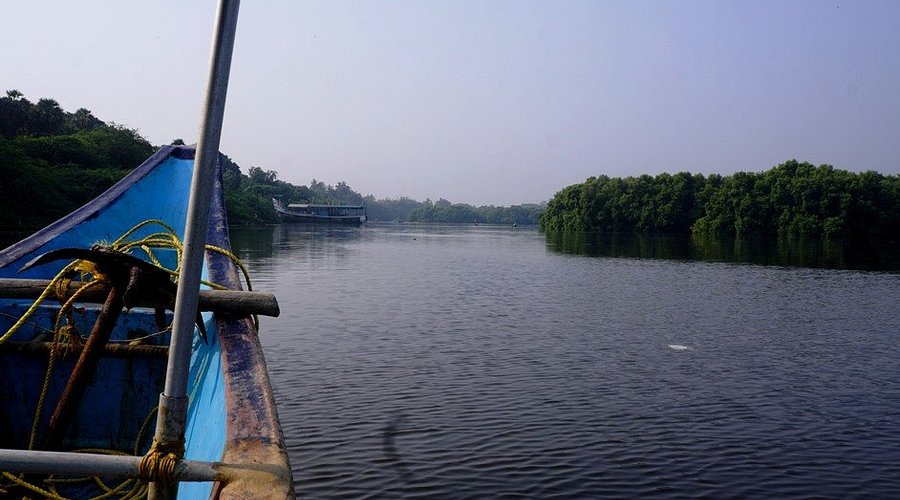
The Ariyankuppam river, which runs close to the site, historically enabled boat-based movement of goods between the port and interior trade routes. Its water levels and surrounding vegetation shift noticeably with the monsoon cycle. During and immediately after the northeast monsoon, typically October through December, the ground around the lower excavation areas can turn muddy and walking becomes harder. The drier months from January through March offer firmer footing and better overall access to the full site. Visitors planning a photography-focused trip should note that the softer light of early morning also reduces the flat, washed-out look that harsh midday sun creates over the open excavation ground. Since shade structures are minimal, an early start is doubly useful: it improves both comfort and picture quality.Location
Frequently Asked Questions
Q1.What is Arikamedu famous for?
Arikamedu is famous for archaeological evidence of Indo-Roman maritime trade, including amphora fragments, fine wares, beads, and settlement remains.
Q2.Where is Arikamedu located?
Arikamedu is located near Ariyankuppam, a short drive from central Puducherry.
Q3.Who excavated Arikamedu?
Multiple teams studied the site, including excavation work associated with Mortimer Wheeler and later archaeological researchers.
Q4.What can I see at Arikamedu today?
Visitors can see mounds, partial ruins, and site landscape context. It is best approached as a history-rich archaeological field site.
Q5.How much time is needed for Arikamedu?
Most travelers spend 1 to 2 hours on-site, then combine it with museum and city heritage stops.
Q6.Is there an entry fee for Arikamedu?
Entry rules and fees can change by local administration, so verify on the day before planning fixed timings.
Q7.What is the best season to visit Arikamedu?
Cooler months and morning visits are most comfortable because the site is open and can be hot at midday.
Q8.Is Arikamedu suitable for casual tourists?
Yes, but expectations should be realistic. The value is historical and archaeological depth rather than dramatic monument architecture.
Recommended For You
Beaches
Karaikal Beach Pondicherry: Guide & Best Time
Karaikal Beach Pondicherry guide with route planning, season tips, nearby attractions, stay strategy, and a practical one-day/two-day coastal itinerary.
Feb 18Read More
Beaches
Veerampattinam Beach: Pondicherry's Hidden Gem
Discover Veerampattinam Beach near Puducherry with village culture, temple festival context, safety tips, route options, and best sunrise-time planning.
Feb 18Read More
Heritage
Mahatma Gandhi Statue Pondicherry: Promenade Landmark & Best Visit Time
Visit Mahatma Gandhi Statue Pondicherry with history, promenade planning, nearby landmarks, and practical tips for a better heritage walk experience.
Feb 20Read More
Never Miss an Adventure
Get the latest trekking guides, travel tips, and exclusive offers delivered straight to your inbox.
