

Heritage
Ateshgah Fire Temple Baku: History, Tickets & Visitor Information

Neha Kapoor
February 21, 2026
20 min read2,369 views
Explore Ateshgah Temple Baku: Ancient Zoroastrian fire temple with eternal flames, Sanskrit inscriptions, and Indian connections. Complete visitor guide with history and practical tips.
Introduction: The Eternal Flame of Baku
Nestled in the Surakhani settlement on the outskirts of Baku, Ateshgah Temple stands as a mesmerizing testament to Azerbaijan's ancient fire-worshipping traditions. This pentagonal structure, translating to "Fire Temple" in Azerbaijani, has captivated travelers for centuries with its naturally burning flames that once erupted from the earth beneath.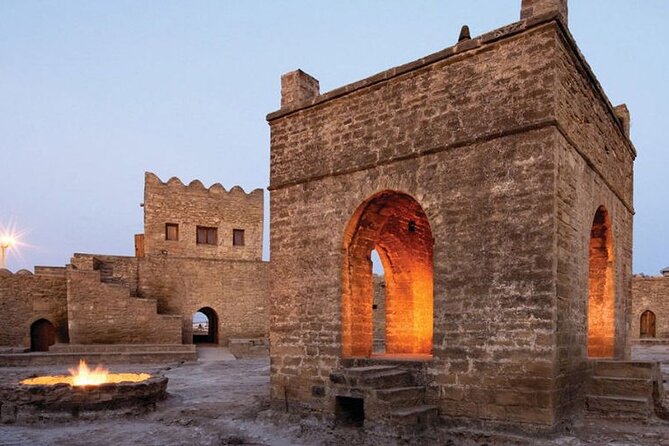 The temple's unique significance lies in its natural eternal flames—fed by Azerbaijan's vast natural gas reserves—that have been burning continuously for thousands of years. These mysterious fires made the region a sacred site for Zoroastrians, who revered fire as the purest manifestation of the divine, and later attracted Hindu and Sikh traders traveling the ancient Silk Route.
Today, Ateshgah Temple serves as both a historical museum and one of Azerbaijan's most visited attractions, offering visitors a fascinating glimpse into the intersection of ancient Persian religion, Indian spirituality, and Azerbaijan's geological wonders. Whether you're a history enthusiast, spiritual seeker, or cultural explorer, this fire temple provides an unforgettable journey through time and faith.
The temple's unique significance lies in its natural eternal flames—fed by Azerbaijan's vast natural gas reserves—that have been burning continuously for thousands of years. These mysterious fires made the region a sacred site for Zoroastrians, who revered fire as the purest manifestation of the divine, and later attracted Hindu and Sikh traders traveling the ancient Silk Route.
Today, Ateshgah Temple serves as both a historical museum and one of Azerbaijan's most visited attractions, offering visitors a fascinating glimpse into the intersection of ancient Persian religion, Indian spirituality, and Azerbaijan's geological wonders. Whether you're a history enthusiast, spiritual seeker, or cultural explorer, this fire temple provides an unforgettable journey through time and faith.
The Fascinating History of Ateshgah Temple
The story of Ateshgah Temple begins millennia ago, when natural gas vents in the Absheron Peninsula created eternal flames that burned continuously from the earth itself. These mysterious fires, emerging from stone and soil, were considered divine manifestations by ancient peoples who inhabited the region. The site's importance grew significantly during the Zoroastrian period (roughly 5th century BC to 7th century AD), when fire was worshipped as the supreme symbol of purity and the divine. Zoroastrianism, founded by the prophet Zoroaster (Zarathustra) in ancient Persia, considered fire to be the son of Ahura Mazda, the supreme god, and built temples over natural gas flames to honor this sacred element.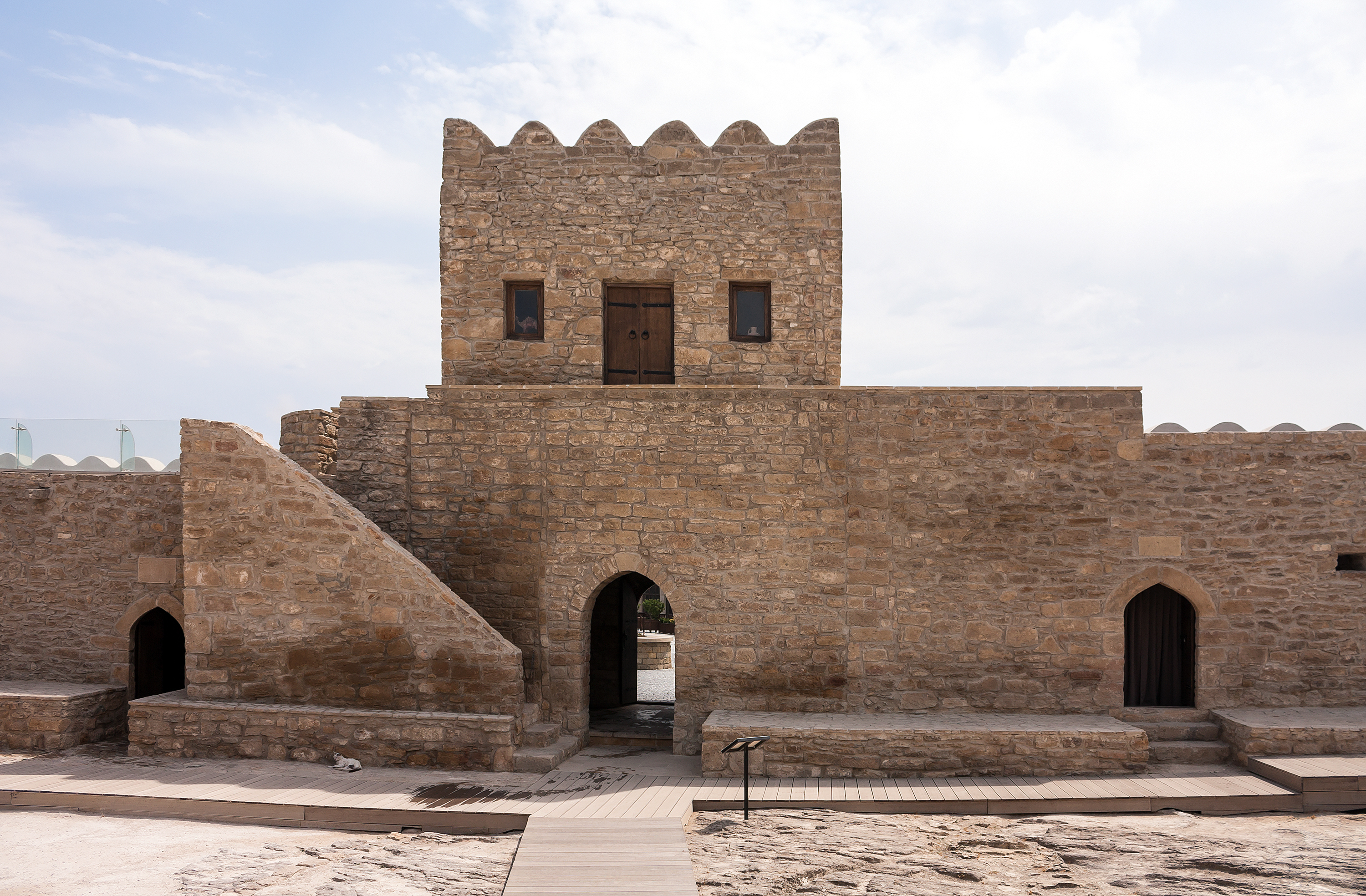 The current stone structure dates primarily to the 17th and 18th centuries, though the site has been sacred for millennia. During this period, the temple complex was expanded and developed by Indian traders and pilgrims who traveled from Northwest India (modern-day Punjab and Gujarat) to Baku along trade routes connecting the Indian subcontinent with the Caucasus and Persia.
These Indian visitors, both Hindu and Sikh, built the existing temple structure around the sacred flames, creating a unique architectural fusion that combined Zoroastrian fire-worshipping traditions with Indian temple design. The inscriptions and artwork they left behind remain visible today, offering fascinating insights into the multicultural nature of this sacred site.
The temple remained an active place of worship until the late 19th century, when the exploitation of Azerbaijan's oil reserves unfortunately caused many of the natural flames to diminish. However, even after the natural flames reduced, the temple continued to be revered as a sacred space, and in 1975 it was converted into a museum to preserve and share its remarkable history with future generations.
The current stone structure dates primarily to the 17th and 18th centuries, though the site has been sacred for millennia. During this period, the temple complex was expanded and developed by Indian traders and pilgrims who traveled from Northwest India (modern-day Punjab and Gujarat) to Baku along trade routes connecting the Indian subcontinent with the Caucasus and Persia.
These Indian visitors, both Hindu and Sikh, built the existing temple structure around the sacred flames, creating a unique architectural fusion that combined Zoroastrian fire-worshipping traditions with Indian temple design. The inscriptions and artwork they left behind remain visible today, offering fascinating insights into the multicultural nature of this sacred site.
The temple remained an active place of worship until the late 19th century, when the exploitation of Azerbaijan's oil reserves unfortunately caused many of the natural flames to diminish. However, even after the natural flames reduced, the temple continued to be revered as a sacred space, and in 1975 it was converted into a museum to preserve and share its remarkable history with future generations.
Natural Eternal Flames: Azerbaijan's Fire Phenomenon
The eternal flames that made Ateshgah Temple sacred are part of Azerbaijan's remarkable geological heritage. The country sits atop vast reserves of natural gas, which seeps to the surface through cracks in the earth's crust. When this gas encounters oxygen, it ignites, creating perpetual flames that burn without any artificial fuel source.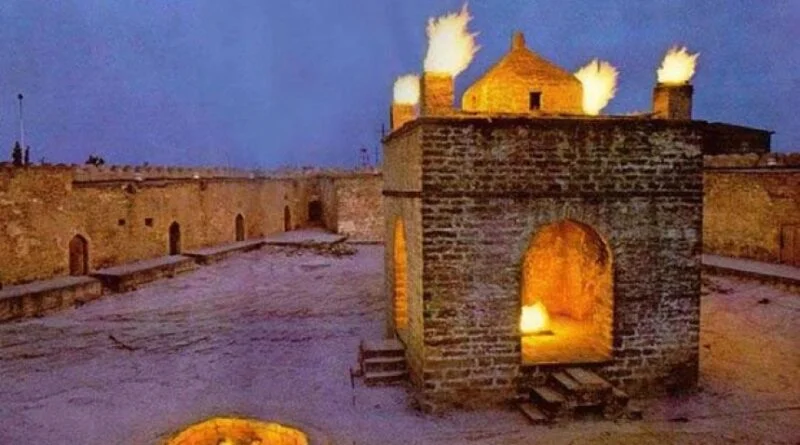 This natural phenomenon is particularly concentrated in the Absheron Peninsula around Baku, earning Azerbaijan the nickname "The Land of Fire." The ancient peoples who witnessed these flames erupting from the earth naturally attributed them to divine intervention, considering the burning ground to be sacred and building shrines and temples over these mystical fire vents.
While the original natural flames at Ateshgah Temple diminished due to oil and gas exploitation in the late 19th century, today the temple maintains its sacred atmosphere with gas-fed flames that continue to burn in the central altar. These maintained flames preserve the temple's ancient character and allow visitors to experience the awe that pilgrims felt for thousands of years when witnessing fire emerging from stone.
The most impressive natural flame in Azerbaijan today can be found at Yanar Dag (Burning Mountain), located about 25 kilometers from Ateshgah Temple. Unlike Ateshgah, where flames are now maintained, Yanar Dag features a natural 10-meter-long wall of fire that has been burning continuously from a hillside cliff for thousands of years, fed by underground gas seeps.
This natural phenomenon is particularly concentrated in the Absheron Peninsula around Baku, earning Azerbaijan the nickname "The Land of Fire." The ancient peoples who witnessed these flames erupting from the earth naturally attributed them to divine intervention, considering the burning ground to be sacred and building shrines and temples over these mystical fire vents.
While the original natural flames at Ateshgah Temple diminished due to oil and gas exploitation in the late 19th century, today the temple maintains its sacred atmosphere with gas-fed flames that continue to burn in the central altar. These maintained flames preserve the temple's ancient character and allow visitors to experience the awe that pilgrims felt for thousands of years when witnessing fire emerging from stone.
The most impressive natural flame in Azerbaijan today can be found at Yanar Dag (Burning Mountain), located about 25 kilometers from Ateshgah Temple. Unlike Ateshgah, where flames are now maintained, Yanar Dag features a natural 10-meter-long wall of fire that has been burning continuously from a hillside cliff for thousands of years, fed by underground gas seeps.
Indian Connections: Sanskrit Inscriptions and Traders
One of the most fascinating aspects of Ateshgah Temple is its deep connection to Indian traders and pilgrims who frequented the site from the 15th to 19th centuries. These visitors, traveling from Northwest India along the ancient Silk Route, were drawn to the temple's sacred flames, which held deep significance in both Hindu and Sikh traditions. For Hindus, fire (Agni) is one of the most important Vedic gods, serving as the messenger between humans and the divine. The sacred fire altar, or homa kund, is central to Hindu religious ceremonies, and the presence of naturally burning flames at Ateshgah made it a natural stop for Indian pilgrims traveling through the region.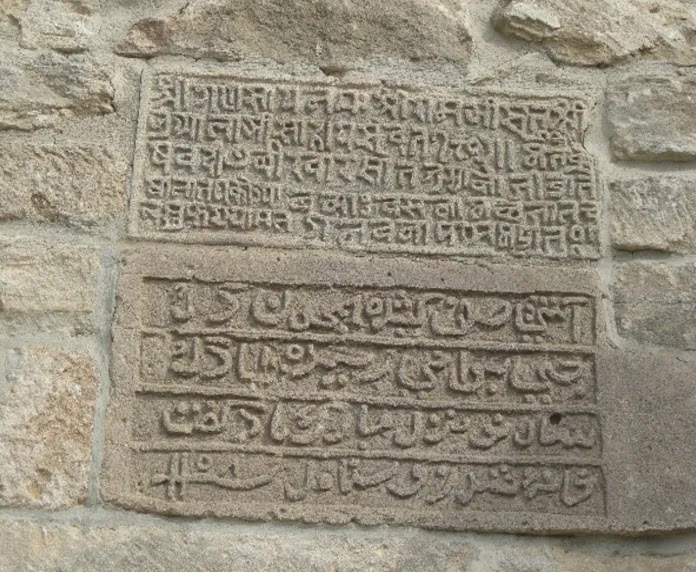 The evidence of these Indian visitors is visible throughout the temple complex in the form of numerous Sanskrit and Punjabi inscriptions carved into the stone walls and altars. These inscriptions include prayers to Hindu deities such as Shiva, Ganesha, and Jwalaji (the goddess of fire), as well as Sikh references to the Guru Granth Sahib.
One notable inscription reads "Jwala Ji" in Devanagari script, referring to the Hindu fire goddess. Another inscription invokes Lord Shiva, while others include the Sikh symbol Ik Onkar, representing the oneness of God. These inscriptions date from various periods between the 17th and 19th centuries and provide a fascinating record of the diverse pilgrims who visited the temple.
The Indian community in Baku was substantial enough during this period that they built the current temple structure, creating guest rooms for pilgrims, living quarters for priests, and spaces for meditation and worship. The architecture reflects this Indian influence, with the temple's pentagonal design and central altar reminiscent of Hindu temple design principles adapted to the local Azerbaijani style.
The evidence of these Indian visitors is visible throughout the temple complex in the form of numerous Sanskrit and Punjabi inscriptions carved into the stone walls and altars. These inscriptions include prayers to Hindu deities such as Shiva, Ganesha, and Jwalaji (the goddess of fire), as well as Sikh references to the Guru Granth Sahib.
One notable inscription reads "Jwala Ji" in Devanagari script, referring to the Hindu fire goddess. Another inscription invokes Lord Shiva, while others include the Sikh symbol Ik Onkar, representing the oneness of God. These inscriptions date from various periods between the 17th and 19th centuries and provide a fascinating record of the diverse pilgrims who visited the temple.
The Indian community in Baku was substantial enough during this period that they built the current temple structure, creating guest rooms for pilgrims, living quarters for priests, and spaces for meditation and worship. The architecture reflects this Indian influence, with the temple's pentagonal design and central altar reminiscent of Hindu temple design principles adapted to the local Azerbaijani style.
Temple Architecture and Sacred Chambers
Ateshgah Temple's architecture is a unique blend of Zoroastrian, Indian, and local Azerbaijani building traditions. The temple complex is built in the form of a pentagonal castle, with thick stone walls that provided both protection from the elements and defense against potential attackers during ancient times. The central feature of the complex is the main altar, where the sacred flame burns continuously. This centrally located fire shrine is surrounded by a series of small chambers or cells that radiate outward from the flame, creating a design that emphasizes the fire's central importance in the temple's spiritual life.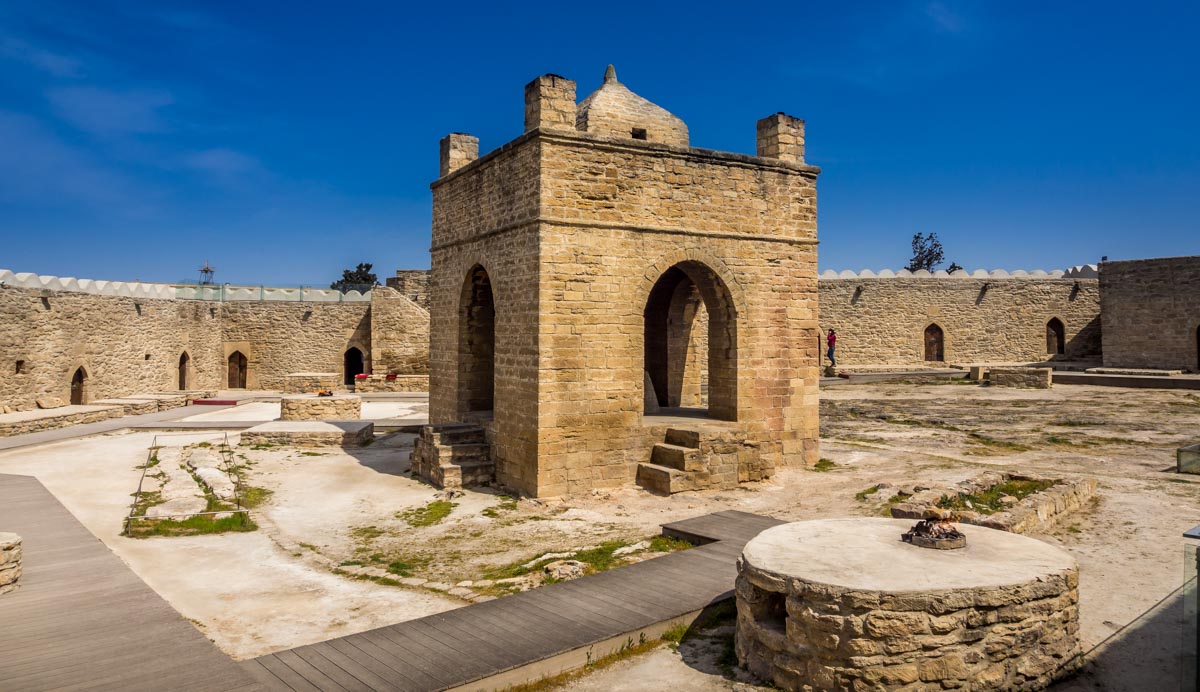 Surrounding the main sanctuary are 26 cells of varying sizes, each with its own unique purpose. These cells were used as living quarters for pilgrims and priests, meditation chambers, storage spaces for sacred objects, and guest rooms for visiting travelers. The cells feature small doorways and stone platforms, giving visitors a sense of the austere, contemplative life led by those who worshipped here.
The temple's entrance is marked by a traditional portal with intricate carvings that combine Persian and Indian artistic motifs. Above the entrance, visitors can see examples of the temple's unique decorative elements, which blend geometric Islamic patterns with Hindu-inspired sacred symbols.
One of the most interesting architectural features is the temple's design for ventilation, allowing the natural gas to escape safely while maintaining the sacred flames. The central altar's construction shows remarkable engineering understanding, with channels that directed gas to the flame while preventing dangerous buildup.
The temple courtyard includes a raised platform in the center, where the main sacred flame burns. This platform is surrounded by the cells, creating an intimate space where worshippers could gather around the fire for ceremonies, meditation, and community events.
Surrounding the main sanctuary are 26 cells of varying sizes, each with its own unique purpose. These cells were used as living quarters for pilgrims and priests, meditation chambers, storage spaces for sacred objects, and guest rooms for visiting travelers. The cells feature small doorways and stone platforms, giving visitors a sense of the austere, contemplative life led by those who worshipped here.
The temple's entrance is marked by a traditional portal with intricate carvings that combine Persian and Indian artistic motifs. Above the entrance, visitors can see examples of the temple's unique decorative elements, which blend geometric Islamic patterns with Hindu-inspired sacred symbols.
One of the most interesting architectural features is the temple's design for ventilation, allowing the natural gas to escape safely while maintaining the sacred flames. The central altar's construction shows remarkable engineering understanding, with channels that directed gas to the flame while preventing dangerous buildup.
The temple courtyard includes a raised platform in the center, where the main sacred flame burns. This platform is surrounded by the cells, creating an intimate space where worshippers could gather around the fire for ceremonies, meditation, and community events.
Best Time to Visit Ateshgah Temple
Timing your visit to Ateshgah Temple can significantly enhance your experience of this sacred site. The temple is open year-round, but each season offers a different perspective on this remarkable attraction.| Season | Months | Temperature | Pros | Cons |
|---|---|---|---|---|
| Spring | Apr - Jun | 15°C - 25°C | Mild weather, blooming landscapes | Some crowds |
| Summer | Jul - Aug | 25°C - 35°C | Long daylight hours | Hot weather, especially midday |
| Autumn | Sep - Oct | 15°C - 20°C | Ideal weather, fewer tourists | Shorter days |
| Winter | Nov - Mar | 5°C - 10°C | Mystical atmosphere, few crowds | Cold, possible snow |
How to Reach Ateshgah Temple from Baku
Ateshgah Temple is located in the Surakhani settlement, approximately 30 kilometers northeast of Baku city center. Getting there is relatively straightforward, with several transportation options available for visitors.| Transport Mode | Time | Cost (Approx.) | Best For |
|---|---|---|---|
| Taxi/Ride-hailing | 30-40 min | 15-25 AZN | Convenience, direct route |
| Public Bus | 45-60 min | 0.40 AZN | Budget travelers |
| Organized Tour | 3-4 hours | 30-50 AZN | Includes Yanar Dag & guide |
| Private Car | 30-40 min | Fuel + Parking | Flexibility and comfort |
Visiting Hours and Tickets
Planning your visit to Ateshgah Temple requires understanding the temple's operating hours and ticket prices. The temple is open throughout the week, giving visitors flexibility in scheduling their trip.| Detail | Information |
|---|---|
| Opening Hours | 10:00 AM - 6:00 PM daily |
| Last Entry | 5:30 PM |
| Closed On | Open every day |
| Adult Ticket | 5 AZN (approximately $3 USD) |
| Student Ticket | 2 AZN (with valid ID) |
| Children Under 6 | Free entry |
| Photography | Allowed (no extra fee) |
| Video Recording | Allowed (no extra fee) |
| Guided Tours | Available for additional fee |
Exploring the Temple Complex
Your visit to Ateshgah Temple begins at the main entrance, where you'll purchase tickets and can optionally rent an audio guide. As you enter through the fortress-like walls, you'll step into the central courtyard, where the sacred eternal flame burns in a raised altar at the center. Take a moment to observe the main flame and appreciate its significance—for thousands of years, fire has burned here as a symbol of purity, divinity, and the connection between earth and sky. The maintained gas-fed flame may not be natural anymore, but it preserves the essence of what made this site sacred for millennia.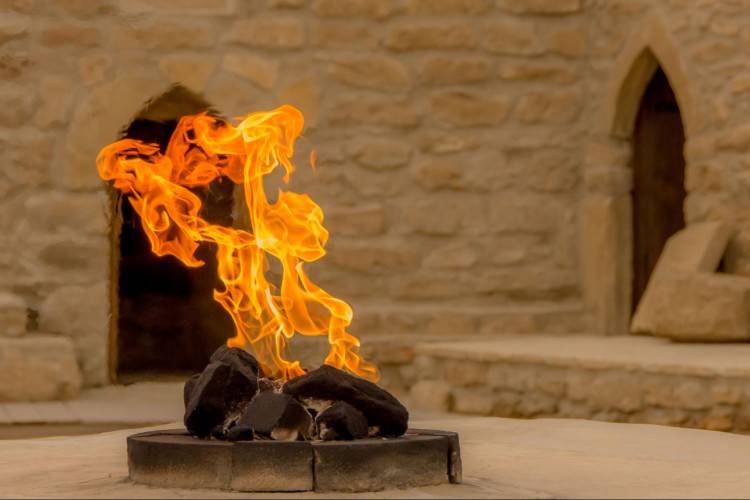 From the central courtyard, explore the 26 cells that surround the main sanctuary. Each cell offers a glimpse into the lives of the monks, pilgrims, and traders who lived and worshipped here. Many cells contain exhibits with artifacts, photographs, and informational displays about the temple's history.
Be sure to examine the Sanskrit and Punjabi inscriptions carved into the stone walls and altars. These inscriptions provide direct evidence of the Indian pilgrims who visited and maintained the temple, and many have been translated in the informational displays throughout the complex.
The temple's museum rooms contain fascinating artifacts discovered during archaeological excavations, including ancient oil lamps, ceremonial objects, coins from various periods, and personal items left by pilgrims over the centuries. These exhibits help paint a picture of daily life at the temple during its active period.
Don't miss the opportunity to climb to the roof of the temple structure (if accessible during your visit). From this vantage point, you can see the pentagonal design of the complex and enjoy views of the surrounding Surakhani area, including the industrial landscape that speaks to Baku's continuing connection to oil and gas.
From the central courtyard, explore the 26 cells that surround the main sanctuary. Each cell offers a glimpse into the lives of the monks, pilgrims, and traders who lived and worshipped here. Many cells contain exhibits with artifacts, photographs, and informational displays about the temple's history.
Be sure to examine the Sanskrit and Punjabi inscriptions carved into the stone walls and altars. These inscriptions provide direct evidence of the Indian pilgrims who visited and maintained the temple, and many have been translated in the informational displays throughout the complex.
The temple's museum rooms contain fascinating artifacts discovered during archaeological excavations, including ancient oil lamps, ceremonial objects, coins from various periods, and personal items left by pilgrims over the centuries. These exhibits help paint a picture of daily life at the temple during its active period.
Don't miss the opportunity to climb to the roof of the temple structure (if accessible during your visit). From this vantage point, you can see the pentagonal design of the complex and enjoy views of the surrounding Surakhani area, including the industrial landscape that speaks to Baku's continuing connection to oil and gas.
Yanar Dag: The Burning Mountain Nearby
No visit to Ateshgah Temple is complete without also experiencing Yanar Dag, or "Burning Mountain," one of Azerbaijan's most remarkable natural fire phenomena. Located approximately 25 kilometers from Ateshgah Temple in the village of Mammadli, Yanar Dag features a 10-meter-long wall of fire that has been burning continuously from a hillside cliff for thousands of years. Unlike Ateshgah Temple, where the flames are now maintained, the fire at Yanar Dag is entirely natural, fueled by underground gas seeps that continuously emerge through the sandstone cliff face. The flames here are not isolated to specific vents but burn along the entire length of the hillside, creating a dramatic spectacle that's especially impressive at night.| Feature | Yanar Dag | Ateshgah Temple |
|---|---|---|
| Flame Type | Natural eternal flames | Maintained gas-fed flames |
| Fire Height | Up to 3 meters | Small altar flame |
| Historical Period | Natural phenomenon | Temple structure 17th-18th century |
| Sacred Structure | Natural site only | Full temple complex with chambers |
| Entry Fee | 2-3 AZN | 5 AZN |
| Best Viewing | Evening/Night | Daytime visit |
Practical Visitor Tips
What to Wear and Carry
When visiting Ateshgah Temple, dress modestly out of respect for the site's religious significance. While there's no strict dress code, both men and women should avoid wearing shorts, sleeveless tops, or revealing clothing. Women may want to carry a scarf, though it's not required to cover your head inside the temple complex. Wear comfortable walking shoes with sturdy soles. The temple complex has stone and gravel surfaces that can be uneven, and you'll be doing considerable walking as you explore the chambers and exterior areas. In winter, dress warmly as the stone structure offers little protection from cold winds, while in summer, bring sun protection and carry water.Essential Items Checklist
- Modest clothing respecting the religious nature of the site
- Comfortable shoes for walking on uneven stone surfaces
- Sunscreen and hat (summer months) for sun protection
- Water bottle to stay hydrated during exploration
- Camera with charged battery for fascinating photography
- Cash in AZN for tickets, audio guide, and small purchases
- Valid student ID if applicable for discounted entry
Best Time of Day to Visit
For the most enjoyable experience, plan to visit Ateshgah Temple in the morning between 10:00 AM and 12:00 PM. During these hours, you'll likely encounter fewer crowds, allowing for a more contemplative experience as you explore the chambers and observe the sacred flame. The morning light is also excellent for photography, illuminating the temple's stone surfaces and creating interesting shadows that enhance the textures of the ancient walls. If you're visiting during summer, morning temperatures are considerably more comfortable than the midday heat. If you're planning to visit both Ateshgah Temple and Yanar Dag in the same day, consider starting with Ateshgah in the morning, then breaking for lunch before heading to Yanar Dag in the late afternoon. This timing allows you to experience Yanar Dag's flames at dusk or after dark, when they're most impressive.Hiring a Guide
While Ateshgah Temple can be explored independently, hiring a guide can significantly enhance your understanding of this complex site. The temple's history involves multiple cultures, religions, and historical periods, and a knowledgeable guide can help weave these elements into a coherent narrative. Guided tours are available at the temple entrance for an additional fee (typically 10-20 AZN depending on group size and duration). Alternatively, many tour operators in Baku offer half-day tours that include Ateshgah Temple, Yanar Dag, and sometimes additional attractions, providing both transportation and guiding services. If you're particularly interested in the temple's Indian connections or Zoroastrian history, consider researching and requesting a guide with specialization in these areas. Some guides have deep knowledge of the Sanskrit inscriptions and can provide detailed explanations of their religious and historical significance.Photography Tips
Photography is fully permitted at Ateshgah Temple without any additional fees, making it a paradise for cultural and historical photography. The ancient stone walls, sacred flame, and intricate architectural details offer numerous opportunities for compelling images. For the best photos of the sacred flame, use a fast shutter speed to capture the flame's details. The temple's interior can be dim, so you may need to adjust your camera's ISO settings or use a lens with a wide aperture. Avoid using flash, as it can disturb other visitors and doesn't capture the flame's natural beauty. Don't just focus on the main flame—the temple's cells, doorways, and inscriptions offer fascinating details that tell the story of the diverse peoples who worshipped here. Wide shots of the pentagonal courtyard and close-ups of Sanskrit text both contribute to a comprehensive photographic record of your visit.Combining with Other Baku Attractions
Ateshgah Temple combines naturally with several other Baku-area attractions for a full day of sightseeing. Besides Yanar Dag, consider visiting the Heydar Aliyev Center for its stunning modern architecture, or the Old City (Icherisheher), a UNESCO World Heritage site that showcases Baku's medieval history. For those interested in Azerbaijan's broader cultural heritage, exploring heritage sites across different regions provides fascinating insights into how ancient trade routes connected diverse cultures and religions. The temple's history parallels many other sacred sites along the Silk Route. If you're planning to explore more of Azerbaijan's remarkable landscapes, the remote valley regions offer similar spiritual retreats nestled in dramatic natural settings, though with distinctly different cultural and religious traditions.Respectful Tourism Practices
As a visitor to this sacred site, it's important to practice respectful tourism. While Ateshgah Temple is now primarily a museum, it retains deep spiritual significance for many people, including Zoroastrians, Hindus, and Sikhs who continue to visit as pilgrims. Maintain a quiet demeanor within the temple complex, especially in chambers where people may be meditating or praying. Avoid touching the inscriptions or carvings, as oils from your skin can damage these ancient stone surfaces. If you encounter religious ceremonies or rituals, maintain a respectful distance and ask permission before photographing participants. Dispose of trash in designated bins and help preserve the site's sanctity by not leaving any litter. The temple's management has worked hard to maintain this historical site—show your appreciation by being a conscientious visitor.Facilities and Amenities
Ateshgah Temple offers basic facilities for visitors, including restrooms and a small gift shop selling souvenirs related to Azerbaijani culture and the temple's history. The gift shop is an excellent place to purchase locally-made crafts, books about Azerbaijani history, and unique mementos of your visit. There are no restaurants or cafes immediately adjacent to the temple, so it's advisable to carry water and snacks, especially if you're visiting during hot weather. However, small vendors near the entrance sell cold drinks and light refreshments. The temple complex is partially wheelchair accessible, though some areas with steps and uneven surfaces may be challenging. Visitors with mobility concerns should contact the site management in advance for specific accessibility information.Conclusion: The Eternal Flame's Enduring Legacy
Ateshgah Temple stands as a unique monument to humanity's ancient fascination with fire as a divine manifestation. From Zoroastrian priests who tended the sacred flames millennia ago to Indian traders who sought spiritual connection far from home, to modern visitors who come to witness this remarkable site, the temple has served as a bridge between earth and sky, human and divine. What makes Ateshgah truly special is not just its eternal flames or ancient stones, but the story they tell of cultural exchange, spiritual devotion, and the universal human impulse to find meaning in nature's mysteries. The Sanskrit inscriptions alongside Persian architecture, the Hindu altars within Zoroastrian sacred space—all speak to a time when diverse traditions could meet and merge in shared reverence. As you stand before the burning altar, watching flames dance in the shadow of ancient stone walls, you connect with thousands of years of human history and spiritual practice. Whether you approach the temple as a historian, architecture enthusiast, spiritual seeker, or curious traveler, Ateshgah offers an experience that is both profoundly educational and deeply moving—a testament to fire's enduring power to captivate the human imagination.Location
Frequently Asked Questions
Q1.What are Ateshgah Temple Baku timings?
Ateshgah Temple is open daily from 10:00 AM to 6:00 PM, with last entry at 5:30 PM. The temple is open every day of the week, including weekends and holidays. The best time to visit is in the morning (10 AM - 12 PM) to avoid crowds and enjoy cooler temperatures, especially during summer months. Winter visitors should note that daylight hours are shorter, so plan accordingly.
Q2.What is the entry fee for Ateshgah Temple?
Entry tickets for Ateshgah Temple cost 5 AZN (approximately $3 USD) for adults. Students with valid ID cards receive a discounted rate of 2 AZN. Children under 6 years of age can enter free of charge. Audio guides are available for an additional 2-3 AZN. Photography and video recording are permitted without any extra fees. Tickets can be purchased at the entrance using cash or card.
Q3.How do I reach Ateshgah Temple from Baku city center?
Ateshgah Temple is located 30 km northeast of Baku in Surakhani. Transportation options include taxi/ride-hailing apps (30-40 minutes, 15-25 AZN), public bus numbers 88 or 184 (45-60 minutes, 0.40 AZN), organized tours (3-4 hours, 30-50 AZN including Yanar Dag), or private car. Taxis and ride-hailing services (Bolt, Uber) offer the most convenient direct route. Public buses are economical but require a 15-minute walk from the bus stop.
Q4.Are the flames at Ateshgah Temple natural?
Historically, Ateshgah Temple featured natural eternal flames fueled by Azerbaijan's vast natural gas reserves. However, due to oil and gas exploitation in the late 19th century, the original natural flames diminished. Today, the temple maintains its sacred atmosphere with gas-fed flames that burn continuously in the central altar, preserving the site's ancient character. For natural eternal flames, visit nearby Yanar Dag (Burning Mountain), where a 10-meter wall of fire has been burning naturally for thousands of years.
Q5.What is the significance of Sanskrit inscriptions at Ateshgah?
The Sanskrit and Punjabi inscriptions at Ateshgah Temple date from the 17th-19th centuries and provide evidence of Indian traders and pilgrims who visited the site. These inscriptions include prayers to Hindu deities like Shiva, Ganesha, and Jwalaji (fire goddess), as well as Sikh references to the Guru Granth Sahib. They reflect the temple's importance as a sacred site along the Silk Route, where diverse spiritual traditions converged in shared reverence for fire's divine significance.
Q6.How much time should I spend at Ateshgah Temple?
Plan to spend 1-2 hours exploring Ateshgah Temple thoroughly. While you can move through the complex in 30-45 minutes, taking 1-2 hours allows you to explore all 26 cells, read the informative displays, examine the Sanskrit inscriptions, and absorb the spiritual atmosphere. If you're hiring a guide or have a strong interest in Zoroastrian history or Indian connections, budget 2-3 hours. Combine with Yanar Dag for a comprehensive fire temple experience.
Q7.What is the best time of year to visit Ateshgah Temple?
The best time to visit Ateshgah Temple is during spring (April-June) and autumn (September-October) when temperatures are mild (15°C-25°C). These seasons offer comfortable weather for exploring the temple's exterior and interior spaces. Summer (July-August) can be hot (25°C-35°C), making midday exploration uncomfortable. Winter (November-March) is cold (5°C-10°C) but offers fewer crowds and a mystical atmosphere. The temple is open year-round.
Q8.Is there a dress code for visiting Ateshgah Temple?
While there's no strictly enforced dress code, visitors should dress modestly out of respect for the site's religious significance. Avoid wearing shorts, sleeveless tops, or revealing clothing. Women may consider carrying a scarf, though head covering is not required. Wear comfortable walking shoes for exploring the uneven stone surfaces. During winter, dress warmly as the temple's stone structure offers little protection from cold winds. In summer, bring sun protection.
Q9.Can I visit both Ateshgah Temple and Yanar Dag in one day?
Yes, visiting both Ateshgah Temple and Yanar Dag in one day is highly recommended and easily done. The sites are located approximately 25 kilometers apart. Most tour operators offer half-day combined tours (3-4 hours, 30-50 AZN) that include transportation and guides. If visiting independently, start with Ateshgah Temple in the morning (10 AM-12 PM), break for lunch, then visit Yanar Dag in late afternoon to see the flames at dusk or after dark when they're most impressive.
Q10.Are guided tours available at Ateshgah Temple?
Yes, guided tours are available at Ateshgah Temple for an additional fee (typically 10-20 AZN depending on group size and duration). Audio guides in multiple languages can also be rented at the ticket counter for 2-3 AZN. Many tour operators in Baku offer comprehensive half-day tours that include Ateshgah Temple, Yanar Dag, transportation, and guiding services. A guide is particularly valuable for understanding the temple's complex history spanning Zoroastrian, Hindu, Sikh, and Islamic traditions.
Q11.Is Ateshgah Temple wheelchair accessible?
Ateshgah Temple is partially wheelchair accessible, though some areas present challenges due to the historic nature of the site. The main courtyard and some exterior areas are accessible, but many cells and chambers require navigating steps, uneven surfaces, and narrow doorways. The temple's management can provide specific accessibility information and assistance. Visitors with mobility concerns are advised to contact the site in advance to discuss their specific needs and arrange any necessary accommodations.
Q12.What other attractions are near Ateshgah Temple?
The main attraction near Ateshgah Temple is Yanar Dag (Burning Mountain), located 25 km away, featuring a 10-meter natural eternal flame. Other nearby Baku attractions include the Heydar Aliyev Center (modern architecture), Old City (Icherisheher) with Maiden Tower and Shirvanshah's Palace (UNESCO World Heritage), and the Flame Towers. The Gobustan Rock Art Cultural Landscape (mud volcanoes and ancient petroglyphs) is about 60 km from Baku and makes an excellent day trip combination with fire-related sites.
Q13.What facilities are available at Ateshgah Temple?
Ateshgah Temple offers basic visitor facilities including restrooms, a small gift shop selling souvenirs and books about Azerbaijani culture and history, and an on-site museum with informative displays in Azerbaijani, Russian, and English. There are no restaurants or cafes immediately adjacent to the temple, though small vendors near the entrance sell cold drinks and light refreshments. Parking is available for private vehicles. Audio guides and guided tours can be arranged at the ticket counter.
Q14.Why is Azerbaijan called the Land of Fire?
Azerbaijan is called 'The Land of Fire' due to its abundant natural gas reserves that create eternal flames erupting from the earth. This phenomenon is particularly concentrated on the Absheron Peninsula around Baku. Ancient peoples witnessing these mysterious flames considered them divine, leading to the development of Zoroastrian fire-worshipping traditions. Sites like Ateshgah Temple and Yanar Dag showcase this geological heritage, which has shaped Azerbaijani culture, religion, and identity for millennia. The name 'Azerbaijan' itself may derive from Persian words meaning 'Land of Fire.'
Q15.Is photography allowed at Ateshgah Temple?
Yes, photography and video recording are fully permitted at Ateshgah Temple without any additional fees. Visitors are encouraged to photograph the temple's architecture, sacred flame, inscriptions, and museum exhibits. For the best flame photos, use a fast shutter speed and avoid flash to capture the natural beauty of the fire. Be respectful of other visitors when photographing and avoid blocking pathways. The stone textures, Sanskrit inscriptions, and the eternal flame provide excellent opportunities for cultural and historical photography.
Q16.What is the religious significance of Ateshgah Temple?
Ateshgah Temple holds religious significance for multiple faiths. For Zoroastrians, fire is the son of Ahura Mazda (supreme god) and the purest manifestation of divinity. For Hindus, fire (Agni) is a Vedic god and essential to sacred rituals. The temple features Sanskrit inscriptions to deities like Shiva and Jwalaji (fire goddess). Sikh references are also present. The site represents a unique convergence of fire-worshipping traditions along ancient trade routes, where diverse spiritual practices met in shared reverence for naturally burning flames considered sacred.
Q17.How old is Ateshgah Temple?
While fire has been worshipped at the site for thousands of years due to natural eternal flames, the current stone structure dates primarily to the 17th and 18th centuries. The site was sacred to Zoroastrians from approximately 5th century BC to 7th century AD. Indian traders and pilgrims built the existing pentagonal temple structure between the 1600s and 1800s, adding the chambers and altars visible today. The temple remained an active place of worship until the late 19th century and was converted into a museum in 1975 to preserve its historical and cultural significance.
Recommended For You

Heritage
Old City Baku (Icherisheher): Walking Route, Gates & Heritage Sites
Explore Old City Baku (Icheri Sheher) with a complete walking guide covering Maiden Tower, Shirvanshahs Palace, route planning, photo spots, and practical travel tips.
Dec 1Read More

International
Maiden Tower Baku: History, Ticket Price & Old City Views
Complete guide to Maiden Tower Baku: UNESCO site history, tickets, timings, legends, and how to visit this iconic Azerbaijan monument.
Nov 17Read More

Travel
Flame Towers Baku: Light Show Timings, Viewpoints & Access
Plan your Flame Towers Baku visit with light show expectations, best viewing points, how to reach, and practical evening itinerary tips.
Feb 6Read More
Never Miss an Adventure
Get the latest trekking guides, travel tips, and exclusive offers delivered straight to your inbox.
