
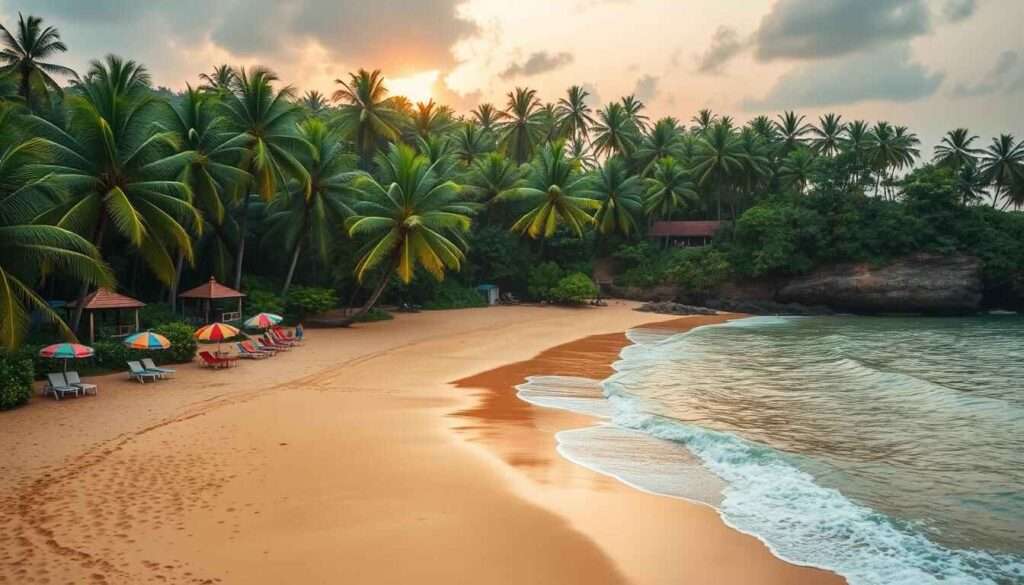
Goa: Complete Travel Plan Beaches And Weather

Rahul Garg
February 20, 2026
Complete Goa travel guide featuring beaches, North vs South Goa, water sports, Portuguese heritage, nightlife & practical tips.
Introduction to Goa
Goa, India's smallest state by area and one of its most beloved destinations, offers a unique blend of sun, sand, sea, spirituality, and Portuguese heritage that captivates millions of visitors annually. Located on India's western coast, along the Arabian Sea, Goa has a character unlike anywhere else in India - a tropical paradise where East meets West, where Hindu temples stand alongside Catholic churches, where trance music mingles with traditional Konkani rhythms, and where rice and fish curry coexist with vindaloo and sorpotel. For travelers looking to explore beyond the popular beaches, our guide to offbeat places in Goa reveals hidden gems and authentic experiences.
What makes Goa truly special is its remarkable diversity. In one destination, you can experience some of India's most beautiful beaches, vibrant nightlife, Portuguese colonial architecture, ancient Hindu temples, spice plantations, wildlife sanctuaries, waterfalls, and a unique culinary scene that blends Indian and Portuguese influences. The state's relaxed atmosphere, friendly locals, and well-developed tourist infrastructure make it accessible to everyone from backpackers to luxury travelers.
Goa's history is fascinating. A Portuguese colony for 451 years (1510-1961), longer than any other part of India, Goa absorbed significant Portuguese cultural influences evident in its architecture (Baroque churches and grand villas), religion (Roman Catholicism), language (Konkani with Portuguese words), cuisine (pork, vinegar, breads), and festivals (Carnival). Yet, despite centuries of Portuguese rule, Goa retained its Indian essence, creating a unique syncretic culture that's neither purely Indian nor Portuguese but distinctly Goan.
The state is divided into two main districts: North Goa and South Goa, each offering distinct experiences. North Goa is known for its lively beaches, vibrant nightlife, bustling markets, water sports, and party scene. South Goa offers quieter beaches, luxury resorts, Portuguese colonial mansions, and a more relaxed pace. Whether you seek adventure or relaxation, culture or cuisine, spirituality or nightlife, Goa has something for you.
Best Time to Visit Goa
Goa enjoys a tropical monsoon climate with warm weather year-round. The best time to visit depends on what you want to experience.
November to February is peak season when weather is ideal with daytime temperatures ranging from 25°C to 32°C and minimal humidity. The skies are clear, the sea is calm, and all water sports and activities are operating. This is when Goa comes alive - restaurants, shacks, beach clubs, and markets are in full swing. Christmas and New Year are particularly popular, with spectacular celebrations. However, this is also the most crowded and expensive period. Book accommodations months in advance, expect higher prices, and be prepared for crowded beaches and popular attractions.
March to May is summer when temperatures rise to 35-38°C and humidity increases. The sea gets rougher, and some water sports may be suspended. However, this is off-season, meaning fewer tourists, empty beaches, and significantly lower prices (up to 60% less than peak season). If you don't mind the heat and humidity, summer offers a more authentic Goan experience with fewer crowds. Early mornings and evenings are pleasant. Many businesses maintain reduced hours or close temporarily during summer.
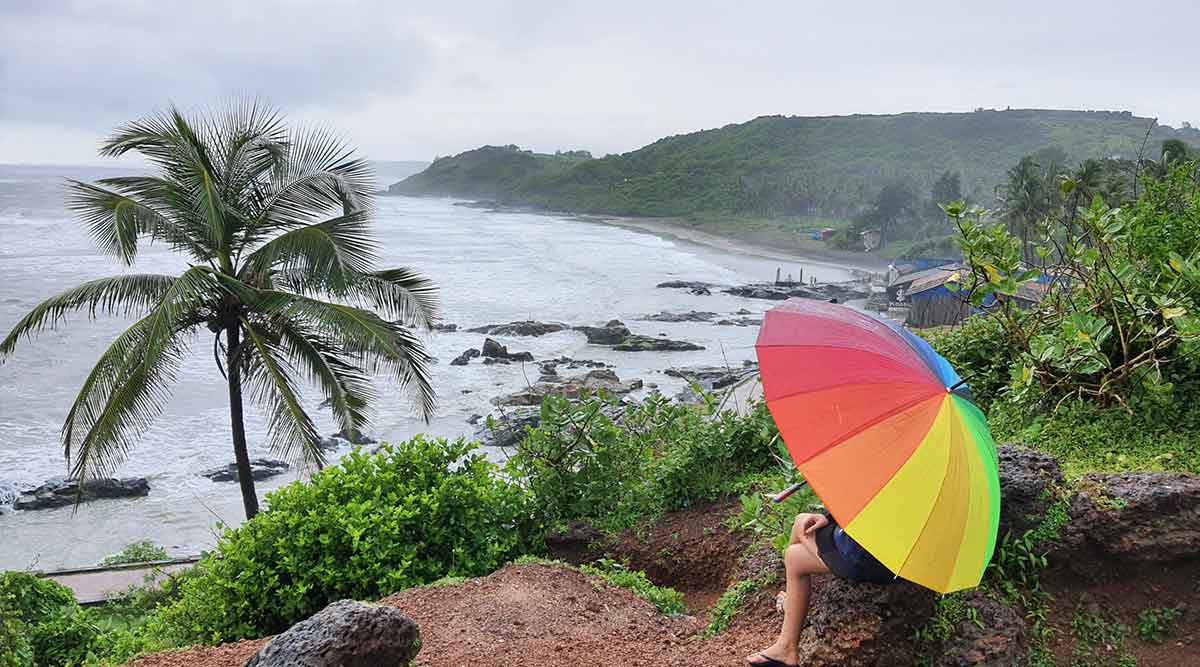
June to October is monsoon season when Goa receives heavy rainfall. The landscape transforms to lush green, waterfalls are spectacular, and the state has a different, more tranquil atmosphere. While swimming is prohibited due to rough seas, and many beach shacks and water sports operators close, this is a beautiful time to experience Goa's natural beauty, spice plantations, and wildlife. The Goa Carnival (typically February) is a spectacular time to visit with colorful parades, music, and dancing reflecting Goa's Portuguese heritage.
North Goa vs South Goa
Choosing between North and South Goa (or dividing time between both) significantly impacts your experience. Each offers distinct vibes and appeals to different types of travelers.
North Goa is lively, energetic, and tourist-friendly. The beaches (Baga, Calangute, Candolim, Anjuna) are lined with shacks, water sports operators, beach clubs, and restaurants. The nightlife is legendary with clubs, bars, and beach parties that go late into the night. Markets (Anjuna Flea Market, Arpora Night Market, Mapusa Friday Market) offer excellent shopping. North Goa has a backpacker-friendly vibe with many budget accommodations, cafes, and a young, international crowd. It's ideal for party-goers, adventure enthusiasts, and those who want activity and excitement.
South Goa is relaxed, upscale, and peaceful. The beaches (Palolem, Agonda, Colva, Benaulim) are pristine, less crowded, and lined with coconut palms rather than shacks. The pace is slower, the accommodations tend toward luxury resorts and boutique stays, and the atmosphere is conducive to relaxation and rejuvenation. South Goa has beautiful Portuguese colonial architecture, including grand mansions and quiet villages where traditional Goan life continues undisturbed. It's ideal for couples, families, luxury travelers, and those seeking peace and tranquility.
Geographically, North Goa is closer to the capital Panaji and the airport, while South Goa's beaches are further south (30-90 minutes from the airport). Many travelers split their time, spending a few days in North Goa for the beaches and nightlife, and a few days in South Goa for relaxation. The two regions are connected by good roads, and travel between them takes approximately 1-2 hours depending on traffic.
Top Beaches in Goa
Baga Beach
Located in North Goa, Baga is one of Goa's most popular and lively beaches. The beach is lined with shacks offering seafood, drinks, and sunbeds. Water sports operators offer parasailing, jet skiing, banana boat rides, and more. The beach extends into Calangute to the south, creating a long stretch of sand that can get quite crowded. The famous Tito's Lane, with its bars and clubs, is nearby. Baga comes alive at night with beach parties, music, and dancing. For those interested in exploring more of the stunning beaches in Goa, there are numerous other beautiful coastal areas to discover beyond Baga.
Anjuna Beach
Anjuna became famous in the 1960s and 70s as a hippie paradise and retains some of that bohemian vibe today. The beach is known for its dramatic red cliffs and rocky outcrops, creating beautiful scenery. The famous Anjuna Flea Market (every Wednesday) has been operating since the 1970s and sells everything from handicrafts to jewelry to clothes to trance music. The beach also hosts a curated night market (every Saturday) with food stalls and live music. Anjuna's proximity to Vagator (with its chapora Fort and sweet water lake) makes it a good base for exploring North Goa's northern beaches.
Vagator Beach
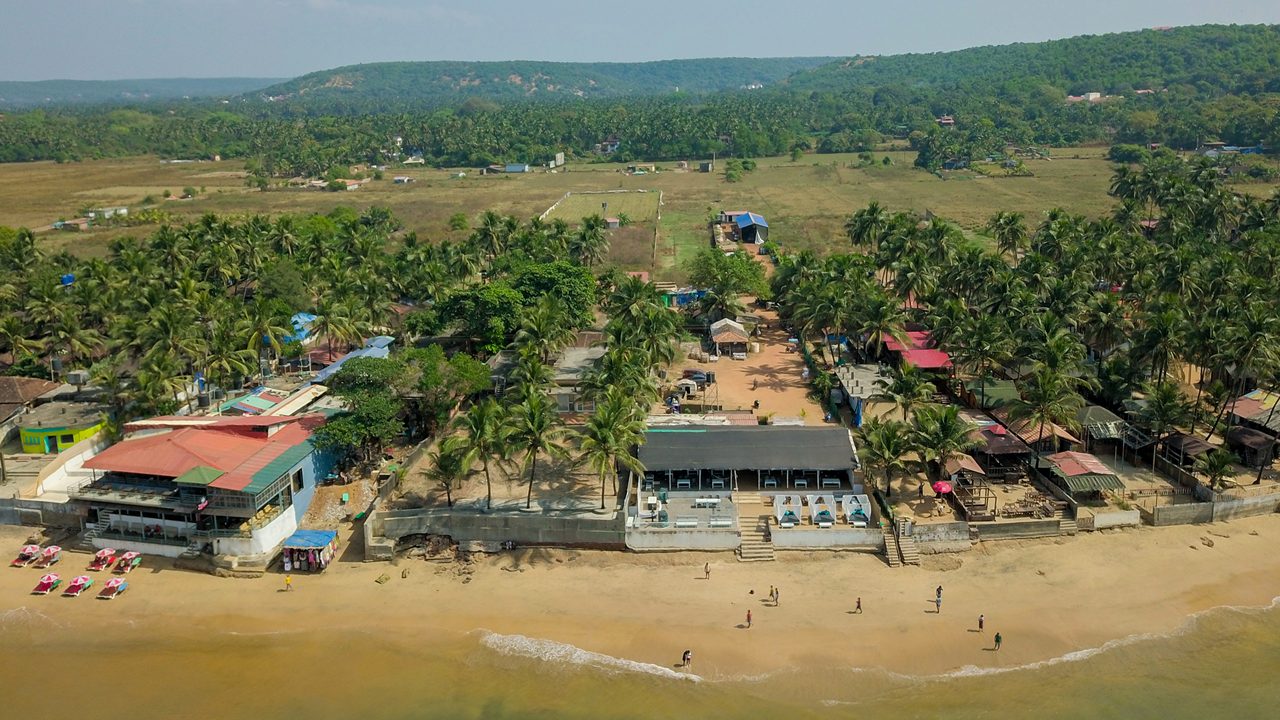
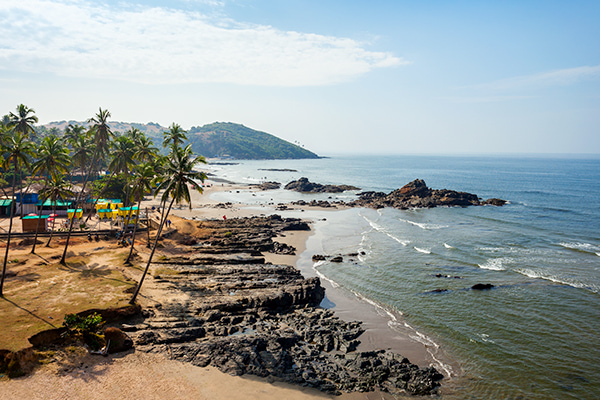
Located just north of Anjuna, Vagator is divided into Big Vagator and Little Vagator by a seaside headland. The beach is beautiful, with red cliffs, black rocks, and swaying palm trees creating a picturesque setting. It's less commercialized than some other North Goa beaches. Chapora Fort, overlooking Vagator Beach, offers spectacular views - it's where the famous Bollywood movie "Dil Chahta Hai" was filmed. Vagator has a more chilled-out vibe compared to Anjuna and Baga, with some excellent beachfront cafes and the famous HillTop venue that hosts trance parties.
Palolem Beach
Located in South Goa, Palolem is often described as one of Goa's most beautiful beaches. A crescent of white sand lined with coconut palms, Palolem has a laid-back, chilled-out atmosphere that appeals to backpackers and those seeking tranquility. The beach is lined with simple wooden huts, cafes, and restaurants. The water is calm, making it safe for swimming. You can take boat trips to see dolphins, visit nearby Butterfly Beach, or explore the quiet islands offshore. Palolem has a vibrant yet relaxed nightlife with silent discos (where dancers listen to music on headphones) and drum circles on the beach. It's less developed and commercialized than North Goa beaches.
Agonda Beach
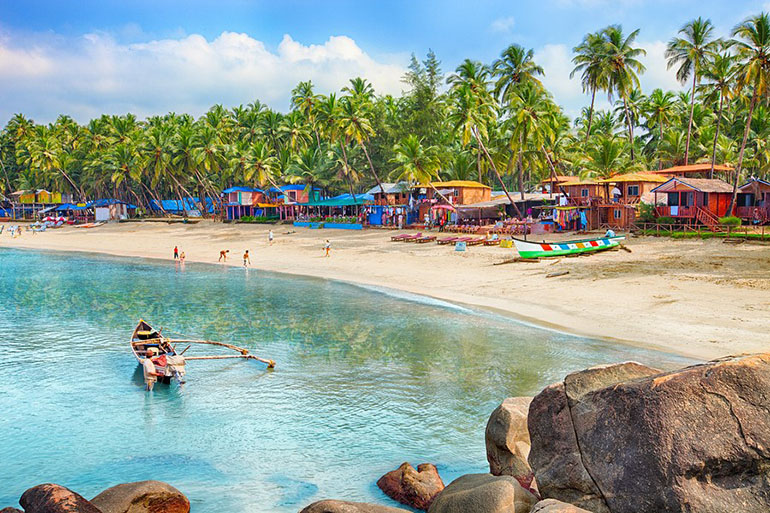
Also in South Goa, Agonda is Palolem's quieter, less-developed neighbor. A long stretch of pristine sand lined with simple huts and a few restaurants, Agonda offers peace and tranquility. The beach is a nesting site for olive ridley sea turtles - if you're lucky (visit between November and February), you might see baby turtles making their way to the sea. Agonda is perfect for those who want to escape crowds, read books, practice yoga, and simply relax. The nightlife is minimal - a few beach bonfires and acoustic music sessions. It's ideal for couples, solo travelers seeking peace, and anyone tired of the typical tourist circuit.
Morjim and Ashwem Beaches
Located in North Goa's Pernem region, Morjim and Ashwem are quieter, less-crowded beaches known for their pristine beauty and turtle nesting sites. Morjim is sometimes called "Little Russia" due to the large number of Russian tourists and businesses. The beaches are lined with upscale cafes and resorts. The northern end of Ashwem has clothing-optional sections (rare in India). These beaches offer a more upscale, sophisticated experience compared to Baga and Calangute. They're particularly popular with families and luxury travelers who want beautiful beaches without the crowds and chaos.
Butterfly Beach
Accessible only by boat from Palolem or Agonda, Butterfly Beach is a secluded pristine beach that lives up to its name - butterflies flutter everywhere, and the beach's shape resembles a butterfly when viewed from above. Accessible primarily during high tide, the beach has a natural pool formed by rocks, ideal for wading. The beach is unspoiled, with no shacks or restaurants - just nature at its finest. Visit on a day trip from Palolem or Agonda. The boat journey itself is beautiful, passing through mangroves and spotting dolphins along the way.
Top Attractions in Goa
Old Goa (Velha Goa)
Old Goa, a UNESCO World Heritage Site, was the capital of Portuguese Goa before epidemics forced the Portuguese to move to Panaji. Today, it's a fascinating collection of churches, convents, and cathedrals that showcase Portuguese colonial architecture and religious history. The Basilica of Bom Jesus houses the mortal remains of St. Francis Xavier and is one of the most important pilgrimage sites in Asia.
The Basilica of Bom Jesus, a UNESCO World Heritage Site, houses the mortal remains of St. Francis Xavier in a silver casket. The basilica's Baroque architecture is beautiful, and it's one of Goa's most important pilgrimage sites. The Se Cathedral, dedicated to St. Catherine, is one of Asia's largest churches with stunning Portuguese-Manueline architecture and the famous Golden Bell. The Church of St. Cajetan, modeled on St. Peter's Basilica in Rome, features impressive Corinthian-style architecture. The Chapel of St. Catherine, the oldest religious structure in Old Goa, is where Afonso de Albuquerque conquered Goa in 1510.
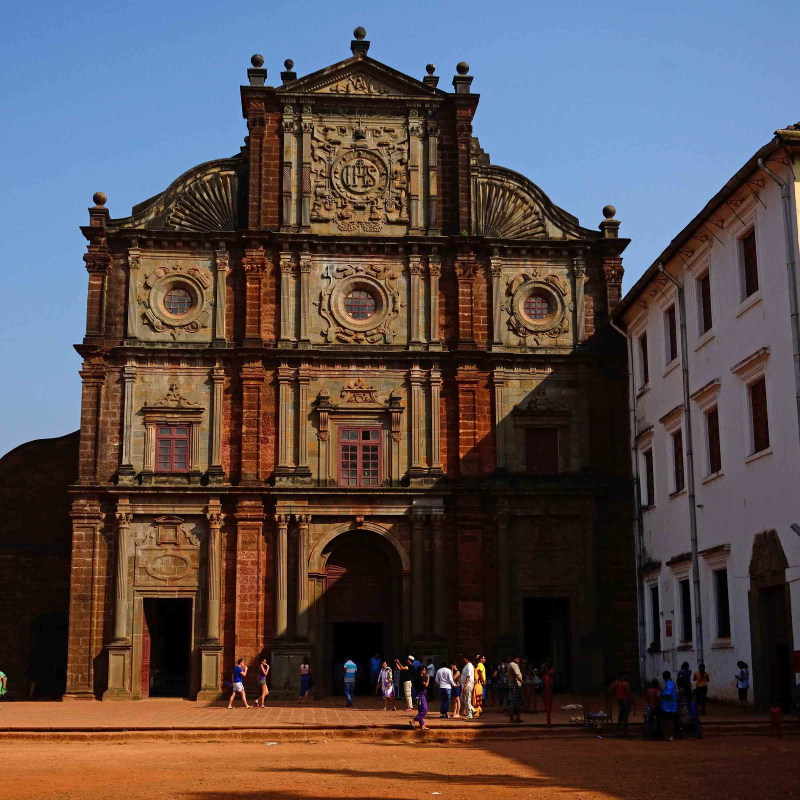
Old Goa's churches are concentrated in a small area and can be explored in 2-3 hours. The site is particularly atmospheric in the early morning or late afternoon when light filters through the churches' stained glass. The Archaeological Museum, located in the convent of St. Francis of Assisi, displays Portuguese artifacts and offers insight into Goa's colonial history.
Fontainhas (Panaji's Latin Quarter)
Fontainhas, Panaji's old Latin quarter, is a beautifully preserved neighborhood with narrow winding streets, colorful Portuguese-style houses, and a Mediterranean atmosphere. The houses, painted in bright colors (yellow, blue, green, red), feature wrought-iron balconies, overhanging roofs, and architectural elements reminiscent of Lisbon.
Walking through Fontainhas feels like stepping back in time or being transported to a Portuguese village. The neighborhood has several art galleries, small cafes, and bakeries selling traditional Goan breads. The Chapel of St. Sebastian, with its striking crucifix, is worth visiting. The area comes alive in the evening when locals gather to socialize.
Take a guided walking tour to learn about the neighborhood's history and architecture, or explore on foot with a good map. The nearby Maruti Temple, located on a hillock, offers excellent views of Panaji and the surrounding area.
Spice Plantations
Goa's spice plantations offer fascinating insight into the region's agricultural heritage. Plantations like Sahakari Spice Farm, Pascoal Spice Village, and Savoi Plantation grow black pepper, cardamom, cinnamon, nutmeg, vanilla, cloves, and various other spices along with tropical fruits like cashew, coconut, pineapple, and bananas.
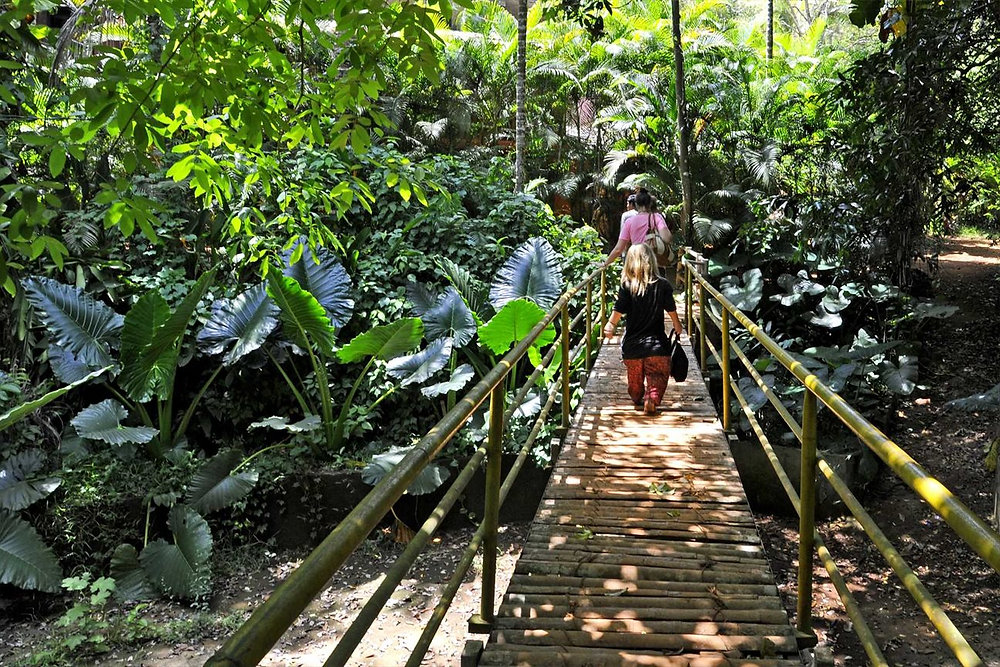
Guided tours (typically 1-2 hours) take you through the plantation, explaining how each spice is grown, harvested, and processed. You'll smell, touch, and taste various spices. Most tours end with a traditional Goan lunch served on banana leaves, featuring local dishes. Some plantations offer elephant rides and baths.
Spice plantations are located in Ponda (central Goa) and can be visited as a day trip from either North or South Goa. Book through your hotel or hire a taxi for the day. The tours are fascinating even if you're not particularly interested in cooking - the knowledge about the spices that drive global trade and cuisine is eye-opening.
Dudhsagar Waterfalls
Located on the Mandovi River on the Goa-Karnataka border, Dudhsagar (Sea of Milk) Waterfalls is one of India's tallest waterfalls, with water cascading 310 meters in four tiers. The falls are particularly spectacular during and after monsoon (June to October) when they're in full flow, creating a magnificent spectacle that resembles flowing milk.
The falls are located within the Bhagwan Mahavir Wildlife Sanctuary, adding to the natural beauty. Access is by train (the falls are visible from the railway bridge and the train stops nearby), by jeep (a bumpy ride through the forest), or by trekking (approximately 12 kilometers through the sanctuary). The jeep safari is the most popular option - book through tour operators in Goa.
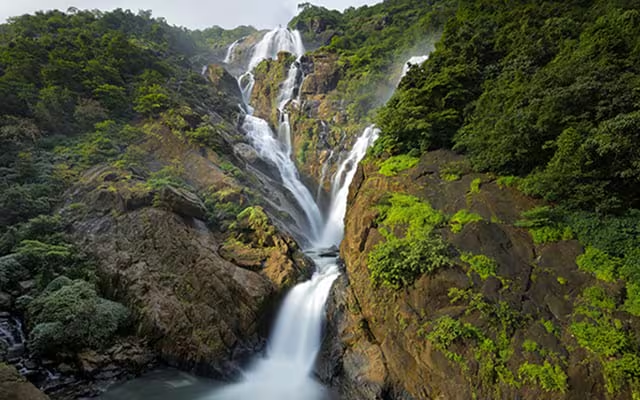
The falls can be visited as a long day trip from Goa's coastal areas. The journey itself is scenic, passing through the Western Ghats' lush forests. Wear comfortable shoes, carry water and snacks, and be prepared for a rough ride if taking a jeep. Swimming is prohibited due to dangerous currents, but there are viewpoints where you can admire the falls' magnificent beauty.
Fort Aguada
Built by the Portuguese in 1612 to defend against Dutch and Maratha invasions, Fort Aguada sits on a hill overlooking the Arabian Sea at the confluence of the Mandovi River and the sea. The fort's lighthouse, the oldest in Asia, was built in 1864 and is still operational.
The fort offers spectacular views of the Arabian Sea and the coastline. While much of the fort is in ruins, the massive walls, gunpowder rooms, and the lighthouse are impressive. The fort complex includes a freshwater spring that provided water to ships - hence the name "Aguada" (watering place).
Part of the fort complex has been converted into the Taj Fort Aguada Resort, but the historical fort area is accessible to visitors. The nearby Candolim Beach is a good place to relax after exploring the fort. Combine a visit to Fort Aguada with a visit to Sinquerim Beach and the nearby lighthouse for a full day of sightseeing.
Divar Island
Located in the Mandovi River, Divar Island is accessible only by ferry (a pleasant 10-minute ride from Panaji). The island has remained largely untouched by mass tourism, offering a glimpse of traditional Goan village life with beautiful Portuguese-style houses, lush paddy fields, and ancient temples.
The island is best explored by rented scooter, motorcycle, or bicycle. Visit the picturesque Piedade Divar Church with its beautiful white facade. The island's Hindu temples, including the Saptakoteshwar Temple, are important pilgrimage sites. The countryside is beautiful, with coconut groves, rice paddies, and small villages where life moves at a slow, traditional pace.
Divar Island comes alive during the Bonderam Festival (usually August), a colorful festival celebrating the harvest with elaborate parades, floats, and music. Visit during the festival for a unique cultural experience, or visit on a regular day for peace, quiet, and beautiful scenery.
Wildlife Sanctuaries
Goa has several wildlife sanctuaries that offer opportunities to spot wildlife and experience nature. The Bhagwan Mahavir Wildlife Sanctuary and Mollem National Park, located in the Western Ghats, is Goa's largest protected area. It's home to wildlife including gaurs (Indian bison), deer, monkeys, various bird species, and occasionally leopards and tigers. The sanctuary contains Dudhsagar Waterfalls and the Tambdi Surla Temple, Goa's oldest temple.
The Cotigao Wildlife Sanctuary in South Goa is known for its spectacular trees, some over 30 meters tall, and wildlife including sloth bears, langurs, and various bird species. The Salim Ali Bird Sanctuary, located on Chorao Island in the Mandovi River, is Goa's only bird sanctuary and excellent for birdwatching, particularly migratory birds during winter.
Wildlife sanctuaries are best visited with a guide who can help spot and identify wildlife. Carry binoculars, wear neutral-colored clothing, and maintain silence to increase chances of wildlife sightings.
Adrenaline and Water Sports
Goa is India's water sports capital, offering activities ranging from relaxing to adrenaline-pumping. Most water sports operators are concentrated in North Goa beaches (Baga, Calangute, Candolim) and some South Goa beaches (Palolem, Colva).
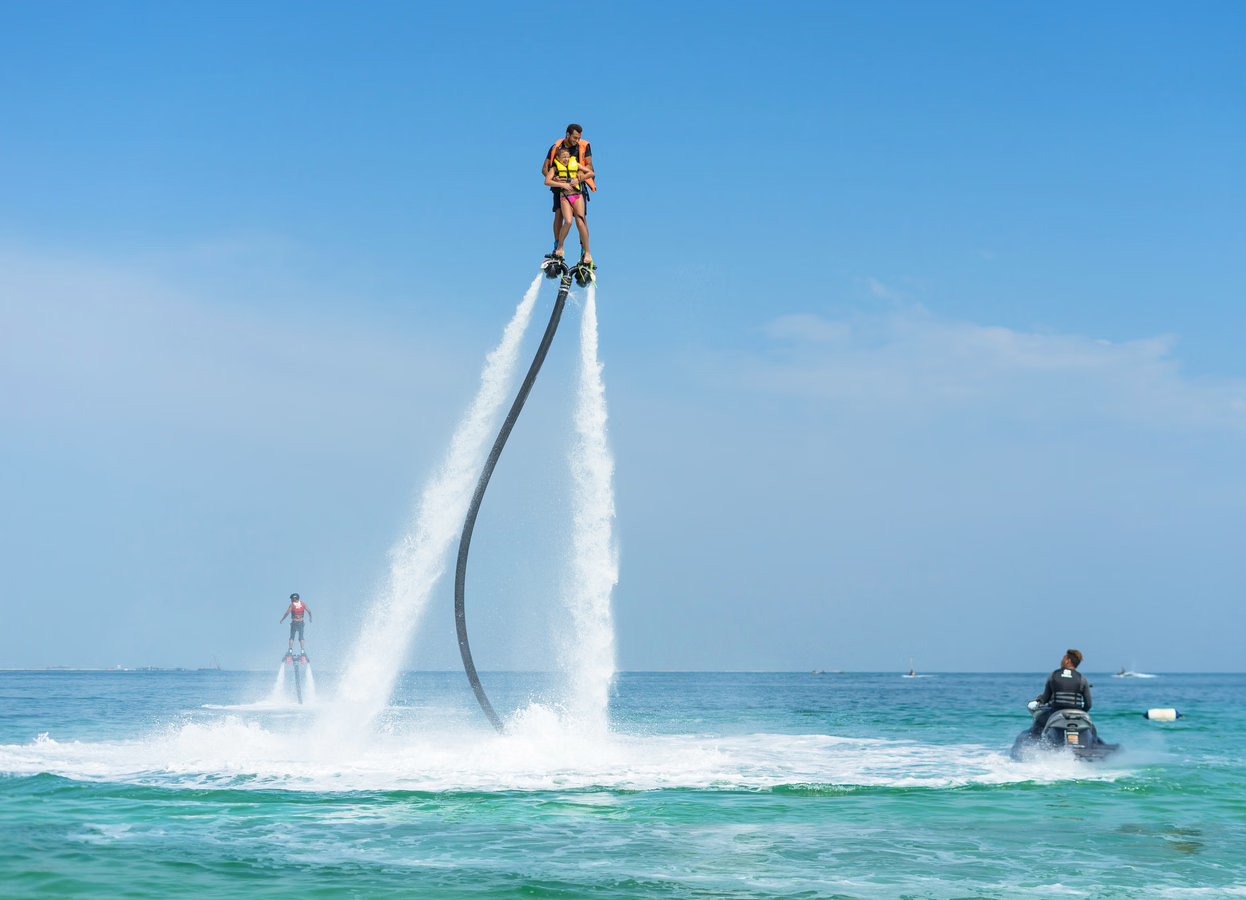
Popular water sports include parasailing (soaring above the sea attached to a parachute), jet skiing (speeding across the water on a motorized vehicle), banana boat rides (inflatable boat rides that can get wild), bumper rides (inflatable tubes pulled by speedboats), and wakeboarding. Windsurfing and kitesurfing are also available, particularly during the windy season.
Scuba diving and snorkeling are offered at Grande Island, Bat Island, and near Netrani Island (across the border in Karnataka). The underwater world includes coral reefs, colorful fish, and sometimes shipwrecks. No prior experience is necessary for introductory dives. Kayaking through mangroves, particularly at Dona Paula and near Palolem, offers a peaceful way to explore Goa's coastline and spot birds and marine life.
Surfing is growing in popularity, particularly at Ashwem and Morjim beaches during the monsoon when waves are good. Surf schools offer lessons for beginners. White water rafting on the Mhadei River (during monsoon season, June-October) offers grade 2-3 rapids suitable for beginners and intermediates.
Goan Cuisine
Goan cuisine is a delicious blend of Indian and Portuguese influences, characterized by fresh seafood, coconut, rice, kokum (a sour fruit), and vinegar. The food is generally spicy but nuanced, with complex flavors developed from the mix of Indian spices and Portuguese ingredients.
Seafood is central to Goan cuisine. Must-try dishes include Goan fish curry (fish in coconut-based curry with kokum), prawn balchão (spicy prawn curry with vinegar), shark ambot tik (sour and spicy shark curry), and rawas (king fish) fry. The seafood is fresh, usually caught that day, and prepared in various ways - curried, fried, roasted, or pickled.
Pork dishes reflect Portuguese influence. Sorpotel is a spicy pork curry made from pork offal, liver, and blood, flavored with vinegar and spices - a Goan Christmas staple. Vindaloo is pork marinated in vinegar and garlic, then cooked with spices - famous worldwide as "vindaloo." Chourisão is spicy Goan pork sausage. Cafreal is marinated chicken fried or roasted, originally brought by the Portuguese from their African colonies.
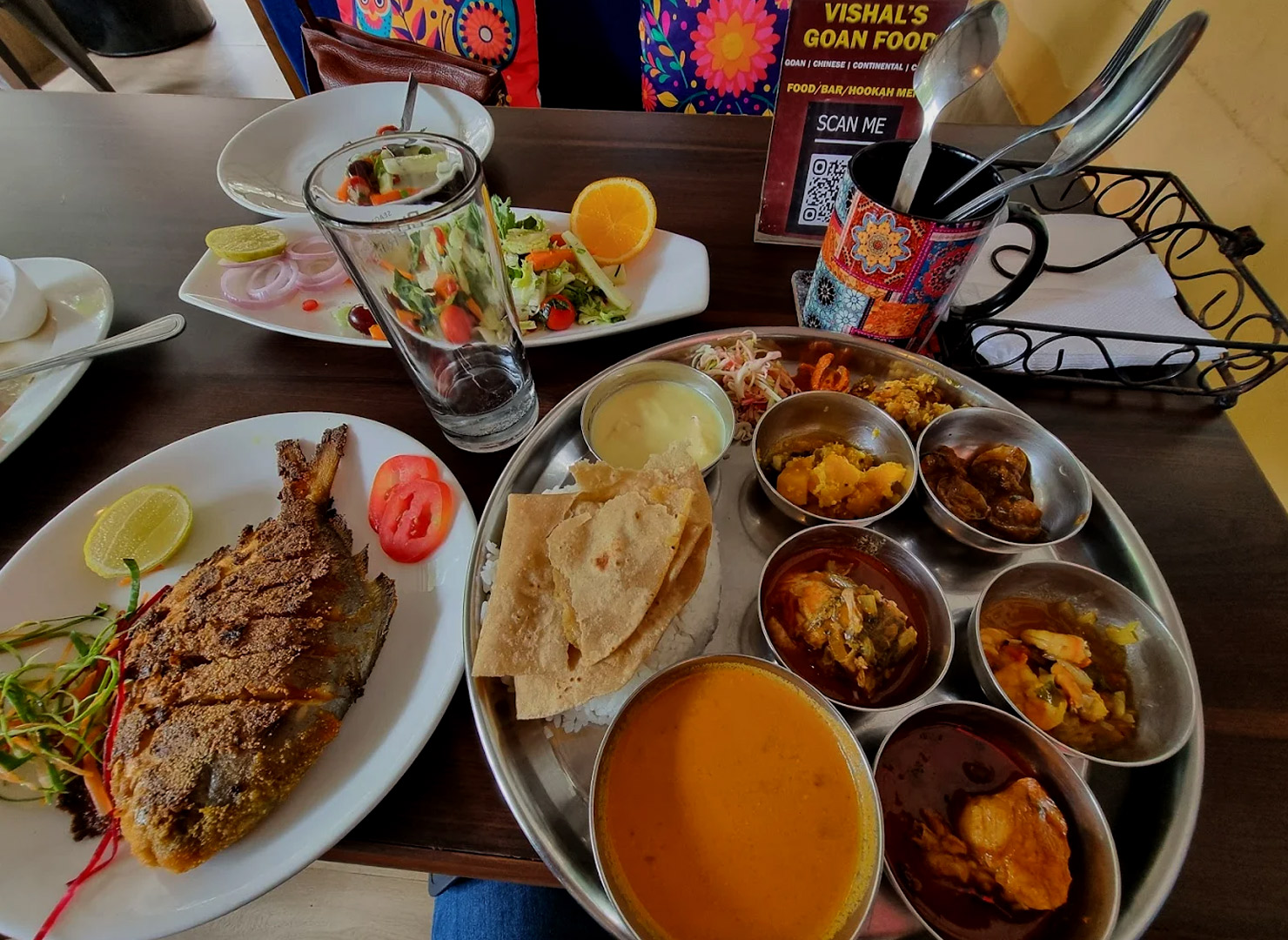
Vegetarian dishes include xacuti (chicken or vegetable curry with coconut and spices), cafreal (vegetarian version), and various preparations using local vegetables and seafood substitutes. Sannas (idlis fermented with toddy), the traditional accompaniment to sorpotel, are delicious.
For dessert, try bebinca (layered pudding made from coconut milk, eggs, and sugar), dodol (jaggery and coconut sweet), and bolinhas (coconut cookies). Goan sweets are rich and delicious.
Best places to eat include beach shacks (for fresh seafood and relaxed atmosphere), traditional Goan restaurants (Mum's Kitchen, Vinayak Family Restaurant, Martin's Corner), and upscale restaurants at luxury hotels. Don't miss trying feni (cashew or coconut feni), Goa's famous local spirit - it's an acquired taste but uniquely Goan.
Shopping in Goa
Goa offers excellent shopping opportunities, particularly for handicrafts, spices, cashew nuts, and beachwear.
The Anjuna Flea Market (every Wednesday) has been operating since the 1970s and is legendary. Hundreds of stalls sell everything from handicrafts to jewelry to clothes to trance music. It's a cultural experience as much as a shopping opportunity. The Arpora Night Market (every Saturday) is more upscale with food stalls, live music, and quality handicrafts. The Mapusa Friday Market is a traditional market where locals shop for everything from spices to clothes to hardware.
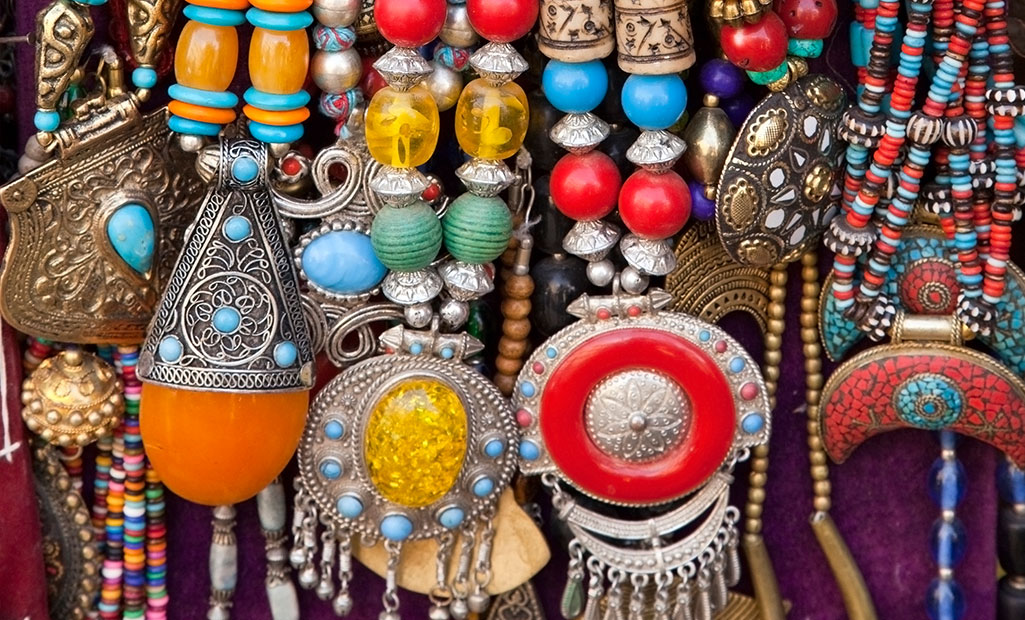
For spices, buy from government emporiums or reputable spice plantations for quality. Spices make excellent gifts - vanilla, cardamom, cinnamon, pepper, and various masalas. Cashew nuts, available in various forms (raw, roasted, salted, flavored), are uniquely Goan and make great gifts. Buy from government outlets or factories for quality.
For handicrafts, look for Goan pottery, brassware, bamboo products, shell crafts, and crochet work. Government emporiums offer fixed prices and guaranteed authenticity. For beachwear, Goa has excellent options - sarongs, beach dresses, and accessories at reasonable prices.
Bargaining is expected at markets but not in government emporiums or fixed-price stores. Start by offering about half the asking price and negotiate from there.
Nightlife in Goa
Goa's nightlife is legendary and diverse, catering to all preferences from trance parties to quiet bars to beach clubs.
In North Goa, famous clubs include Tito's and Mambo's in Baga (iconic but touristy), Club Cubana in Arpora (open-air club with great views), and LPK Waterfront (on the river). These clubs play popular music, serve alcohol and food, and host theme nights. The party scene goes late, often until 3-4 AM.
Beach shacks along Baga, Candolim, and Anjuna transform into party venues at night, with music, dancing, and drinking on the beach. Curlies Beach Shack (Anjuna) and Britto's (Baga) are legendary. HillTop in Vagator hosts famous trance parties under the stars.
South Goa has a more subdued nightlife centered around resort bars and beachside restaurants. Palolem has silent discos (dancers wear headphones) and relaxed beach bars. The vibe is more about conversation and enjoying the sea than wild partying.
Goa's nightlife is relaxed and safe. Most venues accept foreign IDs. Dress code is generally casual. Drink prices are reasonable compared to major Indian cities. Parties typically peak around midnight and continue until the early morning.
How to Reach Goa
By Air
Goa International Airport (Dabolim Airport, GOI) is located approximately 30 kilometers from Panaji and 25 kilometers from Margao. The airport has good connectivity to major Indian cities including Delhi, Mumbai, Bangalore, Hyderabad, and Chennai, with multiple daily flights. International connections are limited but include flights to the Middle East and some charter flights from Europe and Russia during peak season.
From the airport, pre-paid taxis, app-based cabs (Uber, Ola), and rental cars are available. Taxis to popular beach areas cost approximately ₹600-1500 depending on destination. Airport taxis operate on fixed rates - there's a counter inside the terminal where you can pay and get a receipt.
By Train
Goa is served by two main railway lines: the Konkan Railway (running along the coast) and the South Western Railway (running through the interior). Major stations include Vasco da Gama (near the airport), Madgaon (Margao, South Goa), Thivim (North Goa), and Karmali (near Panaji).
Popular trains include the Jan Shatabdi and Konkan Kanya Express from Mumbai, and the Trivandrum Express and Amaravati Express from Bangalore. Train journeys to Goa are scenic, particularly the Konkan Railway route which hugs the coastline, passing through tunnels and over bridges with spectacular sea views. Book tickets well in advance, especially for air-conditioned classes during peak season.
By Road
Goa is well-connected by road to major cities. The distance from Mumbai is approximately 590 kilometers (10-12 hours), from Bangalore approximately 560 kilometers (10-11 hours), and from Pune approximately 450 kilometers (8-9 hours). The roads are generally good, though traffic through towns can slow progress.
Several private bus operators run comfortable sleeper, semi-sleeper, and Volvo buses from Mumbai, Bangalore, and Pune. State-run KSRTC and Kadamba buses also connect Goa to neighboring states. Self-driving is an option - the highways are good, and driving in Goa is relatively relaxed compared to other Indian states. Renting a car or motorcycle in Goa is easy and gives you flexibility to explore.
Getting Around Goa
Getting around Goa requires some form of personal transportation as public transport within the state is limited and tourist attractions are spread out.
Taxis are readily available but can be expensive, especially for tourists. Taxis typically charge by distance or by the trip (fixed rates for common tourist routes). Negotiate rates beforehand or ask your hotel to arrange transport with transparent pricing. App-based services like Uber and Ola operate but have limited coverage outside major towns.
Renting a scooter or motorcycle (₹300-500 per day) is popular and gives you maximum flexibility to explore. International driving permits are technically required but rarely checked. Wear helmets (required by law), drive carefully, and be aware that road conditions can vary. Goa's traffic is relatively relaxed, but accidents involving tourists on rented scooters are common.
Renting a car (₹1500-2500 per day) with or without a driver is a good option for families or those uncomfortable on two-wheelers. Cars give more comfort and safety, especially for longer distances around the state.
Auto-rickshaws are available within towns but not practical for inter-city travel in Goa. They're useful for short trips within Panaji, Margao, or Mapusa. Local buses connect major towns but are slow, crowded, and not tourist-friendly. Private shuttle services operate between popular tourist areas and can be arranged through hotels.
Where to Stay in Goa
Goa offers accommodation options for every budget, from backpacker hostels to luxury resorts.
For budget travelers, North Goa (Anjuna, Vagator, Arpora) has numerous guesthouses, hostels, and budget hotels (₹500-1000 per night). Popular options include Zostel (Anjuna and Palolem), The Hostel Crow, and various family-run guesthouses. Budget accommodations often have common areas, social atmospheres, and organize activities.
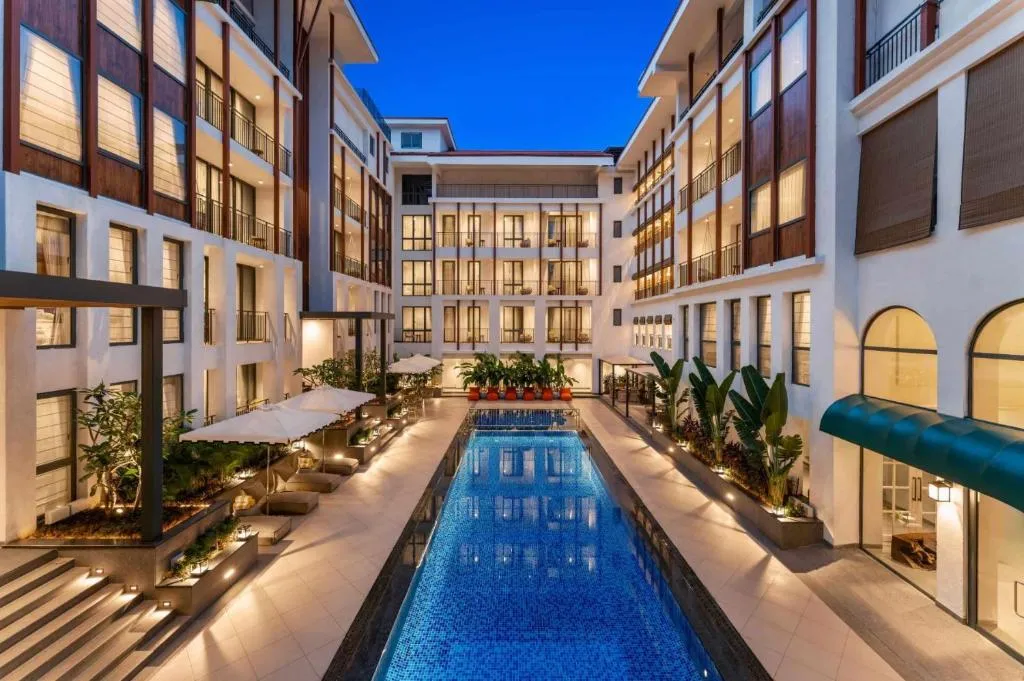
For mid-range travelers, numerous beach resorts, boutique hotels, and guesthouses (₹2000-5000 per night) offer comfortable rooms with amenities. Places like La Calypso (Anjuna), Alor Diwakar (Candolim), and similar properties fall in this category. Mid-range accommodations often have pools, restaurants, and beach access.
Luxury travelers have exceptional options. Taj properties (Taj Exotica, Taj Fort Aguada, Taj Vivanta), W Goa, Leela Goa, Grand Hyatt, and similar offer world-class luxury (₹8000-20000+ per night) with private beaches, multiple restaurants, spas, and impeccable service. These are mostly in South Goa (Taj Exotica, Leela, Grand Hyatt) or upscale North Goa areas (W Goa, Taj Vivanta).
For unique experiences, stay in a restored Portuguese mansion (Maison Martin, Panjim Inn), a beach hut in Palolem or Agonda, or a yoga retreat in the countryside.
Travel Tips for Goa
Goa is generally safe for tourists, including solo female travelers. The state sees millions of visitors annually without major safety issues. However, standard precautions apply - avoid isolated beaches at night, secure your belongings, and be cautious with strangers. The tourist areas have a strong police presence and are safe. Women should dress modestly away from beaches (cover shoulders and knees) to respect local customs.
The sun in Goa is strong, even on cloudy days. Use sunscreen, wear hats, and stay hydrated. The tropical climate can be deceptively exhausting. Heatstroke and sunburn are common - take precautions. Drink plenty of water, especially if drinking alcohol.
Respect local culture and customs. Goa is liberal compared to other Indian states but still conservative by Western standards. Public displays of affection are technically illegal (though rarely enforced on beaches). Dress appropriately when visiting religious sites (cover shoulders and knees, remove footwear before entering shrines). Ask permission before photographing people, especially during ceremonies.
The monsoon (June-October) sees rough seas and dangerous currents. Swimming is prohibited during this period - red flags indicate dangerous areas. Lifeguards patrol major beaches during peak season but not during monsoon. Always swim in designated areas where lifeguards are present.
Drugs are illegal in Goa, despite the persistent hippie/rave image. Possession can lead to serious legal consequences including imprisonment. Be cautious if offered drugs. Police conduct periodic raids, especially during party season.
Negotiate prices for taxis, goods at markets, and services. However, don't over-negotiate - remember that for many service providers, tourism is their livelihood. Tipping is expected at restaurants (10% is standard if service charge not included) and for porters, guides, and taxi drivers for good service.
Conclusion
Goa's enduring popularity as a destination is testament to its unique appeal. Where else in India can you find beautiful beaches, Portuguese colonial architecture, Hindu temples, spice plantations, wildlife, excellent cuisine, vibrant nightlife, and a relaxed atmosphere all in one small state? Goa's remarkable diversity means it can be whatever you want it to be - a party destination, a spiritual retreat, a beach vacation, a culinary journey, or a cultural exploration.
What makes Goa truly special is its atmosphere. The state moves at its own pace, slower and more relaxed than the rest of India. The susegad (the laid-back Goan attitude to life) is contagious. Within days of arriving, you'll find yourself slowing down, enjoying the moment, and perhaps questioning the rush of everyday life back home.
The blend of Indian and Portuguese cultures creates something unique - not quite India, not quite Portugal, but distinctly Goan. This syncretism is visible in everything from architecture to food to festivals to daily life. The result is a destination that feels both familiar and exotic, both exciting and relaxing.
Whether you're seeking adventure on the water, relaxation on pristine beaches, cultural exploration in old quarters, spiritual experiences at temples and churches, culinary adventures with fantastic food, or simply want to escape to a tropical paradise, Goa delivers experiences that keep people returning year after year. Many who visit Goa find themselves coming back, drawn by the beaches, the food, the people, the atmosphere, and the unique feeling that only Goa provides.
It also helps to read up on Gokarna before you finalize your plans.
Location
Frequently Asked Questions
Q1.What is the best time to visit Goa?
Q2.What is the difference between North Goa and South Goa?
Q3.How many days are enough for Goa?
Q4.Is Goa safe for solo female travelers?
Q5.What should I eat in Goa?
Q6.Do I need a visa for Goa?
Q7.Is Goa expensive?
Q8.Can I drive in Goa with a foreign/international license?
Recommended For You
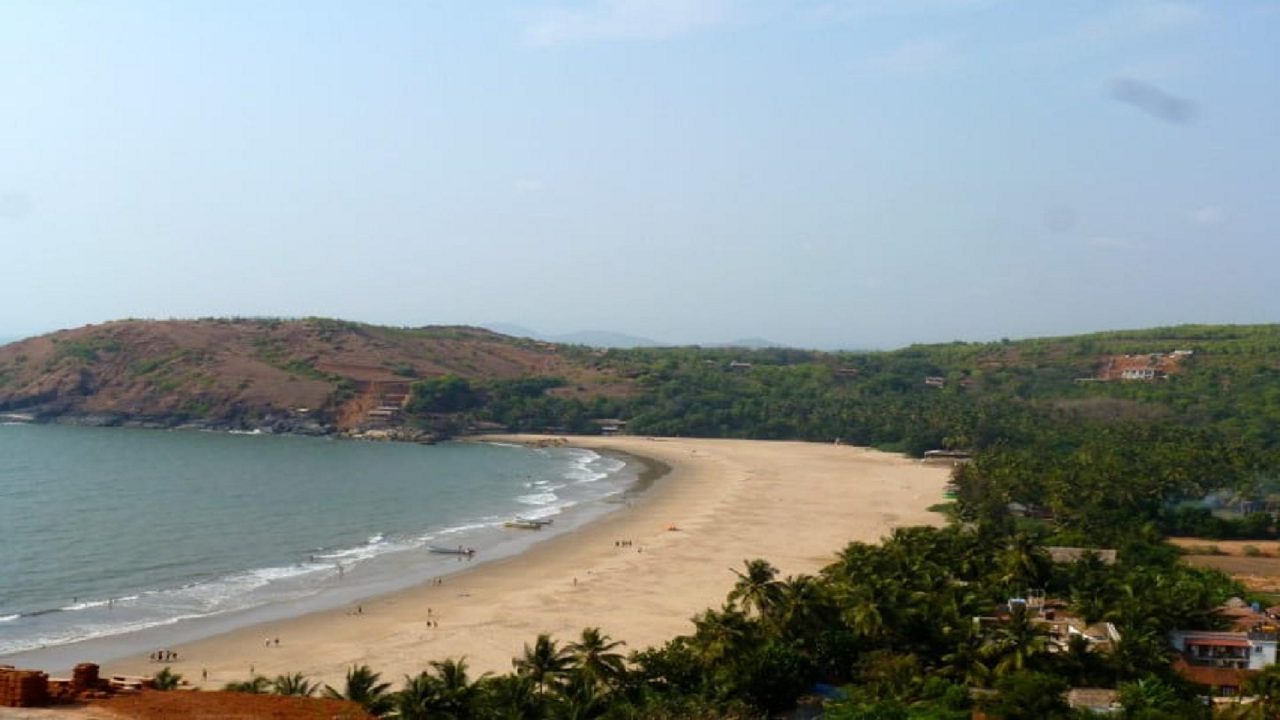
Gokarna Beach Escape: A Serene Alternative to Goa
Plan a Gokarna beach escape with practical beach sequencing, budget guidance, stay strategy, and one-day/two-day itinerary ideas for first-time travelers.
Chikmagalur: Complete Travel Plan Places And Weather
Complete Chikmagalur travel guide with best time to visit, coffee plantations, Mullayanagiri, waterfalls, trekking, how to reach and travel tips.
Coorg: Complete Travel Plan Places And Weather
Complete Coorg travel guide featuring coffee plantations, Abbey Falls, Madikeri, trekking, how to reach, accommodation, food and shopping tips.
Never Miss an Adventure
Get the latest trekking guides, travel tips, and exclusive offers delivered straight to your inbox.
