

How Many Countries in Europe? Complete Guide 2026

Rohit Verma
February 22, 2026
How many countries in Europe? Complete guide to all 44 European countries, transcontinental nations, disputed territories, and why the number varies from 44 to 50.
Introduction
How many countries are there in Europe? It's a question that seems simple but has a surprisingly complex answer. Depending on how you define "Europe" and what criteria you use, you'll get answers ranging from 44 to 50 or even more. This comprehensive guide will help you understand exactly how many countries make up the European continent, why there's confusion about the number, and what every traveler should know about Europe's political geography.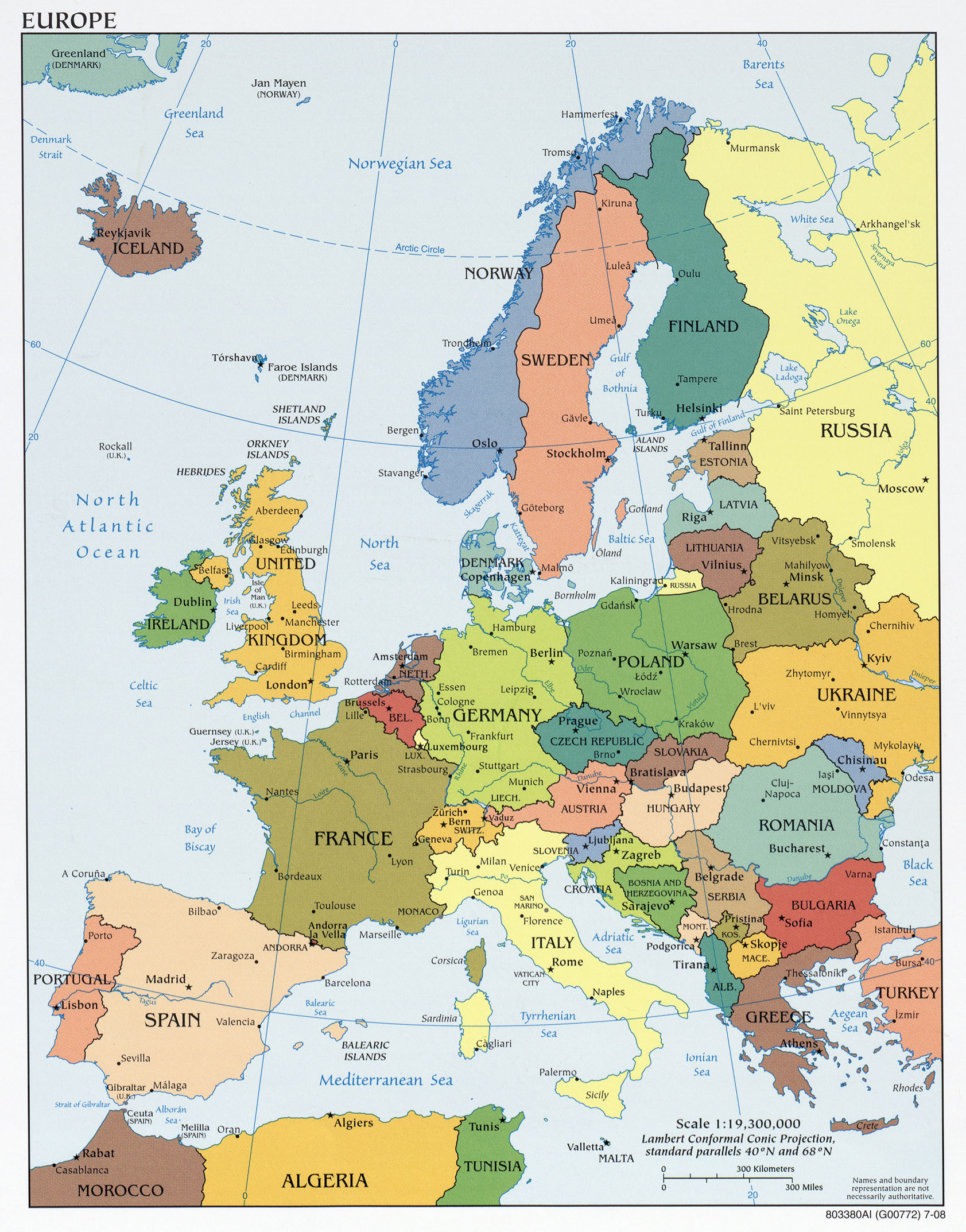 The most widely accepted answer among geographers and political organizations is that there are 44 sovereign countries in Europe. However, you'll commonly hear numbers like 45, 46, 47, or even 50. Why the discrepancy? It comes down to transcontinental countries (nations that span both Europe and Asia), disputed territories, dependent territories, and different definitions of where Europe actually ends and Asia begins.
Understanding Europe's political geography is essential for travelers planning multi-country trips, students studying geography, or anyone curious about how the world is organized. This guide will clarify exactly how many countries exist in Europe, provide a complete list, and explain the nuances that make this question more complicated than it first appears.
The most widely accepted answer among geographers and political organizations is that there are 44 sovereign countries in Europe. However, you'll commonly hear numbers like 45, 46, 47, or even 50. Why the discrepancy? It comes down to transcontinental countries (nations that span both Europe and Asia), disputed territories, dependent territories, and different definitions of where Europe actually ends and Asia begins.
Understanding Europe's political geography is essential for travelers planning multi-country trips, students studying geography, or anyone curious about how the world is organized. This guide will clarify exactly how many countries exist in Europe, provide a complete list, and explain the nuances that make this question more complicated than it first appears.
The Short Answer: How Many Countries in Europe?
The most commonly accepted answer is that there are **44 sovereign countries in Europe**. This is the number recognized by the United Nations and most international organizations when counting countries that have at least some portion of their territory within the European continent. However, you'll often hear different numbers:- 44 countries: The most common answer - sovereign states with territory in Europe
- 45-46 countries: Including transcontinental countries fully or mostly in Europe
- 47-48 countries: Including partially recognized states and disputed territories
- 50 countries: Including transcontinental nations, microstates, and dependent territories
Complete List of European Countries (44 Sovereign States)
Here's the complete list of 44 sovereign countries that are universally recognized as being in Europe, organized by region:Western Europe
- Austria
- Belgium
- France
- Germany
- Liechtenstein
- Luxembourg
- Monaco
- Netherlands
- Switzerland
Northern Europe
- Denmark
- Estonia
- Finland
- Iceland
- Ireland
- Latvia
- Lithuania
- Norway
- Sweden
- United Kingdom
Southern Europe
- Albania
- Andorra
- Bosnia and Herzegovina
- Croatia
- Greece
- Italy
- Malta
- Montenegro
- Portugal
- San Marino
- Slovenia
- Spain
- Vatican City
Eastern Europe
- Belarus
- Bulgaria
- Czech Republic (Czechia)
- Hungary
- Moldova
- Poland
- Romania
- Russia (European part)
- Slovakia
- Ukraine
The Balkans
- Kosovo (disputed/partially recognized)
- North Macedonia
- Serbia
Transcontinental Countries: The Europe-Asia Boundary
One of the biggest sources of confusion about how many countries are in Europe involves transcontinental countries - nations that span both Europe and Asia. These countries are typically included in European counts despite having significant territory in Asia.Russia
Russia is the largest transcontinental country in the world, with approximately 75% of its territory in Asia and 25% in Europe. However, roughly 75% of Russia's population lives in the European portion, and the capital Moscow is definitively in Europe. For this reason, Russia is always counted as a European country despite having more Asian territory. The traditional boundary between European and Asian Russia follows the Ural Mountains, the Ural River, and the Caucasus Mountains. This makes Russia unique - it's the world's largest country by area and straddles two continents.Turkey
Turkey is another transcontinental country, with about 3% of its territory (including Istanbul) in Europe and 97% in Asia. However, like Russia, its largest city Istanbul is in Europe, and it has historically and culturally been considered part of Europe. Turkey is sometimes included in European country counts and sometimes not, depending on the context. Turkey's status is particularly interesting because it's a member of NATO and has sought European Union membership for decades, yet most of its territory lies in Asia. This makes Turkey a cultural and political bridge between Europe and the Middle East.Kazakhstan
Kazakhstan is primarily a Central Asian country, but a small portion of its territory west of the Ural River lies in Europe. However, because this European portion is tiny and sparsely populated, Kazakhstan is rarely counted as a European country. It's usually considered solely Asian for most purposes.The Caucasus Nations
The three Caucasus countries - Georgia, Armenia, and Azerbaijan - sit at the crossroads of Europe and Asia. Their classification is debated, with some geographers placing them entirely in Asia, others entirely in Europe, and still others calling them transcontinental. Culturally and politically, these nations have strong ties to Europe. Georgia and Armenia are Christian nations with ancient cultural connections to Europe. All three have sought closer integration with European institutions. However, most geographic definitions place them in Asia, though the boundary is not clearly defined.Cyprus
Cyprus presents an interesting case. Geographically, the island is clearly in Asia (specifically the Eastern Mediterranean). However, politically and culturally, Cyprus is considered European. It's a member of the European Union, uses the Euro, and has strong historical and cultural ties to Greece and Europe. Cyprus is almost always counted as a European country in political contexts despite its Asian location. This demonstrates that "Europe" is as much a political and cultural concept as a geographic one.Disputed Territories and Partially Recognized States
Another source of variation in European country counts involves disputed territories and partially recognized states.Kosovo
Kosovo declared independence from Serbia in 2008 and is recognized by about 100 UN member states, including most Western countries. However, Serbia (and several other nations, including Russia and China) does not recognize Kosovo's independence. Whether to count Kosovo as a separate country depends on who you ask. The UN doesn't include it in its official count, but many Western organizations and countries do. This explains why some sources say there are 44 European countries while others say 45 or 46.Other Disputed Territories
Europe has several other disputed territories that complicate the country count:- Transnistria: A breakaway region of Moldova that functions independently but isn't widely recognized
- Abkhazia and South Ossetia: Breakaway regions of Georgia recognized by Russia and a few others
- Northern Cyprus: A self-declared state recognized only by Turkey
- Luhansk and Donetsk: Separatist regions in Ukraine (status complicated by ongoing conflict)
Microstates: Europe's Smallest Countries
Europe is home to several microstates - tiny sovereign nations with small populations but full independence. These are always included in European country counts:- Vatican City: 0.44 km², 800 residents - the smallest country in the world
- Monaco: 2.02 km², 39,000 residents - the second smallest country
- San Marino: 61 km², 33,000 residents - the world's oldest republic
- Liechtenstein: 160 km², 39,000 residents - a constitutional monarchy
- Andorra: 468 km², 77,000 residents - a co-principality between France and Spain
- Malta: 316 km², 525,000 residents - an island nation in the Mediterranean
Dependent Territories and Autonomous Regions
Europe also has numerous dependent territories and autonomous regions that are sometimes confused with independent countries. These are NOT counted as separate countries:- Guernsey, Jersey, Isle of Man: British Crown Dependencies
- Faroe Islands: Autonomous territory of Denmark
- Gibraltar: British Overseas Territory
- Åland Islands: Autonomous region of Finland
- Svalbard and Jan Mayen: Norwegian territories
- Canary Islands, Ceuta, Melilla: Spanish territories in Africa
- Greenland: Autonomous territory of Denmark (geographically North America)
 These territories have varying degrees of autonomy but are not independent countries. They're not included in the count of European countries.
European Union vs. Europe: Important Distinction
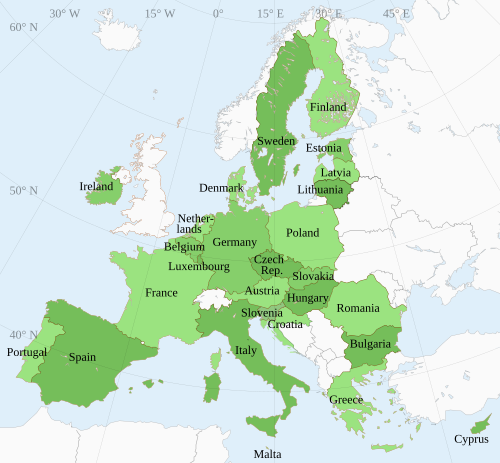
It's important to distinguish between the geographic continent of Europe and the European Union (EU), which is a political and economic union.- Europe (continent): 44 countries
- European Union: 27 member countries (as of 2026)
Schengen Area vs. Europe
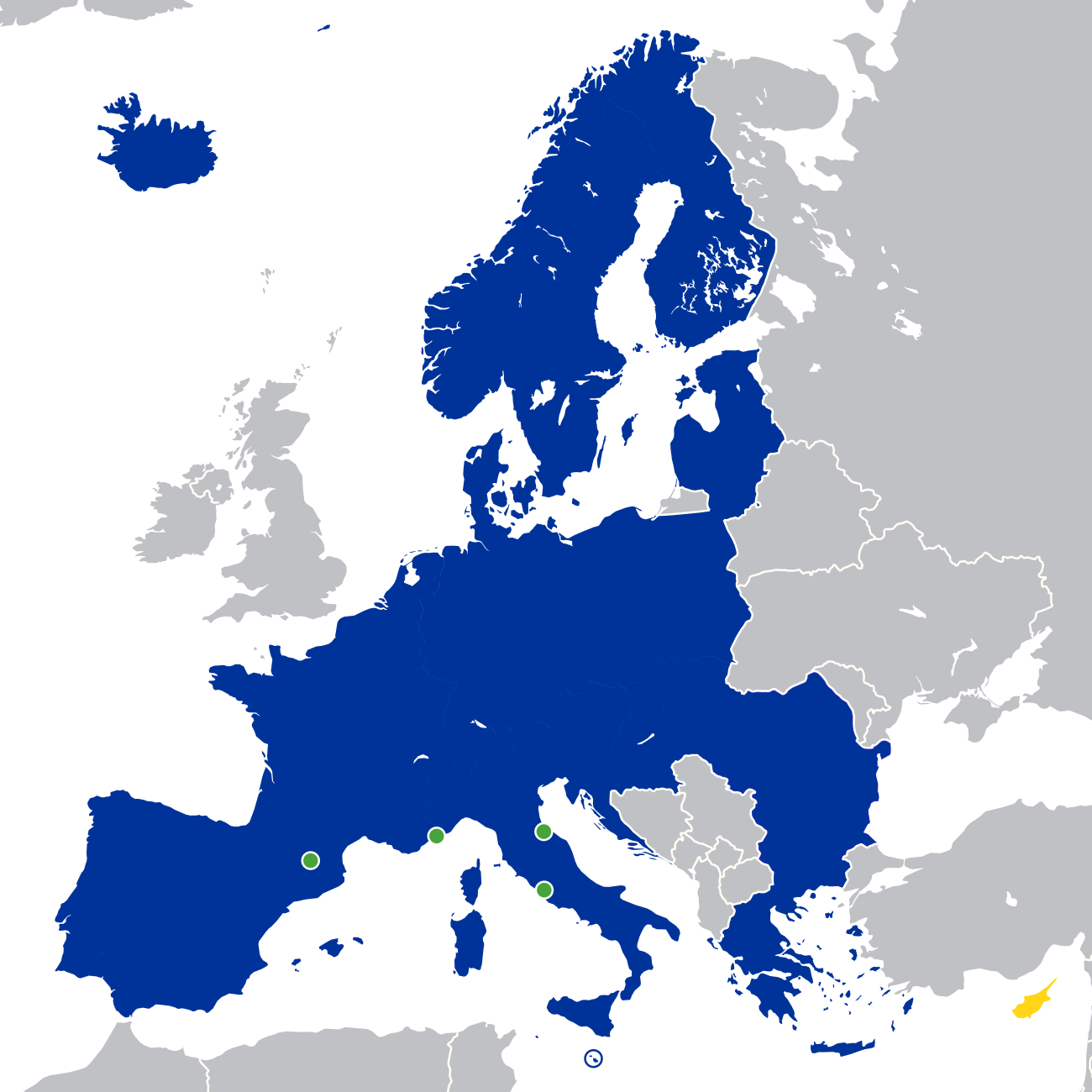
Similarly, the Schengen Area (which allows passport-free travel) is not the same as Europe. As of 2026, 27 European countries participate in the Schengen Agreement, but some European countries (like UK, Ireland, Romania, Bulgaria, Cyprus) maintain border controls.Why the Number Matters for Travelers
Understanding Europe's political geography has practical implications for travelers:Visa Requirements
Different European countries have different visa policies, though the Schengen visa covers most of the EU and some non-EU countries. However, the UK, Ireland, and Eastern European nations outside Schengen have separate visa systems.Currency
Not all European countries use the Euro. The UK uses pounds, Switzerland uses francs, and many Eastern European countries maintain their own currencies. Planning currency exchanges is essential for multi-country trips.Travel Planning
Understanding which countries are in Europe helps with itinerary planning, especially for the popular "European tour" that many travelers undertake. Some travelers aim to visit as many European countries as possible, making accurate counting important.Regional Travel Routes
Planning efficient routes requires understanding geography. The 1-month Europe trip from India typically focuses on Western and Central Europe, while adventure travelers might include the Balkans or Scandinavia. Before finalizing your route, it is worth checking which nations are covered by a Schengen visa versus our list of visa-free countries in Europe for Indian travelers, since entry requirements can significantly change your itinerary planning. Budget-conscious travelers counting countries often prioritize the cheapest countries in Europe to stretch a multi-nation trip further.Largest and Smallest European Countries
By Area
- Largest: Russia (European portion) - 3.96 million km²
- Smallest: Vatican City - 0.44 km²
By Population
- Most populous: Russia (European portion) - 110 million
- Least populous: Vatican City - 800
Most Visited European Countries
For travelers interested in popularity, the most visited European countries are:- France - 90+ million visitors annually
- Spain - 85+ million visitors
- Italy - 65+ million visitors
- Germany - 40+ million visitors
- United Kingdom - 40+ million visitors
Location
Frequently Asked Questions
Q1.Are there 44 or 50 countries in Europe?
Q2.Is Russia in Europe or Asia?
Q3.Is Turkey considered a European country?
Q4.Is the UK still part of Europe after Brexit?
Q5.What's the difference between the EU and Europe?
Q6.Are the Caucasus countries in Europe?
Q7.What are Europe's microstates?
Q8.Is Cyprus in Europe or Asia?
Recommended For You

1-Month Europe Trip Cost from India: Complete Budget Breakdown
Planning a 1-month Europe trip from India? Get complete cost breakdown including flights, visa, accommodation, food & transport. Budget ₹1.5-4.5 lakhs with our detailed guide.

Cheapest Countries to Visit in Europe from India: Budget Breakdown
Discover Europe's most affordable destinations! Complete budget guide covering Albania, Bosnia, Bulgaria, Hungary & more. Daily costs, accommodation, food, and money-saving tips.

Mount Elbrus: Europe’s Highest Mountain, Routes & Climb Facts
Learn why Mount Elbrus is considered the highest mountain in Europe, with clear details on height, routes, season, safety, and practical climb planning.
Never Miss an Adventure
Get the latest trekking guides, travel tips, and exclusive offers delivered straight to your inbox.
