
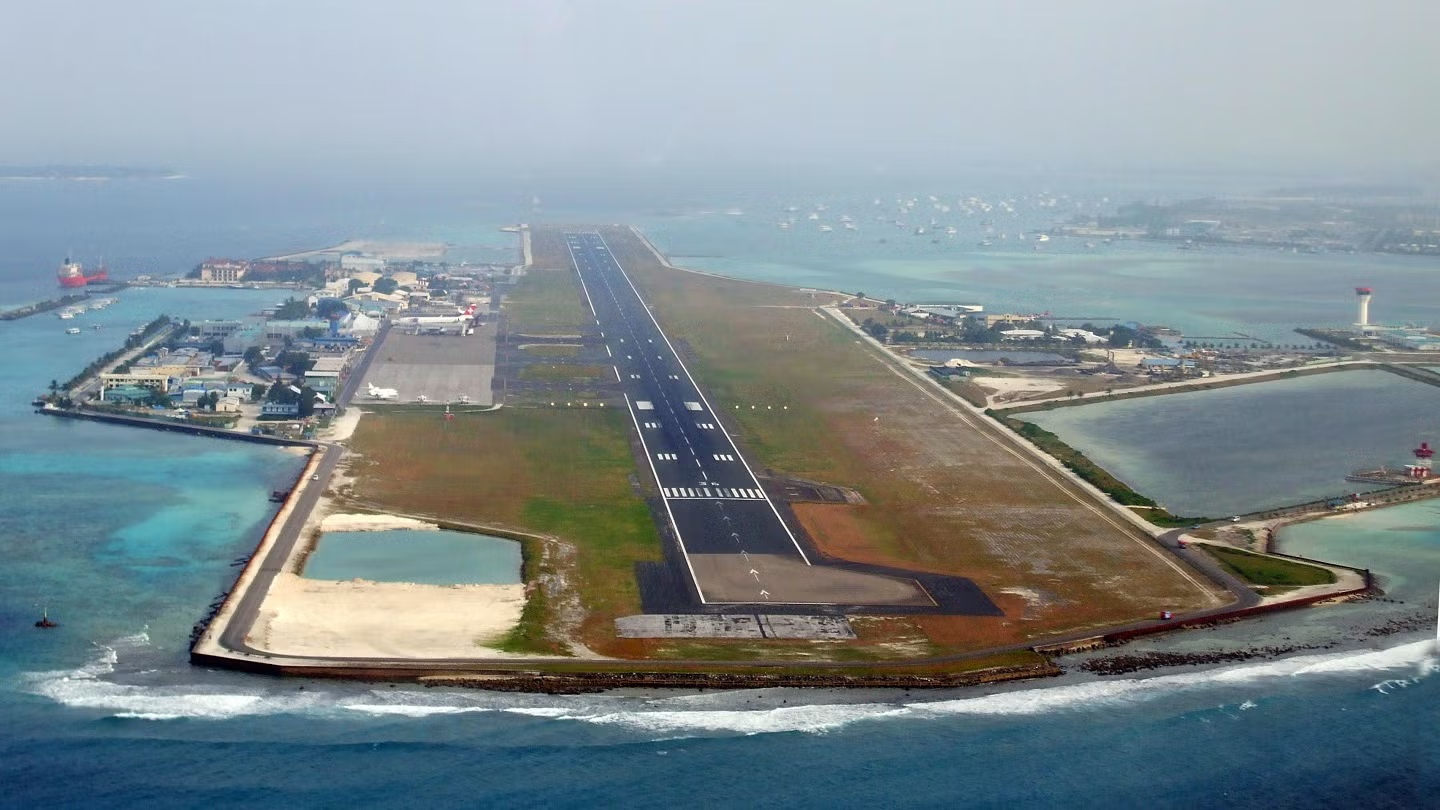
Airports in Maldives: International Hubs, Domestic Airports & Transfers

Rohan Malhotra
February 18, 2026
Complete guide for airports in maldives: complete guide with practical planning, timings, and travel tips.
Airports in Maldives: Complete Transfer and Planning Guide
Understanding airports in Maldives is critical because most trips include multiple transfer steps after international arrival. Unlike single-city destinations, Maldives travel often combines one international airport, one domestic or seaplane segment, and a final boat transfer to your island. If this chain is not planned correctly, even premium bookings can become stressful and expensive.
This guide explains airport types, transfer models, timing risks, and booking logic so you can plan confidently before you fly. For destination pairing, combine this with Male city Maldives, island logistics from Maafushi island Maldives, and multi-country planning context from Bali travel guide.

Velana International Airport (MLE): Main Gateway
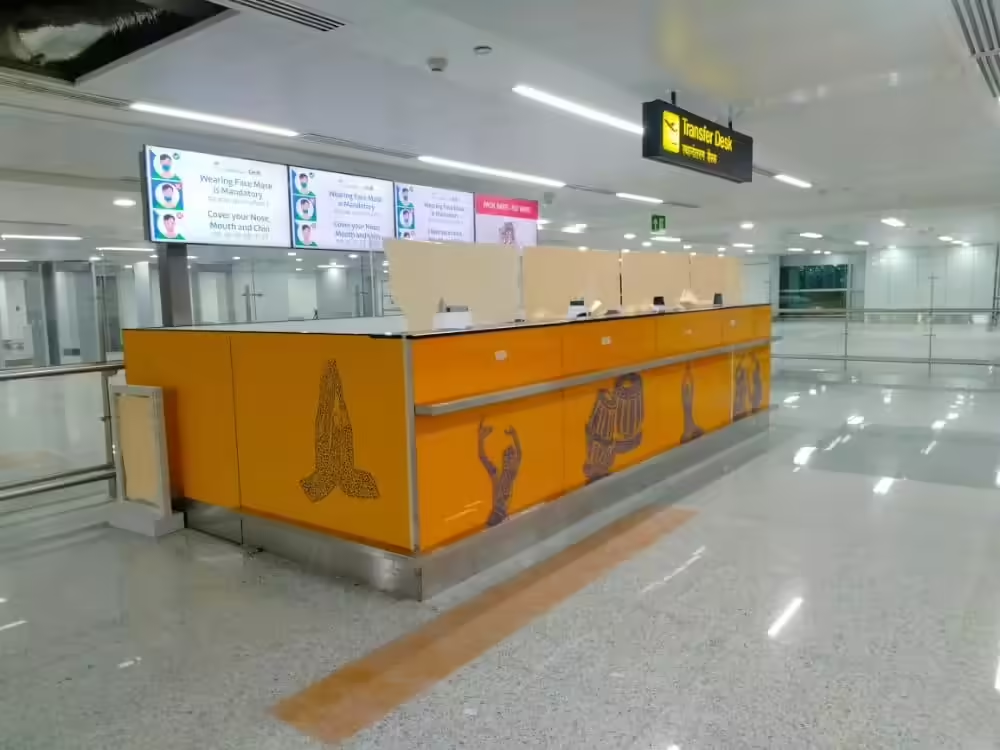
Velana International Airport is the primary entry point for most visitors arriving in Maldives. After immigration, travelers usually proceed to resort transfer desks where onward travel is coordinated. Depending on resort location and arrival time, your next segment may be speedboat, domestic flight, or seaplane.
Many first-time visitors assume airport arrival means immediate resort check-in. In practice, transfer windows can involve waiting time, especially if your onward mode is daylight-limited or weather-sensitive. Keeping this expectation realistic helps reduce arrival-day stress.
Domestic Airports in Maldives
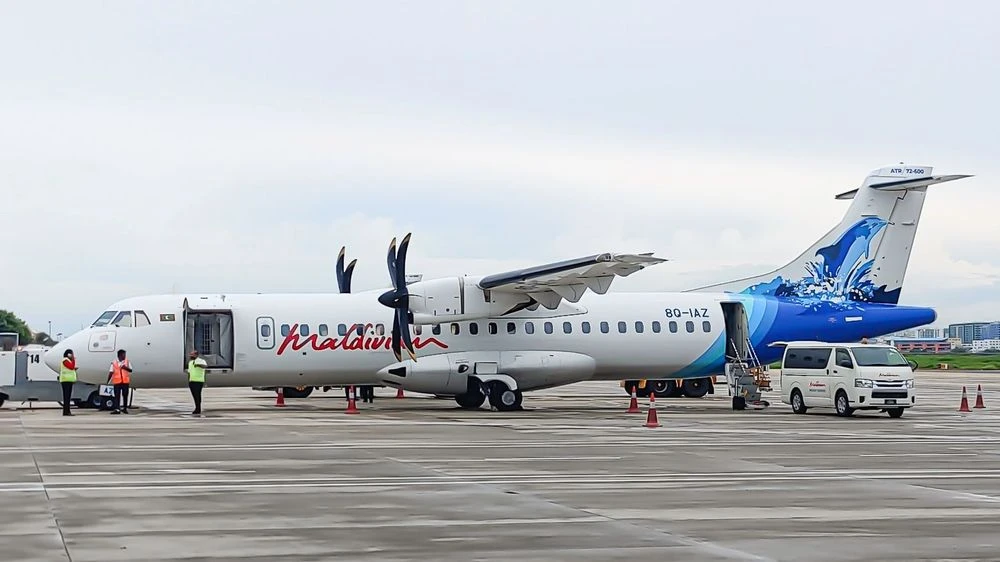
Maldives has several domestic airports used to connect distant atolls where direct speedboat from Male is inefficient. In these cases, a domestic flight is followed by a short boat transfer. This model is common for farther island resorts and can be more predictable than long open-sea travel in rough conditions.
| Transfer Model | Best Use Case | Main Caution |
|---|---|---|
| International + Speedboat | Near-atoll islands and guesthouse zones | Sea condition variability |
| International + Domestic + Boat | Far-atoll resorts | Extra baggage coordination |
| International + Seaplane | Scenic premium transfers | Daylight-only operations |
Seaplane Transfers: What to Expect
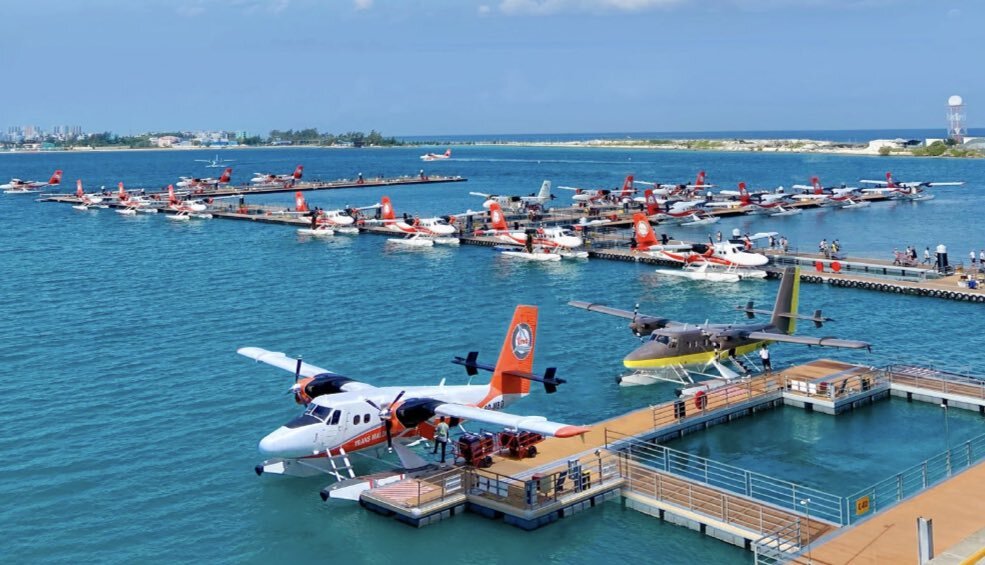
Seaplane transfers are iconic but operationally strict. They usually run in daylight windows, have baggage limits, and depend on weather. Delay buffers are normal, so avoid same-day tight commitments after arrival.
- Confirm baggage allowance before final payment.
- Carry essentials in hand luggage.
- Expect waiting windows during peak arrivals.
- Verify whether transfer is shared or private.
Seaplanes offer outstanding views, but they are not always the fastest practical option for every itinerary.
Speedboat Transfers and Night Arrival Logic
Speedboats are common for islands closer to Male and can be practical for late arrivals depending on operator schedules. Always verify whether night transfers are available for your specific property. If not, you may need an overnight stay near Male before next-day transfer.
For budget island trips, speedboat routes are often the most cost-efficient. For premium private islands, transfer cost can be substantial and should be included in total booking comparison, not treated as minor add-on.
How to Compare Resort Prices Correctly
The most common planning mistake is comparing only room rates. In Maldives, transfer cost can significantly change final trip value. A lower nightly rate with expensive mandatory transfer may cost more overall than a higher room rate with included speedboat service.
Before confirming any stay, ask for total landing cost: room, transfers, taxes, and timing constraints. If any transfer detail is unclear, do not finalize flights yet.
Airport-to-Resort Checklist
- Confirm full transfer chain in writing.
- Check last transfer timing for your arrival day.
- Verify baggage limits for each segment.
- Keep one backup night option near Male for delays.
- Share passport and flight details with resort transfer desk early.
These steps prevent most first-day disruptions and allow smoother onward movement.
Sample Transfer Scenarios
Scenario 1: Budget island stay near Male: direct speedboat plus local transfer. Scenario 2: Premium far-atoll resort: domestic flight plus short boat. Scenario 3: Scenic luxury transfer: seaplane with daylight schedule constraints.
Choose model based on budget, arrival timing, and comfort priorities. For multi-destination travelers comparing tropical routes, you can align seasonality with best time to visit Bali.
Conclusion
Airports in maldives should be planned as a full logistics system, not just a landing point. Decide island first, confirm transfer chain second, then book flights around realistic buffers. With this sequence, you avoid budget surprises and start your Maldives trip with much smoother execution.
Transfer Risk Management for First-Time Visitors
Maldives transfer planning improves significantly when you classify risk before booking: timing risk, weather risk, and baggage risk. Timing risk appears when your international arrival is close to the last onward transfer. Weather risk affects seaplane and open-water boat segments. Baggage risk appears when weight limits are strict or multiple transfer operators are involved. If you map these three risks early, you can choose better flight times and reduce expensive same-day adjustments.
A practical rule is to keep one backup layer in every trip plan. For late arrivals, have a nearby overnight option. For seaplane-heavy routes, carry essential medication and one change of clothes in hand luggage. For domestic-plus-boat chains, keep resort transfer confirmations accessible offline. These simple protections can prevent most first-day disruptions. Maldives travel is smooth when logistics are treated as part of the vacation design, not as a last-minute detail after hotel booking.
Checklist for Smooth Departure from Maldives
Departure logistics matter as much as arrival. Confirm return transfer timing with your resort at least one day in advance, verify luggage allowance one more time, and keep buffer for security and check-in queues at Velana. If your island is weather-sensitive, ask for contingency guidance early.
Small preparation on the last day prevents missed connections and unnecessary stress. Maldives travel feels effortless when transfer planning is maintained from booking through departure.
If you prioritize transfer reliability early, Maldives travel becomes significantly easier from day one to final departure. Logistics discipline is the biggest quality multiplier in island itineraries.
Before booking, ask one final question: what is my guaranteed end-to-end transfer chain if weather, delays, or schedule changes occur? Clarity on that single point prevents most first-day and last-day disruptions in Maldives travel.
Transfer clarity before booking is the single most important Maldives planning habit for smooth travel.
Plan transfer buffers for both arrival and departure days.
Always confirm final transfer windows in writing.
Keep a backup transfer plan ready.
Location
Frequently Asked Questions
Q1.What is the best time related to Airports in Maldives: Complete Guide?
Q2.How many days are enough?
Q3.Is this destination suitable for families?
Q4.Are there budget-friendly options?
Q5.What should I carry?
Q6.Can I combine nearby attractions?
Q7.Is advance booking needed?
Q8.Any safety tips?
Recommended For You

Bali: Complete Travel Plan Places And Weather
Complete Bali travel guide with 7-day itinerary, best time to visit, cost breakdown, top attractions, transport options & insider tips for first-time visitors to Indonesia's Island of Gods.

Places to Visit in Sri Lanka: Top Attractions
Discover the best places to visit in Sri Lanka: Cultural Triangle, hill country, beaches, wildlife, heritage towns, plus 7–14 day itinerary tips.

International Driving License India: Application Process, Documents & Fees
Understand international driving license process in India with eligibility, documents, validity, and practical travel checks.
Never Miss an Adventure
Get the latest trekking guides, travel tips, and exclusive offers delivered straight to your inbox.
