
Kanyakumari Temple: Complete Travel Guide to Devi Kanya Kumari

Rahul Garg
January 16, 2026
Complete Kanyakumari Temple guide with history, architecture, festivals, best time to visit, and travel tips. Explore the Shakti Peetha at India's southern tip.
Where Three Oceans Meet the Goddess
At India's southernmost tip, where the Bay of Bengal, the Arabian Sea, and the Indian Ocean converge, stands the sacred Kanyakumari Temple dedicated to Goddess Kanya Kumari – the virgin goddess. This ancient shrine, also known as the Bhagavathy Amman Temple, is one of the 51 Shakti Peethas (sacred shrines of the Divine Mother) and holds profound significance in Hindu mythology and spirituality.
What makes Kanyakumari truly special is its extraordinary location – on a peninsula surrounded by ocean on three sides, watching spectacular sunrises and sunsets over the waters. The temple stands as a beacon of devotion, with the goddess believed to protect India from the south. The confluence of three oceans (Triveni Sangam) visible from here is considered one of the most sacred places in India.
According to Hindu mythology, this is where the Goddess performed penance to win Lord Shiva as her husband. Though the marriage never occurred, the goddess remained here as a virgin eternally, protecting devotees who seek her blessings. The temple's sanctity, combined with its stunning natural setting, creates an atmosphere of power and peace.
For spiritual seekers, the temple offers the rare opportunity to worship at a Shakti Peetha located at the confluence of three oceans. For nature lovers, the sunrise and sunset views are unparalleled. And for cultural enthusiasts, Kanyakumari represents the meeting point of multiple Indian traditions and cultures.
History and Legend
The Legend of Banasura
According to Hindu mythology, the demon Banasura had obtained a boon that he could only be killed by a virgin. Becoming invincible, he terrorized the universe. The gods prayed to Goddess Parvati, who incarnated as Kanya Kumari (virgin maiden) to kill Banasura.
Banasura, upon seeing the beautiful goddess, desired to marry her. When the goddess agreed on condition that he defeat her in battle, Banasura attacked. The goddess killed him, thereby liberating the worlds from his tyranny. According to legend, the goddess still resides here eternally, protecting the southern tip of India.
Shakti Peetha Significance
Kanyakumari is one of the 51 Shakti Peethas – sacred shrines where body parts of the deceased goddess Sati fell. According to mythology, the spine of Sati fell here, making it an especially powerful center of Goddess worship. Shakti Peethas are considered among the most sacred sites for devotees of the Divine Mother.
The temple has been a place of worship since antiquity, with references in ancient Tamil literature and later Sanskrit texts. Various South Indian dynasties including the Pandyas, Cholas, and Travancore kings contributed to its construction and maintenance.
Temple Architecture
The Temple Structure
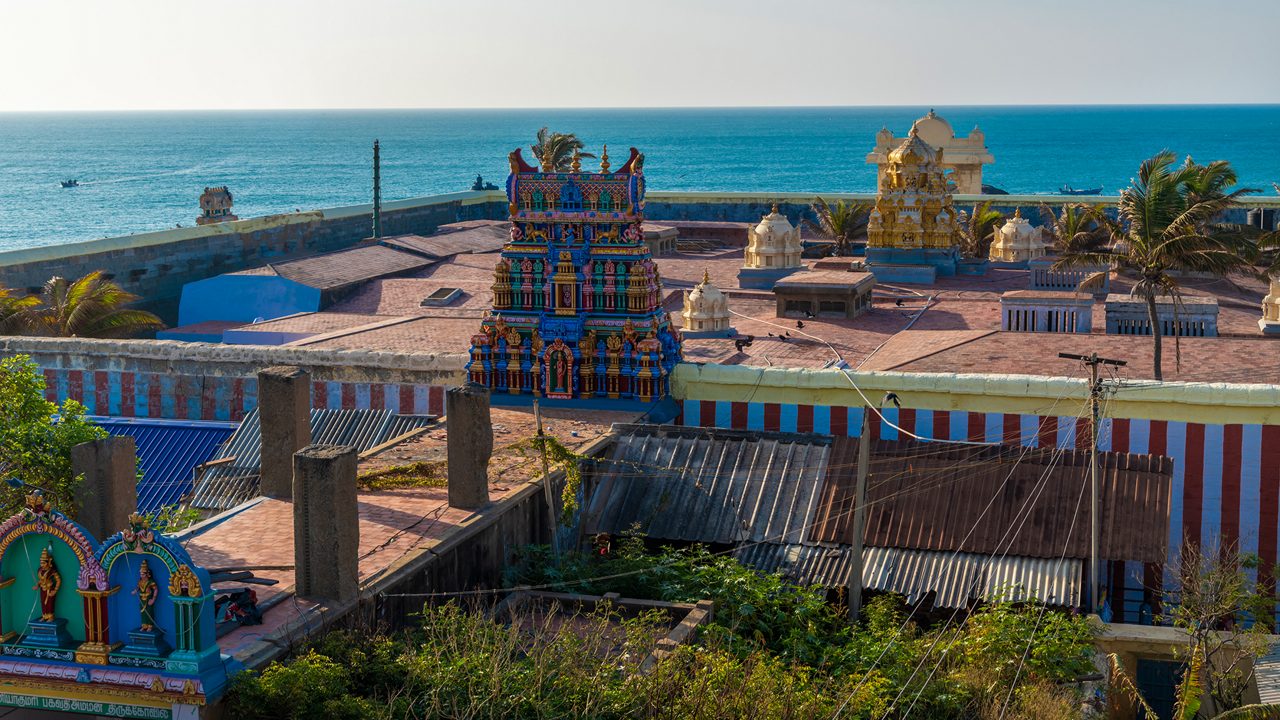
The Kanyakumari Temple features beautiful Dravidian architecture with several distinctive elements:
- Main Gopuram: The temple's entrance tower is covered with sculptures of various deities.
- Navaratri Mandapam: A hall where the goddess is displayed during festivals.
- Oonjal Mandapam: A swing hall where the goddess is ceremonially swung.
- Kalabhairava Shrine: Dedicated to the fierce form of Shiva, the temple's guardian deity.
The temple faces east, allowing the first rays of the sun to fall on the deity. The sanctum houses the beautiful image of the goddess in standing posture, adorned with jewelry and flowers.
Diamond Nose Ring
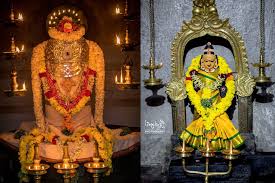
The goddess's most famous ornament is her diamond nose ring, so large that it's said to be visible from the sea. According to legend, the sparkle from this nose ring once guided ships safely to shore.
Worship and Festivals
Daily Worship
The temple follows traditional Kerala-Tamil Nadu style worship with multiple pujas daily. The goddess is decorated differently each day, and various offerings are made by devotees seeking blessings for marriage, prosperity, and protection.
Navaratri Festival
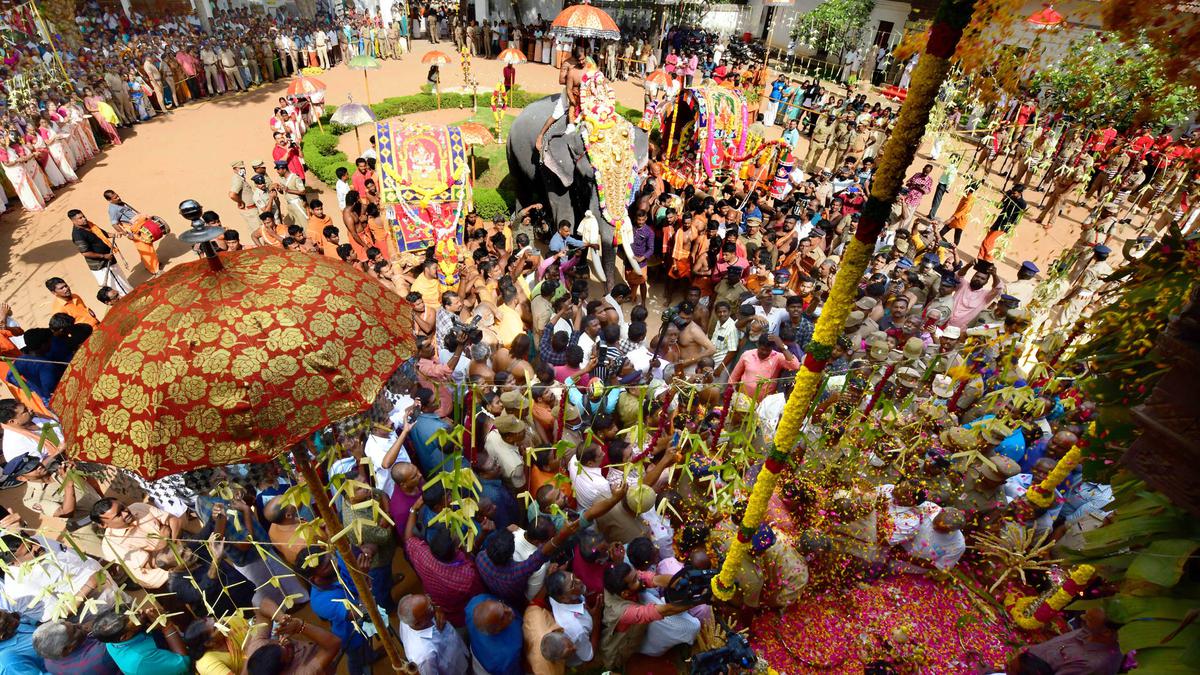
The most important festival is Navaratri (nine nights), usually in September-October. During this festival, the temple is elaborately decorated, and the goddess is worshipped in nine different forms over nine days. The festival attracts thousands of devotees from across India.
Other Festivals
- Vaikasi Visakam: May-June, celebrating the goddess's victory.
- Karthigai Deepam: November-December, festival of lights.
Nearby Attractions
Vivekananda Rock Memorial
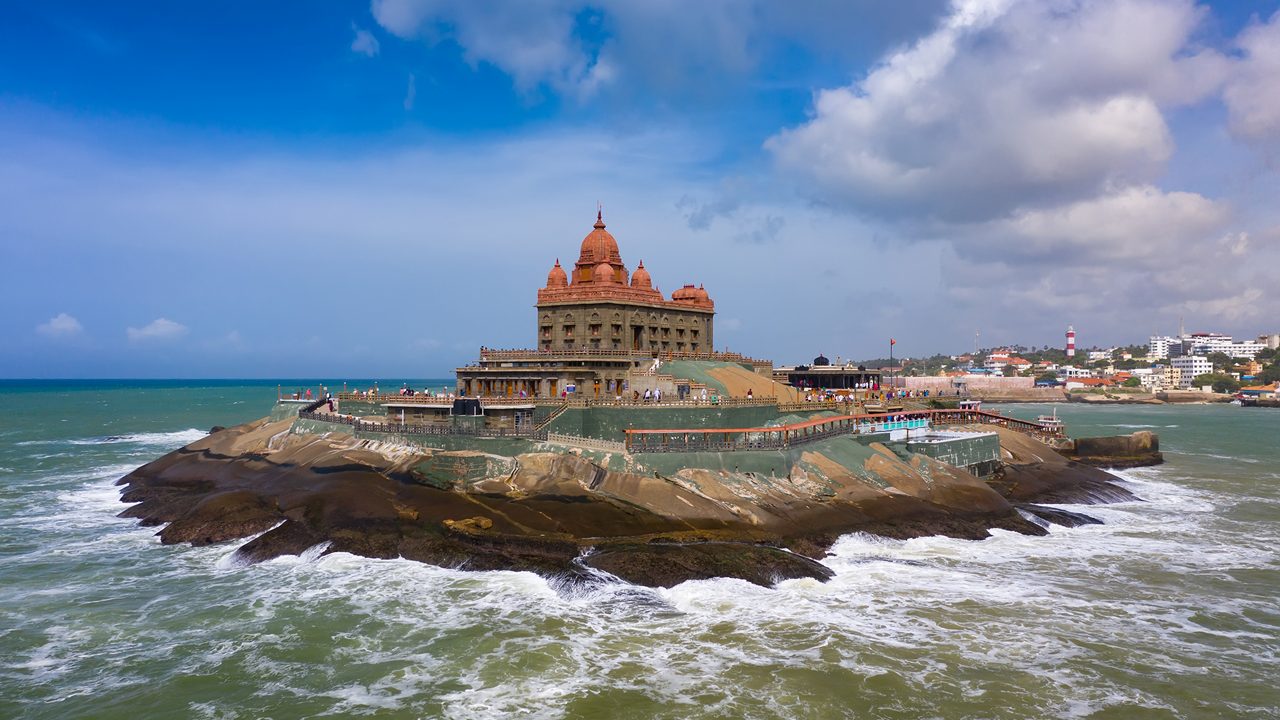
About 500 meters offshore, this memorial marks where Swami Vivekananda meditated and gained enlightenment. A ferry takes visitors to the rock.
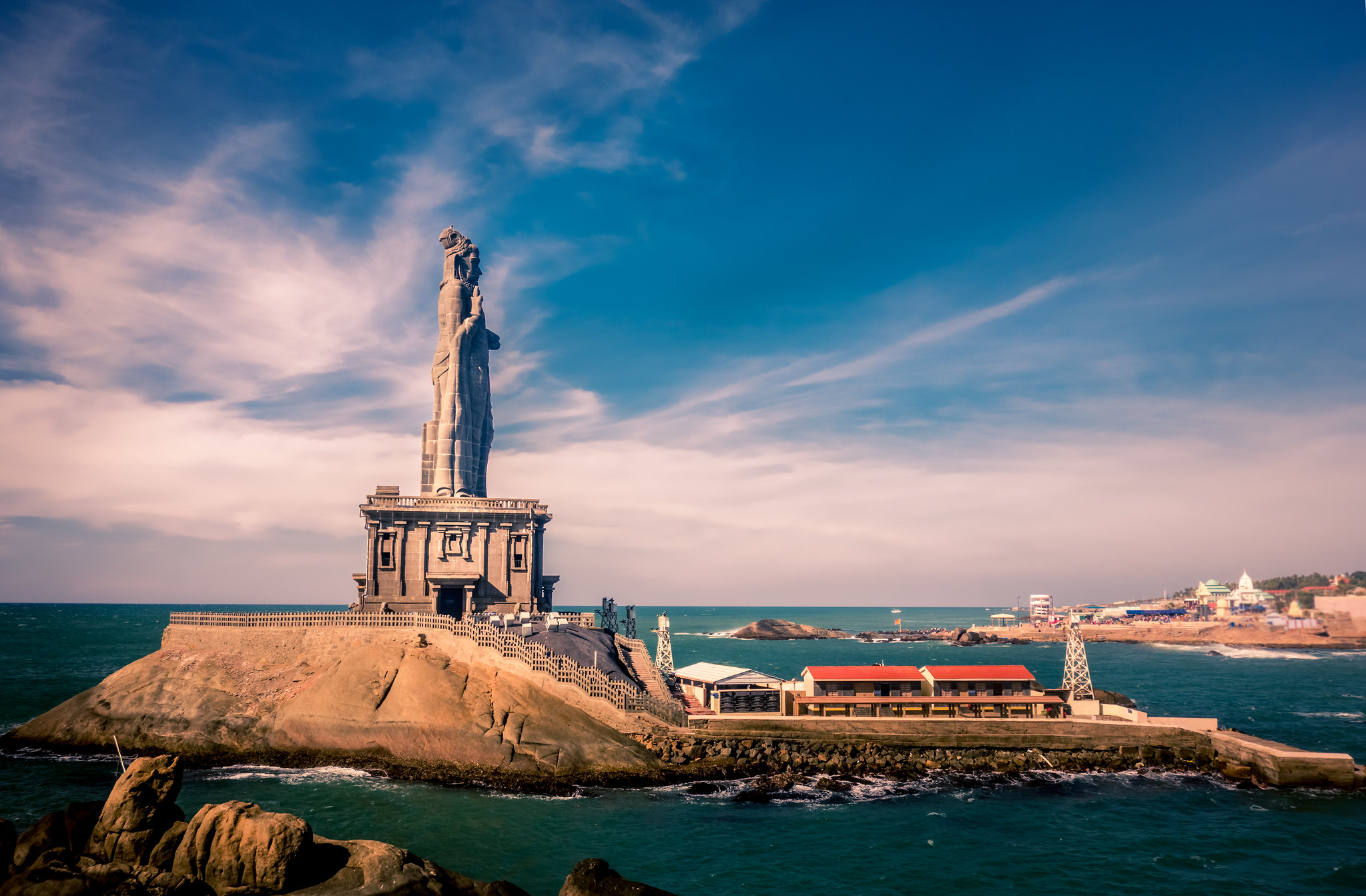
Thiruvalluvar Statue
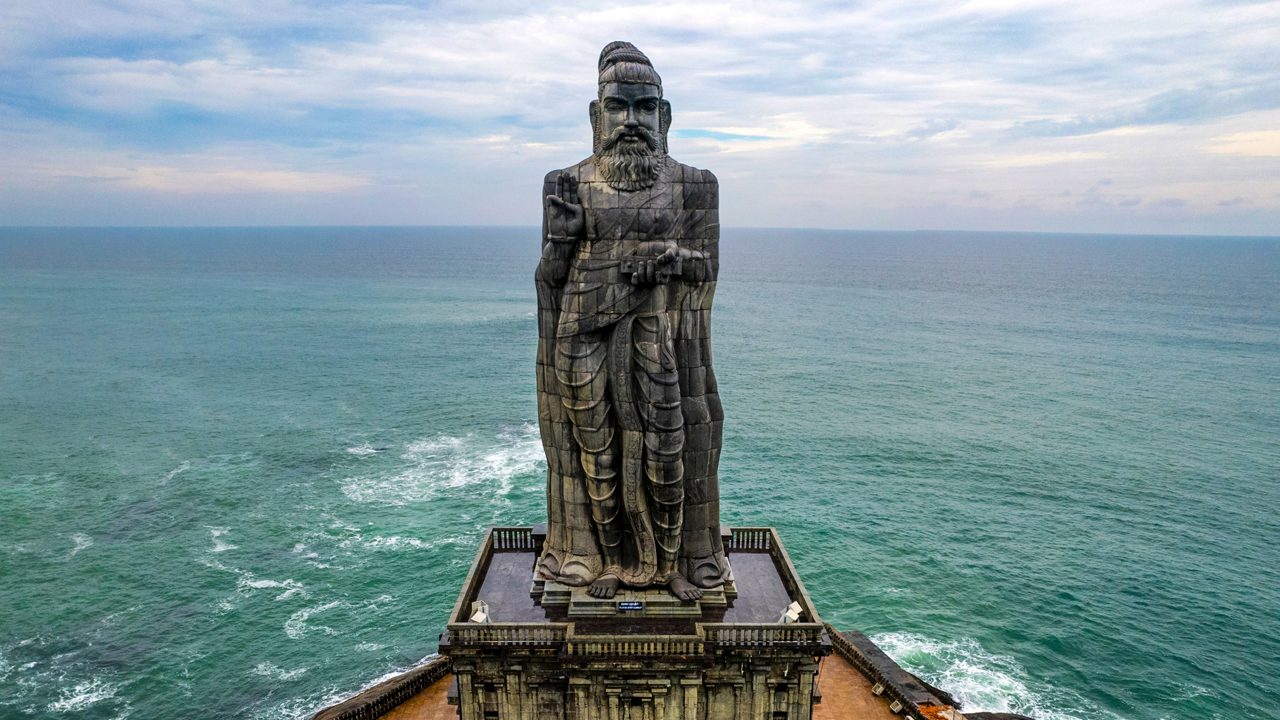
A massive 40-meter statue of the Tamil poet-saint Thiruvalluvar, located on another rock near Vivekananda Rock.
Sunrise and Sunset
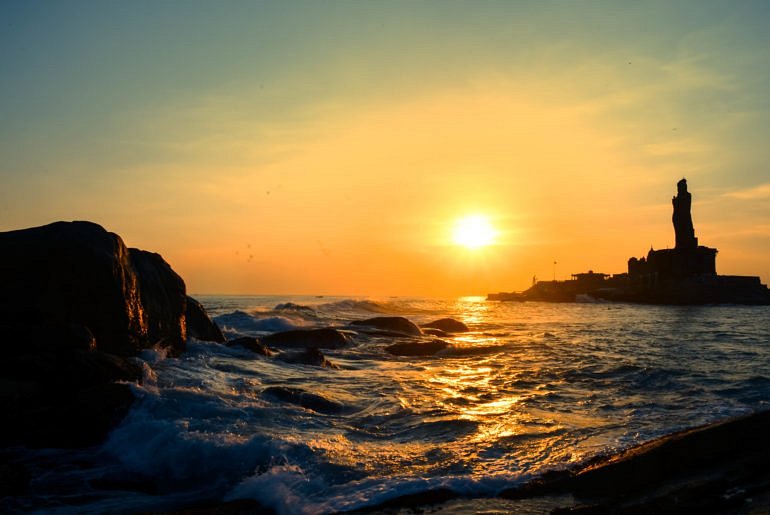
Kanyakumari is one of the few places where you can see both sunrise and sunset over the ocean. The views are spectacular, especially during full moon.
Best Time to Visit
Winter (October to March)
October to March offers pleasant weather for temple visits and sightseeing. This is the peak tourist season.
Festival Seasons
Navaratri (September-October) is the best time to experience the temple's cultural vibrancy.
How to Reach Kanyakumari
By Air
Trivandrum International Airport (90 km) is the nearest airport with excellent connections.
By Train
Kanyakumari has its own railway station connected to major Indian cities. The train journey along the coast is scenic.
By Road
- From Trivandrum: 90 km, approximately 2-3 hours.
- From Madurai: 240 km, approximately 5-6 hours.
Practical Tips
Temple Etiquette
- Dress modestly: Required – cover shoulders and knees.
- Remove footwear: Before entering.
- Non-Hindus: Non-Hindus may enter outer areas but not the inner sanctum.
Accommodation
Various options from budget guesthouses to mid-range hotels with ocean views.
Conclusion
Kanyakumari Temple stands at India's sacred southern tip, where the divine meets the dramatic natural beauty of three oceans. Combine your visit with Rameshwaram or Trivandrum.
Location
Frequently Asked Questions
Q1.Why is Kanyakumari temple famous?
Q2.What is the best time to visit Kanyakumari?
Q3.Can non-Hindus visit Kanyakumari temple?
Q4.What are the timings of Kanyakumari temple?
Q5.How do I reach Kanyakumari Temple?
Q6.What is the dress code at Kanyakumari Temple?
Recommended For You
New Year Party Trivandrum: Kovalam Beach and Events
Plan New Year party Trivandrum with Kovalam beach events, hotel galas, cultural programs, ticket ranges, safety tips, and transport planning for 31st eve.
Thiruvalluvar Statue: Giant Monument at Kanyakumari
Complete travel guide to Thiruvalluvar Statue Kanyakumari - 133 ft monument to Tamil poet-saint. Symbolism, Thirukkural significance, ferry timings, entry fee & travel tips.
Vivekananda Rock Memorial: Complete Travel Guide 2026
Complete travel guide to Vivekananda Rock Memorial in Kanyakumari - where Swami Vivekananda attained enlightenment. Ferry timings, entry fees, best time to visit & nearby attractions.
Never Miss an Adventure
Get the latest trekking guides, travel tips, and exclusive offers delivered straight to your inbox.
