
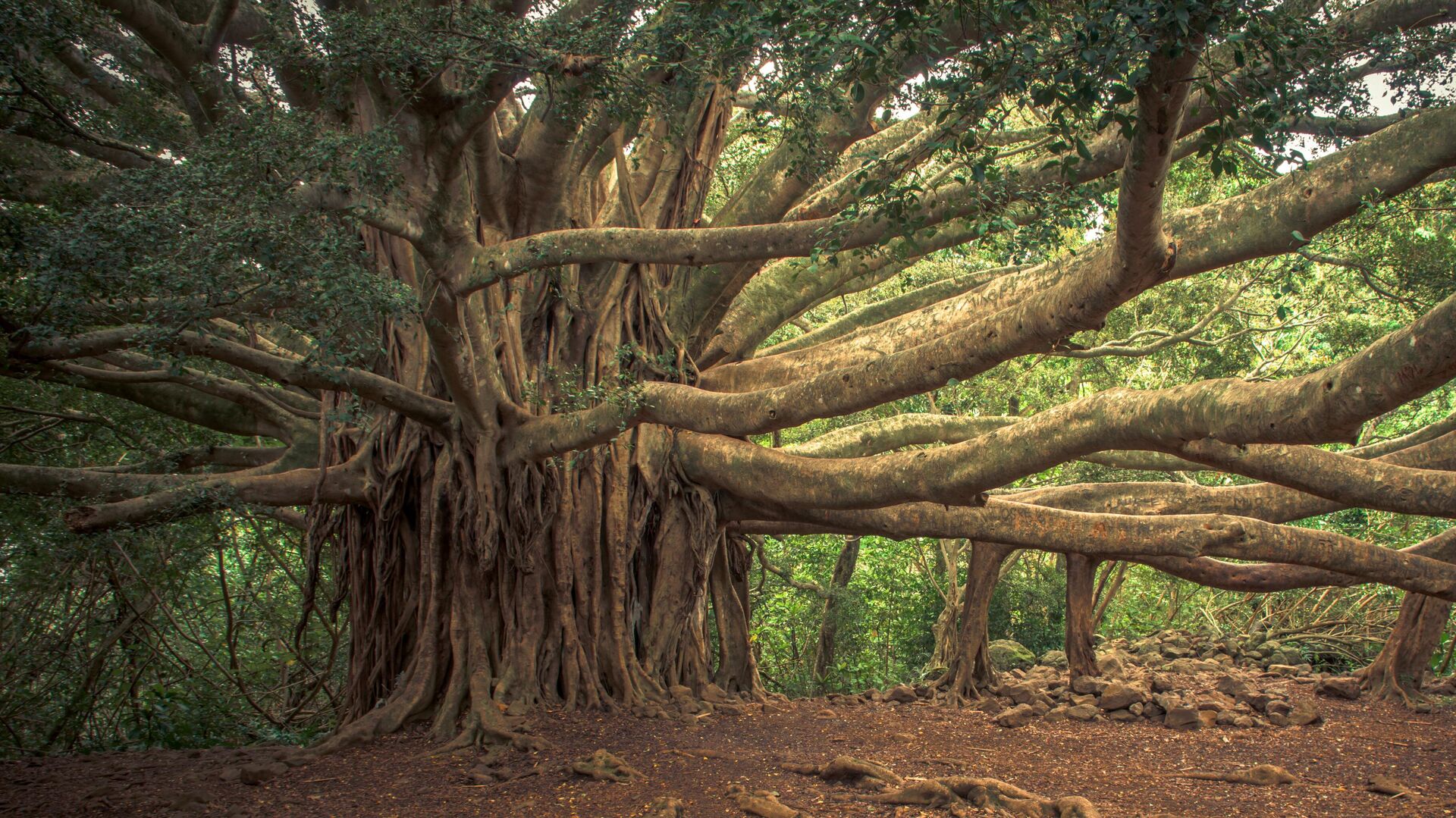
Great Banyan Tree Kolkata: History, Location & Best Time to Visit

Priya Mehta
February 2, 2026
Explore the Great Banyan Tree in Howrah near Kolkata with history, canopy records, growth science, and practical tips for visiting the Acharya Bose Botanical Garden.
Introduction: The Great Banyan Wonder of Howrah
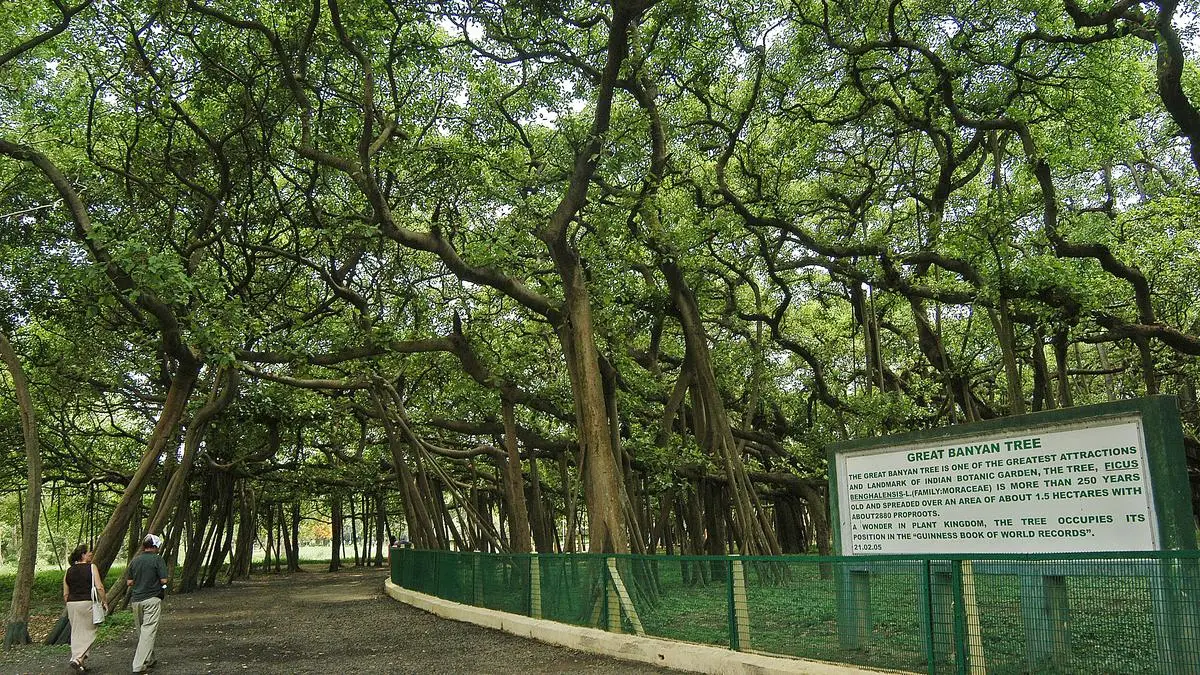
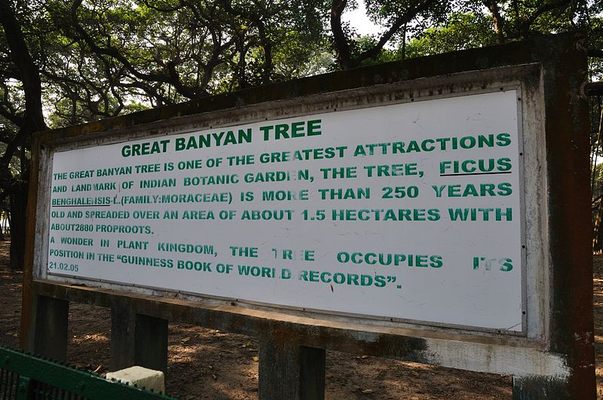
When people search for the oldest banyan tree in the world, most roads lead to one living legend near Kolkata: the Great Banyan Tree in the Acharya Jagadish Chandra Bose Indian Botanic Garden, Howrah. What makes this tree extraordinary is not only age but structure. It behaves less like a single trunked tree and more like a self-expanding forest, with thousands of prop roots that create the illusion of many trees growing together.
The Great Banyan is one of India's most remarkable natural landmarks and a core stop for nature lovers, students, botanists, and photographers. It offers an unusual mix of scientific importance and emotional impact. You stand under one canopy and feel as if you are walking through a miniature woodland ecosystem formed by one genetic individual. This guide explains its records, history, growth science, and practical visitor details so you can plan a smooth trip from Kolkata city to the garden in Howrah.
World Records and Key Statistics
The Great Banyan is globally famous for canopy spread rather than height. In discussions around the largest banyan tree and oldest banyan tree in India, this distinction is important. Many trees can grow tall, but very few can sustain such a broad, continuous canopy over centuries while adapting to trunk loss and storms.
| Feature | Great Banyan Snapshot |
|---|---|
| Approximate age | 250+ years (often traced to the late 18th century) |
| Botanical name | Ficus benghalensis |
| Canopy spread | Among the widest banyan canopies in the world |
| Prop roots | Thousands of aerial roots acting as support trunks |
| Main trunk status | Original central trunk removed historically due to disease |
| Current character | Living clonal colony with ongoing lateral expansion |
Different sources use slightly different numbers for circumference and root count because measurements change with seasonal growth and maintenance. That is normal for a living organism of this scale. If your goal is precision for research, use updated on-site signage and institutional records during your visit.
History of the Great Banyan Tree
The story of the Great Banyan is closely tied to the history of the Indian Botanic Garden in Howrah, established in the late 18th century. Even before modern Kolkata became a dense metropolis, this region was already a botanical research zone. Over time, the banyan became the garden's most iconic specimen and one of the best known trees in South Asia.
Historical accounts and garden records indicate that the tree survived severe weather events, including major cyclonic damage in the 19th century and modern storm episodes in recent decades. The most dramatic phase came when fungal issues and decay affected the original main trunk. To prevent wider structural collapse and disease spread, the trunk was removed in the early 20th century. Instead of dying, the tree continued to thrive through its prop-root network.
This is one reason the Great Banyan appears in top-ranking pages for great banyan tree history: it demonstrates biological resilience at scale. The tree no longer depends on one central axis. Its distributed support system allows continuity even after severe structural loss. In conservation terms, it is a living case study of adaptive survival.
How Banyan Trees Grow: Forest From a Single Individual
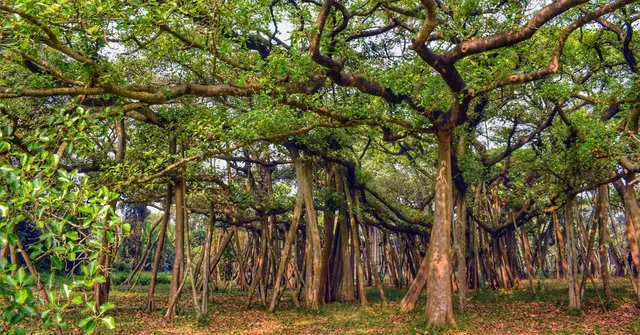
To understand the Great Banyan, you need to understand banyan growth biology. Banyans begin as trees but often evolve into complex clonal systems. Branches send aerial roots downward. Once these roots touch soil, they thicken into supportive columns that function like additional trunks. Over decades, this process repeats and broadens the canopy ring.
Key growth mechanisms
- Aerial root descent: Roots hang from branches and anchor into soil.
- Secondary trunk formation: Anchored roots thicken and bear weight.
- Lateral crown expansion: Branches keep extending horizontally.
- Clonal continuity: The structure remains one genetic organism despite many trunk-like pillars.
This vegetative strategy makes banyans highly resilient compared to trees that rely on a single central trunk. It also explains why search queries like great banyan tree width and great banyan tree age are more relevant than pure height comparisons. The Great Banyan's superpower is horizontal longevity.
Visiting Acharya Jagadish Chandra Bose Indian Botanic Garden
If you are planning to visit the oldest banyan tree near Kolkata, this section matters most. The Great Banyan is located inside the Acharya Jagadish Chandra Bose Indian Botanic Garden in Shibpur, Howrah, on the western side of the Hooghly River. The garden is extensive, so allocate enough walking time and do not treat this as a quick 20-minute stop.
Location context
- City zone: Shibpur, Howrah
- Nearby metro city: Kolkata
- Institutional management: Botanical Survey ecosystem
- Site type: Botanical research and public heritage garden
Most travelers reach by app cabs, local taxis, or mixed metro-plus-road combinations depending on stay location in Kolkata. Morning visits are usually better for cooler temperatures, softer light, and lower crowd pressure around key paths.
| Planning Item | Practical Recommendation |
|---|---|
| Visit duration | 2.5 to 4 hours for relaxed exploration |
| Best arrival window | Morning slots for comfort and photography |
| Footwear | Comfortable walking shoes (garden paths are long) |
| Hydration | Carry water, especially in humid months |
| Tickets and timings | Check same-day updates at official counters/channels |
Because ticket rules and operating windows can change seasonally or administratively, always verify on the day of travel. Avoid relying on old screenshots from social media.
Other Attractions Inside the Garden
Many visitors focus only on the banyan and leave early. That misses the larger value of the site. The garden contains diverse plant collections and heritage tree zones that make this a meaningful half-day nature experience. Depending on route access and maintenance schedules, you may find sections for palms, bamboos, ornamental species, and wetland-adapted flora.
If you enjoy botanical storytelling, treat the visit as a layered trail: Great Banyan first, then themed plant clusters, then quiet walkway loops. This helps avoid crowd bunching and gives better photo opportunities across different light conditions.
For a broader Kolkata trip plan, combine this stop with famous landmarks of Kolkata and places to visit in Kolkata. If you are building a culture-and-food day, pair it with street food in Kolkata in the evening.
Photography Tips for the Great Banyan
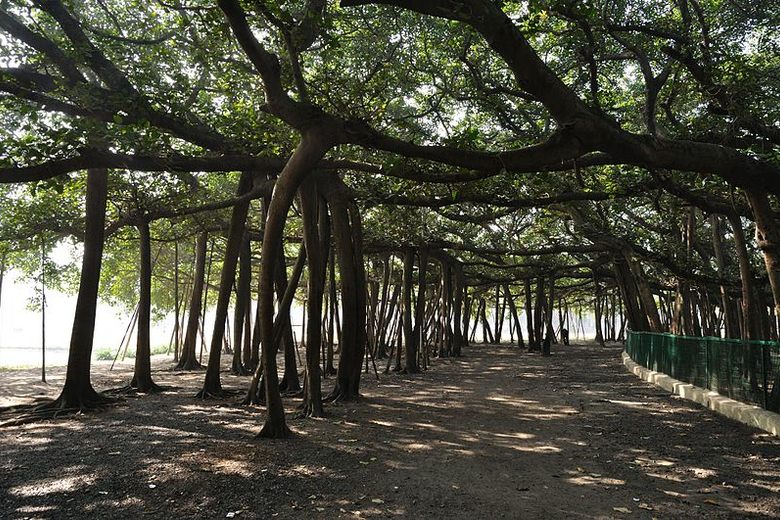
Photographing the Great Banyan is challenging because scale is hard to communicate in one frame. Wide shots capture canopy spread but lose root detail. Close shots show texture but miss the forest effect. A strong photo set combines both.
Suggested shot plan
- Start with wide-angle canopy frames from marked pathways.
- Take mid-range shots showing repeated prop-root columns.
- Capture bark texture and root geometry for detail context.
- Include people at safe distance to convey true scale.
- Shoot one slow pan video for continuity of the canopy zone.
Use early light for softer shadows. Midday can still work for documentary style, but highlights can blow out in open patches. During monsoon or post-rain windows, root textures and greenery appear richer, though surfaces may be slippery.
Best Time to Visit
The garden can be visited in most months, but comfort and photo quality vary by season. For most travelers, cooler months are easiest. Humid summer afternoons can reduce walking comfort, and monsoon visits require extra care on wet paths.
| Season | Experience | Recommendation |
|---|---|---|
| October to February | Pleasant weather, easier long walks | Best overall season |
| March to June | Hot and humid windows | Visit early morning only |
| July to September | Lush greenery, rain interruptions possible | Good for nature mood if rain-ready |
Weekday mornings are generally smoother than weekends if you want calm trails and cleaner frames. Festival periods may increase city-side traffic even when the garden itself is manageable.
Practical Visitor Guide
How to reach from Kolkata
- Cab route: Most convenient for families and photographers with gear.
- Public transport mix: Budget-friendly but includes last-mile planning.
- Self-drive: Useful if combining multiple Howrah and Kolkata stops.
What to carry
- Water bottle and light snacks
- Cap/umbrella based on season
- Walking shoes and breathable clothing
- Phone with offline maps
- Camera plus backup battery if shooting long sessions
Etiquette and safety
- Stay on marked paths and avoid restricted botanical zones.
- Do not climb root structures or damage bark for photos.
- Avoid littering; carry back plastic waste.
- Respect signage and staff guidance at all times.
This is a scientific and ecological heritage zone, not just a selfie point. Responsible behavior keeps the site healthy and accessible for future visitors.
Why the Great Banyan Matters Beyond Tourism
The Great Banyan is a strong reminder that urban regions need long-term ecological memory. In rapidly expanding metropolitan belts, old-growth trees preserve biodiversity microhabitats, cooling effects, and public nature education value that cannot be replaced quickly. The tree is also a living classroom for botany: clonal growth, adaptive resilience, and structural plasticity are visible on the ground without lab abstraction.
For students, this site offers field-level understanding of plant architecture. For travelers, it offers awe without artificial spectacle. For conservation advocates, it is proof that protection and public access can coexist when management and visitor discipline align.
Conclusion
If you are looking for the oldest banyan tree in the world and the most iconic banyan landmark in India, the Great Banyan in Howrah deserves a dedicated visit. Its age, canopy scale, and survival story make it one of the most extraordinary tree experiences in the country. Plan a morning visit, walk slowly through the root corridors, and give yourself enough time to absorb both science and atmosphere. This is not only a Kolkata side trip. It is one of India's great living natural monuments.
Location
Frequently Asked Questions
Q1.Where is the Great Banyan Tree located?
Q2.How far is the Great Banyan from Kolkata city center?
Q3.What are the botanical garden timings?
Q4.How old is the Great Banyan Tree?
Q5.Why is the Great Banyan Tree special?
Q6.What is the entry fee for the garden?
Q7.What is the best time to visit the Great Banyan?
Q8.How do I reach Acharya Bose Botanical Garden?
Recommended For You
Kolkata Metro Tourist Smart Card: Price, Validity & Usage Rules
Complete Kolkata Metro Tourist Smart Card guide with price, where to buy, recharge, validity, benefits & how to use for hassle-free metro travel in Kolkata.

Street Food in Kolkata: 20 Must-Try Dishes & Best Locations
Discover the best street food in Kolkata - from iconic phuchka and aromatic biryani to crispy kathi rolls and delicious Bengali sweets. Explore 20+ must-try dishes, famous food locations, and prices in this comprehensive Kolkata street food guide.
Temples in Kolkata: The City of Joy's Sacred Heritage
Explore sacred temples in Kolkata. Discover Kalighat, Dakshineswar, Belur Math & more with timings and travel guide.
Never Miss an Adventure
Get the latest trekking guides, travel tips, and exclusive offers delivered straight to your inbox.
