
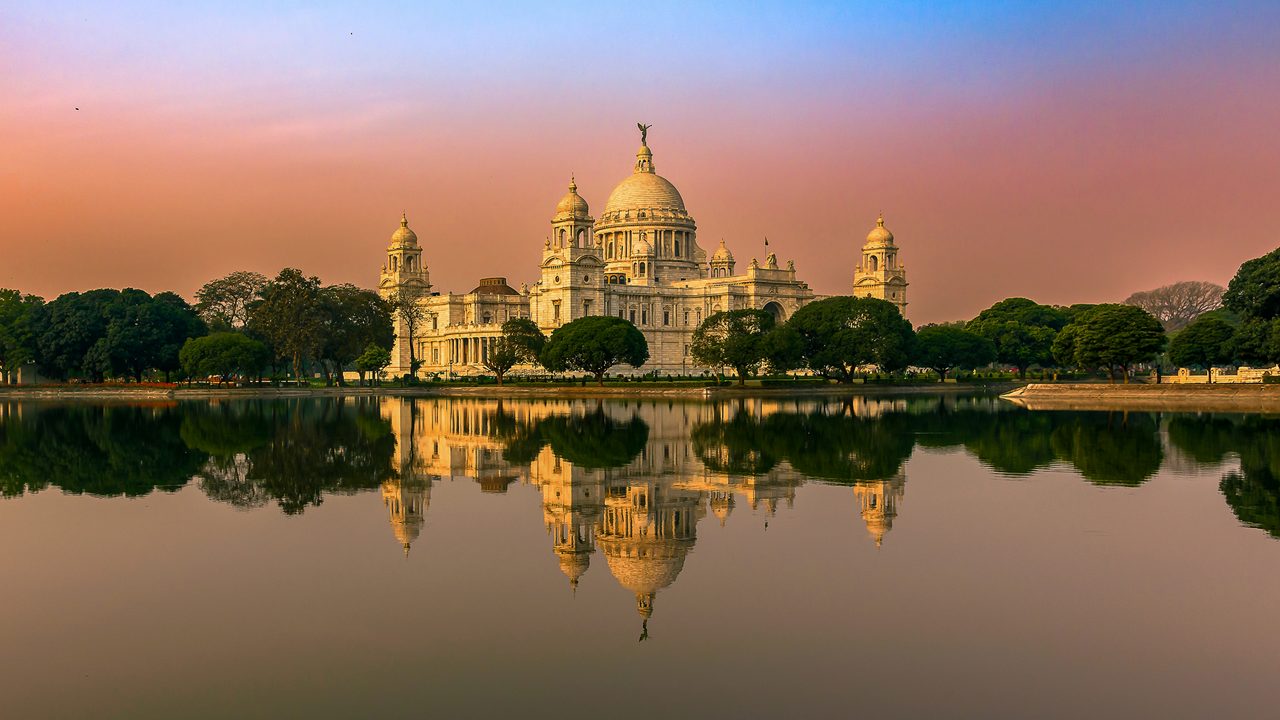
Famous Landmarks of Kolkata: Complete Guide to City of Joy's Iconic Monuments

Rohit Verma
February 20, 2026
Explore Kolkata's famous landmarks - from Howrah Bridge to Victoria Memorial, Dakshineswar to Indian Museum. Complete guide with timings, history, and travel tips.
Introduction: The Cultural Capital's Timeless Heritage
Kolkata, formerly known as Calcutta, stands as India's cultural capital and the "City of Joy." This metropolis of 14 million people carries within its boundaries an extraordinary collection of landmarks that tell the story of British colonial rule, the Bengal Renaissance, spiritual movements, and modern India's evolution. From the iconic Howrah Bridge spanning the Hooghly River to the magnificent Victoria Memorial's white marble splendor, from ancient temples to colonial edifices, Kolkata's landmarks represent a unique fusion of European architecture and Indian sensibilities.
What sets Kolkata apart from other Indian cities is its remarkable preservation of heritage. While many cities have rapidly modernized, Kolkata maintains its colonial charm alongside contemporary development. Walking through its streets feels like stepping into a living museum where trams still rattle down heritage avenues, where British-era buildings house government offices, and where century-old eateries continue serving recipes passed down through generations.
This guide covers Kolkata's most significant landmarks - historical monuments that every visitor should experience. Whether you're a history enthusiast, architecture lover, spiritual seeker, or simply a curious traveler, these landmarks offer profound insights into Kolkata's soul and India's fascinating past.
Howrah Bridge: The Gateway to Kolkata
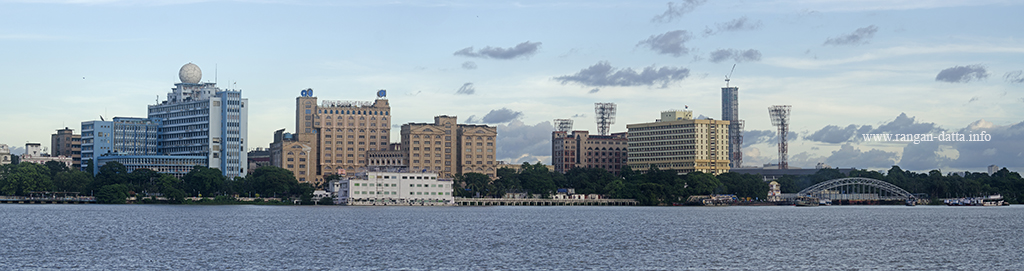
Rabindra Setu, popularly known as Howrah Bridge, is Kolkata's most recognizable icon and one of the world's busiest cantilever bridges. Spanning 705 meters across the Hooghly River, this engineering marvel connects Kolkata's bustling city center with Howrah, the satellite city that houses one of India's largest railway stations.
Engineering Marvel
Constructed between 1936 and 1942, Howrah Bridge carries over 100,000 vehicles and countless pedestrians daily. What's remarkable is that this massive structure was built without nuts and bolts - it's held together by over 26,500 tons of high-tensile steel rivets. The bridge's cantilever design allows ships to pass beneath while supporting enormous loads above.
Architectural Significance
The bridge's Art Deco styling combined with industrial functionality makes it a unique landmark. At night, when illuminated, it creates a spectacular sight against the dark river waters. The bridge has appeared in countless films and photographs, becoming synonymous with Kolkata's identity.
Best Viewing Points
Millennium Park (on Kolkata side): Offers panoramic views of the bridge, especially beautiful at sunset. The park's riverside location provides perfect photo opportunities.
Ferry Ride: Taking a ferry from Howrah to Kolkata offers a unique perspective - you sail directly under the massive bridge, appreciating its scale from below.
Ramakrishna Mission Ghat: Located near the bridge on the Howrah side, this spot provides excellent views and is less crowded than other vantage points.
Practical Information
- Timings: Open 24 hours (walking)
- Entry Fee: Free (vehicles pay toll)
- Best Time to Visit: Early morning (6-8 AM) for peaceful atmosphere; evening (4-7 PM) for illuminated views
- Time Required: 30 minutes to 1 hour
Victoria Memorial: The Taj Mahal of the East
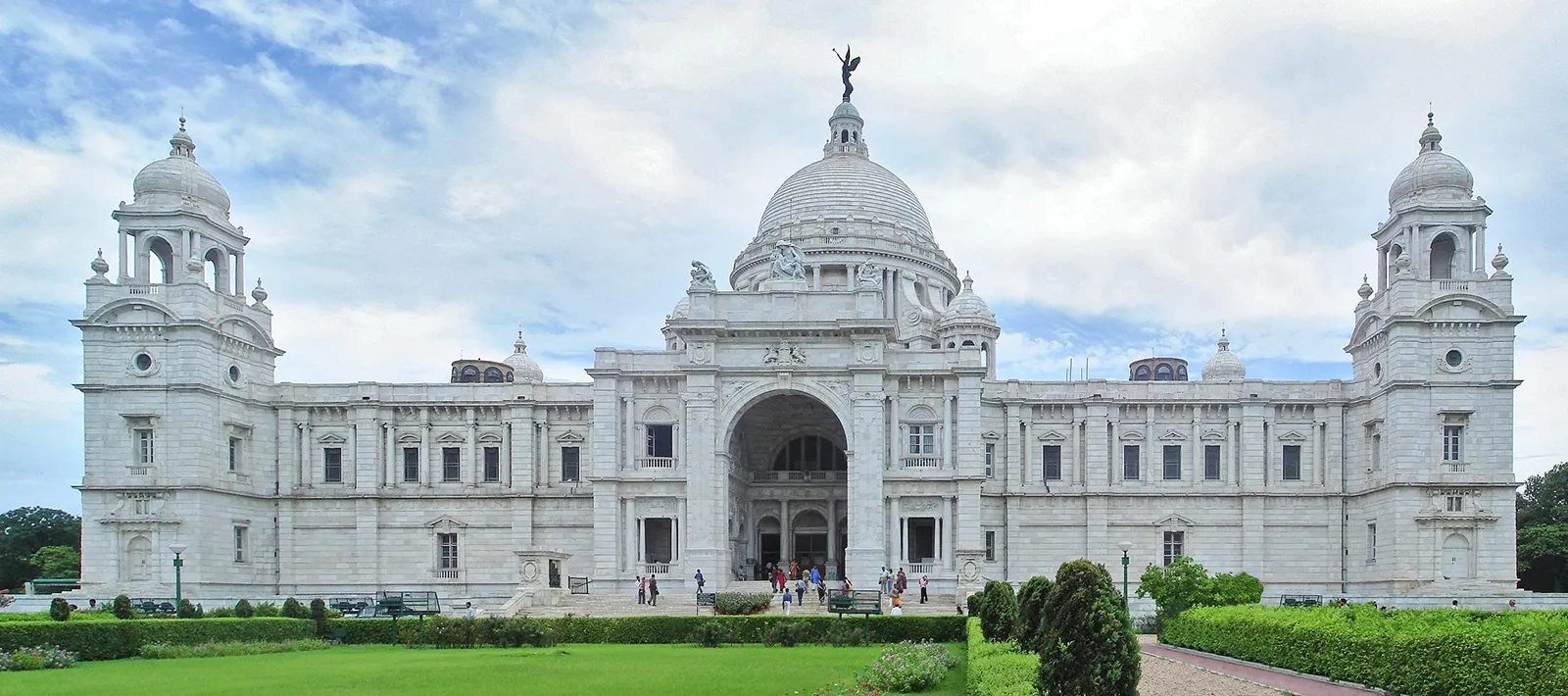
The Victoria Memorial is Kolkata's crown jewel - a magnificent white marble monument that commemorates Queen Victoria's 1901 Diamond Jubilee. Often called the "Taj Mahal of the East," this architectural masterpiece blends British, Mughal, and Venetian styles into something uniquely Indo-Saracenic.
Historical Background
Built between 1906 and 1921, the memorial was financed by British and Indian alike, costing approximately ₹10.5 million (an enormous sum in those days). Lord Curzon, Viceroy of India, conceived the memorial as a tribute to Queen Victoria and a monument to British rule in India. Today, it stands as a museum housing over 30,000 artifacts from the colonial period.
Architecture and Design
The memorial's design by architect Sir William Emerson creates a harmonious fusion. The dome resembles that of the Taj Mahal, the four quadrants feature Mughal-style chatris (domed pavilions), while the overall proportions reflect Renaissance influences. The building is surrounded by 64 acres of immaculately maintained gardens, perfect for leisurely strolls.
Museum Collections
Inside, the museum's collections are extraordinarily rich:
- Royal Gallery: Portraits of Queen Victoria and Prince Albert, along with personal artifacts including her writing desk and piano
- Calcutta Gallery: Traces Kolkata's history from its founding as a British trading post to becoming India's capital
- Paintings: Works by Thomas Daniell, Johann Zoffany, and other notable artists who documented British India
- Weapons and Armory: Swords, guns, and armor from various periods of Indian history
The Light and Sound Show
The evening light and sound show brings the memorial's history to life. Narrated in the voice of Lord Curzon, the show covers Kolkata's colonial history and the memorial's construction. The English show runs from October to March (7:15 PM), while the Bengali version runs from April to September. Tickets cost ₹100 for adults and ₹50 for children.
Practical Information
- Timings: 10:00 AM to 5:00 PM (Closed on Mondays)
- Entry Fee: Indians ₹50, Foreigners ₹500, Gardens ₹10
- Light Show: ₹100 per person
- Best Time to Visit: Winter (October-March), morning for fewer crowds
- Time Required: 2-3 hours for museum, 1 hour for gardens
Indian Museum: The Oldest in Asia
The Indian Museum in Kolkata is the oldest and largest museum in Asia, founded in 1814 by the Asiatic Society of Bengal. With over 35 galleries spread across multiple floors, housing more than 100,000 artifacts, this museum is a treasure trove of Indian and world heritage.
Historical Significance
The museum's founding marked the beginning of organized museum culture in India. Its collections grew rapidly during the 19th century as British administrators, scholars, and archaeologists contributed specimens from across India and beyond. The current building, opened in 1878, is a palatial Italianate structure that houses the vast collections.
Key Collections
Archaeology Section
The museum's most famous exhibit is the Bharhut Stupa gateway (2nd century BCE) - one of the greatest surviving examples of early Buddhist art. The intricately carved gateway depicts stories from Buddha's life and Jataka tales. Other highlights include sculptures from Gandhara, Amaravati, and Pala periods.
Egyptian Gallery
Surprisingly, Kolkata's museum has an excellent Egyptian collection, including a 4000-year-old mummy (one of only six in India). The gallery also features sarcophagi, ushabti figures, and various Egyptian artifacts.
Art Section
The painting gallery features works by Rabindranath Tagore, Jamini Roy, Nandalal Bose, and Abanindranath Tagore - pioneers of the Bengal School of Art. The miniature painting collection includes Rajput, Mughal, and Pahari schools.
Natural History
Fossilized skeletons, including an enormous dinosaur skeleton, taxidermied animals including Bengal tigers, and extensive botanical and geological specimens make this section popular with families.
Textiles and Decorative Arts
The museum houses incredible textiles, including Banarasi brocades, Kashmiri shawls, and Jamdani saris. Decorative arts include ivory carvings, bronze statues, and metalware.
Practical Information
- Timings: 10:00 AM to 5:00 PM (Closed on Mondays and government holidays)
- Entry Fee: Indians ₹50, Foreigners ₹500, Students ₹20
- Photography: Allowed (₹50 fee for camera)
- Best Time to Visit: Weekday mornings to avoid crowds
- Time Required: 3-4 hours for comprehensive visit
Writer's Building: The Seat of Power
The Writer's Building, often simply called "Writers' Building," is Kolkata's most important colonial-era government building and the seat of West Bengal's state government. Located at B.B.D. Bagh (formerly Dalhousie Square), this red-brick edifice has witnessed two centuries of Bengal's political history.
Historical Background
Constructed in 1777, the building originally housed the "writers" (junior clerks) of the British East India Company. These young British men, fresh from England, lived and worked here as they learned the ropes of colonial administration. The building was expanded and modified over the decades, with the current facade dating from the late 19th century.
Architectural Features
The Writer's Building exemplifies the neo-classical style favored by the British in India. Its imposing facade features Ionic columns, pedimented windows, and a central tower topped by a statue of Minerva, the Roman goddess of wisdom. The building's red color comes from the special brick brought from Burma for its construction.
Historical Significance
This building witnessed some of the most significant events in Bengal's history:
- It housed British administration during the tragic Bengal Famine of 1943
- It was the site of the 1930 assassination of British official Col. N.S. Simpson by Bengali revolutionaries Benoy, Badal, and Dinesh (after whom B.B.D. Bagh is named)
- It became the seat of West Bengal's elected government after independence
Visiting Information
- Note: This is a working government building - entry is restricted
- Exterior Viewing: Best appreciated from B.B.D. Bagh square
- Photography: Exterior photography permitted, interior restricted
- Best Time: Weekday mornings when the area is bustling with activity
St. Paul's Cathedral: The Anglican Masterpiece
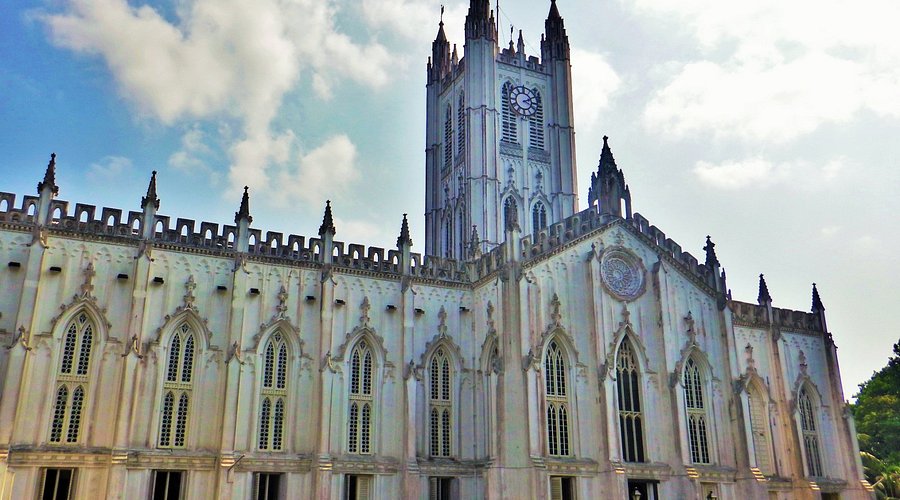
St. Paul's Cathedral is Kolkata's largest church and one of its most beautiful religious buildings. Built between 1839 and 1847, this Anglican cathedral stands as a testament to the Gothic Revival movement in colonial India.
Architectural Features
The cathedral was designed by Major William Nairn Forbes in the Indo-Gothic style. Its most distinctive feature is the central tower, modeled after Canterbury Cathedral, which rises 60 meters above the ground. The building is cruciform in plan, with a long nave, transepts, and a choir.
The cathedral has been rebuilt twice due to earthquakes. The original tower collapsed in the 1897 earthquake, and the entire building was severely damaged in the 1934 earthquake. The current structure, completed in 1938, incorporates reinforced concrete to withstand seismic activity.
Interior Features
Inside, the cathedral features:
- Stained Glass: Beautiful stained glass windows filter colored light into the sanctuary
- Wooden Carvings: The choir stalls feature intricate wooden carvings
- Floors: Mosaic floors with intricate geometric patterns
- Memorials: Numerous memorial tablets commemorating British residents of colonial Calcutta
The Surroundings
The cathedral is surrounded by a well-maintained garden that provides a peaceful retreat from Kolkata's bustle. The Bishop's House, adjacent to the cathedral, is another heritage building worth admiring from outside.
Practical Information
- Timings: 9:00 AM to 12:00 PM, 3:00 PM to 6:00 PM
- Services: Sunday services at 8:00 AM and 9:00 AM
- Entry Fee: Free
- Dress Code: Modest attire required (shoulders and knees covered)
- Best Time: Early morning or late afternoon for beautiful light
Marble Palace: A Hidden Gem
The Marble Palace is one of Kolkata's most fascinating but least-visited heritage buildings. Built in 1835 by Raja Rajendra Mullick, a wealthy Bengali merchant, this mansion showcases the opulent lifestyle of Bengal's 19th-century aristocracy.
Architectural Marvel
The palace gets its name from the extensive use of marble - 126 different types of marble from across India were used in its construction. The architecture blends neoclassical European styles with traditional Bengali elements, creating something unique.
Art Collection
The Mullick family were avid art collectors, and the palace houses an extraordinary collection:
- European Paintings: Works by Rubens, Titian, Reynolds, and Gainsborough (though authenticity of some is debated)
- Sculptures: Classical statues including Venus and copies of famous works
- Chinese Art: Porcelain, jade, and other decorative objects
- Bengal School: Paintings by Jamini Roy and other local artists
Unique Features
The palace complex includes:
- A small zoo with birds and deer (one of India's first private zoos)
- A rock garden with artificial waterfalls and grottos
- A courtyard with a fountain and marble statues
- The Thakurbari (family shrine) with beautiful silver work
Visiting Information
- Timings: 10:00 AM to 4:00 PM (Closed on Mondays and Thursdays)
- Entry Fee: Free (requires advance permission from Tourism Office)
- Photography: Not allowed inside
- Requirement: Must obtain permission 24 hours in advance from West Bengal Tourism Office
- Time Required: 1 hour
Dakshineswar Kali Temple
Dakshineswar Kali Temple is one of Bengal's most important temples and holds special significance in the Ramakrishna-Vivekananda spiritual tradition. Built in 1855 by Rani Rashmoni, a wealthy philanthropist, this temple complex is located on the eastern bank of the Hooghly River.
Temple Architecture
The main temple follows the traditional Navaratna (nine-spired) style of Bengali temple architecture. The nine spires represent the nine planets in Hindu astrology. The temple houses an idol of Goddess Kali in her Dakshina Kali form - standing on Lord Shiva's chest, symbolizing the union of divine energies.
The Temple Complex
Besides the main Kali temple, the complex includes:
- 12 Shiva Temples: Built in a row along the riverfront, representing the 12 Jyotirlingas
- Radha-Krishna Temple: Dedicated to the divine couple
- Rani Rashmoni's Shrine: Memorial to the temple's founder
- Panchavati: Sacred garden with a banyan tree where Sri Ramakrishna meditated
- Nahabat: Music tower where traditional temple music is performed
Sri Ramakrishna's Association
This temple is where Sri Ramakrishna Paramahamsa, one of India's greatest saints, served as priest and attained spiritual realization. His room, preserved exactly as he left it, is a place of pilgrimage for his followers. The temple's spiritual significance draws devotees from around the world.
River Views
The temple's location on the Hooghly River provides beautiful views, especially at sunrise. Ferries connect Dakshineswar to Belur Math across the river - many pilgrims visit both in the same trip.
Practical Information
- Timings: 6:00 AM to 12:30 PM, 3:00 PM to 8:30 PM
- Entry Fee: Free (₹50 for special entry queue)
- Best Time: Early morning (6-8 AM) for peaceful darshan and sunrise views
- Time Required: 1-2 hours
- Photography: Allowed in temple complex, not inside sanctum
Belur Math: Harmony of Religions
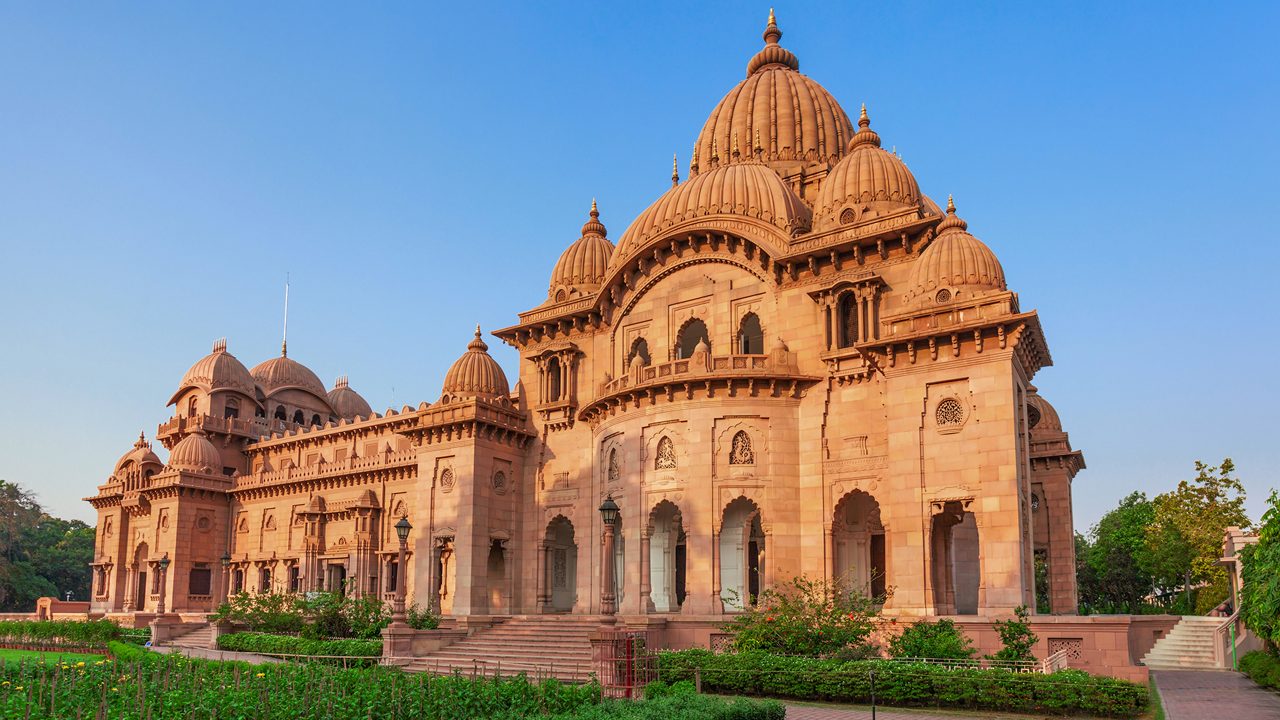
Just across the Hooghly River from Dakshineswar lies Belur Math, the headquarters of the Ramakrishna Math and Mission. This sacred space, consecrated in 1938, embodies the teachings of Sri Ramakrishna and Swami Vivekananda.
Unique Architecture
Belur Math's main temple is architectural symbolism at its finest. Designed by Swami Vivekananda, the structure harmoniously blends elements from Hindu, Islamic, Christian, and Buddhist traditions:
- Hindu Element: The overall plan follows Hindu temple architecture
- Islamic Element: The dome resembles a mosque
- Christian Element: The church-like windows and arches
- Buddhist Element: The mandala-like floor plan
The result is a building that looks like a temple, mosque, or church depending on how you view it - a perfect representation of the Ramakrishna Mission's message of harmony among religions.
The Sacred Relics
The main temple houses the sacred relics of Sri Ramakrishna. The sanctum's peaceful atmosphere, overlooking the river, is ideal for meditation. Visitors often sit in silence, absorbing the spiritual energy that generations of monks have cultivated.
Other Attractions
The Belur Math complex includes:
- Swami Vivekananda's Room: Preserved exactly as when he lived there
- Old Monastery: The original building where Ramakrishna's direct disciples lived
- Samadhi Shrines: Memorials to direct disciples of Ramakrishna
- Museum: Exhibits on Ramakrishna Movement's history
- Riverside Promenade: Beautiful walkway along the Hooghly
Practical Information
- Timings: April-September: 6:00 AM to 11:30 AM, 4:00 PM to 7:00 PM; October-March: 6:30 AM to 11:30 AM, 3:30 PM to 6:00 PM
- Entry Fee: Free
- Dress Code: Modest attire required
- Time Required: 1-2 hours
- Photography: Not allowed inside main temple
Kalighat Kali Temple: Kolkata's Namesake
Kalighat Kali Temple is one of the 51 Shakti Peethas - the most sacred sites in Shakta Hinduism. According to legend, when Lord Shiva was carrying the corpse of Sati, her right toe fell here. The temple's name gave Kolkata its name (Kalikata).
The Temple's History
While the site has been sacred for millennia, the current temple structure was built in 1809. The temple has undergone several renovations, but the sanctum's spiritual power remains undiminished.
The Deity
The main idol of Goddess Kali is unique - three eyes, four hands holding a scimitar and severed head, and a long protruding tongue made of gold. Despite her fearsome appearance, devotees believe she is deeply compassionate.
Sacred Tank
The temple tank (kund), known as Adi Ganga, is considered sacred. Devotees take ritual baths here before entering the temple. The tank is fed by a now-underground branch of the Hooghly River.
Visiting Tips
- Best Time: Early morning (5-7 AM) for peaceful darshan
- Busy Days: Tuesdays, Saturdays, and Amavasya (new moon days)
- Offerings: Red hibiscus flowers are Kali's favorite
- Dress: Modest clothing preferred
Fort William: The Military Heart
Fort William is Kolkata's military fortress and the headquarters of the Eastern Command of the Indian Army. Built between 1758 and 1781, after the original Fort William (where the Black Hole of Calcutta incident occurred) was captured by Siraj-ud-Daulah, this fortress has played a crucial role in Kolkata's military history.
Architecture and Layout
The fort is built in the shape of an irregular octagon, with five sides facing landward and three facing the river (Ganges). It covers 70 hectares, making it one of Asia's largest forts. The fort could house 10,000 soldiers and was virtually impregnable in its time.
The Maidan
Fort William's most enduring legacy is the Maidan - the vast parkland surrounding it. To ensure clear lines of fire, British authorities kept the area around the fort clear. Today, this 400-hectare green space is Kolkata's lungs and most popular public space.
Access
- Note: This is an active military base - entry restricted to authorized personnel
- Exterior Viewing: Best seen from the Maidan
- Photography: Strictly prohibited
Other Notable Landmarks
Prinsep Ghat
Built in 1843 along the Hooghly River, this beautiful ghat features Greek-style columns and arches. It's one of Kolkata's most photogenic spots, especially at sunset when the river glows golden.
Metcalfe Hall
Built in 1844, this building now houses the Asiatic Society. Its imposing Corinthian columns make it one of Kolkata's finest examples of colonial architecture.
Raj Bhavan
The Governor of West Bengal's official residence, built in 1803, is a magnificent neoclassical building surrounded by gardens. While entry is restricted, the exterior is visible from the road.
General Post Office (GPO)
Built in 1864, Kolkata's GPO features a massive domed rotunda and beautiful ironwork. It's still a functioning post office and worth viewing from outside.
Kolkata Heritage Tram: Reliving the Past
Kolkata's trams are a heritage transport system that has been running since 1902. Riding these slow-moving vehicles through heritage streets offers a unique perspective on the city. Several heritage routes connect major landmarks.
- Route: Esplanade to North Kolkata via heritage areas
- Fare: Extremely affordable (₹10-30)
- Experience: Slow, nostalgic journey through colonial Kolkata
Best Time to Visit Kolkata
Winter (October to March) - Recommended
October to March is ideal for sightseeing. The weather is pleasant (12-25°C), making it comfortable to explore outdoor monuments.
- December-January: Coolest months, perfect for walking tours
- February: Great weather, fewer crowds than December
Monsoon (July to September)
Rain can disrupt sightseeing plans, but the city looks beautiful after rain. Heritage buildings appear magnificent against cloudy skies.
Summer (April to June) - Avoid
Extremely hot (35-40°C) and humid (80-90%). Not recommended for extensive sightseeing.
Getting Around Kolkata
Metro
Kolkata's metro is clean, efficient, and air-conditioned. The North-South line connects major areas. New lines are under construction expanding connectivity.
Taxis and App Cabs
Yellow taxis are ubiquitous. Uber and Ola are widely available and often more convenient for tourists.
Ferries
Scenic and affordable ferries cross the Hooghly, connecting Dakshineswar, Belur Math, and Howrah with Kolkata.
Trams
Slow but charming, trams offer a heritage transport experience. Several routes connect major landmarks.
Suggested Itineraries
Day 1: Colonial Heritage
Morning: Victoria Memorial (2 hours)
Late Morning: St. Paul's Cathedral (1 hour)
Lunch: Flury's or Peter Cat on Park Street
Afternoon: Indian Museum (2 hours)
Evening: Writer's Building and B.B.D. Bagh area
Day 2: Spiritual Kolkata
Morning: Dakshineswar Kali Temple (2 hours)
Late Morning: Ferry across to Belur Math (1.5 hours)
Lunch: Local eatery near Belur
Afternoon: Kalighat Temple (1 hour)
Evening: Prinsep Ghat at sunset
Day 3: Hidden Gems
Morning: Marble Palace (advance permission required, 1 hour)
Late Morning: College Street book market
Lunch: Indian Coffee House
Afternoon: Metcalfe Hall, GPO, Raj Bhavan (exterior viewing)
Evening: Howrah Bridge from Millennium Park
Practical Tips
- Dress: Modest clothing required at religious sites
- Footwear: Remove shoes before entering temples
- Photography: Check rules at each site
- Water: Carry bottled water
- Guides: Consider hiring licensed guides at major sites
- Bargaining: Not applicable at monuments, but useful at markets
Conclusion: Timeless Grandeur
Kolkata's landmarks are more than stone and marble - they're living chapters of India's story. From colonial grandeur to spiritual power, from artistic mastery to engineering brilliance, these monuments represent the breadth of human achievement and the depth of cultural synthesis that makes Kolkata unique.
What makes these landmarks special is how they remain part of daily life. Victoria Memorial isn't just a museum - it's where Kolkatans jog in its gardens. Howrah Bridge isn't just a tourist attraction - millions cross it daily. The temples aren't just heritage sites - they're active places of worship.
This continuity between past and present is Kolkata's magic. As you explore these landmarks, you're not just seeing history - you're experiencing the living heritage that makes Kolkata the City of Joy.
For deeper exploration of Kolkata's spiritual heritage, check out our guide on temples in Kolkata. Food lovers shouldn't miss our comprehensive Kolkata street food guide. If you're visiting during festival season, our guide to Durga Puja in Kolkata will help you experience Bengal's greatest festival.
Location
Frequently Asked Questions
Q1.What are the famous landmarks in Kolkata?
Q2.What are Victoria Memorial timings and entry fee?
Q3.Can you walk on Howrah Bridge?
Q4.How far is Dakshineswar from Kolkata city center?
Q5.What is special about the Indian Museum in Kolkata?
Q6.Is Belur Math a temple?
Q7.What is the best time to visit Kolkata landmarks?
Q8.How much time is needed to see Kolkata's major landmarks?
Q9.Do I need advance permission for any Kolkata landmarks?
Q10.What is the dress code for Kolkata temples?
Q11.How do I reach Howrah Bridge from Kolkata city center?
Q12.What are the photography rules at Kolkata landmarks?
Recommended For You
Outdoor Activities Kolkata: Adventure & Sports
Best outdoor activities in Kolkata. Adventure parks, trekking, water sports, cycling & more. Complete guide with locations & tips.
Hidden Gems in Kolkata: Offbeat Lanes, Culture & Local Eats
Explore hidden gems in Kolkata with practical offbeat routes across heritage lanes, local markets, and less-touristy neighborhoods.
Shopping in Kolkata: New Market, Gariahat, Malls & Cultural Picks
Shopping in Kolkata guide - New Market, College Street books, sarees, Bengali sweets. Complete guide to markets, malls, prices and shopping tips.
Never Miss an Adventure
Get the latest trekking guides, travel tips, and exclusive offers delivered straight to your inbox.
