

10 Oldest Countries in the World: Civilizations That Shaped History

Neha Kapoor
February 1, 2026
Discover the 10 oldest countries in the world with clear criteria, timeline context, and the difference between ancient civilization age and modern state continuity.
Introduction: Civilizations That Stood the Test of Time
The search for the oldest countries in the world is fascinating because it connects archaeology, written history, language, religion, and identity. But it is also one of the most misunderstood topics online. Many listicles mix up an ancient civilization, a historical kingdom, and a modern nation-state as if they are the same thing. They are not. A country can have deep civilizational roots while its modern political borders are relatively new. At the same time, some states are old in legal continuity but do not claim the oldest civilization status.
To make this guide useful, we focus on historical continuity: long-term cultural identity, continuous population centers, documented governance traditions, and links between ancient and modern state identity. This approach reflects how top-ranking educational pages structure the topic: they combine chronology with context rather than offering a single, absolute answer. You will find a practical top-10 list, clear criteria, comparisons by region, and FAQ-level clarity on the oldest country debate.
What Makes a Country "Old"?
Before ranking, define the term. A civilization may be ancient, but the present political state may have formed later. Similarly, a country can have old constitutional continuity but less ancient civilizational depth than Egypt, India, or China. Historians usually evaluate four dimensions together: archaeological antiquity, documentary continuity, enduring cultural identity, and political succession.
For this article, countries are selected based on whether modern identity can be reasonably connected to very old civilizational or state traditions. Dates are approximate in early periods because evidence quality varies. This is normal in historical writing and should be treated as scholarly caution, not uncertainty failure.
| Criterion | Why It Matters |
|---|---|
| Ancient origins | Shows depth of settlement and early state formation |
| Written records | Provides verifiable chronology for dynasties and governance |
| Cultural continuity | Links modern identity to long-standing traditions |
| Political continuity or succession | Explains how older polities connect to the current state |
Top 10 Oldest Countries in the World
1) Egypt
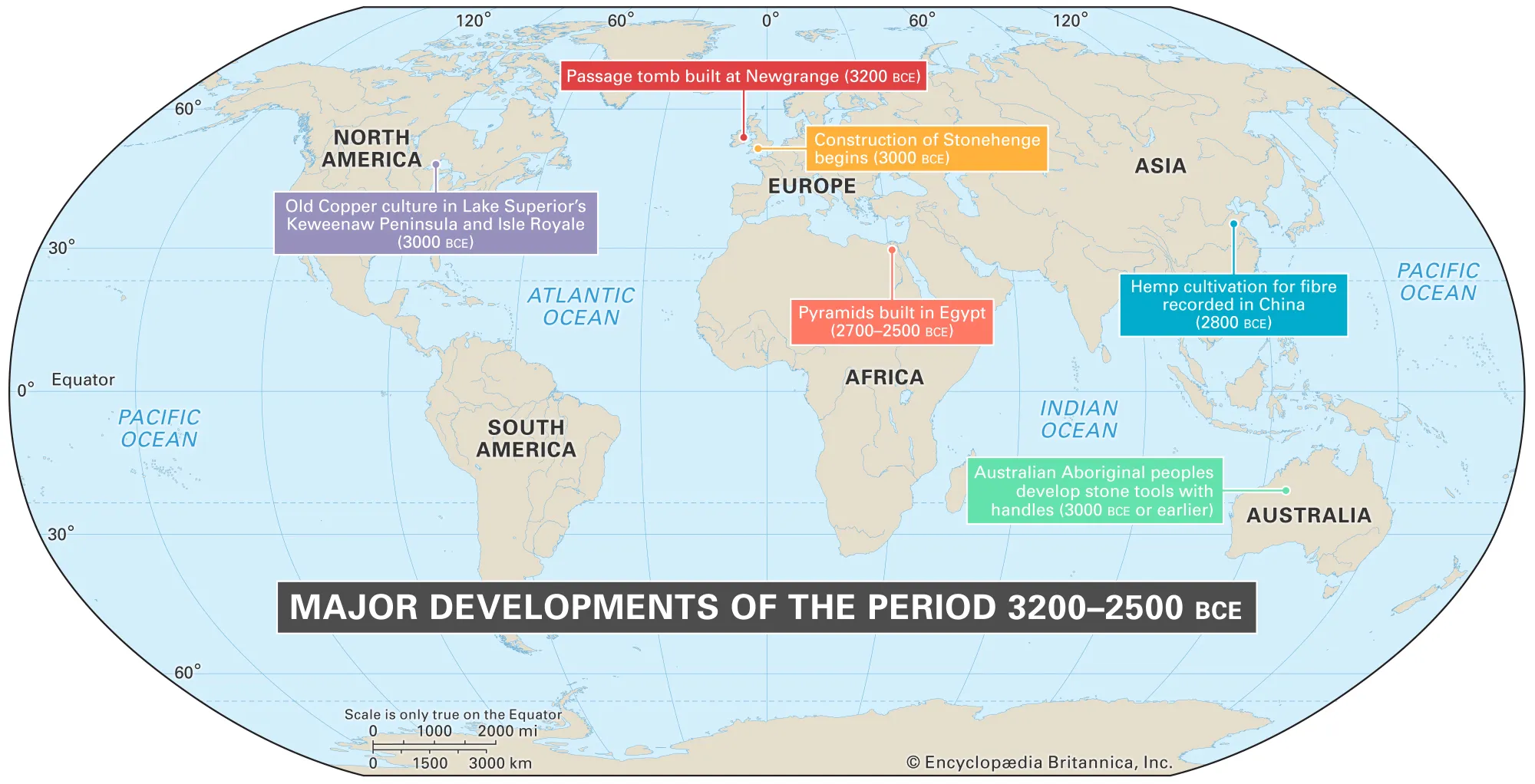
Egypt is frequently placed at or near the top because its unified ancient state is commonly dated to around 3100 BCE, when Upper and Lower Egypt were consolidated. Few regions have a documented civilizational timeline as visible as Egypt's, with monumental architecture, inscriptions, and long dynastic succession. Over millennia, Egypt experienced Persian, Greek, Roman, Arab, Ottoman, and modern nationalist phases, yet Egyptian civilizational identity remained remarkably durable through language shifts, religious transitions, and imperial rule.
Modern Egypt is not a direct continuation of one uninterrupted pharaonic government, but its historical continuity is still profound. The Nile-based settlement pattern, agricultural core, and civilizational memory create a clear link between ancient and modern eras. This is why Egypt appears in nearly every authoritative oldest-countries discussion.
2) India
India's antiquity is usually framed through the Indus Valley Civilization (from roughly the 3rd millennium BCE), followed by Vedic, classical, and medieval transformations. What makes India distinctive is continuity through cultural practice: philosophical traditions, pilgrimage geographies, linguistic families, and social institutions that evolved but did not disappear. Political authority shifted across many kingdoms and empires, yet civilizational continuity remained strong.
Modern India's nation-state is contemporary, but Indian civilization is ancient. This distinction is central to high-quality rankings. India is also one of the clearest examples of plural continuity, where multiple religious and linguistic traditions coexist within a long historical arc rather than a single dynastic narrative.
3) China
China is commonly associated with more than four millennia of civilizational continuity, with early dynastic traditions, written records, and stable cultural institutions supporting that claim. Even when dynasties changed, Chinese administrative frameworks, script continuity, philosophical canons, and historical self-conception endured. This long continuity is one reason China is often positioned as the archetype of a continuous civilization-state.
Debate usually centers on how far back to date the earliest state phase, but not on China's deep antiquity itself. In practical terms, China remains one of the strongest entries in any oldest countries list because the bridge from ancient civilization to modern state identity is exceptionally well documented.

4) Iran
Iran combines pre-Persian antiquity with major imperial legacies, especially the Achaemenid period, and sustained Persian cultural influence across West and Central Asia. Even under major political transitions, including Islamic conquest and later dynastic changes, Persian language, literary tradition, and statecraft culture maintained continuity. That continuity gives Iran a strong position among the world's oldest countries.
The key historical point is not uninterrupted political sovereignty in one form, but durable civilizational identity across changing political systems. Iran's long historical memory, preserved in text, art, and urban centers, makes it one of the most historically continuous societies in the region.
5) Greece
Greece is often included for its deep historical roots in Aegean and classical civilizations, with enduring language continuity and cultural legacy. Ancient Greek city-states, Hellenistic expansion, Byzantine phases, and eventual modern independence create a complex but traceable continuity thread. While the modern Greek state formed in the 19th century, Greek civilizational identity is far older and extensively documented.
Greece's significance also comes from its intellectual legacy in philosophy, politics, drama, and science, which remained influential long after classical antiquity. This continuity of cultural identity supports Greece's place in oldest-country rankings even when modern-state chronology is treated separately.
6) Ethiopia
Ethiopia is a critical inclusion because it represents long African state and civilizational continuity outside common Euro-Asian narratives. Ancient polities in the Horn of Africa, later Aksumite power, and strong religious-cultural institutions underpin Ethiopia's deep historical standing. Ethiopia also maintained remarkable political resilience in the colonial era relative to many neighbors, strengthening continuity narratives in modern historiography.
Language traditions, manuscript culture, and highland political history all contribute to Ethiopia's place in oldest nations discussions. It is one of the clearest examples of ancient heritage connected to present national identity in Sub-Saharan Africa.
7) Japan
Japan is often ranked among the oldest countries due to long imperial lineage traditions and strong cultural continuity. Although early dates for imperial origins blend historical record and foundational narrative, Japan's state tradition is undeniably old in comparative terms. What distinguishes Japan is continuity through adaptation: major reforms, external influences, and modernization occurred without erasing core cultural institutions.
From classical court culture to modern constitutional statehood, Japan retained durable civilizational identity, language continuity, and symbolic imperial legitimacy. This makes Japan one of the most coherent examples of long historical continuity in East Asia.
8) Armenia
Armenia's antiquity is tied to early kingdoms, long Christian heritage, and resilient identity across periods of imperial domination and diaspora dispersion. Armenian continuity is especially visible in language, church tradition, manuscript culture, and collective memory tied to historical highlands. Even when sovereignty was interrupted, civilizational identity persisted across centuries.
Because oldest-country rankings increasingly emphasize cultural continuity in addition to political chronology, Armenia is a strong and historically meaningful entry. It also broadens the list geographically, showing that ancient continuity is not limited to a few dominant empires.

9) San Marino
San Marino is a special case. It does not claim one of the oldest ancient civilizations, but it is widely recognized as one of the world's oldest surviving republics with constitutional continuity over many centuries. That legal-political continuity is why San Marino appears in top-ranking lists alongside much larger civilizational states.
If your definition of old emphasizes uninterrupted republican statehood rather than Bronze Age origins, San Marino becomes one of the strongest entries globally. This is a good example of why methodology matters before declaring a single oldest country.
10) Portugal
Portugal is another state-continuity entry rather than a Bronze Age civilization claim. Its medieval foundation and long sovereign continuity in recognizable form make it one of Europe's oldest existing nation-states. While Iberia has deeper pre-modern histories shared with other cultures, Portugal's sustained political identity is unusually stable in the European context.
Including Portugal helps balance the list by showing two valid historical lenses: civilizational antiquity and sovereign state continuity. Readers comparing sources should always check which lens an article is using.
Honorable Mentions
Several countries are often included in extended lists depending on criteria. Iraq (Mesopotamian civilizational zone), Syria (ancient Levantine urban history), and Georgia (long kingdom and church continuity) are common examples. Their ranking position changes based on whether the article prioritizes current-state continuity, civilizational age, or both.
- Iraq: one of the earliest urban-civilizational regions in human history.
- Syria: deep antiquity and long cultural continuity despite modern conflict.
- Georgia: early state traditions and durable language-cultural identity.
- Vietnam: long historical continuity with documented imperial periods.
How Age Is Measured: Civilizations vs Nation-States
Most confusion comes from merging two different measurements. Civilizational age tracks the depth of organized society and cultural continuity in a region. Nation-state age tracks the legal and political continuity of a modern sovereign state. A country can rank high on one and lower on the other. Egypt, India, and China are dominant in civilizational depth. San Marino and Portugal are strong on legal-state continuity.
A robust article should present both metrics, because users searching "oldest country in the world" may mean either one. This dual-metric method is also how leading ranking pages improve relevance and reduce reader confusion.
| Measurement Lens | Typical Leaders | Interpretation |
|---|---|---|
| Civilizational antiquity | Egypt, India, China, Iran | Depth of ancient culture and records |
| State continuity | San Marino, Portugal, Japan | Durability of formal political identity |
| Hybrid continuity | Greece, Ethiopia, Armenia | Strong cultural continuity plus later state forms |
Why This Topic Matters for Travelers and Culture Readers
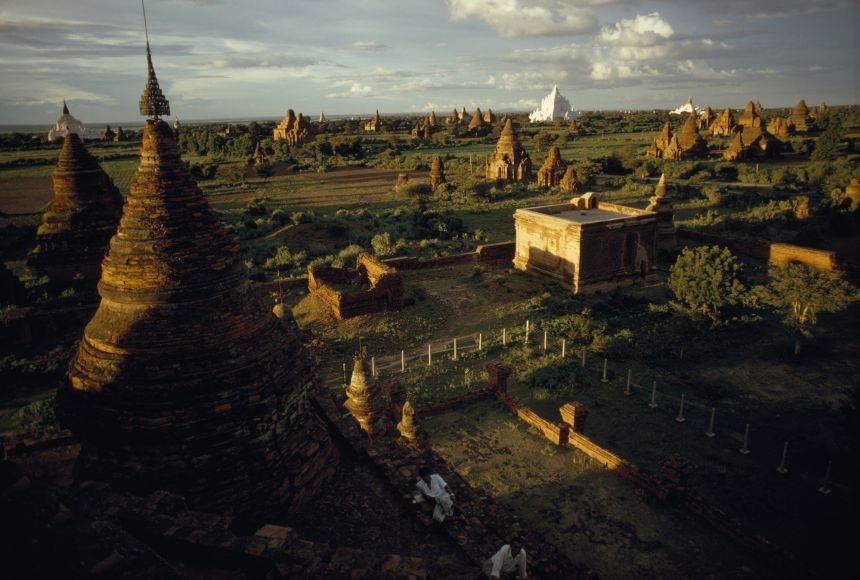
Understanding historical continuity improves travel and cultural reading. Instead of seeing monuments as isolated attractions, you begin to see how institutions, language, and belief systems carried forward across centuries. This is especially relevant for heritage itineraries and comparative travel research. For example, if you want to explore architectural continuity, combine this topic with Oldest Temples in India. For urban historical layering, compare with Old City Baku. For broader global travel context, see Plane Spotting Places in the World and World's Safest City.
Regional Timeline Snapshot
To improve readability, it helps to group oldest-country narratives by historical region rather than strict rank order. North Africa and West Asia show very early state formation and textual continuity. South Asia and East Asia show long civilizational evolution with large population continuity over time. Europe contains fewer Bronze Age civilization-scale continuities in direct state form but includes powerful legal-state continuity examples like San Marino and Portugal.
This regional approach is also what many high-performing search pages do well: they answer user intent in layers. A reader first wants a direct list, then asks why the list differs across websites, then wants a framework to evaluate claims independently. Building that layered structure improves both trust and dwell time.
| Region | Continuity Pattern | Typical Ranking Strength |
|---|---|---|
| North Africa | Very ancient state tradition with long documentary history | High civilizational antiquity |
| South Asia | Deep civilizational continuity across many political phases | High civilizational antiquity |
| East Asia | Dynastic succession with strong script and administrative continuity | High continuity strength |
| West Asia | Imperial legacy plus enduring language-cultural systems | High historical depth |
| Europe | Strong medieval-to-modern state continuity in select cases | High legal-state continuity |
Common Ranking Mistakes You Should Avoid
Many viral lists repeat the same errors. The first is treating a legendary foundation date as identical to verifiable state formation. The second is ignoring interruptions and reconstructions in political sovereignty while still claiming uninterrupted statehood. The third is mixing city antiquity with country antiquity. A city can be one of the oldest continuously inhabited places without implying the modern country formed at the same time.
Another frequent mistake is binary framing, such as asking whether one country is older than another without clarifying criteria. This creates artificial conflicts and harms factual quality. A stronger method is to ask: older by what definition? civilizational depth, written records, legal sovereignty continuity, or constitutional form? Once that is clear, most disagreements become manageable.
- Do not rank by single-source listicles alone.
- Separate civilizational antiquity from modern legal statehood.
- Use approximate ranges for early periods instead of false precision.
- Acknowledge major reconstructions and regime transitions.
- Check whether claims are archaeological, textual, or symbolic-traditional.
Conclusion
There is no single one-line answer to the oldest country in the world unless you define the metric first. If you prioritize civilizational antiquity, Egypt, India, and China lead most discussions. If you prioritize legal-state continuity, San Marino and Portugal become central. The best approach is transparent criteria, evidence-aware dating, and clear distinction between civilization and modern statehood. That is exactly how reliable rankings stay accurate, readable, and useful.
Location
Frequently Asked Questions
Q1.What is the oldest country in the world?
Q2.How is a country's age determined?
Q3.What is the difference between oldest country and oldest civilization?
Q4.Is China or Egypt older?
Q5.Is India the oldest civilization?
Q6.What is the oldest country in Europe?
Q7.What is the oldest country in Asia?
Q8.What defines continuous history for a country?
Recommended For You

7-Star Hotels in the World: Luxury Stays, Features & Price Range
Discover the world's only true 7-star hotels including Burj Al Arab, Emirates Palace, Taj Falaknuma & more. Complete guide with prices, amenities, and booking details.

15 Best Plane Spotting Places In The World
Discover 15 best plane spotting places in the world with regional breakdown, photography tips, safety guidance, and practical travel planning for aviation enthusiasts.

Mount Elbrus: Europe’s Highest Mountain, Routes & Climb Facts
Learn why Mount Elbrus is considered the highest mountain in Europe, with clear details on height, routes, season, safety, and practical climb planning.
Never Miss an Adventure
Get the latest trekking guides, travel tips, and exclusive offers delivered straight to your inbox.
