

15 Oldest Temples in India: Ancient Architecture & Sacred Legacy

Rohan Malhotra
December 8, 2025
Explore 15 of the oldest temples in India with evidence-led timelines, architecture evolution, and practical heritage context for deeper temple travel planning.
Introduction: Why India's Oldest Temples Still Matter
India's oldest temples are not just monuments from the past. Many are active sacred places where rituals continue daily, linking present-day worship with traditions that began many centuries ago. For travelers, students, and pilgrims, these temples show how architecture, faith, politics, trade, and art evolved together across regions. They also reveal that temple history in India is not a single timeline. Rock-cut caves, brick sanctuaries, stone mandapas, and towering vimanas developed in different places and periods, often side by side.
Search intent around oldest temples in India usually falls into three needs: identifying which temple is actually the oldest, finding a reliable list of ancient temples still standing, and understanding what makes each site historically important. This guide addresses all three with a practical, evidence-led approach. You will find timelines, architecture clues, and context for each site, plus clear notes on dating certainty where scholarly debate exists.
How Temple Age Is Determined
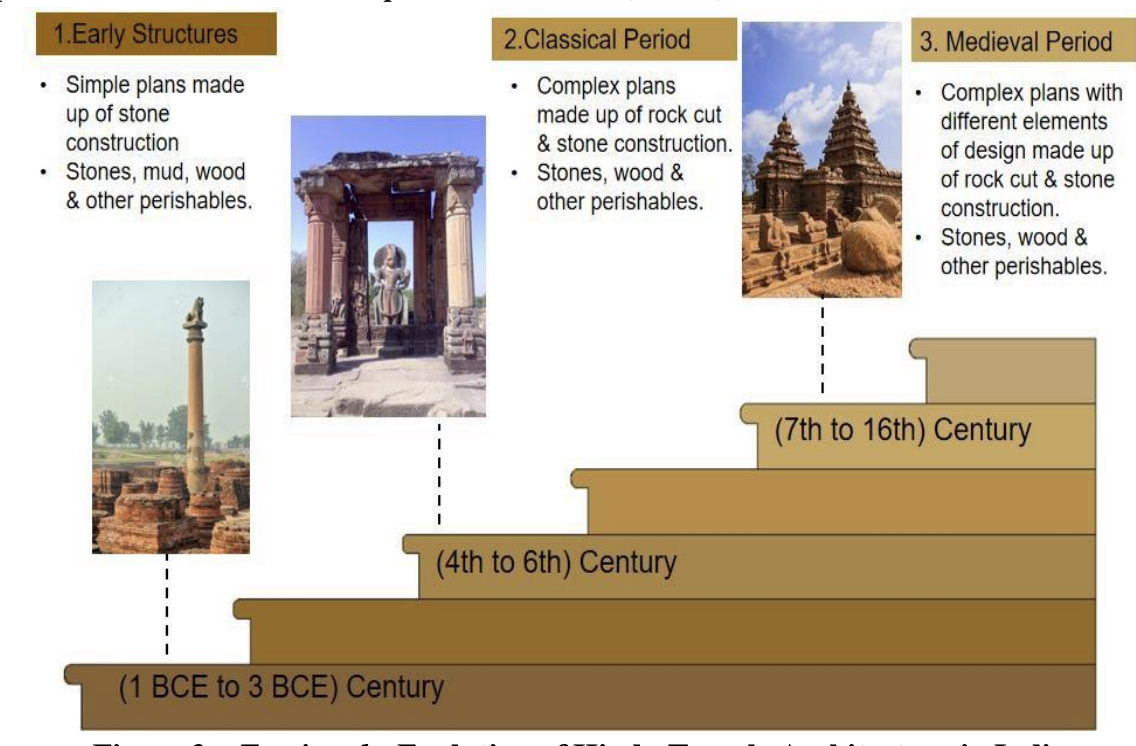
Before listing temples, it is important to explain methodology. Age claims on social media are often simplified, while historians use layered evidence. Archaeologists usually combine inscriptional records, paleography, excavation layers, dynastic references, material analysis, and style comparison to estimate chronology. In many cases, the original core of a temple may be ancient while outer mandapas or gopurams were added later.
For this list, dates are presented as accepted scholarly ranges or traditional attributions where evidence is partial. When a site has multiple building phases, the earliest surviving structural component is prioritized. This is why some temples with famous current forms may appear younger than less-known sites with older cores. The result is more accurate and useful for readers who want historical depth rather than viral claims.
| Dating Method | What It Helps Confirm |
|---|---|
| Inscriptions and copper plates | Patron, dynasty, and approximate construction phase |
| Archaeological stratigraphy | Relative age of layers and earlier occupation |
| Architectural style analysis | Likely period based on plan, shikhara, pillars, motifs |
| Material and iconographic comparison | Cross-validation against other dated monuments |
The 15 Oldest Temples in India
1. Mundeshwari Temple, Bihar (commonly dated to early centuries CE)
Mundeshwari Temple in the Kaimur region is often cited among the oldest continuously worshipped Hindu temples in India. Its octagonal plan is unusual and architecturally important, and inscriptions in the area support its antiquity. Though exact dating is debated, many scholars place its surviving form in the early historic to Gupta transition period. The shrine is associated with Shiva and Shakti worship and is significant because it preserves an early structural tradition that predates many grand medieval temple complexes.
2. Sanchi Stupa Complex, Madhya Pradesh (3rd century BCE onward)
Strictly speaking, Sanchi is a Buddhist stupa complex rather than a Hindu temple, but it is essential to any discussion of India's oldest sacred architecture. Commissioned initially in the Mauryan age and expanded later, Sanchi provides a documented sequence of ritual architecture, gateways, and narrative reliefs. It helps readers understand how early sacred construction evolved in stone. If your focus includes ancient religious architecture beyond one tradition, Sanchi is foundational.
3. Mahabodhi Temple, Bodh Gaya, Bihar (core site from 3rd century BCE; later rebuilds)
The Mahabodhi complex marks the place of the Buddha's enlightenment and has one of the most historically layered temple records in South Asia. The present superstructure reflects later restorations, but the sacred site's antiquity is far older. This distinction is crucial for accurate SEO content: the religious site can be ancient even when visible masonry includes later phases. Mahabodhi remains a living pilgrimage center and a key reference point for Buddhist architecture in India.
4. Udayagiri Caves, Madhya Pradesh (4th-5th century CE)
Udayagiri's rock-cut sanctuaries represent a major moment in early Hindu temple expression under Gupta patronage. Cave shrines, inscriptions, and sculptural panels, especially Vaishnava imagery, make this site critical for understanding early formalization of Hindu sacred spaces. While cave architecture differs from free-standing temples, these excavations preserve iconographic programs that influenced later structural temples across north and central India.
5. Bhaja Caves, Maharashtra (2nd century BCE to early CE phases)
Bhaja's chaityas and viharas belong to an early Buddhist monastic tradition and are among western India's oldest surviving rock-cut sacred spaces. Included in this list for historical continuity, Bhaja demonstrates construction logic, acoustic planning, and ritual circulation that later influenced temple and cave design in the Deccan. It is also a useful reminder that early Indian sacred architecture developed through regional experimentation, not one uniform model.
6. Karla Caves, Maharashtra (2nd century BCE to 2nd century CE)
Karla is home to one of the largest and best-preserved ancient rock-cut chaitya halls in India. Massive pillars, vaulted space, and donor inscriptions show how patronage networks sustained monumental religious construction long before many famous medieval temples. For readers searching oldest temples in India, Karla widens perspective from isolated rankings to architectural processes and trade-linked religious institutions.
7. Lad Khan Temple, Aihole, Karnataka (5th century CE)
Aihole is often called a laboratory of Indian temple architecture, and Lad Khan Temple is one of its earliest and most discussed monuments. Its design appears transitional, with features that suggest adaptation from assembly-like forms into temple space. The monument is vital for understanding the shift toward fully developed structural plans in the Deccan. If you want to track the roots of later Chalukyan and Dravidian excellence, Lad Khan is mandatory.
8. Durga Temple, Aihole, Karnataka (7th-8th century CE)
Despite its name, this temple was likely not originally dedicated to Goddess Durga in the modern sense. It is famous for its apsidal plan and circumambulatory passage, blending influences from earlier Buddhist and Hindu architectural vocabularies. Durga Temple illustrates a period when form was still fluid, and builders tested how sacred movement, sculptural panels, and elevated plinth design could work together.
9. Dashavatara Temple, Deogarh, Uttar Pradesh (early 6th century CE)
Dashavatara Temple is one of the earliest major surviving examples of the north Indian Nagara tradition. Its square sanctum, sculptural reliefs, and early shikhara concepts are indispensable in textbook histories of Hindu temple architecture. The site demonstrates how theological narrative and built form were integrated in the Gupta era, influencing subsequent temple design across northern India.
10. Kailasanatha Temple, Kanchipuram, Tamil Nadu (late 7th-early 8th century CE)
Kailasanatha in Kanchipuram is among the earliest grand structural temples in Tamil Nadu and a cornerstone for understanding Pallava architecture. Sandstone articulation, circumambulatory scheme, and the rhythm of subsidiary shrines show mature planning that later culminated in larger Chola monuments. Readers building south India heritage itineraries should pair this with Mahabalipuram Temple and later Chola masterpieces for a complete narrative arc.
11. Shore Temple, Mahabalipuram, Tamil Nadu (8th century CE)
The Shore Temple is one of the oldest surviving structural temples on India's coastline and an iconic Pallava monument. Its location near the Bay of Bengal makes conservation especially challenging due to wind and saline exposure. Architecturally, it reflects the transition from rock-cut experimentation to free-standing stone temple form. For travel planning and monument details, see Mahabalipuram Temple guide.
12. Kailasa Temple, Ellora, Maharashtra (8th century CE)
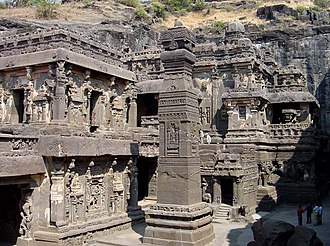
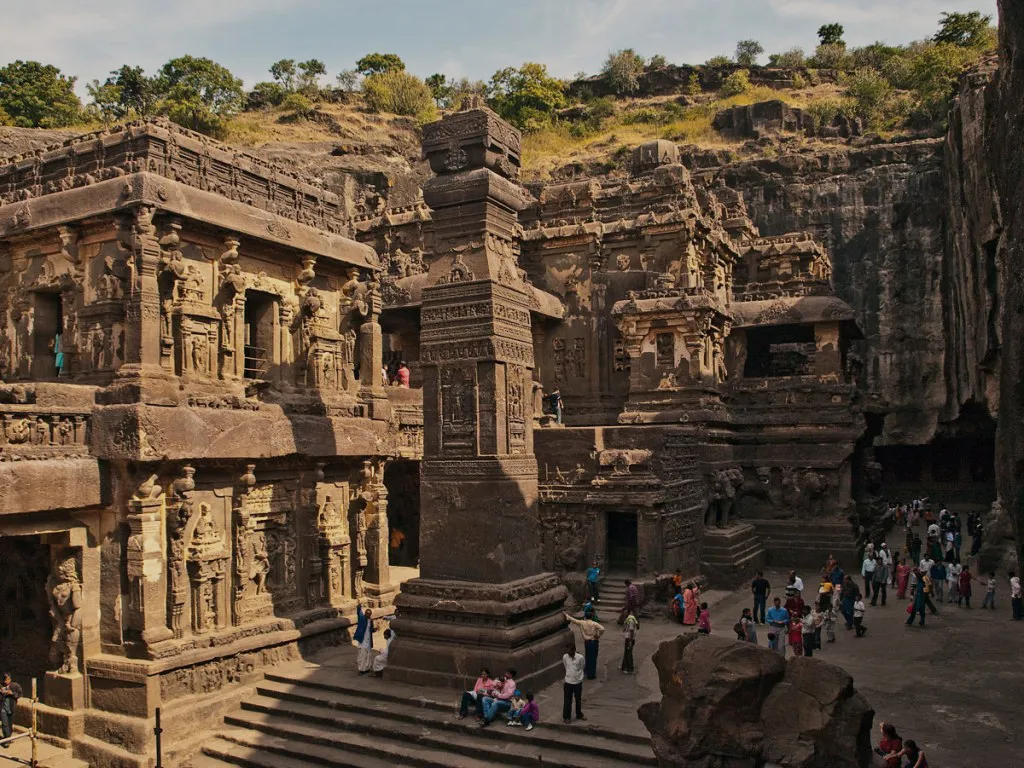
Kailasa at Ellora is not the oldest temple in India, but it is among the most extraordinary achievements in ancient engineering. Carved top-down from a single basalt mass, it combines scale, narrative sculpture, and structural illusion at a level few monuments match globally. In an oldest-temples list, Kailasa represents the culmination of the rock-cut tradition and demonstrates what mature patronage and craftsmanship could accomplish.
13. Lingaraj Temple, Bhubaneswar, Odisha (11th century CE core, older sacred tradition)
Lingaraj is included for contextual continuity because Odisha's temple sequence is central to Indian architectural history. The visible temple belongs to the mature Kalinga phase, but the site's sacred lineage extends further back in local tradition. Its rekha deul tower and jagamohana composition are key to understanding eastern Indian temple morphology. Readers can continue with the dedicated Lingaraj Temple Bhubaneswar article.
14. Brihadeeswarar Temple, Thanjavur, Tamil Nadu (11th century CE)
Brihadeeswarar is younger than many entries above, yet no serious heritage guide should omit it because it marks the high classical expression of Chola temple architecture. Its axial planning, monumental vimana, inscriptions, and mural traditions make it a benchmark in South Asian art history. It is ideal for readers who want to understand how early temple experiments became imperial-scale sacred complexes. Explore details in Brihadeeswarar Temple.
15. Kedarnath Temple Tradition, Uttarakhand (early medieval references; later reconstructions)
Kedarnath's present form and repairs belong to multiple phases, but the site's sanctity and pilgrimage continuity are deeply old in Himalayan Shaiva tradition. It is a good final entry because it shows how temple history in India is often tied to living route networks, oral traditions, and repeated rebuilding in difficult terrain. Unlike urban monuments, Himalayan shrines preserve continuity through ritual and pilgrimage cycles as much as through unchanged masonry.
Architecture Evolution: From Rock-Cut to Monumental Structural Temples
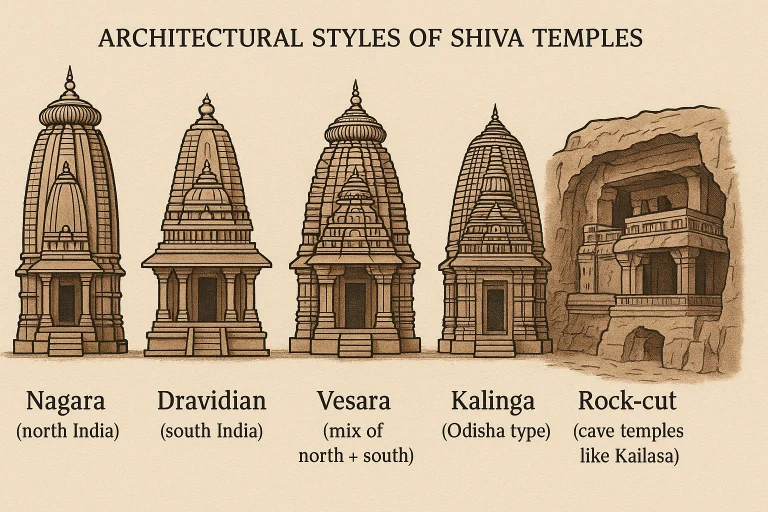
When readers compare the oldest temples in India, they often expect a straight chronological ladder. In practice, architecture evolved through parallel streams. Rock-cut caves in western India advanced spatial planning and ritual movement; Gupta and post-Gupta structural experiments in central and north India refined sanctum geometry and iconographic narratives; Pallava and Chola builders in the south expanded scale, verticality, and processional complexity. Odisha's Kalinga tradition developed distinct tower and hall grammar, while Himalayan temples adapted to climate and terrain constraints.
The key insight is that Indian temple architecture is cumulative. New dynasties did not erase earlier forms; they absorbed, localized, and transformed them. That is why a list like this should be read as an interconnected map, not a contest of single-year claims.
| Phase | Representative Sites | Core Character |
|---|---|---|
| Early sacred monuments | Sanchi, Mahabodhi | Ritual focus, layered rebuilding, early stone programs |
| Rock-cut development | Bhaja, Karla, Udayagiri, Ellora | Excavated space, narrative carving, monastic and devotional use |
| Early structural Hindu forms | Lad Khan, Dashavatara | Sanctum standardization, emerging shikhara vocabulary |
| Mature regional classicism | Shore, Lingaraj, Brihadeeswarar | Distinct regional styles with large-scale planning |
Preservation Challenges and What Travelers Should Know
Ancient temples face weathering, groundwater stress, visitor pressure, urban encroachment, and in some coastal zones, salt-driven erosion. Conservation is therefore an ongoing process, not a one-time repair. Responsible travel matters. Avoid touching carvings, respect restricted zones, follow photography rules, and support official site interpretation rather than unverified claims.
If you are planning temple-focused circuits, group sites by region to reduce fatigue and improve depth. For eastern India, combine Lingaraj with Konark Sun Temple. For south India, pair Kanchipuram and Mahabalipuram with Brihadeeswarar Temple. For central India, extend from Sanchi and Udayagiri toward Khajuraho Temples. For devotional continuity, compare route patterns with Kashi Vishwanath Temple Varanasi and Somnath Temple.
Suggested Itineraries by Interest
For history-first travelers (6-8 days)
- Bhopal base: Sanchi and Udayagiri
- Fly or rail to Varanasi region for comparative sacred traditions
- Extend to Deogarh or Aihole-Badami-Pattadakal circuit if possible
For architecture-focused travelers (7-10 days)
- Tamil Nadu segment: Kanchipuram, Mahabalipuram, Thanjavur
- Odisha segment: Bhubaneswar and Konark
- Karnataka segment: Aihole and nearby early Chalukya sites
For spiritual and living-temple experience (5-7 days)
- Varanasi and Kashi corridor for active ritual rhythm
- Odisha and Tamil Nadu for major darshan plus architectural study
- Himalayan extension in season for pilgrimage-route context
How to Read Conflicting Age Claims on the Internet
Readers often see contradictory statements such as oldest temple in India, oldest surviving temple, oldest living temple, or oldest rock-cut temple and assume one claim must be false. In reality, each phrase uses a different criterion. Oldest surviving temple usually refers to preserved physical structure. Oldest living temple emphasizes uninterrupted worship. Oldest site can refer to sacred occupation even when built fabric is from later reconstruction. Oldest rock-cut temple concerns a specific construction technique. Clear definitions remove most confusion.
A second source of confusion is renovation history. Many major temples visible today include medieval or early modern additions around an older core shrine. If an article dates the outer tower, the year may differ from a source dating the sanctum. Neither is automatically wrong; they are measuring different layers. For reliable reading, check whether the source cites inscriptions, excavation findings, or architectural studies instead of repeating generic listicle claims.
Regional Patterns: What Changes Across India
North and central India preserve important early structural experiments and Gupta-influenced forms, while western India contributes a deep rock-cut legacy with monastic and devotional spaces. Eastern India, especially Odisha, offers one of the clearest examples of coherent regional tower-hall grammar. South India presents a long arc from Pallava innovation to Chola monumentality and later temple-city expansion. Himalayan temple traditions highlight continuity through pilgrimage and repeated rebuilding in a difficult climate.
Understanding these regional patterns improves trip quality. Instead of trying to see every famous temple in one rushed itinerary, choose one architectural question per journey. For example: how did rock-cut space inform later structural design? Or how did temple superstructures differ between Kalinga and Dravidian systems? This approach turns sightseeing into interpretation and helps travelers remember why each monument matters.
| Region | Best Known Early Strength | Representative Theme |
|---|---|---|
| Central-North India | Early structural sanctum experimentation | Gupta and post-Gupta transition |
| Western India | Rock-cut chaitya and vihara systems | Trade-linked sacred architecture |
| Eastern India | Kalinga tower and assembly-hall refinement | Vertical rhythm and iconographic density |
| South India | Pallava to Chola structural expansion | From coastal forms to imperial scale |
| Himalayan Belt | Pilgrimage continuity and adaptive rebuilding | Ritual resilience in extreme terrain |
Practical Research Checklist for Students and Content Creators
If you are writing an assignment, making travel content, or building an educational thread, use a basic verification checklist before publishing age claims. First, identify what exactly is being dated: site sanctity, present structure, or earliest inscription. Second, record whether the date is absolute or approximate. Third, compare at least two credible sources. Fourth, mention uncertainty openly where evidence is contested. This method improves trustworthiness and helps avoid overconfident but inaccurate statements.
- Use precise language such as commonly dated to, earliest surviving core, or later reconstruction phase.
- Distinguish between Buddhist stupa complexes, rock-cut caves, and free-standing temples.
- Avoid ranking monuments only by viral popularity or photo visibility.
- Note if a temple is still active because living ritual status changes interpretation.
- Include conservation context to show present-day relevance.
Month-Wise Planning for Temple Heritage Circuits
Weather and festival calendars strongly influence temple travel. October to February is generally best for multi-city circuits across north, central, and eastern India. Coastal Tamil Nadu and Odisha can be humid but manageable with early starts. Monsoon travel can be rewarding for greenery and lower crowd pressure, yet some sites become logistically slower due to rain disruptions. In high summer, prioritize dawn and late-afternoon slots and keep indoor museum buffers.
Festival periods add spiritual intensity but also longer queues and stricter movement controls near active shrines. If your trip objective is architecture study and photography, choose non-peak weekdays. If your objective is ritual immersion, festival windows may be worth the extra planning complexity. In either case, book transport and stays with cancellation flexibility when moving across multiple states.
Common Mistakes When Building an Oldest Temples List
- Mixing temple site antiquity with current visible structure date without clarification.
- Ignoring regional styles and presenting all monuments as one homogeneous architecture.
- Using one unsourced date and repeating it across every platform.
- Overlooking Buddhist and Jain sacred architecture in early Indian chronology discussions.
- Skipping preservation status, which is critical for modern travel planning.
- Adding internal links that are unrelated to reader intent instead of relevant deep dives.
Strong heritage content balances history, readability, and practical value. That means a reader should leave with both understanding and a usable route to explore further. For example, after finishing this guide, continue with Konark Sun Temple for Kalinga comparison, Virupaksha Temple Hampi for Deccan continuity, and Ramanathaswamy Temple for living pilgrimage architecture in the south.
Conclusion
The oldest temples in India are best understood through evidence, continuity, and regional diversity. Some sites are ancient because of their surviving core structure. Others are ancient because sacred use has continued through rebuilding across centuries. Both perspectives are valid when presented clearly. If your goal is depth, use this list as a framework: start with early sacred sites, follow rock-cut innovation, then trace the rise of major regional structural traditions. You will not just collect monuments; you will understand how Indian civilization encoded memory, devotion, and artistry in stone.
For deeper exploration, continue with destination guides on Virupaksha Temple Hampi, Ramanathaswamy Temple, and Khajuraho Temples to compare living rituals, dynastic signatures, and architectural language across regions.
Location
Frequently Asked Questions
Q1.What is the oldest temple in India?
Q2.Which is the oldest living temple in India?
Q3.How are temple ages determined by historians?
Q4.What is the oldest temple in North India?
Q5.What is the oldest temple in South India?
Q6.What is the oldest temple in Tamil Nadu?
Q7.Which is the oldest rock-cut temple tradition in India?
Q8.Why do different websites show different temple ages?
Recommended For You

Konark Sun Temple Odisha: History, Timings & Visitor Tips
Visit Konark Sun Temple in Odisha - UNESCO World Heritage Site shaped like a chariot. Complete guide with timings, tickets, history & architecture.

Lingaraj Temple Bhubaneswar: Darshan Timings, Rituals & Entry Details
Visit Lingaraj Temple in Bhubaneswar - 1000-year-old Shiva temple & Kalinga architecture masterpiece. Complete guide with timings, darshan & history.

Virupaksha Temple Hampi: Timings, History & Hampi Circuit Highlights
Discover Virupaksha Temple in Hampi, a 1400-year-old living shrine showcasing Vijayanagara architecture, sacred shrines, and spiritual heritage.
Never Miss an Adventure
Get the latest trekking guides, travel tips, and exclusive offers delivered straight to your inbox.
