
Shopping in Gangtok: MG Marg & Local Markets

Rohan Malhotra
December 19, 2025
Discover shopping in Gangtok Sikkim: MG Marg pedestrian street, Tibetan handicrafts, Temi tea & Buddhist souvenirs. Complete Himalayan shopping guide.
Shopping in Gangtok: Himalayan Retail Paradise
Gangtok, Sikkim's capital and largest city, offers a shopping experience that blends Himalayan tranquility with Tibetan cultural influences and modern retail conveniences. Unlike the chaotic markets of Indian plains cities, Gangtok's shopping scene—centered around the vehicle-free MG Marg—combines scenic beauty, organized commerce, and authentic Himalayan products in a uniquely pleasant environment. The city's shopping character reflects Sikkim's position as a meeting point between India, Tibet, Nepal, and Bhutan. This cultural convergence creates distinctive shopping opportunities—Tibetan handicrafts alongside Sikkimese textiles, Buddhist ritual objects beside modern fashion, and traditional foods next to contemporary cafes. Shopping here becomes a journey through Himalayan cultures. What makes Gangtok shopping special is the combination of authenticity and convenience. Unlike some tourist destinations where souvenirs represent simplified versions of local culture, Gangtok's markets feature genuinely traditional items used by local communities. At the same time, the city's tourism infrastructure means shopping here is comfortable—organized markets, English-speaking shopkeepers, and tax-free pricing that keeps costs reasonable. The pedestrian-friendly MG Marg represents the heart of Gangtok's shopping experience. This vehicle-free zone allows leisurely browsing without traffic noise or pollution. Clean streets, benches for resting, and cafes for breaks create a shopping atmosphere that's pleasant rather than stressful. It's a stark contrast to the crowded, chaotic shopping areas typical of many Indian cities.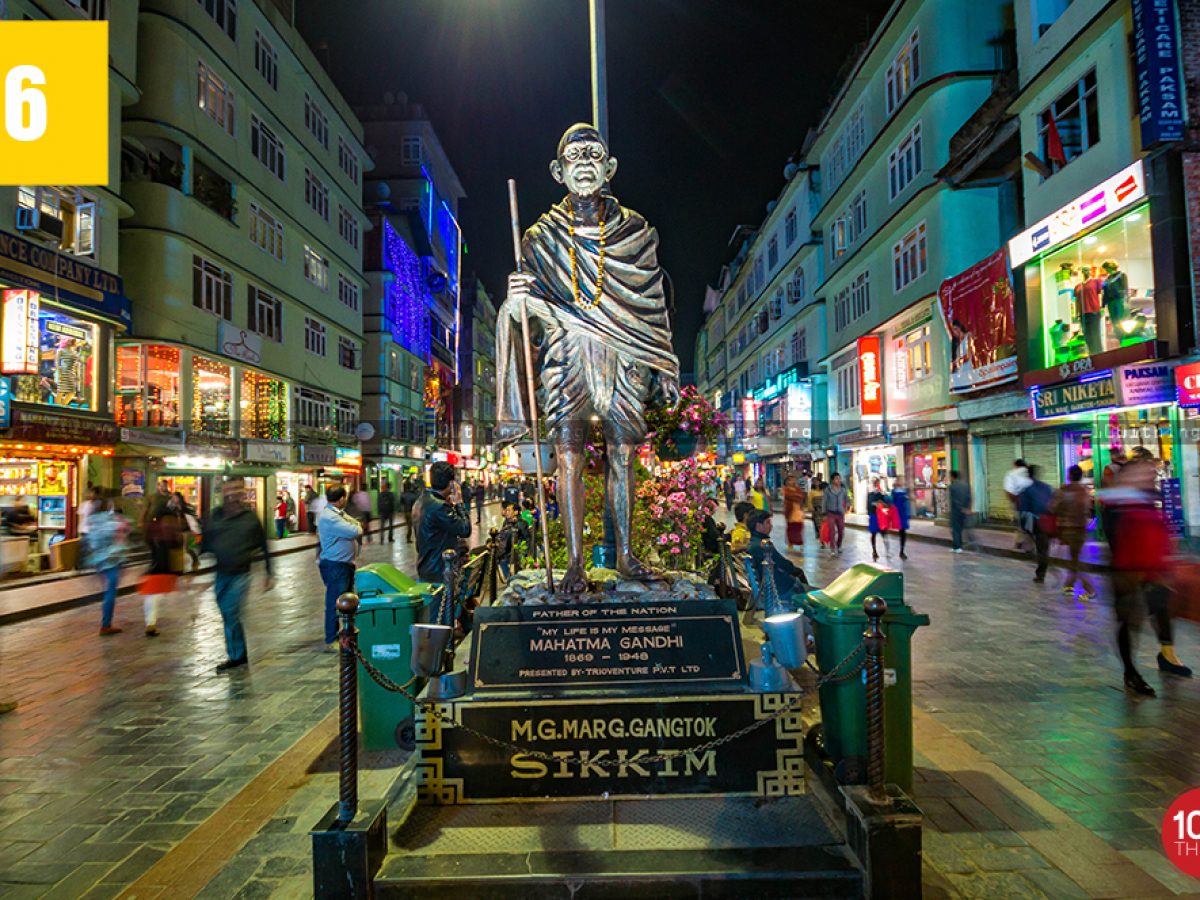
MG Marg: Pedestrian Shopping Paradise
If you are doing a Himalayan circuit, compare this with shopping in Bhutan for cultural-shopping differences.
MG Marg (Mahatma Gandhi Marg) functions as Gangtok's primary shopping and social space. This wide, vehicle-free street features organized rows of shops on both sides, selling everything from Tibetan handicrafts to modern clothing. What makes MG Marg special is the complete absence of vehicular traffic—you can walk in the middle of the street without dodging cars or motorcycles. The shopping options along MG Marg cater to various interests. Branded clothing stores share space with handicraft shops. Bookstores coexist with souvenir shops. Cafes and restaurants are interspersed with retail outlets, creating an environment where shopping and relaxation naturally blend. Evening atmosphere on MG Marg deserves special mention. As the sun sets behind the Himalayan peaks, the street comes alive with locals and tourists enjoying the pleasant weather. Street musicians sometimes perform, and the cafes fill up. This evening energy makes MG Marg as much a social space as a shopping destination. Shopping along MG Marg requires no particular strategy—you simply stroll and explore. However, being systematic helps cover the entire street. Start from one end and walk to the other, popping into shops that catch your interest. Most shops are similar in size (small to medium), so browsing doesn't require major time commitments. Seasonal considerations affect MG Marg shopping. Winter (December-February) brings cold temperatures but clear skies and mountain views. Summer (March-June) offers pleasant weather but occasional rain. Monsoon (July-September) sees heavier rainfall that can disrupt outdoor shopping, though covered walkways provide some protection.| Shopping Category | Availability on MG Marg | Best For |
|---|---|---|
| Handicrafts | Excellent | Tibetan crafts, souvenirs |
| Clothing | Good | Modern and traditional |
| Electronics | Fair | Basic needs |
| Books | Few stores | Himalayan literature |
| Souvenirs | Excellent | Gift items |
Traditional Handicrafts & Tibetan Market
Northeast shoppers also benchmark variety using shopping in Guwahati before buying in Gangtok.
The Government Institute of Cottage Industries, often called the Cottage Industry Emporium, represents the most reliable source for authentic Sikkimese and Tibetan handicrafts in Gangtok. Unlike private shops where authenticity and quality vary, this government-run outlet ensures products meet quality standards and artisans receive fair compensation. Thanka paintings represent one of the most distinctive Tibetan handicrafts available. These religious paintings on cotton or silk appliqué depict Buddhist deities, mandalas, and spiritual symbols. Genuine Thanka paintings require months of skilled work and serve both artistic and spiritual purposes. Prices vary dramatically based on size, complexity, and painter expertise—from ₹2,000 for small, simpler pieces to ₹50,000+ for large, intricate works. Choktse tables, traditional Tibetan folding tables, represent both practical furniture and decorative art. These tables, typically painted with Buddhist symbols and auspicious designs, feature collapsible legs that make them portable. The woodwork and painting reflect traditional Tibetan craftsmanship. Small Choktse tables suitable for altars or decorative purposes cost ₹3,000-8,000 depending on size and painting complexity. Wooden masks, used in traditional Tibetan Cham dances (religious ritual dances), represent interesting decorative purchases. These masks, depicting various deities and protective spirits, are hand-carved and painted. While full dance masks may be too large for most buyers, smaller versions created as decorative pieces make unique wall art. Carpets from Gangtok showcase Tibetan weaving traditions. Hand-knotted wool carpets feature traditional designs—dragons, phoenixes, floral patterns, and geometric motifs. The carpets are durable and serve both practical floor use and decorative wall hanging purposes. Prices depend on knot density (knots per square inch), size, and design complexity. Lal Bazaar, Gangtok's traditional market area, complements the handicraft shopping with more utilitarian items. This market serves local residents' daily needs—vegetables, groceries, household items, and local products. For tourists seeking local flavor rather than tourist-oriented souvenirs, Lal Bazaar provides authentic market atmosphere and reasonably priced local products. The Old Market area, near Lal Bazaar, features traditional shops that have operated for decades. Here you'll find stores selling everything from copper utensils to prayer flags. The area has more chaotic energy compared to organized MG Marg but offers more authentic local shopping experience. Tibetan Refugee Market provides another handicraft shopping option. This market, operated by Tibetan refugees living in Sikkim, offers handicrafts at generally lower prices than fixed-price government emporiums. Bargaining is more acceptable here, and the purchases directly support refugee communities.Sikkim Tea & Temi Tea Garden
Sikkim tea, though less famous than Assam or Darjeeling varieties, represents a unique Himalayan terroir that tea connoisseurs appreciate. The tea grows at high altitudes in Sikkim's Himalayan foothills, developing distinctive characteristics that reflect the cool mountain climate and pristine environment. Temi Tea Garden, Sikkim's only tea estate, produces tea that's gained recognition among tea enthusiasts. The garden, established in 1969, grows tea at altitudes ranging from 4,000 to 6,000 feet. This high-altitude growing conditions produce tea with delicate flavor and subtle complexity that differs from low-garden varieties. Tea varieties from Temi include black tea (orthodox and CTC), green tea, white tea, and specialty blends. The orthodox black tea, processed using traditional methods to preserve whole leaves, represents the premium offering. Green tea, with health benefits and lighter flavor, has gained popularity among health-conscious consumers. White tea, the most delicate variety made from young tea buds, commands premium prices.| Tea Variety | Characteristics | Price Range (per kg) |
|---|---|---|
| Orthodox Black | Complex, aromatic | ₹400 - ₹1,500 |
| CTC Black | Strong, robust | ₹250 - ₹600 |
| Green Tea | Light, healthy | ₹300 - ₹1,000 |
| White Tea | Delicate, premium | ₹800 - ₹2,500 |
Local Textiles & Dress
Sikkimese traditional dress reflects the state's cultural diversity, with different communities having distinct clothing traditions. Shopping in Gangtok offers opportunities to purchase these traditional textiles, supporting local weavers and acquiring authentic Himalayan clothing. Bakhu represents the traditional dress worn by Sikkimese Bhutia women. This full-length dress, typically made from silk or heavy cotton, features simple lines that prioritize comfort over elaborate ornamentation. What makes Bakhu special is the fabric quality and the distinctive colors favored in Sikkim—rich jewel tones like deep blue, maroon, and emerald green. Bakhu prices vary based on fabric. Cotton versions suitable for daily wear cost ₹2,000-4,000. Silk Bakhu, worn for festivals and formal occasions, range from ₹5,000-15,000 depending on silk quality and any additional embroidery or embellishment. Sikkimese handloom textiles showcase weaving traditions from various communities. The handloom center in Gangtok produces fabrics featuring traditional patterns unique to Sikkim. These woven fabrics, used for both clothing and home furnishings, incorporate colors and motifs that reflect Himalayan aesthetics—snow lions, Buddhist symbols, and geometric patterns inspired by mountain landscapes. Products available include shawls and stoles (lightweight for cool weather, heavier for winter), bags and purses (featuring traditional weaving patterns), and jackets (combining contemporary styling with traditional woven textiles). The handloom institute ensures quality and authentic craftsmanship. Prices for handloom products are moderate compared to some other Indian textiles. Shawls typically cost ₹800-3,000 depending on fabric quality and weaving complexity. Bags and smaller items range from ₹300-1,500. These prices support local weavers while remaining accessible to most buyers. Custom orders for handloom textiles are sometimes possible. The handloom center can coordinate weavers to create custom pieces with specific color combinations or patterns. This requires advance planning but results in personalized items exactly as desired.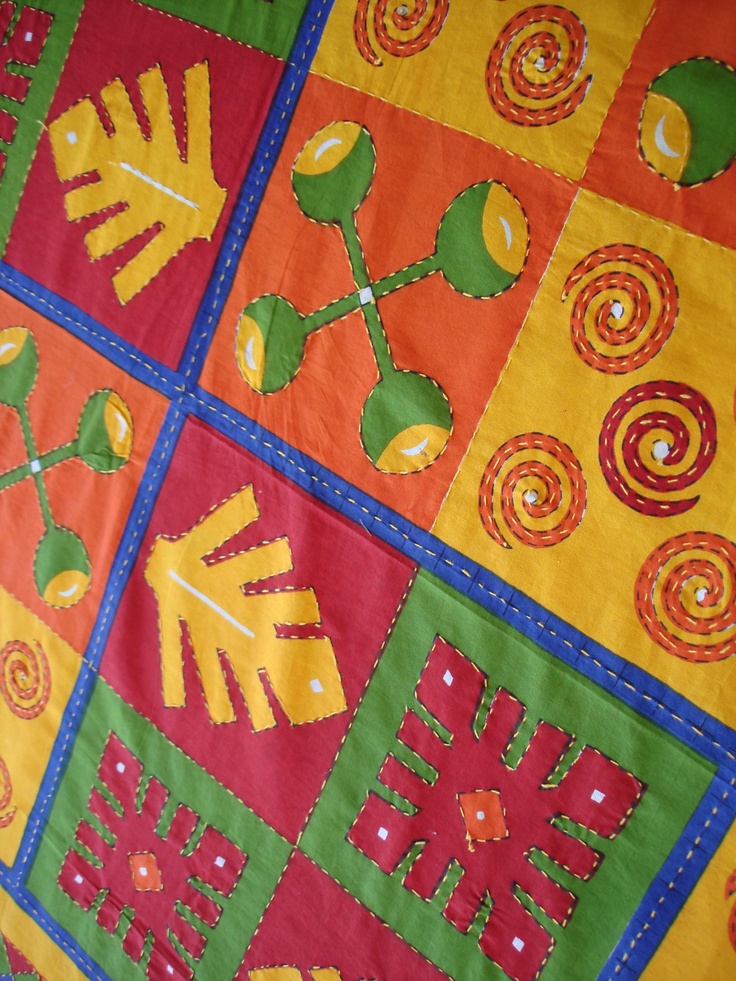
Souvenirs & Gift Items
If you continue to larger metros, keep a comparison list from shopping in Delhi.
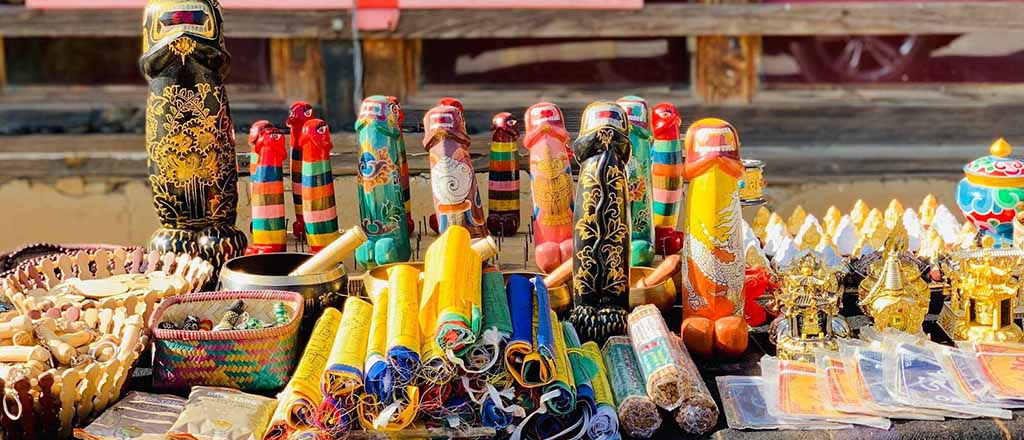
Buddhist ritual items available in Gangtok make meaningful purchases for those interested in Tibetan Buddhism or seeking gifts with spiritual significance. These items, beyond their decorative value, represent authentic religious objects used in Buddhist practice. Prayer flags, perhaps the most visible Buddhist symbol in Himalayan regions, come in sets of five colors representing five elements—blue (sky), white (clouds), red (fire), green (water), and yellow (earth). The flags feature printed prayers that are believed to spread blessings when displayed outdoors. Prices vary based on size and quality, starting around ₹200 for small sets. Prayer wheels, handheld cylinders containing written prayers, represent important religious objects. Spinning the wheel clockwise is believed to have the same spiritual benefit as reciting the prayers aloud. Prayer wheels range from small handheld versions (₹300-800) to larger elaborate pieces (₹2,000-5,000). Authentic prayer wheels should contain written mantras inside, not just printed on the exterior. Singing bowls, used in meditation and healing practices, produce resonant tones when struck or circled with a wooden mallet. Authentic singing bowls, made from traditional metal alloys, produce complex harmonics. Prices range from ₹1,000 for small bowls to ₹10,000+ for large, high-quality pieces with superior sound quality. Tibetan incense, made from natural ingredients according to traditional recipes, creates distinctive aromas used in meditation and ritual. Unlike many commercial incenses, authentic Tibetan incense uses purely natural ingredients without synthetic fragrances. Prices vary based on ingredients and length, typically ₹200-800 per box. Local food products make practical souvenirs. Sikkim pickle, featuring local ingredients like bamboo shoot and dalley (Sikkimese cherry chili), offers spicy flavors unique to the region. Churpi, traditional hardened cheese made from yak milk, provides protein-rich snack that travels well. Local wines, including temi wine (tea wine) and fruit wines, represent Sikkim's emerging wine industry. Cardamom from Sikkim's large-cardamom plantations represents another local specialty. Sikkimese black cardamom, with larger pods and more intense flavor than small green cardamom, is used in cooking and traditional medicine. The cardamom makes excellent spice gifts for those who appreciate distinctive ingredients.Shopping Tips & Best Time
For east-India city pricing context, compare with shopping in Kolkata as well.
Best season for shopping in Gangtok is March-June (spring and early summer) and September-November (autumn). These periods offer pleasant weather for walking around MG Marg and exploring markets. Winter (December-February) is cold but manageable with proper clothing—some shops might have shorter hours during cold winter days. Monsoon (July-September) brings rain that can disrupt shopping, though covered walkways on MG Marg provide some protection. Market timing generally follows standard patterns—most shops on MG Marg open around 10 AM and close by 8 PM. Lal Bazaar and traditional markets often open earlier (around 8 AM) and might close by 7 PM. Some souvenir shops catering to tourists might stay open later during peak tourist season. Cash vs. digital payments—cash remains important in traditional markets like Lal Bazaar and smaller handicraft shops. However, MG Marg establishments generally accept cards and digital payments. Carrying sufficient cash ensures smooth transactions, especially when bargaining or buying from smaller vendors. Bargaining in Gangtok follows typical patterns for tourist destinations. Government emporiums have fixed prices. Private handicraft shops may accept some negotiation, particularly for larger purchases. Street vendors and market stalls expect bargaining. Polite negotiation works better than aggressive haggling. Quality checks are important for handicrafts. Genuine Thanka paintings should show evidence of hand-painting rather than mass printing. Carpets should have consistent knotting and clean finishes. Woodwork should be smooth without rough edges. Government emporiums provide quality assurance that private shops might not match. Altitude considerations matter in Gangtok, which sits at 5,410 feet (1,650 meters). Some visitors experience mild altitude effects, particularly during first days. Taking breaks while shopping, staying hydrated, and not overexerting helps manage altitude. Fortunately, MG Marg's flat, vehicle-free terrain makes shopping less physically demanding than hilly areas. Carry rain gear during monsoon and unpredictable weather periods. A light rain jacket or umbrella allows comfortable shopping even during showers. Weather in the Himalayas can change quickly—sunny mornings can give way to rainy afternoons.Conclusion
Shopping in Gangtok offers a uniquely pleasant Himalayan experience that combines authentic local products, comfortable shopping environment, and stunning mountain scenery. Whether exploring the vehicle-free MG Marg, browsing authentic handicrafts at government emporiums, or purchasing Sikkim tea fresh from Temi Garden, shopping here connects you to Himalayan culture and traditions. The city's blend of Tibetan influences, Sikkimese craftsmanship, and modern conveniences creates shopping opportunities that few destinations can match. Approach shopping with curiosity about Himalayan cultures, appreciation for traditional craftsmanship, and willingness to support local artisans—Gangtok rewards this approach with purchases that become treasured reminders of time spent in Sikkim's enchanting capital.Location
Frequently Asked Questions
Q1.What are the best shopping places in Gangtok?
Q2.What is Gangtok famous for shopping?
Q3.What are MG Marg timings?
Q4.What to buy from Gangtok?
Q5.Where to buy tea in Gangtok?
Q6.Best place for handicrafts in Gangtok?
Q7.Are shops open on Sunday in Gangtok?
Q8.Is bargaining acceptable in Gangtok?
Recommended For You
New Market Gangtok: Shopping Guide & Tips
Shop at New Market Gangtok. Timings, what to buy, souvenirs, location & how to reach. Complete shopping guide for Sikkim's capital.
Shopping in Bhutan: Complete Guide to Handicrafts, Textiles & Souvenirs
Discover shopping in Bhutan with our complete guide. Traditional textiles, Thimphu weekend market, handicrafts, prayer flags, thangkas, and authentic Bhutanese souvenirs.
15 Best Places to Visit in Gangtok: Monasteries, Lakes & Ropeways
Explore the best places to visit in Gangtok including Tsomgo Lake, Nathula Pass, Rumtek Monastery, MG Marg, and practical permit-aware travel tips.
Never Miss an Adventure
Get the latest trekking guides, travel tips, and exclusive offers delivered straight to your inbox.
