
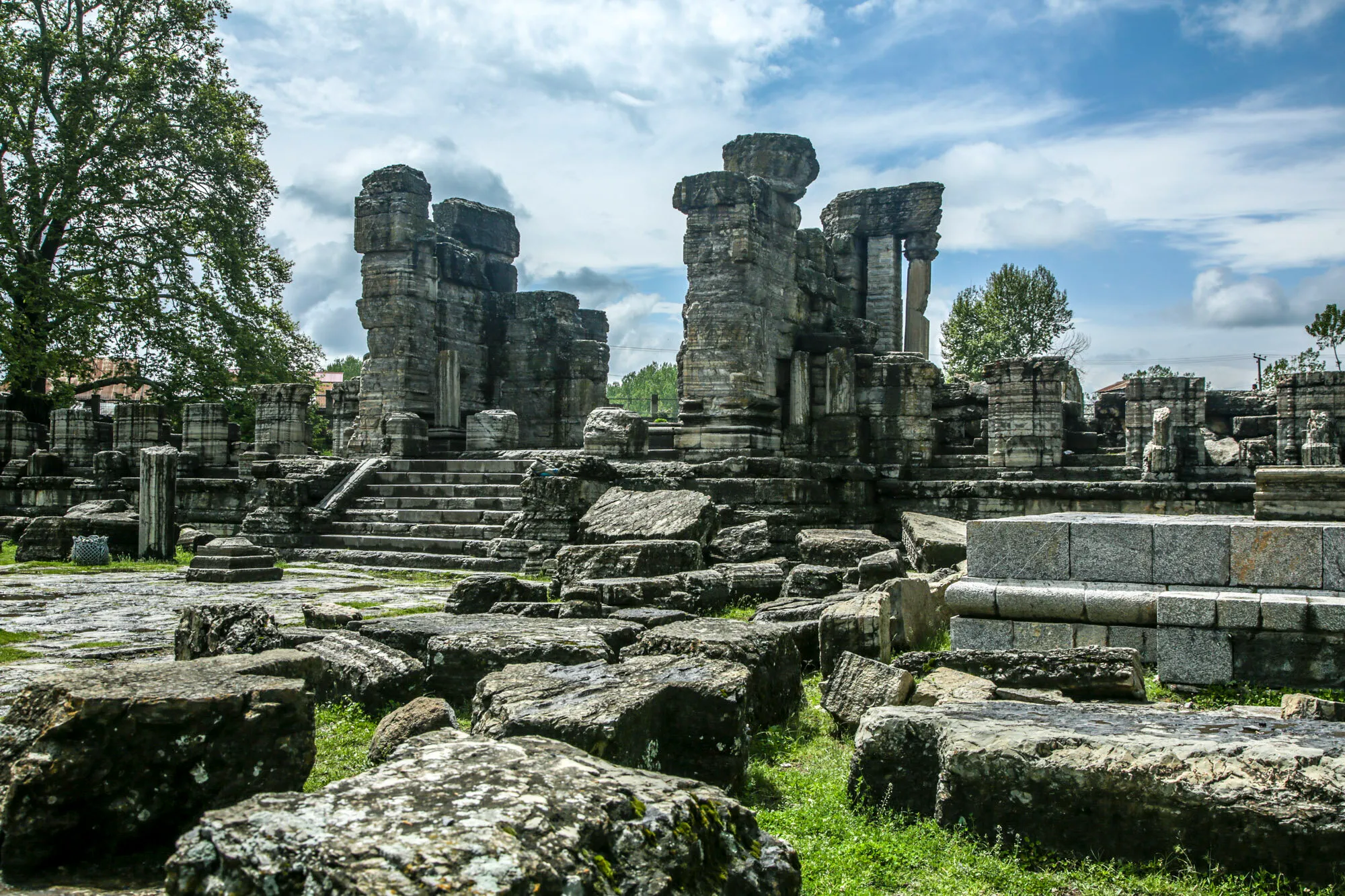
Avantiswami Temple Kashmir: Ancient Lord Vishnu Shrine Ruins

Ananya Sharma
February 19, 2026
Explore Avantiswami Temple in Awantipora, Kashmir - ancient 9th-century Lord Vishnu shrine ruins. Discover Kashmir temple architecture, ASI conservation & travel guide.
The Ancient Vishnu Temple of Kashmir's Golden Age
Nestled in the picturesque Kashmir Valley, Avantiswami Temple stands as a magnificent testament to Kashmir's rich architectural heritage and spiritual legacy. Located in Awantipora, approximately 30 kilometers from Srinagar, this ancient temple dedicated to Lord Vishnu represents the pinnacle of Kashmiri temple architecture during the 9th century. Built by King Avantivarman, one of Kashmir's most illustrious rulers, the temple ruins today offer visitors a glimpse into the artistic brilliance and religious devotion that defined medieval Kashmir.The Avantiswami Temple, along with its companion Avantishwara Temple dedicated to Lord Shiva, formed the centerpiece of the ancient city of Avantipura, which King Avantivarman established as his capital. Though now in ruins, the temple's remaining structures reveal the extraordinary craftsmanship of Kashmiri artisans who worked with locally available limestone to create a masterpiece of geometric precision, sculptural beauty, and spiritual symbolism. For travelers interested in India's temple heritage, Avantiswami provides a unique opportunity to explore the distinctive Kashmir style of temple architecture, which differs markedly from the Nagara and Dravida styles seen elsewhere in India.
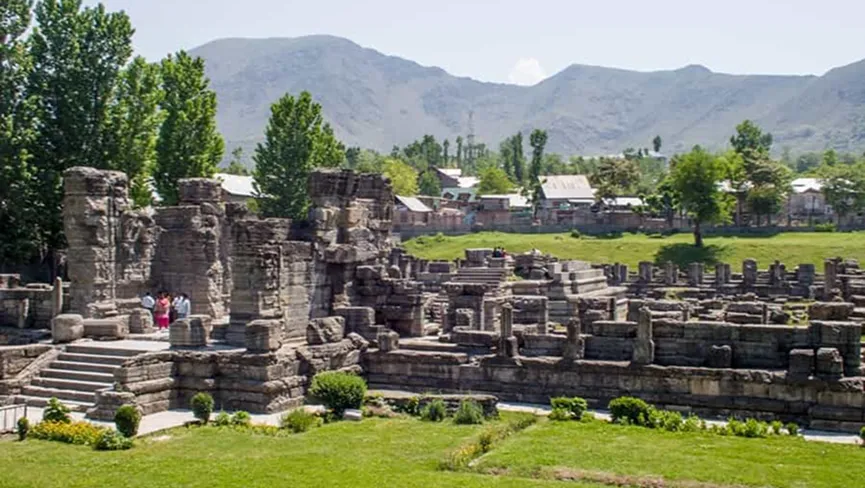
What makes Avantiswami Temple particularly fascinating is its rediscovery and restoration by the Archaeological Survey of India (ASI). After centuries of neglect following the temple's destruction by earthquakes and invasions, systematic excavations and conservation efforts have uncovered much of the original structure, allowing modern visitors to appreciate the grandeur of this ancient Vishnu shrine. The temple's serene location on the banks of the Jhelum River, surrounded by the stunning landscapes of Kashmir, creates an atmosphere of timeless peace that continues to attract pilgrims, history enthusiasts, and curious travelers alike.
Temple History: King Avantivarman's Legacy
The story of Avantiswami Temple is intimately connected with the reign of King Avantivarman (ruled 855-883 CE), the founder of the Utpala dynasty and one of Kashmir's most celebrated rulers. Coming to power during a period of political instability, Avantivarman brought unprecedented peace and prosperity to Kashmir, creating an environment where arts, literature, and architecture flourished. His reign is often described as the beginning of a golden age in Kashmir's history, a time when the valley became a center of learning and culture that attracted scholars and artisans from across the Indian subcontinent.
King Avantivarman's decision to build twin temples—one dedicated to Lord Vishnu (Avantiswami) and another to Lord Shiva (Avantishwara)—reflected both his deep religious devotion and his political acumen. By honoring the two principal deities of Hinduism, he demonstrated his commitment to religious harmony and his understanding of Kashmir's pluralistic spiritual traditions. The temples were constructed between 853 and 855 CE, according to the historian Kalhana's Rajatarangini, the 12th-century chronicle of Kashmir's kings and kingdoms.
The Temple's Original Grandeur
In its prime, the Avantiswami Temple was an architectural marvel that would have dominated the landscape of medieval Avantipura. Historical accounts and archaeological evidence suggest that the temple was built in the traditional Kashmiri style, characterized by a square sanctum (garbhagriha) with a towering shikhara (spire), a spacious assembly hall (mandapa), and an elaborate entrance porch. The entire complex was enclosed within a rectangular courtyard surrounded by subsidiary shrines and other structures.
The temple was named "Avantiswami" meaning "Lord of Avanti," combining the king's name with the Sanskrit word "Iswami" (Lord). This naming convention not only honored the king but also established a direct connection between the ruler and the divine, a common practice in ancient Indian temple architecture that reinforced the concept of divine kingship.
Decline and Destruction
The temple's magnificent period was relatively short-lived. Following Avantivarman's death, the Utpala dynasty continued to rule Kashmir, but the region gradually entered a period of political turmoil. The temple suffered its first major damage from earthquakes, which are common in the seismically active Kashmir Valley. The structural integrity of the temple was compromised, and the towering shikhara collapsed.
Subsequent centuries brought further challenges. Foreign invasions, particularly during the medieval period, resulted in deliberate destruction and looting of temple treasures. The changing religious landscape of Kashmir also contributed to the temple's decline, as Hindu patronage decreased and the once-great structure fell into disrepair. By the time the Mughals established control over Kashmir in the 16th century, the Avantiswami Temple was already largely a ruin, though its importance as a historical and religious site was still recognized.
Despite centuries of neglect, the temple's foundations and many of its structural elements remained buried but intact, preserving the story of Kashmir's glorious past for future generations to rediscover.
Temple Architecture: Kashmir Style Excellence
The Avantiswami Temple exemplifies the distinctive Kashmir style of temple architecture, which evolved independently of the Nagara (North Indian) and Dravida (South Indian) architectural traditions that dominated most of India. This unique architectural style developed in Kashmir from the 7th to the 12th centuries CE and is characterized by specific elements that set it apart from other temple-building traditions.
Structural Layout and Design
Avantiswami Temple follows the classic Kashmiri temple layout with a cruciform plan and a central sanctum surrounded by a circumambulatory path (pradakshina path). The temple faces east, in accordance with Hindu temple architecture principles, allowing the first rays of the sun to illuminate the sanctum. The entire complex is enclosed within a rectangular courtyard measuring approximately 50 meters by 40 meters, with the main temple positioned in the center.
One of the most distinctive features of Kashmiri temple architecture visible at Avantiswami is the double-pierced lattice window design. These ornate windows, with their intricate geometric patterns, allowed light to enter while maintaining the sanctity of the inner sanctum. The remaining fragments of these windows showcase the incredible skill of Kashmiri craftsmen in transforming stone into delicate, lace-like patterns.
The Shikhara and Mandapa
Although the original shikhara (tower) has collapsed, archaeological evidence and comparisons with contemporary temples suggest that Avantiswami's shikhara would have been a curvilinear structure rising to a significant height, typical of the Kashmiri style. Unlike the North Indian Nagara style's curved shikhara or the South Indian pyramidal vimana, Kashmiri shikharas featured a unique profile that combined verticality with graceful curves.
The mandapa (assembly hall) was a spacious structure where devotees would gather for prayers and rituals. The pillars of the mandapa, though mostly ruined now, would have featured intricate carvings of deities, celestial beings, and mythological scenes. The hall's design allowed for excellent acoustics, important for the chanting of mantras and singing of hymns during religious ceremonies.
Sculptural Decoration
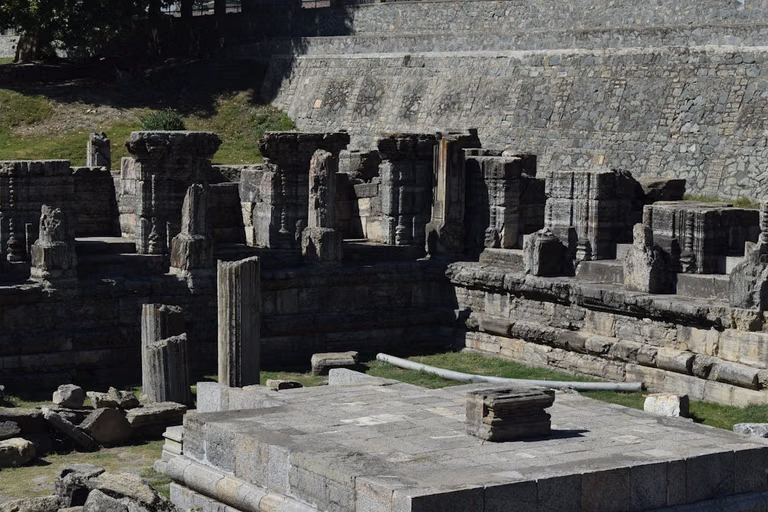
The decorative sculpture at Avantiswami represents the height of Kashmiri artistic achievement. The temple walls, both inside and outside, would have been adorned with sculptures depicting various deities, especially forms of Vishnu such as Vaikuntha Vishnu (the four-headed Vishnu), scenes from Hindu mythology, and guardian figures at the entrances. Although many sculptures were damaged or destroyed over the centuries, some remarkable examples have survived and are now displayed in the government museum in Srinagar.
The style of sculpture at Avantiswami reflects the classical Kashmiri aesthetic: figures with gentle, serene expressions, elaborate jewelry and clothing rendered in meticulous detail, and a remarkable sense of movement and life despite being carved in stone. The sculptors demonstrated particular skill in depicting the human form, with figures displaying graceful poses and naturalistic proportions that suggest a sophisticated understanding of anatomy.
Material and Construction Techniques
The temple was constructed primarily using grey limestone, which was readily available in the Kashmir Valley. This stone, while softer than granite, allowed for finer carving and more detailed sculptural work. The builders employed advanced masonry techniques, using interlocking stones without mortar in many places, a technique that provided structural flexibility and helped the temple withstand earthquakes to some extent.
The foundation of the temple was particularly robust, featuring a massive stone platform that raised the structure above ground level. This not only gave the temple a sense of elevation and importance but also provided protection from flooding from the nearby Jhelum River. The precision with which these massive stones were cut and fitted together is remarkable, considering that the builders worked with simple iron tools and lacked modern construction equipment.
Archaeological Discovery and ASI Conservation
The rediscovery and preservation of Avantiswami Temple is one of the most important archaeological success stories in modern India. For centuries, the temple lay buried under earth and vegetation, its existence known primarily through historical texts and local folklore. It wasn't until the early 20th century that systematic archaeological work began to uncover the full extent of this ancient monument.
Initial Excavations
The first major excavations at Avantiswami Temple were conducted by the Archaeological Survey of India (ASI) between 1914 and 1920 under the supervision of renowned archaeologists. These excavations revealed that much of the temple's foundation and lower walls remained intact, buried under layers of sediment and debris. The ASI team carefully documented each finding, creating detailed records of the temple's layout, architectural features, and sculptural remains.
The excavations uncovered not only the main temple structure but also numerous subsidiary shrines, boundary walls, and other features of the temple complex. Archaeologists found evidence of multiple building phases, suggesting that the temple had been renovated and expanded over the centuries following its initial construction. Artifacts discovered during the excavation included pottery, coins, and inscriptions that helped date the various phases of the temple's history.
Conservation and Restoration
Following the initial excavations, the ASI began a comprehensive conservation program to stabilize the temple remains and protect them from further deterioration. This work involved reinforcing structural elements, clearing vegetation that was damaging the masonry, and creating a proper drainage system to prevent water accumulation during rains.
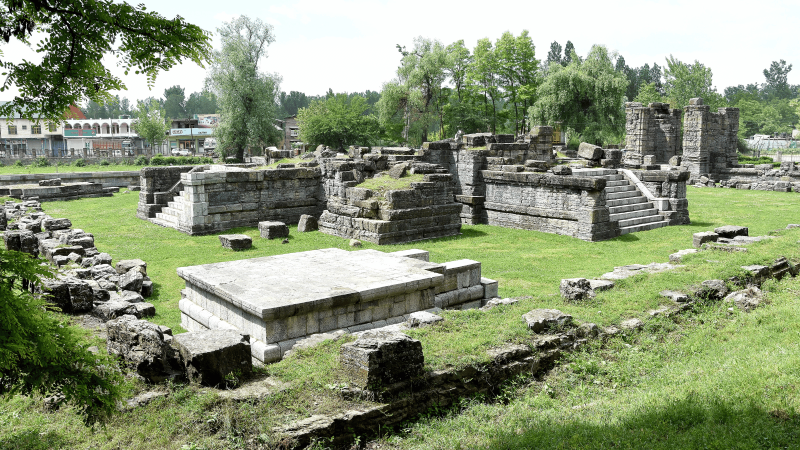
One of the most challenging aspects of conservation has been dealing with the effects of weathering on the soft limestone. The Kashmir Valley's climate, with its cold winters and wet summers, causes gradual erosion of the stone surfaces. The ASI has employed various techniques to mitigate this, including the application of protective chemical treatments and the construction of shelters over particularly vulnerable sections.
Importantly, the ASI's approach has been one of conservation rather than reconstruction. Rather than attempting to rebuild the temple to its original form—a controversial approach that can erase historical evidence—the focus has been on preserving what remains and presenting it in a way that helps visitors understand the temple's original appearance and significance.
Sculpture Preservation
Many of the most important sculptures discovered at Avantiswami Temple have been moved to the Sri Pratap Singh Museum in Srinagar for safekeeping and display. These include magnificent examples of Vishnu and other deities, as well as decorative architectural elements. The museum provides these priceless artworks with a controlled environment that protects them from further deterioration while making them accessible to scholars and the public.
Some sculptures remain at the temple site, either incorporated into the conservation work or displayed in a small on-site museum. The ASI has created replicas of some key sculptures, placing them in their original positions to help visitors visualize the temple's former grandeur while protecting the originals from exposure to the elements.
Current Status
Today, Avantiswami Temple is a protected monument under the care of the Archaeological Survey of India. The site is open to visitors, and ongoing conservation work ensures that the ruins will remain stable for future generations. The ASI continues to monitor the site's condition and conduct periodic maintenance work as needed.
In recent years, there has been increased interest in promoting Avantiswami Temple as part of Kashmir's tourist attractions. The site's historical significance, combined with its relatively accessible location from Srinagar, makes it an important destination for heritage tourism. Improved signage, visitor facilities, and educational materials have been added to enhance the visitor experience while maintaining the site's dignity and historical integrity.
Religious Significance: Lord Vishnu's Abode
As a temple dedicated to Lord Vishnu, Avantiswami was an important center of Vaishnavism in medieval Kashmir. Vishnu, one of the principal deities of Hinduism, is known as the preserver and protector of the universe, and temples dedicated to him have been centers of religious, cultural, and social life for millennia.
Vaishnavism in Kashmir
During the 9th century, when Avantiswami was built, Kashmir was home to a vibrant Hindu religious culture that included worship of both Shiva and Vishnu. While Shaivism (worship of Shiva) was particularly strong in Kashmir, Vaishnavism also had a significant following, as evidenced by the construction of this magnificent Vishnu temple. The coexistence of the Avantiswami (Vishnu) and Avantishwara (Shiva) temples in the same complex reflects the inclusive, non-sectarian approach to religion that characterized Kashmiri Hinduism.
The temple would have been an active center of worship, with daily rituals, festivals, and pilgrimage activities. Priests trained in the Kashmiri Vaishnava tradition would have performed elaborate ceremonies (pujas) involving offerings of flowers, food, and other items to the deity. The temple would have also been a place for learning, where scholars taught scriptures such as the Vedas, Puranas, and Bhagavad Gita to students.
Temple Rituals and Practices
While we don't have detailed records of the specific rituals performed at Avantiswami, we can infer from contemporary sources and parallel traditions that the temple would have followed the pancharatra mode of Vaishnava worship, which was popular in medieval Kashmir. This tradition emphasized elaborate ritual procedures, detailed iconography, and the use of yantras (mystical diagrams) and mantras (sacred chants) in worship.
The daily routine at the temple would have begun before dawn with the awakening ceremony (suprabhata), followed by multiple worship services throughout the day. Festival days, particularly those associated with Vishnu such as Janmashtami (Krishna's birthday) and Diwali, would have drawn large crowds of devotees from Avantipura and surrounding areas. The temple would have been an important economic center as well, receiving donations and endowments from devotees and the ruling dynasty.
Philosophical Significance
Beyond its ritual importance, Avantiswami Temple was part of the broader philosophical and cultural landscape of Kashmir. The 9th century was a period of tremendous intellectual activity in Kashmir, with the development of schools of Hindu philosophy such as Kashmir Shaivism and the Pratyabhijna system. While these traditions were Shaiva-oriented, the intellectual climate they created influenced all religious practices in the valley, including Vaishnavism.
The temple's very existence as a grand architectural statement about the power of Vishnu reflects the theological understanding of the deity's role as the sustainer of cosmic order. Its construction by King Avantivarman also illustrates the concept of dharma—the idea that rulers had a duty to support religious institutions and uphold spiritual values. In this sense, Avantiswami Temple was not just a place of worship but a statement about the relationship between political power and religious authority.
How to Reach Avantiswami Temple from Srinagar
Reaching Avantiswami Temple is relatively straightforward, as it's located on one of the main highways connecting Srinagar with other parts of Jammu and Kashmir. The temple is situated in Awantipora (also spelled Avantipora or Awantipura), a town on the banks of the Jhelum River. Here's a comprehensive guide on how to reach the temple:
From Srinagar
Distance: Approximately 30 kilometers southeast of Srinagar
By Road: The most common way to reach Avantiswami Temple is by road from Srinagar. The temple is located on National Highway 44 (formerly NH 1A), which connects Srinagar with Jammu. The drive takes approximately 45 minutes to 1 hour, depending on traffic and road conditions.
Transport Options:
- Private Taxi/Cab: The most convenient option. Taxis can be hired from Srinagar for a round trip. The cost typically ranges from ₹1500 to ₹2500 for a full day, including waiting time.
- Rental Car: If you're comfortable driving in Kashmir, rental cars are available in Srinagar. This gives you flexibility to explore at your own pace.
- Bus: State-run and private buses run between Srinagar and Awantipora regularly. This is the most economical option (approximately ₹50-100 per person), but you'll need to arrange local transport from the bus stand to the temple site.
- Shared Taxi: Shared taxis are available from Srinagar's Parimpora taxi stand. This is a budget-friendly option that costs around ₹100-150 per person.
From Other Locations
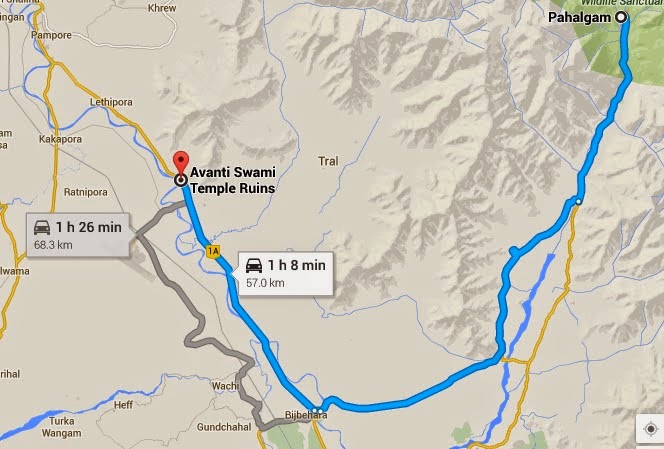
From Pahalgam: Approximately 80 kilometers, 2.5-3 hours by road. You can combine a visit to Avantiswami with a trip to Pahalgam, one of Kashmir's most popular tourist destinations.
From Gulmarg: Approximately 100 kilometers, 3-3.5 hours by road. The journey takes you through some beautiful scenery as you cross the Kashmir Valley.
From Jammu: Approximately 250 kilometers, 6-7 hours by road via NH 44. If you're traveling from Jammu to Srinagar by road, Awantipora is roughly at the midpoint, making it a convenient stop.
Navigation and Local Directions
Once you reach Awantipora town, the temple is located near the main highway and is well-signposted. Most local drivers and residents know the location of the "Avantiswami Mandir" or "Ancient Temple." The temple site is on the outskirts of the town, surrounded by open fields with views of the surrounding mountains.
For those using GPS navigation, the coordinates are provided at the end of this article. However, be aware that GPS connectivity can be unreliable in parts of Kashmir, so it's advisable to get directions from locals as well.
Road Conditions
The roads from Srinagar to Awantipora are generally in good condition, as this is a major national highway. However, road conditions can vary depending on weather, particularly in winter when snow and rain can make driving challenging. During peak tourist season (May-October), traffic can be heavy, especially on weekends.
If you're not familiar with driving in mountainous areas, it's recommended to hire a local driver who knows the roads. The journey, while not particularly dangerous, does require attention, especially when sharing the road with trucks and buses.
Best Time to Visit Avantiswami Temple
Choosing the right time to visit Avantiswami Temple can significantly enhance your experience. Kashmir's climate varies dramatically throughout the year, and each season offers a different perspective on this ancient monument and its surroundings.
Summer Season (April to June) – Recommended
Summer is the ideal time to visit Avantiswami Temple for most travelers. The weather is pleasant and comfortable, with daytime temperatures ranging from 15°C to 25°C. The skies are generally clear, offering excellent visibility and beautiful views of the surrounding mountains and valleys.
This season also coincides with the peak tourist period in Kashmir, which means you'll find good infrastructure, plenty of accommodation options in Srinagar, and all tourist facilities operating at full capacity. The temple grounds are lush and green in summer, creating a beautiful contrast with the ancient stone ruins.
Autumn Season (September to November) – Highly Recommended
Many travelers consider autumn to be the absolute best time to visit Avantiswami Temple. The weather remains pleasant (similar to summer), but the crowds thin out significantly as the peak tourist season winds down.
The autumn light in Kashmir is particularly beautiful, with soft golden tones that make for spectacular photography. The changing colors of the surrounding trees and the harvest season activity in nearby fields add to the visual appeal of the temple visit.
Winter Season (December to March) – For the Adventurous
Winter in Kashmir is cold, with temperatures often dropping below freezing and occasional snowfall. Visiting Avantiswami Temple in winter presents a unique opportunity to see the ancient ruins against a backdrop of snow-covered mountains—a truly magical sight.
However, winter travel comes with challenges. Road conditions can be difficult, especially during and after snowfall. Many tourist facilities have limited operations or are closed altogether. You'll need proper winter clothing, including warm jackets, gloves, and sturdy boots. If you're prepared for the cold and possible travel disruptions, a winter visit can be deeply rewarding.
Spring Season (March to April) – Emerging Beauty
Spring is a transitional season when Kashmir shakes off winter's chill and begins to bloom. The almond blossoms for which Kashmir is famous appear during this time, creating stunning visual displays. The weather can be unpredictable—some days are warm and pleasant, while others can still be quite cold.
Visiting in spring offers the advantage of fewer crowds than summer and the opportunity to see the Kashmir Valley come alive after winter. The temple surroundings are particularly beautiful as the first green shoots appear and fruit trees begin to flower.
| Season | Months | Temperature | Pros | Cons |
|---|---|---|---|---|
| Summer | Apr - Jun | 15°C - 25°C | Pleasant weather, peak tourist season | More crowds, higher prices |
| Autumn | Sep - Nov | 12°C - 22°C | Beautiful light, fewer crowds | Getting colder |
| Winter | Dec - Mar | -2°C - 10°C | Snow scenery, magical atmosphere | Very cold, travel challenges |
| Spring | Mar - Apr | 10°C - 20°C | Blooms, fewer crowds | Unpredictable weather |
Best Time of Day
Regardless of the season, the best time to actually visit the temple site is in the morning (9 AM to 12 PM) or late afternoon (3 PM to 5 PM). During these hours, the light is beautiful for photography, and you'll avoid the harsh midday sun. Morning visits have the added advantage of cooler temperatures and fewer visitors.
If you're interested in photography, aim for the golden hour—the hour after sunrise or the hour before sunset. The soft, angled light during these times brings out the textures and details of the ancient stonework and creates a magical atmosphere among the ruins.
Nearby Attractions & Places to Visit
While Avantiswami Temple is certainly worth a dedicated visit, combining it with other attractions in the area can make for a more fulfilling day of exploration. The temple's strategic location in the Kashmir Valley makes it an excellent base or stop for a broader Kashmir itinerary.
Avantishwara Temple (Shiva Temple)
Located just a short distance from Avantiswami, the Avantishwara Temple was the twin temple dedicated to Lord Shiva, built by the same king, Avantivarman. While both temples lie in ruins, Avantishwara offers a complementary experience to Avantiswami and helps visitors understand the full scope of King Avantivarman's temple-building project.
Like Avantiswami, Avantishwara has been excavated and partially restored by the ASI. The temple follows the same Kashmiri architectural style but features Shiva-specific sculptural elements. Visiting both temples gives you a complete picture of 9th-century Kashmiri temple architecture and the religious syncretism of the period.
Pari Mahal
Located approximately 20 kilometers from Avantiswami, Pari Mahal (Fairy Palace) is a beautiful seven-terraced Mughal garden overlooking Dal Lake in Srinagar. Built in the mid-17th century by Dara Shikoh, the eldest son of Shah Jahan, Pari Mahal was originally a library and an observatory.
The gardens offer stunning views of Dal Lake and the surrounding Zabarwan mountain range. It's an excellent place to visit after exploring the temples, providing a contrast between ancient Hindu architecture and Mughal garden design. The sunset views from Pari Mahal are particularly spectacular.
Dal Lake and Srinagar City
Srinagar, the summer capital of Jammu and Kashmir, is approximately 30 kilometers from Avantiswami Temple and offers numerous attractions. Dal Lake, with its famous houseboats and shikara rides, is iconic to Kashmir. A visit to the floating vegetable market, the Mughal gardens (Shalimar Bagh, Nishat Bagh, and Chashme Shahi), and the old city's historic mosques and markets can easily fill a day or two.
The Sri Pratap Singh Museum in Srinagar houses many sculptures and artifacts from Avantiswami Temple. If you're interested in seeing some of the original temple art, a visit to the museum is highly recommended after seeing the temple ruins.
Shankaracharya Temple
Perched on a hilltop in Srinagar, the Shankaracharya Temple is another ancient shrine dedicated to Lord Shiva. Dating to around 200 BCE, it predates Avantiswami by over a millennium and offers a different perspective on Kashmir's religious history.
The temple's location provides panoramic views of Srinagar and Dal Lake. The climb to the temple involves a number of steps but is manageable for most visitors. The temple is an important pilgrimage site and offers insights into the continuity of religious practice in Kashmir.
Pahalgam
Located approximately 80 kilometers from Awantipora, Pahalgam is one of Kashmir's most popular hill stations and a base for treks in the Lidder Valley. Known as the "Valley of Shepherds," Pahalgam offers stunning natural scenery, including meadows, rivers, and pine forests.
Pahalgam is also the starting point for the annual Amarnath Yatra pilgrimage. The town has numerous hotels, restaurants, and tourist facilities. If you have extra time, an overnight stay in Pahalgam combined with a visit to Avantiswami Temple makes for an excellent introduction to Kashmir's religious and natural heritage.
Martand Sun Temple
Located near Anantnag, about 40 kilometers from Awantipora, the Martand Sun Temple is another impressive Kashmiri temple ruin. Built in the 8th century by King Lalitaditya Muktapida, this temple dedicated to Surya (the Sun God) is even larger than Avantiswami and represents another high point of Kashmiri temple architecture.
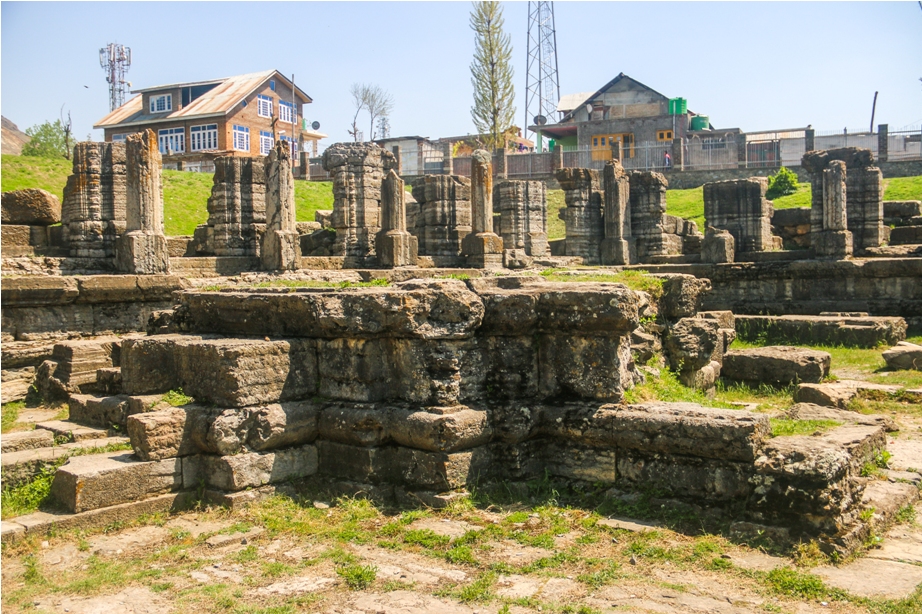
Though largely in ruins, the Martand Sun Temple's scale and the quality of its remaining architecture are truly impressive. Combining a visit to Martand with Avantiswami gives you a comprehensive view of Kashmir's ancient temple heritage and the architectural achievements of different periods.
Achabal Gardens
Another Mughal garden in the vicinity, Achabal Gardens is located near Anantnag, roughly 50 kilometers from Awantipora. Built in 1620 by Jahangir's wife, Nur Jahan, the garden is built around a natural spring and features beautiful terraces, waterfalls, and chinar trees.
Achabal is less crowded than the famous Mughal gardens in Srinagar and offers a peaceful environment for relaxation. The garden's design and the natural spring that feeds it are excellent examples of Mughal landscape architecture and water management.
Visitor Tips & Practical Information
To make the most of your visit to Avantiswami Temple, keep these practical tips and guidelines in mind:
Timing and Duration
Plan to spend approximately 1-2 hours at Avantiswami Temple. This allows enough time to explore the ruins at a leisurely pace, take photographs, and absorb the historical atmosphere. If you're also visiting Avantishwara Temple nearby, budget an additional hour.
The site is generally open from sunrise to sunset, but it's advisable to visit during daylight hours for safety and to properly see the ruins. The best lighting for photography is in the morning or late afternoon.
What to Wear
Dress modestly out of respect for the site's religious significance. While there's no strict dress code, it's advisable to avoid shorts, sleeveless tops, or revealing clothing. Comfortable walking shoes are essential, as you'll be walking on uneven ground and climbing steps.
If you're visiting in winter, wear warm clothing in layers. The temple site is exposed and can be quite windy. In summer, bring sun protection—a hat or cap, sunglasses, and sunscreen—as there's limited shade on the site.
Facilities Available
Facilities at Avantiswami Temple are basic. There's a small parking area near the entrance, but no dedicated ticket office or visitor center. The ASI maintains the site, but there are no restrooms, food vendors, or souvenir shops on-site. It's advisable to carry water and snacks, especially in summer.
For more extensive facilities, you'll need to return to Awantipora town or continue to Srinagar. Plan accordingly and use facilities in Srinagar before starting your trip.
Hiring a Guide
Official guides are not always available at the site, but you may be able to hire a local guide who can explain the temple's history and architecture. Alternatively, hire a guide in Srinagar who can accompany you for the full day. A knowledgeable guide can significantly enhance your experience by providing historical context and pointing out architectural details you might otherwise miss.
Photography Guidelines
Photography is permitted at Avantiswami Temple, and the ruins offer excellent photographic opportunities. There's no additional fee for photography. For the best results, bring a camera with good wide-angle capability to capture the architectural elements and a telephoto lens for details.
The soft light of early morning or late afternoon is ideal for photography. If you're visiting during midday, the harsh light can create strong shadows that may not be flattering for the ruins. Consider using a polarizing filter to reduce glare and enhance the colors of the stone.
Safety Considerations
Avantiswami Temple is generally safe to visit, but as with any travel in Jammu and Kashmir, it's advisable to check current security conditions before planning your visit. The security situation in Kashmir can change, and it's important to stay informed.
When visiting the temple ruins, be careful when walking on uneven ground or climbing on the ancient structures. Some stones may be loose, and the surfaces can be slippery, especially in wet weather. Don't climb on walls or structures that appear unstable.
Combining with Other Activities
Consider combining your temple visit with other activities in the region. If you're interested in trekking, the Kolukmalai region offers challenging trails with stunning views. For a more leisurely experience, lake visits and cave exploration are excellent alternatives. However, these destinations are in other parts of India—within Kashmir itself, consider combining your temple visit with a shikara ride on Dal Lake or a day trip to Gulmarg.
Responsible Tourism
Help preserve Avantiswami Temple by being a responsible tourist. Don't touch, climb on, or damage the ancient structures. Take your trash with you when you leave. Avoid making excessive noise that might disturb other visitors or the peaceful atmosphere of the site.
Remember that this is an archaeological site of great historical importance. Treat it with the respect it deserves, and help ensure that future generations can also appreciate this monument to Kashmir's glorious past.
Conclusion: Preserving Kashmir's Temple Heritage
Avantiswami Temple stands as a powerful reminder of Kashmir's rich cultural heritage and the heights of artistic achievement that the valley once attained. Though now in ruins, the temple continues to inspire awe in visitors who make the journey to Awantipora, offering a tangible connection to the golden age of Kashmiri civilization under King Avantivarman.
The temple's story—of its creation as a grand Vishnu shrine, its centuries as a center of worship, its destruction by time and human action, and its rediscovery and preservation in the modern era—mirrors the broader story of Kashmir itself. It is a story of great achievements, periods of decline, and ongoing efforts to preserve and understand the past.
For travelers interested in India's temple heritage, Avantiswami offers something truly unique: the opportunity to explore a distinctive architectural tradition that flourished in Kashmir and produced some of the most beautiful temples in India. The Kashmiri style, with its elegant proportions, intricate decorative work, and skilled use of locally available stone, represents an important branch of Indian temple architecture that deserves wider recognition.
The work of the Archaeological Survey of India in excavating, conserving, and presenting Avantiswami Temple is commendable. Their efforts ensure that this important monument will continue to educate and inspire visitors for generations to come. Each person who visits Avantiswami and learns about its history becomes part of the temple's ongoing story, helping to keep alive the memory of Kashmir's ancient glory.
As you walk among the temple's weathered walls and imagine the structure as it once stood—a towering shikhara rising toward the heavens, intricately carved sculptures adorning every surface, priests performing rituals, and devotees offering prayers—you connect with a millennium of human history. The stones of Avantiswami Temple have much to teach us about artistic excellence, religious devotion, and the enduring human impulse to create beauty that transcends time.
Whether you're a history enthusiast, an architecture student, a spiritual seeker, or simply a curious traveler, Avantiswami Temple rewards those who make the effort to visit. In the shadow of the Kashmir mountains, beside the flowing Jhelum River, the ruins of this ancient Vishnu temple continue to stand as a testament to human creativity and the enduring power of faith.
As tourism in Kashmir continues to develop and more travelers discover the valley's attractions, sites like Avantiswami Temple play an increasingly important role in showcasing Kashmir's cultural heritage beyond its famous natural beauty. They remind us that Kashmir is not just a scenic destination but a land with a rich, complex history that has much to teach us about art, architecture, and the human spirit.
Location
Frequently Asked Questions
Q1.What is Avantiswami Temple and who built it?
Q2.How do I reach Avantiswami Temple from Srinagar?
Q3.What is the best time to visit Avantiswami Temple?
Q4.Is there an entry fee for Avantiswami Temple?
Q5.What makes Kashmiri temple architecture unique at Avantiswami?
Q6.What are the nearby attractions to visit with Avantiswami Temple?
Q7.What is the historical significance of Avantiswami Temple?
Q8.How much time should I spend at Avantiswami Temple?
Recommended For You
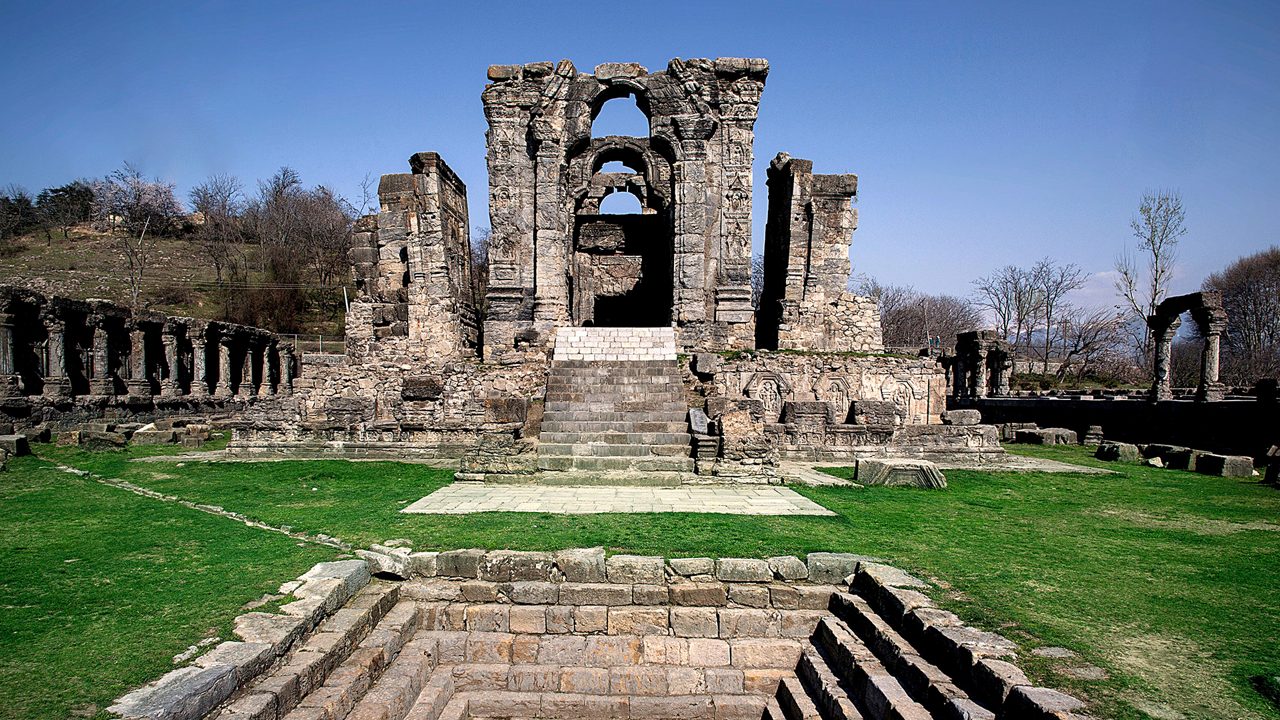
Martand Sun Temple Kashmir: Ancient History, Route & Visitor Info
Complete Martand Sun Temple Kashmir guide with history, architecture, timings, route planning, best season, nearby attractions, and practical travel tips.
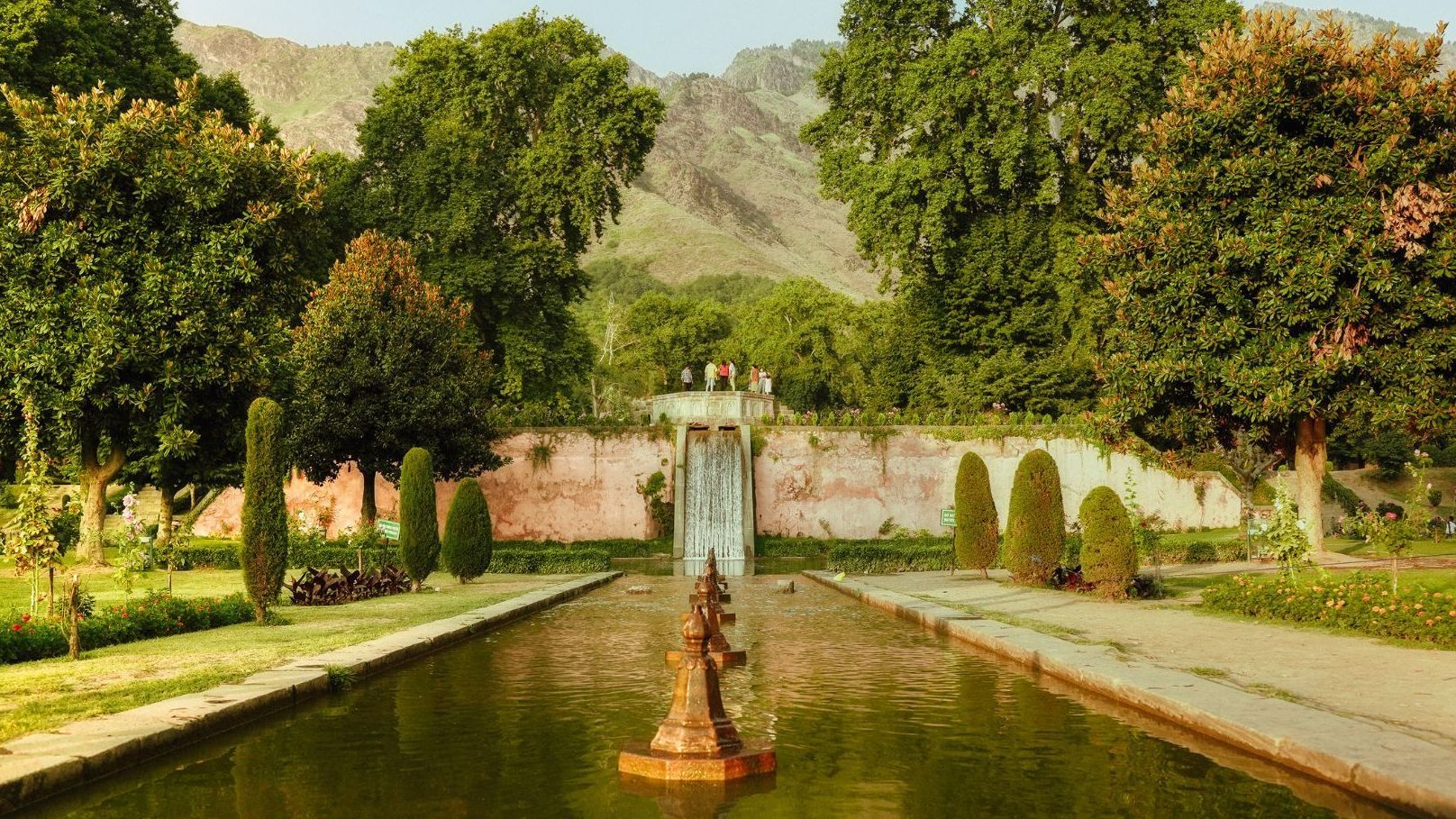
Mughal Gardens Kashmir: Complete Guide to 5 Gardens
Explore Mughal Gardens in Srinagar - Shalimar, Nishat, Chashme Shahi & more. Timings, entry fee, best time & travel guide.
Shankaracharya Temple Srinagar: Timings, Steps & Darshan Information
Visit Shankaracharya Temple in Srinagar, Kashmir - ancient Shiva temple with panoramic Dal Lake views. Complete guide with history, trek & timings.
Never Miss an Adventure
Get the latest trekking guides, travel tips, and exclusive offers delivered straight to your inbox.
