
Chidambaram Nataraja Temple: Timings, Rituals & Temple Architecture

Rohan Malhotra
February 4, 2026
Complete Chidambaram Nataraja Temple guide with history, architecture, spiritual significance, festivals, best time to visit, and travel tips. Explore Lord Shiva's cosmic dance.
The Cosmic Dance of Lord Shiva
In the temple town of Chidambaram in Tamil Nadu stands one of Hinduism's most sacred and mysterious shrines – the Nataraja Temple, dedicated to Lord Shiva in his form as the cosmic dancer. This ancient temple complex, with its golden roof and sacred spaces, houses what is perhaps the most iconic representation of Shiva: the bronze image of Nataraja performing the Tandava – the dance of cosmic creation and destruction.
Chidambaram holds a unique place in Hindu theology as one of the Panchabhuta Sthalas – the five temples representing the five elements (earth, water, fire, air, and space). Here, Shiva is worshipped not as a lingam (his usual aniconic form) but as Akasha Linga – the element of space or ether. This abstract conception represents the formless, all-pervading nature of the divine, making Chidambaram one of the most philosophically sophisticated temple sites in India.
The temple's significance goes beyond its theological importance. The Nataraja image that originated here has become one of the most recognizable symbols of Hinduism worldwide, inspiring artists, philosophers, and scientists alike. The physicist Fritjof Capra saw in Nataraja's dance a parallel to modern quantum physics, while for devotees, it represents the eternal rhythm of the universe.
For spiritual seekers, art historians, students of philosophy, or anyone interested in the depths of Indian culture, Chidambaram offers an experience that transcends ordinary temple visits. Here, in the sacred space of the Chit Sabha (hall of consciousness), the cosmic dance continues eternally, and visitors can connect with one of humanity's most profound conceptions of the divine.
Ancient Legacy and Temple History
The history of the Chidambaram Nataraja Temple spans over two millennia, making it one of South India's oldest continuously worshipped temple sites. The earliest references to Chidambaram appear in Tamil Sangam literature (approximately 3rd century BCE to 3rd century CE), where it's mentioned as a sacred place of Shiva worship.
The temple as it stands today was built primarily by the Chola dynasty, who ruled Tamil Nadu from the 9th to 13th centuries CE and were great patrons of Shaivism. The Cholas considered Chidambaram their family deity temple and poured enormous resources into its construction and maintenance. The sanctum sanctorum (Chit Sabha) dates to the Chola period, though it may have been built on the site of earlier shrines.
According to temple tradition, the site was originally a forest of Tillai trees (a type of mangrove), hence the ancient name Tillai for Chidambaram. Hindu mythology tells us that this was where Shiva performed his cosmic dance before the sages, and where he taught the path of yoga to his disciples. The Tevaram hymns (7th-9th centuries CE), the sacred Tamil Shaivite literature, sing praises of Chidambaram, cementing its importance in the Bhakti movement.
The temple received patronage from various South Indian dynasties including the Pallavas, Pandyas, and Vijayanagara rulers. Each dynasty contributed to the temple's expansion and ornamentation. The towering gopurams (temple towers) were added later, primarily during the Vijayanagara and Nayak periods (14th-17th centuries), giving the complex its present grand appearance.
What makes Chidambaram's history unique is its continuous tradition of worship and scholarship. The temple has been a center of Shaivite philosophy, music, and dance for over a thousand years. The Dikshitars, a community of Brahmin priests, have been the temple's hereditary custodians for centuries, maintaining its rituals and traditions with remarkable continuity.
The Nataraja Image
The iconic bronze image of Nataraja that Chidambaram gave to the world represents Shiva performing the Ananda Tandava – the dance of bliss. In this representation, Shiva stands within a ring of fire (prabha mandala), symbolizing the cycle of creation and destruction. His four arms hold different symbols: a drum (damaru) representing creation, fire representing destruction, a gesture of reassurance (abhaya mudra), and a hand pointing to his raised foot symbolizing liberation.
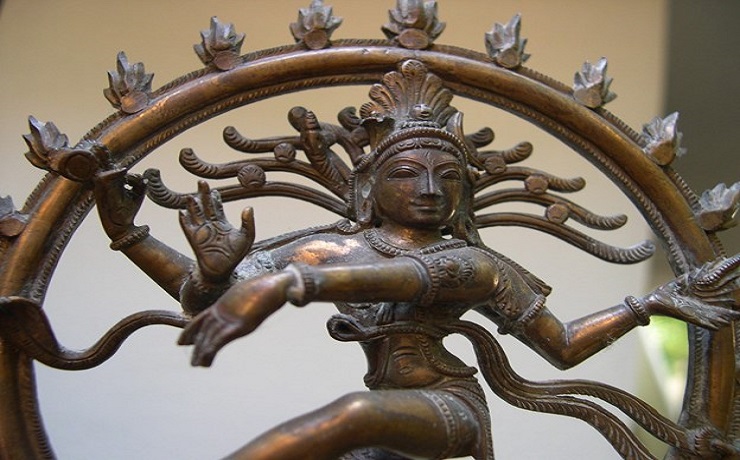
This image, believed to have originated at Chidambaram, spread throughout South India and eventually the world. The Chola period (9th-13th centuries) saw the perfection of the bronze-casting technique known as the lost-wax method, and Chidambaram became a center for creating these sacred bronzes. The Nataraja image from Chidambaram became the prototype for countless others across India and beyond.
Temple Architecture and Sacred Spaces
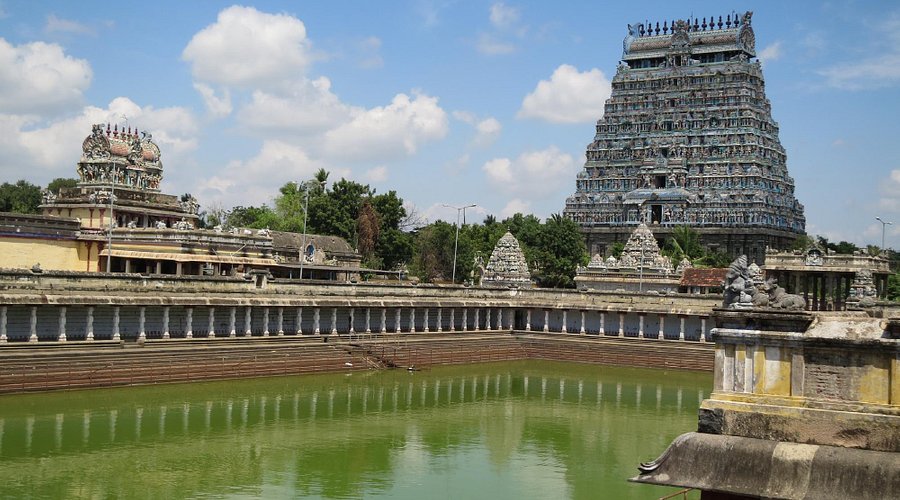
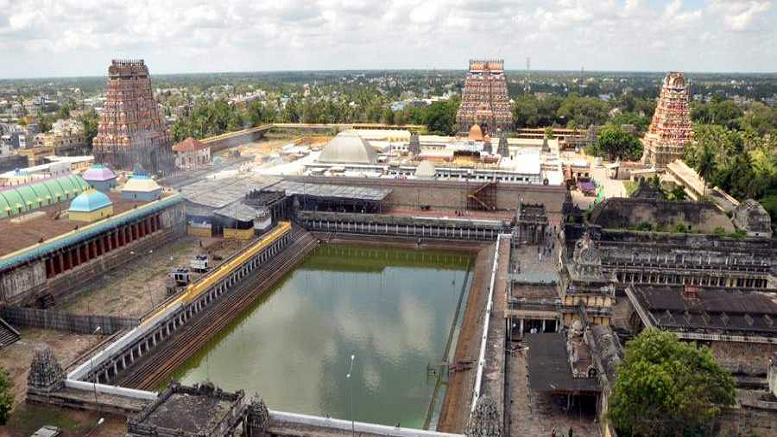
The Chidambaram Nataraja Temple complex is vast, covering approximately 40 acres in the heart of Chidambaram town. The architecture represents the culmination of South Indian temple design, with towering gopurams, spacious mandapams (halls), and multiple shrines.
The Temple Towers (Gopurams)
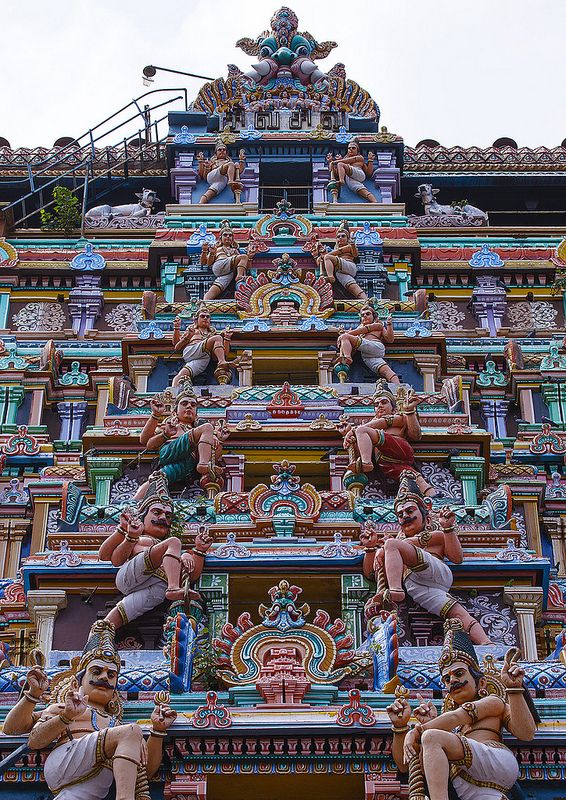
The temple has four rajagopurams (main entrance towers) facing the four cardinal directions, each covered with sculptures of deities, mythical beings, and scenes from Hindu mythology. These towers are among the tallest in South India:
- East Gopuram: The main entrance, approximately 40 meters tall, covered with elaborate sculptures.
- West Gopuram: Similar in height and design, facing the town.
- North Gopuram: Associated with the temple's rituals.
- South Gopuram: An important entrance for processional routes.
These gopurams serve as transition points between the mundane world and the sacred space within. Walking through them symbolizes leaving ordinary concerns behind and entering the realm of the divine.
The Chit Sabha: Hall of Consciousness
The Chit Sabha (Hall of Consciousness) is the heart of the temple, the inner sanctum where Shiva as Nataraja is worshipped. This small, square hall with a sloping copper roof is one of the most sacred spaces in Shaivism. Unlike most temples where the deity is in the center, here the shrine is on the side, and the central space is left empty – symbolizing the formless aspect of Shiva as space (akasha).
The roof is covered with gold, giving the shrine its name Pon Ambalam (Golden Hall). The gold was traditionally contributed by devotees over centuries, and the roof is periodically renewed. The gleaming golden roof is visible from afar and has become a symbol of the temple.
Within the Chit Sabha are several important features:
- The Nataraja Image: The bronze murti (idol) of Shiva as cosmic dancer, believed to be self-manifested (svayambhu).
- Sivakami Sundarar: The goddess, consort of Shiva, with her own shrine.
- The Ruby Nataraja: A small Nataraja image made of ruby, revealed during special festivals.
- The Spatika Linga: A crystal lingam representing Shiva's formless aspect.
Kanaka Sabha: The Golden Hall
The Kanaka Sabha is the outer hall leading to the Chit Sabha. This spacious hall with beautiful pillars is where devotees gather for worship and rituals. The pillars feature carved figures of deities, and the hall has been the site of countless devotional activities over centuries.
The Nritta Sabha: Hall of Dance
The Nritta Sabha (Hall of Dance) is another important structure within the complex. This hall, with its unique octagonal shape, is believed to be where Shiva first performed his cosmic dance. The hall's pillars feature sculpted figures of dancers in various poses, and the space continues to be used for classical dance performances today.
The hall is supported by pillars representing the eight guardians of the directions (dikpalakas), emphasizing the cosmic significance of Shiva's dance which encompasses all directions and all of creation.
Sacred Tanks and Other Shrines
The temple complex includes several sacred tanks (water bodies) used for ritual purification:
- Sivaganga Tank: The main sacred tank, where devotees bathe before worship. The tank is believed to have healing properties.
- Punya Theertham: Another sacred water body within the complex.
Other important shrines within the complex include:
- Govindaraja Perumal Temple: A Vishnu shrine within the Shiva temple complex, symbolizing the harmony between Shaivism and Vaishnavism.
- Shivakamasundari Shrine: Dedicated to the goddess in another aspect.
- Siddhanta Shrines: Dedicated to Shaivite saints and philosophers.
Spiritual Significance and Philosophy
Chidambaram holds profound significance in Hindu philosophy and spirituality. As one of the Panchabhuta Sthalas, it represents Akasha (space/ether) – the most subtle of the five elements and the one that contains all others.
The Panchabhuta Sthalas
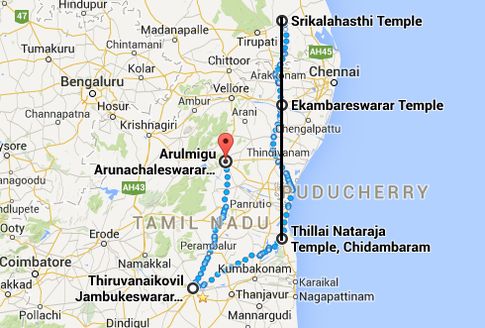
The five elements temples (Panchabhuta Sthalas) are sacred Shiva temples in Tamil Nadu, each representing one of the five elements:
- Chidambaram: Akasha (space/ether)
- Kanchipuram: Prithvi (earth)
- Tiruvannamalai: Agni (fire)
- Kalahasti: Vayu (air)
- Jambukeswaram: Jala (water)
Together, these temples represent the complete manifestation of the material world and Shiva's presence within it. Pilgrims often visit all five temples as part of a spiritual journey, experiencing the divine through each element.
The Formless Divine
What makes Chidambaram unique is its emphasis on the formless aspect of the divine. The empty space in the center of the Chit Sabha is worshipped as the Akasha Linga – Shiva as formless space. This abstract conception represents the highest philosophical understanding in Shaivism, that ultimately, the divine is beyond all forms yet present in everything.
The temple tradition speaks of the Chidambara Rahasya (the secret of Chidambaram) – the mystery of the formless divine that can be experienced but not adequately described in words. This mystery is represented by various symbols in the temple, including the curtain (vilai) that is temporarily drawn during rituals to veil and reveal the deity.
Shiva as Cosmic Dancer
The image of Nataraja represents Shiva as the lord of dance, whose cosmic dance (Tandava) maintains the universe's rhythm. This dance is both creative and destructive, representing the eternal cycles of existence. The ring of fire around Nataraja symbolizes samsara – the cycle of birth and death – while Shiva's raised foot represents liberation from this cycle.
For devotees, the dance symbolizes that the divine is dynamic, not static – that the universe is maintained by constant divine activity. The dance also represents the rhythm of spiritual practice, the oscillation between discipline and surrender, action and stillness.
Worship, Rituals, and Festivals
The Chidambaram temple follows elaborate worship protocols (agamas) maintained by the Dikshitar community of priests. The daily rituals are precise, complex, and have been performed with little change for centuries.
Daily Worship
The temple opens early in the morning, typically around 6:00 AM, and remains open until 10:00 PM with breaks during the day. The daily worship includes several ritual services:
- Morning Abhishekam: The sacred bath of the deity with various substances including water, milk, honey, and sandal paste.
- Alankaram: Decoration of the deity with flowers, clothes, and jewelry.
- Deepa Aradhana: Worship with lamps, considered one of the most important rituals.
- Arati: The waving of lamps before the deity at the end of each worship session.
The priests use specific Mantras (sacred chants) and Mudras (ritual hand gestures) during worship, maintaining traditions that have been passed down for generations.
Major Festivals
The temple celebrates several festivals with great grandeur, drawing devotees from across India:
Arudra Darshanam: Celebrated in the Tamil month of Margazhi (December-January), this is the most important festival at Chidambaram. It celebrates Shiva's cosmic dance, and the Nataraja image is taken out in procession. The festival lasts for 10 days, with each day featuring different rituals and ceremonies.
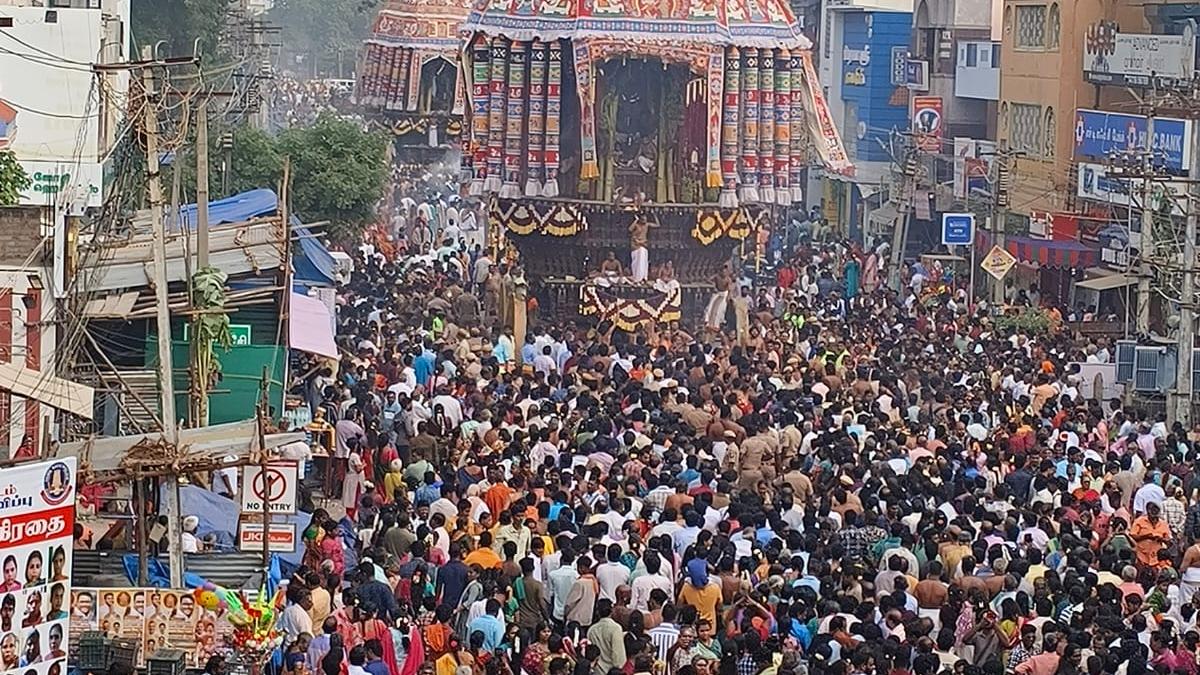
Aani Tirumanjanam: Celebrated in the Tamil month of Aani (June-July), this festival involves the sacred bath (abhishekam) of the Nataraja image with various substances. The deity is taken in procession around the temple streets.
Panguni Uthiram: A spring festival (March-April) celebrating the divine marriage of Shiva and Parvati. The festival includes processions and special rituals.
Navaratri: The nine-night festival dedicated to the Divine Mother is celebrated with special pujas and cultural programs including classical music and dance performances.
Ritual Performances
Classical dance performances, especially Bharatanatyam, are regularly held at the temple, particularly in the Nritta Sabha. These performances are not just cultural events but spiritual offerings, continuing the ancient tradition of dance as worship. The temple has been associated with great dancers and musicians throughout history, and remains an important center for the classical arts.
Best Time to Visit Chidambaram
Festival Seasons (December-January and June-July)
The best time to experience the temple's full cultural vibrancy is during Arudra Darshanam (December-January) or Aani Tirumanjanam (June-July). During these festivals, the temple is decorated elaborately, special rituals are performed, and cultural programs add to the atmosphere. However, these are also the busiest times, and the town can be crowded.
Winter (November to February)
November to February offers pleasant weather with temperatures ranging from 20°C to 30°C, making it comfortable for temple visits and exploring the region. The crowds are thinner than during festivals, allowing for a more peaceful darshan. This is an ideal time for those who prefer a quieter, more contemplative experience.
Summer (March to May)
Summer can be hot with temperatures reaching 38°C-40°C. However, the temple's stone structure and covered areas provide some relief. Early morning visits (6-9 AM) are recommended during summer to avoid the midday heat. Carry water, wear a hat, and use sunscreen if visiting during the hottest part of the day.
Monsoon (October to December)
The northeast monsoon brings rainfall to this region. The rain can make outdoor movement difficult, but the temple complex has extensive covered areas. The temple is especially beautiful during rain, with the sound of water on the copper roof creating a meditative atmosphere.
How to Reach Chidambaram
By Air
The nearest airport is Puducherry Airport, approximately 60 kilometers away. Puducherry has connecting flights to Chennai and Bangalore. Alternatively, Chennai International Airport is about 150 kilometers away and has excellent connections to major Indian and international cities.
By Train
Chidambaram has its own railway station, Chidambaram Junction, which is well-connected to major Tamil Nadu cities:
- From Chennai: Several trains including the Cholan Express connect Chennai to Chidambaram. Journey time is approximately 5-6 hours.
- From Thanjavur: About 2-3 hours by train.
- From Puducherry: About 2 hours by train.
From the railway station, auto-rickshaws (₹50-100) are available to reach the temple in the center of town.
By Road
Chidambaram is well-connected by road:
- From Chennai: Approximately 150 kilometers via NH32 and NH45. The drive takes about 3-4 hours.
- From Puducherry: About 60 kilometers, 1.5-2 hours by road.
- From Thanjavur: About 100 kilometers, 2-3 hours by road.
TNSTC buses operate regular services to Chidambaram from Chennai, Puducherry, and other major towns. Private buses and taxis are also available. The roads are generally in good condition.
Nearby Attractions
- Pichavaram Mangrove Forest: The world's second-largest mangrove forest, about 15 km away. Known for boating through dense mangrove tunnels.
- Puducherry: The former French colony with its unique blend of French and Indian cultures, about 60 km away.
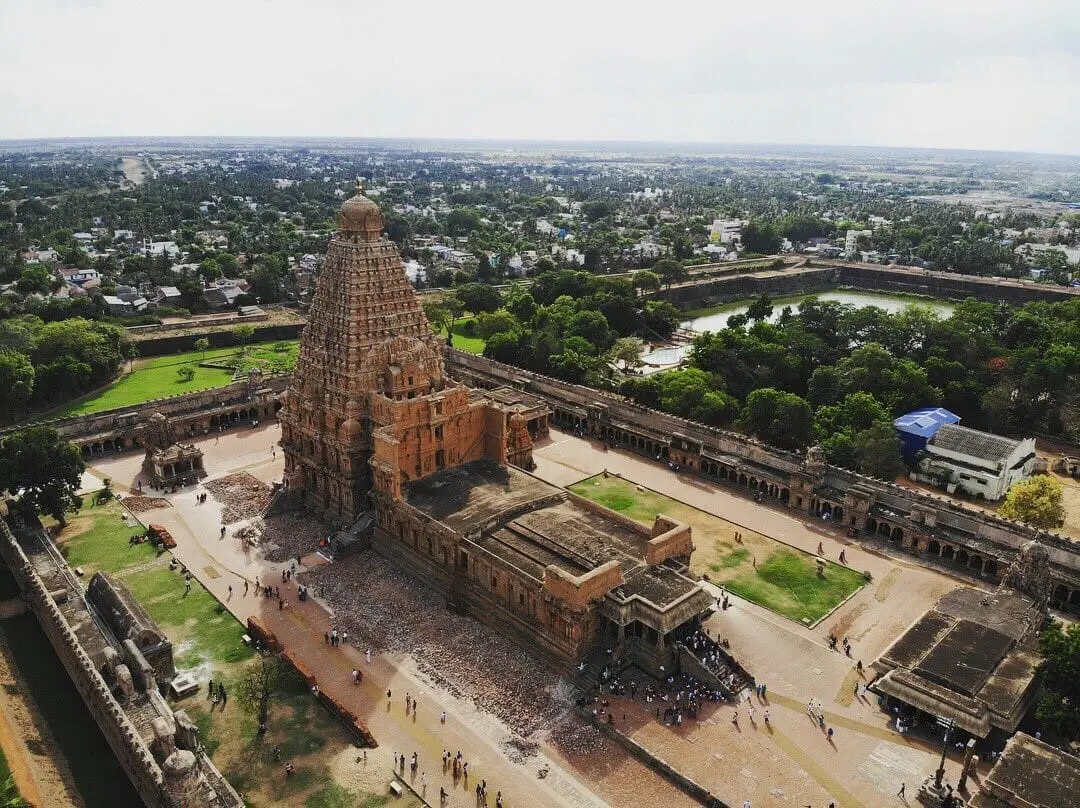
- Thanjavur: Home to the Brihadeeswara Temple and other Chola monuments, about 100 km away.
- Kumbakonam: Temple town with numerous ancient temples, about 40 km away.
Practical Tips for Visiting
Temple Etiquette
- Dress modestly: Wear conservative clothing covering shoulders and knees. Remove footwear before entering.
- Photography: Photography may be restricted in certain areas. Check with temple authorities.
- Respect rituals: Maintain silence during pujas and don't disturb worshippers.
- Cell phones: Switch off or keep silent within temple precincts.
Accommodation
Chidambaram has several budget and mid-range hotels. For more options, stay in nearby Puducherry (60 km) or Thanjavur (100 km). Hotel Akshaya and Hotel Grand Palace are popular options in Chidambaram.
Food
Traditional South Indian vegetarian food is available locally. Try the Chidambaram special prasadam (sacred food) distributed after puja. Nearby Puducherry offers diverse cuisine including French and continental options.
Conclusion: Where the Cosmic Dance Eternal
The Chidambaram Nataraja Temple stands as one of humanity's most profound spiritual monuments – a place where philosophy, art, architecture, and devotion converge in extraordinary harmony. For over a thousand years, this temple has preserved the vision of Shiva as cosmic dancer, whose eternal Tandava maintains the rhythm of the universe.
What makes Chidambaram special is its ability to speak to different levels of understanding. For the simple devotee, it's a sacred place where Shiva grants blessings. For the philosopher, it represents the formless divine beyond all categories. For the artist, it's the birthplace of one of the world's most beautiful religious images. For the scientist, it offers a vision of cosmic dynamics that parallels modern physics.
The temple's golden roof gleaming over the town of Chidambaram is a beacon calling seekers to experience the mystery of the divine dance. Whether you're a Hindu pilgrim completing the Panchabhuta Sthala circuit, an art student studying Indian bronzes, a spiritual seeker exploring the depths of Shaivite philosophy, or simply a traveler drawn to sacred places, Chidambaram offers an experience that can transform your understanding of the divine.
The temple combines well with visits to the Meenakshi Temple in Madurai, the beach town of Puducherry, the Chola temples of Thanjavur, or the coastal shrine at Rameshwaram, making it part of a comprehensive exploration of South India's spiritual heritage.
So come to Chidambaram with an open mind and receptive heart. Let the golden-roofed shrine inspire you. Let the cosmic dance remind you of the eternal rhythms that sustain existence. And may you leave with a sense of the divine presence that dances eternally in the space of consciousness – the Chidambara Rahasya that is both mystery and revelation.
Location
Frequently Asked Questions
Q1.What is special about Chidambaram Nataraja Temple?
Q2.Why is Shiva called Nataraja?
Q3.What are the timings of Chidambaram temple?
Q4.What are Panchabhuta Sthalas?
Q5.How to reach Chidambaram from Chennai?
Q6.What is the Chidambara Rahasya?
Q7.Which festival is famous in Chidambaram temple?
Q8.Is photography allowed inside Chidambaram temple?
Recommended For You

Best Beaches in Puducherry: Activities, Nearby Cafes & Stay Areas
Complete guide to the best beaches in Puducherry including Promenade, Serenity, Auroville, Paradise, and more. Discover surfing spots, timings, activities, and travel tips.
Temples in Kerala: God's Own Country's Sacred Heritage
Explore sacred temples in Kerala. Discover Sabarimala, Guruvayur, Padmanabhaswamy & more with complete travel guide.
Brihadeeswarar Temple Thanjavur: History, Timings & Architecture
Explore Brihadeeswarar Temple Thanjavur with history, timings, entry details, architecture highlights, route options, and practical tips for a complete visit.
Never Miss an Adventure
Get the latest trekking guides, travel tips, and exclusive offers delivered straight to your inbox.
