
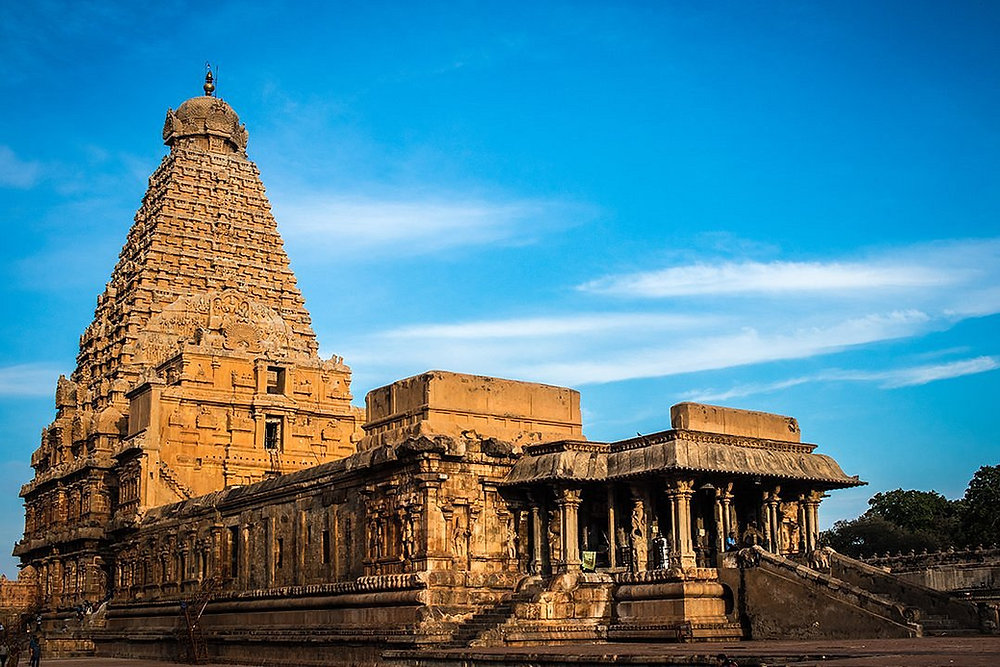
Temples in Thanjavur: The Great Living Chola Heritage

Priya Mehta
January 12, 2026
Explore Thanjavur's magnificent Brihadeeswara Temple & UNESCO-listed Chola temples. Discover architecture, history, rituals and travel guide.
Introduction: The Temple City of Tamil Nadu
Thanjavur, also known as Tanjore, stands as one of South India's most important cultural and religious centers. Once the capital of the mighty Chola Empire, this city in Tamil Nadu is home to some of the most magnificent temples ever built in India. The temples of Thanjavur, particularly the UNESCO-listed Great Living Chola Temples, represent the pinnacle of Dravidian architecture and the artistic achievements of one of India's greatest dynasties. While the famous Meenakshi Temple in Madurai represents another pinnacle of South Indian temple architecture, Thanjavur's temples stand unique for their Chola legacy.
What makes Thanjavur's temple landscape truly extraordinary is not just the grandeur of its monuments but their living, breathing nature. These are not museum pieces but active centers of worship where rituals established a thousand years ago continue uninterrupted. The city's most famous temple - the Brihadeeswara Temple - has been in continuous use since its completion in 1010 CE, making it over a thousand years old. This continuity between past and present gives Thanjavur's temples a spiritual energy that must be experienced to be understood.
Brihadeeswara Temple: The Periya Kovil
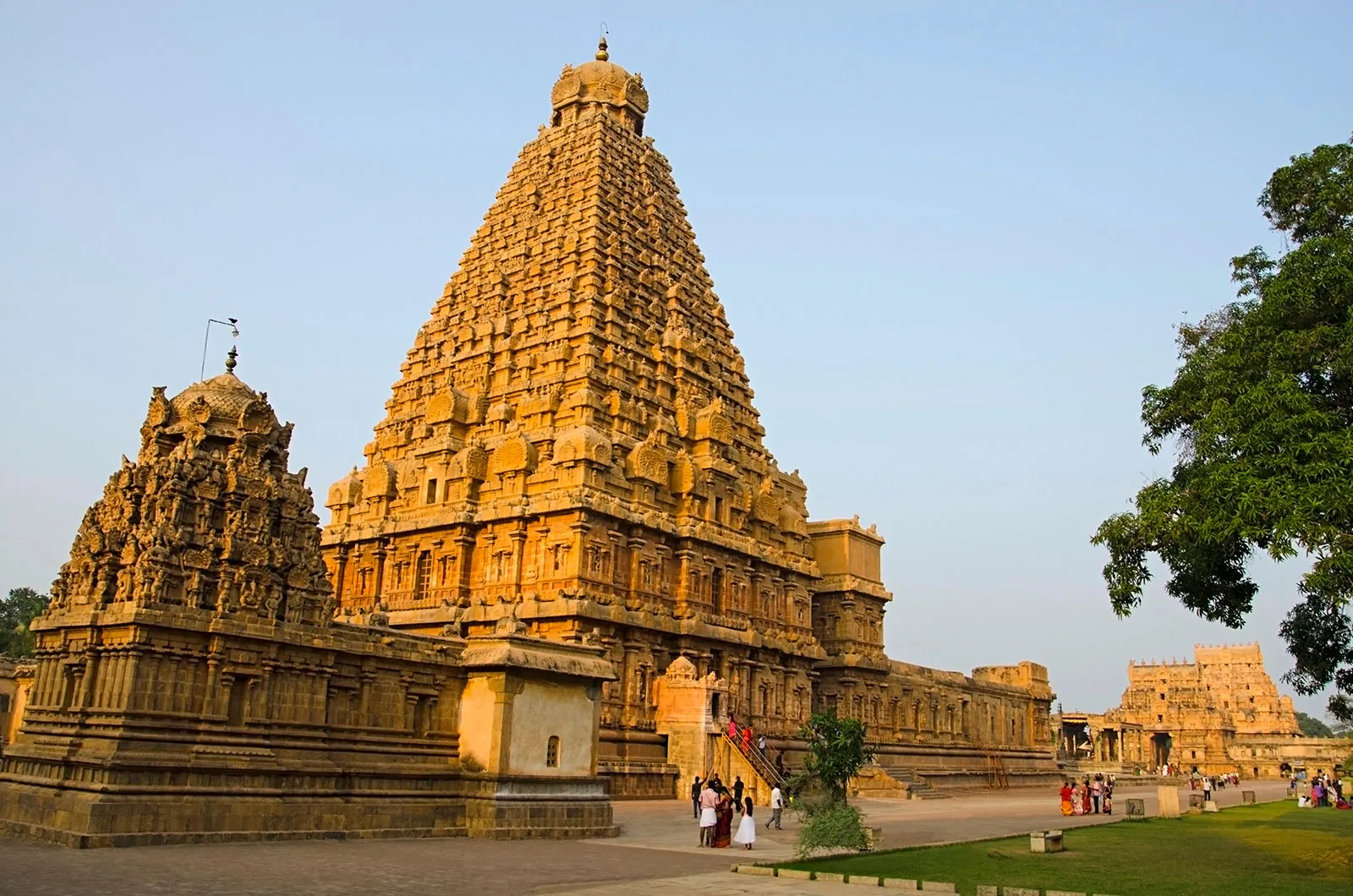
The Brihadeeswara Temple, locally known as Periya Kovil (Big Temple), is Thanjavur's crown jewel and one of India's most spectacular monuments. Built by the Chola emperor Rajaraja I between 1003 and 1010 CE, this temple is dedicated to Lord Shiva and represents the zenith of Chola architecture and artistic achievement. Lord Shiva, the presiding deity, is worshipped across India in various sacred forms, from the Amarnath Temple in Kashmir to the magnificent temples of South India.
Architectural Marvel
The temple's most striking feature is its towering vimana (temple tower) over the main sanctum, which rises to an impressive height of 216 feet (66 meters). For over a thousand years, this was the tallest temple tower in India. What makes this achievement even more remarkable is that the vimana is built entirely of granite, without any binding material - the stones are simply interlocked with incredible precision.
Atop the vimana sits a massive single stone block - a cupola (kalash) weighing approximately 80 tons. The engineering feat of raising this enormous stone to such a height in the 11th century, without modern machinery, continues to amaze architects and historians. Theories about how this was accomplished include the use of earthen ramps that were gradually built up and then dismantled.
The temple complex is built on a raised platform and is surrounded by a high wall. The entrance is through two impressive gopurams (gateway towers). The outer courtyard measures 240 meters by 120 meters and houses numerous subsidiary shrines.
The Nandi Mandapa
At the entrance to the main shrine stands a colossal Nandi (Shiva's sacred bull) carved from a single rock. This monolithic Nandi measures 16 feet in length, 12 feet in height, and 8 feet in width, making it one of the largest Nandi statues in India. The Nandi sits in a mandapa (hall) supported by pillars decorated with intricate carvings. This divine bull, serving as Shiva's vehicle, can also be seen at other Shiva temples across India, including those at Hampi.
Sculptural Treasures
The temple walls feature exquisite carvings of various deities, particularly the 108 Bharatanatyam dance poses (karanas) carved on the inner walls of the temple. These carvings are invaluable for understanding the evolution of classical Indian dance. The temple also features beautiful bronze sculptures of Chola period, though many are now housed in the museum within the temple complex.
The sanctum sanctorum houses a massive Shiva linga, one of the largest in India. The circumambulation path around the sanctum features carved panels depicting scenes from Hindu mythology and the achievements of the Chola kings.
UNESCO World Heritage Status
In 1987, the Brihadeeswara Temple was designated a UNESCO World Heritage Site as part of the "Great Living Chola Temples" group, which also includes temples at Gangaikonda Cholapuram and Darasuram. UNESCO recognized these temples for their outstanding universal value as masterpieces of Chola architecture and their testimony to the Chola civilization's brilliant achievements in architecture, sculpture, painting, and bronze casting. India is home to many UNESCO World Heritage temples, including the magnificent temple complexes at Hampi and the Belur and Halebidu temples.
Airavateswara Temple, Darasuram
Located about 35 kilometers from Thanjavur in the town of Darasuram, the Airavateswara Temple is another UNESCO World Heritage Site built by the Chola king Rajaraja II in the 12th century. Though smaller than the Brihadeeswara Temple, many consider it artistically superior for its refined and intricate craftsmanship.
Unique Architecture
The temple, dedicated to Lord Shiva, is renowned for its sculptural excellence. The main sanctum is in the shape of a chariot drawn by horses, a unique design element. The temple features beautifully carved pillars, many of which produce musical notes when tapped. The front mandapa is designed as a chariot with stone horses and wheels, reflecting the temple's name - Airavateswara comes from Airavata, Indra's white elephant, who worshipped Shiva here.
Intricate Carvings
The temple walls feature exquisite sculptures depicting scenes from the Ramayana and other Hindu epics. The level of detail is extraordinary - even the smallest figures are carved with precision. The temple also features beautiful panels depicting the 63 Nayanmars (Shaivite saints) and various scenes from daily life in medieval Tamil Nadu.
The temple's legend says that Airavata, Indra's white elephant, worshipped Shiva here to regain his white color after being cursed. Another legend says that Yama, the god of death, also worshipped here and was cured of a burning sensation. The temple tank is believed to have healing properties, and pilgrims take ritual baths here.
Gangaikonda Cholapuram Temple
Built by Rajendra Chola I to commemorate his victory over the Pala dynasty and his expansion to the Ganges river, this temple served as the capital of the Chola empire for about 250 years. Located approximately 70 kilometers from Thanjavur, it's the third UNESCO-listed Great Living Chola Temple.
The temple architecture follows the Brihadeeswara Temple's design but with some modifications. The sanctum tower is slightly smaller but equally impressive. The temple features beautiful sculptures including a giant Nandi and various deities. The city around it, once a magnificent capital, is now mostly ruins, making the temple stand as a solitary reminder of past glory.
Other Important Temples in Thanjavur
Swami Malai Temple
One of the six abodes (Arupadaiveedu) of Lord Murugan (Kartikeya), Swami Malai is located about 8 kilometers from Thanjavur. The temple is built on an artificial hill, giving it its name (Swami = God, Malai = Hill). Lord Murugan is worshipped here as Swaminathan. The temple is significant for its legend where Murugan taught the meaning of the Omkara (Om) to his father Shiva.
Thiruvaiyaru Temples
Located 13 kilometers from Thanjavur, Thiruvaiyaru (five rivers) is named after the five rivers that flow through the area. The town has several important temples, most notably the Panchanadeeswara Temple dedicated to Shiva. Thiruvaiyaru is also famous as the birthplace of Saint Tyagaraja, one of the Trinity of Carnatic music, and hosts an annual music festival in his honor.
Punnaivanathar Temple
Dedicated to Lord Shiva, this temple is associated with the legend of Shiva drinking the deadly Halahala poison that emerged during the churning of the cosmic ocean. The temple features beautiful architecture and is an important Shiva pilgrimage site.
Chandra Bhagawan Temple
Dedicated to the Moon God (Chandra), this temple is one of the few Navagraha (nine planetary deity) temples in the region. It's believed that worshipping here can alleviate problems related to the moon in one's astrological chart.
Thanjavur Maratha Palace Complex
While not a temple, the Thanjavur Maratha Palace deserves mention for its temple-like architecture and religious significance. Built by the Maratha rulers who governed Thanjavur after the Cholas, the palace complex houses several important religious structures:
- Sivaganga Fort: The fortified complex surrounding the palace
- Royal Temples: Small temples dedicated to various deities within the palace
- Saraswathi Mahal Library: Contains ancient manuscripts on religion and philosophy
Temple Rituals and Festivals
Daily Rituals
The Brihadeeswara Temple and other major temples follow traditional Shaivite ritual protocols. Each day, six worship services (kaalas) are performed:
- Tiruvananthal (Early Morning): Shiva is awakened with hymns and offerings
- Siyarkkal (Morning): Abhishekam (ritual bathing) of the Shiva linga
- Ucchikalam (Midday): The main ritual of the day with elaborate offerings
- Sayaratchai (Evening): Evening prayers and offerings
- Irandamkalam: Night worship ritual
- Ardha Jamam: Final ritual before closing
Major Festivals
Maha Shivaratri: The most important Shaivite festival, Maha Shivaratri (February-March) sees thousands of devotees keeping vigil, fasting, and worshipping throughout the night. The temple is beautifully decorated, and special abhishekam is performed throughout the day.
Aani Tirumanjanam: Celebrated in June-July, this festival marks the summer solstice and features special abhishekam with sacred water, sandalwood paste, and other auspicious substances.
Navratri: The nine nights dedicated to the goddess are celebrated with great devotion. The Brihadeeswara Temple features special decorations and rituals for each of the nine nights.
Brahmotsavam: The annual festival of the Brihadeeswara Temple, usually held in April-May, features elaborate rituals, processions of the deity on various vahanas (vehicles), and cultural programs. The temple deity is taken out in a magnificent chariot during this festival.
Kumbabhishekam: The temple's consecration ceremony is held every 12 years, involving elaborate rituals to re-consecrate the temple and its deities. This major event attracts thousands of devotees.
Bronze Art Tradition
Thanjavur is renowned for its bronze casting tradition, particularly of Hindu deities. The Chola bronzes from this region are considered among the finest examples of Indian bronze art. The Thanjavur Palace Museum and the Brihadeeswara Temple museum house exceptional collections of these bronzes.
The technique used, called madhuchistha vidhana (lost wax process), creates incredibly detailed and expressive figures. Nataraja (Shiva as the cosmic dancer) is the most famous Chola bronze, and examples from Thanjavur can be found in museums worldwide. Contemporary artisans in Thanjavur continue this tradition, creating beautiful bronze sculptures for temples and collectors.
Planning Your Visit to Thanjavur Temples
Best Time to Visit
The ideal time to visit Thanjavur is from October to March when the weather is pleasant. Summers (April-June) are very hot with temperatures reaching 40°C, making temple visits uncomfortable. Monsoon (July-September) brings moderate rain but can still be good for visiting if you don't mind getting wet. For festival experiences, visit during Maha Shivaratri (February-March) or the Brahmotsavam (April-May).
How to Reach Thanjavur
By Air: The nearest airport is Tiruchirappalli (Trichy), approximately 58 kilometers away. Chennai Airport (350 km) and Coimbatore Airport (275 km) are other options. From the airport, taxis and buses are available.
By Rail: Thanjavur Junction is well-connected to major cities including Chennai, Bangalore, Trichy, and Madurai. Direct trains connect Thanjavur to Chennai (approximately 6-8 hours) and other major Tamil Nadu cities.
By Road: Thanjavur is well-connected by road. The drive from Chennai takes about 7-8 hours. Regular buses operate from Chennai, Bangalore, and other major cities. The road journey offers views of rural Tamil Nadu.
Getting Around
- Auto-rickshaws: Convenient for short distances within the city
- Taxis: Available for full-day hire (₹1500-2000)
- Buses: Public buses connect Thanjavur to nearby temples
- Private vehicles: Can be rented for flexibility
Where to Stay
Heritage Hotels: Several converted heritage properties offer a taste of old Thanjavur
Mid-range Hotels: Plenty of options near the railway station and Grand Anicut Canal area
Budget Options: Guest houses and lodges available throughout the city
Suggested Itinerary
Day 1: Big Temple & City
Morning: Brihadeeswara Temple (3-4 hours)
Afternoon: Palace Complex & Museum
Evening: Explore city markets
Day 2: UNESCO Sites
Morning: Drive to Darasuram - Airavateswara Temple
Afternoon: Gangaikonda Cholapuram
Evening: Return to Thanjavur
Day 3: Murugan Temple & Art
Morning: Swami Malai Temple
Afternoon: Bronze casting workshops
Evening: Thiruvaiyaru
Temple Etiquette Tips
- Dress Modestly: Traditional attire is preferred. Shoulders and knees must be covered.
- Remove Footwear: Shoes must be removed before entering temple premises.
- Respect Rituals: Maintain silence during rituals and ask permission before photography.
- Timing: Visit early morning or late evening for peaceful darshan.
- Donations: If making a donation, use the official donation boxes or temple office.
Conclusion: Living Heritage of the Cholas
The temples of Thanjavur represent far more than architectural monuments; they are living testimonies to the spiritual, artistic, and cultural achievements of one of India's greatest dynasties. When you walk through the corridors of the Brihadeeswara Temple, touch the ancient stones that have witnessed a millennium of worship, or observe rituals that have continued uninterrupted for a thousand years, you connect with something profound and timeless.
What makes Thanjavur's temples truly special is their continuity. These are not ruins but active centers of faith where priests continue the exact same rituals established by Rajaraja Chola a millennium ago. The bells that ring today, the chants that fill the air, the devotees who queue for darshan - all these create an unbroken thread linking the present to the past.
Whether you're a history buff marveling at architectural achievements, a devotee seeking spiritual blessings, an art lover appreciating sculptural masterpieces, or simply a traveler drawn to extraordinary places, the temples of Thanjavur offer an experience that is both intellectually stimulating and spiritually moving.
Come to Thanjavur and stand before the towering vimana of the Brihadeeswara Temple. Watch the centuries-old rituals. Absorb the spiritual energy that has drawn devotees for a millennium. Discover for yourself why these temples are called "Great Living Chola Temples" - for in Thanjavur, the past doesn't just survive; it lives, breathes, and continues to inspire.
Location
Frequently Asked Questions
Q1.What are the timings of Brihadeeswara Temple Thanjavur?
Q2.Why is Brihadeeswara Temple called the Big Temple?
Q3.Is there an entry fee for Brihadeeswara Temple?
Q4.How to reach Thanjavur from Chennai?
Q5.What is special about Airavateswara Temple Darasuram?
Q6.How many days are needed to explore Thanjavur temples?
Q7.What is the best time to visit Thanjavur temples?
Q8.What should I wear when visiting Thanjavur temples?
Recommended For You
Places to Visit in Thanjavur: Temples, Palaces & Day Excursions
Explore Thanjavur's magnificent temples, palaces & art. Complete guide to Brihadeeswarar Temple, Thanjavur Palace & cultural attractions.
Chidambaram Nataraja Temple: Timings, Rituals & Temple Architecture
Complete Chidambaram Nataraja Temple guide with history, architecture, spiritual significance, festivals, best time to visit, and travel tips. Explore Lord Shiva's cosmic dance.
Places to Visit in Tamil Nadu: Region-Wise Attractions & Itinerary Ideas
Discover places to visit in Tamil Nadu with region-wise planning, season logic, and practical itinerary models for smoother travel.
Never Miss an Adventure
Get the latest trekking guides, travel tips, and exclusive offers delivered straight to your inbox.
