
Festivals of Meghalaya: 15 Cultural Celebrations and Traditions

Ananya Sharma
February 20, 2026
Explore festivals of Meghalaya including Wangala, Shad Suk Mynsiem, Nongkrem, and Behdienkhlam with calendar tips, locations, and travel planning advice.
1. Introduction to Festivals of Meghalaya
Meghalaya, the "Abode of Clouds," is one of India’s strongest cultural festival regions because Khasi, Jaintia, and Garo communities continue to celebrate traditional agrarian, spiritual, and identity-linked festivals through music, dance, ritual, and community participation. For travelers, festivals of Meghalaya are not only visual events but a way to understand how local society connects harvest cycles, clan traditions, and faith practices.
From Wangala’s drum-led Garo celebration to Shad Suk Mynsiem’s graceful Khasi spring dance and Behdienkhlam’s powerful Jaintia rituals in Jowai, each festival has its own meaning, season, and etiquette. This guide covers the top 15 festivals in Meghalaya, calendar timing, cultural significance, attire, dance forms, key locations, and practical trip planning.
If you are planning your Meghalaya visit around weather + celebrations, start with best time to visit Meghalaya and then use this calendar guide.
2. Cultural Significance of Meghalaya Festivals
Most traditional festivals in Meghalaya are tied to three core themes: thanksgiving for harvest, invocation for community well-being, and preservation of indigenous identity. Festivals are community-centered, meaning they strengthen bonds between clans, villages, and generations through shared rituals and public participation.
- Agrarian linkage: many festivals are aligned with sowing or post-harvest cycles.
- Spiritual continuity: rituals invoke blessings, protection, and prosperity.
- Cultural transmission: dance, costume, and instruments are taught through festival participation.
- Tourism value: festivals create high-value cultural travel windows beyond monsoon sightseeing.
3. Top 15 Festivals in Meghalaya
1) Wangala Festival (Garo Hills)
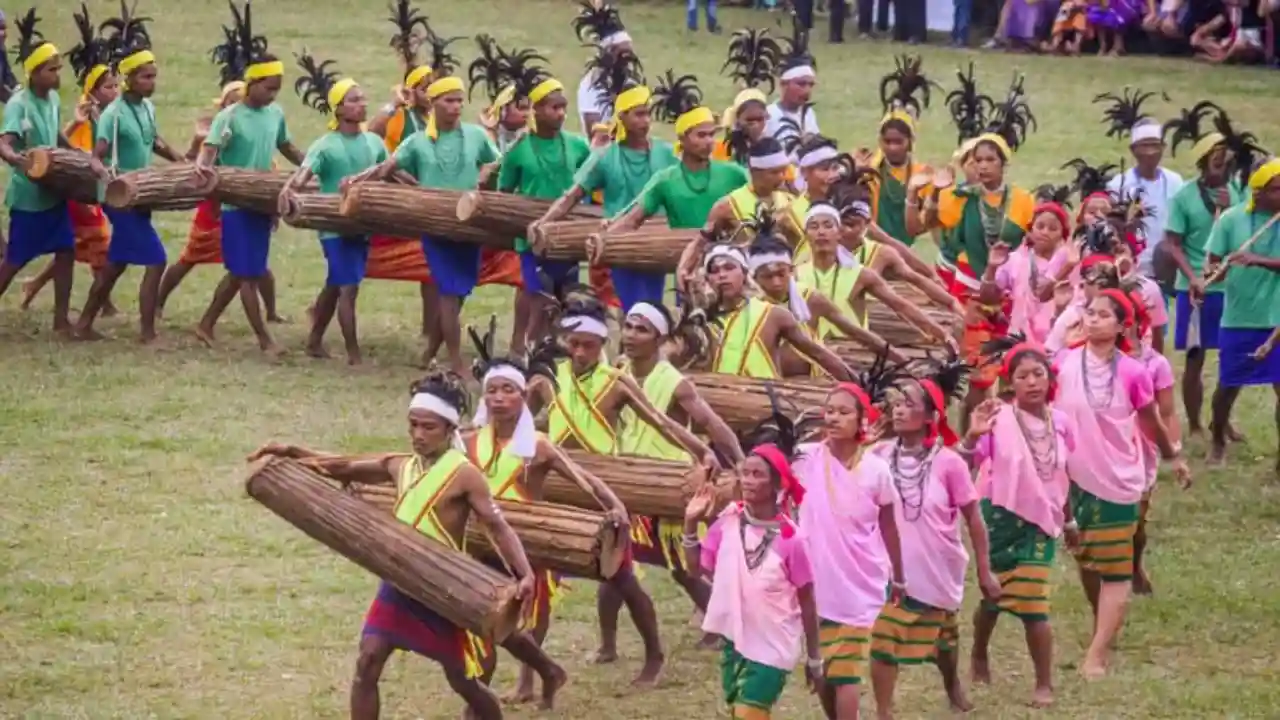
Wangala, often called the "100 Drums Festival," is one of the most famous festivals of Meghalaya and a key Garo harvest thanksgiving celebration dedicated to Saljong (Sun/Fertility deity). Government festival pages describe it as a post-harvest event with strong drum-led dance identity, usually observed in November windows in Garo Hills.
2) Shad Suk Mynsiem (Shillong, Khasi region)
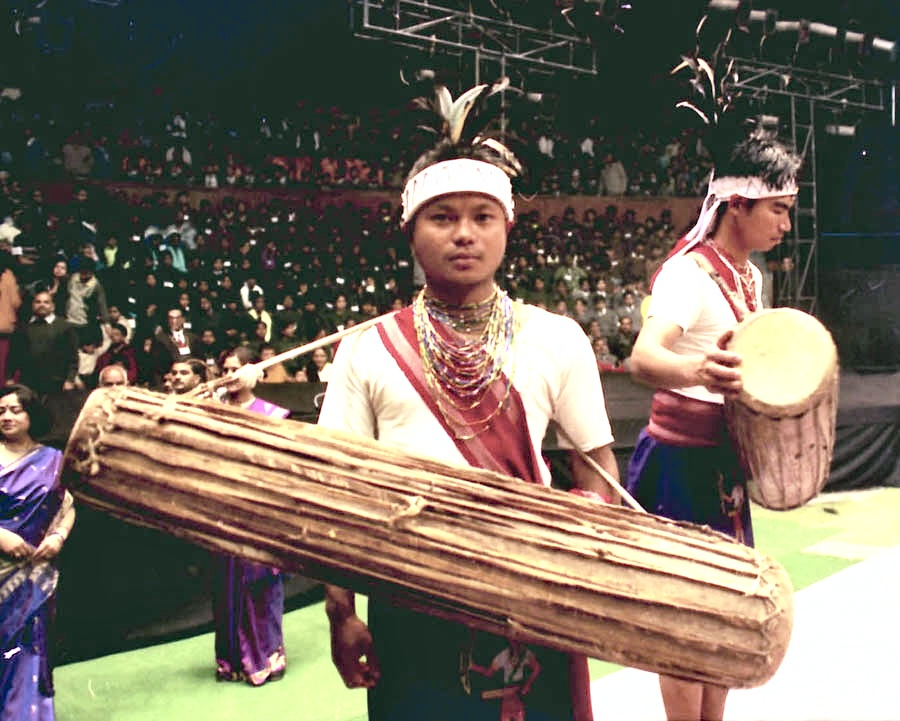
Known as the "Dance of Peaceful/Contented Hearts," this is among the most important Khasi cultural festivals, generally held in April in Shillong. Meghalaya tourism references it as an agrarian thanksgiving celebration before sowing season, with structured dance formations that reflect Khasi social values.
3) Nongkrem Dance Festival (Smit)
Nongkrem (Ka Pomblang Nongkrem) is a major Khasi religious dance festival at Smit near Shillong, usually in November. It is known for ritual offerings, traditional attire, and ceremonial dance by men and women, with high cultural significance in Khasi heritage.
4) Behdienkhlam (Jowai, Jaintia Hills)
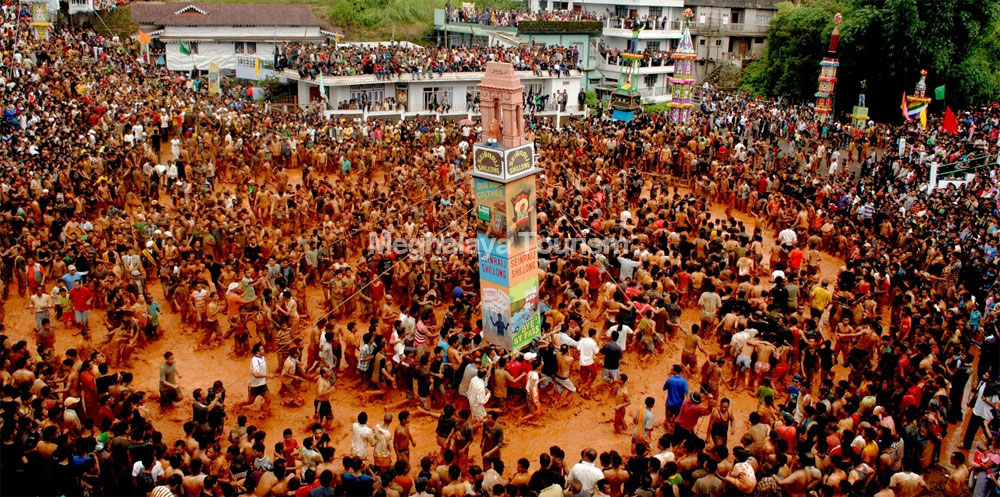
Behdienkhlam is one of the most unique Jaintia (Pnar) festivals, generally celebrated in July after sowing season. Meghalaya government festival references describe it as a ritual to drive away disease/evil and seek blessings for good harvest and community welfare.
5) Seng Kut Snem (Shillong)
Seng Kut Snem is an important Khasi indigenous faith-linked annual gathering marked by cultural processions, traditional performances, and identity assertion through dress and ritual symbolism.
6) Chad Sukra
An agrarian seasonal observance linked to field cycles and community prayers before cultivation. It is important in understanding how agricultural rhythm shapes local festival culture.
7) Laho Dance Festival Traditions
Laho is a social dance format associated with Jaintia/Khasi settings and is seen in cultural gatherings where community celebration and rhythm-based participation are central.
8) Christmas in Meghalaya (especially Shillong)
Given the strong Christian population in Meghalaya, Christmas is a major state-wide celebration with church services, local events, and festive city atmosphere. Shillong becomes a key cultural hub in this period.
9) Easter Celebrations
Easter observances across churches and communities are significant in the religious calendar and add to Meghalaya’s plural festival identity.
10) Durga Puja (Shillong urban pockets)
Durga Puja, though not indigenous to tribal faith systems, is an important urban celebration in Meghalaya due to mixed community settlement and cultural overlap.
11) Eid Celebrations
Eid festivals add to Meghalaya’s inter-community celebration matrix, especially in urban centers with mixed demographics.
12) Shad Beh Sier (Khasi-Jaintia belt)
A traditional post-harvest celebration associated with thanksgiving and community dance in parts of Meghalaya.
13) Autumn/Harvest Community Festivals
Multiple district-level events run during post-monsoon months, often featuring local produce, dance, and village-led cultural expression.
14) Cherry Blossom Season Events (Shillong)
Modern cultural event programming during cherry blossom season has become a major tourism draw in Shillong, blending music, arts, and destination branding.
15) Local Village Cultural Fairs
Smaller village festivals and cultural fairs are often the best way to see authentic costume, instruments, and oral-cultural traditions outside high-profile tourism events.
| Festival | Community/Region | Typical Month | Main Theme |
|---|---|---|---|
| Wangala | Garo Hills | November | Post-harvest thanksgiving, drum dance |
| Shad Suk Mynsiem | Khasi (Shillong) | April | Spring thanksgiving dance |
| Nongkrem | Khasi (Smit) | November | Ritual-dance and prosperity prayers |
| Behdienkhlam | Jaintia (Jowai) | July | Driving away evil/plague, harvest invocation |
| Seng Kut Snem | Khasi | November | Indigenous identity and faith-cultural expression |
4. Festival Calendar and Dates (Practical View)
Because many festivals are influenced by local calendars, rituals, and administrative announcements, exact dates should always be confirmed closer to travel.
| Month | Likely Festival Focus | Travel Note |
|---|---|---|
| April | Shad Suk Mynsiem | Good weather, strong Shillong cultural window |
| July | Behdienkhlam | Monsoon logistics required, Jowai-centric |
| October-November | Nongkrem, Wangala, Seng Kut Snem | Peak cultural season in many districts |
| December | Christmas + year-end events | Strong urban atmosphere in Shillong |
5. Best Time to Experience Festivals in Meghalaya
- Best all-round cultural window: October to November.
- For Khasi spring celebrations: April (Shad Suk Mynsiem period).
- For Jaintia ritual festival depth: July (Behdienkhlam).
- For urban festive atmosphere: December in Shillong.
If you also want waterfalls and sightseeing balance, combine this guide with places to visit in Meghalaya and Meghalaya travel guide.
6. Traditional Costumes and Attire During Festivals
Khasi Attire
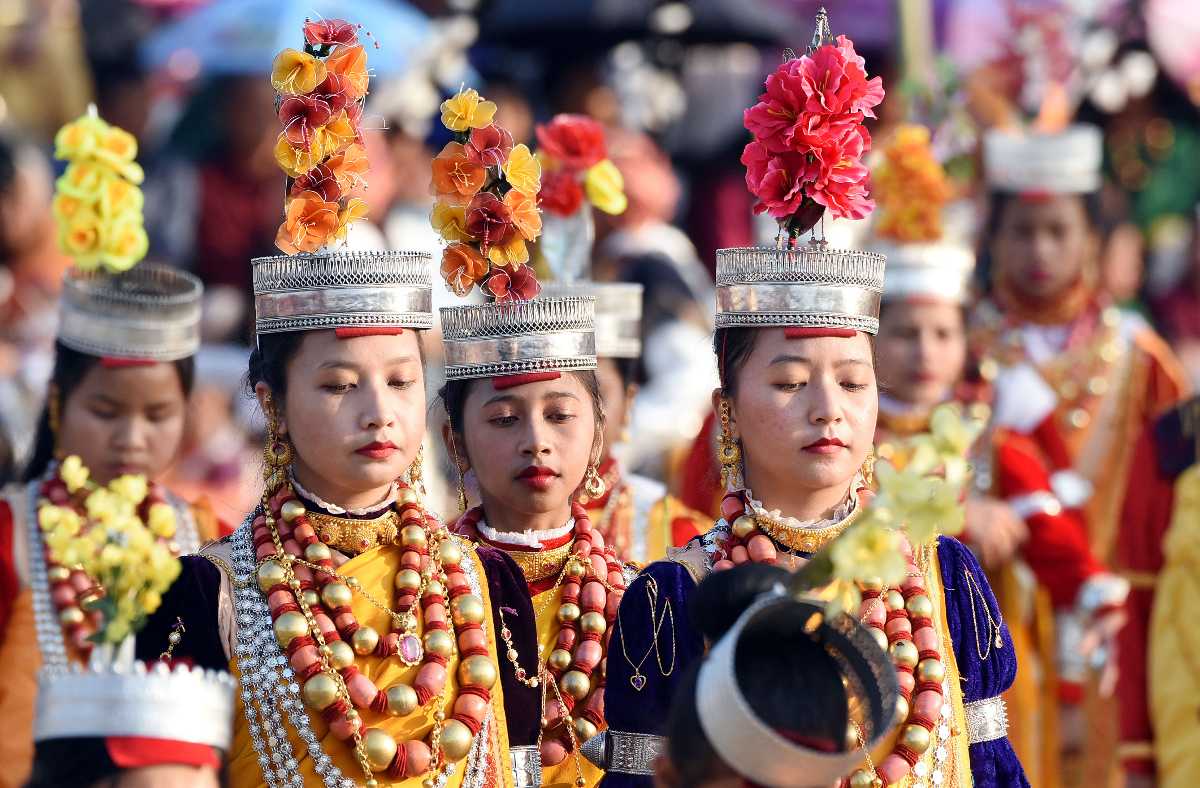
Khasi festival dress typically features Jainsem for women with layered traditional ornaments, while men wear traditional attire including ceremonial elements during dances.
Garo Attire
Garo festival attire during Wangala includes vibrant textiles, headgear, and performance-specific styling that complements drum-led choreography.
Jaintia Attire
Jaintia attire shares broad regional similarities with Khasi styles but includes distinct local variations in drape, ornamentation, and ceremonial use.
7. Music and Dance Forms You Will See
Dance is not a side activity in Meghalaya festivals; it is the core storytelling and ritual expression medium.
- Wangala dance: energetic drum-synchronized group movement.
- Shad Suk Mynsiem dance: graceful, symbolic, and highly structured.
- Nongkrem dance: ritual-heavy ceremonial performance.
- Behdienkhlam processional elements: dramatic public ritual movement.
Instruments commonly include drums, gongs, flutes, and wind-percussion combinations that shape each community’s distinct festival sound.
8. Festival Locations and Access
| Location | Key Festival Link | Access Base |
|---|---|---|
| Shillong | Shad Suk Mynsiem, Seng Kut Snem, Christmas events | State capital, strongest connectivity |
| Smit | Nongkrem Dance Festival | Near Shillong (short road transfer) |
| Jowai | Behdienkhlam | Jaintia Hills road access |
| Tura/Garo Hills | Wangala Festival | Longer transfer, plan in advance |
9. How to Plan Festival Visit to Meghalaya
- Pick one anchor festival first (Wangala, Shad Suk Mynsiem, or Behdienkhlam).
- Confirm current-year dates from official channels before booking.
- Book stay early in Shillong/Jowai/Tura depending on festival.
- Keep at least one buffer day for weather and road delays.
- Add nearby attractions only after finalizing core event schedule.
For complete route planning from arrival to district travel, use how to reach Meghalaya and how to reach Shillong from Delhi.
10. Travel Tips for Festival Tourism
- Ask before photographing ritual moments or close portraits.
- Dress modestly during ceremonial segments.
- Avoid blocking dance routes or ritual zones.
- Carry rain protection in monsoon-linked festival windows.
- Prefer local guides for district-level cultural context.
- Respect community instructions; festival spaces are living cultural sites, not staged sets.
11. Final Takeaway
The festivals of Meghalaya are not just events to watch; they are community systems that keep language, ritual, costume, dance, and memory alive across Khasi, Jaintia, and Garo regions. If you plan by festival calendar instead of only weather, your Meghalaya trip becomes far more meaningful. Choose one major festival, pace your district movement, and travel respectfully—you will experience the cultural heart of Meghalaya, not just its landscapes.
12. Sample Festival Itineraries
4-Day Shillong and Smit Festival Plan
Day 1: Arrive in Shillong, local orientation, market walk, and community-culture briefing with a local guide.\nDay 2: Attend festival sessions in Shillong (Shad Suk Mynsiem or Seng Kut Snem season), observe traditional dance and costume segments.\nDay 3: Visit Smit for Nongkrem-linked cultural context, return to Shillong for evening food and music exploration.\nDay 4: Add nearby viewpoints or heritage sites, then depart.
5-Day Garo and Khasi Festival Route
Day 1: Shillong arrival and transfer prep.\nDay 2: Travel to Garo Hills belt (Tura side) for Wangala-focused planning.\nDay 3: Wangala event participation and cultural showcases.\nDay 4: Return transit with buffer for weather and road conditions.\nDay 5: Shillong recovery + departure.
This route works best for travelers specifically targeting Wangala and should be planned with extra transport margin due to longer overland movement.
13. Festival Etiquette and Responsible Tourism
Responsible participation is critical in Meghalaya festivals because these are living community traditions, not staged tourist shows. Always ask before taking close-up photos of performers, elders, or ritual objects. During ceremonial sequences, maintain silence and avoid entering designated cultural zones unless invited.
- Do not step into dance circles unless participation is explicitly encouraged.
- Avoid drone use without permissions.
- Support local artisans by buying directly from verified stalls.
- Prefer local transport and local guides for better cultural interpretation.
- Avoid stereotyping communities; each district has distinct customs.
Meghalaya's festival tourism works best when travelers engage respectfully and contribute positively to local economies and traditions.
Location
Frequently Asked Questions
Q1.What are the famous festivals of Meghalaya?
Q2.What is the most famous festival of Meghalaya?
Q3.What is Wangala Festival?
Q4.When is Wangala Festival celebrated?
Q5.What is Shad Suk Mynsiem?
Q6.What is Behdienkhlam Festival?
Q7.What is the best time to visit Meghalaya for festivals?
Q8.Are tourists allowed in Meghalaya festivals?
Recommended For You
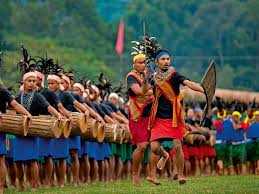
Wangala Festival Meghalaya: Dates, Dance Highlights & Visitor Info
Discover Wangala Festival Meghalaya with practical guidance on dates, drumming traditions, travel planning, cultural etiquette, and first-time visitor tips.
Cherrapunji Tourist Places: Top Attractions, Itinerary & Travel Tips
Plan your Cherrapunji trip with top tourist places, route-based itinerary ideas, weather strategy, and practical travel tips. Discover waterfalls, living root bridges, caves, and more in this comprehensive guide.
Tourist Places in Shillong: Sightseeing Route, Timings & Best Views
Discover the top tourist places in Shillong with waterfalls, lakes, viewpoints, museums, markets, and practical day-trip planning for Cherrapunji and Dawki.
Never Miss an Adventure
Get the latest trekking guides, travel tips, and exclusive offers delivered straight to your inbox.
