
Ghanta Ghar Jodhpur: Clock Tower History & Market Shopping

Priya Mehta
January 14, 2026
Explore Ghanta Ghar Jodhpur with history, market timings, shopping tips, street food recommendations, and practical guidance for visiting Clock Tower and Sardar Market.
Introduction to Ghanta Ghar Jodhpur
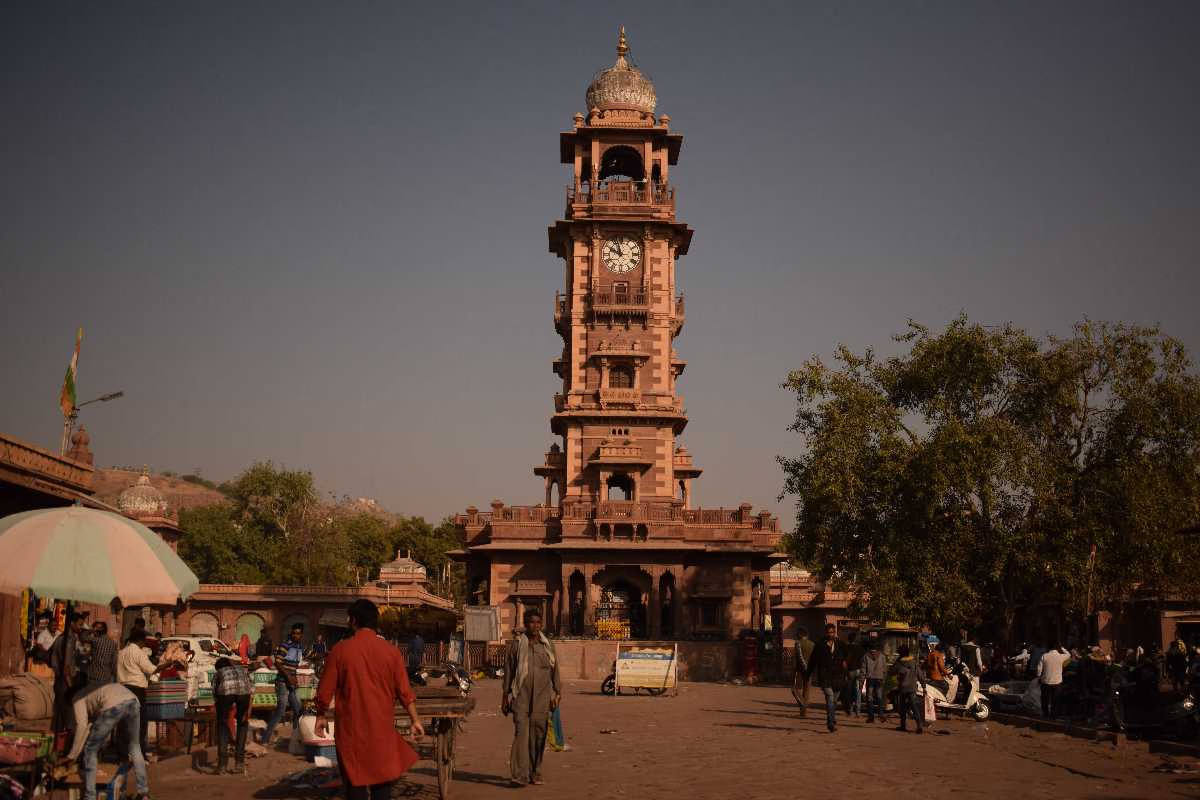
Ghanta Ghar Jodhpur, also known as the Clock Tower, is one of the most recognized landmarks in the Blue City's old quarter. It sits at the heart of the commercial zone near Sardar Market and works as both a historic marker and a practical navigation point for travelers exploring the walled city lanes. While many visitors arrive for quick photos, the real value of this area is the full street-level experience: market culture, old city architecture, local food, spice trading, and handcrafted shopping in one compact zone.
The neighborhood around Ghanta Ghar gives you a very different side of Jodhpur compared to palace and fort circuits. Here, movement is dense, sounds are constant, and the market rhythm changes by hour. You can start with the tower, move through spice alleys, bargain for textiles or mojris, then finish with local snacks before sunset. If planned correctly, this stop becomes a core old-city experience rather than a short checklist visit.
History and Construction
Ghanta Ghar was commissioned during the reign of Maharaja Sardar Singh in the late 19th to early 20th century period, when Jodhpur was shaping its modern urban identity while retaining strong traditional trading culture. The tower quickly became a visual center for the old bazaar network and a symbol of civic timekeeping in a merchant city where market rhythm mattered deeply.
Its location was strategic: close enough to major trade lanes, temple routes, and dense residential clusters to function as a shared reference point. Over time, the area around it grew into one of Jodhpur's most active commercial pockets, now popularly identified with Sardar Market. Even today, many local directions are still given using the tower as the anchor.
What makes Ghanta Ghar historically interesting is not monumental scale but continuity of use. Unlike protected monuments that function mainly as tourism spaces, this landmark remains embedded in daily city life. Traders, residents, pilgrims, and tourists all pass through the same zone, which keeps the place culturally alive.
Ghanta Ghar Timings and Practical Access
The tower itself is in an open public area and is visible at all hours, but the real visitor experience depends on market activity timings. Sardar Market shops typically become active in the morning and continue till evening, with peak movement in late afternoon and early night.
| Time Slot | Area Character | Best For |
|---|---|---|
| 9:00 AM to 11:30 AM | Fresh market setup, lighter crowd | Comfortable walking, cleaner photos, easier bargaining |
| 12:00 PM to 4:00 PM | Steady trade flow, warmer conditions | Focused shopping with less evening rush |
| 4:30 PM to 8:00 PM | Most lively and crowded | Street atmosphere, food walk, vibrant market scenes |
Shop-level opening and closing can vary by season, festival dates, and individual business preference. If you are looking for specific products, reach before sunset and confirm availability early.
Best Time to Visit Ghanta Ghar
The best season to visit Ghanta Ghar Jodhpur is from October to March when temperatures are manageable for long walking sessions in the old city. Summer can be very hot, especially in midday hours, and heat reflects strongly from stone streets and built-up market lanes. Monsoon is less extreme than peak summer but can bring humidity and patchy rain.
Within a day, morning is best for comfort and structured shopping, while evening is best for energy and food exploration. If you want both, split your visit: morning for buying and photography, evening for street food and atmosphere. Weekend evenings are crowded, so weekday slots are better for families and senior travelers.
How to Reach Ghanta Ghar Jodhpur
Reaching Ghanta Ghar is straightforward because it sits in a central old-city zone and is familiar to all local drivers. Auto-rickshaw remains the easiest option for short city transfers, while cabs are useful for hotel pickups in outer areas.
From Jodhpur Junction
The distance is short by city standards. Autos and cabs are available at all times, and travel time depends mainly on traffic near market lanes.
From Mehrangarh Side
If you are coming from fort areas, Ghanta Ghar can be done as a downhill market continuation. Many travelers combine both in one half-day plan.
From Airport or Outer Hotels
Use app cabs or hotel-arranged taxis for smoother drop points. Final approach may require short walking due to lane congestion.
If you are mapping a broader city circuit, connect this visit with Mehrangarh Fort Jodhpur, Toorji Ka Jhalra, and Mandore Gardens Jodhpur.
Sardar Market Around Ghanta Ghar
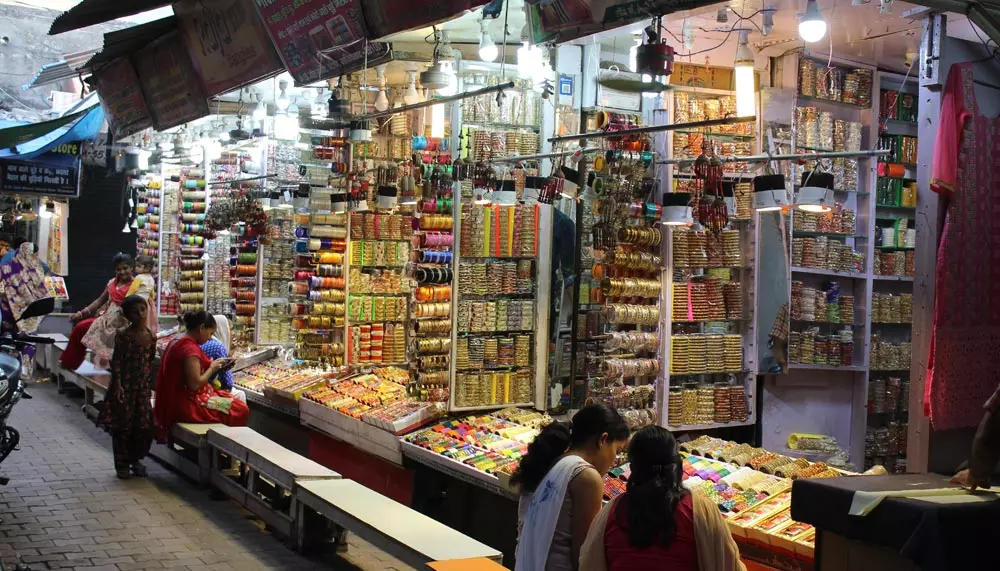
Sardar Market is the biggest reason most travelers spend meaningful time around the clock tower. It is a layered old bazaar where product clusters emerge by lane: spices, textiles, handicrafts, household goods, footwear, and local snacks. The market is visually dense and highly sensory, with color-heavy displays, spice aromas, and constant bargaining.
Unlike organized mall-style shopping, Sardar Market rewards patient walking and comparison. Prices can vary by stall, and quality differences are significant in textiles, spices, and craft items. The strongest approach is to shortlist desired items first, survey multiple shops, then make final purchases.
The market also gives insight into Jodhpur's trading culture. Many shops are family-run, and negotiation is treated as normal conversation. If you remain polite and steady, you can usually secure reasonable prices without aggressive haggling.
Shopping at Ghanta Ghar: What to Expect
Jodhpur clock tower shopping is most rewarding for travelers interested in practical souvenirs, regional crafts, and kitchen spices. This is not a luxury district; it is an active bazaar where value comes from variety and local texture.
- Spices: Red chili, turmeric, cumin blends, and regional masalas are popular buys.
- Textiles: Bandhani and block-print fabrics, cushion covers, and table linens are common.
- Footwear: Traditional mojris and leather sandals are widely available.
- Handicrafts: Puppets, small decor items, metalware, and giftable artifacts.
- Accessories: Lac bangles, oxidized jewelry, and low-cost fashion pieces.
Keep in mind that quality varies widely. Check stitching, dye stability, and finishing before purchase. For spices, ask for recent stock and compare aroma between vendors.
Famous Items to Buy Near Ghanta Ghar
| Item | Why People Buy It | Buying Tip |
|---|---|---|
| Mathaniya-style chili products | Iconic Rajasthani heat profile | Buy small quantity first if unsure about spice level |
| Bandhani dupattas and fabrics | Traditional Rajasthan textile identity | Check color bleed risk before packing |
| Mojri footwear | Classic regional style souvenir | Try both feet and check sole comfort |
| Masala blends | Useful edible souvenir | Prefer sealed packs for travel |
| Small handcrafted decor | Affordable and gift-friendly | Inspect corners and paint quality |
If you are on a short trip, prioritize one textile purchase, one spice purchase, and one small craft item. This keeps shopping practical without excess baggage.
Street Food Around Ghanta Ghar
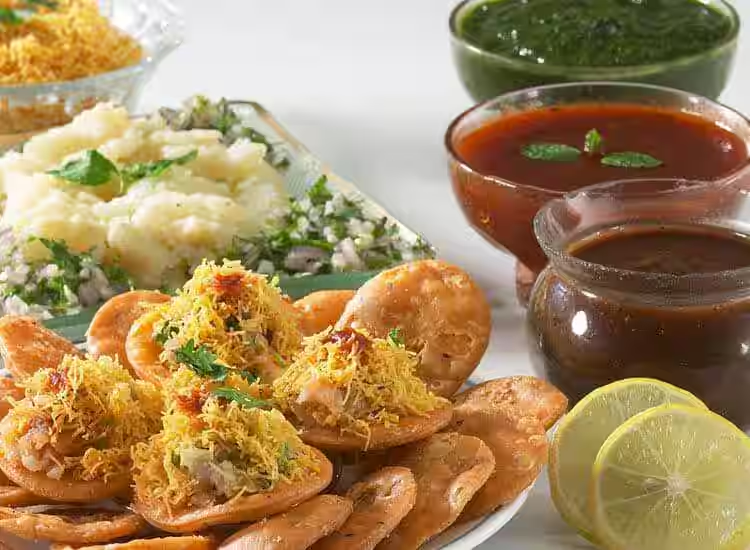
The old market belt near Ghanta Ghar is also a strong food zone. You will find both sit-down legacy outlets and quick roadside options. Popular categories include kachori, mirchi-based snacks, lassi, sweets, and local thali-style meals in nearby lanes.
For first-time visitors, start with lighter items and observe hygiene before choosing stalls. Peak evenings bring freshness due to high turnover, but also heavier queue pressure. Keep a separate budget for food tasting because this area can quickly turn into a snack trail.
If you want a structured culinary follow-up, use best places to eat in Jodhpur for dedicated food stops after market exploration.
Architecture and Design Character
The clock tower itself reflects late princely-era civic architecture influences and remains a vertical landmark in a predominantly horizontal, tightly packed bazaar environment. Its value lies in urban placement: it punctuates the skyline and helps orient movement through old Jodhpur's dense lane matrix.
The surrounding built fabric includes old façades, projecting balconies, market-front shutters, and color-weathered walls that carry the city's visual memory. During golden-hour light, this mix produces strong photography conditions, especially when combined with market movement below.
While the tower does not operate as a deep museum-like site, it functions as a live urban heritage anchor. That makes it ideal for travelers interested in the intersection of architecture and daily commerce.
Photography Tips at Ghanta Ghar and Sardar Market
- Arrive early morning for cleaner foregrounds and lower crowd density.
- Use late afternoon for warm tones and denser market storytelling frames.
- Capture one wide tower shot, one lane-depth shot, and one market-detail shot.
- Ask before taking close portraits of shopkeepers and local residents.
- Keep equipment compact in narrow lanes to avoid blocking movement.
- Avoid standing in active traffic pockets for long tripod setups.
For social media reels, short walking shots from lane entry to tower view work better than static zoom-heavy clips. Keep transitions natural and include ambient market sound where possible.
Nearby Attractions You Can Combine
Ghanta Ghar is easiest to combine with nearby heritage and old-city stops. Strong combinations include:
- Mehrangarh Fort Jodhpur for royal architecture and city views.
- Toorji Ka Jhalra Jodhpur for stepwell heritage and neighborhood exploration.
- Chamunda Mataji Temple Jodhpur for devotional continuity in a heritage route.
- Places to visit in Jodhpur for full city itinerary planning.
- Best time to visit Jodhpur for season-based planning.
This cluster can be done in one long day if you start early and keep buffers for traffic and food breaks.
Travel Tips for First-Time Visitors
- Carry cash and UPI options; digital payment works in many shops but not all.
- Wear comfortable footwear because old-city walking involves uneven surfaces.
- Keep valuables close in dense evening crowds.
- Bargain politely; extreme bargaining can reduce quality options.
- Use weekday mornings for easier movement and cleaner shopping decisions.
- Plan pickup and drop points in advance if traveling with family or elders.
- Stay hydrated, especially outside winter months.
With good timing and realistic expectations, Ghanta Ghar and Sardar Market can become one of the most memorable cultural-market experiences in Rajasthan.
Location
Frequently Asked Questions
Q1.What is Ghanta Ghar Jodhpur famous for?
Q2.What are Ghanta Ghar Jodhpur timings?
Q3.Is there an entry fee for Ghanta Ghar?
Q4.What is the best time to visit Ghanta Ghar Jodhpur?
Q5.How can I reach Ghanta Ghar Jodhpur?
Q6.What should I buy near Ghanta Ghar and Sardar Market?
Q7.Is Sardar Market near Ghanta Ghar safe for tourists?
Q8.What is the best street food near Ghanta Ghar Jodhpur?
Recommended For You
Best Places to Eat in Jodhpur: Food Guide and Tips
Best places to eat in Jodhpur guide with heritage-aware routing, meal timing, budget control, and practical one-day food planning.
Best Time to Visit Jodhpur: Climate, Events & Travel Windows
Plan the best time to visit Jodhpur with season-wise weather, fort exploration timing, festival windows, and practical travel planning tips.
Jodhpur: 15 Best Places to Visit in the Blue City
Explore Jodhpur! From Mehrangarh Fort to Umaid Bhawan, discover blue city, forts, palaces, markets & desert with complete guide.
Never Miss an Adventure
Get the latest trekking guides, travel tips, and exclusive offers delivered straight to your inbox.
