
Goa Carnival: Parade Routes, Dates & Celebration Highlights
Priya Mehta
February 10, 2026
Experience Goa Carnival! Get dates, parade schedule, events, venues & complete festival guide. Join the vibrant Portuguese celebration in Goa.
Introduction
Imagine a street festival so vibrant and electrifying that it captures the essence of Goa's unique cultural fusion – Portuguese heritage meets Indian exuberance in an explosion of color, music, and dance. The Goa Carnival is exactly that: India's most spectacular street festival and a celebration unlike any other in the country. For four days each year, the streets of Goa transform into a riot of color, rhythm, and unbridled joy, attracting hundreds of thousands of visitors from across India and the world.
With a history spanning over 500 years, the Goa Carnival has evolved from a traditional Portuguese pre-Lenten celebration into a uniquely Goan phenomenon that blends European carnival traditions with Indian cultural elements. The result is an unforgettable experience that combines elaborate parades, elaborate costumes, live music, street food, and an atmosphere of pure celebration. Whether you're a culture enthusiast, a photography buff, or simply someone who loves a good party, the Goa Carnival offers something that will leave you with memories to last a lifetime.
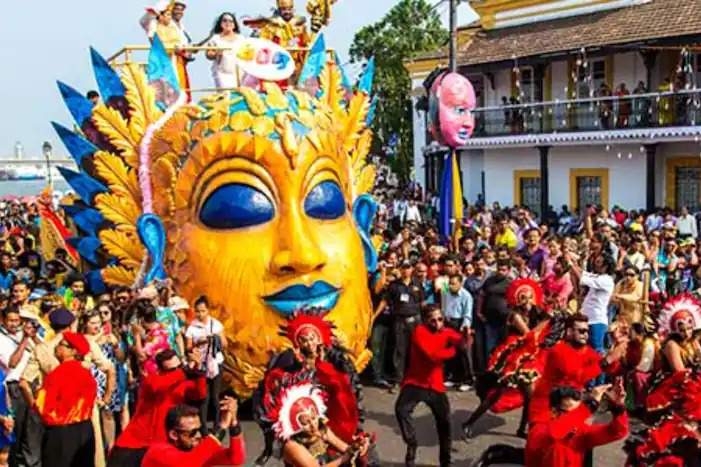
What makes the Goa Carnival truly special is its accessibility. Unlike many cultural festivals that cater primarily to locals or practitioners, this carnival is designed for everyone – tourists, locals, families, and party-goers alike. The streets are open, the celebrations spill out of venues into public spaces, and the infectious energy invites participation. Whether you want to watch from the sidelines or join the dancers in the streets, the Goa Carnival welcomes you with open arms.
Goa Carnival Dates & Schedule
The timing of the Goa Carnival follows the traditional Christian calendar, occurring before the Lenten period of fasting and sacrifice.
Carnival Dates
The Goa Carnival typically begins in February and spans four days. The festival always starts on the Saturday before Lent and continues through Tuesday. In 2026, the dates are February 14-17. The carnival always concludes on Fat Tuesday, the day before Ash Wednesday, which marks the beginning of Lent. This timing means the exact dates change each year based on when Easter falls, so it's important to check the current year's schedule when planning your visit.
Daily Schedule
The festival unfolds over four days, each with its own character and special events:
Day 1 (Saturday) – Opening Celebration: The carnival kicks off with an opening ceremony and inaugural parade. King Momo, the King of Carnival, makes his grand appearance and declares the carnival open with his famous decree to "eat, drink, and make merry." The streets come alive with music, dancers, and the first parade floats winding through Panaji.
Day 2 (Sunday) – Main Parade Day: Sunday is the biggest parade day, with the most elaborate floats and largest crowds. The main carnival parade winds through the streets of Panaji, featuring dozens of spectacular floats, thousands of performers, live bands, and an energy that builds through the day and night. This is the day most visitors plan their trip around.
Day 3 (Monday) – Cultural Events: While parades continue, Monday focuses more on cultural programs and competitions. You'll find traditional Goan folk dances, music performances, costume contests, and various competitions throughout the city. The energy is more spread out, with events happening in multiple locations.
Day 4 (Tuesday) – Red & Black Dance Finale: The carnival concludes with the famous Red & Black Dance, a grand finale that brings the four-day celebration to an exuberant close. The dress code is strictly red and black, and participants dance through the night in a final burst of celebration before the fasting period of Lent begins.
Event Timing
Parades typically begin around 3:30 PM to 4:00 PM and continue for 3-4 hours. Street parties and cultural events start earlier in the day and continue throughout the afternoon and evening. Night parties at clubs, bars, and beach venues begin around 8:00-9:00 PM and continue until 3:00-4:00 AM. The Red & Black Dance finale on Tuesday typically runs from evening until late night.
Venue Schedule
The main parade and major events happen in Panaji (the state capital), but celebrations occur across multiple cities:
- Panaji: Main parade location, all four days
- Margao: Major celebrations with significant parades
- Vasco da Gama: Full carnival program with parades and events
- Mapusa: Cultural programs and smaller parades
- Other locations: Ponda, Bicholim, and beach areas have various celebrations
History & Portuguese Influence
The Goa Carnival's story begins in 1510, when the Portuguese conquered Goa and brought with them their traditions of carnival celebrations. What started as a Portuguese import gradually evolved into something uniquely Goan, incorporating local elements and becoming an integral part of Goa's cultural identity.
Origins in Portuguese Tradition
The carnival tradition originated in Europe as a pre-Lenten celebration – a final period of indulgence and celebration before the 40 days of fasting and sacrifice during Lent. The Portuguese, who established their colonial capital in Goa in 1510, brought this tradition with them. In the 18th century, the carnival began to take shape as we know it today, though it was initially a celebration limited to the Portuguese elite and the local Catholic community.
Portuguese Influence on the Festival
The Portuguese influence is evident in every aspect of the carnival. The very concept of a pre-Lenten celebration is Catholic Portuguese tradition. The elaborate costumes recall European carnival masquerade balls. The parade floats, while now featuring Indian themes, follow the Portuguese tradition of decorated wagon parades. Even the music blends Portuguese instruments and melodies with Goan and Indian influences. However, over the centuries, these Portuguese elements have been thoroughly Indianized, creating a fusion that's neither purely European nor entirely Indian but distinctly Goan.
Modern Evolution
After Goa's liberation from Portuguese rule in 1961, the carnival didn't disappear – instead, it evolved and expanded. What was once a primarily Catholic celebration became a secular festival that embraced all of Goa's diverse communities. The government began promoting it as a tourist attraction in the 1970s and 1980s, helping it grow into the massive event it is today. Modern carnival includes corporate sponsors, media coverage, and international participants, yet it retains the core elements of celebration and community that have defined it for centuries.
Carnival Parade Highlights
The parade is the heart of the Goa Carnival, a spectacular procession that winds through the streets for hours, featuring some of the most elaborate and creative floats you'll ever see.
Parade Features
The main parade typically includes 30-40 major floats, each more elaborate than the last. These aren't just decorated vehicles but mobile stages, some with performers dancing atop them, others featuring elaborate sets and mechanical elements. Accompanying the floats are over 1,000 performers in elaborate costumes, live bands playing everything from traditional Goan music to contemporary hits, dance troupes performing everything from folk dances to modern choreography, and street performers including jugglers, acrobats, and musicians.
Main Parade Elements
King Momo Float: The opening float features King Momo, the King of Carnival, who presides over the festivities. King Momo is a mythical figure derived from Greek mythology, adapted as the symbol of joy and celebration. His arrival and proclamation officially opens the carnival.
Cultural Floats: These showcase Goan heritage and culture – you might see floats depicting traditional Goan villages, scenes from Hindu mythology, important historical events, or aspects of Goan life like fishing and farming. These floats serve as mobile museums of Goan culture.
Music Bands: Live music is integral to the parade. Brass bands play traditional tunes, while contemporary bands add modern beats. Some floats have their own sound systems blasting everything from Bollywood hits to international dance music.
Dance Groups: Traditional folk dance troupes perform dekhni, fugdi, and other Goan dances. Contemporary dance groups add modern elements with choreographed routines. The energy is infectious, and many spectators find themselves dancing along.
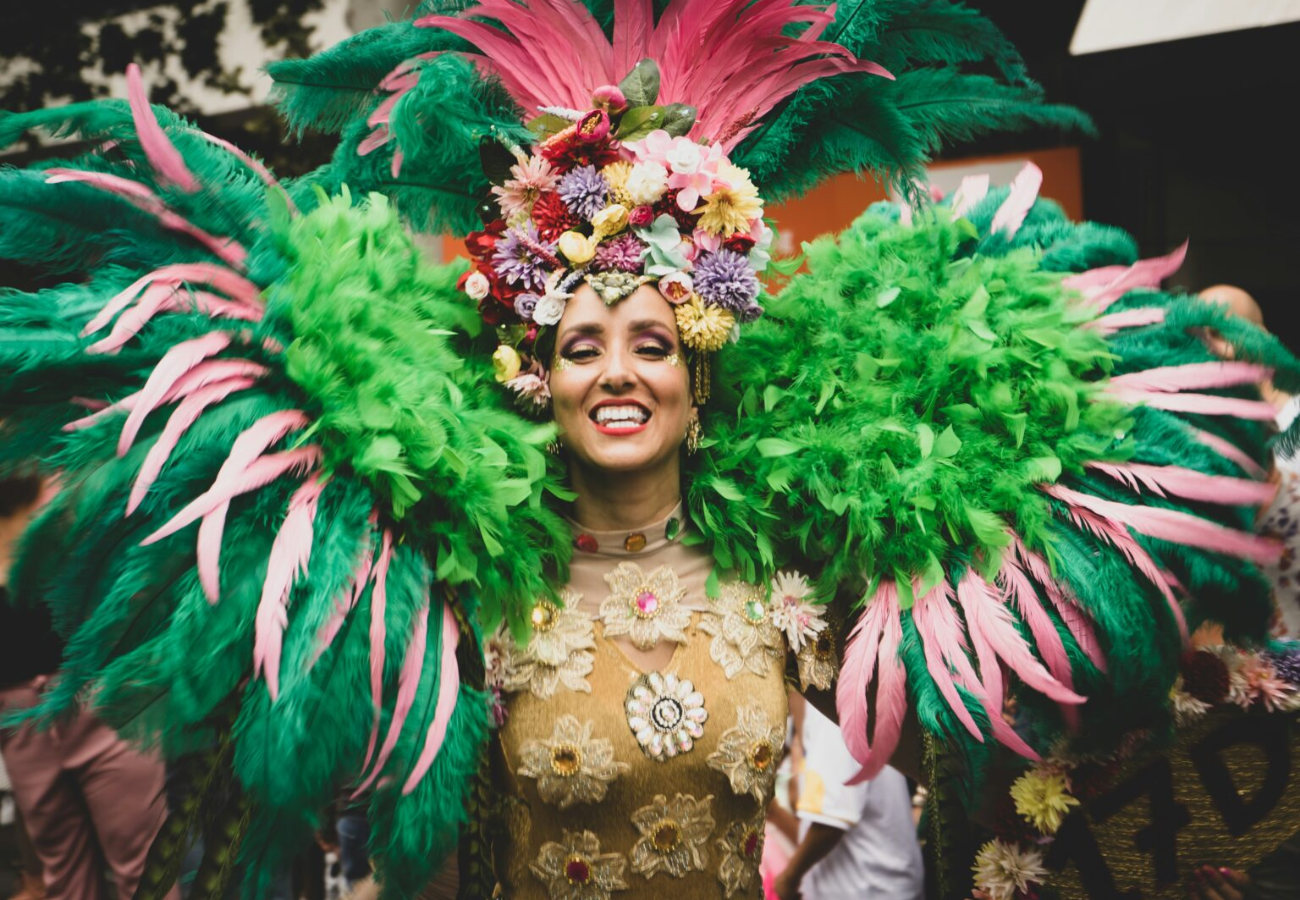
Costume Parade: Participants wear elaborately designed costumes featuring feathers, sequins, elaborate headpieces, and themed outfits representing everything from mythological characters to social commentary. The creativity and craftsmanship of these costumes are impressive.
Clowns and Jesters: Adding humor and entertainment, clowns and jesters interact with crowds, perform tricks, and keep the energy light and fun between the more serious parade elements.
Parade Route (Panaji)
The main parade in Panaji typically starts near MG Road close to Church Square, winds through the main streets of the capital city, and concludes at Campal Ground. The route covers approximately 3-4 kilometers and takes 3-4 hours to complete. The streets are lined with spectators, many having arrived hours early to secure good viewing spots. Along the route, food stalls, drink vendors, and sometimes small stages with additional entertainment keep crowds engaged between parade elements.
Best Places to Experience Carnival
While celebrations happen across Goa, different locations offer different experiences.
Panaji ⭐ Best for Full Experience: As the capital city and main parade location, Panaji offers the most complete carnival experience. The main parade here is the largest and most elaborate, with over 100,000 people in attendance over the four days. All four days feature major events, and the city has the best accommodation, dining, and infrastructure to handle the tourist influx. If you can only visit one location, make it Panaji.
Margao: The second-largest celebration happens in Margao, where 40,000-60,000 people gather for significant parades and events. The atmosphere here is more local – fewer international tourists, more Goan families celebrating their traditions. For a more authentic experience away from the tourist crowds, Margao is an excellent choice.
Vasco da Gama: This city near the airport hosts full carnival programs with significant parades (30,000-50,000 attendees). Its proximity to the airport makes it convenient for travelers arriving or departing during carnival time. The celebrations here are well-organized and less overwhelming than Panaji while still offering the full carnival experience.
Mapusa: The focus here is more on cultural programs rather than elaborate parades. With 20,000-30,000 attendees, the atmosphere is traditional and community-focused. For visitors staying in North Goa, Mapusa offers convenient access to carnival celebrations without traveling all the way to Panaji.
Beach Areas: Candolim, Calangute, and Baga host beach parties and celebrations that complement the official carnival events. These aren't official carnival venues but become unofficial celebration zones with special events, parties, and a festive atmosphere that blends carnival energy with Goa's famous beach party scene.
Street Events & Parties
Beyond the parades, the Goa Carnival includes numerous street events and parties that keep the celebration going day and night.
Street Events
During carnival days, public spaces across host cities come alive with free entertainment. Live music performances feature everything from traditional Goan bands to contemporary pop acts. Dance competitions get crowds involved, with spontaneous dancing breaking out everywhere. Food festivals showcase Goan cuisine, while costume contests reward the most creative outfits. Street plays and magic shows provide entertainment between parade elements. These events create a festive atmosphere throughout the cities, not just along parade routes.
Night Parties
After the parades end, the party continues at venues across Goa. Clubs like Club LP in Calangute, Curlies in Anjuna, and venues along Tito's Lane in Baga host special carnival nights with themed decor, extended hours, and special performances. Beach parties transform the sand into dance floors with bonfires, DJs, and celebrations under the stars. Hotels host premium carnival parties with buffets, live entertainment, and exclusive experiences. Street parties offer free celebrations where anyone can join the dancing in public areas.
Food & Drinks During Carnival
No celebration in Goa is complete without food and drink, and carnival is no exception.
Traditional Foods
Carnival is an opportunity to indulge before the fasting period of Lent, and Goans take full advantage. Traditional foods include sannas (rice cakes), bebinca (a layered dessert made with coconut milk and eggs), dodol (a sweet dish made from jaggery and coconut), and feast foods like pork sorpotel and vindaloo. Street food stalls along parade routes serve choriz (Goan sausages), xacuti (a spicy chicken dish), and other Goan specialties.
Drinks
Feni, Goa's famous cashew or coconut spirit, flows freely during carnival. Beer, particularly Kingfisher and local brands, is the beverage of choice for many. Special carnival cocktails are created at bars and clubs, while Portuguese wines add an international touch. For non-drinkers, fresh juices, coconut water, and soft drinks are widely available.
Red & Black Dance
The Red & Black Dance is the signature finale of the Goa Carnival, a grand closing event that brings the four-day celebration to an exuberant close on Tuesday evening.
Red and black are the colors of this final night, representing the duality of joy and farewell. The dress code is strictly enforced – you won't be admitted to the main areas wearing anything else. The event features live bands and DJs playing across multiple stages, open dancing where thousands of people move together to the music, and a festive atmosphere that's simultaneously a celebration and a farewell.
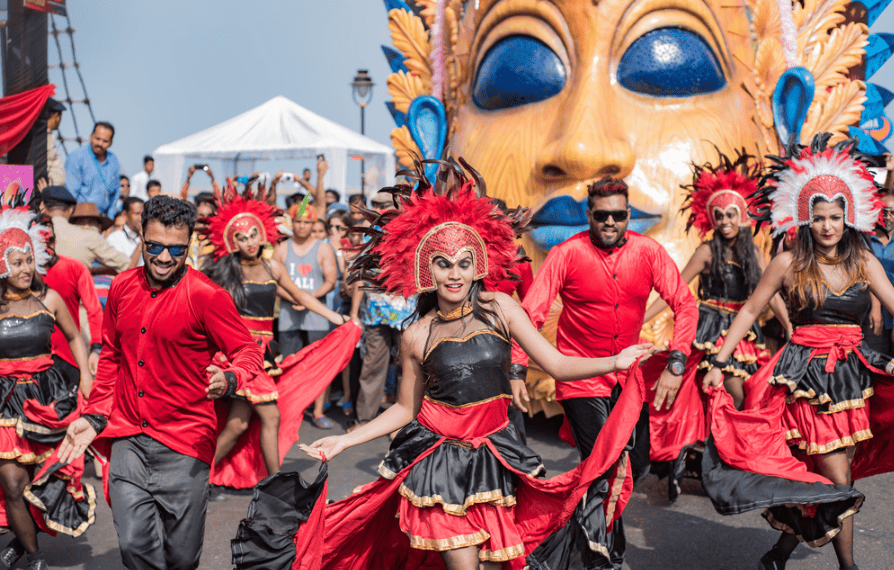
Typically held at Campal Ground in Panaji, the Red & Black Dance attracts 20,000-30,000 people and runs until late night or early morning. Participation is free and open to all – there are no tickets required for the general event, though VIP areas may have special access. For many, this final celebration is the highlight of the carnival – a last chance to dance, sing, and celebrate before Lent begins.
King Momo & Traditions
King Momo is the most recognizable symbol of the Goa Carnival, a figure who presides over the festivities and embodies the spirit of celebration and indulgence.
Derived from Greek mythology, King Momo (Momus) was the god of satire and mockery, adapted into carnival traditions as the figure who opens the celebrations. In the Goa Carnival, King Momo arrives on a special float, dressed in elaborate royal costume, and officially opens the carnival by proclaiming "Kha, piye, and enjoy karla" (Eat, drink, and make merry). His declaration sets the tone for the four days of celebration ahead.
Other traditions include elaborately decorated floats with themed displays, elegant costume balls inspired by European masquerade traditions, masked events where anonymity adds mystery and fun, food feasting representing the pre-Lenten indulgence, and music and dance as expressions of cultural joy and identity.
Costumes & Dress Code
Costumes are central to the carnival experience, though expectations differ for performers versus visitors.
Parade Performer Costumes
The elaborate costumes worn by parade participants are professionally designed and created, costing anywhere from ₹5,000 to ₹50,000 or more. These costumes feature feathers, sequins, elaborate headpieces, and themed designs representing historical figures, mythological characters, social commentary, cultural symbols, or purely imaginative creations. The creativity and craftsmanship that goes into these costumes is extraordinary, with many performers spending months preparing their outfits.
Visitor Dress Code
For visitors, the dress code is casual and comfortable. Wear comfortable clothes suitable for hot, humid February weather in Goa. Bright colors fit the festive atmosphere, and comfortable shoes are essential as you'll be doing lots of walking. For the final day's Red & Black Dance, you'll need to dress in red and black if you want to participate fully. Sun protection with hats and sunglasses is also advisable for day events.
How to Reach Goa During Carnival
Reaching Goa during carnival requires advance planning as transportation gets booked quickly.
By Air
Dabolim Airport is Goa's main airport, with flights from all major Indian cities and some international connections. During carnival, flights fill up quickly, so book well in advance – ideally 2-3 months ahead. From the airport to Panaji is approximately 30 kilometers.
By Train
The Konkan Railway connects Goa to Mumbai and Mangalore. Panaji Station and Thivim Station are the nearest to the capital. Madgaon Junction and Vasco da Gama are other major stops. Train tickets also sell out quickly during carnival season, so book early.
By Road
Goa is connected by road to Mumbai (590 km, 10-12 hours), Pune (460 km, 8-10 hours), and Bangalore (560 km, 10-12 hours). State and private buses operate on these routes. Driving is also an option, though roads can be congested during carnival.
Local Transport
Within Goa, taxis are available everywhere but can be expensive during carnival when demand is high. Auto-rickshaws work for short distances. Rental scooters and motorcycles are a popular and flexible option, allowing you to navigate traffic more easily than cars. Public buses operate but can be crowded and confusing for visitors.
Travel Tips & Accommodation
Planning ahead is crucial for a successful carnival experience.
Accommodation Tips
Book accommodation 2-3 months in advance – hotels fill up completely during carnival. Prices are 2-3 times higher than regular season. Stay near parade routes in Panaji for the best experience, or choose North Goa beaches like Calangute/Baga for a more relaxed base with easy access to celebrations. Options range from hotels and guesthouses to homestays. Budget ₹3,000-15,000 per night should get you a decent room.
Essential Travel Tips
- Pre-book Everything: Transport, accommodation, and event tickets should all be booked in advance
- Carry Cash: ATMs are crowded during carnival, and many vendors prefer cash
- Weather: February is hot and humid – dress appropriately and stay hydrated
- Crowd Management: Expect crowds everywhere – plan accordingly and be patient
- Safety: Watch your belongings in crowded areas and stay with your group
What to Pack
- Light cotton clothes suitable for hot weather
- Comfortable footwear for lots of walking
- Sunscreen and a hat for sun protection
- Camera with extra batteries for capturing memories
- Both cash and cards for payments
- Portable charger for your phone
Goa Festival Trip Extensions
To turn Carnival into a full itinerary, add route planning from the Goa travel guide, beach days from best beaches in Goa, shopping and parade corridors near Anjuna Flea Market, and fort-sunset views at Chapora Fort.
Location
Frequently Asked Questions
Q1.What are the dates of Goa Carnival?
Q2.How many days does Goa Carnival last?
Q3.What time does Goa Carnival parade start?
Q4.Where does the Goa Carnival parade take place?
Q5.What happens at Goa Carnival?
Q6.What is the route of Goa Carnival parade?
Q7.What is King Momo in Goa Carnival?
Q8.How to reach Goa during Carnival?
Recommended For You
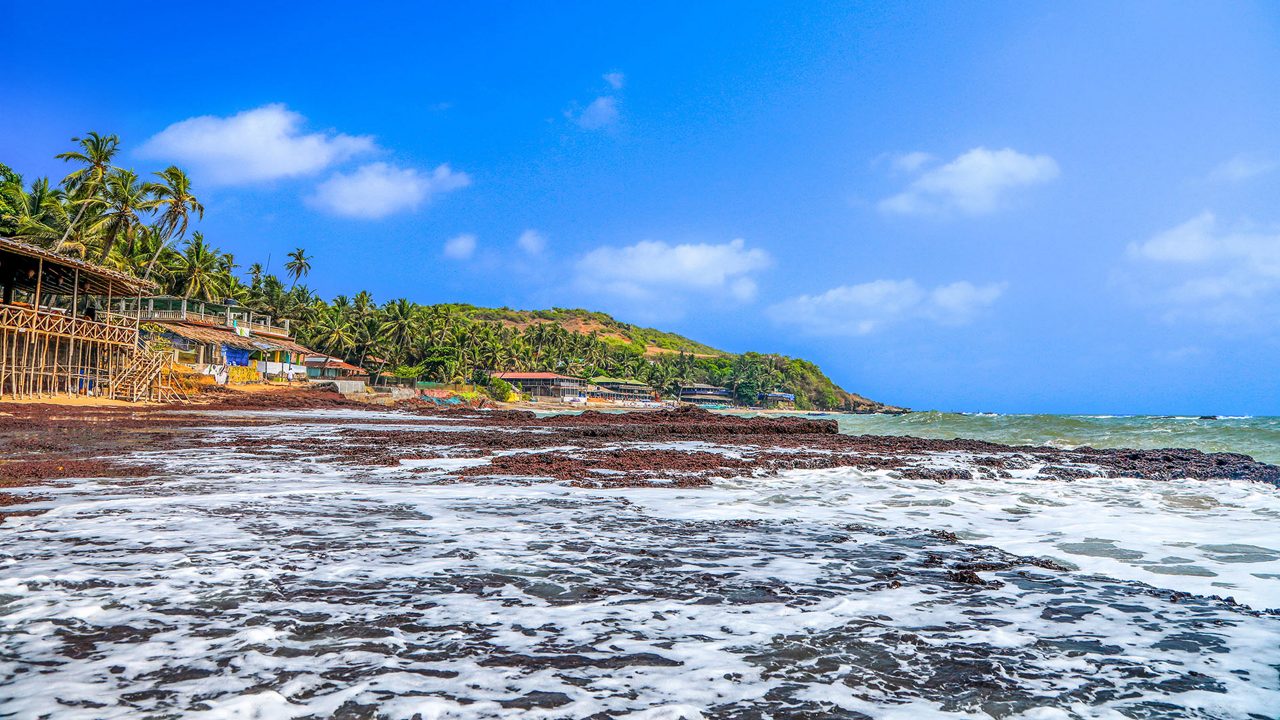
Anjuna Beach Goa: Flea Market, Nightlife & Beach Activities
Anjuna Beach Goa - Famous for its Wednesday Flea Market, legendary trance parties, rocky coastline and stunning sunsets. Complete guide to Goa's iconic hippie beach.
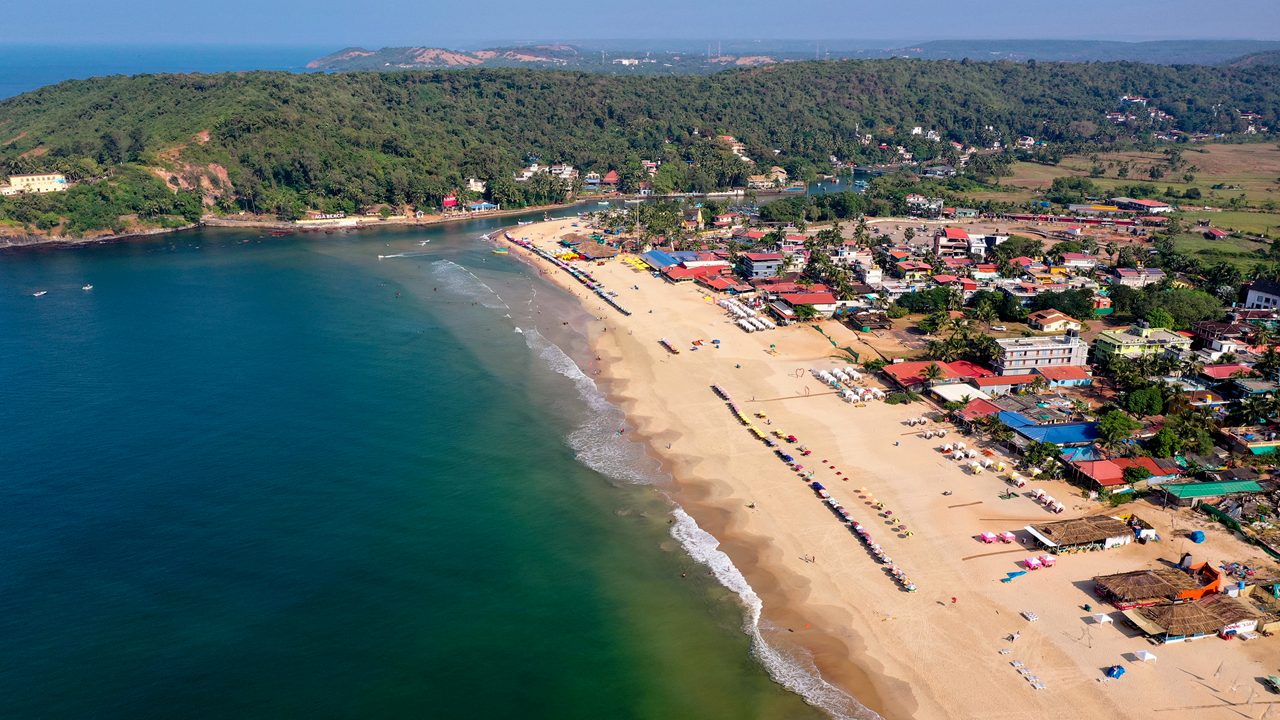
Baga Beach Goa: Activities, Nightlife & Tips
Baga Beach Goa - Enjoy exciting water sports, legendary nightlife at Tito's Lane, beach shack dining and complete travel guide with prices, best time to visit and how to reach.
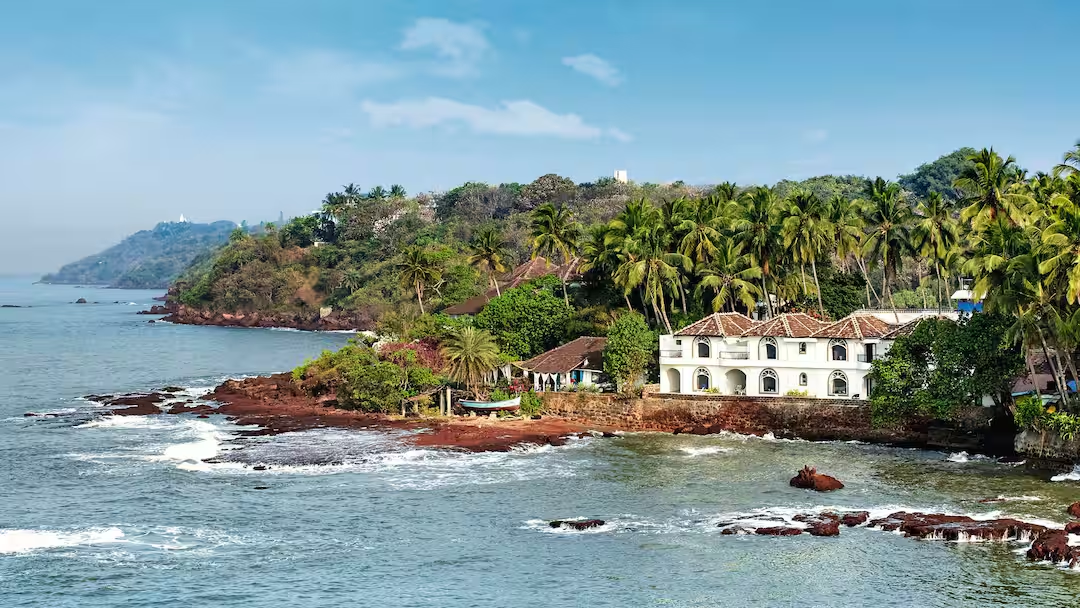
Dona Paula Beach Goa: Attractions & Travel Tips
Discover Dona Paula Beach in Goa, famous for its viewpoint & water sports. Complete guide with activities, best time to visit & nearby attractions.
Never Miss an Adventure
Get the latest trekking guides, travel tips, and exclusive offers delivered straight to your inbox.
