
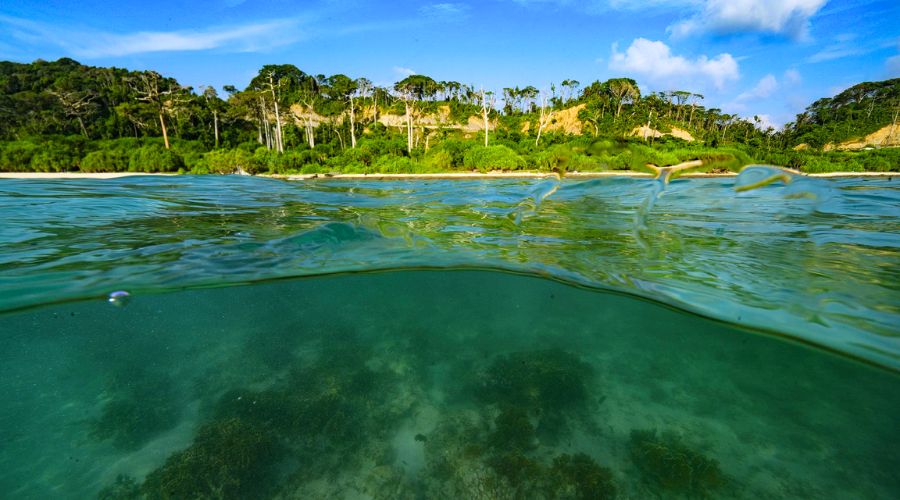
Great Andaman Biosphere Reserve: Ecosystem, Access & Responsible Travel

Neha Kapoor
December 18, 2025
Understand the Great Andaman biosphere topic with clear UNESCO context, Jarawa protection rules, permit basics, ATR conduct, and ethical Andaman travel guidance.
Introduction to the Great Andaman Biosphere Reserve Topic
The phrase Great Andaman Biosphere Reserve is widely used in travel searches, but visitors often get mixed information because protected-area terms in Andaman and Nicobar are not always used precisely online. In practical trip planning, two distinct conservation realities matter. First, UNESCO's Man and Biosphere network listing in this region refers to the Great Nicobar Biosphere Reserve. Second, the Jarawa Tribal Reserve in South and Middle Andaman follows separate protection law and strict movement rules on the Andaman Trunk Road corridor.
This guide is built to remove confusion and promote ethical planning. You will learn what is officially recognized, how tribal protection rules affect road travel, what permits and behavior standards apply, and how to visit Andaman responsibly without harmful tribal tourism practices. If you plan this region with accuracy and respect, you can enjoy nature and heritage while supporting long-term conservation.
What Is Officially Recognized?
For factual clarity, UNESCO MAB records the Great Nicobar Biosphere Reserve in India's Andaman and Nicobar island system. The term Great Andaman Biosphere Reserve appears frequently in blogs and packages, but it is often used loosely for broader island conservation narratives.
At the same time, Jarawa protection on the Andaman Trunk Road is governed through aboriginal tribe protection regulation and local enforcement rules. This is separate from biosphere branding and must never be treated as a tourist interaction opportunity.
| Term | Correct Context |
|---|---|
| Great Andaman Biosphere Reserve | Common search phrase, often informal or broad usage |
| Great Nicobar Biosphere Reserve | Official biosphere listing in UNESCO MAB network context |
| Jarawa Tribal Reserve | Legally protected tribal area with strict no-contact rules |
Why This Region Matters Ecologically
The Andaman-Nicobar system is ecologically significant for tropical forests, coastal habitats, marine biodiversity, and endemic species. High rainfall, island geography, and varied terrain create strong habitat diversity. Conservation here is not about one scenic point; it is about integrated forest-marine systems under pressure from climate events, infrastructure expansion, and unmanaged tourism behavior.
In biosphere terms, the value comes from balancing ecological protection with carefully regulated human activity. In tribal protection terms, the value comes from safeguarding vulnerable communities from disease exposure, exploitation, and cultural disruption.
Jarawa Tribe and Habitat Protection
The Jarawa are one of the indigenous communities of the Andaman Islands with legally protected habitat. Interaction-based tourism involving tribal observation, photography, gifting, or contact is prohibited and ethically harmful. Official police guidance for ATR movement highlights strict do-and-dont rules in Jarawa Reserve transit zones.
- No photography or videography in Jarawa reserve transit stretch.
- No stopping vehicles inside protected corridor unless officially directed.
- No offering food, goods, clothing, or any object to Jarawa people.
- Travel only in convoy as instructed by authorities.
These rules are not optional tourist etiquette. They are legal and humanitarian safeguards.
UNESCO and Biosphere Context in Andaman-Nicobar
UNESCO's MAB profile for Great Nicobar outlines biodiversity richness, ecological variety, and indigenous community context in that southern island landscape. This matters for travelers because it sets the baseline: biosphere tourism should be conservation-oriented, not extractive or thrill-seeking.
When planning from Port Blair or other Andaman points, do not assume every protected region is open for unrestricted tourism activity. Access, permits, and route permissions can vary significantly by island and reserve category.

Permits and Access: What Visitors Should Verify
Permit requirements in Andaman and Nicobar can change by route, nationality category, and local administrative notices. Always verify current rules before travel through official channels and recent operator advisories.
| Planning Item | Why It Matters |
|---|---|
| ID and route authorization | Needed for regulated movement in sensitive corridors |
| Convoy timing windows | Required for ATR transit in Jarawa reserve sections |
| Vehicle category restrictions | Different rules may apply to private and commercial transport |
| Photography restrictions | Strict enforcement in protected tribal areas |
Never rely solely on old itinerary screenshots. Check same-week updates before departure.
Andaman Trunk Road and Jarawa Reserve Transit
ATR travel is one of the most sensitive route segments in the islands because it intersects protected tribal zones. Movement is regulated through convoy formats and conduct rules. Travelers should treat this stretch as a restricted corridor, not a sightseeing safari.
If your itinerary includes Baratang-side experiences such as limestone caves or mangrove routes, choose operators that explicitly brief legal compliance. Ignore any package that markets tribal encounter language. Ethical and legal travel here means no contact, no voyeurism, and no recording.
Best Time to Plan a Responsible Visit
Weather comfort and sea conditions usually shape Andaman trip quality. Most visitors prefer fair-weather windows for inter-island movement and road logistics. Heavy monsoon phases can affect ferry reliability and travel pace.
| Season Window | Travel Character | Recommendation |
|---|---|---|
| Fair-weather months | Better visibility and smoother transfers | Best for first-time visitors |
| Shoulder period | Manageable with flexible planning | Good if schedule allows adjustments |
| Heavy monsoon phase | Operational variability | Avoid rigid plans and high-risk logistics |
Season choice should be paired with route legality, not only weather convenience.
How to Reach and Plan Ethically from Port Blair
Most travelers begin through Port Blair and build trips to islands or inland corridors based on permits and operator structure. If your plan includes regulated areas, choose verified transport providers and avoid last-minute informal deals promising shortcuts.
Useful base resources for route planning include Andaman complete travel guide, things to do in Andaman, and Baratang limestone caves guide. For general island pacing, review places to visit in Andaman.
Rules and Guidelines Visitors Must Follow
- Respect all no-contact tribal protection laws.
- Follow convoy instructions and checkpoint procedures.
- Keep cameras off where prohibited.
- Do not stop in restricted transit segments.
- Do not share or promote tribal voyeur content online.
- Use licensed operators with compliance briefings.
These practices reduce legal risk and protect vulnerable communities.
Photography Restrictions and Responsible Media Behavior
Photography in ecologically sensitive and tribal-protection zones is not a casual decision. Even when landscapes are visually striking, restrictions can apply by location segment. For Jarawa reserve transit, rules explicitly prohibit photography and videography.
Responsible media behavior also means avoiding sensational storytelling that turns protected communities into tourist content. If in doubt, do not shoot. Respect is more important than social media output.
Conservation Efforts and Current Challenges
Conservation in Andaman-Nicobar faces layered challenges: habitat pressure, disaster vulnerability, climate-linked coastal changes, and irresponsible tourism behavior. Effective protection requires coordination between forest, tribal welfare, transport enforcement, and visitor education.
Travelers can help by choosing compliant routes, refusing exploitative tribal-tour products, minimizing waste, and supporting low-impact local services. Conservation is not abstract policy; it is daily behavior on roads, beaches, forests, and checkpoints.
Ethical Tourism Practices in Protected Island Regions
Ethical tourism in this context means more than avoiding litter. It requires informed choices that protect people as much as landscapes. A practical ethical framework:
- Do not consume or share content that objectifies indigenous communities.
- Do not reward operators who break reserve conduct rules.
- Prioritize education-led itineraries over exploitative thrill packages.
- Keep interactions local, respectful, and legally compliant.
- Choose quality over checklist tourism pace.
This approach improves travel quality while preserving fragile socio-ecological systems.
Common Mistakes to Avoid in Sensitive Andaman Corridors
Many itinerary problems in this region come from misinformation, not distance. A common mistake is booking packages that advertise tribal sightings as an attraction. Any operator using that language should be avoided immediately. Another mistake is assuming all protected-area rules are identical across islands. In reality, biosphere, tribal reserve, and wildlife route controls can differ by location and purpose.
Travelers also underestimate timing discipline on regulated roads. Missing a convoy reporting window can disrupt the full day and force risky rushed movement later. Plan buffer time, keep documents ready, and follow checkpoint instructions without argument. If your group includes children or elderly members, prioritize comfort over aggressive day plans and avoid stacking long transfers with high-heat movement.
Digital behavior matters too. Do not upload or share content that violates dignity, privacy, or legal boundaries around indigenous communities. Responsible tourism includes both on-ground conduct and online conduct. When visitors respect this, they help reduce exploitative demand and support long-term conservation credibility in the islands.
Quick Pre-Departure Checklist
- Verify route legality and current checkpoint rules.
- Carry original ID and digital backup copies.
- Use licensed operators only for regulated corridors.
- Keep emergency contacts saved offline.
- Pack water, sun protection, and basic medical essentials.
- Brief your group on no-contact and no-photography rules in tribal reserve areas.
A 10-minute pre-departure check reduces most avoidable issues and keeps the journey compliant, safer, and more respectful. It also helps travelers avoid last-minute permit confusion, convoy misses, and unnecessary legal friction for first-time island travelers.
Final Take
The keyword Great Andaman Biosphere Reserve reflects strong traveler interest, but responsible planning requires factual precision. UNESCO biosphere context in this island system is linked to Great Nicobar, while Jarawa habitat protection follows strict legal rules in separate reserve corridors. Treating these as distinct but connected conservation realities is the only ethical way to travel here.
If you verify permits, follow ATR rules, avoid tribal-contact tourism, and prioritize conservation-minded operators, your Andaman journey can be both meaningful and responsible.

Location
Frequently Asked Questions
Q1.What is Great Andaman Biosphere Reserve?
Q2.Where is the Great Andaman biosphere context located?
Q3.Is Great Andaman Biosphere Reserve a UNESCO site?
Q4.Who are the Jarawa tribe?
Q5.Can tourists meet the Jarawa tribe?
Q6.Do I need permits for protected Andaman routes?
Q7.What are ATR convoy rules in Jarawa reserve areas?
Q8.How can I travel ethically in these protected regions?
Recommended For You
Things to Do in Andaman: Top Activities, Water Sports & Island Tours
Plan top things to do in Andaman with diving, snorkeling, beaches, island hopping, historical sites, and practical itinerary plus budget guidance.

Havelock Island (Swaraj Dweep): Beaches, Stay & Ferry Planning
Discover Havelock Island (Swaraj Dweep) in Andaman - home to the legendary Radhanagar Beach. Explore pristine beaches, world-class scuba diving, water sports, and island adventures in this tropical paradise. Complete travel guide with practical tips and itineraries.
Andaman Islands: Best Time To Visit And Things To Do
Planning your dream Andaman Islands vacation? This comprehensive guide covers essential Andaman travel tips for first-timers including best time to visit, how many days required, permits, packing list, budget breakdown, ferry booking, safety guidelines, and practical advice. Get ready for the perfect island paradise getaway with our expert tips on Port Blair, Havelock, Neil Island, water activities, and more.
Never Miss an Adventure
Get the latest trekking guides, travel tips, and exclusive offers delivered straight to your inbox.
