
Historical Monuments of Tezpur: Assam Heritage Walk & Attractions

Neha Kapoor
December 18, 2025
Explore the historical monuments of Tezpur including Agnigarh, Bamuni Hills, Da Parbatia, and Mahabhairab Temple with routes, timings, and travel tips.
Introduction
Tezpur, often remembered for its mythological identity as Sonitpur, is one of Assam's most layered heritage towns. Many travelers know it as a calm Brahmaputra-side city, but its true strength lies in historical monuments that connect mythology, medieval temple art, colonial-era urban planning, and living religious traditions. If you are searching for historical monuments of Tezpur, the key is to plan by significance and location so that you can cover the main sites without rushing.
This guide covers Agnigarh Hill, Bamuni Hills, Da Parbatia, Hazara Pukhuri, Cole Park (Chitralekha Udyan), and Mahabhairab Temple, along with route planning, best season, and practical travel advice. Distances and timing windows are approximate and can vary by traffic and local events. If you are extending beyond city heritage, pair this plan with places to visit in Assam to build a complete trip.
Why Tezpur Matters in Assam's Heritage Map
Tezpur is not a single-monument destination. It is a heritage cluster where mythology, archaeology, and regional history overlap. The city is associated with the Usha-Aniruddha legend, older temple fragments, sculptural remains from early medieval phases, and public spaces developed in the colonial period. This combination makes Tezpur one of the most accessible heritage-focused city breaks in Upper Assam.
| Monument | Historical Value | Approx Visit Time | Trip Type |
|---|---|---|---|
| Agnigarh Hill | Mythology-linked hill site | 1-1.5 hours | Scenic + cultural |
| Bamuni Hills | Early medieval temple ruins | 1 hour | Archaeological |
| Da Parbatia | Ancient sculpted doorframe remains | 30-45 min | High heritage value |
| Hazara Pukhuri | Historic tank and civic space | 30-45 min | Light heritage stop |
| Cole Park / Chitralekha Udyan | Colonial-era park with artifacts | 1 hour | Family-friendly |
| Mahabhairab Temple | Ancient Shiva worship site | 45-60 min | Spiritual + historical |
Agnigarh Hill, Tezpur
Agnigarh is one of the most searched monuments in Tezpur because it combines legend, landscape, and easy accessibility. According to local tradition, this was the fortified site where Banasura kept his daughter Usha in seclusion, surrounded by fire. Whether approached as mythology or cultural memory, the site remains central to Tezpur's identity.
Today, Agnigarh is developed as a viewpoint and landscaped monument area with sculptures that narrate the Usha-Aniruddha story. The hill offers broad views of Tezpur and the Brahmaputra belt, making it a strong first stop for orientation. Visit early morning or late afternoon for better light and lower heat exposure.
- Why visit: city legend, panoramic viewpoint, easy access.
- Best for: first-time visitors and short city breaks.
- Tip: carry water and plan footwear for mild uphill movement.
Bamuni Hills History and Ruins
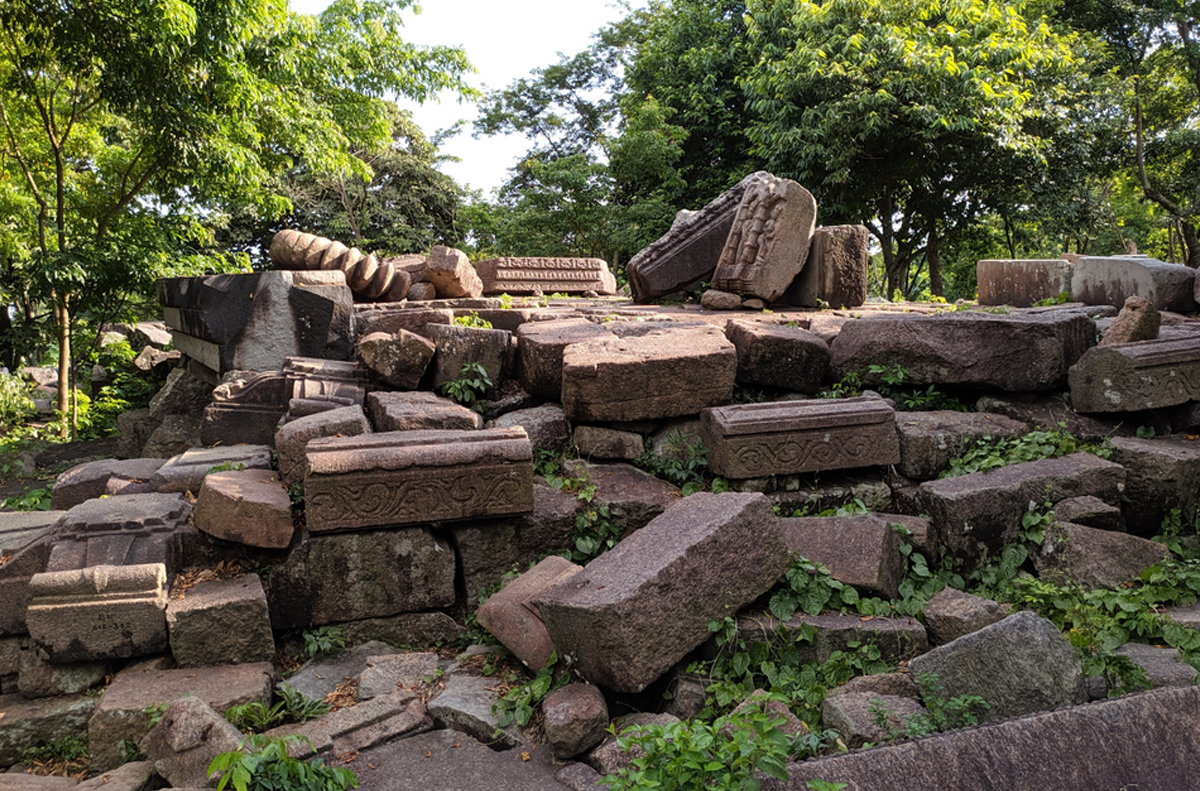
Bamuni Hills is one of the most important archaeological zones around Tezpur. The site contains remains of an early medieval temple complex, generally associated with 9th to 10th century sculptural and architectural traditions. Fragmented stone blocks, carved motifs, and iconographic patterns suggest the scale and craftsmanship of the original complex.
The ruins are especially useful for travelers interested in ancient Assamese temple art and transitional styles that show regional adaptation of broader Indian sculptural forms. While it is not a large museum-format site, Bamuni Hills has high interpretive value when visited with patience.
- Why visit: serious archaeological context.
- Best for: history learners, students, and photography with texture focus.
- Tip: avoid rushed photo-only visits; spend time reading the stone details.

Da Parbatia Temple Gateway
Da Parbatia is often treated as the finest single relic in the Tezpur area. The sculpted stone doorframe, usually dated to an early historic-medieval phase, is known for its detailed carvings and iconographic significance. The figures flanking the doorway, often interpreted as river goddesses, are among the most discussed examples of early temple artistry in Assam.
Even though the standing structure is limited, Da Parbatia carries major heritage weight because it preserves artistic evidence from a much older temple tradition in the Brahmaputra valley. This is a short stop in terms of time, but a high-priority one in terms of historical importance.
- Why visit: early sculptural heritage in Assam.
- Best for: heritage-focused travelers on a Tezpur monument circuit.
- Tip: combine with Bamuni Hills on the same half-day block.
Hazara Pukhuri
Hazara Pukhuri is a large historic tank that adds civic and environmental history to Tezpur's monument trail. Unlike temple or fort remains, this site reflects water management and urban life layers. Over time, it has also become a local leisure zone, which makes it easy to include without heavy logistics.
For visitors, Hazara Pukhuri works as a slower pause between high-detail heritage stops. It is not an archaeology-heavy destination like Bamuni Hills, but it helps complete the story of how older Assamese urban centers balanced sacred, residential, and civic spaces.
- Why visit: historic waterbody and city heritage continuity.
- Best for: relaxed walks, mixed-age travel groups.
- Tip: visit during cooler hours for comfort.
Cole Park (Chitralekha Udyan)
Cole Park, now widely known as Chitralekha Udyan, represents Tezpur's public heritage culture. Established during colonial administration and later expanded, the park includes historical stone elements and curated open spaces. It is one of the easiest places for families to engage with heritage in a low-pressure format.
The park is linked with local legend through the Chitralekha naming tradition and continues to function as an urban cultural zone. If you are traveling with children or senior family members, this is one of the most comfortable monument-adjacent stops in Tezpur.
- Why visit: accessible heritage environment.
- Best for: families, evening visits, light city exploration.
- Tip: pair with nearby food plans using places to eat in Tezpur.

Mahabhairab Temple
Mahabhairab Temple is one of Tezpur's most significant religious heritage landmarks. Dedicated to Lord Shiva and associated with ancient local traditions, the temple remains an active spiritual center with strong local participation during festivals.
From a heritage perspective, Mahabhairab helps connect Tezpur's archaeology and mythology with living worship practices. This continuity is important: many historical places in Assam are not isolated ruins but living sites where ritual and memory continue together.
If spiritual sites are part of your trip, combine this with religious places in Tezpur for a focused route.
How to Reach Tezpur from Guwahati and Nearby Hubs
| Mode | Typical Route | Approx Time | Planning Notes |
|---|---|---|---|
| By Road | Guwahati to Tezpur via NH corridor | 4-5 hours | Most flexible option for monument hopping |
| By Train | Nearest railheads via Assam network | Varies | Use onward taxi for local monument circuit |
| By Air | Regional connectivity plus Guwahati hub | Varies | Guwahati often gives better schedule flexibility |
Most visitors choose the road route from Guwahati because it allows direct control over arrival time and easier local transfers. If you are combining wildlife with heritage, add Kaziranga National Park as the next leg.
Best Time to Visit Tezpur Monuments
- November to March: best weather for walking and outdoor exploration.
- April to June: warmer and more humid, but still manageable with early starts.
- July to September: monsoon greenery is strong, but rainfall may affect movement.
For heritage-centric travelers, winter months provide the best balance of comfort, light conditions, and itinerary reliability.
Suggested 1-Day and 2-Day Heritage Plans
1-Day Monument Circuit
- Morning: Agnigarh Hill, Da Parbatia
- Midday: Bamuni Hills
- Evening: Cole Park and Hazara Pukhuri
- Night: Mahabhairab area and local market walk
2-Day Relaxed Heritage Circuit
- Day 1: Agnigarh, Bamuni Hills, Da Parbatia
- Day 2: Hazara Pukhuri, Cole Park, Mahabhairab Temple, city cultural stops
A 2-day plan gives better pacing and allows meaningful time at each site without fatigue.
Practical Travel Tips for Monument Visits
- Start early to avoid mid-day heat in open archaeological zones.
- Carry water, light snacks, and sun protection.
- Respect local temple rules and photography guidance.
- Use local transport or hired cab for smoother monument sequencing.
- Keep one flexible buffer slot for weather or traffic delays.
For shopping and light city add-ons, see shopping malls in Tezpur and cafes in Tezpur.
Sonitpur History and the Usha-Aniruddha Narrative
Tezpur's identity as Sonitpur is rooted in the mythological conflict between Lord Krishna's lineage and the kingdom of Banasura. In regional memory, this battle is linked to the love story of Usha and Aniruddha, which gives emotional context to sites like Agnigarh. Whether read as mythology, symbolic history, or cultural memory, this narrative still shapes Tezpur's public storytelling.
For heritage travelers, this matters because monuments here are interpreted through both archaeology and oral tradition. Bamuni Hills and Da Parbatia represent material evidence from historical periods, while Agnigarh and related names preserve narrative continuity. Together, they create a layered travel experience where legend and stone heritage coexist rather than compete. This is one reason Tezpur feels different from purely archaeological circuits.
Entry Timings and Practical Cost Planning
Individual monument timings in Tezpur can vary by season, local maintenance, and festival schedules, so verify opening windows locally on arrival day. Most open heritage spots are easiest to visit between morning and late afternoon. For a smooth day, keep one flexible buffer between sites and avoid planning every stop at tight one-hour intervals.
- Budget style: many public heritage spaces are low-cost compared with major metro monuments.
- Transport: local cabs or auto transfers save time across dispersed points.
- Food planning: keep lunch around the central city zone to reduce backtracking.
This approach keeps your monument circuit realistic and helps avoid rushed, low-quality visits.
Conclusion
Tezpur stands out as one of Assam's most accessible heritage cities where mythology, archaeology, and living culture meet in a compact radius. From the legend-rich Agnigarh Hill to the sculptural significance of Da Parbatia and the temple remains at Bamuni Hills, each monument adds a different chapter to the city's historical identity.
If you plan your route by site type and travel pace, Tezpur can deliver a rewarding heritage experience in one to two days without rush. It is an ideal stop for travelers who want history with context, not only checklist tourism.

Location
Frequently Asked Questions
Q1.Why is Tezpur called the City of Blood?
Q2.What is famous in Tezpur for heritage travelers?
Q3.How old are Bamuni Hills ruins?
Q4.Is Agnigarh Hill worth visiting?
Q5.What is the best time to visit Tezpur monuments?
Q6.How many days are enough for Tezpur monument sightseeing?
Q7.How can I reach Tezpur from Guwahati?
Q8.Are Tezpur heritage sites suitable for families?
Recommended For You
Best Cafes in Tezpur: Assam Tea, Views & Budget Picks
A complete Tezpur cafe guide covering Assam tea spots, student cafés, river-view seating, budget options, timings, and where to go by mood.
Places to Eat in Tezpur: Assamese Food, Cafes & Family Spots
Discover places to eat in Tezpur with Assamese specialties, local eateries, market snacks, sweet shops, and practical dining tips for every budget.

Shopping Malls in Tezpur: Complete Shopping Guide 2026
Shopping in Tezpur Assam: Complete guide to malls, markets, Assamese silk, handicrafts, tea & authentic local products with practical tips.
Never Miss an Adventure
Get the latest trekking guides, travel tips, and exclusive offers delivered straight to your inbox.
