
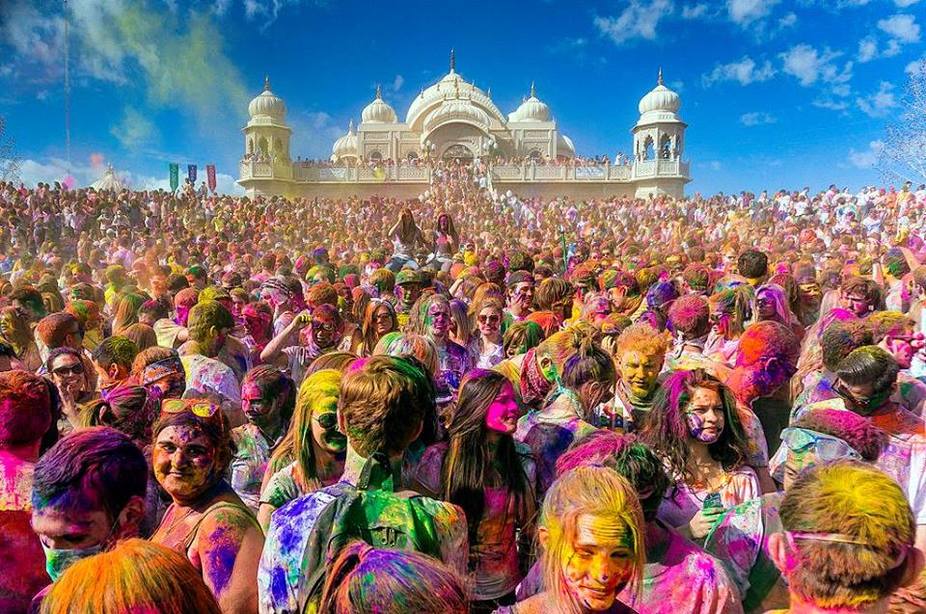
Lathmar Holi in Barsana: Experience the Unique Playful Tradition
Ananya Sharma
January 20, 2026
Experience Lathmar Holi in Barsana - the unique tradition where women chase men with sticks! Discover legend, dates, tips, celebrations & complete guide for 2026.
Lathmar Holi in Barsana is one of India's most unique and fascinating Holi traditions, where women playfully chase men with sticks (lathis) while men protect themselves with shields. This centuries-old tradition, reenacting Lord Krishna's visit to Barsana to tease Radha, draws thousands of visitors who come to witness this extraordinary celebration. Located just 45 km from Mathura, Barsana becomes a carnival of color, laughter, and cultural spectacle during the Holi season.
The Legend Behind Lathmar Holi
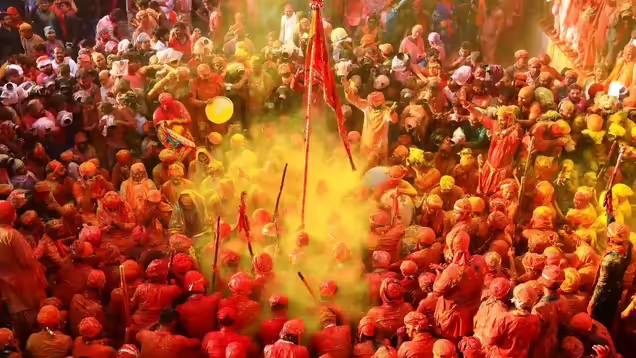
The tradition of Lathmar Holi is rooted in the beloved mythology of Lord Krishna and Radha. According to legend, Lord Krishna, who lived in Vrindavan, visited Barsana (Radha's village) to tease her and her friends. The women of Barsana, offended by Krishna's teasing, chased him away with sticks. Reenacting this divine play, Lathmar Holi celebrates this playful interaction between Krishna and the gopis (milkmaids).
What makes this tradition special is how it has been preserved for centuries. The residents of Barsana and Nandgaon (Krishna's village) take immense pride in maintaining this unique custom. Every year, men from Nandgaon visit Barsana, where the local women "chase" them with decorated wooden sticks, while the men protect themselves with leather shields.
The tradition is deeply embedded in the Braj region's cultural identity. It's not just a performance for tourists - it's a living practice that connects modern-day residents to their ancient heritage. The playful nature of Lathmar Holi also reflects a unique social custom where traditional gender roles are temporarily reversed, allowing women to assert dominance in a socially sanctioned way.
When and How Lathmar Holi is Celebrated
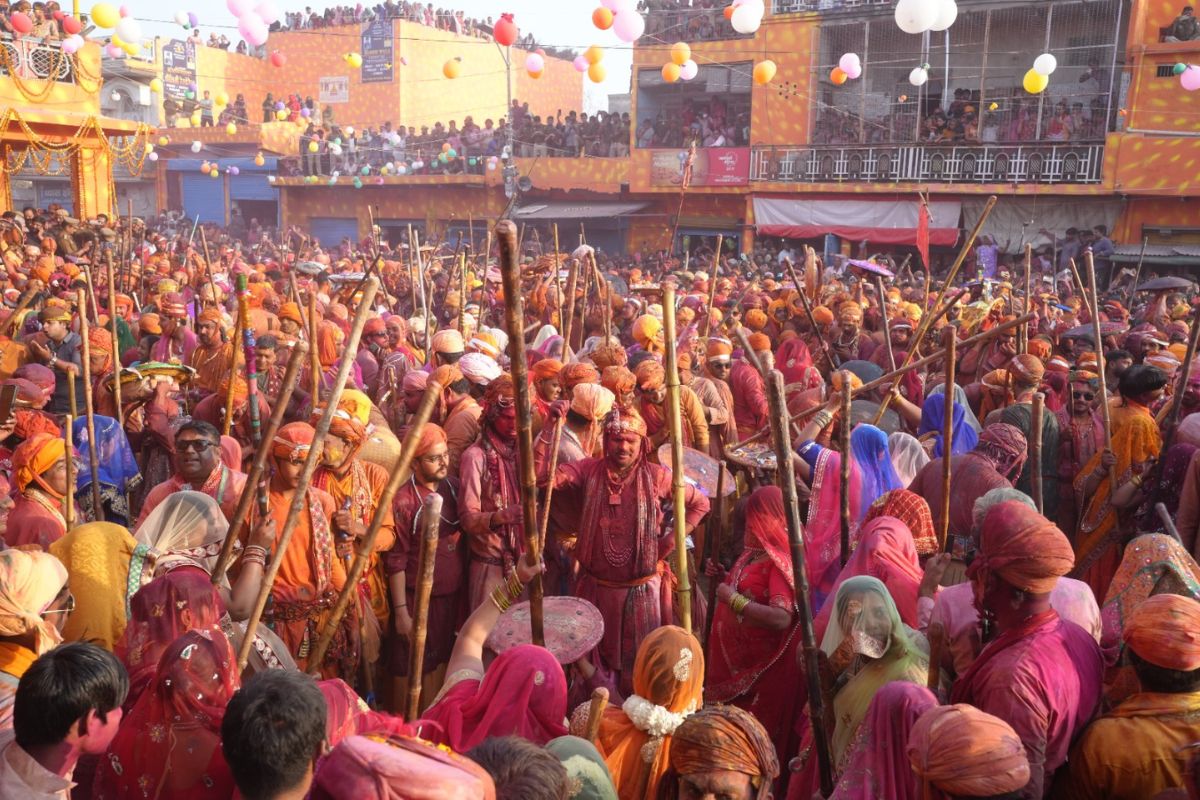
Lathmar Holi doesn't take place on the main Holi day. Instead, it's celebrated several days before, typically around the Phalguna Shukla Ekadashi (11th day of the waxing moon). The festival extends over multiple days with different events in Barsana and Nandgaon.
The celebrations begin when men from Nandgaon arrive at Barsana's Radha Rani Temple, singing songs and chanting "Radhe Radhe." The women of Barsana, dressed in traditional clothes and armed with decorated lathis (sticks), gather to "welcome" them. What follows is a mock battle where women chase the men while singing traditional Holi songs. The men protect themselves with leather shields but cannot retaliate - they can only dodge and defend.
The atmosphere is electric with color and sound. Amid the stick-play, people throw colored powder (gulal) and water, creating a vibrant spectacle. Traditional musicians playing drums and other instruments accompany the celebration, providing rhythmic energy to the proceedings. Despite the apparent chaos, there's an underlying order and mutual respect between participants.
A few days later, the men of Barsana visit Nandgaon for a reciprocal celebration called "Phoolon ki Holi" (Holi of flowers), where the roles are reversed. This exchange between the two villages symbolizes the playful relationship between Krishna and Radha's communities.
The Radha Rani Temple: Epicenter of Celebrations
The Radha Rani Temple, also known as the Ladliji Temple, is the focal point of Lathmar Holi celebrations. This beautiful temple, dedicated to Radha, is believed to be the site where Krishna came to visit Radha according to local tradition. During Lathmar Holi, the temple courtyard becomes the main stage for the stick-play festivities.
The temple's architecture provides a stunning backdrop for the celebrations. Its red sandstone structure, typical of the Braj region's style, glows with added color during Holi. Devotees first offer prayers at the temple before the festivities begin, maintaining the spiritual foundation of the celebration.
Temple priests perform special ceremonies during Lathmar Holi, including abhishekam (ritual bathing) of Radha's idol with colored water and milk. These rituals connect the playful celebrations to the festival's religious significance, reminding participants that Lathmar Holi is ultimately a celebration of divine love.
Modern Lathmar Holi vs Traditional Practice
While the core tradition remains unchanged, Lathmar Holi has evolved significantly over the years. What was once a purely local community celebration has now become a major tourist attraction, drawing visitors from across India and around the world. This influx has changed the dynamics of the celebration in several ways.
In the past, Lathmar Holi was an intimate affair where residents of Barsana and Nandgaon would play with each other in village lanes. Today, the celebrations are more organized, with designated areas for tourists to watch. The local administration now manages crowds, ensuring safety while maintaining the tradition's authenticity.
The commercial aspect has also grown. Local businesses cater to the thousands of visitors who come for Lathmar Holi, offering everything from food and accommodation to special viewing platforms. Photography is now a major part of the experience, with many tourists coming specifically to capture this unique tradition.
Despite these changes, the core elements remain intact. The women of Barsana still take pride in their role, and the men of Nandgaon still make the annual journey. The songs, the stick-play, and the color-throwing continue as they have for centuries, creating a bridge between past and present.
Best Places to Witness Lathmar Holi
Radha Rani Temple Complex - This is the main venue where the traditional stick-play occurs. The temple courtyard becomes a chaotic, colorful arena where women chase men with lathis. Arrive early to secure a good viewing spot. The temple's elevated areas provide the best vantage points for photography.
Barsana Village Streets - The lanes leading to the temple become celebration zones themselves. As men from Nandgaan approach the temple, women line the streets, singing and wielding their sticks. These street celebrations are often more intimate than the main temple event and offer closer interaction with locals.
Nandgaon - Visit Nandgaan (about 8 km away) to see the preparations and the reciprocal celebrations. The Nand Baba Temple here hosts its own festivities. Seeing both sides of the tradition gives you a complete understanding of the Barsana-Nandgaan Holi relationship.
Goverdhan Hill - Located between Barsana and Mathura, Goverdhan is a pilgrimage site that also celebrates Holi with great enthusiasm. While it doesn't have Lathmar Holi, the celebrations here are less crowded and offer insight into Braj region's broader Holi traditions.
Barsana Holi Food and Specialties
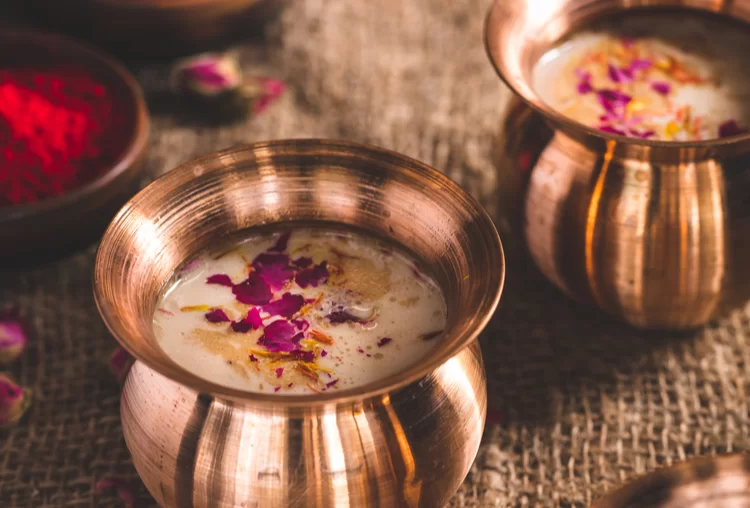
The Braj region has its own culinary traditions that shine during Holi. In Barsana and surrounding villages, households prepare special dishes that have been passed down through generations. These foods are an essential part of the Lathmar Holi experience.
The most iconic Holi preparation in this region is "Thandai," the spiced milk drink that's synonymous with Braj's Holi celebrations. Traditional Thandai contains bhang (cannabis), which is believed to be Lord Shiva's favorite and has been consumed in this region for centuries. Many households prepare non-bhang versions as well, flavored with almonds, cardamom, saffron, and rose water.
"Gujiya," the sweet dumpling filled with khoya and dry fruits, is prepared in almost every household. The Braj version of gujiya is particularly renowned for its delicate preparation. Another local specialty is "Mathri" and "Namakpare" - savory snacks that are fried in bulk and distributed to visitors.
"Kanji," a fermented drink made from black carrots and water, is another Holi specialty of the Braj region. Prepared weeks in advance, the drink is believed to have cooling properties that balance the heat of March. Many families also prepare "Dahi Bhalla" and "Papdi Chaat" for the festival.
What makes Braj's Holi food special is its connection to Krishna mythology. Many dishes are believed to be favorites of Krishna, and preparing them is seen as a form of devotion. The food here isn't just sustenance - it's an offering to the divine and a way to participate in the region's living mythology.
Tips for Experiencing Lathmar Holi
If you're planning to witness Lathmar Holi, preparation is essential. This is one of India's most intense festivals, and knowing what to expect will help you have a safe and enjoyable experience.
Plan your visit well in advance. Lathmar Holi dates vary each year based on the Hindu calendar, so check the exact dates before booking travel. Accommodation in Barsana and Mathura fills up months in advance. Consider staying in Mathura or Vrindavan and making a day trip to Barsana, as options are more plentiful there.
Arrive at the venue very early - by 6 AM or earlier. The crowds swell rapidly as the day progresses, and latecomers may not get good viewing spots. The morning light is also better for photography, and the celebrations are more organized in the early hours.
Dress appropriately for the chaos you're about to witness. You will likely get colored even as a spectator. Wear old clothes that you don't mind staining permanently. Many locals wear white specifically for Holi. Cotton fabrics are ideal for March's weather. Women should avoid revealing outfits out of respect for the temple setting.
Protect your electronics meticulously. The combination of colored powder, water, and crowded conditions makes it nearly impossible to keep devices clean. Use waterproof pouches or leave cameras and phones at your hotel. If you must photograph, bring protective gear for your camera and consider using a telephoto lens to maintain distance.
Maintain respectful distance from the stick-play. While Lathmar Holi looks playful, those sticks are real and can cause injury. Don't try to join in unless you're a local participant. Stay behind the barriers set up for spectators and respect the boundaries set by organizers.
Safety and Practical Considerations
While Lathmar Holi is a unique cultural experience, it requires particular caution. The combination of large crowds, physical activity, and colored powder creates conditions where accidents can happen.
Be extremely careful around the stick-play area. Women swinging lathis may not see tourists standing nearby, and the sticks can cause serious injury. Stay in designated spectator areas and never try to cross the arena where the play is happening. The men protecting themselves are focused on dodging sticks and may accidentally collide with spectators.
The crowds can become overwhelming, with thousands of people pushing to get closer views. Be aware of your surroundings and avoid the densest parts of the crowd if you're uncomfortable. The temple area and surrounding lanes become packed, making it difficult to move. If you get caught in a crowd surge, go with the flow rather than fighting against it.
Protect yourself from colors. While the Gulal used in traditional celebrations is generally safer than synthetic colors, it can still cause skin irritation in some people. Apply oil or moisturizer to exposed skin before going out. Wear sunglasses to protect your eyes from colored powder. If you have respiratory issues, consider wearing a mask as the air fills with fine powder.
Stay hydrated and take breaks. March in this region can be warm, and active participation or even spectatorship can be draining. Drink plenty of water and step away from the main celebration area periodically. Local vendors sell water, cold drinks, and snacks.
Women travelers should be particularly cautious. While Barsana is generally safe during Lathmar Holi, the crowded, chaotic environment can lead to uncomfortable situations. Consider visiting with a group or guide. Avoid isolated areas of the village. Trust your instincts - if a situation feels uncomfortable, remove yourself immediately.
Photography Guidelines for Lathmar Holi
Lathmar Holi offers spectacular photography opportunities, but capturing it requires preparation and respect. The colorful chaos of women chasing men with sticks makes for unforgettable images, but getting these shots safely is challenging.
Use telephoto lenses to maintain distance from the action. Trying to get close-up shots in the midst of stick-play is dangerous and disrespectful. The best vantage points are from the temple's elevated areas or designated viewing platforms.
Protect your camera equipment comprehensively. The fine colored powder can damage camera sensors and lenses. Use rain covers or plastic bags to protect your camera body. Put UV filters on your lenses to protect the glass. Bring cleaning supplies - you'll need to clean your equipment frequently throughout the day.
Ask permission before photographing people, especially women. Many locals are happy to be photographed, but it's polite to ask first. Some may request money for photos. Focus on capturing the spirit of celebration rather than just seeking dramatic shots.
The best photographs often come from the preparations and aftermath rather than the main event itself. Arrive early to capture men from Nandgaan approaching Barsana, singing and chanting. Stay late to capture the exhausted but happy participants heading home. These moments often tell more complete stories than the chaotic stick-play itself.
Combining Lathmar Holi with Other Braj Celebrations
Lathmar Holi is just one part of the broader Holi celebrations in the Braj region. If you're making the trip to Barsana, consider experiencing other unique Holi traditions nearby to get a complete picture of how this festival is celebrated in Krishna's land.
Vrindavan, just a few kilometers away, celebrates Holi for over a week. The famous Banke Bihari Temple hosts special celebrations where the idol is dressed in white colored clothes that become multicolored during the festivities. The widows of Vrindavan also play Holi at the Gopinath Temple, a beautiful tradition that has gained international attention.
Mathura, Krishna's birthplace, celebrates Holi with great enthusiasm at the Krishna Janmasthan Temple. The city's celebrations include traditional music and week-long cultural programs. Mathura's Holi is more organized than Barsana's and offers a different perspective on the festival.
Gokul and Goverdhan, two other important sites in Krishna's life, also have unique Holi traditions. Gokul celebrates "Ekadashi Holi" while Goverdhan has special ceremonies at the Goverdhan Hill. Visiting these places gives you insight into the regional variations of Holi within the Braj area.
Experiencing Lathmar Holi in Barsana is more than just witnessing a unique tradition - it's an immersion into one of India's most culturally rich regions during its most vibrant festival. The combination of mythology, playfulness, and community celebration creates an experience that's both profoundly traditional and instantly accessible. Whether you're a cultural enthusiast, a photographer, or simply someone curious about India's diverse traditions, Lathmar Holi offers an unforgettable glimpse into the living heritage of the Braj region.
Location
Frequently Asked Questions
Q1.What is Lathmar Holi in Barsana?
Q2.When is Lathmar Holi celebrated in 2026?
Q3.Where is Barsana and how do I reach there?
Q4.Is Lathmar Holi safe for tourists?
Q5.Can tourists participate in Lathmar Holi?
Q6.What should I wear for Lathmar Holi?
Q7.Where should I stay for Lathmar Holi?
Q8.What makes Lathmar Holi unique?
Recommended For You
Diwali in Ayodhya: Deepotsav Dates, Events & Crowd Planning
Experience the world's grandest Diwali celebration in Ayodhya. Witness 22 lakh diyas illuminate the sacred Saryu River during Deepotsav. Complete guide to timings, locations, and travel tips.
Durga Puja in West Bengal: Major Pandals, Timings & Travel Plan
Durga Puja Kolkata planning guide with pandal cluster routes, crowd-smart timing, transport strategy, and practical one-day/two-day festival templates.
Holi Festival 2025: Celebration Dates And Traditions
Experience Holi festival in India - the vibrant Festival of Colors! Discover traditions, celebrations, best places, safety tips, history & cultural significance in this comprehensive guide.
Never Miss an Adventure
Get the latest trekking guides, travel tips, and exclusive offers delivered straight to your inbox.
