
Jantar Mantar Jaipur: Timings, Tickets & Observatory Highlights

Rohit Verma
December 10, 2025
Explore Jantar Mantar Jaipur - the world's largest stone astronomical observatory. Get timings, entry fee, instruments guide & UNESCO heritage details.
Introduction to Jantar Mantar Jaipur
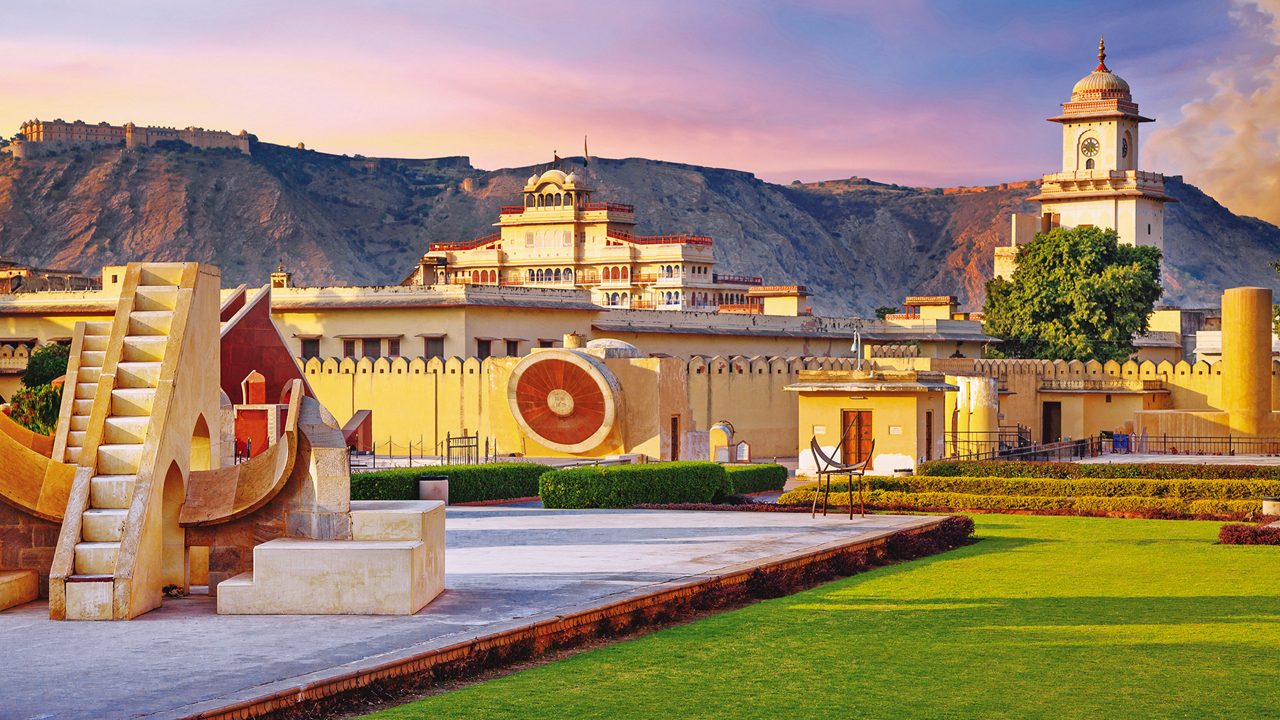
Located in the heart of Jaipur, the Pink City, Jantar Mantar stands as the world's largest stone astronomical observatory. Built nearly 300 years ago between 1728 and 1734, this UNESCO World Heritage Site represents one of the most remarkable scientific achievements of medieval India. The name "Jantar Mantar" comes from the Sanskrit words "Yantra" (instrument) and "Mantra" (formula), translating to "instruments of calculation."
This extraordinary complex houses 19 massive astronomical instruments built from stone and marble, designed to observe celestial bodies with remarkable precision. What makes Jantar Mantar particularly fascinating is that these instruments, constructed without modern technology, could measure time, predict eclipses, and track planetary movements with an accuracy that still impresses astronomers today. The observatory is not just a historical monument—it's a testament to India's rich scientific heritage and the visionary genius of Maharaja Jai Singh II.
Whether you're an astronomy enthusiast, history lover, or curious traveler, Jantar Mantar offers a fascinating glimpse into the scientific mindset of 18th-century India. This comprehensive guide covers everything you need to know about visiting this astronomical marvel.
History and Construction
Maharaja Jai Singh II's Vision
Maharaja Sawai Jai Singh II (1686-1743), the founder of Jaipur, was far more than just a ruler. He was a brilliant mathematician, astronomer, and scholar who recognized the critical need for accurate astronomical calculations. In the early 18th century, existing astronomical tables contained significant errors, leading to incorrect predictions of eclipses and planetary positions. Dissatisfied with these inaccuracies, Jai Singh resolved to create observatories that would provide precise measurements.
Construction Period
Construction of Jantar Mantar Jaipur began in 1728 and was completed in 1734, making it the largest and best-preserved of the five observatories Jai Singh built across India. The other observatories were constructed in Delhi, Ujjain, Varanasi, and Mathura. Jaipur's observatory, however, was special—it was built in the city Jai Singh himself founded, allowing him to integrate the observatory seamlessly into his capital's urban planning.
Scientific Purpose
The primary purpose of Jantar Mantar was to create accurate astronomical tables for various practical applications. These included determining auspicious times for ceremonies, creating precise calendars, predicting eclipses, and tracking planetary movements. The instruments could also help calculate the exact timing of solstices and equinoxes, which had both religious and agricultural significance.
Historical Context
The construction of Jantar Mantar coincided with a period of great intellectual activity in India. Jai Singh's court was a center of learning, attracting scholars from across the country and beyond. The observatory reflected the Maharaja's belief that scientific knowledge should be accessible and practical, serving both spiritual and worldly needs.
Jantar Mantar Timings and Entry Fee
Planning your visit requires knowing the essential practical details. Here's everything you need to know about timings and entry fees.
| Category | Details |
|---|---|
| Daily Timings | 9:00 AM - 4:30 PM (Open all days except Friday) |
| Entry Fee - Indians | ₹50 per person |
| Entry Fee - Foreigners | ₹200 per person |
| Students | ₹15 (with valid ID) |
| Photography | Allowed (still cameras free) |
| Video Camera | ₹100 extra fee |
Best Time to Visit
The optimal time to visit Jantar Mantar is between 9:00 AM - 11:00 AM or 3:00 PM - 4:30 PM. During these hours, the sun's position makes it easier to understand how the instruments work, particularly the sundials which cast clear shadows on their scales. Midday visits can be uncomfortable during summer due to the lack of shade within the complex.
Recommended Duration
Plan to spend approximately 2-3 hours at Jantar Mantar. This allows enough time to explore all the major instruments, read the information panels, and understand how each device functions. If you're particularly interested in astronomy, consider hiring a guide who can provide detailed explanations of the scientific principles behind each instrument.
Best Time to Visit Jantar Mantar Jaipur
Choosing the right season for your visit significantly impacts your experience.
| Season | Months | Weather | Rating |
|---|---|---|---|
| Winter | October - March | 15-25°C, Pleasant days, cool nights | 9/10 (Best) |
| Monsoon | July - September | Moderate rain, lush surroundings | 7/10 |
| Summer | April - June | 25-45°C, Very hot | 6/10 (Early morning only) |
Winter Season (October-March)
Winter is undoubtedly the best time to visit Jantar Mantar. The pleasant weather makes it comfortable to walk around the open complex and spend time understanding each instrument. The clear winter skies also provide ideal conditions for understanding how the observatory tracks celestial bodies.
Monsoon Season (July-September)
The monsoon brings moderate rainfall to Jaipur, but the observatory remains accessible. The rain can provide relief from the heat, and the cloudy skies create dramatic lighting conditions for photography. However, some instruments may not demonstrate their full functionality on overcast days.
How to Reach Jantar Mantar Jaipur
From Jaipur Airport
Jantar Mantar is located approximately 15 kilometers from Jaipur International Airport. The journey takes about 30 minutes by taxi or auto-rickshaw, depending on traffic conditions. Prepaid taxis are available at the airport.
From Jaipur Junction Railway Station
The observatory is just 4 kilometers from Jaipur Junction, the main railway station. You can reach Jantar Mantar in 15 minutes by auto-rickshaw (₹100-150) or taxi (₹200-250). Many visitors prefer to walk, enjoying the streets of the old city.
Within the Old City
Jantar Mantar is centrally located in Jaipur's old city, within walking distance of other major attractions. It's just a 3-minute walk from Hawa Mahal and a 5-minute walk from the City Palace complex. Most visitors explore all three attractions together as they form the core of Jaipur's heritage circuit.
Public Transport
Jaipur's city bus service operates routes that stop near Jantar Mantar. Bus routes 6, 6A, and C1 connect the observatory to various parts of the city. However, buses can be crowded, and auto-rickshaws or taxis are generally more convenient for tourists.
Major Astronomical Instruments at Jantar Mantar
Jantar Mantar Jaipur houses 19 major architectural astronomical instruments, each designed for specific observational and calculation purposes.
Samrat Yantra (The Supreme Instrument)
The Samrat Yantra is the centerpiece of Jantar Mantar and the world's largest stone sundial. Standing at an impressive height of 90 feet, this massive structure can tell time with an accuracy of two seconds. The triangular gnomon, with its hypotenuse parallel to Earth's axis, casts a shadow on the finely graduated quadrants on either side.
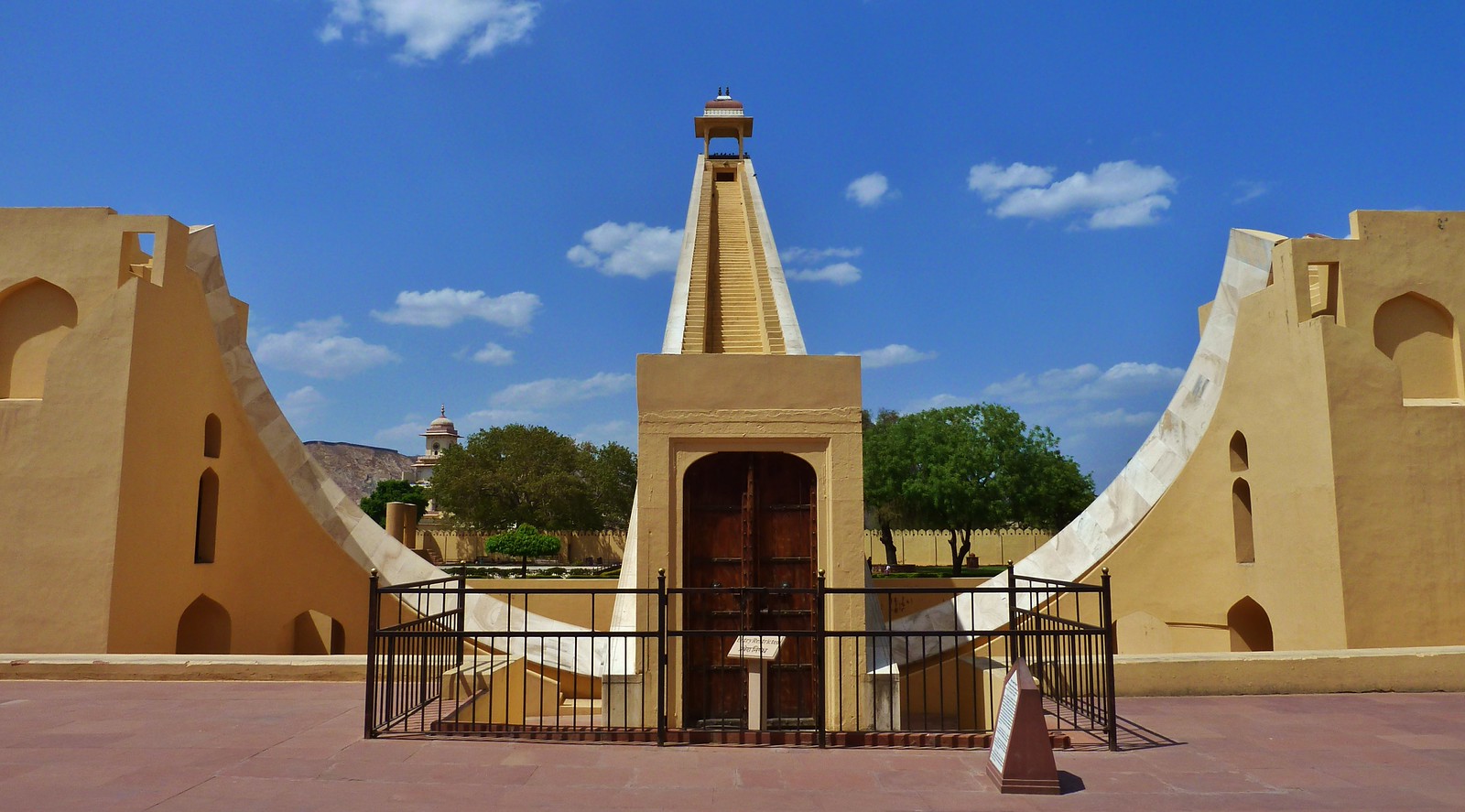
The instrument works on a simple yet brilliant principle: as the sun moves across the sky, the shadow's position on the quadrant indicates the time. The Samrat Yantra can also measure the declination of the sun and other celestial bodies, making it a versatile astronomical tool.
Jai Prakash Yantra
This remarkable instrument consists of two hemispherical bowls, each a complementary image of the sky above. The bowls are marked with graduated coordinates representing the celestial sphere. A small metal plate suspended at the center of each bowl casts a shadow, allowing astronomers to determine the position of celestial objects.
The dual design is ingenious: when one bowl is in shadow, the other is illuminated, ensuring continuous observation capability. The Jai Prakash Yantra can measure all celestial coordinates, making it one of the most versatile instruments in the observatory.
Ram Yantra
The Ram Yantra consists of two cylindrical structures that complement each other in measuring the altitude and azimuth of celestial bodies. Each cylinder represents a building with a central pillar. The open space between the pillar and walls is graduated, allowing precise measurement of stellar positions.
The instrument's design ensures that if one cylinder is unusable due to the sun's position, the other remains functional. This practical consideration shows Jai Singh's understanding of the challenges of observational astronomy.
Mishra Yantra
The Mishra Yantra is a multi-purpose instrument that combines several functions in a single structure. It can detect Hindu calendar festivals, calculate eclipses, and determine the exact moments of solstices and equinoxes. The instrument can also indicate the time in four different cities simultaneously, acknowledging that solar time varies by longitude.
Dhruva Darshaka
This instrument is designed specifically for observing the Pole Star (Dhruva in Sanskrit), which appears stationary in the sky while all other stars appear to rotate around it. The Dhruva Darshaka helped ancient astronomers determine cardinal directions and was useful for navigation and alignment purposes.
UNESCO World Heritage Status
In 2010, Jantar Mantar Jaipur was inscribed as a UNESCO World Heritage Site, along with the other observatories built by Maharaja Jai Singh II. This recognition acknowledged the site's outstanding universal value as a testament to the astronomical knowledge and technological achievements of 18th-century India.
The UNESCO citation describes the observatory as "an expression of the astronomical skills and cosmological concepts of the period." The designation has helped raise awareness about the importance of preserving these unique scientific instruments and has increased international visitor interest.
The Archaeological Survey of India (ASI) is responsible for the conservation and maintenance of Jantar Mantar. Ongoing preservation efforts ensure that these 300-year-old instruments remain intact and functional for future generations to appreciate and study.
Architecture and Design
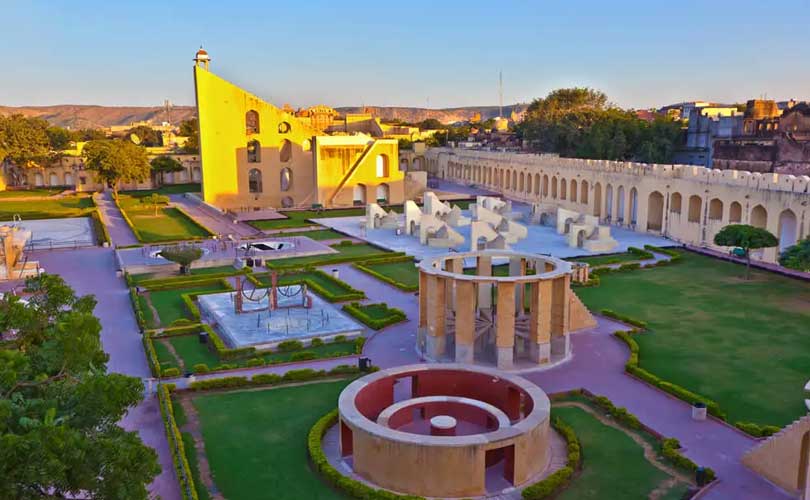
The architectural approach to Jantar Mantar is fundamentally scientific rather than aesthetic. Every element serves a specific observational or calculation purpose. The structures are built from local stone and marble, materials chosen for their durability and dimensional stability.
The massive scale of the instruments isn't gratuitous—larger instruments allow for finer graduations and more precise measurements. The Samrat Yantra's 90-foot height, for instance, enables its remarkable two-second accuracy in timekeeping.
The design follows precise geometric calculations and is aligned with celestial coordinates. The placement of each instrument was carefully considered to avoid interference from shadows cast by other structures. The open design ensures clear sightlines to the sky from multiple vantage points.
Nearby Attractions
Jantar Mantar's central location makes it easy to combine with other Jaipur attractions:
- Hawa Mahal: Just a 3-minute walk, this iconic Palace of Winds is one of Jaipur's most photographed landmarks.
- City Palace: A 5-minute walk takes you to the former royal residence, now a museum showcasing Jaipur's royal heritage.
- Albert Hall Museum: Located 1 kilometer away, this is Rajasthan's oldest museum and houses an extensive collection of artifacts.
- Birla Mandir: Approximately 4 kilometers away, this modern marble temple is dedicated to Lord Vishnu and Goddess Lakshmi.
- Amer Fort: Located 11 kilometers from Jantar Mantar, this magnificent fort-palace complex is a must-visit attraction.
Visitor Tips and Guidelines
Making the Most of Your Visit
Hire a Guide: A knowledgeable guide can explain the scientific principles behind each instrument, significantly enhancing your experience. Guides are available for ₹200-300.
Wear Comfortable Shoes: The complex requires walking on uneven surfaces, and you'll spend considerable time on your feet exploring the instruments.
Carry Water: Jaipur can get extremely hot, especially in summer. There's limited shade within the complex, so staying hydrated is important.
Sun Protection: Use sunscreen, wear a hat, and carry sunglasses, particularly during summer months.
Visit Early or Late: Early morning or late afternoon visits avoid the harsh midday sun and provide the best conditions for understanding how the instruments work.
Photography Tips
The massive scale of the instruments creates dramatic photographic opportunities. Early morning light provides interesting shadows through the structures. The golden hour before sunset offers excellent lighting for capturing the observatory's architectural grandeur against the sky.
Conclusion
Jantar Mantar Jaipur stands as a remarkable testament to human curiosity, scientific inquiry, and engineering prowess. More than just a collection of curious structures, this observatory represents the systematic approach to astronomy that flourished in India three centuries ago.
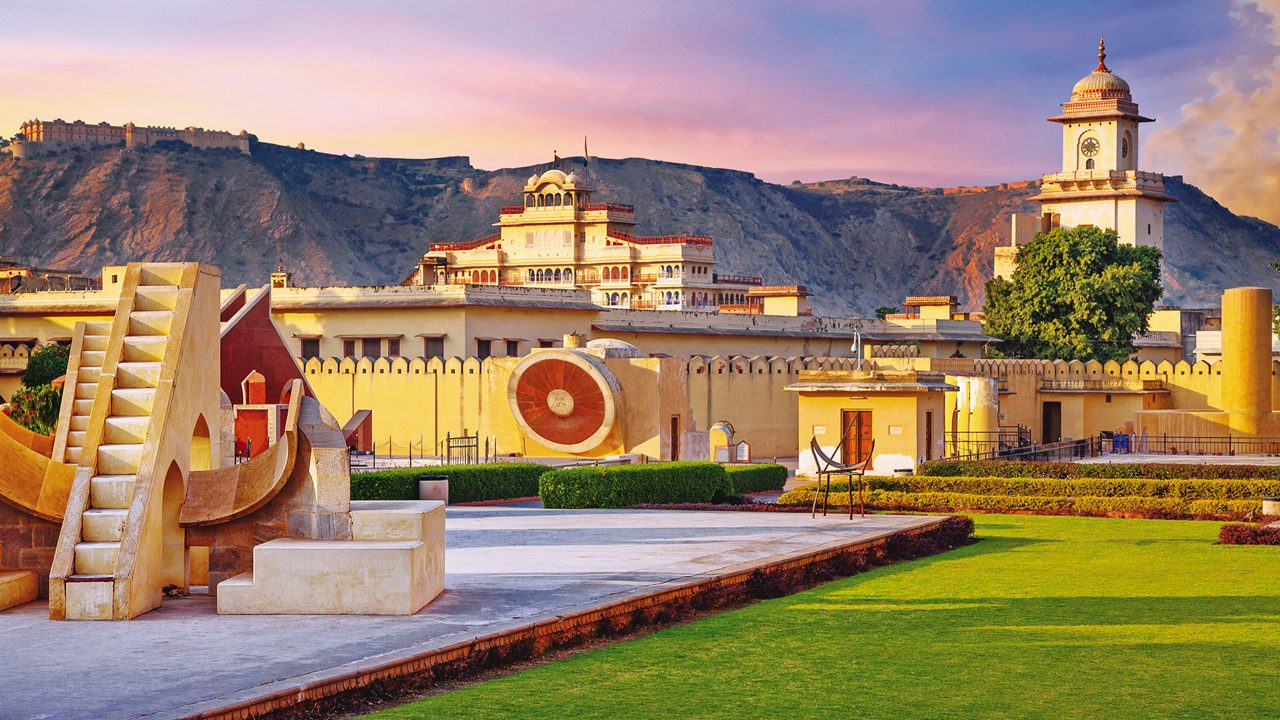
What makes this site particularly special is that it remains functional—these instruments can still measure time and track celestial bodies, much as they did in 1734. This continuity connects us directly to the astronomers who stood here nearly 300 years ago, seeking to understand the cosmos through observation, calculation, and reason.
Whether you're captivated by the scientific principles, impressed by the engineering achievement, or simply drawn to the historical atmosphere, Jantar Mantar offers an experience that is both educational and inspiring. It reminds us that the pursuit of knowledge is a universal human endeavor, transcending time and culture.
Location
Frequently Asked Questions
Q1.What is Jantar Mantar Jaipur?
Q2.What are Jantar Mantar Jaipur timings?
Q3.What is the Jantar Mantar entry fee?
Q4.What is the best time to visit Jantar Mantar?
Q5.How to reach Jantar Mantar Jaipur?
Q6.How many instruments are in Jantar Mantar?
Q7.What is Samrat Yantra used for?
Q8.How much time is needed at Jantar Mantar?
Recommended For You
Best Places to Visit in Jaipur: Forts, Bazaars & Royal Landmarks
Discover the best places to visit in Jaipur with forts, palaces, markets, timings strategy, transport tips, and practical 2-3 day itinerary planning.
Chokhi Dhani Jaipur: Ticket Price, Food Experience & Visit Timings
Plan Chokhi Dhani Village Jaipur with timing and ticket guidance, package tips, food highlights, and transport advice for a smooth cultural evening.
Jal Mahal Jaipur: Best Viewpoints, Timings & Photo Spots
Visit Jal Mahal (Water Palace) in Jaipur. Discover best viewpoints, history, architecture, night view, and how to reach. Complete travel guide.
Never Miss an Adventure
Get the latest trekking guides, travel tips, and exclusive offers delivered straight to your inbox.
