
Phobjikha Valley Bhutan: Black-Necked Cranes, Stays & Travel Plan
Ananya Sharma
February 18, 2026
Discover Phobjikha Valley Bhutan - winter home to sacred black-necked cranes. Complete guide to Gangtey Monastery, crane festival, best time to visit & travel tips.
Introduction: The Glacial Valley Paradise
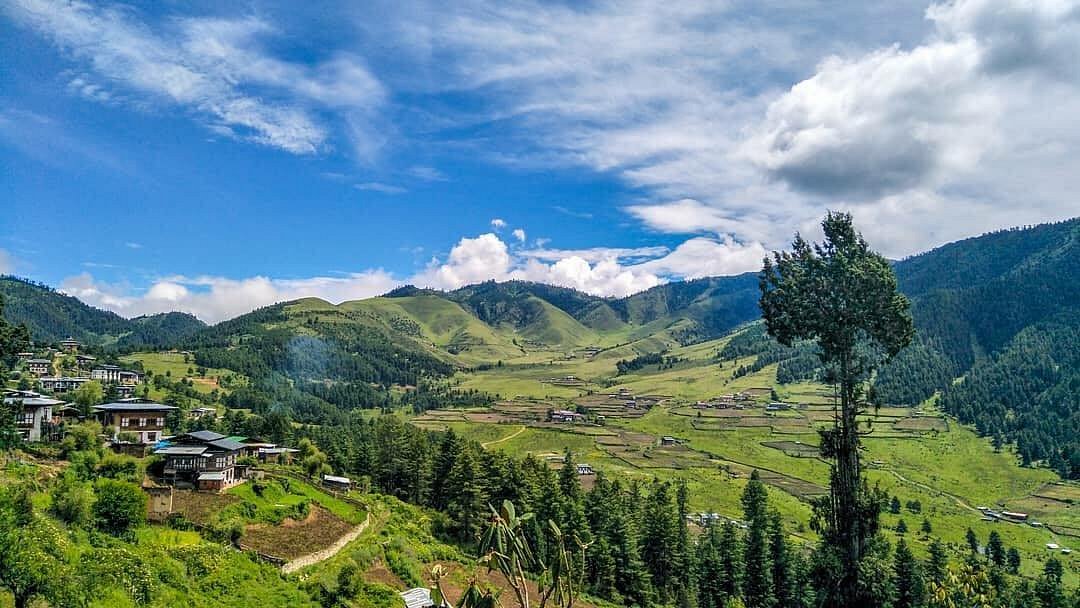
Nestled in the heart of central Bhutan, Phobjikha Valley unfolds as one of the most breathtaking landscapes in the Himalayan kingdom. This bowl-shaped glacial valley, situated at an altitude of 3,000 meters (9,800 feet), is a pristine wilderness that seems untouched by time. Known as one of Bhutan's most beautiful and serene valleys, Phobjikha offers visitors a rare combination of natural splendor, cultural richness, and wildlife conservation that makes it truly special.
What sets Phobjikha Valley apart from other destinations in Bhutan is its unique ecosystem and the profound connection between nature and Bhutanese culture. The valley is most famous as the winter home of the endangered black-necked cranes, sacred birds that migrate here annually from the Tibetan Plateau. These elegant creatures, with their distinctive black necks and graceful dances, have become symbols of the valley and are deeply woven into local folklore and traditions.
The valley's landscape is characterized by wide, open marshlands surrounded by rolling hills covered in pine and rhododendron forests. Unlike many other Himalayan valleys that are steep and narrow, Phobjikha is remarkably broad and flat, creating a sense of peaceful expansiveness. The glacial valley was formed by ancient glaciers that carved out this unique geographical feature, leaving behind a rich wetland ecosystem that supports diverse wildlife.
Beyond its natural beauty, Phobjikha is home to the iconic Gangtey Monastery (Gangtey Goemba), which overlooks the valley from its hilltop perch. This 17th-century monastery is not only a significant spiritual site but also offers some of the most spectacular panoramic views of the valley below. The combination of spiritual heritage and natural wonder makes Phobjikha a destination that nourishes both the soul and the senses.
What truly makes Phobjikha Valley special is the commitment to conservation and sustainable tourism. The Royal Society for Protection of Nature (RSPN) has been instrumental in protecting the valley's ecosystem while ensuring that local communities benefit from tourism. This balance between conservation and community development has made Phobjikha a model for sustainable tourism in Bhutan and beyond.
The Sacred Black-Necked Cranes
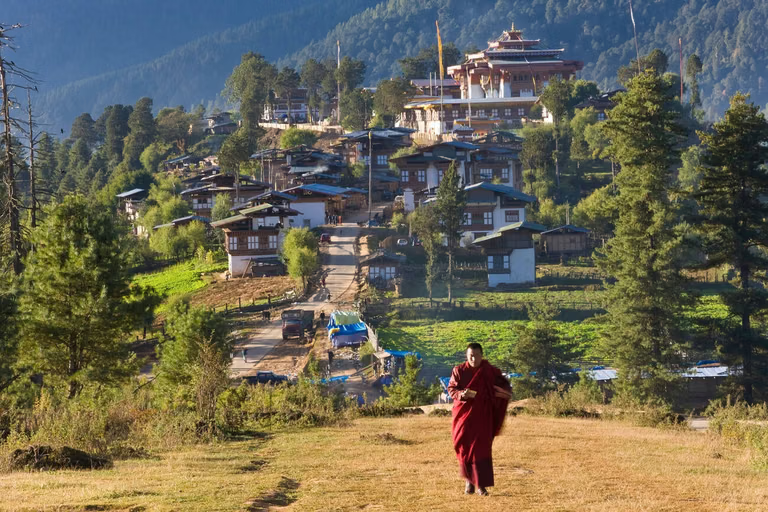
The black-necked cranes (Grus nigricollis) are undoubtedly the stars of Phobjikha Valley. These magnificent birds, considered vulnerable and endangered, hold a special place in both the ecosystem and Bhutanese culture. Standing up to 1.4 meters tall with a wingspan of 2.3 meters, these cranes are easily recognized by their distinctive black necks and heads, contrasted against gray bodies and striking red crowns.
Every year, typically beginning in late October, these sacred birds arrive in Phobjikha Valley from their breeding grounds on the Tibetan Plateau. The journey of over 1,000 kilometers is remarkable in itself, but what's truly special is that the same cranes return to the same valley year after year. Local Bhutanese believe that the cranes circle the Gangtey Monastery three times upon arrival as a sign of respect before descending to the valley floor – a beautiful tradition that speaks to the deep spiritual connection between these birds and the local culture.
The cranes stay in Phobjikha from November through February, escaping the harsh winter conditions of the Tibetan Plateau. During their stay, they feed on the valley's marsh vegetation, insects, and small animals. The wetlands of Phobjikha provide the perfect habitat for these birds, offering abundant food and safe roosting grounds. Typically, 300-500 cranes winter in the valley, though numbers can vary from year to year.
What makes black-necked cranes particularly special is their behavior. These birds mate for life, and pairs can often seen performing elaborate courtship dances – bowing, leaping, and throwing objects into the air while calling to each other. These displays are not only mating rituals but also social behaviors that strengthen pair bonds. Seeing a group of cranes dancing together in the golden light of a Bhutanese winter morning is an experience that stays with visitors forever.
The cultural significance of these cranes in Bhutan cannot be overstated. In Bhutanese Buddhism, black-necked cranes are considered sacred, believed to be the incarnations of celestial beings. Local legends tell of the cranes being the messengers of the gods, and their arrival is celebrated as a blessing upon the valley. This cultural reverence has been instrumental in conservation efforts – when local communities revere the cranes as sacred, they naturally become guardians of their habitat.
The Royal Society for Protection of Nature (RSPN) has established the Black-Necked Crane Information Centre in the valley. This center provides excellent viewing opportunities (with telescopes for close-up observation), educational displays about crane biology and conservation, and information about the valley's ecosystem. The center's staff can often provide updates on crane sightings and the best locations for viewing.
Conservation Success Story
The conservation of black-necked cranes in Bhutan is a remarkable success story. Through a combination of legal protection, habitat preservation, and community engagement, Bhutan has created a safe haven for these endangered birds. The government has banned construction in critical crane habitat, and power lines have been buried to prevent collisions. Local farmers have been educated and incentivized to use crane-friendly agricultural practices, such as delaying potato harvesting until after the cranes have departed.
These efforts have paid off – crane numbers in Bhutan have been stable or increasing in recent years, even as populations in other parts of their range face threats. Phobjikha Valley stands as a model of how conservation can work when it's supported by both government policy and local community engagement.
Gangtey Monastery: The Spiritual Heart
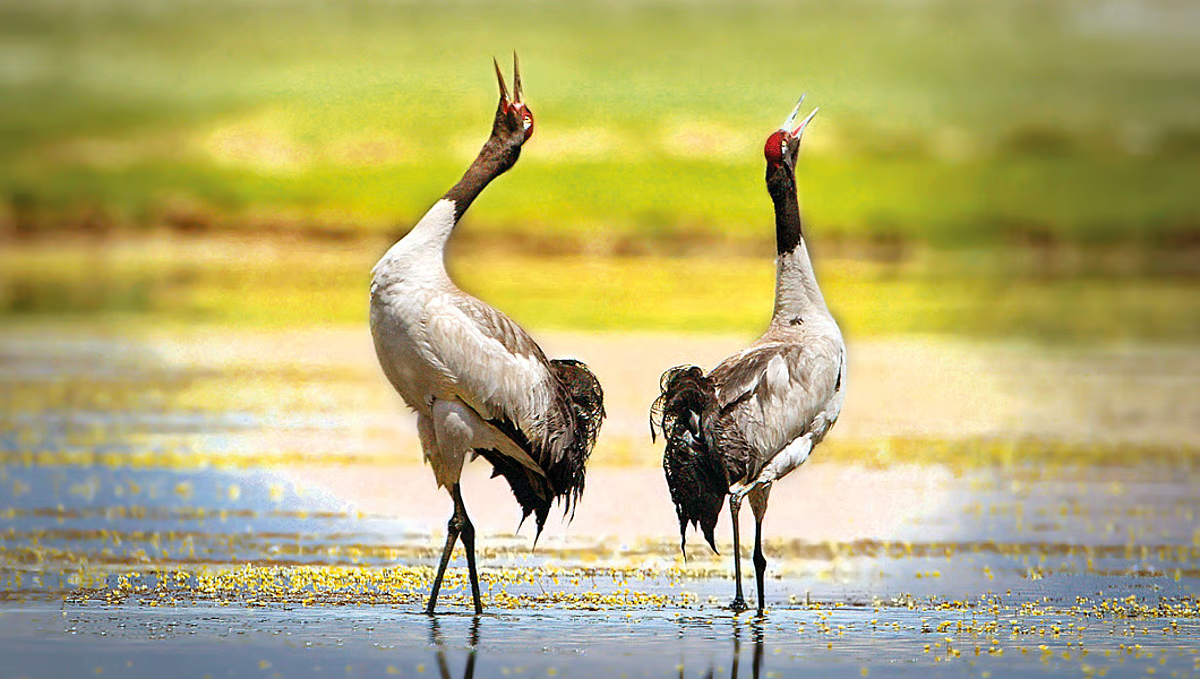
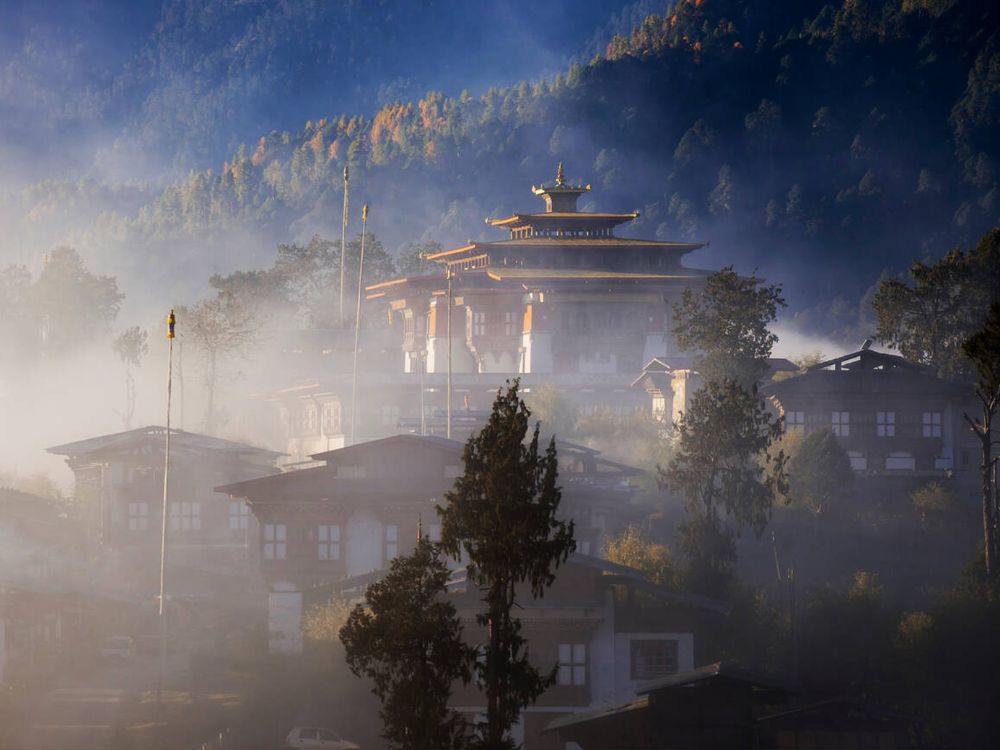
Perched on a hill overlooking Phobjikha Valley, Gangtey Monastery (officially known as Gangtey Goemba) is one of Bhutan's most important and beautiful monasteries. Founded in the 17th century by Pema Lingpa's grandson, Tenzin Legpey Dondrup, this monastery is the seat of the Peling tradition of Buddhism, one of the major schools of Bhutanese Buddhism.
The monastery's location is nothing short of spectacular. Situated on a ridge at the head of the valley, it commands panoramic views of the entire Phobjikha basin. From the monastery courtyard, you can see the marshlands where the cranes feed, the traditional villages scattered across the valley floor, and the forested hills that enclose this magical place. On clear days, the views extend to snow-capped peaks in the distance, creating a setting that feels both peaceful and majestic.
Architecture enthusiasts will appreciate the monastery's traditional Bhutanese design. The central building features whitewashed walls with intricate wood carvings around the windows and doors. The interior houses sacred statues, ancient scriptures, and beautiful thangkas (religious paintings). Over 100 monks currently reside at Gangtey, maintaining the monastery's spiritual traditions and providing religious education to young novices.
The monastery complex includes several buildings, the most important being the lhakhang (temple) which houses the main sacred statues. Visitors are welcome to explore the outer courtyards and, with permission, may be able to view the interior temple spaces. Remember to dress modestly (covered shoulders and knees) and remove your shoes before entering temple buildings.
One of the best times to visit Gangtey Monastery is during morning or evening prayers. The monks' chanting, accompanied by traditional instruments like drums, cymbals, and long horns, creates an atmosphere of deep spirituality that resonates through the valley. These prayer sessions are typically held around 6:00 AM and 5:00 PM, though exact times can vary.
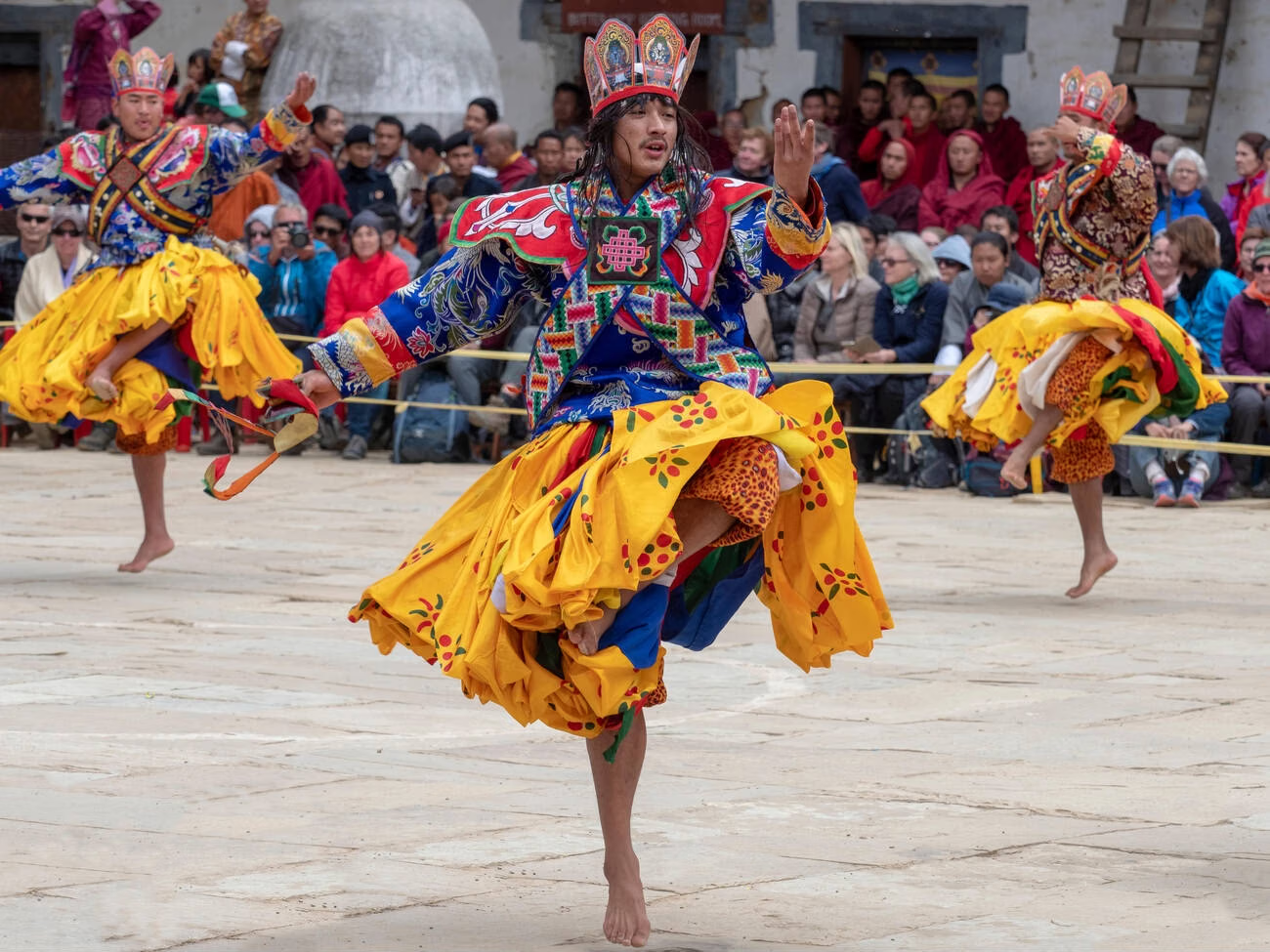
The monastery is also the site of the annual Gangtey Tshechu, a religious festival held in the autumn. While smaller than some of Bhutan's more famous festivals, this tshechu offers an authentic experience with fewer tourists. The festival features masked cham dances performed by monks, believed to bless viewers and earn them merit. The exact dates vary each year according to the Bhutanese lunar calendar, so check locally if you're hoping to attend.
The walk from Gangtey village to the monastery takes about 15-20 minutes and is pleasant, passing through pine forests and offering increasingly beautiful views as you ascend. For those staying in the valley, this walk is a perfect way to start or end the day, especially in the early morning when the mists still cling to the valley floor.
Black-Necked Crane Festival
One of the most special events in Phobjikha Valley is the annual Black-Necked Crane Festival, held on November 11th every year. This unique festival celebrates the arrival of the sacred cranes and serves as an important platform for raising awareness about crane conservation.
The festival takes place in the courtyard of Gangtey Monastery, creating a beautiful setting where cultural celebration meets environmental advocacy. The timing is significant – November 11th was chosen to coincide with the arrival of the first cranes in the valley, making it a true celebration of this annual migration.
What makes this festival special is its community-centered approach. Unlike some tourist-oriented festivals, the Black-Necked Crane Festival is organized by and for the local community, with visitors welcome to participate. Local schoolchildren perform crane dances – choreographed movements that mimic the graceful dancing of real cranes. These performances are both adorable and touching, representing the passing of conservation values to the next generation.
The festival features a variety of cultural performances including traditional Bhutanese music and dance, masked cham dances performed by monks from Gangtey Monastery, and folk songs. Local communities set up stalls serving traditional Bhutanese food, and there are handicraft displays featuring locally made products. The atmosphere is festive and welcoming, with locals and international visitors mingling together in celebration.
Beyond the entertainment, the festival has a serious conservation purpose. Educational programs about crane biology, habitat protection, and the importance of wetland conservation are presented throughout the day. The Royal Society for Protection of Nature uses the festival as an opportunity to engage with local communities about sustainable agricultural practices that benefit both farmers and cranes.
For visitors, the festival offers a unique opportunity to experience authentic Bhutanese culture while supporting important conservation work. The sense of community pride in the cranes and their habitat is palpable, and it's inspiring to see how conservation has been woven into the cultural fabric of the valley. If your travel dates align with the festival, it's an experience not to be missed.
Planning for the Festival
If you plan to attend the Black-Necked Crane Festival, book accommodation well in advance, as November is peak season in Phobjikha. The festival typically begins in the morning and continues through the afternoon, so plan to spend the full day at the monastery. Dress warmly – November mornings in Phobjikha can be quite cold, even if the day warms up later. Bring a camera but be respectful when taking photographs, especially during religious ceremonies.
Best Time to Visit Phobjikha Valley
Choosing when to visit Phobjikha Valley depends largely on what you want to experience. Each season offers a different perspective on this beautiful valley, and understanding the seasonal variations will help you plan the perfect trip.
Crane Season (November - February)
For most visitors, the winter months from November to February are the best time to visit Phobjikha Valley. This is when the black-necked cranes are in residence, and seeing these sacred birds in their winter habitat is the primary draw for most visitors.
November: The cranes typically begin arriving in late October, and by November they're well-established in the valley. November 11th brings the Black-Necked Crane Festival, making this a particularly exciting time to visit. The weather in November is crisp but not yet very cold, with daytime temperatures typically ranging from 5-15°C (41-59°F). The autumn colors in the surrounding forests are still beautiful, adding to the visual appeal. December - February: These are the core winter months when the valley is at its quietest and most serene. The cranes are present throughout this period, and you'll have excellent opportunities for viewing and photography. Winter days are cold but often sunny, with temperatures typically ranging from -5 to 10°C (23-50°F). Snow is possible but not guaranteed – when it does snow, the valley becomes even more magical, with the white landscape contrasting beautifully against the monastery's golden roofs.If your primary goal is to see the black-necked cranes, plan your visit for any time between November and February. The cranes are most active in the mornings and late afternoons when they fly between roosting and feeding areas, so plan your viewing times accordingly.
Spring (March - May)
Spring brings a different kind of beauty to Phobjikha Valley. The cranes have typically departed by late February, heading back to their breeding grounds in Tibet. However, the valley compensates with its own spring beauty.
March and April see the valley come alive with blooming rhododendrons and magnolias in the surrounding forests. The hillsides are carpeted with wildflowers, and the air is filled with their fragrance. The weather is pleasant and warming, with daytime temperatures typically ranging from 10-20°C (50-68°F).
May brings warmer temperatures and the promise of summer. While you won't see cranes during this season, you'll have the valley largely to yourself – tourist numbers are much lower outside the crane season. This is an excellent time for hiking and exploring the valley's natural beauty without the crowds.
Autumn (September - October)
Autumn is arguably the most beautiful time in Phobjikha Valley, even though the cranes haven't yet arrived. September and October bring clear skies, crisp air, and spectacular fall colors as the forests turn shades of gold, orange, and red.
The weather is stable and pleasant, with daytime temperatures typically ranging from 10-18°C (50-64°F). This is an excellent time for photography, with the clear mountain air providing excellent visibility and the fall colors creating stunning landscapes.
Late October often brings the first arrivals of black-necked cranes, so if you time your visit for the end of October, you might be able to witness the excitement of their return and possibly see the traditional circling of Gangtey Monastery.
Summer (June - August)
Summer is the rainy season in Phobjikha Valley. The valley turns lush and green, with wildflowers blooming across the meadows. However, frequent rain can make hiking difficult and visibility limited due to clouds and mist.
If you don't mind rain and want to see the valley at its greenest, summer can be beautiful in its own way. The temperatures are mild, typically ranging from 15-25°C (59-77°F). However, most visitors prefer to avoid the monsoon season, and tourist facilities may have limited hours or services.
Things to Do in Phobjikha Valley
While crane viewing is undoubtedly the main attraction, Phobjikha Valley offers plenty of other activities that will enrich your visit. Here are the top experiences you shouldn't miss:
Crane Watching from Observation Center
The Black-Necked Crane Information Centre, managed by the Royal Society for Protection of Nature, is the best place for crane viewing. The center has telescopes set up for close-up observation, and the staff can provide information about recent sightings and the best viewing spots. The center also has educational displays about crane biology, migration patterns, and conservation efforts.
The best times for crane watching are early morning (around 6:00-8:00 AM) and late afternoon (4:00-6:00 PM) when the cranes are most active. During these times, you'll see the cranes flying between their roosting areas in the marshes and their feeding grounds in the agricultural fields. The sight of these elegant birds flying against the backdrop of the valley is truly magical.
Remember to maintain a respectful distance from the cranes and avoid disturbing them. Use the observation center's telescopes or bring your own binoculars for close-up views. If you're photographing the cranes, use a telephoto lens and avoid flash photography.
Gangtey Nature Trail
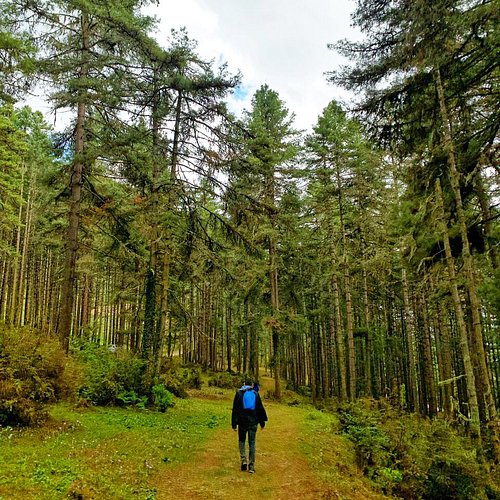
The Gangtey Nature Trail is one of the most pleasant walks in Bhutan, offering stunning views and a chance to experience the valley's beauty up close. This relatively easy 1.5-hour walk descends from Gangtey Monastery through pine forests to the valley floor, passing through traditional villages and offering breathtaking panoramic views along the way.
The trail is well-marked and maintained, making it accessible to most fitness levels. As you walk, you'll pass through forests of blue pine, bamboo groves, and small settlements where you can see traditional Bhutanese farm life. Local farmers are often working in their fields, and you may see yaks and cattle grazing in the meadows.
The walk can be done in either direction, but most people prefer to start at the monastery and walk down to the valley floor, then arrange for a driver to pick them up at the bottom. Alternatively, you can do it as a round trip, though this involves climbing back up to the monastery.
The trail is particularly beautiful in the early morning when the mists still cling to the valley floor, creating an ethereal atmosphere. It's also lovely in autumn when the forests are turning color, or in spring when the rhododendrons are blooming.
Explore Gangtey Village
Gangtey Village, situated near the monastery, offers a glimpse into traditional Bhutanese village life. The village consists of traditional Bhutanese houses made of rammed earth and wood, with intricately painted wooden windows and doors. Walking through the village, you'll see farmers going about their daily work, children playing, and traditional life continuing much as it has for centuries.
The village has a few small shops selling basic supplies and local handicrafts. It's worth stopping to browse these shops if you're interested in purchasing locally made items. You'll also find simple restaurants serving traditional Bhutanese food – this is a great place to try ema datshi (chili cheese), the national dish of Bhutan.
Be respectful when photographing people and their homes – always ask permission before taking close-up photographs. Bhutanese people are generally friendly and welcoming, especially if you approach them with respect and a smile.
Photography Tour
Phobjikha Valley is a photographer's paradise. The combination of dramatic landscapes, wildlife, traditional architecture, and cultural scenes provides endless photographic opportunities. Here are some prime subjects:
- Black-necked cranes: The most sought-after subject.
Use a telephoto lens (at least 300mm equivalent) and be patient.
- Monastery panoramas: The view from Gangtey Monastery across the valley is spectacular, especially in morning or evening light.
- Traditional houses: The intricately painted windows and doors of Bhutanese houses make beautiful detail shots.
- Farmers at work: With permission, photographs of traditional agricultural life can be compelling.
- Landscape panoramas: The broad valley floor surrounded by hills creates stunning wide-angle compositions.
The best light is typically around sunrise and sunset, when the low angle light creates dramatic shadows and warm colors. The clear mountain air of Phobjikha often produces beautifully crisp light that's ideal for landscape photography.
Birdwatching Beyond Cranes
While the black-necked cranes are the star attraction, Phobjikha Valley is home to numerous other bird species. Birdwatchers will find plenty to keep themselves occupied:
- Himalayan Monal: This stunningly colorful pheasant is sometimes seen in the surrounding forests.
- Blood Pheasant: Another beautiful pheasant species that inhabits the higher elevations.
- Satyr Tragopan: A colorful pheasant that can sometimes be spotted in the forests.
- Various thrushes and laughingthrushes: Common in the forests and undergrowth.
- Forest birds: Numerous species of tits, warblers, and finches inhabit the pine forests.
Early morning is the best time for birdwatching, as the birds are most active and the light is good. Bring binoculars and a field guide if you're serious about birdwatching.
Meditation and Spiritual Practice
The peaceful atmosphere of Phobjikha Valley makes it an ideal place for meditation and spiritual reflection. Many visitors find that the combination of natural beauty, spiritual energy from the monastery, and the tranquil pace of life creates the perfect environment for inner work.
Gangtey Monastery sometimes offers meditation sessions or retreats for interested visitors. Even if formal programs aren't available, you can find peaceful spots in the monastery grounds or in the surrounding forests for quiet contemplation. The sound of monks chanting, the sight of prayer flags fluttering in the wind, and the majestic landscape all contribute to an atmosphere conducive to spiritual practice.
Visit Local Homestays
For a more authentic cultural experience, consider staying in or visiting a local homestay. Several families in the valley offer simple but comfortable accommodations, giving you a chance to experience traditional Bhutanese hospitality and daily life.
Homestay guests often have the opportunity to participate in daily activities like cooking traditional meals, working in the fields, or learning traditional crafts. This is a wonderful way to connect with local culture and support the community directly. Even if you don't stay overnight, some homestays welcome visitors for meals or cultural activities.
How to Reach Phobjikha Valley
Getting to Phobjikha Valley is an adventure in itself, with the journey offering beautiful views of Bhutan's mountainous landscape. Here's everything you need to know about reaching this remote valley:
From Thimphu
The journey from Thimphu, Bhutan's capital, to Phobjikha Valley takes approximately 4-5 hours and covers a distance of about 135 kilometers. The route takes you east from Thimphu over the Dochu La Pass (3,100 meters), where you'll be rewarded with spectacular views of the Himalayan range on clear days.
From Dochu La, the road descends to Wangdue Phodrang, where you'll turn south toward Phobjikha. The last stretch of the journey involves a dramatic descent into the valley, with switchbacks offering increasingly beautiful views as you approach. The first view of the valley spread out below is truly breathtaking.
The road conditions are generally good, though the route is mountainous with many curves and elevation changes. Most visitors travel by private car or tourist bus, which can be arranged through tour operators or hotels. Having your own vehicle gives you flexibility for exploring the valley once you arrive.
From Punakha
Phobjikha Valley is approximately 75 kilometers from Punakha, making it a feasible 2-3 hour drive. This makes it possible to visit both Punakha (famous for its beautiful dzong) and Phobjikha Valley in the same trip, and many travelers do exactly this.
The route from Punakha joins the Thimphu-Wangdue Phodrang highway, then follows the same road south toward Phobjikha. The drive is scenic, passing through rural Bhutanese countryside and offering glimpses of traditional village life.
Road Conditions and Travel Tips
The roads to Phobjikha are generally well-maintained, but this is mountainous terrain with steep gradients and sharp curves. During the winter months (December-February), there can be ice or snow on the road, particularly around the higher elevations. In these conditions, a four-wheel drive vehicle is recommended, though usually not essential.
During the monsoon season (June-August), landslides can occasionally block roads, though the route to Phobjikha is less prone to this than some other Bhutanese roads. Always check current road conditions if you're traveling during the rainy season.
The drive to Phobjikha is beautiful, so allow plenty of time for stops to enjoy the scenery and take photographs. There are few services along the route, so carry water and snacks. The last fuel station before Phobjikha is in Wangdue Phodrang, so fill up your tank there.
Scenic Highlights Along the Way
The journey to Phobjikha offers several beautiful stops:
- Dochu La Pass: At 3,100 meters, this pass offers spectacular Himalayan views on clear days. The 108 chortens (stupas) at the pass are also worth visiting.
- Wangdue Phodrang: This small town has a dramatic dzong (fortress) situated at the confluence of two rivers.
- Nobding Village: A picturesque village about halfway to Phobjikha, with a small monastery and traditional houses.
Accommodation in Phobjikha Valley
Despite its remote location, Phobjikha Valley offers a range of accommodation options to suit different budgets and preferences. From luxury resorts to traditional homestays, you'll find something that meets your needs.
Resorts and Hotels
The Dewachen Resort is perhaps the best-known luxury accommodation in the valley. Located in a beautiful setting with stunning valley views, this resort offers comfortable rooms, excellent food, and traditional Bhutanese architecture combined with modern amenities. The resort's restaurant serves both Bhutanese and international cuisine, and the staff can arrange activities and transport.Several mid-range hotels operate in Gangtey village and the surrounding area. These typically offer clean, comfortable rooms with attached bathrooms, restaurants serving Bhutanese food, and basic amenities like hot water and heating (essential in winter!). While not luxurious, these hotels provide a comfortable base for exploring the valley.
Homestays
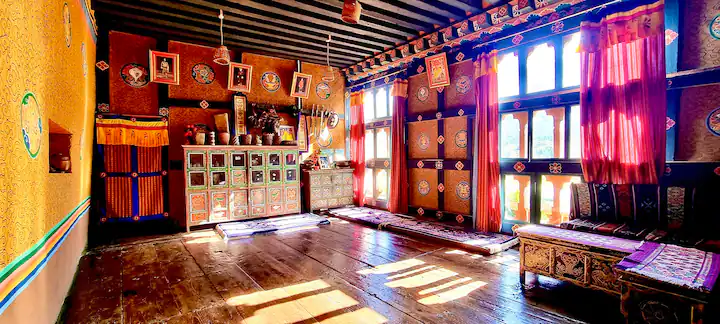
For a more authentic experience, consider staying in a local homestay. Several families in the valley open their homes to visitors, offering simple but comfortable accommodations. Homestays typically provide basic rooms with shared bathrooms, traditional Bhutanese meals, and the opportunity to experience local family life.
Homestays are generally the most budget-friendly option and offer the most authentic cultural experience. However, facilities are basic – expect simple beds, traditional squat toilets (though some homestays now have Western-style toilets), and limited hot water. What you sacrifice in comfort, you gain in cultural immersion and connection with local people.
Camping
Camping is possible in Phobjikha Valley, though it's essential to do so responsibly and with proper permits. The RSPN can provide guidance on appropriate camping locations that won't disturb wildlife or damage fragile ecosystems. If you're an experienced camper seeking a wilderness experience, camping under the stars in Phobjikha can be magical – the valley's isolation means minimal light pollution and excellent stargazing.
Booking Considerations
Regardless of your choice of accommodation, booking in advance is highly recommended, especially during the crane season (November-February) and around the Black-Necked Crane Festival (November 11th). The valley has limited accommodation options, and they fill up quickly during peak season.
Bookings can typically be made through tour operators (required for most international visitors to Bhutan) or directly with the properties if you're traveling independently. Be clear about your needs regarding heating (essential in winter), meals (most accommodations include meals in the room rate), and transportation to and from the valley.
Trekking Options Around Phobjikha
While Phobjikha Valley is relatively flat and easy to explore on foot, the surrounding area offers several trekking options for those who want to venture further into the mountains:
Gangtey Nature Trail
As mentioned earlier, this 1.5-hour trail is the most popular walk in the area. It's relatively easy, making it accessible to most fitness levels, and offers beautiful views without requiring significant exertion. The trail descends about 400 meters from the monastery to the valley floor, so if you're doing it as a round trip, be prepared for the climb back up.
Gangtey Trek (2 Days)
For those wanting a more substantial trekking experience, the Gangtey Trek offers a beautiful two-day journey through the mountains surrounding the valley. The trek typically starts from Gangtey and passes through forests, villages, and high mountain camps, offering spectacular views of the valley from different perspectives.
Day one usually involves climbing out of the valley and camping overnight at a high elevation site. Day two continues through beautiful mountain scenery before descending back to the valley or connecting to other trails. This trek requires a reasonable level of fitness and proper trekking gear, but it's not particularly technical and can be managed by most reasonably fit hikers.
Shasha Trail to Wangdue Phodrang (2 Days)
The Shasha Trail is a traditional route that connects Phobjikha Valley to Wangdue Phodrang. This two-day trek takes you through remote villages and beautiful mountain scenery, offering a glimpse of rural Bhutanese life that most tourists never see.
The trail passes through pristine forests, high mountain passes, and small settlements where traditional life continues unchanged. It's moderately challenging, with some steep climbs and descents, but the spectacular views and cultural immersion make the effort worthwhile.
Trekking Season
The best seasons for trekking around Phobjikha are spring (March-May) and autumn (September-November). During these periods, the weather is generally stable, the views are clear, and the temperatures are pleasant for hiking.
Winter trekking is possible but requires proper cold-weather gear and experience with snow conditions. Summer trekking is generally not recommended due to rain, leeches, and poor visibility.
Hiring a Guide
While short walks like the Gangtey Nature Trail can be done independently, longer treks should be done with a guide. Local guides know the trails, weather patterns, and can arrange homestays or camping in villages where appropriate. They can also facilitate cultural interactions and provide insights into local history and culture that you'd miss on your own.
Guides can be arranged through tour operators, your accommodation, or the RSPN office in the valley. Rates are reasonable, and the enhanced experience and safety that comes with having a guide are well worth the cost.
Practical Tips for Visiting Phobjikha Valley
To make the most of your visit to this beautiful valley, keep these practical tips in mind:
Respect the Cranes
The black-necked cranes are the valley's most precious inhabitants, and it's essential to respect their space and needs. Maintain a safe distance when viewing the cranes – use binoculars or zoom lenses for close-up views rather than approaching the birds. Never attempt to touch or feed the cranes, and avoid making loud noises or sudden movements that might disturb them.
If you're with children, teach them crane-watching etiquette before you go out to view the birds. The observation center at RSPN is a great place to learn about crane behavior and how to observe them responsibly.
Dress Code for Monasteries
When visiting Gangtey Monastery or any other religious site, dress modestly. Both men and women should cover their shoulders and knees. Remove your shoes before entering temple buildings, and don't point your feet at Buddha statues or religious objects (considered disrespectful in Buddhist culture).
It's also polite to walk around religious monuments (stupas, chortens) in a clockwise direction. If you're unsure about proper behavior, observe what locals do or ask your guide.
Weather Preparation
Phobjikha Valley's high elevation means weather can be cold, especially in winter. Even in summer, nights can be chilly. Dress in layers so you can adjust to changing temperatures throughout the day. A warm jacket, hat, and gloves are essential if you're visiting between November and February.
Good walking shoes are essential – you'll be doing a fair bit of walking, and the terrain can be uneven. Waterproof shoes with good grip are ideal, especially if you're visiting during the wetter months.
Photography Guidelines
Use a telephoto lens for crane photography to avoid disturbing the birds. Be patient and wait for the cranes to come to you rather than pursuing them. When photographing people, always ask permission first – a simple smile and gesture toward your camera is usually sufficient.
Early morning and late afternoon provide the best light for photography. The clear mountain air of Phobjikha often produces beautiful crisp light, so take advantage of it. Don't forget to photograph the broader landscapes – the valley's bowl shape and surrounding hills create stunning compositions.
Bhutan Entry Requirements
Remember that visiting Bhutan requires planning. Most international visitors (except citizens of India, Bangladesh, and the Maldives) need to book through a licensed Bhutanese tour operator and pay the daily Sustainable Development Fee. Indian citizens have simpler requirements but still need to obtain permits and follow certain procedures.
Your tour operator can arrange all the necessary permits for visiting Phobjikha Valley and other parts of Bhutan. Make sure you have all your documents in order before you travel.
Currency and Cash
Bhutanese Ngultrum (BTN) is the local currency, and Indian rupees are also widely accepted. Carry cash, as credit card acceptance is limited outside of major hotels. There are no ATMs in Phobjikha Valley, so withdraw enough cash in Thimphu or Wangdue Phodrang before you travel to the valley.
Support Conservation
Consider making a donation to the Royal Society for Protection of Nature (RSPN) to support their important conservation work in the valley.
The Black-Necked Crane Information Centre accepts donations, and this is a meaningful way to give back to the valley that you're enjoying.
Respect Local Customs
Bhutanese culture is conservative and respectful. Ask permission before entering private property or photographing people. Dress modestly, especially in villages and religious sites. Try to learn a few words of Dzongkha (the Bhutanese language) – locals appreciate the effort, and even simple greetings like "Kuzuzangpo" (hello) can go a long way in building connections.
Conclusion
Phobjikha Valley is a place that stays with you long after you've left. The combination of stunning natural beauty, the elegant black-necked cranes, the spiritual atmosphere of Gangtey Monastery, and the warmth of the local people creates an experience that touches something deep within the soul.
What makes Phobjikha truly special is the harmony between nature and culture that exists here. The cranes are not just wildlife – they're sacred beings woven into the cultural and spiritual fabric of the valley. The conservation efforts are not just about protecting a species – they're about preserving a way of life and a belief system that sees humans as part of nature, not separate from it.
Whether you come for the cranes, the monastery, the trekking, or simply to experience the peace of this beautiful valley, Phobjikha offers something rare and precious in our busy world: a place where time seems to slow down, where nature still thrives, and where the connection between land and people remains strong.
For travelers exploring Bhutan, Phobjikha Valley offers a different perspective from the more famous tourist destinations. It's quieter, wilder, and perhaps more authentic – a place where you can experience the Bhutan that existed before modernization, where traditional life continues much as it has for centuries, and where the natural world is still revered as sacred.
As you sit on the hillside below Gangtey Monastery, watching the cranes dance in the golden light of a Bhutanese winter afternoon, you'll understand why this valley has such a powerful effect on those who visit. It's more than just a beautiful place – it's a reminder of what's possible when we live in harmony with nature and when conservation becomes not just a science, but a spiritual practice.
Phobjikha Valley is not just a destination – it's an experience, a lesson, and a blessing. Come with respect, leave with gratitude, and carry a piece of this sacred valley in your heart forever.
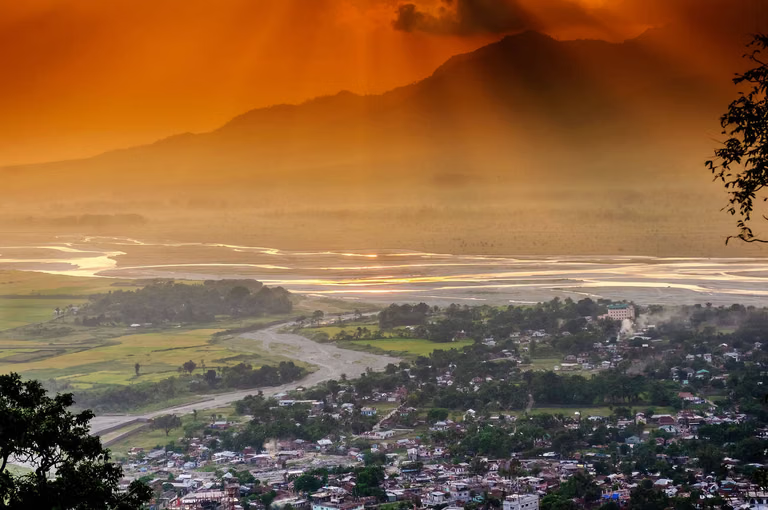
Location
Frequently Asked Questions
Q1.What is the best time to visit Phobjikha Valley?
Q2.When do black-necked cranes arrive in Phobjikha?
Q3.How many days are needed for Phobjikha Valley?
Q4.Can we see black-necked cranes year-round?
Q5.What is special about black-necked cranes?
Q6.What can we do in Phobjikha Valley?
Q7.How to reach Phobjikha Valley from Thimphu?
Q8.Are there hotels in Phobjikha Valley?
Recommended For You
Thimphu Bhutan: Complete Travel Guide and Top Places
Plan your Thimphu Bhutan trip with top attractions, best season, India access routes, local transport, stay options, and practical sightseeing tips.
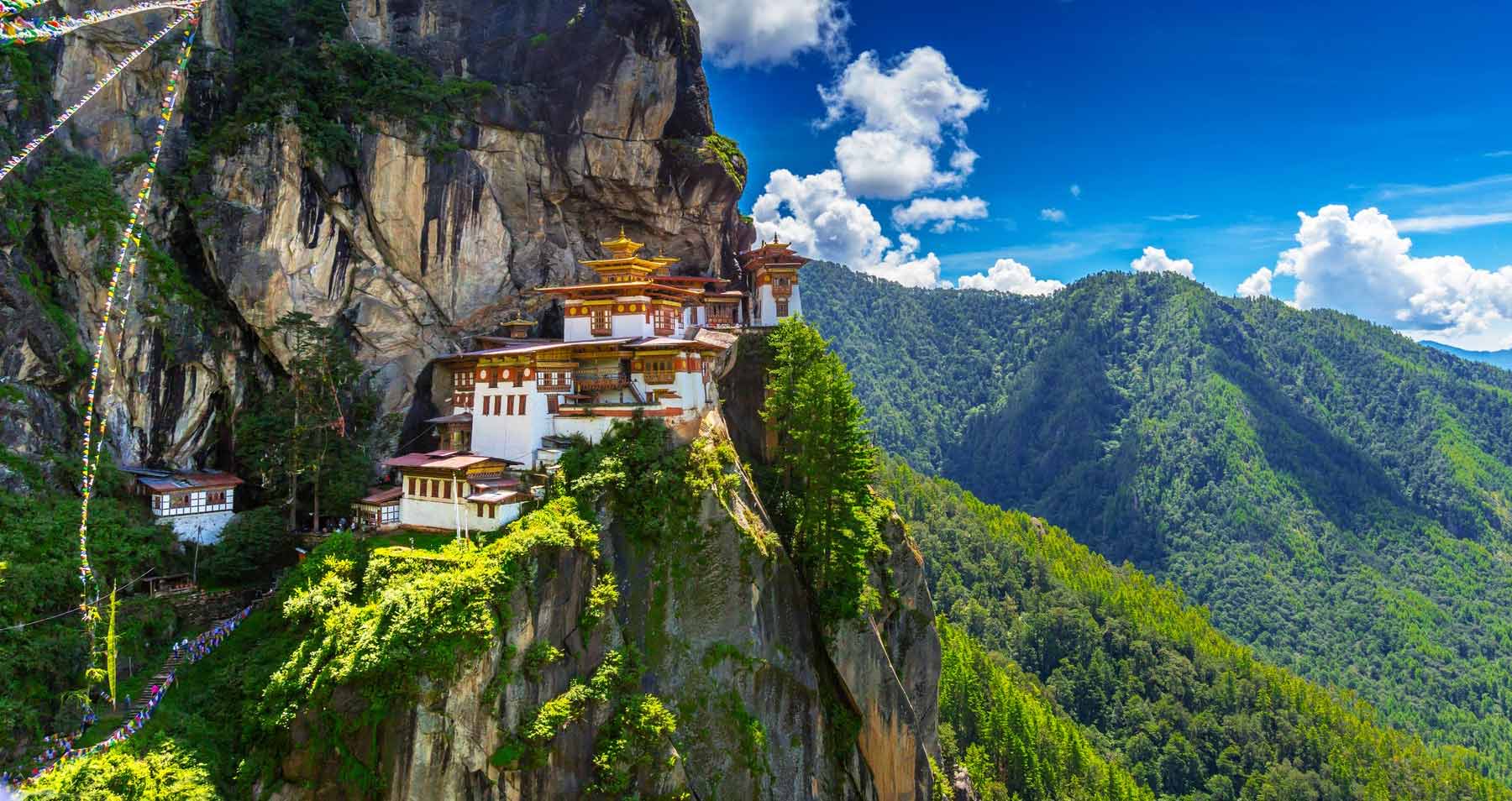
Best Tourist Places in Bhutan: Region-Wise Attractions & Itinerary Ideas
Explore the best tourist places in Bhutan with region-wise highlights from Paro, Thimphu, Punakha, Bumthang, and Phobjikha, plus practical travel planning tips.
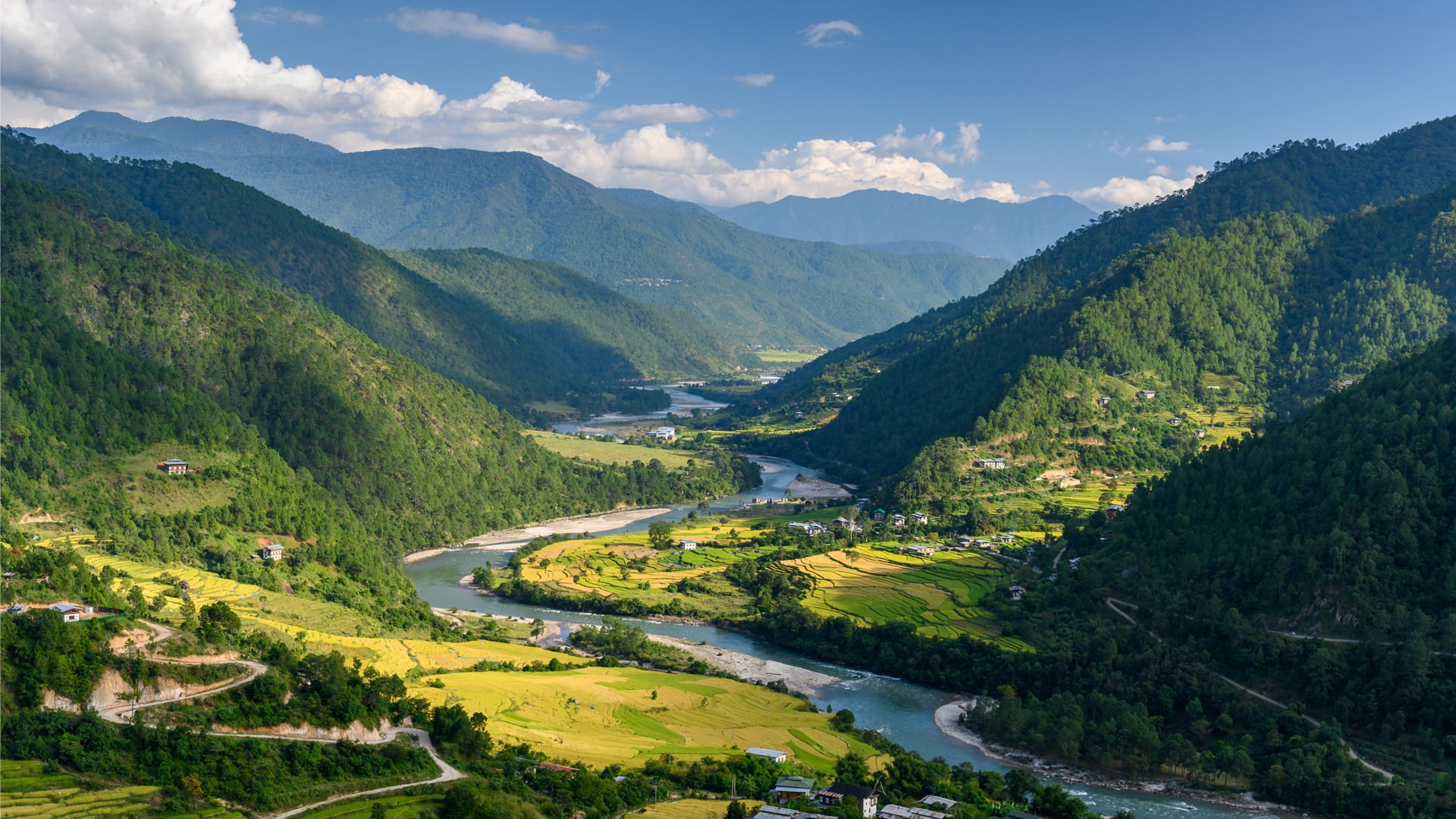
Punakha Bhutan: Dzong, Suspension Bridge & Valley Highlights
Plan Punakha Bhutan with Dzong, suspension bridge, temple stops, best season tips, and practical route planning for a smooth valley trip.
Never Miss an Adventure
Get the latest trekking guides, travel tips, and exclusive offers delivered straight to your inbox.
