
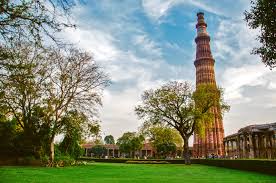
Qutub Minar Delhi: Complete Guide to UNESCO World Heritage Site

Ananya Sharma
November 24, 2025
Explore Qutub Minar Delhi - tallest brick minaret & UNESCO site. Discover 800 years of Islamic architecture, the mysterious Iron Pillar & Delhi heritage.
Introduction: Delhi's Majestic Victory Tower
Rising 73 meters above the plains of South Delhi, Qutub Minar dominates the skyline as one of India's most magnificent medieval monuments. This UNESCO World Heritage Site, built nearly 800 years ago, remains the tallest brick minaret in the world and attracts millions of visitors annually.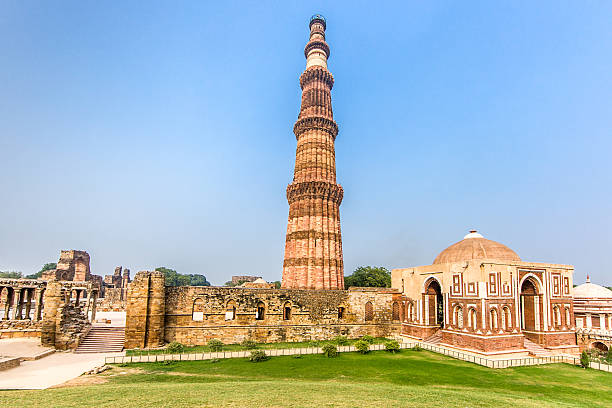 As you stand at its base and gaze upward at the five soaring storeys, each adorned with intricate carvings and Quranic verses, you're not just looking at an architectural marvel—you're witnessing the story of Delhi's transformation from a Hindu stronghold to the capital of Islamic India.
Constructed in 1193 by Qutb-ud-din Aibak, the founder of the Delhi Sultanate, Qutub Minar was built to celebrate Muslim dominance over the last Hindu kingdom of Delhi. But beyond its symbolism of conquest, the tower represents an extraordinary fusion of indigenous Indian architectural traditions with Islamic artistic sensibilities.
The red sandstone and marble structure, with its distinctive tapered design and projecting balconies, has influenced minaret construction across the Indian subcontinent for centuries. If you're exploring Delhi's rich heritage, Qutub Minar is an essential stop.
As you stand at its base and gaze upward at the five soaring storeys, each adorned with intricate carvings and Quranic verses, you're not just looking at an architectural marvel—you're witnessing the story of Delhi's transformation from a Hindu stronghold to the capital of Islamic India.
Constructed in 1193 by Qutb-ud-din Aibak, the founder of the Delhi Sultanate, Qutub Minar was built to celebrate Muslim dominance over the last Hindu kingdom of Delhi. But beyond its symbolism of conquest, the tower represents an extraordinary fusion of indigenous Indian architectural traditions with Islamic artistic sensibilities.
The red sandstone and marble structure, with its distinctive tapered design and projecting balconies, has influenced minaret construction across the Indian subcontinent for centuries. If you're exploring Delhi's rich heritage, Qutub Minar is an essential stop.
The Fascinating History Behind Qutub Minar
The story of Qutub Minar begins in 1192 CE, shortly after the Battle of Tarain, when Muhammad Ghori defeated Prithviraj Chauhan, the last Hindu ruler of Delhi. His general, Qutb-ud-din Aibak, who later became the first Sultan of Delhi, commissioned the tower in 1193.| Year | Historical Event |
|---|---|
| 1192 | Battle of Tarain - Ghori defeats Prithviraj Chauhan |
| 1193 | Qutb-ud-din Aibak begins construction |
| 1210 | First storey completed by Aibak |
| 1211-1236 | Iltutmish adds three more storeys |
| 1368 | Firoz Shah Tughlaq completes fifth storey |
| 1993 | UNESCO World Heritage Site designation |
Survival Through Earthquakes
Over its eight-century history, Qutub Minar has survived several major earthquakes. Significant damage occurred in 1505, 1803, and 1997, each requiring extensive repairs. The most notable restoration was carried out by Major Robert Smith of the British Indian Army in 1828. Smith added a cupola (dome) atop the fifth floor, but it was removed in 1848 on the orders of the Viceroy, Lord Hardinge, who felt it didn't match the original architectural style. The removed cupola now sits on the lawns of the complex and is known as "Smith's Folly."Architectural Marvel: Understanding Qutub Minar's Design
The Five Storeys: A Journey Upward
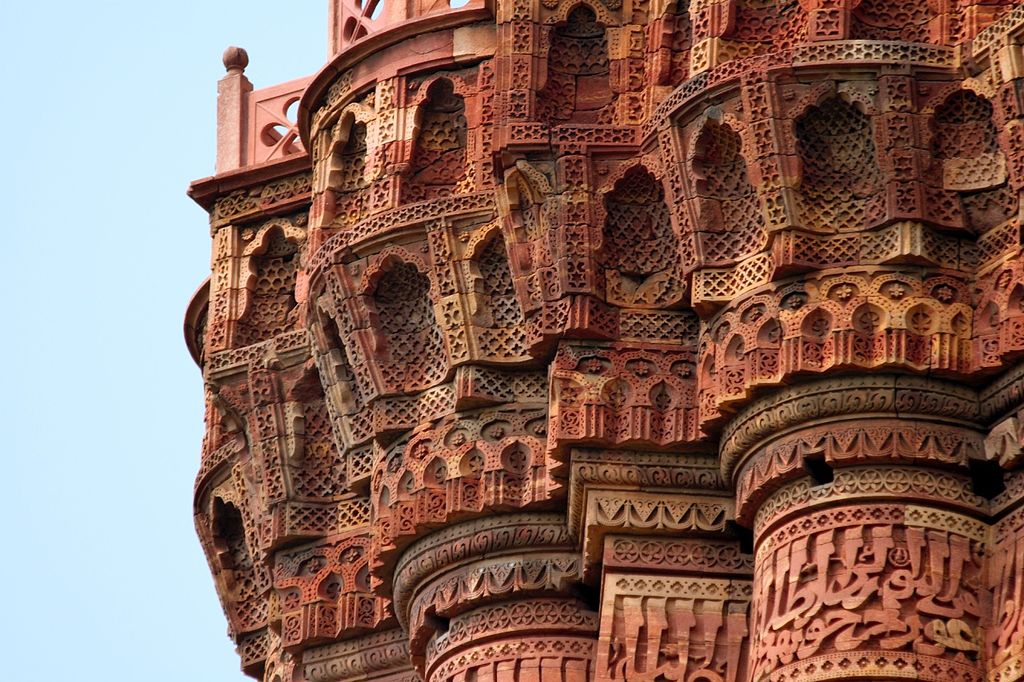
Qutub Minar rises in five distinct storeys, each with its own character and story:| Storey | Builder | Material | Key Features |
|---|---|---|---|
| First | Qutb-ud-din Aibak | Red sandstone | Most elaborate, angular fluting |
| Second | Iltutmish | Red sandstone | Stalactite brackets |
| Third | Iltutmish | Red sandstone | Smoother shaft, inscriptions |
| Fourth | Firoz Shah Tughlaq | Marble & sandstone | Material contrast |
| Fifth | Firoz Shah Tughlaq | Marble & sandstone | Final storey, repairs |
Inscriptions and Calligraphy
One of the most remarkable features of Qutub Minar is its extensive epigraphic program. The tower's surface is covered with Arabic inscriptions that serve both decorative and documentary purposes.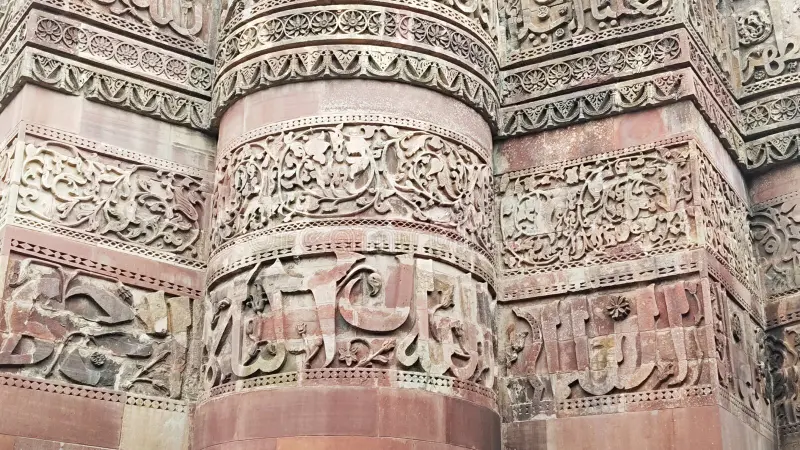 These inscriptions include verses from the Quran, particularly those emphasizing God's power and justice, which align with the tower's symbolic function as a minaret calling the faithful to prayer. Beyond religious verses, the inscriptions also serve a historical purpose.
They name the rulers who built different sections of the tower, record dates of construction and restoration, and provide insights into the political and religious context of the time. For historians, these inscriptions are invaluable primary sources.
These inscriptions include verses from the Quran, particularly those emphasizing God's power and justice, which align with the tower's symbolic function as a minaret calling the faithful to prayer. Beyond religious verses, the inscriptions also serve a historical purpose.
They name the rulers who built different sections of the tower, record dates of construction and restoration, and provide insights into the political and religious context of the time. For historians, these inscriptions are invaluable primary sources.
The Balconies: Engineering Marvels
The projecting balconies that mark each storey are engineering marvels in themselves. Each balcony is supported by a series of brackets carved in the shape of lotus buds and other floral motifs. These brackets are not merely decorative—they distribute the weight of the balcony above, preventing the structure from collapsing under its own weight. The balconies also offer spectacular views of the surrounding area, reinforcing the tower's function as a symbol of domination and surveillance.The Iron Pillar: Delhi's Ancient Rust-Resistant Mystery
Standing innocuously in the Qutub complex is one of India's most intriguing archaeological mysteries—the Iron Pillar. This 7-meter tall column, made of 98% wrought iron, has stood for over 1,600 years without showing significant signs of rust.Origins and Age
The Iron Pillar predates Qutub Minar by nearly a millennium. It was likely forged during the Gupta period, around 375-415 CE, during the reign of Chandragupta II. Originally, it stood in a temple complex in the Udayagiri area of Madhya Pradesh, dedicated to Vishnu. When Qutb-ud-din Aibak demolished Hindu temples to build his mosque and minar, he brought the pillar to its current location as a trophy of conquest.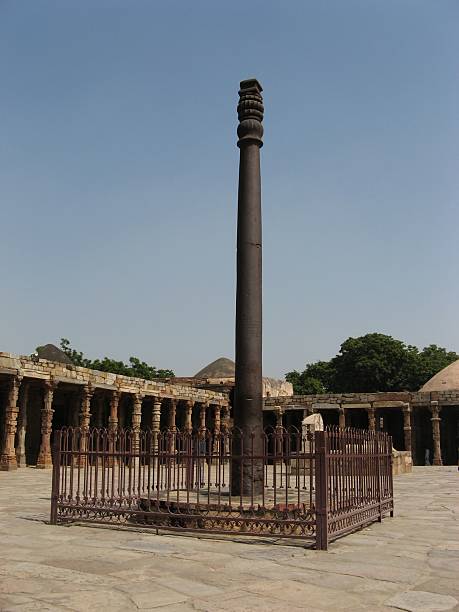
The Rust-Resistant Mystery
What makes the Iron Pillar truly remarkable is its corrosion resistance, despite being exposed to the elements for sixteen centuries. Scientists have studied this phenomenon extensively.| Theory | Explanation |
|---|---|
| Composition Theory | High phosphorus (1%) forms protective layer |
| Climate Theory | Delhi's dry climate helps preservation |
| Massive Size | 7m tall, 6 tonnes - slow corrosion |
| Layer Formation | Iron phosphate layer protects metal |
The Qutub Complex: More Than Just a Minaret
While Qutub Minar is the star attraction, the surrounding archaeological complex contains several other historically significant structures.Quwwat-ul-Islam Mosque
Adjacent to the minar is the Quwwat-ul-Islam (Might of Islam) Mosque, the oldest surviving mosque in northern India. Built by Qutb-ud-din Aibak between 1193 and 1197, it was constructed using materials from demolished Hindu and Jain temples. The prayer hall's arches were originally Hindu temple pillars, repurposed to create the colonnaded space. The central courtyard features stunning Islamic calligraphy and geometric patterns, but the decorative motifs show clear Hindu influence—lotus buds, bells, and chains.Alai Minar: The Unfinished Ambition
At the southern end of the complex stands the Alai Minar, a stark reminder of an unfulfilled ambition. Ala-ud-din Khalji dreamed of building a minaret twice the size of Qutub Minar. Construction began in 1311, and only the first storey, rising to about 24 meters, was completed before the Sultan's death in 1316. The abandoned stump gives us a sense of the scale Ala-ud-din envisioned—a tower that would have risen to nearly 150 meters.Alai Darwaza
Built by Ala-ud-din Khalji in 1311, the Alai Darwaza is the southern gateway to the Quwwat-ul-Islam Mosque and represents one of the finest examples of early Islamic architecture in India. The gateway is built of red sandstone and white marble, featuring intricate geometric patterns, Arabic calligraphy, and lotus motifs. It's particularly notable for its true arch—a technological innovation in Indian architecture at the time.Best Time to Visit Qutub Minar
Understanding Delhi's seasonal variations is crucial for planning your visit.| Season | Months | Temperature | Pros | Cons |
|---|---|---|---|---|
| Winter | Oct - Mar | 20°C - 25°C | Ideal weather, clear skies | Peak tourist season |
| Summer | Apr - Jun | Up to 40°C | Fewer tourists | Extreme heat, no shade |
| Monsoon | Jul - Sep | 25°C - 30°C | Pleasant temperatures | Humidity, occasional rain |
Recommended Seasons
The winter months from October to March offer the most pleasant weather for exploring the complex. Early morning (6-8 AM) provides the best lighting for photography and fewer crowds. Summer months (April to June) are extremely hot, making daytime visits uncomfortable. If you must visit in summer, go very early in the morning or late afternoon. The monsoon brings relief from the heat but also humidity.Practical Visitor Information
Timings and Entry Fee
Timings: Qutub Minar is open every day from sunrise to sunset, typically 6:00 AM to 6:00 PM.| Category | Entry Fee |
|---|---|
| Indian Citizens | ₹35 per person |
| Foreign Tourists | ₹550 per person |
| Children under 15 | Free entry |
| Photography | Free (personal use) |
How to Reach Qutub Minar
By Metro: The most convenient way to reach Qutub Minar is via the Delhi Metro. Take the Yellow Line to Qutub Minar station. From there, it's a short auto-rickshaw ride (about 1.5 km) or a 15-20 minute walk to the monument.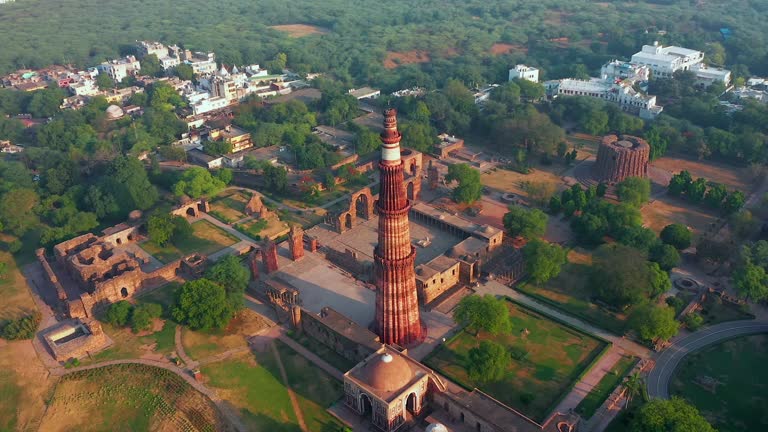 By Road: If you're driving or taking a taxi, Qutub Minar is easily accessible via roads connecting it to central Delhi and Gurgaon. There's ample parking available near the complex for a nominal fee.
Essential Visitor Tips
- Arrive early: Gates open at 6:00 AM for best lighting and fewer crowds
- Wear comfortable shoes: Paved pathways but lots of walking
- Dress modestly: Heritage site with religious significance
- Stay hydrated: Limited shade, especially in summer
- Hire a guide: Worth it for history enthusiasts
- Carry cash: For entry fees and purchases
- Respect the monument: Don't climb on barriers or touch carvings
Things to Do at Qutub Minar
Photography Hotspots
Qutub Minar and its complex offer endless photographic opportunities:- The Classic Shot: Stand at the base and shoot straight up to capture its full height
- Through the Arches: The mosque arches provide perfect frames for the minar
- The Silhouette: Sunset offers stunning silhouettes against the colorful sky
- Detail shots: Capture the intricate carvings and inscriptions up close
- The Iron Pillar: Photograph this ancient marvel from different angles
Guided Tours vs. Self-Exploration
For history enthusiasts, hiring a guide is highly recommended. Several official and private guides are available at the entrance. A good guide will bring the monument to life with stories of its construction and the rulers who built it. If you prefer to explore at your own pace, rent an audio guide or download a reputable app before your visit.Nearby Attractions
If you're planning a full day in South Delhi, consider combining your visit to Qutub Minar with nearby attractions. The Mehrauli Archaeological Park, located just behind the Qutub complex, contains over 100 historically significant monuments.The Annual Qutub Festival
Every year, typically in November or December, the Qutub complex plays host to the three-day Qutub Festival. This cultural event showcases classical music and dance performances against the backdrop of the illuminated minar. The festival also features craft fairs, where artisans from across India display and sell their work. Food stalls offer regional cuisines, making it a complete cultural experience. During the festival, the entire complex is illuminated, and the minar takes on a completely different personality in the artificial light.Conclusion: Why Qutub Minar Deserves a Place on Your Delhi Itinerary
Qutub Minar is more than just a historical monument—it's a symbol of Delhi's resilience, a testament to the architectural genius of medieval India, and a bridge between different eras of Indian history. Standing at its base, you're not just looking at a tower; you're witnessing the story of how Islamic India emerged from the remnants of Hindu kingdoms, how local artisans adapted their skills to new patrons, and how different cultures merged to create something uniquely Indian. The monument's survival for eight centuries, through earthquakes, invasions, and the simple passage of time, is in itself remarkable. For first-time visitors to Delhi, Qutub Minar is an essential stop that provides context for the city's long history. Pair it with a walk through Red Fort or a visit to India Gate to see how Delhi's monuments span different eras of power.Location
Frequently Asked Questions
Q1.What is the entry fee for Qutub Minar?
Q2.What are Qutub Minar's timings?
Q3.Can we climb Qutub Minar?
Q4.What is the height of Qutub Minar?
Q5.Why is the Iron Pillar at Qutub Minar famous?
Q6.How do I reach Qutub Minar by metro?
Q7.How much time is required to visit Qutub Minar?
Q8.What is the best time to visit Qutub Minar?
Q9.Is photography allowed at Qutub Minar?
Q10.Who built Qutub Minar and when?
Q11.Is Qutub Minar a UNESCO World Heritage Site?
Q12.What is the Qutub Festival?
Recommended For You
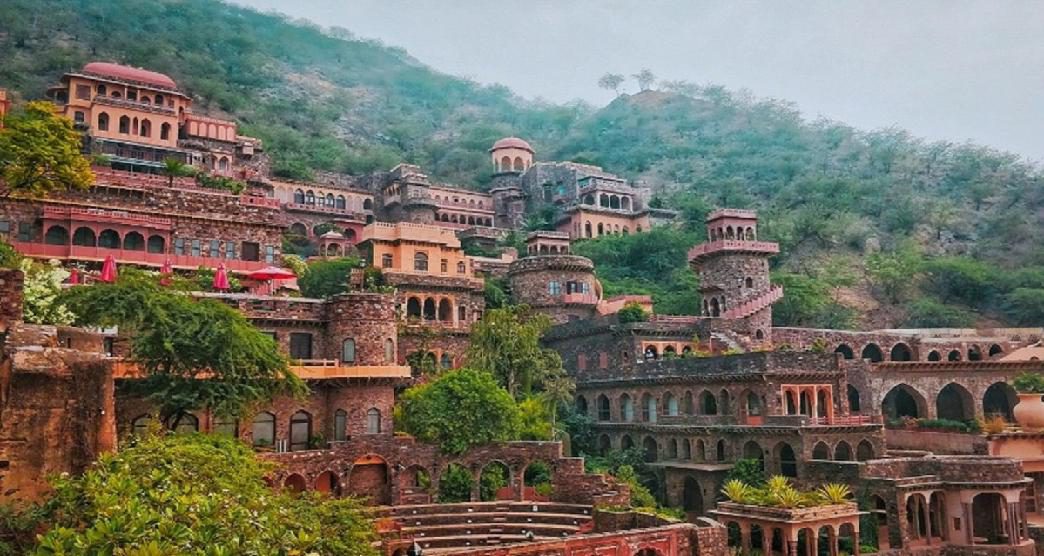
Best Places to Visit in Delhi: Monuments, Markets & Day Plans
Explore the best places to visit in Delhi including Red Fort, India Gate, Qutub Minar, Humayun's Tomb, Lotus Temple & Akshardham. Complete travel guide with timings, entry fees, and practical tips.
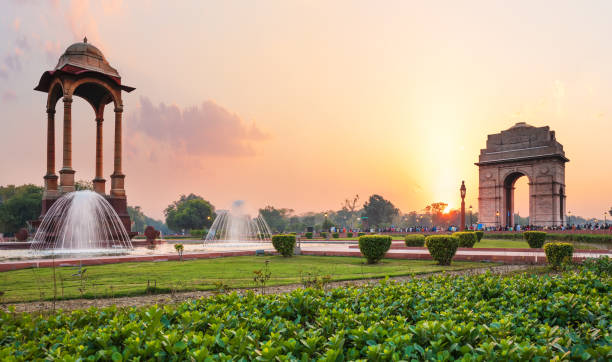
India Gate Delhi: Best Time, Nearby Spots & Night Visit Details
Visit India Gate Delhi with this complete guide covering history, architecture, timings, evening experience, nearby attractions, and practical travel tips.
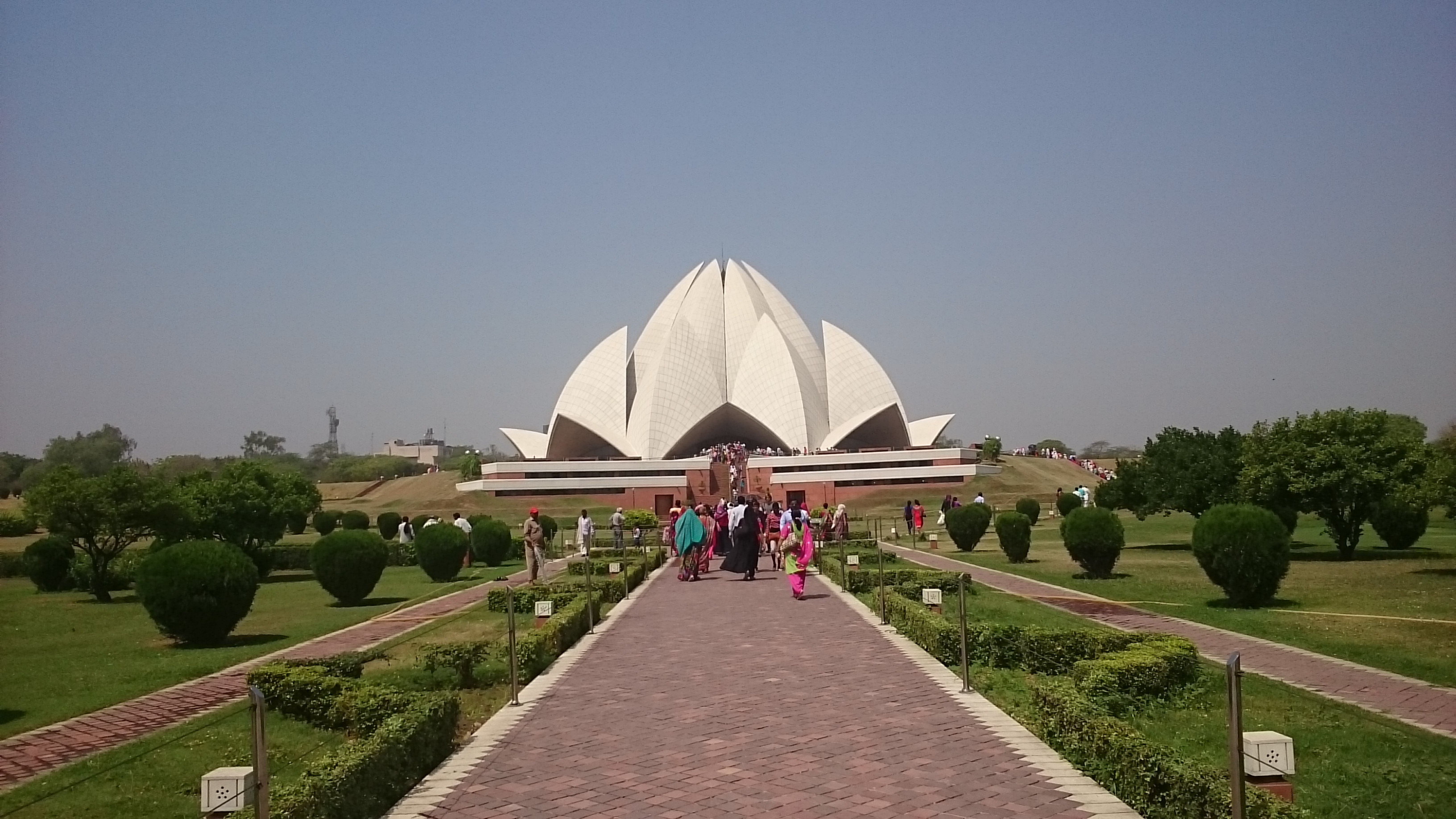
Lotus Temple Delhi: Timings, Entry Rules & Best Visiting Hours
Lotus Temple Delhi complete visitor guide: FREE entry, timings (9 AM-5:30 PM winter, 9 AM-7 PM summer), nearest metro (Kalkaji Mandir), photography rules, dress code, meditation tips & best time to visit. Plan your peaceful retreat.
Never Miss an Adventure
Get the latest trekking guides, travel tips, and exclusive offers delivered straight to your inbox.
