
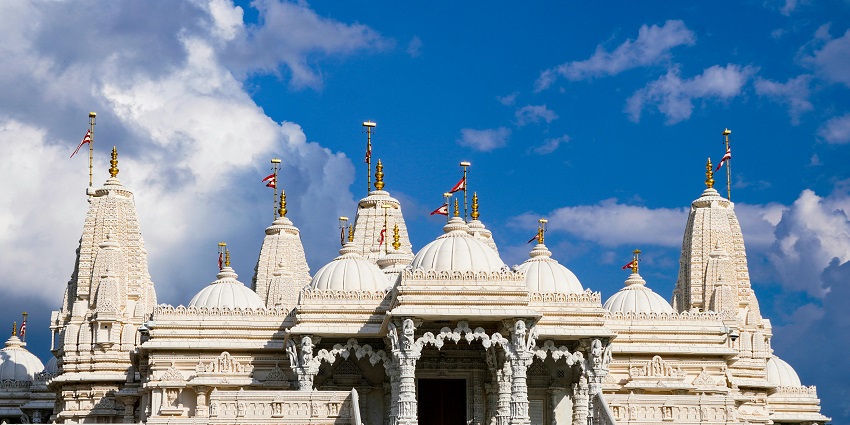
Temples in Guntur: 15 Sacred Sites

Priya Mehta
December 4, 2025
Explore 15 famous temples in Guntur, Andhra Pradesh. From Amaravati to Mangalagiri, discover spiritual heritage sites.
Introduction: Temple Heritage of Andhra
\nGuntur district in Andhra Pradesh stands as a magnificent testament to India's ancient temple heritage, housing sacred sites that span over two millennia of continuous worship. Located on the southeastern coast of India, this region has been a crucible of religious development where Buddhist, Shaivite, and Vaishnavite traditions have flourished together, creating a unique spiritual landscape that reflects the diversity of Hindu religious practice.
\n\nThe temples of Guntur represent some of the most historically significant sacred sites in South India. From the ancient Buddhist stupa of Amaravati, once the capital of the Satavahana Empire, to the hill temples of Mangalagiri and Kotappakonda with their miraculous legends and ancient architecture, Guntur's temples offer visitors a comprehensive journey through the evolution of temple building and religious philosophy in Andhra Pradesh.
\n\nFor travelers exploring Andhra Pradesh's spiritual heritage, comparing temple traditions with temples in Chittoor provides insights into how architectural styles vary across the region. Similarly, understanding temples in Hyderabad offers a broader perspective on Telangana and Andhra temple cultures.
\n\n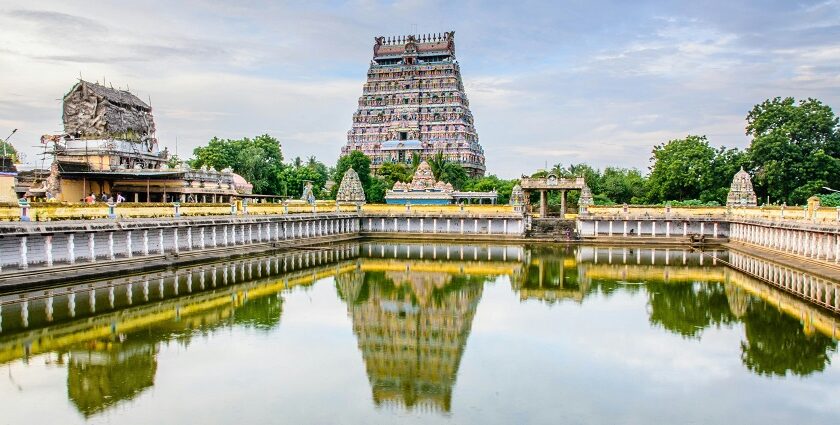 \n\n\n
Amaravati Temple (Amareswara)
\nThe Amaravati Temple, officially known as the Amareswara Swamy Temple, is located approximately 35 km from Guntur city in the historic town of Amaravati. This temple holds immense historical significance as it represents the ancient site where Buddhism flourished under Emperor Ashoka and later transformed into a major Hindu pilgrimage center. The temple dates back to the 2nd century BCE, making it one of the oldest continuously operating religious sites in India.
\n\nDedicated to Lord Shiva as Amareswara, the temple's architecture follows the classic Dravidian style with beautiful gopurams and intricate stone carvings. The temple complex houses the main sanctum with the Shiva lingam, surrounded by smaller shrines dedicated to various deities. What makes Amaravati particularly significant is its inclusion in the Pancharamas, the five most sacred Shiva temples in Andhra Pradesh, each believed to be established by Lord Shiva himself.
\n\nTemple timings are from 6 AM to 1 PM and 3 PM to 9 PM. The temple is especially vibrant during Mahashivratri in February-March and the Kalyanotsavam (celestial marriage festival of Lord Shiva) in March-April. Devotees from across India visit during these festivals to participate in special abhishekam rituals and night-long prayers. Allow 2-3 hours for temple visit, including time to explore the nearby Amaravati Buddhist site and museum that house magnificent sculptures and artifacts from the ancient Buddhist stupa.
\n\n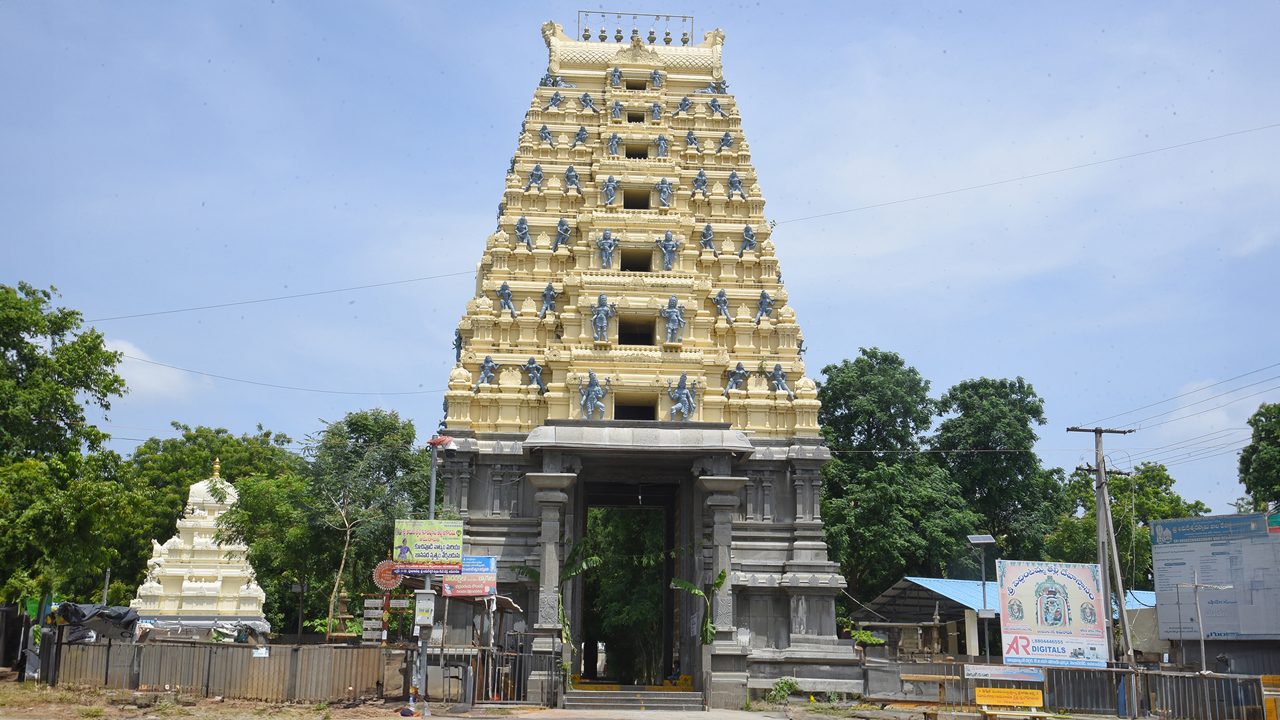 \n\n
\n\nFor those interested in exploring temple traditions across southern India, temples in Kerala provide comparative insights into how religious practices vary while maintaining core spiritual traditions.
\n\nAmaravati Buddhist Stupa
\nAdjacent to the Amareswara Temple lies one of India's most important Buddhist archaeological sites—the Amaravati Mahachaitya (Great Stupa). Once the largest stupa in India with a diameter of 50 meters and height of 30 meters, this site was a major center of Buddhist learning during the Satavahana period (2nd century BCE to 3rd century CE). Emperor Ashoka visited this site, and the Amaravati school of Buddhist art developed here, influencing Buddhist art across Asia.
\n\nWhile the original stupa is no longer standing, the archaeological site and museum house magnificent limestone sculptures, panels depicting Buddha's life, and the famous Amaravati marbles. The Buddhist influence here explains the syncretic culture that characterizes Guntur's religious heritage, where Buddhist and Hindu traditions have coexisted and influenced each other for centuries.
\n\n\nMangalagiri Temple
\nThe Mangalagiri Temple complex, located 20 km from Guntur city, consists of two sacred temples dedicated to Lord Narasimha, the lion-man incarnation of Lord Vishnu. The hill temple, known as Lakshmi Narasimha Temple, sits atop Mangalagiri hill, accessible by climbing 600 steps. The base temple, called Panakala Swamy Temple, is famous for the unique Panakam (jaggery water) offering ritual that devotees believe produces miraculous results.
\n\nAccording to legend, Lord Narasimha appeared at this site to save his devotee Prahlada from his demon father Hiranyakashipu. The temple's unique offering involves devotees pouring jaggery water (Panakam) over the deity's idol. What makes this miraculous is that even after millions of devotees have offered Panakam over centuries, the idol's idol never shows signs of erosion or damage from the sweet liquid—evidence that many devotees cite as proof of the deity's divine nature.
\n\nThe hill temple timings are from 6:30 AM to 3 PM, while the base Panakala Swamy Temple operates until 1 PM for the Panakam offering ritual. Allow 1-2 hours for visiting both temples and climbing the 600 steps to the hill shrine. The climb is moderate in difficulty and provides panoramic views of the surrounding countryside. The temple is especially crowded during Narasimha Jayanti (May) and on weekdays when devotees come to offer Panakam.
\n\n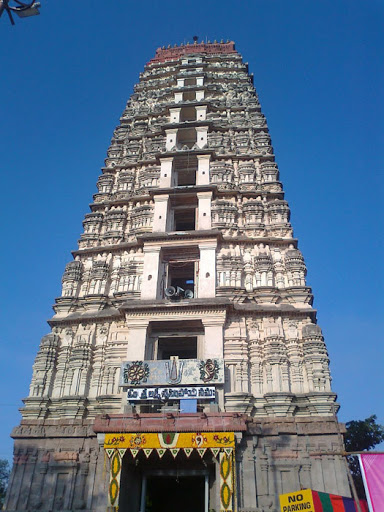 \n\n\n
Kotappakonda Temple
\nThe Kotappakonda Temple, situated 60 km from Guntur city in the village of Kotappakonda, is one of Andhra Pradesh's most unique and architecturally significant temples. The temple is dedicated to Lord Shiva as Trikuteswaraswamy, but what makes it distinctive is its three-peaked temple structure representing the Hindu trinity: Brahma, Vishnu, and Maheshwara (Shiva).
\n\nThe temple's architecture follows the ancient Kakatiya style, characterized by its distinctively carved pillars, intricate sculptures, and the three-peaked shikhara that sets it apart from other Shiva temples in the region. Each peak houses a shrine dedicated to one aspect of the trinity, allowing devotees to worship all three deities in a single temple visit. The three peaks require moderate trekking to reach, making the pilgrimage physically rewarding as well as spiritually fulfilling.
\n\nTemple timings are from 6 AM to 1 PM and 3 PM to 8 PM. Allow 3-4 hours for a complete visit, including time to climb all three peaks and participate in darshan at each shrine. The Maha Shivratri festival sees grand celebrations with special ceremonies, elaborate decorations, and night-long prayers that attract devotees from across Andhra Pradesh. The Karthika Pournami (full moon in Karthika month) is another significant festival period at the temple.
\n\n\nGuntur City Temples
\nWithin Guntur city limits, several important temples serve the local community and visitors. The Sai Baba Temple in Guntur is one of the most popular, following the tradition of Shirdi Sai Baba worship that has spread across India. The temple features a beautiful idol of Sai Baba and attracts devotees seeking blessings for health, prosperity, and spiritual growth. Thursday, considered Sai Baba's day, sees especially large gatherings.
\n\nThe Ayyappa Temple in Guntur follows the Sabarimala style of worship, dedicated to Lord Ayyappan, the deity who combines aspects of both Shiva and Vishnu. The temple's architecture resembles the Sabarimala shrine, and devotees often observe the traditional 41-day vrata (fast) before visiting, especially during the Mandala season (November-January).
\n\nThe Venkateswara Temple in Guntur serves as a local replica of the famous Tirupati Balaji temple. Dedicated to Lord Venkateswara, this temple allows devotees who cannot travel to Tirupati to offer prayers and receive blessings. The Mariamman Temple, dedicated to the local Goddess Mariamman, represents the Shakta tradition and is especially active during the summer months when devotees pray for protection from diseases.
\n\nAll city temples typically open during morning and evening hours, with darshan lasting approximately 30 minutes each. They are easily accessible via auto-rickshaw or taxi from anywhere in Guntur city and serve as important community spiritual centers.
\n\n\nNageswaran Temple
\nThe Nageswaran Temple, located in Ponnur approximately 25 km from Guntur city, is an ancient Shiva temple dating back to the Chola period. The temple is dedicated to Lord Shiva as Nageswara, one of the 12 Jyotirlingas (self-manifested Shiva lingas) that hold special significance in Hindu tradition, though its exact status in the Jyotirlinga list varies by tradition.
\n\nThe temple's architecture follows the traditional Dravidian style with beautiful stone carvings and a serene atmosphere conducive to meditation. What makes this temple distinctive is its emphasis on Naga (serpent) worship, with serpent motifs appearing throughout the temple's decoration. Nageswara literally means "Lord of Serpents," and the temple's association with serpent worship reflects the ancient Vedic tradition of Nagas as divine beings and Shiva's connection with serpents.
\n\nTemple timings are typically from 6 AM to 1 PM and 4 PM to 8 PM. Allow 1-2 hours for temple visit. The temple is particularly active during Mahashivratri when special abhishekam rituals and serpent worship ceremonies take place. Access is possible via road from Guntur city with private vehicle or organized tour.
\n\n\nChebrolu Temples
\nThe village of Chebrolu, located 15 km from Guntur city, is known as a temple town due to its collection of multiple historic temples. The main temple complex features shrines dedicated to Brahma, Vishnu, and Shiva—representing the complete Hindu trinity within a single temple complex, similar to Kotappakonda but with different architectural style.
\n\nThe temples date back to the 11th century and showcase a blend of Chola and Kakatiya architectural styles. The beautiful stone carvings, ornate pillars, and multiple shrines make Chebrolu an important site for temple architecture enthusiasts. The village itself has maintained its traditional character, providing visitors with a glimpse into temple town life as it has existed for centuries.
\n\nAllow approximately 2 hours for visiting the main temple complex and exploring the village. The best time to visit is during winter months (November-February) when the weather is pleasant for exploring the temple town. The Chebrolu temples represent the temple heritage that once characterized many villages in Andhra Pradesh before urbanization changed the landscape.
\n\nOther Notable Temples in Guntur District
\nBeyond these major sites, Guntur district houses several other historically significant temples. The Peda Amaravati Temple near the main Amaravati complex serves as an additional Shiva worship site. The Sitanagaram Temple, dedicated to Lord Rama, represents the Ramayana tradition that flourished in this region. The Tadepalle Temple complex, with its multiple shrines and ancient architecture, provides additional insights into the region's religious diversity.
\n\nThe Guntur district also features several temple tanks (theertham) considered sacred, where devotees take ritual baths before visiting temples. These temple tanks, often connected to specific temples through underground channels, represent the ancient water management systems that temple towns developed and the sacred significance of water in Hindu worship traditions.
\n\n\nTemple Circuit Planning Tips
\nThe best time to visit Guntur temples is between October and March, when the weather is pleasant (20-30°C) and ideal for temple visits and climbing hills. Winter months (November-February) offer comfortable daytime temperatures perfect for exploring outdoor temples like Mangalagiri and Kotappakonda that require climbing.
\n\nA comprehensive temple circuit covering major sites typically requires 2-3 days, starting from Guntur city center as the base. The recommended route is: Day 1 - Guntur city temples (Sai Baba, Ayyappa, Venkateswara, Mariamman - 30 minutes each, morning); Day 2 - Mangalagiri Temple (morning, 1-2 hours including climb) and Amaravati Temple (afternoon, 2-3 hours including Buddhist site and museum); Day 3 - Kotappakonda Temple (full day, 3-4 hours including climbing three peaks) or combine Chebrolu and Nageswaran temples.
\n\nTransport within the region is best arranged via private taxi or vehicle. Public buses connect major temple towns but require additional local transport to reach temple sites from bus stands. Accommodation options in Guntur city range from budget hotels (INR 500-800) to mid-range properties (INR 1000-2000), providing convenient access to all temples as day trips.
\n\nDress codes mandate traditional, modest clothing—men should wear dhoti or pants with shirts, women should wear saree or churidhar with dupatta. Footwear must be removed before entering temple premises. Photography permissions vary by temple—always ask before taking photographs, especially of deities. Most temples offer prasadam (sacred food offerings) free or at nominal cost. Local restaurants serve delicious Andhra cuisine for those seeking meals outside temple prasadam.
\n\n\nConclusion
\nGuntur's temples offer a profound spiritual journey through Andhra Pradesh's rich temple heritage, spanning from the 2nd century BCE Buddhist stupa of Amaravati to the hill temples of Mangalagiri and Kotappakonda with their unique trinity worship traditions. From the ancient Amareswara Temple, one of the Pancharamas, to the miracle-producing Panakala Swamy Temple, from the temple town of Chebrolu to the city temples serving local communities, each site contributes uniquely to Guntur's spiritual landscape.
\n\nThe temples showcase diverse architectural styles—Dravidian, Kakatiya, Chola—representing different periods of temple construction and regional variations. The syncretic culture of Guntur, where Buddhist and Hindu traditions have coexisted and influenced each other for centuries, provides visitors with a unique opportunity to understand India's religious diversity within a single district.
\n\nWhether seeking blessings from ancient deities, participating in special rituals like Panakam offering at Mangalagiri, climbing the three peaks of Kotappakonda, or exploring the magnificent Buddhist sculptures at Amaravati, Guntur's temples offer diverse opportunities for spiritual exploration, historical understanding, and cultural appreciation. Plan your temple circuit thoughtfully, respecting temple customs and dress codes. Approach each sacred space with reverence to fully appreciate the spiritual energy accumulated over millennia of continuous worship.
Location
Frequently Asked Questions
Q1.What are the famous temples in Guntur?
Q2.How far is Amaravati from Guntur?
Q3.Can we cover all temples in one day?
Q4.What is special about Mangalagiri Temple?
Q5.How much time needed at Amaravati?
Q6.Are there accommodations near temples?
Q7.What is the best time to visit Guntur temples?
Q8.How to reach Kotappakonda from Guntur?
Recommended For You
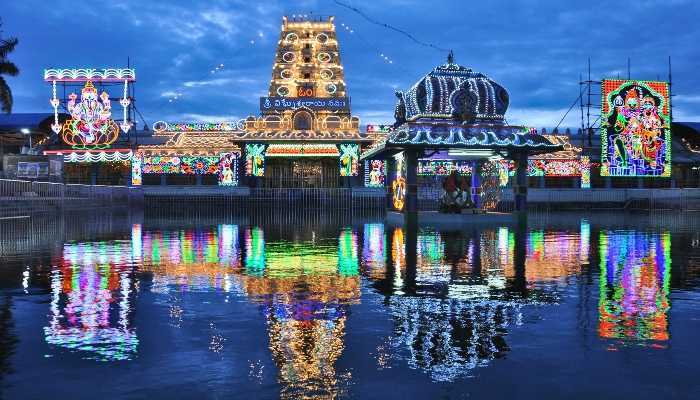
Temples in Chittoor: 12 Sacred Sites
Explore 12 famous temples in Chittoor district. From Tirupati to Srikalahasti, discover sacred Hindu temples.
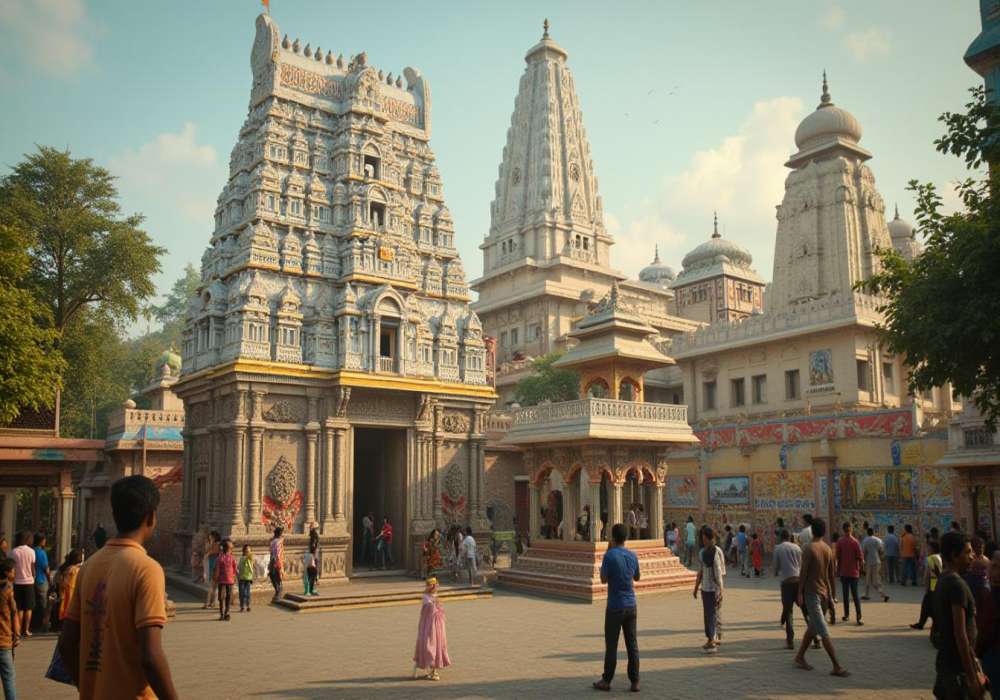
Temples in Hyderabad: 20 Sacred Sites
Explore 20 famous temples in Hyderabad. From Birla Mandir to Chilkur Balaji, discover spiritual sites, timings & heritage.
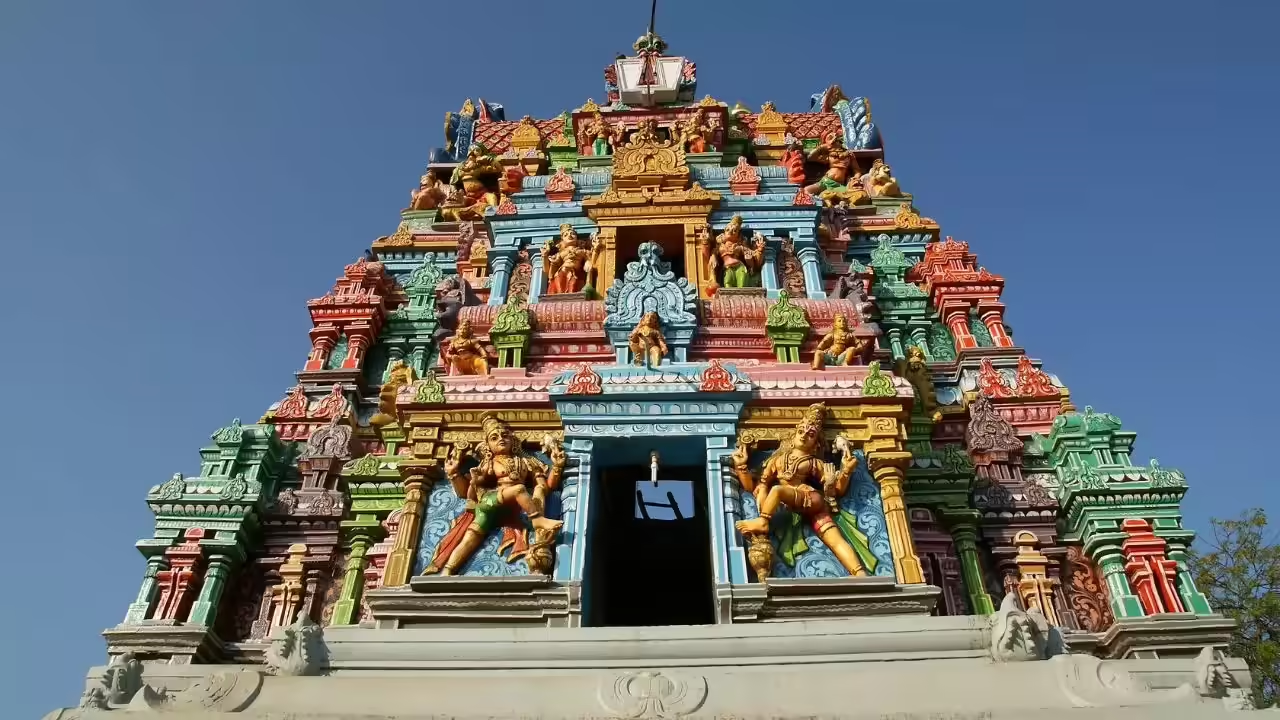
Temples in Kerala: God's Own Country's Sacred Heritage
Explore sacred temples in Kerala. Discover Sabarimala, Guruvayur, Padmanabhaswamy & more with complete travel guide.
Never Miss an Adventure
Get the latest trekking guides, travel tips, and exclusive offers delivered straight to your inbox.
