
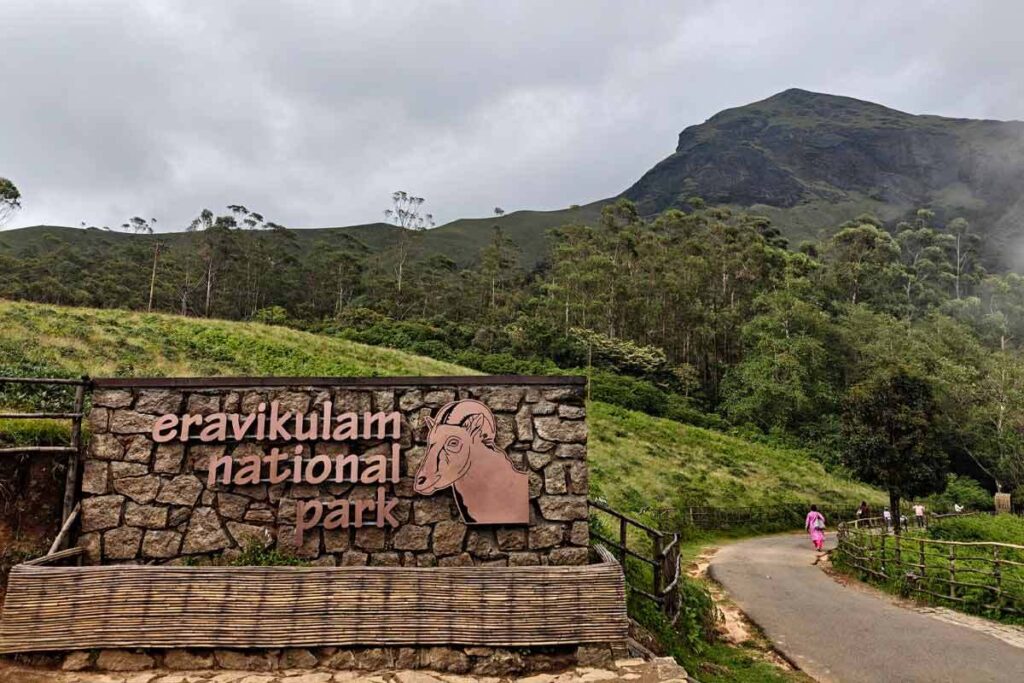
Eravikulam National Park: Entry Tickets, Nilgiri Tahr Spotting & Timings

Ananya Sharma
February 19, 2026
Complete guide to Eravikulam National Park Kerala - Nilgiri Tahr, tickets, timings, best time to visit, and how to reach.
Introduction: Home of the Endangered Nilgiri Tahr
Eravikulam National Park stands as Kerala's most protected wildlife destination, renowned for hosting the largest surviving population of the endangered Nilgiri Tahr—a mountain ungulate found only in the southern Western Ghats. Located in the Idukki district along the crest of the Western Ghats, this 97 square kilometer park represents one of India's most significant conservation success stories. For wildlife enthusiasts and nature lovers, Eravikulam offers the rare privilege of observing these remarkable mountain goats in their natural high-altitude habitat.
What makes Eravikulam special is its accessibility combined with authentic wildlife experiences. Unlike many remote wildlife destinations requiring arduous travel, Eravikulam is easily reached from Munnar, one of Kerala's most popular hill stations. Yet despite its accessibility, the park maintains strict conservation protocols that prioritize the welfare of its flagship species over tourism demands. This balance between conservation and controlled tourism makes Eravikulam a model for sustainable wildlife destinations in India.
About Eravikulam National Park
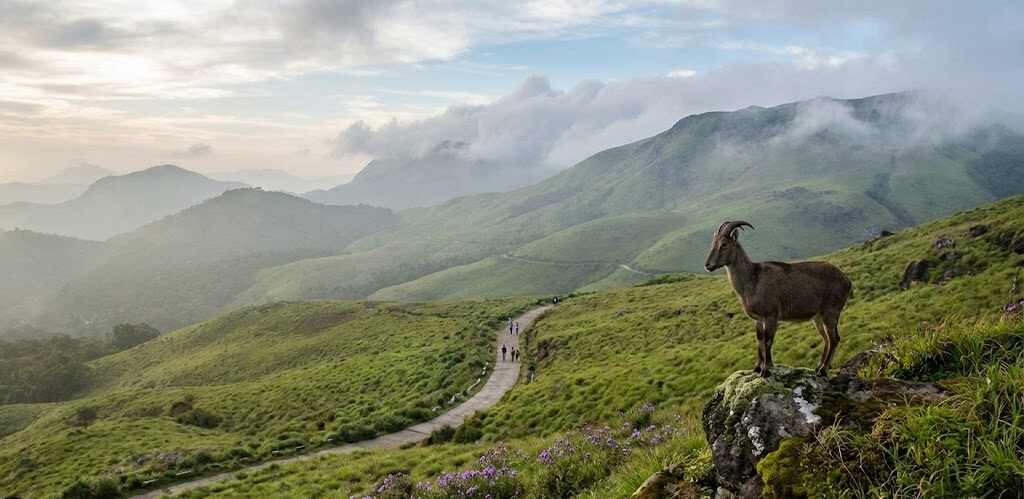
Established in 1978 to protect the Nilgiri Tahr, Eravikulam National Park encompasses the high-altitude grasslands and shola forests of the Western Ghats. The park's elevation ranges from 2,000 to 2,695 meters above sea level, with Anamudi Peak—South India's highest point at 2,695 meters—located within its boundaries. This dramatic terrain creates a unique ecosystem where montane grasslands intersperse with dense shola forests, forming the classic "grassland-shola" mosaic characteristic of the higher Western Ghats.
The park's significance extends beyond the Nilgiri Tahr. It protects critical watersheds that feed numerous rivers originating in the Western Ghats, including the Periyar, Mullayar, and Cheruthoni rivers. The rolling grasslands, dotted with rocky outcrops and wind-sculpted trees, create some of South India's most breathtaking mountain landscapes. During the flowering season, the famous Neelakurinji (Strobilanthes kunthianus) blooms once every twelve years, carpeting the hillsides in violet—a phenomenon that draws visitors from across the world.
The Nilgiri Tahr: Flagship Species
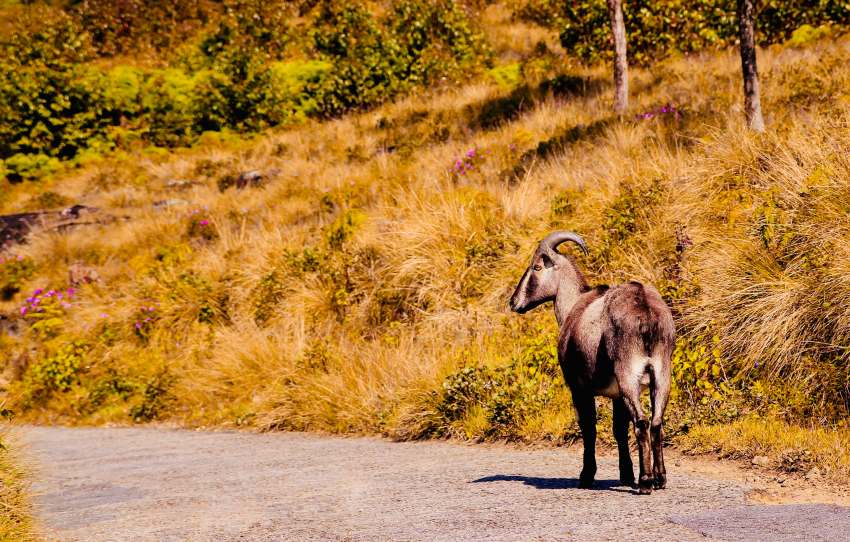
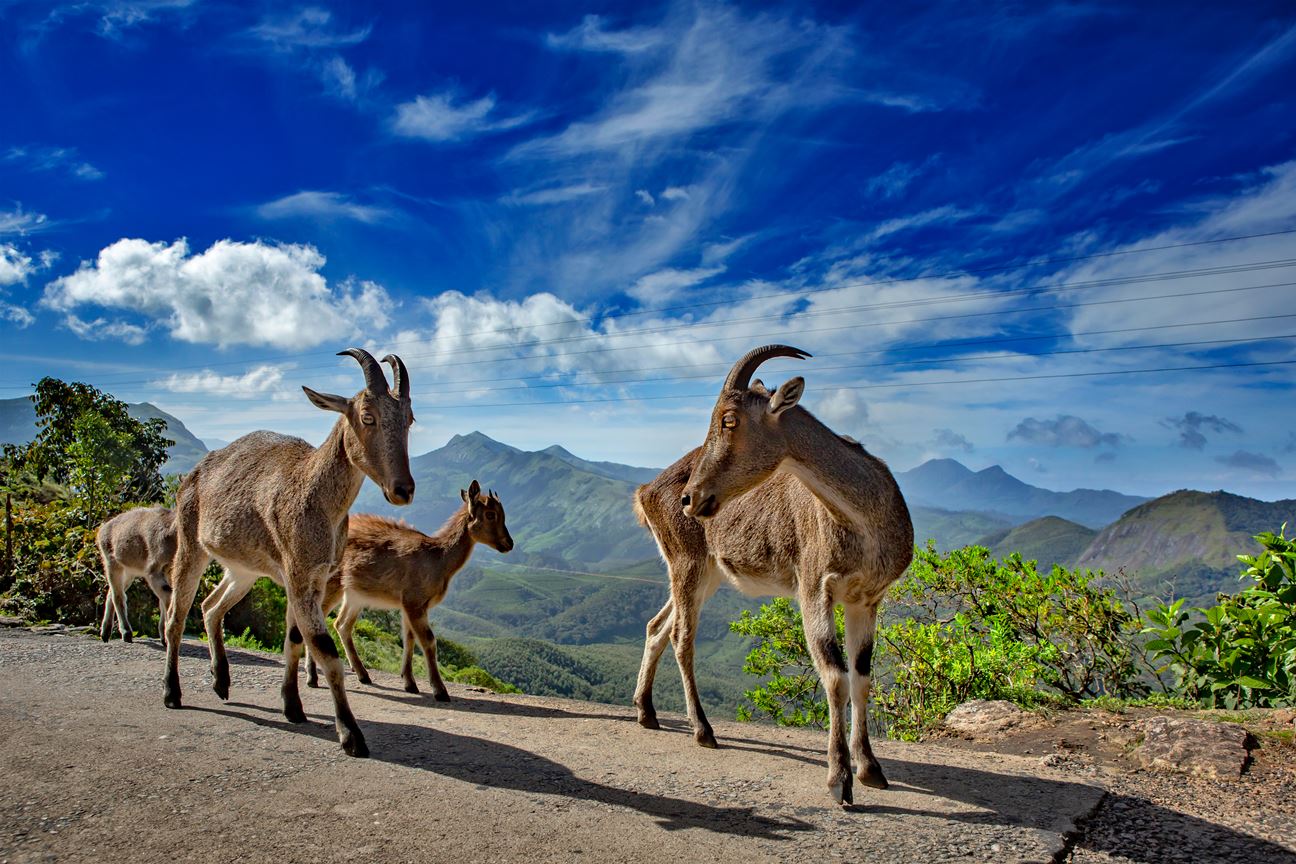
The Nilgiri Tahr (Nilgiritragus hylocrius) is a mountain goat species endemic to the Nilgiri Hills and the southern portion of the Western Ghats. With a population estimated at around 700-800 individuals within Eravikulam, the park protects approximately one-third of the species' remaining global population. These remarkable animals are perfectly adapted to life on steep, rocky terrain, with specialized hooves that provide exceptional grip on precipitous slopes.
Male Tahrs develop impressive horns that sweep backward and can weigh up to 80 kilograms, while females are smaller and hornless. Their coloration ranges from dark brown to grey, providing excellent camouflage against the rocky terrain. Observing these sure-footed creatures navigate near-vertical cliffs with apparent ease represents one of India's most memorable wildlife experiences. The best viewing opportunities occur during the early morning hours when Tahrs descend to graze on grassy slopes before retreating to higher, more secure terrain as temperatures rise.
Other Wildlife at Eravikulam
While the Nilgiri Tahr is the star attraction, Eravikulam supports remarkable biodiversity despite its small size. The park's isolation and high elevation have created conditions for species endemism, with several animals found nowhere else on Earth.
The endangered Nilgiri marten—a rare mustelid resembling a weasel—occurs here, though sightings are extremely uncommon due to its elusive nature. Other mammals include the Nilgiri langur, Indian giant squirrel, and various smaller carnivores. The park's birdlife includes endemics like the Nilgiri wood pigeon, Nilgiri flycatcher, and the black-and-orange flycatcher. Raptors including the endangered Nilgiri keelback and various snake species represent the reptile diversity.
Butterfly enthusiasts can find numerous species including some endemics, while the park's flora includes remarkable orchids, balsams, and other plants adapted to the high-altitude environment. The Neelakurinji flowering event transforms the landscape every twelve years, creating a natural spectacle that attracts visitors from across the globe.
Best Time to Visit Eravikulam
Eravikulam remains open throughout the year except during the calving season when the park closes to protect newborn Tahrs. Weather conditions vary dramatically by season, with each period offering distinct experiences.
| Season | Conditions | Recommendation |
|---|---|---|
| September-February | Pleasant, clear skies, cool temperatures | Best overall visiting period, excellent Tahr visibility |
| March-May | Warmer days, occasional mist | Good for wildlife, comfortable trekking |
| June-August | Monsoon rainfall, misty conditions | Limited visibility, park may close during heavy rain |
| Calving Season | Variable (usually January-February) | Park closed for Tahr protection (check dates) |
The Eravikulam Experience
Unlike traditional wildlife reserves with open jeep safaris, Eravikulam exploration primarily involves guided tours in forest department mini-buses that transport visitors from the park entrance to Rajamalai, the main tourism zone. From Rajamalai, visitors can walk on designated trails accompanied by forest guards who provide information about the park and help locate wildlife.
The main trail offers excellent opportunities to observe Nilgiri Tahr at relatively close range. The animals are habituated to human presence to some degree, allowing for observation without disturbance. Photography opportunities are excellent, though visitors must maintain designated distances and follow strict guidelines to avoid stressing the animals.
For more adventurous visitors, the park offers limited trekking opportunities to more remote areas. These treks require special permits and are physically demanding due to the steep terrain and high elevation. However, they provide access to less-visited areas where wildlife sightings can be more intimate and landscapes more spectacular.
Tickets and Entry Requirements
All visitors require entry tickets purchased at the park entrance. The ticket system includes mini-bus transport to Rajamalai and access to designated viewing areas. Advance booking is not typically required for general entry, but during peak periods, queues can develop.
- Entry Fee: Nominal charge for adults and children (separate rates)
- Transport: Mini-bus service included in entry fee
- Camera Fee: Separate charges for still and video cameras
- ID Proof: Required for all visitors
How to Reach Eravikulam
Eravikulam's accessibility from Munnar makes it one of South India's most easily visited national parks. Munnar itself is well-connected to major Kerala cities.
- From Munnar: ~15 km, approximately 45 minutes by road
- From Kochi: ~130 km, approximately 4 hours
- From Thekkady: ~100 km, approximately 3.5 hours
- Nearest Railway: Aluva station (120 km away)
- Nearest Airport: Cochin International (110 km away)
Where to Stay Near Eravikulam
Most visitors stay in Munnar, which offers accommodation ranging from budget homestays to luxury resorts. Munnar's proximity to Eravikulam (15 km) makes it an ideal base. For those seeking closer accommodation, basic facilities exist near Rajamalai, though options are limited compared to Munnar.
- Munnar Town: Wide range of hotels, resorts, and homestays
- Rajamalai Area: Basic forest department facilities and a few private properties
- Devikulam: Quieter alternative to Munnar with some accommodation options
Tips for Visiting Eravikulam
Eravikulam's high elevation creates specific conditions that visitors should prepare for, regardless of experience level.
- Carry warm clothing regardless of season (temperatures can drop suddenly)
- Wear sturdy walking shoes with good grip
- Bring rain protection during monsoon months
- Apply sunscreen even on cloudy days (UV intensity is high at altitude)
- Carry water and snacks (facilities are limited beyond Rajamalai)
- Respect all wildlife viewing guidelines
- Maintain silence for better wildlife observation
Photography Guidelines
Eravikulam offers exceptional wildlife photography opportunities, particularly for Nilgiri Tahr. The animals' relative tolerance of human presence allows for close-up shots with telephoto lenses. However, photographers must follow strict guidelines: maintain minimum distances from animals, avoid blocking animal movement paths, and never use flash. Drone photography is prohibited without special permits. Remember that animal welfare always takes priority over image capture.
Anamudi Peak
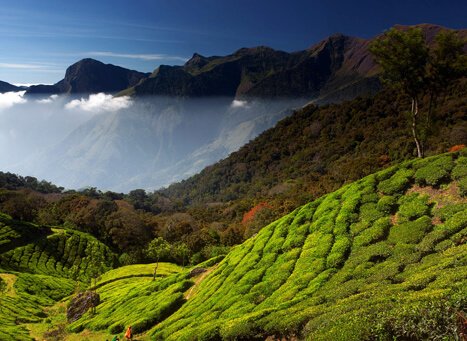
Anamudi Peak, South India's highest point at 2,695 meters, lies within Eravikulam National Park. While the peak itself requires special permission and trekking arrangements, views of Anamudi from various points within the park are spectacular. On clear days, the peak dominates the horizon, its cloud-capped summit a reminder of the Western Ghats' grandeur. For experienced trekkers seeking summit access, contact the forest department well in advance for permit procedures and guide requirements.
Neelakurinji Blooming
One of Eravikulam's most remarkable phenomena occurs once every twelve years when the Neelakurinji (Strobilanthes kunthianus) flowers carpet the hillsides in violet. This mass flowering event, which last occurred in 2018, transforms the landscape dramatically and attracts visitors from across India and internationally. The next blooming is expected around 2030. Planning visits during this period requires considerable advance preparation as accommodation becomes scarce and visitor numbers surge dramatically.
Combining Eravikulam with Munnar
Munnar's proximity to Eravikulam makes it natural to combine wildlife viewing with the region's other attractions. Munnar offers tea plantation tours, the Attukad Waterfalls, Mattupetty Dam, and numerous scenic viewpoints. A complete Munnar itinerary typically includes Eravikulam as a highlight, complementing other experiences that showcase Kerala's hill station heritage.
Responsible Tourism at Eravikulam
Eravikulam's primary conservation mission requires visitors to practice exemplary behavior. The park's small size and vulnerable wildlife make it particularly sensitive to disturbance. Visitors should strictly follow designated trails, maintain silence during wildlife encounters, never feed animals, and carry out all waste. Photography should never stress animals or block their movement. Remember that your behavior sets precedent for future tourism policies.
Budget Planning
| Expense Category | Budget Range | Notes |
|---|---|---|
| Park Entry | ₹100-200 per person | Includes mini-bus transport to Rajamalai |
| Accommodation | ₹800-5000 per night | In Munnar, ranging from homestays to resorts |
| Transport | Variable | Local taxis or auto-rickshaws in Munnar |
| Food | ₹200-600 per meal | Local restaurants to resort dining |
Family and Children Considerations
Eravikulam works exceptionally well for families with children. The mini-bus transport eliminates strenuous hiking, and the opportunity to see Tahrs at relatively close range engages children meaningfully with wildlife. The park's educational value regarding conservation and endangered species provides meaningful learning opportunities. Ensure children understand viewing guidelines and maintain appropriate behavior around wildlife.
Common Mistakes to Avoid
- Visiting during the unknown calving closure period and finding the park closed
- Underestimating cold temperatures at high elevation
- Attempting unauthorized entry or straying from designated trails
- Disrespecting wildlife viewing guidelines (approaching too close, making noise)
- Ignoring weather forecasts and attempting visits during dangerous conditions
Safety Information
Eravikulam's guided nature and designated viewing areas minimize risks for visitors. However, the park's high elevation and steep terrain demand respect. Stay on designated paths, follow guard instructions immediately, and avoid risky photography positions. Weather can change rapidly—fog can descend suddenly, reducing visibility to near zero. During such conditions, follow staff instructions about return timing. Medical facilities are available in Munnar if needed.
Weather and Climate
Eravikulam's high elevation creates a montane climate distinct from surrounding lowlands. Temperatures range from near-freezing in winter to pleasant mid-20s°C in summer. Rainfall occurs primarily during the southwest monsoon (June-August) but can happen in any season. Mist and fog are common, especially in mornings and during monsoon months. UV radiation is intense at this elevation despite cool temperatures—sun protection is essential even on overcast days.
Conclusion
Eravikulam National Park represents one of India's most accessible yet authentic wildlife experiences. The opportunity to observe endangered Nilgiri Tahr in their natural habitat, combined with spectacular mountain scenery and well-managed tourism facilities, creates a destination that rewards both serious wildlife enthusiasts and casual visitors alike. For anyone traveling to Munnar, Eravikulam is an essential addition to the itinerary—a place where conservation success stories unfold against a backdrop of some of South India's most dramatic landscapes.
Location
Frequently Asked Questions
Q1.What is the best time to visit Eravikulam National Park?
Q2.How can I book tickets for Eravikulam National Park?
Q3.What wildlife can I see at Eravikulam National Park?
Q4.What are the timings of Eravikulam National Park?
Q5.Is Eravikulam National Park worth visiting?
Q6.How do I reach Eravikulam National Park from Munnar?
Recommended For You
National Parks in Kerala: Wildlife Zones, Safari Types & Travel Tips
Explore Kerala's national parks with this complete wildlife travel guide featuring Eravikulam, Periyar, Silent Valley, and more with practical planning tips.
Parambikulam Tiger Reserve: Safari Booking, Stay & Eco Activities
Complete guide to Parambikulam Tiger Reserve Kerala - safari booking, timings, wildlife, how to reach, and accommodation.
Silent Valley National Park Kerala: Entry Rules, Trails & Best Season
Complete Silent Valley National Park Kerala travel guide covering permits, best time to visit, lion-tailed macaque, Kunthipuzha River, trekking, and practical travel tips for this pristine rainforest sanctuary.
Never Miss an Adventure
Get the latest trekking guides, travel tips, and exclusive offers delivered straight to your inbox.
