

Gurudwara Pathar Sahib: Legend & History

Priya Mehta
January 29, 2026
Visit Gurudwara Pathar Sahib in Ladakh. Discover the legend of Guru Nanak Dev Ji and the demon, the sacred rock with his imprint, and experience the unique Army-maintained shrine on the Leh-Kargil highway.
A Sacred Miracle in the Ladakhi Desert
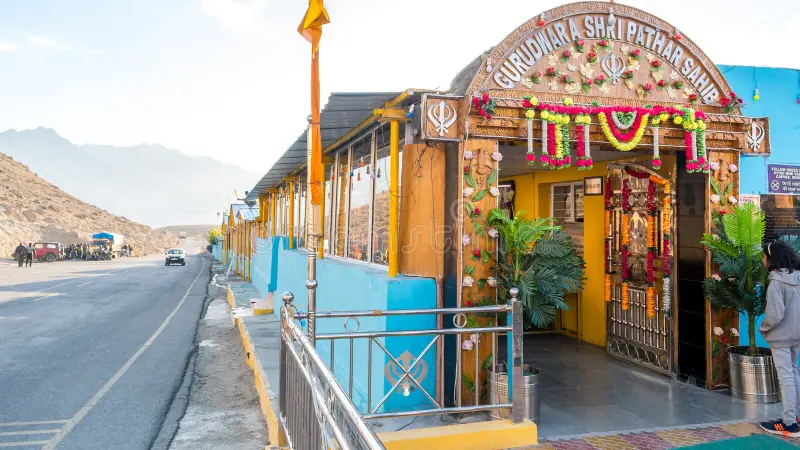
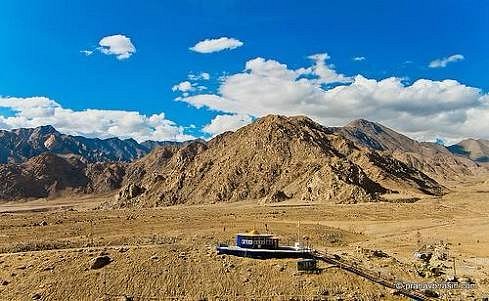
Nestled in the barren landscapes of Ladakh, where wind-swept mountains meet endless skies, stands a testament to faith that defies logic. Gurudwara Pathar Sahib, located approximately 25 kilometers from Leh on the Leh-Kargil highway, is not just a place of worship—it's a living miracle that has drawn devotees and curious travelers for centuries.
What makes this gurudwara unique is not just its stunning location at 11,500 feet above sea level, but the sacred rock it houses—a boulder that supposedly turned soft like wax when it touched Guru Nanak Dev Ji, the founder of Sikhism. The gurudwara is maintained by the Indian Army, a rare sight where soldiers in uniform serve devotees with the same reverence as the granthi (priest).
For travelers journeying through Ladakh, Gurudwara Pathar Sahib offers more than just spiritual solace. It's a place where legends come alive, where the harsh mountain landscape meets warm hospitality, and where every visitor is welcomed with a cup of hot tea and prayers, regardless of their faith.
The Legend of Guru Nanak and the Demon
The story of Gurudwara Pathar Sahib begins in 1517 AD, when Guru Nanak Dev Ji, during his travels to Tibet, arrived in this region. According to local legends, the area was terrorized a demon who lived on the hilltop. The demon, disturbed by the Guru's presence and growing influence among the locals, decided to eliminate him.
One morning, while the Guru was meditating, the demon rolled a massive boulder down the hillside, intending to crush him. As the boulder hurtled towards the meditating Guru, something extraordinary happened. Instead of crushing him, the rock miraculously turned soft like wax upon touching Guru Nanak's back, molding around his body without causing any harm.
When the demon saw the Guru emerge unharmed from beneath the boulder, he realized this was no ordinary being. The boulder, now softened, bore the clear imprint of Guru Nanak's back, shoulders, and head. Overcome with remorse and recognizing the Guru's divine power, the demon fell at his feet and begged for forgiveness. Guru Nanak, known for his compassion, forgave the demon, who then became a disciple.
The rock remains at the gurudwara today, and visitors can see the imprint—a spine curve, shoulder contours, and even what appears to be the demon's footprint where he kicked the boulder in frustration. The locals, who refer to Guru Nanak as 'Nanak Lama,' hold this site in deep reverence, and it remains one of Ladakh's most sacred pilgrimage sites.
The Sacred Rock: A Living Testament
The sacred rock at Gurudwara Pathar Sahib is approximately 5 feet tall and weighs several tons. What makes it remarkable is the clear imprint of a human back on its surface. The contours of a spine, shoulders, and the back of a head are visible to anyone who visits. Even more fascinating is the footprint near the base, believed to be that of the demon.
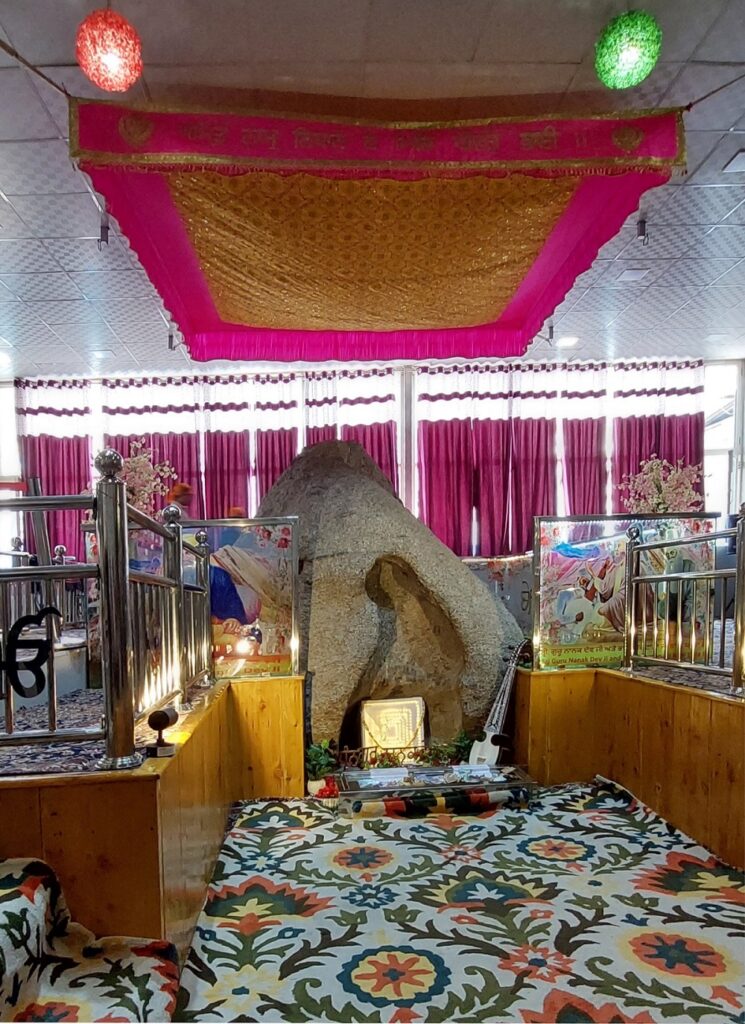
Devotees believe that touching the rock brings blessings and healing. Many visitors apply chandan (sandalwood paste) on the rock as an offering. The rock is kept in a glass enclosure within the gurudwara complex, protected but visible to all who come to pay their respects.
For historians and skeptics, the rock remains an unexplained phenomenon. Scientific analysis has been inconclusive about how such distinct imprints could have formed naturally on a hard granite boulder. For devotees, however, the rock is proof of divine intervention—a tangible connection to the miraculous life of Guru Nanak Dev Ji.
The Unique Army Connection
Gurudwara Pathar Sahib has a fascinating modern history. The sacred rock was rediscovered in 1970 during the construction of the Leh-Nimu road. When workers attempted to move the boulder to clear the path, they found it impossible to budge despite using heavy machinery. A local lama (monk) informed them about the rock's sacred significance and its connection to Guru Nanak.
The Indian Army, which was overseeing the road construction, decided to preserve the rock and build a gurudwara around it. This marked the beginning of a unique tradition—the Gurudwara Pathar Sahib is one of the few gurudwaras in India maintained entirely by the Indian Army. Soldiers take turns serving langar (community meal), managing the gurudwara, and ensuring its upkeep.
For visitors, it's a heartwarming sight to see soldiers in uniform serving prasad and tea to devotees, their demeanors reflecting the same devotion and respect as any religious servant. The Army's involvement has also ensured excellent maintenance of the gurudwara complex, with clean premises, well-maintained gardens, and excellent facilities for visitors.
The Langar Experience
No visit to Gurudwara Pathar Sahib is complete without partaking in the langar. The community kitchen serves hot tea, prasad, and meals to all visitors throughout the day, free of cost. In the cold Ladakhi weather, a cup of hot tea served by a smiling soldier or volunteer feels like nectar.
The langar hall is simple but clean, with visitors sitting on the floor to share meals—a practice that reinforces the Sikh principle of equality. The menu typically includes kadha prasad (a sweet wheat flour dish), tea, and sometimes rice and dal. What makes the langar here special is the setting—imagine savoring hot prasad while gazing at snow-capped mountains through the window.
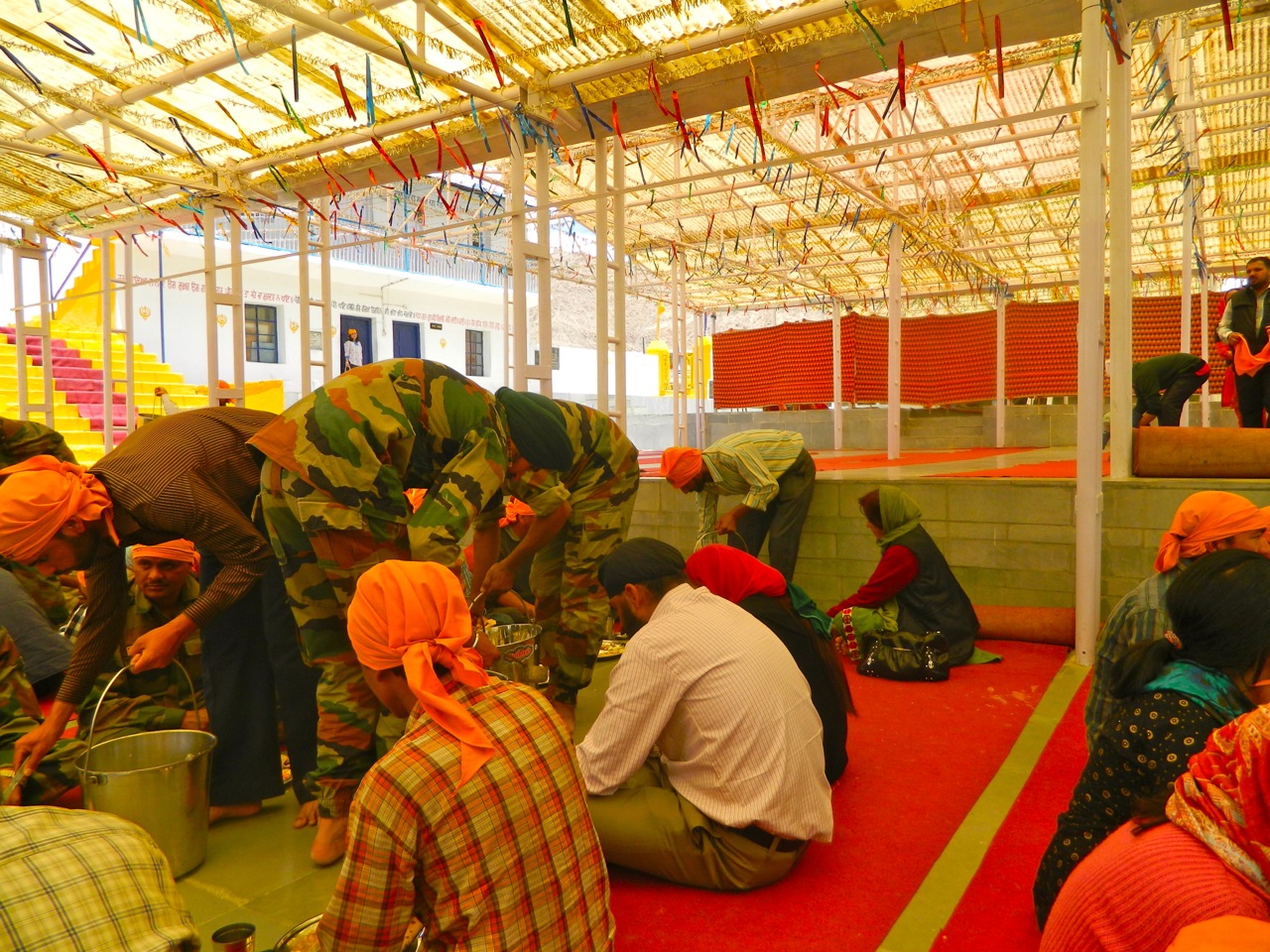
Visitors are welcome to volunteer in the langar seva (service). Many travelers choose to spend an hour helping serve food or washing dishes—an experience that offers a deeper connection to the gurudwara's community spirit.
Location and How to Reach
Gurudwara Pathar Sahib is strategically located on the Leh-Kargil highway (National Highway 1), approximately 25 kilometers from Leh town. The journey takes about 45 minutes to an hour by car or bike.
By Bike/Car: Rent a bike or car in Leh and take the Leh-Kargil road. The gurudwara is on the right side of the highway, clearly visible from the road. The drive itself is scenic, with the road winding through mountains alongside the Indus River. Riders continuing further along this route often treat it as the first stop on a full Leh to Kargil bike trip.
By Taxi: Taxis are available from Leh. Most drivers know Gurudwara Pathar Sahib well, as it's a popular stop on the way to Magnetic Hill and Sangam (confluence of Indus and Zanskar rivers).
En Route Visits: Gurudwara Pathar Sahib is usually visited as part of a circuit that includes Magnetic Hill (just 3 km ahead), Sangam (confluence point), and the Hall of Fame museum. It's best to hire a taxi for the entire day if you plan to visit all these attractions.
Best Time to Visit: The gurudwara is open year-round, but accessibility depends on road conditions. Summer (May to October) is ideal when roads are clear. Winter visits are challenging due to snow, though the gurudwara remains open.
Nearby Attractions
Magnetic Hill (3 km): Just a few kilometers ahead, this gravity hill creates an optical illusion where vehicles appear to roll uphill. It's a popular stop, and the two attractions can easily be visited together.
Sangam (8 km): The confluence of the Indus and Zanskar rivers offers spectacular views, especially in summer when the Zanskar's blue waters contrast with the Indus's muddy flow.
Hall of Fame (14 km): A museum maintained by the Indian Army showcasing Ladakh's culture and the Army's role in the region. It's an excellent place to learn about the Siachen Glacier and Kargil War, and pairs well with the Kargil War Memorial if you are continuing further along the highway.
Gurudwara Pathar Sahib sits at an altitude of 11,500 feet, so visitors should take it easy and stay hydrated to avoid altitude sickness. The gurudwara complex has prayer halls, the main shrine housing the sacred rock, langar facilities, and clean restrooms.
Practical Information for Visitors
Timings: The gurudwara is open from 6:00 AM to 7:00 PM daily. Morning and evening prayers are held, though visitors are welcome throughout the day.
Dress Code: As with all religious places, dress modestly. Cover your head before entering the main shrine. Scarves are available at the entrance if needed.
Photography: Photography is allowed in the complex but refrain from taking photos during prayer ceremonies. Respect devotees who may be meditating or praying.
Facilities: The gurudwara has clean restrooms, drinking water, and shoe storage. There's also a small shop where visitors can buy souvenirs and religious items.
Donations: There's no entry fee, but donations are accepted for the gurudwara's maintenance. Donation boxes are available in the complex.
A Spiritual Stop on the Highway
Gurudwara Pathar Sahib is more than just a religious site—it's an experience that embodies the essence of Sikhism: equality, service, and devotion. Whether you're a believer seeking blessings or a traveler curious about legends, this gurudwara welcomes all with open arms.
The sight of soldiers serving langar, the miraculous rock with its ancient imprint, and the breathtaking Ladakhi landscape combine to create a memory that stays with visitors long after they've left. For those journeying through Ladakh, a stop at Gurudwara Pathar Sahib is not just recommended—it's essential.
So the next time you find yourself on the Leh-Kargil highway, take a break. Pause for a prayer, sip hot tea served by a smiling soldier, and witness the rock that defied a demon. In doing so, you'll connect with a legend that has inspired faith for over five centuries.
Location
Frequently Asked Questions
Q1.How far is Pathar Sahib Gurudwara from Leh?
Q2.Who maintains the Pathar Sahib Gurudwara?
Q3.What is the story behind the sacred rock?
Q4.Is Langar available at Pathar Sahib?
Q5.Can we visit Pathar Sahib in winter?
Q6.What are the timings of Gurudwara Pathar Sahib?
Q7.Is there any entry fee to visit Pathar Sahib?
Q8.What should I wear when visiting Pathar Sahib?
Recommended For You

Photography Spots Ladakh: Best Views, Light, and Plan
Capture top photography spots in Ladakh with light-aware planning, route strategy, and safety-first movement tips.

Zoji La Pass Ladakh: Road Conditions, Best Time & Safety Tips
Complete Zoji La Pass Ladakh guide with road condition patterns, best crossing season, route planning, and safety essentials.

Hemis National Park Ladakh: Snow Leopard Tracking & Travel Info
Explore Hemis National Park Ladakh, home to the world's highest density of snow leopards. Discover wildlife, trekking & tracking in this Himalayan paradise.
Never Miss an Adventure
Get the latest trekking guides, travel tips, and exclusive offers delivered straight to your inbox.
