
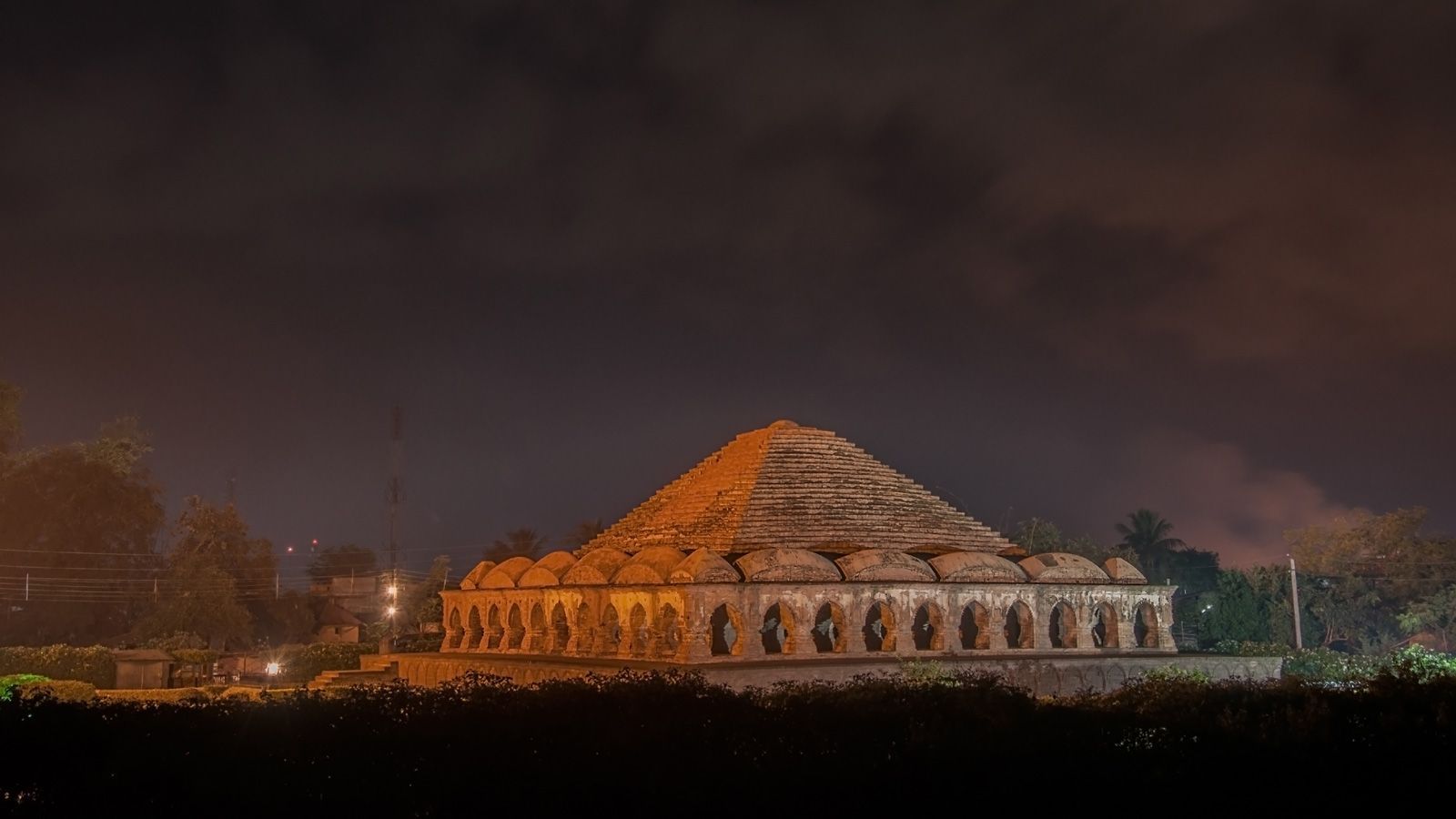
Historical Places in Bishnupur: Terracotta Temples & Heritage Spots

Rohan Malhotra
February 20, 2026
Explore historical places in Bishnupur! Discover terracotta temples, Malla kingdom heritage, architecture & complete travel guide to this Bengal treasure.
Historical Places in Bishnupur Guide
Bishnupur is one of eastern India's most distinctive heritage towns, known for terracotta temple architecture, Malla-era history, and craft continuity. Travelers searching for historical places in Bishnupur usually want both monument value and cultural context. The town is compact enough for focused exploration, but it still rewards careful pacing and thematic planning.
If your route begins from Kolkata, combine this trip with broader regional references like places to visit in Kolkata and temple comparisons such as Konark Sun Temple for better architectural perspective.
Why Bishnupur Is Historically Important
Bishnupur flourished under the Malla rulers and developed a unique architectural language using brick and terracotta reliefs. The monuments reflect devotional themes, social motifs, and local adaptation to material availability. This makes Bishnupur highly significant in Indian temple history because style here is both region-specific and technically innovative.
Unlike massive imperial capitals, Bishnupur offers a more readable town-scale heritage experience where temples, local neighborhoods, and living craft traditions remain connected.
Terracotta Temple Architecture: What to Observe
Look for curved cornice profiles, narrative panels, and repetitive decorative bands. Terracotta surfaces often depict mythological stories, processional scenes, and local motifs. This level of storytelling in baked clay is one of Bishnupur's strongest artistic signatures.
Because details are dense, first do a full visual scan and then return to panels section by section. This method helps avoid visual overload and improves interpretation quality.

Key Monument Clusters
Most travelers cover temple clusters in a single day, but heritage-focused visitors should keep additional time for comparative observation. A short checklist helps: plan form, facade narrative, panel depth, and restoration condition. This turns a sightseeing walk into structured heritage learning.
If you are short on time, prioritize one major temple, one secondary temple, and one local museum or craft interaction point. This gives balance across architecture and culture.
How to Reach Bishnupur
Bishnupur is reachable by rail and road from Kolkata and nearby urban centers. Railway options are popular for day and short overnight trips. Private road transfer gives more flexibility if you plan multiple rural or craft stops around the core town.
For efficient movement, finalize local transport before arrival. This saves time and helps avoid fragmented monument hopping.
Best Time to Visit
October to February is generally best for walking-based heritage visits in Bishnupur. Weather is more comfortable, and daylight conditions are suitable for panel photography. Summers are workable but can reduce on-foot endurance during midday.
Festival and event windows can add cultural energy, but crowd levels may increase. Choose based on whether your priority is atmosphere or detailed observation.

One-Day and Two-Day Itinerary Models
| Plan | Best For | Structure |
|---|---|---|
| One-Day | General travelers | Main temples + short craft/market stop |
| Two-Day | Heritage-focused visitors | Temple deep-dive + museum + craft immersion |
If possible, keep at least one evening and one morning in Bishnupur. Light variation alone improves both viewing and photography quality.
Craft and Cultural Continuity
Bishnupur is not only about monuments. Local terracotta craft and textile traditions continue to shape the town's identity. Including a craft interaction gives a fuller understanding of how historical aesthetics survive in contemporary practice.
Travelers should support genuine local makers and avoid rushed souvenir-only transactions. Quality engagement benefits both visitor experience and local heritage economy.

Photography Tips
Terracotta details respond best to side light, especially in morning and late afternoon. Midday sun can flatten relief depth. Capture both wide architectural frames and close motif studies for complete documentation.
Keep a stable stance and avoid touching fragile surfaces for close-up shots. Responsible distance helps preserve details for future visitors.
Common Mistakes to Avoid
- Rushing all temples in one quick loop
- Ignoring panel-level observation
- Skipping local craft context
- Underestimating weather impact on walking
- Using only one outdated source for timings
Most of these issues are solved by one rule: fewer stops, deeper observation.
Useful Internal Reading for Trip Planning
For city extension ideas, review hidden gems in Kolkata and temples in Kolkata. These help create a balanced heritage itinerary across urban and small-town formats.
You can also use regional planning guides to split your journey into architecture-focused and culture-focused days for better travel quality.
Final Take
Bishnupur is one of the best destinations in India for travelers who want high heritage density in a manageable town format. Its terracotta architecture, historical continuity, and living craft ecosystem make it uniquely rewarding.
Plan with patience, observe details, and combine monuments with cultural context. That approach gives the strongest return from a Bishnupur visit.
Extended Planning Notes
A common reason travelers under-enjoy this destination is over-compressed scheduling. Heritage exploration improves when you keep transit buffers, climate buffers, and one optional stop instead of forcing fixed minute-level plans. This destination works best when viewed as a contextual experience rather than a checklist item. Use realistic movement assumptions, especially if your group includes elders or children. A slower pace increases observation quality, reduces fatigue, and gives better decision-making for the second half of the day.
For stronger route continuity, pair this guide with ajanta and ellora caves and konark sun temple. These internal references help you connect architecture, local culture, and practical movement planning without repeating the same attraction type all day. In multi-stop routes, alternate high-effort and low-effort segments. This keeps energy stable and avoids the common pattern of early enthusiasm followed by rushed final stops.
Advanced Observation Checklist
- Start with macro layout before focusing on details
- Identify what is original, restored, or weathered
- Map movement paths and visitor pressure points
- Use two viewing passes: orientation pass and detail pass
- Take notes on interpretation, not just photos
This method is especially useful for travelers who want meaningful recall after the trip. Without structured observation, even major monuments can blur together. A short note-taking discipline can dramatically improve retention and storytelling quality.
Photo and Timing Strategy
For most locations, first light and late light are best for texture and depth. Midday can still work for documentation shots, but nuanced details are easier to capture in softer directional light. Keep one wide contextual frame, one medium narrative frame, and one close detail frame for each section. This simple three-frame model gives a complete visual record without overshooting.
If crowds are high, wait for flow gaps instead of forcing frames. Patience usually produces cleaner compositions and safer movement. Also avoid physically risky positions for dramatic angles. Strong storytelling images come more from composition discipline than from dangerous viewpoints.
Final Field Guidance
Before ending the visit, verify that you covered primary sections, essential context points, and one reflective pause to synthesize what you observed. If you still have time, use temples kolkata to decide your next stop based on effort level rather than popularity alone. This approach improves total trip quality and prevents late-day burnout.
The most successful heritage days are not the busiest ones. They are the ones where you understand the place, remember key details, and finish with enough energy for the next day. Plan accordingly, and this destination will deliver much stronger value.
Additional practical note: keep digital map backups, verify local timings close to visit date, and maintain a flexible one-hour buffer in your schedule. This small margin usually absorbs traffic, queue variation, or weather disruption without compromising core site quality.
Additional practical note: keep digital map backups, verify local timings close to visit date, and maintain a flexible one-hour buffer in your schedule. This small margin usually absorbs traffic, queue variation, or weather disruption without compromising core site quality.
Location
Frequently Asked Questions
Q1.Why is Bishnupur historically important?
Q2.What is the history of Bishnupur temples?
Q3.Who built the terracotta temples in Bishnupur?
Q4.How old are Bishnupur temples?
Q5.Best terracotta temples in Bishnupur?
Q6.What is special about Bishnupur temples?
Q7.How many temples in Bishnupur?
Q8.How to reach Bishnupur from Kolkata?
Recommended For You
Hidden Gems in Kolkata: Offbeat Lanes, Culture & Local Eats
Explore hidden gems in Kolkata with practical offbeat routes across heritage lanes, local markets, and less-touristy neighborhoods.
West Bengal in Monsoon: Best Destinations, Weather & Travel Tips
Explore West Bengal in monsoon. From Kolkata's charm to Darjeeling's mists, discover tea gardens, Durga Puja prep & hill station beauty.
Places to Visit Kolkata: Top 20 Attractions
Discover top places to visit Kolkata with landmarks, temples, museums, markets, food trails, and practical 2-3 day itinerary planning.
Never Miss an Adventure
Get the latest trekking guides, travel tips, and exclusive offers delivered straight to your inbox.
