
History of Bagalkot: Heritage, Dynasties and Monuments

Ananya Sharma
December 26, 2025
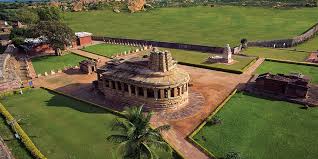
Explore the history of Bagalkot through Chalukya heritage, Badami, Aihole, Pattadakal, and key political transitions that shaped this North Karnataka district.
Introduction to the History of Bagalkot
Bagalkot, in North Karnataka, is one of the most important historical landscapes in peninsular India. While many travelers identify it through famous temple circuits such as Badami, Aihole, and Pattadakal, the deeper story of this district is much broader. It includes prehistoric settlement evidence, early trade links, dynastic statecraft, temple experimentation, medieval power shifts, and modern district formation in post-independence India.
If you are exploring the history of Bagalkot, the best approach is to read it as a long timeline rather than isolated monuments. This guide does that in practical sections: early origins, Chalukya era, later empires, colonial transition, and modern development, followed by a site-focused heritage plan. For trip routing, pair this with places to visit in Bagalkot before finalizing your itinerary.
Quick Timeline of Bagalkot
| Phase | Key Development | Why It Matters |
|---|---|---|
| Prehistoric and early historic period | Megalithic and stone-tool evidence in regional basin zones | Shows very early human settlement continuity |
| 6th to 8th centuries | Badami Chalukya rule with Badami as capital | Core era for temple and cave architecture |
| Medieval transitions | Control shifts through later Deccan powers | Political and cultural layering across region |
| Colonial era | Administrative restructuring under British framework | Infrastructure and governance patterns changed |
| Modern period | Bagalkot district formed in 1997 | Current district identity consolidated |
This structure helps explain why Bagalkot heritage feels dense and interconnected.
Ancient Period and Early Origins
Archaeological records from the broader Bagalkot region indicate human activity across long timescales, including stone-tool and megalithic traces in parts of the district landscape. These findings matter because they establish Bagalkot not merely as a medieval temple zone, but as an inhabited cultural region with deep chronological depth.
By early historic times, the region had strategic value due to river-linked corridors and Deccan trade movement. This geographic advantage later supported the rise of powerful dynastic centers, especially under the Chalukyas. In historical interpretation, Bagalkot is best understood as a crossroads: politically significant, culturally productive, and architecturally experimental.
Badami Chalukyas and the Golden Phase
The most defining chapter in Bagalkot Karnataka history is the Badami Chalukya era. From the 6th century onward, this dynasty established a major Deccan power center and shaped a lasting architectural tradition. Under rulers such as Pulakeshin I and Pulakeshin II, the state expanded politically while investing in monumental architecture, inscriptions, and temple-building programs.
What makes this period exceptional is not only military power but artistic innovation. The Chalukya realm became a laboratory where temple forms developed through experimentation in plan, style, and iconography. Aihole, Badami, and Pattadakal are still treated by historians as a connected sequence demonstrating this evolution.
- Political significance: one of the major early medieval powers of South India.
- Architectural significance: major experimentation in cave and structural temple forms.
- Cultural significance: religious patronage across multiple traditions.

Badami as a Capital Landscape
Badami's topography, marked by sandstone cliffs and defensible terrain, helped it function as an effective capital. The city's built environment integrated political power, religious architecture, and water systems. Today, Badami's cave temples remain the most visible symbols of this capital era, but the surrounding settlement pattern is equally important for historical understanding.
The Badami chapter should be read with nearby sites rather than in isolation. This is why serious heritage travelers treat Aihole-Badami-Pattadakal as one continuous civilizational corridor.
Detailed stop guide: Badami Caves.
Aihole and Pattadakal in Bagalkot Heritage History
Aihole is often described as an architectural workshop zone of early Chalukya temple design, while Pattadakal represents a high mature phase where northern and southern forms were harmonized in a refined ceremonial complex. Pattadakal's global recognition as a UNESCO World Heritage Site reflects this peak architectural significance.
For travelers, this means Bagalkot is not just a district with a few monuments; it is one of India's most important temple-architecture study regions. The three-site sequence reveals experimentation, refinement, and formal synthesis in a way that few heritage circuits can match.
- Aihole: broad variety of early temple forms and planning types.
- Pattadakal: mature ceremonial architecture and dynastic monumentality.
- Badami: capital context with cave and structural temple continuity.
Related guides: Aihole Temples Karnataka and Pattadakal Temples.
Medieval Power Shifts: Vijayanagara, Bahmani and Adil Shahi Influence
After the early Chalukya phase, the region entered longer medieval transitions shaped by competing Deccan powers. Governance structures, revenue systems, military priorities, and cultural patronage shifted over time. These transitions did not erase earlier heritage; instead, they layered new political memories over established sacred and settlement geographies.
In historical travel terms, Bagalkot's value lies in this accumulation. Monuments and urban traces in the region represent multiple eras rather than a single frozen period. This helps explain why local history narratives combine dynastic pride, religious memory, and regional identity in one continuous story.
Colonial Period and Administrative Reorganization
Under colonial-era governance frameworks, the region experienced administrative and infrastructural restructuring alongside broader shifts across the Bombay Presidency and surrounding territories. Local political authority transformed, but older heritage landscapes remained central to regional identity and scholarly interest.
Documentation and institutional mapping improved in this period, which later supported post-independence district-level administration and heritage management. For modern readers, this phase provides the bridge between dynastic history and contemporary civic geography.
Modern Bagalkot and District Formation
The modern Bagalkot district took its present administrative identity in 1997, when it was formed by reorganization from the earlier Vijayapura-linked arrangement. This matters because many travelers still read the heritage map through older administrative references. Contemporary Bagalkot now carries both a modern district role and one of the richest early-medieval heritage clusters in India.
Today, the district's public identity is shaped by three simultaneous layers: heritage tourism, agriculture and regional economy, and educational-institution growth. That mix gives Bagalkot a living context beyond monument visits.

Key Historical Monuments in Bagalkot District
| Site | Historical Layer | Best For | Typical Time Needed |
|---|---|---|---|
| Badami Caves | Chalukya capital era | Rock-cut architecture and iconography | 2-3 hours |
| Aihole Temple Cluster | Early temple experimentation | Architecture learners and long walks | 2-4 hours |
| Pattadakal | Mature Chalukya ceremonial architecture | UNESCO-level heritage interpretation | 1.5-3 hours |
A two-day circuit is usually better than trying to rush all three sites in one day.
Cultural Significance of Bagalkot Heritage
Bagalkot's historical significance is not limited to temple stones and royal dates. The district also reflects long continuity in language, craft traditions, devotional culture, and public memory. Local festivals, oral history, and everyday religious practice keep historical sites connected to living communities.
This living continuity is one reason heritage in Bagalkot feels authentic even to first-time visitors. You are not entering abandoned ruins only; you are entering a region where historical landscapes remain socially meaningful.
Conservation and Responsible Heritage Travel
Bagalkot's monuments are both globally important and physically fragile. Sandstone surfaces, exposed carvings, and open archaeological zones are sensitive to weathering and visitor pressure. Responsible behavior helps preserve these sites for future generations and improves your own visit quality.
- Do not touch carvings: oils and friction can accelerate surface damage.
- Avoid litter and plastic: open temple landscapes are vulnerable to accumulation.
- Respect protected zones: ropes and marked boundaries exist for conservation reasons.
- Use certified local guidance where possible: interpretation becomes richer and safer.
This conservation lens turns a regular trip into a more meaningful heritage experience.
Suggested Heritage Itinerary
1-Day Focused Circuit
- Morning: Badami caves and viewpoints
- Afternoon: Pattadakal temple group
- Evening: local town food stop
2-Day Deep Circuit
- Day 1: Badami + Pattadakal
- Day 2: Aihole cluster with slower exploration
For meals and breaks, combine with places to eat in Bagalkot and street food in Bagalkot.
How to Reach Main Heritage Sites
Bagalkot's core monuments are best covered by road. Travelers typically base themselves in Badami or Bagalkot town and use private cabs or self-drive routes for day circuits. Distances between Badami, Aihole, and Pattadakal are manageable, but local road speed and stop durations can extend total travel time. Start early and keep buffer slots between monuments to avoid rushed visits.
If you are entering from other Karnataka hubs, combine this leg with a broader state itinerary for smoother transfers and overnight planning.
Travel Tips for History-Focused Visitors
- Start early to avoid heat and improve monument viewing comfort.
- Carry water and sun protection; many zones are open and exposed.
- Use local guides where available for architectural context.
- Avoid touching carvings or climbing protected sections.
- Keep enough transfer buffer between Badami, Aihole, and Pattadakal.
For broader state planning, see places to visit in Karnataka.
Conclusion
The history of Bagalkot is a rare combination of deep antiquity, dynastic brilliance, and living regional identity. Its most famous chapter, the Badami Chalukya era, made the district globally significant through temple and cave architecture. But the wider story includes prehistoric traces, medieval transitions, colonial restructuring, and modern district formation.
If you approach Bagalkot as a timeline rather than a checklist, every site becomes more meaningful. That is the difference between quick sightseeing and true heritage travel in North Karnataka.
For researchers, students, and culturally curious travelers, Bagalkot offers one of the clearest ground-level lessons in how Indian temple architecture evolved across phases while remaining tied to living communities and regional identity.

Location
Frequently Asked Questions
Q1.What is the history of Bagalkot?
Q2.How old is Bagalkot's heritage landscape?
Q3.What is Bagalkot most famous for historically?
Q4.Who ruled Bagalkot in its most important historical phase?
Q5.What is the significance of Pattadakal in Bagalkot district?
Q6.Are Aihole and Badami connected to the same historical period?
Q7.How can I reach major historical sites in Bagalkot?
Q8.How much time is ideal for a Bagalkot heritage trip?
Recommended For You
Places to Eat in Bagalkot: Local Food, Family Dining & Cafes
Explore places to eat in Bagalkot with North Karnataka thalis, local eateries, sweets, and practical dining tips for families and road-trippers.

Street Food Bagalkot: Local Eats, Stalls, and Tips
Discover street food in Bagalkot with top snack picks, stall timing tips, and practical hygiene guidance for a better local food walk.
Places to Visit in Bagalkot: Karnataka Heritage
Best places to visit in Bagalkot Karnataka. Badami caves, Pattadakal temples, Aihole & more. Complete travel guide.
Never Miss an Adventure
Get the latest trekking guides, travel tips, and exclusive offers delivered straight to your inbox.
