
Jantar Mantar Delhi: Timings, Entry Fee & Must-See Instruments

Rohan Malhotra
November 20, 2025
Explore Jantar Mantar Delhi - UNESCO astronomical observatory with timings, entry fee, instruments & visitor guide. Built by Maharaja Jai Singh II in 1724.
Introduction to Jantar Mantar Delhi
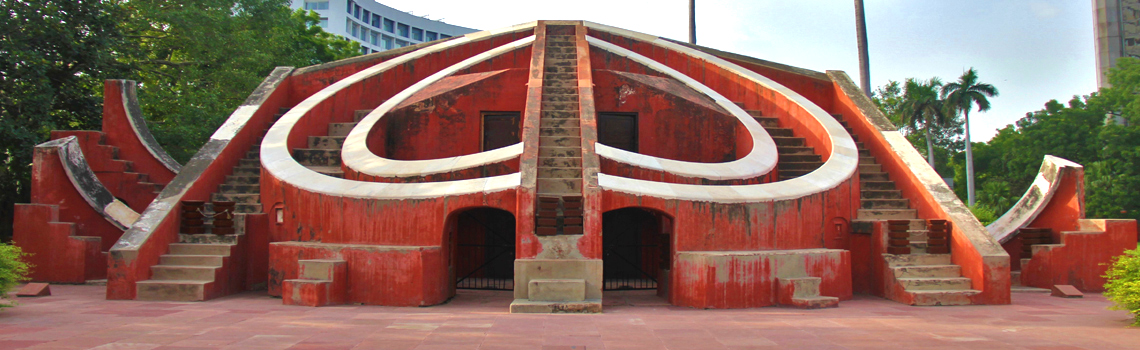
Jantar Mantar Delhi stands as one of the world's most remarkable astronomical observatories, showcasing India's ancient scientific wisdom through massive stone instruments. Built in 1724 by Maharaja Jai Singh II, this UNESCO World Heritage Site represents a fascinating blend of astronomy, architecture, and mathematical precision. Located in the heart of New Delhi near Connaught Place, the observatory continues to captivate visitors with its giant sundials and celestial measurement devices.
What makes Jantar Mantar truly extraordinary is that these instruments, constructed nearly 300 years ago, can still measure time and track celestial bodies with remarkable accuracy. The name itself translates to "calculation instrument," perfectly describing its purpose. For travelers interested in science, history, or architecture, this site offers a unique glimpse into 18th-century Indian astronomy that rivals modern observatories in its ingenuity.
History and Maharaja Jai Singh II
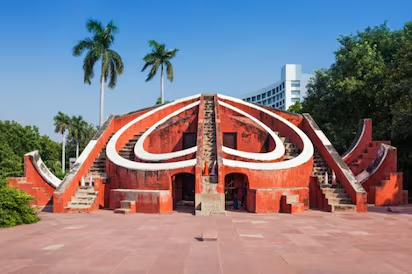
The story of Jantar Mantar begins with Maharaja Sawai Jai Singh II (1686-1743), the visionary ruler of Jaipur who was not just a king but also a brilliant astronomer and mathematician. Recognizing the limitations of existing astronomical calculations, Jai Singh II decided to build observatories that would provide more accurate data for predicting eclipses, planetary movements, and celestial events.
The Delhi observatory was the first of five Jantar Mantars constructed between 1724 and 1735. The others were built in Jaipur, Ujjain, Varanasi, and Mathura. Delhi served as the prototype, and its success led to the construction of the more elaborate Jaipur observatory, which remains the best-preserved today. All five observatories were part of Jai Singh II's ambitious project to create a network of astronomical stations across India.
Historical Context and Construction
Built during the Mughal era under the patronage of Emperor Muhammad Shah, Jantar Mantar Delhi represents a fascinating period when Indian rulers were actively promoting scientific inquiry. The observatory's location in Delhi was strategic, placing it at the center of political power while allowing scholars from across the empire to study and collaborate.
The construction involved skilled artisans who carved massive stone structures with precise angles and measurements. Each instrument was carefully aligned with celestial coordinates, demonstrating sophisticated understanding of astronomy and mathematics. The use of local materials like red sandstone ensured durability while creating structures that have withstood centuries of weather and use.
UNESCO Recognition and Preservation
In 2010, the Jantar Mantar in Jaipur was inscribed as a UNESCO World Heritage Site, bringing attention to all five observatories. While Delhi's Jantar Mantar hasn't received individual UNESCO status, it is recognized as part of this exceptional ensemble of astronomical observatories. The Archaeological Survey of India maintains and preserves the site, ensuring these scientific marvels continue to educate and inspire visitors.
Over the centuries, the observatory has undergone several restoration efforts. By the late 19th century during British rule, it had fallen into disrepair, but preservation efforts in the 20th and 21st centuries have restored much of its former glory. Today, it stands as a testament to India's rich scientific heritage.
| Historical Timeline | Event |
|---|---|
| 1686-1743 | Life of Maharaja Jai Singh II, founder of Jantar Mantar |
| 1724 | Construction of Delhi Jantar Mantar completed |
| 1724-1735 | All five Jantar Mantar observatories built across India |
| 1867 | Observatory reported in disrepair during British era |
| 20th Century | Restoration and preservation efforts initiated |
| 2010 | Jaipur Jantar Mantar designated UNESCO World Heritage Site |
Jantar Mantar Timings and Entry Information
Planning your visit to Jantar Mantar Delhi requires understanding the timings and entry fees to make the most of your experience. The observatory is managed by the Archaeological Survey of India and maintains regular visiting hours throughout the year.
| Detail | Information |
|---|---|
| Opening Days | All days except Friday |
| Daily Timings | 9:00 AM - 6:00 PM |
| Indian Citizens | ₹30 per person |
| Foreign Tourists | ₹500 per person |
| Children (below 15) | Free entry |
| Audio Guide | ₹150 (available in multiple languages) |
| Video Camera | ₹100 extra charge |
| Photography | Allowed, no extra charges |
Best Time to Visit
The ideal time to visit Jantar Mantar Delhi depends on your priorities. For the best experience, arrive between 9:00 AM and 11:00 AM when the site is less crowded and the light is good for photography. Alternatively, visit between 4:00 PM and 6:00 PM for afternoon exploration with softer light.
Winter months (October to March) offer the most comfortable weather, with pleasant temperatures that make exploring the open-air observatory enjoyable. Summer visits are possible but should be planned for early morning to avoid the intense Delhi heat. Monsoon season offers dramatic skies but be prepared for rain.
Duration and Planning
Allocate 1 to 2 hours for a thorough visit to Jantar Mantar. This allows time to examine each instrument, read the informational plaques, and perhaps hire a guide for deeper understanding. Astronomy enthusiasts might want to spend more time studying the instruments' functions.
Audio guides are available for rent and provide detailed explanations of each instrument's purpose and operation. These are particularly helpful for visitors without prior astronomy knowledge. Professional guides are also available for hire at the entrance, typically charging between ₹200-300 for a comprehensive tour.
Major Astronomical Instruments at Jantar Mantar
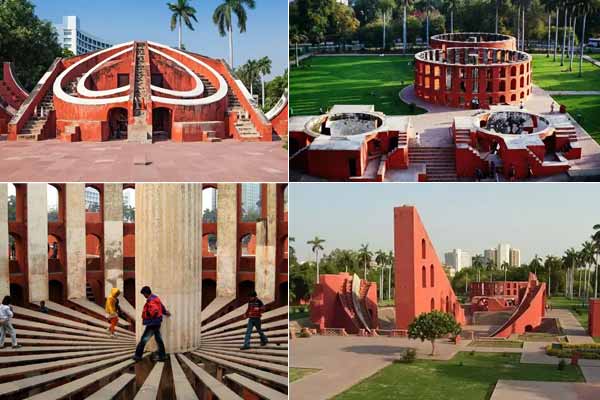
The Jantar Mantar Delhi houses 13 massive astronomical instruments, each designed for specific calculations and measurements. These structures represent the pinnacle of 18th-century astronomical engineering and continue to function today.
Samrat Yantra - The Great Sundial
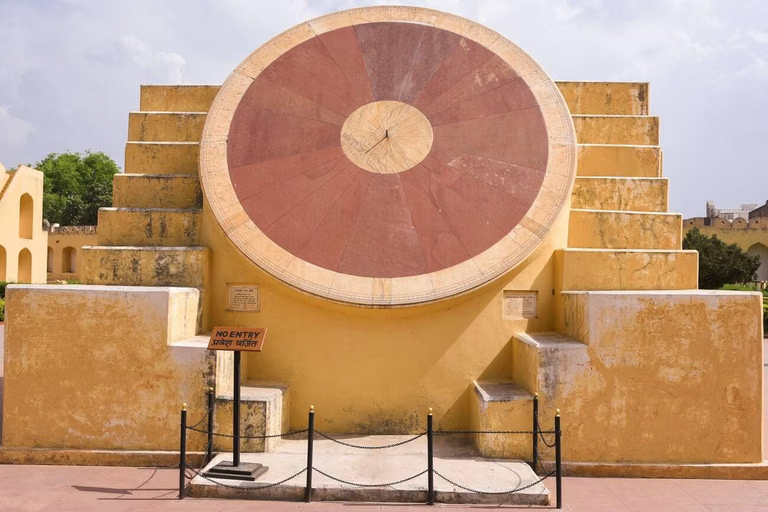
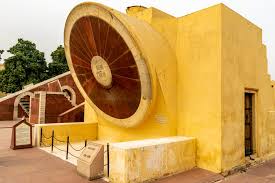
The Samrat Yantra is the most prominent instrument at Jantar Mantar Delhi and one of the largest sundials in the world. Standing 70 feet tall, this massive triangular structure can measure time with an accuracy of within 2 seconds, a remarkable achievement for its era.
The instrument works by casting a shadow on carefully calibrated scales. The triangular gnomon (the part that casts the shadow) is aligned with Earth's axis, while the quadrant scales measure the shadow's position. By reading the shadow's location, observers can determine the local time, solar declination, and even predict equinoxes.
The precision of the Samrat Yantra is particularly impressive when you consider it was built using only stone, masonry, and manual labor. The alignment and calibration required sophisticated understanding of astronomy and mathematics. Today, visitors can still see the shadow moving across the scales, demonstrating the instrument's continued functionality.
Jai Prakash Yantra - The Instrument of Reflection
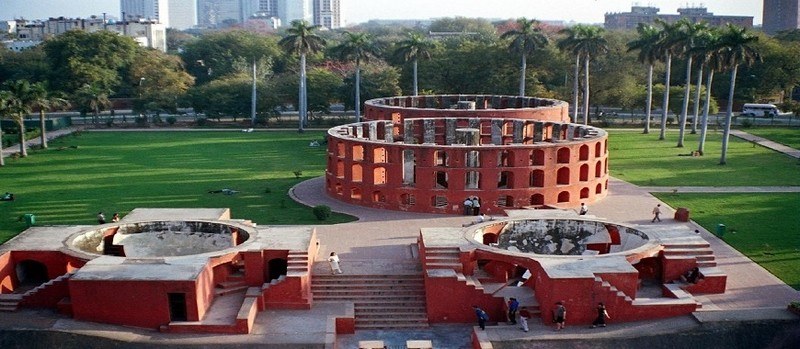
The Jai Prakash Yantra consists of two large concave hemispheres sunk into the ground. These bowl-shaped structures represent inverted celestial spheres, allowing astronomers to measure the coordinates of stars, planets, and other celestial bodies.
The interior surfaces of the hemispheres are marked with graduated arcs and scales. By placing a sighting instrument at the center and observing the reflection or shadow of a celestial object, astronomers could determine its altitude and azimuth. This dual-hemisphere design allowed measurements to be taken regardless of the celestial body's position in the sky.
The innovation of the Jai Prakash Yantra lies in its design. By creating concave surfaces, Jai Singh II created instruments that could track any celestial body at any time, overcoming the limitations of flat instruments. This design was so effective that similar instruments were installed at other Jantar Mantar observatories.
Mishra Yantra - The Composite Instrument
The Mishra Yantra is a complex structure combining multiple instruments in one design. This space-efficient approach allowed Jai Singh II to maximize the observatory's capabilities within limited space. The instrument includes four smaller instruments arranged together, each serving different purposes.
Components of the Mishra Yantra include an equatorial ring for tracking celestial movements, dial instruments for timekeeping, and various scales for different calculations. This multi-purpose design represents Jai Singh II's practical approach to observatory construction—maximizing scientific output while minimizing space requirements.
The composite nature of the Mishra Yantra demonstrates the sophisticated understanding of multiple astronomical phenomena. Rather than building separate instruments for each calculation, Jai Singh II integrated them into single, efficient structures.
Other Important Instruments
Beyond the major instruments, Jantar Mantar Delhi houses several other remarkable devices:
- Ram Yantra: Two cylindrical structures used for measuring altitude and azimuth of celestial bodies. These instruments complement the Jai Prakash Yantra and provide additional measurement capabilities.
- Nadivalaya Yantra: An equatorial dial designed to measure time based on the sun's position. This instrument was particularly useful for determining solar noon.
- Rashivalaya Yantra: Twelve triangular structures representing the twelve zodiac signs. These instruments allowed measurements of celestial bodies in different zodiacal positions.
- Dakshinottara Bhitti: A meridian line instrument for measuring when celestial objects cross the meridian.
Scientific Significance and Architecture
Jantar Mantar Delhi represents a remarkable achievement in the history of astronomy. The instruments here demonstrate that 18th-century Indian astronomers had developed sophisticated methods for celestial observation that rivaled European astronomy of the same period.
Astronomical Achievements
The primary achievement of Jantar Mantar was precise timekeeping and celestial tracking. The Samrat Yantra could measure time to within seconds, a precision that was extraordinary for an instrument made entirely of stone. This accuracy allowed astronomers to predict eclipses, determine planetary positions, and create accurate calendars.
The observatory also contributed to the correction of existing astronomical tables. By providing accurate measurements, Jai Singh II was able to identify errors in contemporary astronomical calculations and develop more precise ephemerides (tables showing positions of celestial bodies).
Mathematical and Engineering Innovation
The construction of Jantar Mantar required advanced mathematical understanding. Each instrument's dimensions, angles, and scales were calculated with precision. The alignment with celestial coordinates required knowledge of spherical trigonometry and coordinate systems.
From an engineering perspective, the observatory is remarkable for its structural stability. The massive stone instruments have withstood earthquakes, weather, and centuries of use. The use of interlocking stone masonry and careful foundation work ensured the instruments would maintain their precise alignments over time.
Architecture and Design Philosophy
The architecture of Jantar Mantar follows a philosophy of form following function. Every element of the instruments serves a scientific purpose. The monumental scale wasn't chosen for grandeur but was necessary for accuracy—larger instruments can measure smaller angular differences.
The materials used, primarily local red sandstone and marble, were chosen for durability and workability. The stone can be carved to precise measurements while withstanding Delhi's extreme weather. The minimal decorative elements reflect the scientific purpose—ornamentation was secondary to accuracy.
The layout of the observatory follows a logical organization. Instruments are arranged for ease of use and to minimize interference between measurements. The circular design of some instruments and the linear arrangement of others reflect the different astronomical principles they embody.
| Aspect | Details |
|---|---|
| Total Instruments | 13 major instruments |
| Primary Material | Red sandstone and marble |
| Construction Technique | Interlocking stone masonry |
| Design Philosophy | Form follows scientific function |
| Measurement Accuracy | Within 2 seconds for timekeeping |
| Structural Stability | Weather-resistant, earthquake-resistant |
How to Reach Jantar Mantar Delhi
Jantar Mantar's central location makes it easily accessible by various modes of transportation. Its proximity to Connaught Place, one of Delhi's major commercial hubs, means visitors can combine their observatory visit with shopping, dining, and other attractions.
By Metro (Recommended)
The Delhi Metro is the most convenient and reliable way to reach Jantar Mantar. The nearest metro station is Patel Chowk on the Violet Line, which is just a 5-minute walk from the observatory. From Connaught Place (Rajiv Chowk station), it's a short ride on the Yellow Line followed by a transfer or a quick walk.
The metro is air-conditioned, avoids Delhi's notorious traffic, and offers predictable travel times. For visitors coming from other parts of Delhi-NCR, the metro network provides seamless connectivity to Patel Chowk.
By Bus
Multiple DTC bus routes pass near Jantar Mantar, including routes 234, 410, and 503. Bus stops are located on Sansad Marg (Parliament Street), just a short walk from the observatory. Buses are the most economical option but can be crowded during peak hours.
By Auto-Rickshaw or Taxi
Auto-rickshaws and taxis are readily available throughout Delhi. From Connaught Place, an auto-rickshaw ride to Jantar Mantar takes about 10 minutes and costs approximately ₹30-50. Ride-sharing apps like Uber and Ola also operate extensively in the area.
By Private Vehicle
For those driving, parking is available near Connaught Place and Parliament Street. However, parking can be challenging during peak hours, and traffic congestion in Central Delhi can be severe. Using public transport or ride-sharing is generally recommended.
From Key Locations
- From Indira Gandhi International Airport: 45 minutes via NH8 and metro
- From New Delhi Railway Station: 20 minutes by taxi or 15 minutes by metro
- From Old Delhi (Chandni Chowk): 25 minutes by taxi or 20 minutes by metro
- From Connaught Place: 10-minute walk or 5-minute auto ride
Nearby Attractions and Itinerary Planning
Jantar Mantar's central location makes it an excellent starting point for exploring other Delhi attractions. Combining your visit with nearby sites creates a comprehensive experience of India's capital city.
Immediate Nearby Attractions
Connaught Place: Just a 5-minute walk away, Connaught Place is Delhi's iconic circular market offering shopping, dining, and entertainment. After your observatory visit, explore the Inner Circle's branded stores, enjoy lunch at historic restaurants, or browse through Janpath market for handicrafts.
Parliament House and Rashtrapati Bhavan: Located on Sansad Marg near Jantar Mantar, these government buildings are impressive from the outside. While entry requires special permission, driving or walking past them provides views of India's democratic institutions.
National Museum: Approximately 1 kilometer from Jantar Mantar on Janpath, the National Museum houses an impressive collection spanning India's history. Art and history enthusiasts should not miss this treasure trove.
Heritage Attractions
For a heritage-focused itinerary, combine Jantar Mantar with other historical monuments. India Gate, Delhi's iconic war memorial, is approximately 2 kilometers away and can be visited in the same day. The Red Fort in Old Delhi offers a contrast with Mughal architecture, while Qutub Minar showcases early Islamic architecture.
Historical places in Delhi offer numerous options for extended exploration. The observatory fits well into both New Delhi and Old Delhi heritage circuits, making it a versatile addition to any itinerary.
Sample Itinerary: Heritage Day in Central Delhi
Here's how to plan a perfect day around Jantar Mantar:
- 9:00-11:00 AM: Explore Jantar Mantar, hire a guide or use audio guide
- 11:00 AM-1:00 PM: Walk to Connaught Place, shop and explore
- 1:00-2:00 PM: Lunch at a restaurant in Connaught Place
- 2:00-4:00 PM: Visit National Museum on Janpath
- 4:00-6:00 PM: Head to India Gate for sunset and evening illumination
- 6:00 PM onwards: Enjoy street food around India Gate or dinner in CP

Visitor Tips and Practical Guidelines
Make the most of your Jantar Mantar visit with these practical tips and guidelines gathered from experienced travelers and astronomy enthusiasts.
Best Practices
- Visit early or late: Early morning (9-11 AM) offers cooler weather and fewer crowds. Late afternoon (4-6 PM) provides beautiful golden light for photography.
- Hire a guide: While informational plaques are present, a guide can explain the complex instruments' functions in detail, greatly enhancing your understanding and appreciation.
- Use audio guides: If a human guide isn't available, audio guides in multiple languages offer comprehensive explanations of each instrument.
- Wear comfortable shoes: The observatory involves walking on uneven stone surfaces and climbing steps to view instruments from different angles.
- Carry water: Delhi's weather can be dehydrating, especially in summer. Bring your own water bottle as vendors may not always be available inside.
Photography Tips
Jantar Mantar is excellent for photography, with its geometric structures and dramatic shadows. Visit during golden hour (shortly after sunrise or before sunset) for the most striking images. The interplay of light and shadow across the instruments creates powerful compositions.
For night photography, note that the observatory closes at 6:00 PM, so late evening shots aren't possible. However, late afternoon light can be dramatic. Use a wide-angle lens to capture the scale of the instruments, and consider including people in your shots for scale reference.
Weather Considerations
- Winter (October-March): Ideal weather. Mornings can be cool, so bring a light jacket. Perfect for exploring and photography.
- Summer (April-June): Extreme heat. Visit only early morning (before 10 AM). Carry water, wear sunscreen, and seek shade when possible.
- Monsoon (July-September): Rain and humidity. Check weather forecast and carry an umbrella. The observatory has limited covered areas.
Group Visits and Educational Tours
Jantar Mantar is popular for school field trips and educational tours. Large groups should consider booking in advance and arriving early to avoid crowds. The site is particularly valuable for students of astronomy, mathematics, and history, offering tangible examples of scientific principles.
Accessibility
Wheelchair access is limited at Jantar Mantar due to the stone pathways and steps. Visitors with mobility issues should contact the Archaeological Survey of India for specific accessibility information before visiting.
Respect and Etiquette
Remember that Jantar Mantar is a scientific and historical monument. Maintain decorum by keeping noise levels low, especially when guides are conducting tours. Respect the instruments—climbing on them is prohibited as it can damage these centuries-old structures.
Final Take
Jantar Mantar Delhi is more than just a collection of stone structures—it's a testament to India's rich scientific heritage and the ingenuity of 18th-century astronomers. Whether you're a science enthusiast, history buff, or curious traveler, the observatory offers a unique experience that bridges ancient wisdom and modern understanding.
The instruments' continued functionality demonstrates that good design and precise engineering can stand the test of time. As you walk among these massive structures, consider that they were built before modern technology, yet can still measure celestial phenomena with remarkable accuracy.
Combine your visit with nearby attractions like Connaught Place for a full day of exploration, or pair it with other historical monuments in Delhi for a comprehensive heritage experience. Jantar Mantar Delhi deserves a place on every visitor's itinerary—it's not just about observing ancient instruments, but about appreciating the scientific spirit that created them.
Location
Frequently Asked Questions
Q1.What is Jantar Mantar Delhi?
Q2.What are the timings of Jantar Mantar Delhi?
Q3.What is the entry fee for Jantar Mantar Delhi?
Q4.When was Jantar Mantar built?
Q5.What is Samrat Yantra used for?
Q6.How many instruments are in Jantar Mantar?
Q7.What is the purpose of Jantar Mantar?
Q8.Is Jantar Mantar still functional?
Q9.How much time is needed to visit Jantar Mantar?
Q10.How to reach Jantar Mantar Delhi?
Q11.Is photography allowed at Jantar Mantar?
Q12.What is the best time to visit Jantar Mantar?
Q13.Who built Jantar Mantar and why?
Recommended For You
Best Places to Visit in Delhi: Monuments, Markets & Day Plans
Explore the best places to visit in Delhi including Red Fort, India Gate, Qutub Minar, Humayun's Tomb, Lotus Temple & Akshardham. Complete travel guide with timings, entry fees, and practical tips.
Qutub Minar Delhi: Complete Guide to UNESCO World Heritage Site
Explore Qutub Minar Delhi - tallest brick minaret & UNESCO site. Discover 800 years of Islamic architecture, the mysterious Iron Pillar & Delhi heritage.
Red Fort Delhi: Ticket Price, Timings, Metro Route & Sound Show
Discover Red Fort Delhi - UNESCO World Heritage Site. Complete visitor guide with timings, tickets, sound show details, metro route, and Old Delhi itinerary tips.
Never Miss an Adventure
Get the latest trekking guides, travel tips, and exclusive offers delivered straight to your inbox.
