
Jhulta Minara Ahmedabad: Mystery, History and Timings

Neha Kapoor
January 19, 2026
Explore Jhulta Minara in Ahmedabad with history, mystery, timings, architecture, how to reach, and practical tips for planning a smart heritage visit.
Introduction: The Shaking Minarets of Ahmedabad
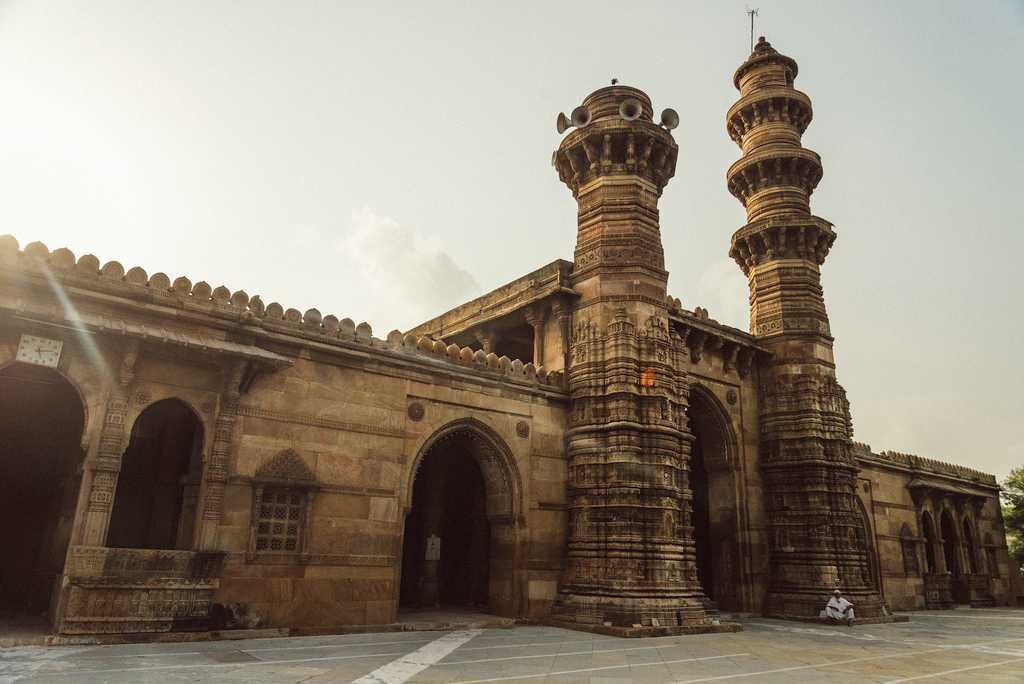
Jhulta Minara in Ahmedabad, also known as the Shaking Minarets, is one of Gujarat's most discussed architectural mysteries. The surviving twin minarets are associated with the ruins of Sidi Bashir Mosque near Kalupur railway side. For generations, travelers have been fascinated by one unusual claim: if one minaret is shaken, the other responds with vibration while the connecting structure appears relatively stable. Whether viewed as engineering brilliance, structural resonance, or historical legend, the monument has remained a signature heritage point in old Ahmedabad.
Today, the site is best approached as a protected historical structure rather than an interactive demonstration point. Entry for climbing and shaking activity is restricted to preserve the monument. Even then, the place remains worth visiting for its carvings, urban context, and historical importance in understanding medieval Ahmedabad's architectural experimentation. This guide covers history, mystery, architecture, timings, location access, and practical visitor planning.
History and Origins of Jhulta Minara
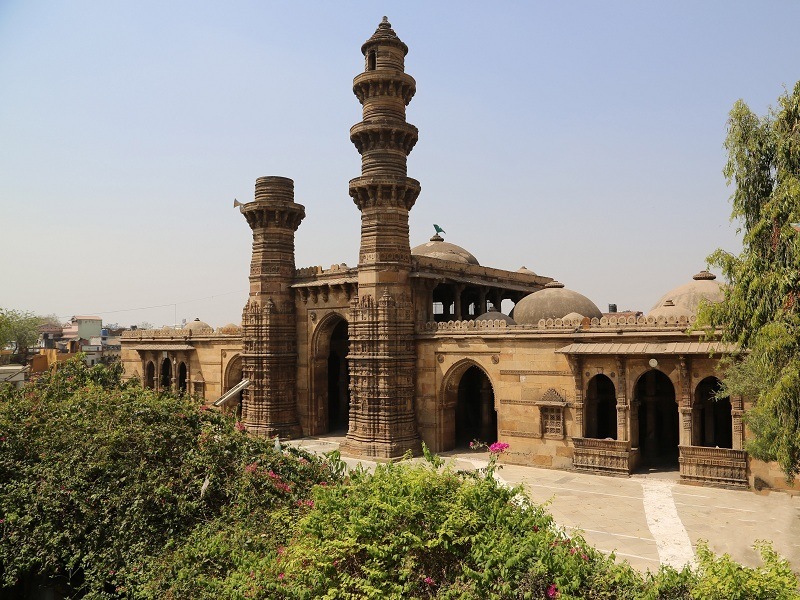
Most commonly cited historical narratives link the structure to Sidi Bashir and the late Gujarat Sultanate period. Some accounts connect the monument to the reign window around the 15th century, while interpretations vary on exact patronage attribution between Sidi Bashir and nobles associated with the regional court. What is broadly accepted is that the original mosque complex suffered major damage in later conflicts, leaving behind the iconic gateway section and two minarets that travelers see today.
The monument's survival in partial form is important. Instead of a fully preserved mosque, Jhulta Minara presents a fragment of history: a surviving engineered gateway that outlived the larger structural body. This incomplete survival is one reason the site feels mysterious; visitors encounter the most technically intriguing part without the full context of the original complex layout.
Heritage discussions around Ahmedabad often include Jhulta Minara alongside old-city monuments because it represents a rare intersection of Indo-Islamic form, civic memory, and unresolved structural behavior. If you are planning a broader old-city circuit, combine this site with Sidi Saiyyed Mosque Ahmedabad and Bhadra Fort Ahmedabad for better historical continuity.
The Mystery: Why Are They Called Shaking Minarets?
The nickname Jhulta (shaking/swinging) comes from observations that vibration in one tower seemed to reflect in the other. Historical travel writing and local oral narratives repeated this phenomenon for decades, and it became central to the monument's identity. Engineers and historians have proposed multiple explanations such as resonance transfer, layered masonry response, and geometry-led vibration behavior, but no universally accepted single explanation dominates public discussion.
One practical point is clear for modern visitors: preservation now comes first. Because of safety and heritage protection concerns, public access for physically testing the shaking behavior is not allowed. So the site experience has shifted from demonstration to observation. You visit Jhulta Minara to appreciate the surviving architectural form, not to reproduce historical experiments.
This change is positive for conservation. Many historic structures in dense cities degrade faster under direct mechanical interference. Restricting interaction improves the chance that future generations can still study and admire these minarets.
Architecture and Structural Design
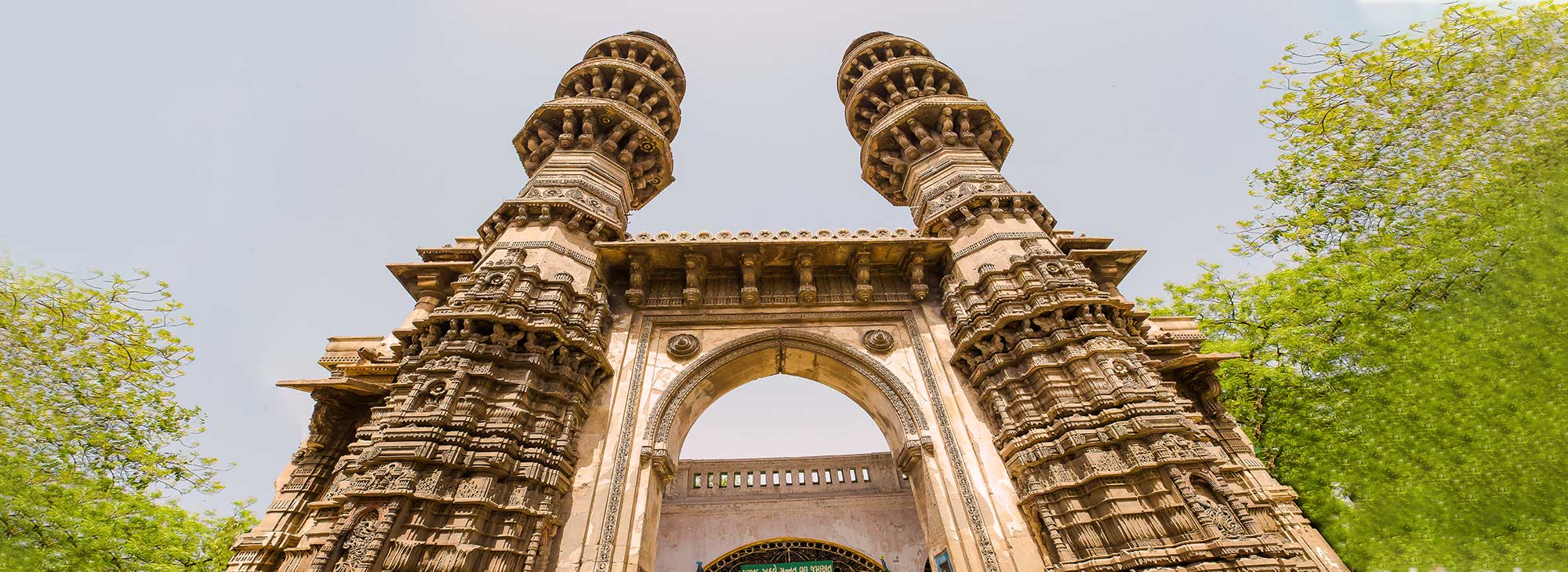
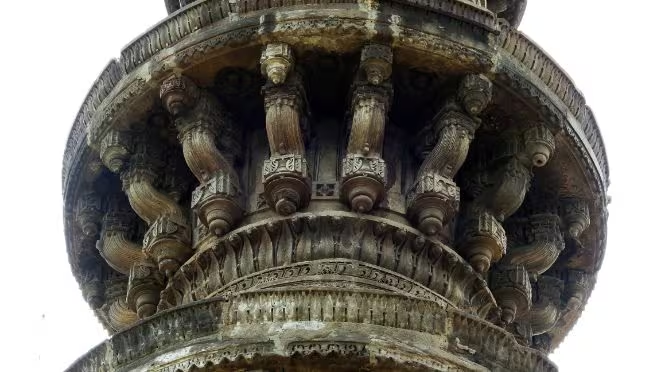
Jhulta Minara is valued not only because of the shaking legend but also for its craft details. The twin minarets rise with tiered balcony-like projections and decorative bands that reflect Indo-Islamic aesthetic vocabulary used in medieval Gujarat. Carved details, rhythmic vertical composition, and proportional balance still stand out despite partial ruin conditions.
Architectural observers often note that the surviving gateway-plus-minaret arrangement creates a visually strong frame against the surrounding urban environment. The monument is close to transit infrastructure, yet once you stand near it and focus on stonework patterns, the historical character becomes prominent.
Even without climbing access, you can study:
- Balcony ring proportions on each tier.
- Decorative carving rhythm along vertical surfaces.
- How the two minarets frame the central arched section.
- Weathering patterns that reveal age and exposure.
Sidi Bashir Mosque Connection
Jhulta Minara is historically linked to the Sidi Bashir Mosque ruins. While the full mosque body no longer survives in complete form, the minaret gateway became the identity anchor of the site. This often leads to naming variation in public use: some references say Sidi Bashir Mosque, others say Jhulta Minara, and many tourism descriptions use both together.
For readers researching the site, this dual naming can cause confusion. A practical approach is to treat Jhulta Minara as the popular visual landmark and Sidi Bashir Mosque as the historical parent structure context. Both refer to the same heritage location cluster near old Ahmedabad's transport core.
Jhulta Minara Timings and Entry Information
Timings can vary by local management conditions, security restrictions, and site access controls. Many tourism listings show daytime access windows, and entry is generally viewed from outside/ground level rather than as an interior climb experience. Because public information can change, confirm current visit timing before planning a strict schedule.
| Visitor Factor | Typical Situation | Planning Advice |
|---|---|---|
| Entry Fee | Commonly listed as free viewing | Keep small cash anyway for local transport |
| Access Mode | Ground-level observation | Do not expect climbing permission |
| Best Time Slot | Morning or late afternoon | Better light and lower heat stress |
Since this is a heritage-sensitive site, avoid relying on outdated social clips that show old interaction methods no longer permitted.
Best Time to Visit
For Ahmedabad heritage walks, the most comfortable season is usually October to February. Summer afternoons can be harsh, especially if you are combining multiple open-air stops in one day. Morning sessions are better for both weather and photography, while evening visits can be paired with old-city food plans.
If you are building a one-day old Ahmedabad heritage route, keep Jhulta Minara as an early or mid-stop and avoid long idle waits in peak midday heat. The visit itself is usually short, so it works best in combination with nearby landmarks.
How to Reach Jhulta Minara
Jhulta Minara is located close to Ahmedabad Junction (Kalupur side), which makes access relatively easy for rail travelers. Because the site lies in an active city zone, local traffic can influence travel time more than distance.
- From Ahmedabad Junction: very short transfer range by walk/auto depending on entry point.
- From airport side: use cab and keep buffer for traffic.
- By local transport: auto-rickshaws and app cabs are practical.
If you are arriving by train and leaving the same day, this can be one of the easiest heritage stops to include without long detours.
Nearby Places to Combine in One Heritage Circuit
Jhulta Minara works best as part of a cluster, not as a standalone half-day destination. Good combinations include:
Sidi Saiyyed Mosque Ahmedabad for iconic jali heritage.
Manek Chowk Ahmedabad for food and old-city atmosphere.
Adalaj Stepwell if you are extending toward stepwell architecture.
Sabarmati Ashram for a contrasting modern-national history layer.
You can also use things to do in Ahmedabad to structure a full day by travel direction rather than random hopping.
Photography and Visitor Tips
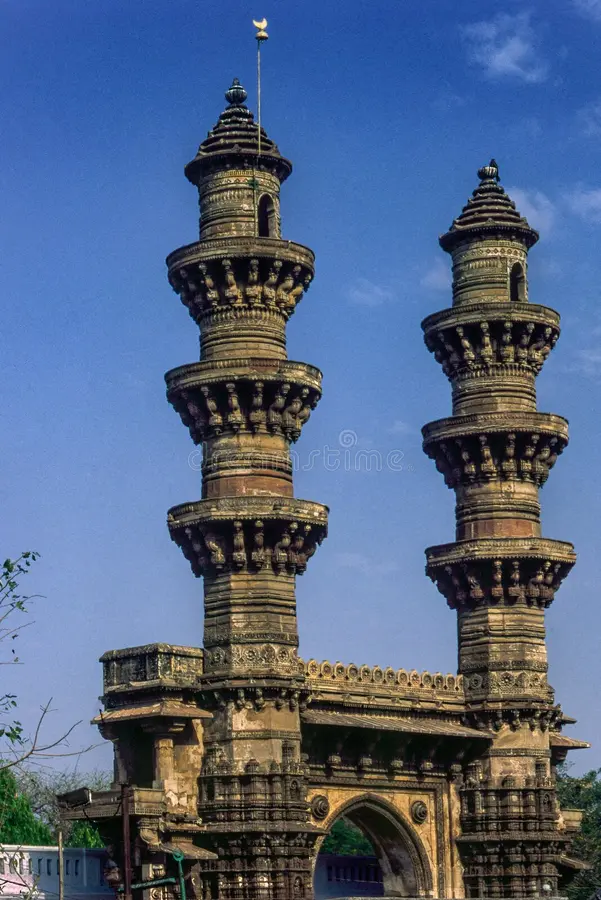
Jhulta Minara is photogenic because of vertical geometry and heritage texture contrast against the city background. You do not need long hours; 30 to 45 minutes is often enough for documentation and observation.
Useful tips:
- Carry a normal/wide lens setup for full gateway framing.
- Morning light gives cleaner shadow lines on carvings.
- Respect barriers and do not attempt restricted access.
- Keep bags compact in crowded transit-adjacent zones.
- Combine visit with nearby breakfast or evening food plans.
If your trip is Gujarat-focused, pair this site with places to visit in Gujarat for multi-city planning.
Practical Half-Day Itinerary (Suggested)
| Time Block | Plan | Why It Works |
|---|---|---|
| 8:00 AM - 9:00 AM | Jhulta Minara visit | Better weather, easier access |
| 9:30 AM - 11:00 AM | Sidi Saiyyed / old city heritage stop | Architectural continuity |
| 11:30 AM - 1:00 PM | Local food break and market walk | Cultural context beyond monuments |
This structure avoids heat-heavy midday movement and gives a compact but meaningful heritage experience.
Common Myths and What Visitors Should Understand
Many visitors arrive expecting a live shaking demonstration, but that expectation comes from older narratives. Current heritage practice focuses on preservation, so the best approach is observation, photography, and context learning from outside approved boundaries.
Another myth is that the mystery has one final scientific answer. In practice, multiple structural theories exist and public interpretation remains open. This uncertainty is part of the monument appeal, but it should not overshadow the visible stone craftsmanship and historical value of the surviving gateway.
If you approach Jhulta Minara with this mindset, even a short visit becomes meaningful. You leave with both photographs and a clearer understanding of why partial ruins still matter in living cities.
For researchers and architecture students, Jhulta Minara is also a useful case study in how incomplete monuments shape public memory. The site shows how stories, structural behavior, and conservation rules evolve over time. That combination of history and engineering curiosity is exactly why the monument stays relevant in modern Ahmedabad travel culture.
Final Take
Jhulta Minara in Ahmedabad remains a high-value short stop for travelers interested in architectural mysteries and old-city history. Even without interactive shaking demonstrations, the monument's form, story, and location make it relevant for any heritage-focused itinerary. Visit with realistic expectations, respect conservation rules, and combine it with nearby monuments for the best experience.
Location
Frequently Asked Questions
Q1.Why is Jhulta Minara called the Shaking Minarets?
Q2.What is the scientific reason behind the shaking effect?
Q3.Where is Jhulta Minara located in Ahmedabad?
Q4.Who built Jhulta Minara?
Q5.What are the timings of Jhulta Minara?
Q6.Is there an entry fee for Jhulta Minara?
Q7.How far is Jhulta Minara from Ahmedabad Railway Station?
Q8.What is the best time to visit Jhulta Minara?
Recommended For You
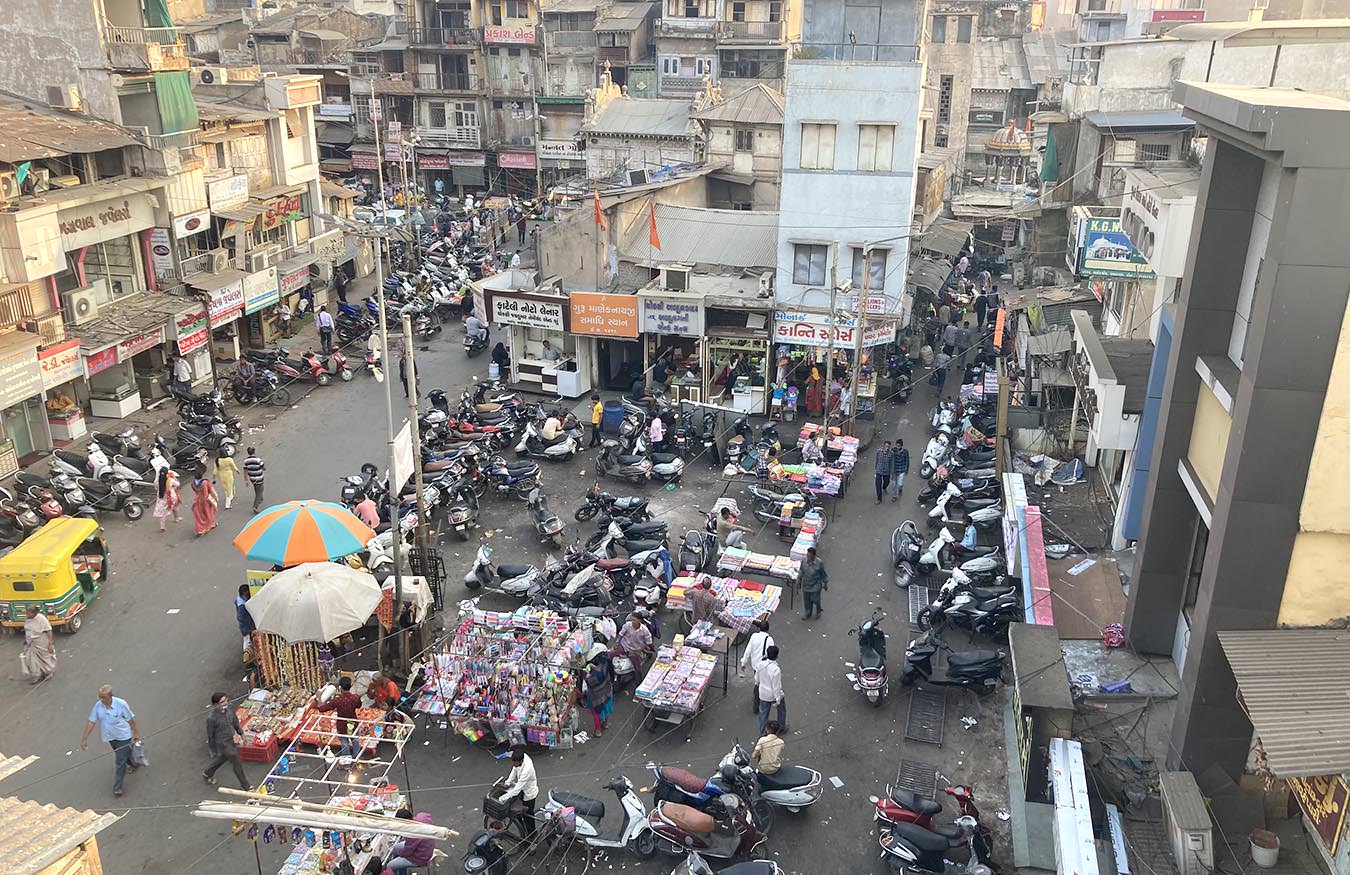
Manek Chowk Ahmedabad: Night Street Food Market & Must-Try Items
Explore Manek Chowk Ahmedabad with must-try foods, best visit timings, budget tips, stall-selection strategy, and practical night-market planning guidance.
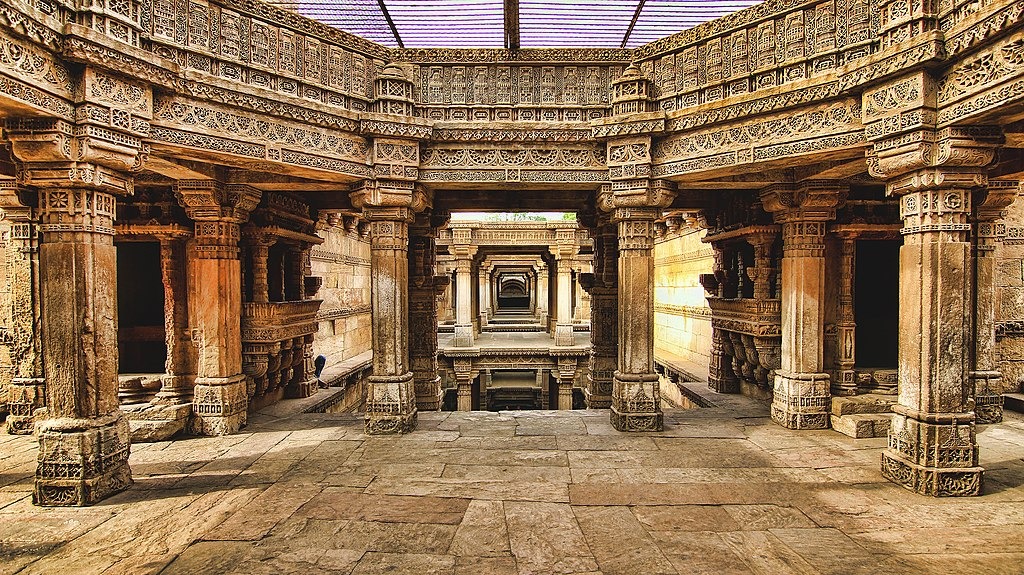
Adalaj Stepwell Ahmedabad: History, Timings & Architecture Highlights
Adalaj Stepwell guide with history, architecture, timings, entry fee, how to reach, and photography tips. Plan your visit from Ahmedabad with ease.
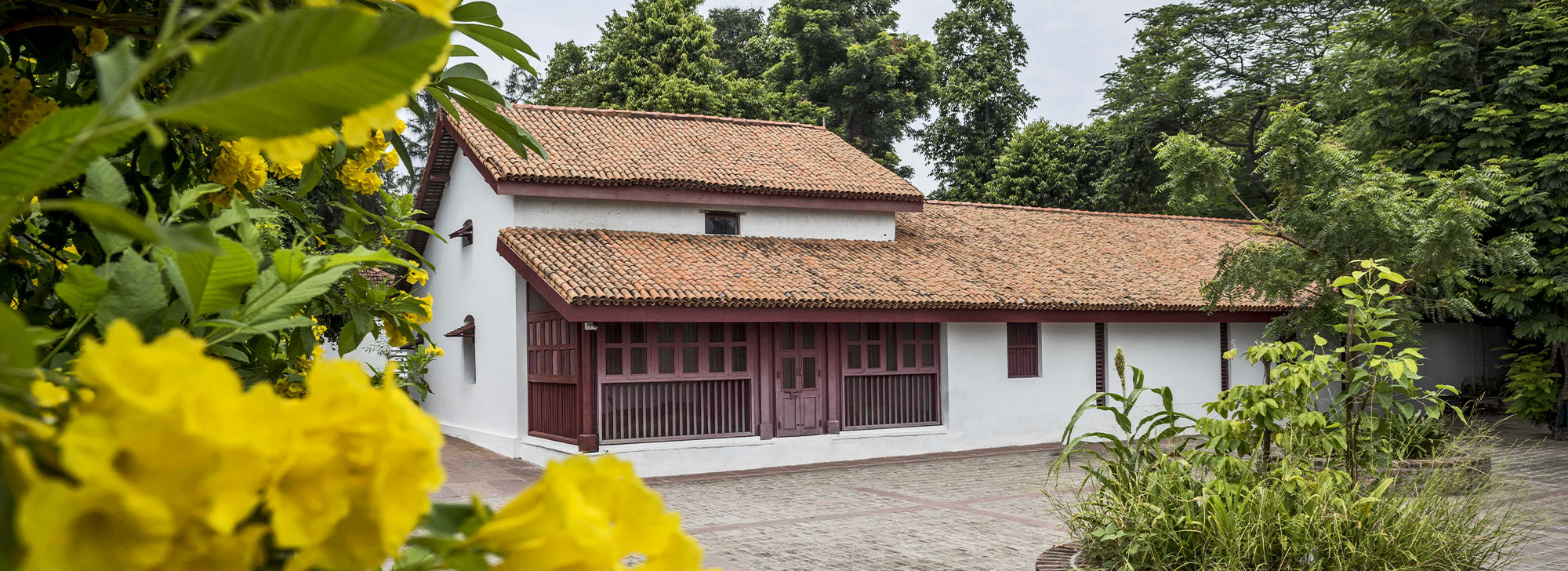
Sabarmati Ashram Ahmedabad: Gandhi Museum, Timings & Entry Details
Visit Sabarmati Ashram Ahmedabad. Complete guide with timings, entry fee, museum collections, Dandi March history, light & sound show, and travel tips.
Never Miss an Adventure
Get the latest trekking guides, travel tips, and exclusive offers delivered straight to your inbox.
