
Mumbai Pune Expressway Traffic: Live Updates & Block Information

Ananya Sharma
January 12, 2026
Complete guide to Mumbai Pune Expressway traffic with live updates, accident-prone zones, alternative routes, emergency contacts, and safety tips for safe travel between Maharashtra's major cities.
Introduction: India's Busiest Expressway
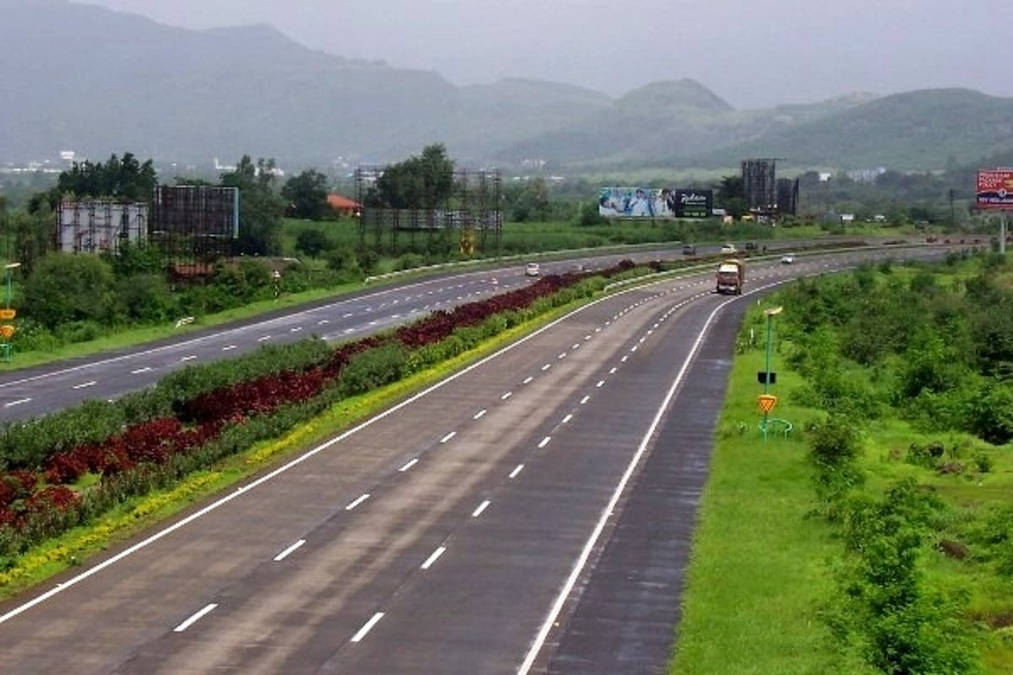
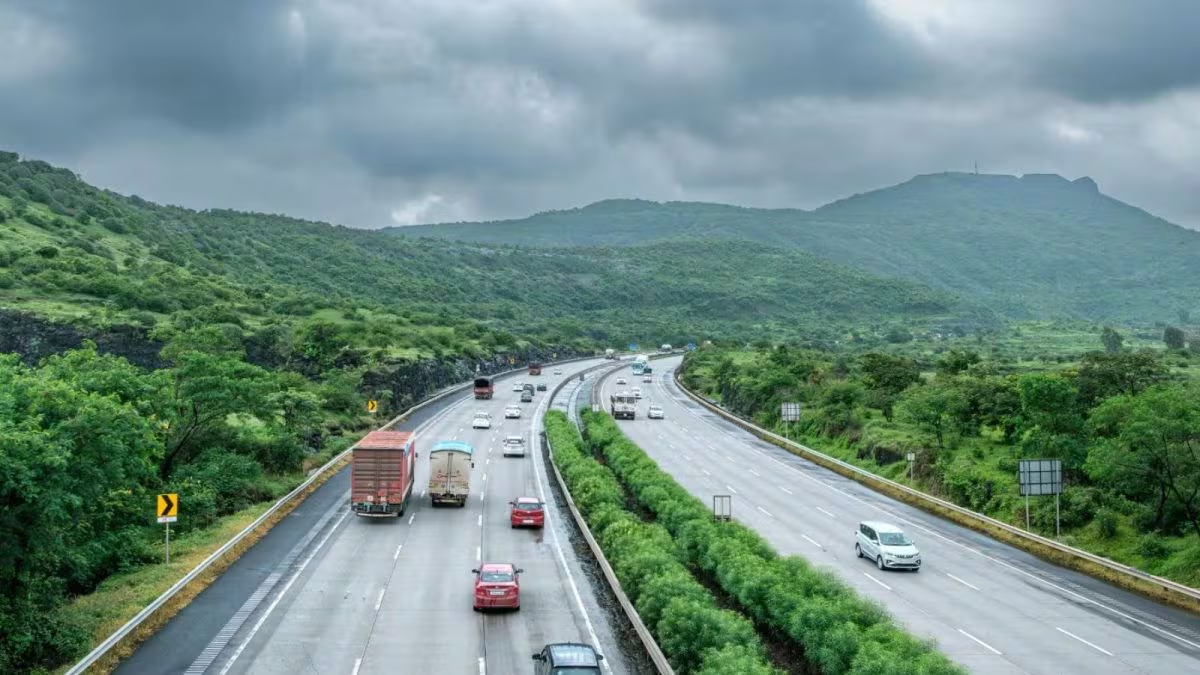
The Mumbai-Pune Expressway, officially known as the Yashwantrao Chavan Expressway, stands as India's first six-lane concrete, high-speed toll expressway. Spanning 94 kilometers through the picturesque Sahyadri mountain ranges, this engineering marvel connects Mumbai, the country's financial capital, with Pune, its cultural hub. Since its inauguration in 2002, the expressway has transformed travel between these two major cities, reducing journey time from over 5 hours to approximately 2 hours under normal conditions. However, with an average daily traffic volume exceeding 60,000 vehicles, the expressway is no stranger to congestion, accidents, and unexpected blockages. The challenging terrain, steep gradients, and varying weather conditions make it prone to disruptions that can leave travelers stranded for hours. This comprehensive guide provides real-time traffic information, accident-prone zones, alternative routes, and essential safety tips to help you navigate this critical highway safely and efficiently.Why Mumbai Pune Expressway Experiences Traffic Blocks
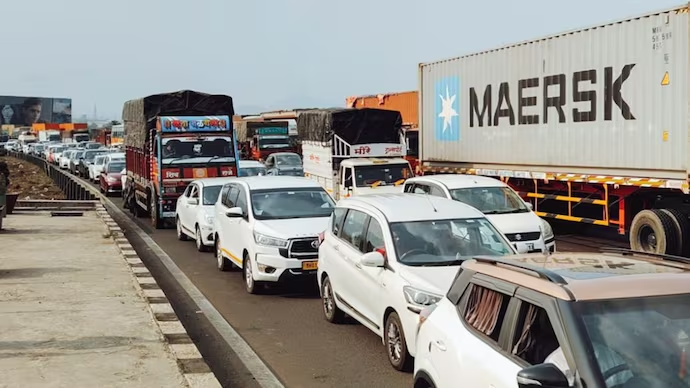 Understanding the root causes of traffic blockages can help you plan better and avoid getting stuck. The expressway's unique topography and heavy usage create several challenges that frequently lead to congestion.
Accidents: The Primary Cause
Accidents remain the single biggest cause of traffic blocks on the Mumbai-Pune Expressway. The high-speed nature of the road, combined with challenging terrain, creates dangerous conditions. On average, 3-5 accidents occur daily, ranging from minor fender benders to major collisions. Even small accidents can cause massive traffic jams because the expressway lacks adequate shoulders and service lanes. When an accident blocks even one lane, the ripple effect extends for kilometers, often taking 2-4 hours to clear completely.Vehicle Breakdowns
The steep ghat sections, particularly the Khandala and Lonavala ascents and descents, take a heavy toll on vehicles, especially those not properly maintained. Overheating engines, brake failures, and tyre blowouts are common occurrences. Commercial vehicles, trucks, and buses frequently break down in these challenging sections, narrowing the carriageway and creating bottlenecks. During peak hours, even a single breakdown can cause traffic to back up for 5-7 kilometers.Monsoon Landslides
The expressway traverses through ecologically fragile areas of the Western Ghats, highly susceptible to landslides during the monsoon season (June-September). Heavy rainfall destabilizes the slopes, resulting in falling rocks, mudslides, and occasional complete closures. The Adoshi tunnel area and sections near Khandala ghat are particularly vulnerable. During heavy monsoon days, minor landslides can cause partial blocks, while major incidents may necessitate complete closure for 6-12 hours while debris is cleared and slopes stabilized.Construction and Maintenance
Ongoing construction activities, including widening work, bridge repairs, and toll plaza upgrades, regularly disrupt traffic flow. The MSRDC (Maharashtra State Road Development Corporation) frequently undertakes maintenance work, leading to lane closures and diversions. These planned blocks are usually announced in advance, but sudden emergency repairs can catch commuters off guard. Construction zones typically reduce speed limits to 40 km/h, creating significant slowdowns even when complete blockages aren't in place.Fog and Low Visibility
Winter months (December-February) bring dense fog to the ghat sections, particularly early mornings and late evenings. Visibility can drop to under 10 meters, making driving extremely hazardous. Fog-related accidents involving multiple vehicles are common during these periods. The highway patrol often imposes speed restrictions or temporarily closes affected sections during severe fog conditions, leading to unexpected delays.Rush Hour Congestion
Peak travel times create predictable but frustrating congestion patterns. Friday evenings (Mumbai to Pune) and Sunday evenings (Pune to Mumbai) see exponential traffic increases as weekend travelers commute between the cities. Holiday periods, festivals, and long weekends can see traffic volumes double, turning what should be a 2-hour journey into a 5-6 hour ordeal. The toll plazas at Khalapur and Talegaon become major choke points during these peak periods, with queues extending several kilometers.Accident-Prone Zones on the Expressway
 Certain sections of the Mumbai-Pune Expressway have earned notoriety as accident black spots. Being aware of these dangerous zones can help you stay alert and drive more cautiously when passing through them.
Amrutanjan Bridge Area
This is perhaps the most dangerous section of the entire expressway. The sharp S-curves combined with steep gradients create challenging driving conditions. The bridge section itself is narrow, and many drivers misjudge the required speed reduction. This area sees frequent accidents, particularly during early morning hours when dew makes the surface slippery, and at night when high-beam headlights from oncoming traffic blind drivers. Statistics show that this 2-kilometer stretch accounts for nearly 15% of all accidents on the expressway despite representing barely 2% of its total length.Khandala Ghat Section
The steep descent towards Khandala tests both vehicle brakes and driver skills. This section features multiple sharp turns and gradient changes that catch inexperienced drivers off guard. Truck and bus brake failures are common here, often leading to multi-vehicle pileups. The ghat section also experiences heavy crosswinds, which can affect high-moving vehicles, especially lighter cars. The accidents here tend to be more severe due to the high speeds involved and the difficult terrain for rescue operations.Adoshi Tunnel Vicinity
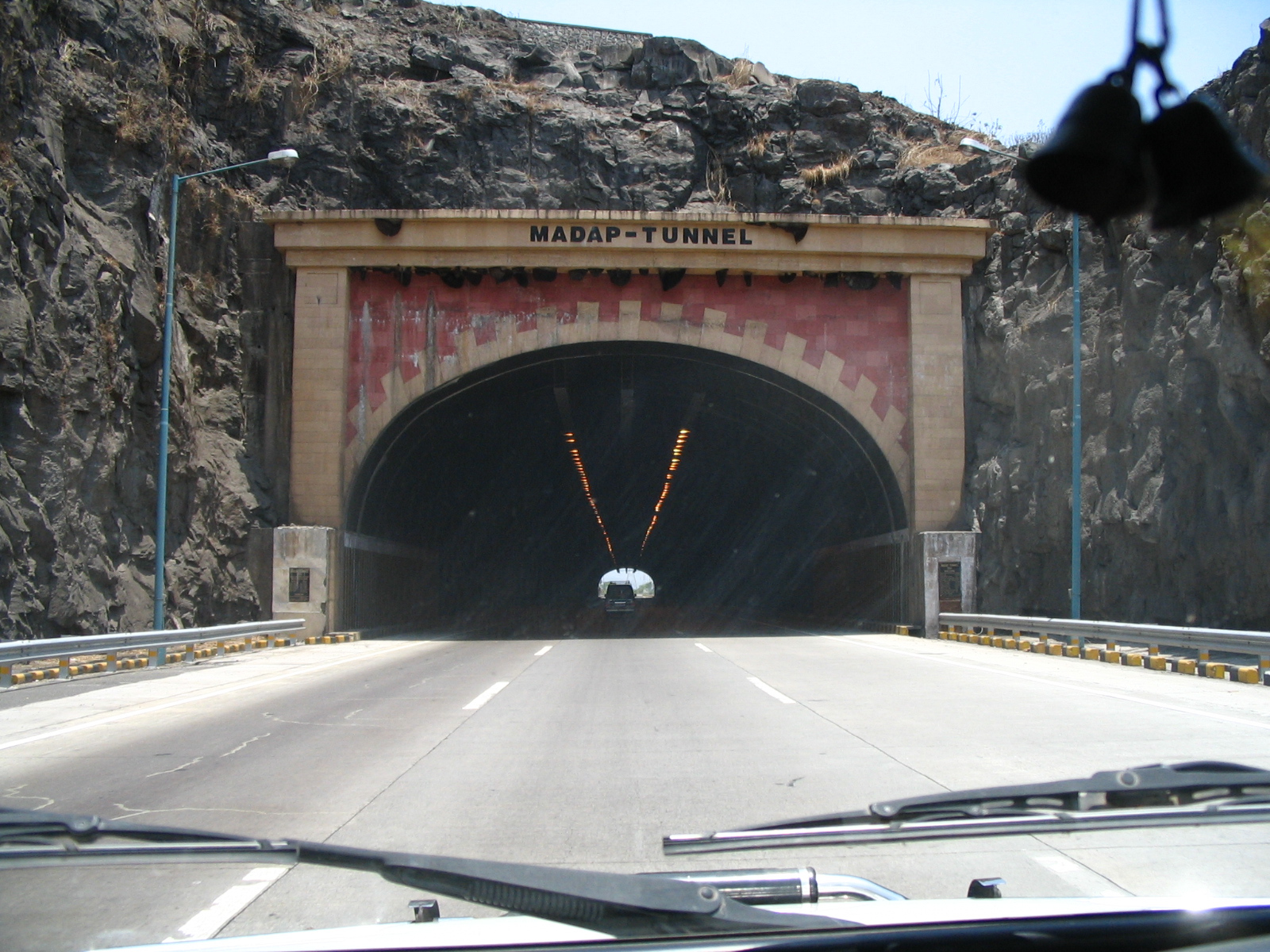
The approach to Adoshi Tunnel and the tunnel itself present unique hazards. The sudden transition from bright sunlight to the dimly lit tunnel causes temporary blindness, requiring significant speed reduction. Water seepage inside the tunnel creates wet patches that are extremely slippery. The tunnel's narrow width leaves little margin for error. Many accidents occur at the tunnel's entrance and exit where drivers misjudge the speed differential and lose control.Talegaon Chowk and Surroundings
While not a ghat section, the Talegaon area sees a disproportionate number of accidents due to high-speed driving and intersection points. This area has multiple entry and exit points, leading to frequent lane changes and merging accidents. The presence of commercial establishments and dhabas near the highway causes additional hazards as vehicles slow down abruptly to turn off the main carriageway. The relatively straight road encourages speeding, but the traffic density means reduced reaction times.Lonavala Exit Region
The Lonavala exit is one of the busiest points on the expressway, with tourists constantly entering and exiting. The high volume of slow-moving traffic turning towards Lonavala creates dangerous situations for fast-moving through traffic. Weekend travelers unfamiliar with the route often make last-minute maneuvers, leading to rear-end collisions. This area also sees a high incidence of pedestrian accidents as people attempt to cross the highway to reach dhabas and shops.Urse Exit to Pune
The final approach to Pune sees high-speed accidents as exhausted drivers let their guard down, thinking the challenging journey is over. This section is deceptively simple—long, straight stretches that encourage speeding. However, traffic density increases significantly, and unexpected slowdowns are common as the expressway merges with city roads. The transition from high-speed highway to city traffic catches many drivers unaware, leading to accidents.Alternative Routes When Expressway is Blocked
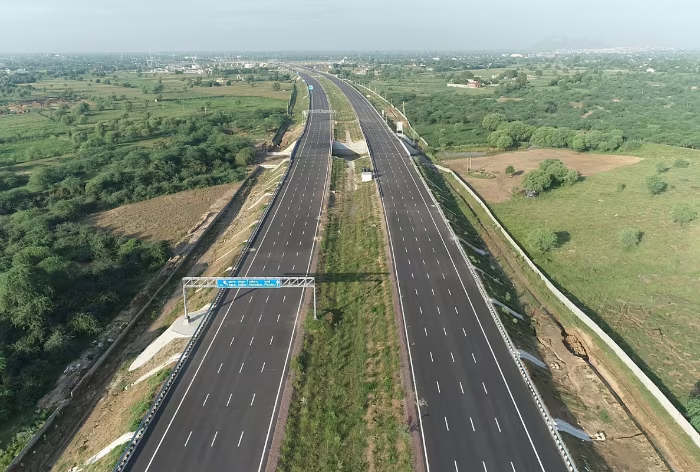 When the expressway is blocked or you want to avoid heavy traffic, several alternative routes can get you to your destination. While these routes may take longer, they can sometimes be faster during severe expressway congestion.
Old Mumbai-Pune Highway (NH48)
The traditional route before the expressway was built, NH48 remains a reliable alternative. This route passes through the towns of Panvel, Khalapur, and the old Khandala and Lonavala ghats. While the distance is longer at approximately 150 kilometers compared to the expressway's 94 kilometers, the route offers more service lanes, emergency exits, and facilities in case of breakdowns.Distance: 150 km
Normal Time: 3-3.5 hours
Advantages: More eateries and fuel stations, multiple escape routes, better phone connectivity
Disadvantages: More traffic signals, passes through populated areas, single-lane ghat sections
Best For: When expressway is completely blocked, during severe accidents, for drivers unfamiliar with expressway terrain
Via Tamhini Ghat (Mulshi Route)
This scenic route takes you through the Mulshi Lake region and Tamhini Ghat, offering breathtaking views and a more relaxed driving experience. The route starts from Navi Mumbai, goes through Panvel and Kolad, ascends the Tamhini Ghat, passes near Mulshi Lake, and connects to Pune via Pirangut and Chandani Chowk.Distance: 165 km
Normal Time: 4-4.5 hours
Advantages: Extremely scenic, less traffic, good road conditions, multiple dhabas for food breaks
Disadvantages: Significantly longer, single-lane ghat section, limited fuel stations, poor mobile network in parts
Best For: Leisure trips, photography enthusiasts, avoiding weekend expressway rush, monsoon drives
Via Khopoli-Pen Route
This alternative branches off from the expressway at Khalapur, goes through Khopoli, Pen, and Nagothane, and rejoins the highway near Urse. It's particularly useful when blockages occur between Lonavala and Pune.Distance: 135 km
Normal Time: 3.5-4 hours
Advantages: Bypasses accident-prone Khandala ghat, good road conditions, moderate traffic
Disadvantages: Still longer than expressway, passes through industrial areas with truck traffic
Best For: When Khandala ghat is blocked, during monsoon when expressway is closed, late-night travel
Decision Guide: When to Take Alternatives
- If delay exceeds 2 hours: Consider NH48 via old highway
- If expressway completely closed: Tamhini Ghat route for scenic drive, NH48 for speed
- During peak rush hour: Sometimes staying on expressway is still faster despite traffic
- If starting journey late: Alternative routes may be better for overnight travel
- Monsoon season: Keep NH48 as primary option due to expressway landslide risk
Real-Time Traffic Update Sources
Staying informed about current traffic conditions can save you hours of frustration. Multiple sources provide real-time information about the expressway status.Google Maps and Waze
Google Maps remains the most reliable and widely used traffic information source. Its real-time data comes from millions of users, providing accurate information about congestion, accidents, and road closures. The app automatically reroutes you based on current conditions and can predict travel times with surprising accuracy. Waze, owned by Google, offers additional features like police trap warnings and road hazard notifications contributed by the community.MSRTC and Highway Patrol Apps
The Maharashtra State Road Transport Corporation (MSRTC) and Maharashtra Highway Patrol maintain official apps and social media accounts where they post verified information about expressway conditions. These official sources are particularly reliable for planned blocks, maintenance schedules, and major accident updates. Their Twitter handles (@msrtdlonline and @MumbaiPolice) are frequently updated during emergencies.WhatsApp Groups
Numerous commuter WhatsApp groups exist where drivers share real-time information about traffic conditions. These groups can be invaluable for getting instant updates from people actually on the road. However, information from these groups should be verified as rumors can spread quickly. Popular groups include "Mumbai Pune Expressway Traffic Updates" and various logistics and transport company groups.Radio Stations
Mumbai and Pune radio stations provide regular traffic updates during morning and evening rush hours. Stations like Radio Mirchi, Red FM, and Fever FM have dedicated traffic bulletins every 15-30 minutes during peak times. These updates are particularly useful when you're already on the road and can't check your phone frequently.Toll Plaza Helplines
The expressway toll plazas maintain helpline numbers that can provide information about current conditions. While not as frequently updated as digital sources, these official channels can provide definitive information about complete closures and expected reopening times. The numbers are displayed at toll plazas and are available on the MSRDC website.Essential Safety Tips for Expressway Driving
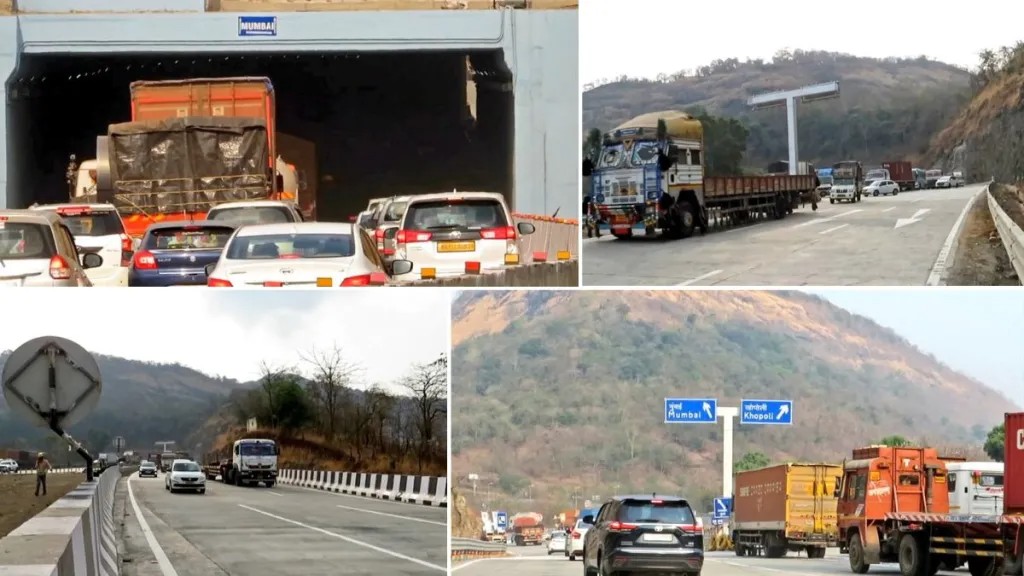 Driving safely on the Mumbai-Pune Expressway requires specific skills and awareness. Follow these essential safety guidelines to ensure your journey is incident-free.
Strictly Follow Speed Limits
The expressway has a maximum speed limit of 80 km/h for cars and 60 km/h for commercial vehicles. These limits aren't arbitrary—they're based on the road's design and the challenging terrain. The ghat sections have even lower limits posted clearly. Speeding is the single biggest factor in expressway accidents. Remember that reaching your destination late is better than not reaching at all. Modern vehicles can easily exceed posted limits, but the question isn't whether you can go fast—it's whether you can stop quickly when unexpected obstacles appear.Maintain Proper Lane Discipline
The expressway has six lanes divided by a central median. The left lane is for slow vehicles, the middle lanes for normal traffic, and the rightmost lane (the fast lane) is strictly for overtaking. Do not hog the fast lane—after overtaking, move back to the middle or left lanes. Heavy vehicles must stay in the leftmost lanes at all times. Proper lane discipline prevents sudden maneuvers and reduces accident risk significantly.Safe Overtaking Practices
Before overtaking, check your mirrors thoroughly and use turn signals well in advance. Only overtake from the right side. Never overtake on curves, near intersections, or in areas with limited visibility. Ensure you have clear visibility of oncoming traffic before pulling out. If a vehicle from behind is flashing headlights or using horns, they may be indicating emergency or attempting to pass—let them by rather than racing.Ghat Section Driving Techniques
The Khandala and Lonavala ghat sections require special driving techniques. When descending, use engine braking by shifting to lower gears rather than relying solely on your brakes. Continuous braking can cause brake fade—the complete loss of braking power due to overheating. Never switch off your vehicle while descending; this will cut power to brakes and steering. Keep to lower gears and maintain steady speeds. When ascending, ensure you're in the appropriate gear before starting the climb—downshifting on steep inclines can cause you to lose momentum and speed.Manage Driver Fatigue
Driver fatigue is a major cause of accidents on the expressway. The journey may seem short at 94 km, but the concentration required, especially in ghat sections, is mentally exhausting. Take breaks at the designated food plazas and rest areas. The expressway has several well-maintained food courts with clean restrooms. If you feel drowsy, pull over at the next available spot—don't try to push through. For long journeys, consider having a second driver who can switch when fatigue sets in.Pre-Journey Vehicle Maintenance
Before starting your journey, ensure your vehicle is in optimal condition. Check tire pressure and tread depth—properly inflated tires are crucial for safe ghat driving. Test your brakes thoroughly, especially if you haven't driven in hilly terrain recently. Check fluid levels including engine oil, coolant, and brake fluid. Ensure all lights and indicators are working. Keep your windshield clean for maximum visibility, and top up washer fluid. If your vehicle is due for major service, complete it before attempting the ghat sections.Monsoon Driving Precautions
During monsoon, reduce your speed below posted limits—wet roads require significantly longer stopping distances. Turn on headlights even during daytime for better visibility. Avoid sudden braking—apply brakes gently and early to prevent skidding. Watch out for potholes filled with water that can damage your suspension or cause loss of control. Maintain extra distance from vehicles ahead—spray from other vehicles can reduce your visibility dramatically. If rainfall is extremely heavy, consider pulling over at a safe location and waiting for conditions to improve.Night Driving Considerations
night driving on the expressway presents additional challenges. Use dipper/low beam headlights when there's oncoming traffic or when following another vehicle—high beams blind other drivers. The ghat sections are particularly dangerous at night due to reduced visibility of curves and gradient changes. If you're not experienced with night driving in hills, avoid it entirely. Wildlife crossing is a real risk, particularly in less populated sections—scan the road edges continually. Keep your windshield clean inside and out to reduce glare from oncoming headlights.
Emergency Contacts and Facilities
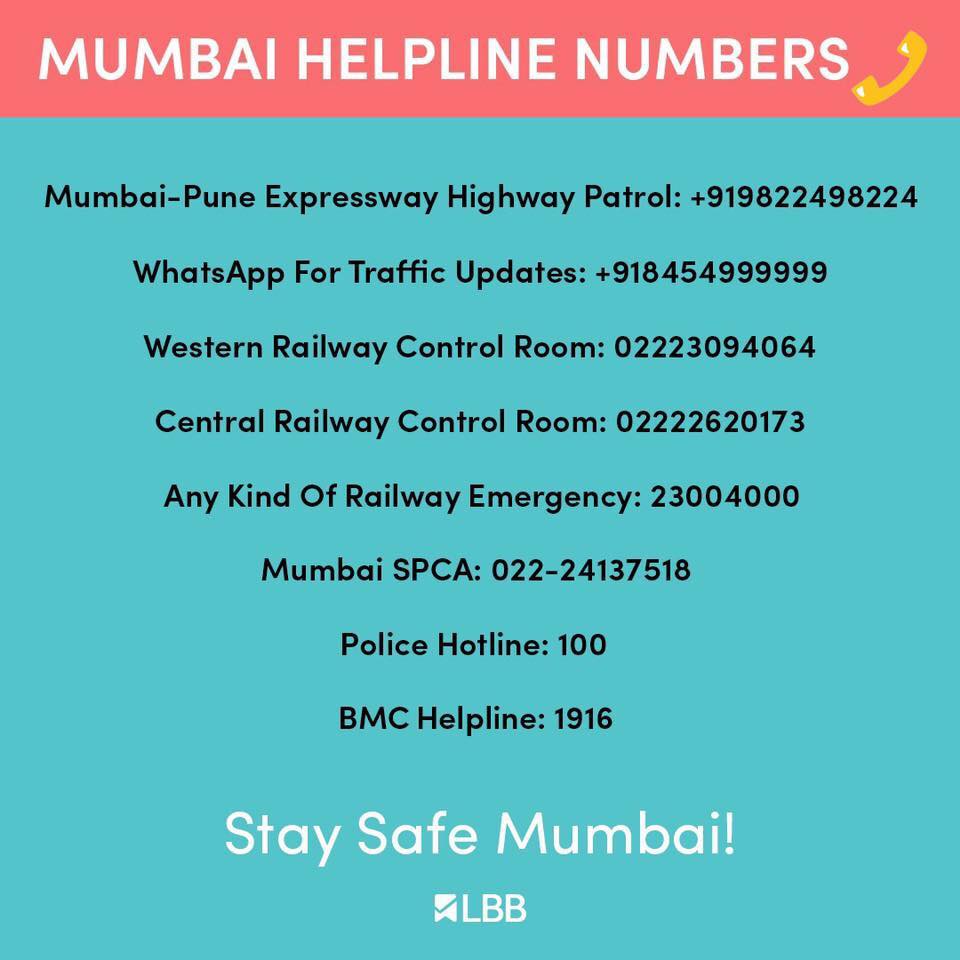 Being prepared for emergencies can make a critical difference. Save these important numbers and know the locations of emergency facilities along the route.
Highway Patrol and Police
Highway Patrol Emergency: +91-22-27571264
Toll Plaza Emergency: Available at all major plazas
Police Control Room (Pune): +91-20-26122244
Police Control Room (Mumbai): +91-22-22621855
The expressway has highway patrol vehicles stationed at strategic points. These patrolling vehicles are equipped with first aid, fire extinguishers, and basic repair tools. In case of accidents or breakdowns, wave down a patrol vehicle or call the emergency numbers. Highway patrol can arrange for cranes, mechanics, and medical assistance.
Ambulance and Medical Services
108 Ambulance Service: 108 (toll-free)
Hospitals near Expressway:
- Lonavala: Noble Hospital, +91-2114-239006
- Khalapur: Sub-District Hospital, +91-2192-223244
- Urse: Apex Hospital, +91-2114-271333
Several hospitals are located within short distances of the expressway for emergency medical care. The 108 ambulance service has dedicated units stationed near the expressway with response times under 15 minutes for most locations. For serious injuries, Mumbai and Pune both have major trauma centers within reachable distance.
Crane and Vehicle Recovery Services
Authorized crane services are available for towing disabled vehicles. The highway patrol can arrange these services, or you can contact them directly. Rates are regulated by MSRDC and displayed at toll plazas. Keep in mind that crane services may take time to arrive during peak accident periods. If your vehicle is immobilized in a dangerous location, move to safety behind the barrier while waiting for assistance.
Breakdown Assistance
MSRDC Helpline: +91-22-26594521
Toll-Free Highway Info: 1800-22-2002 (working hours)
The expressway has designated breakdown lanes at several locations. If your vehicle breaks down, try to move it to the shoulder or breakdown lane. Turn on your hazard lights and place emergency triangles or stones to warn other drivers. Do not stand behind or in front of your vehicle—stand well away from the carriageway behind the safety barriers.
Best Times to Travel
Strategic timing can significantly reduce your travel time and stress. Understanding traffic patterns can help you plan your journey for maximum efficiency.
Weekday Patterns
- Best Time (Mumbai to Pune): 6:00-8:00 AM, 11:00 AM-3:00 PM
- Best Time (Pune to Mumbai): 5:00-7:00 AM, 10:00 AM-3:00 PM
- Avoid: 8:00-11:00 AM (towards Pune), 5:00-9:00 PM (towards Mumbai)
Weekend Patterns
- Friday Evening: Heavy Mumbai to Pune traffic from 4:00 PM onwards
- Sunday Evening: Heavy Pune to Mumbai traffic from 4:00 PM onwards
- Saturday Morning: Moderate traffic both directions from 8:00 AM-12:00 PM
Seasonal Considerations
Monsoon (June-September): Higher accident risk, potential landslides, plan for extra 1-2 hours
Winter (December-February): Early morning fog, best to travel after 9:00 AM
Summer (March-May): Generally best conditions, but holiday periods see heavy traffic
Regardless of when you travel, always check live traffic conditions before starting your journey and have alternative routes mapped out as backup options. The Mumbai-Pune Expressway, despite its challenges, remains an engineering marvel and the most efficient way to travel between these two great cities—with proper planning and safe driving practices, you can navigate it safely and efficiently.
Conclusion
The Mumbai-Pune Expressway represents both the progress of Indian infrastructure and the challenges of managing high-volume traffic through difficult terrain. While it has dramatically reduced travel time between Maharashtra's two major cities, it requires respect, preparation, and careful driving to navigate safely.
Understanding accident-prone zones, staying updated with real-time traffic information, knowing alternative routes, and following safety guidelines are essential for stress-free travel. The expressway's beauty—the sweeping views of the Sahyadris, the cool mountain air—can be enjoyed fully when you're not worrying about traffic jams or safety concerns.
Plan your journey during off-peak hours when possible, maintain your vehicle properly, and never underestimate the challenging sections of the route. Whether you're a daily commuter, occasional traveler, or first-time user, treating the expressway with the respect it demands will ensure you reach your destination safely—every single time.
Safe travels, and may the road be always open before you!
If you're planning to explore the beautiful hill stations along the expressway route, Lonavala offers stunning viewpoints, waterfalls, and trekking opportunities perfect for a weekend getaway. For those interested in understanding more about traffic patterns and safety measures on this critical highway, detailed analysis and real-time updates can help you plan better. Additionally, knowing the best places to visit in Mumbai and Pune can help you plan your complete itinerary, making your intercity travel experience more enjoyable and productive.
Location
Frequently Asked Questions
Q1.Why is Mumbai Pune Expressway blocked today?
The Mumbai-Pune Expressway can be blocked due to several reasons: accidents (most common), vehicle breakdowns, landslides during monsoon, construction work, or severe fog conditions.
To check today's specific status, use Google Maps for real-time traffic, follow official Twitter handles like @MumbaiPolice or @msrtdlonline, or check commuter WhatsApp groups for live updates from drivers currently on the route.
Q2.How do I check Mumbai Pune Expressway live traffic status?
Multiple sources provide real-time traffic updates:
1. Google Maps - Most reliable for real-time congestion and rerouting
2. Waze App - Community-driven updates with police and hazard alerts
3. Twitter handles: @MumbaiPolice, @msrtdlonline for official updates
4. Radio stations - Traffic bulletins during rush hours
5. WhatsApp commuter groups for instant updates from travelers
Q3.What are alternative routes from Mumbai to Pune when expressway is closed?
When the expressway is blocked, you have three main alternatives:
1. Old Mumbai-Pune Highway (NH48) - 150 km, 3-3.5 hours via Panvel, Khalapur, old ghats
2. Tamhini Ghat Route - 165 km, 4-4.5 hours via Mulshi Lake (scenic but longer)
3. Khopoli-Pen Route - 135 km, 3.5-4 hours via Pen and Nagothane
The old highway is usually the fastest alternative, while Tamhini Ghat offers beautiful scenery but takes longer.
Q4.Which are the most accident-prone zones on Mumbai Pune Expressway?
The most dangerous accident black spots on the expressway are:
1. Amrutanjan Bridge - Sharp S-curves, accounts for 15% of all accidents
2. Khandala Ghat - Steep descent with multiple sharp turns
3. Adoshi Tunnel - Poor visibility, slippery surface
4. Talegaon Chowk - High-speed area with heavy traffic merging
5. Lonavala Exit - Sudden slowing vehicles causing rear-end collisions
Exercise extreme caution in these zones, reduce speed, and maintain higher following distances.
Q5.What should I do if my car breaks down on the expressway?
If your vehicle breaks down:
1. Try to move to the shoulder or breakdown lane if possible
2. Turn on hazard lights immediately
3. Place emergency triangles or stones to warn other drivers
4. Stand well away from the carriageway behind safety barriers
5. Call Highway Patrol: +91-22-27571264
6. Call MSRDC Helpline: +91-22-26594521
7. Wait for authorized help - don't accept unauthorized assistance
Never stand behind or in front of your vehicle on the carriageway!
Q6.Is it safe to drive on Mumbai Pune Expressway at night?
Night driving on the expressway presents additional risks: reduced visibility of curves in ghat sections, high-beam glare from oncoming traffic, wildlife crossing in less populated areas, and driver fatigue.
If you must drive at night: Use low beam/dipper when approaching or following vehicles, reduce speed below posted limits, take breaks at food plazas if feeling drowsy, and avoid ghat sections if not experienced with night hill driving.
Daytime driving is significantly safer, especially for those unfamiliar with the route.
Q7.What is the best time to travel from Mumbai to Pune to avoid traffic?
The best times to travel Mumbai to Pune are:
Weekdays: 6:00-8:00 AM or 11:00 AM-3:00 PM
Avoid: 8:00-11:00 AM (peak morning traffic)
Weekends: Friday evenings see heavy traffic 4:00 PM onwards
Saturday mornings are moderate from 8:00 AM-12:00 PM
Seasonally: Winter - travel after 9:00 AM to avoid fog
Monsoon - add 1-2 hours to expected travel time
Always check live traffic before departing regardless of planned timing.
Q8.How long does it normally take to travel from Mumbai to Pune?
Under normal conditions without traffic:
Mumbai to Pune via Expressway: 2-2.5 hours for 94 km
However, actual travel time varies significantly:
Off-peak hours: 2 hours
Moderate traffic: 2.5-3 hours
Heavy traffic: 4-6 hours (especially Friday/Sunday evenings)
When expressway is blocked: 5-7 hours via alternative routes
During peak holiday periods: plan for 5+ hours
Check real-time traffic for current conditions before starting your journey.
Recommended For You
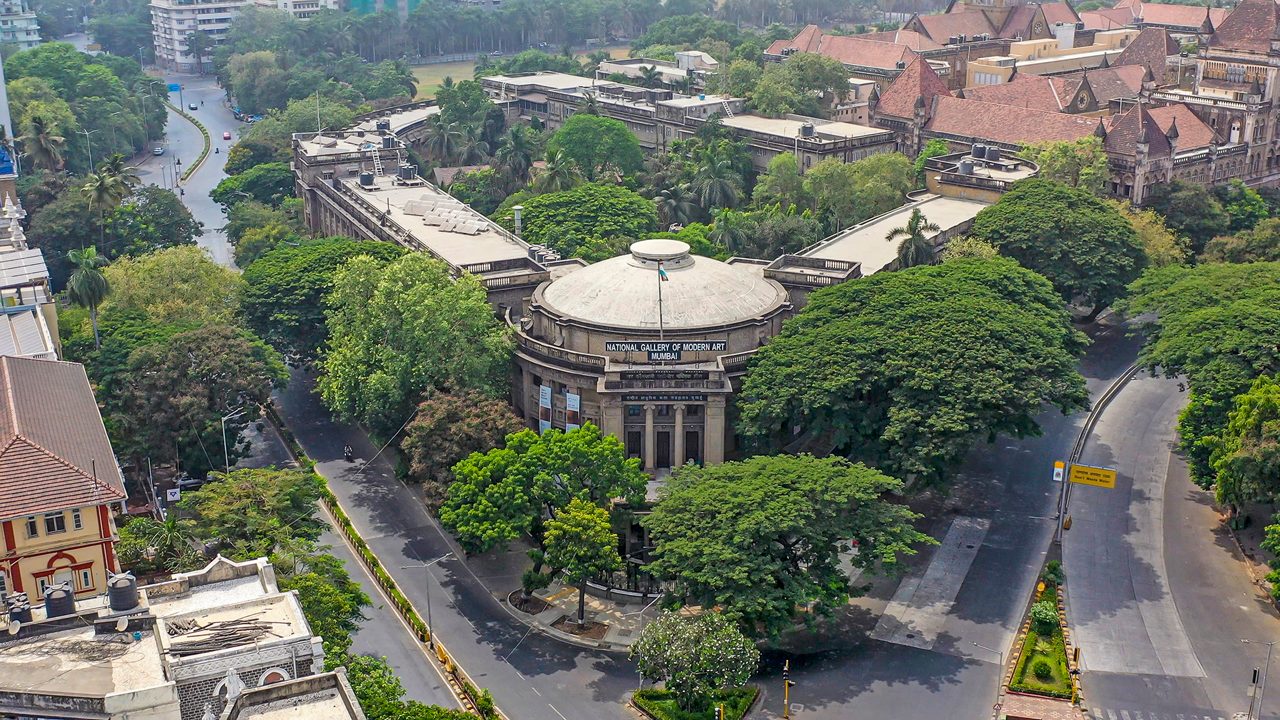
Best Places to Visit in Mumbai: Top Tourist Attractions
Discover the best places to visit in Mumbai from iconic Gateway of India and Marine Drive to Elephanta Caves and Juhu Beach. Explore Mumbai's top tourist attractions, heritage sites, beaches, and practical travel tips.
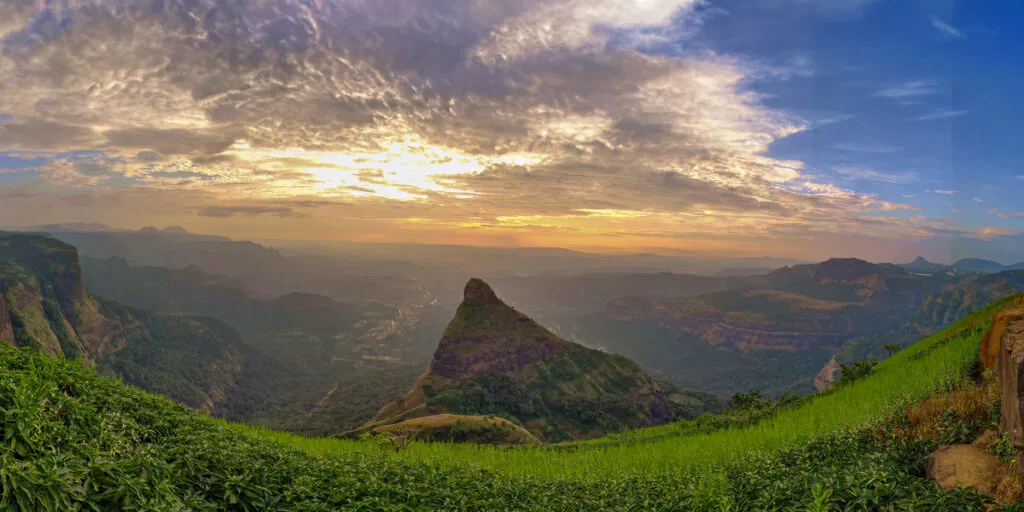
Lonavala: Complete Travel Plan Places And Weather
Complete Lonavala travel guide with top attractions like Bhushi Dam, Karla Caves, Lohagad Fort, 2-3 day itineraries, budget breakdown, transport options & practical tips for monsoon trips.
Pune Mumbai Expressway Traffic: Updates and Travel Tips
Plan Pune Mumbai Expressway traffic smarter with timing strategy, weather tips, and safety-first route planning.
Never Miss an Adventure
Get the latest trekking guides, travel tips, and exclusive offers delivered straight to your inbox.
